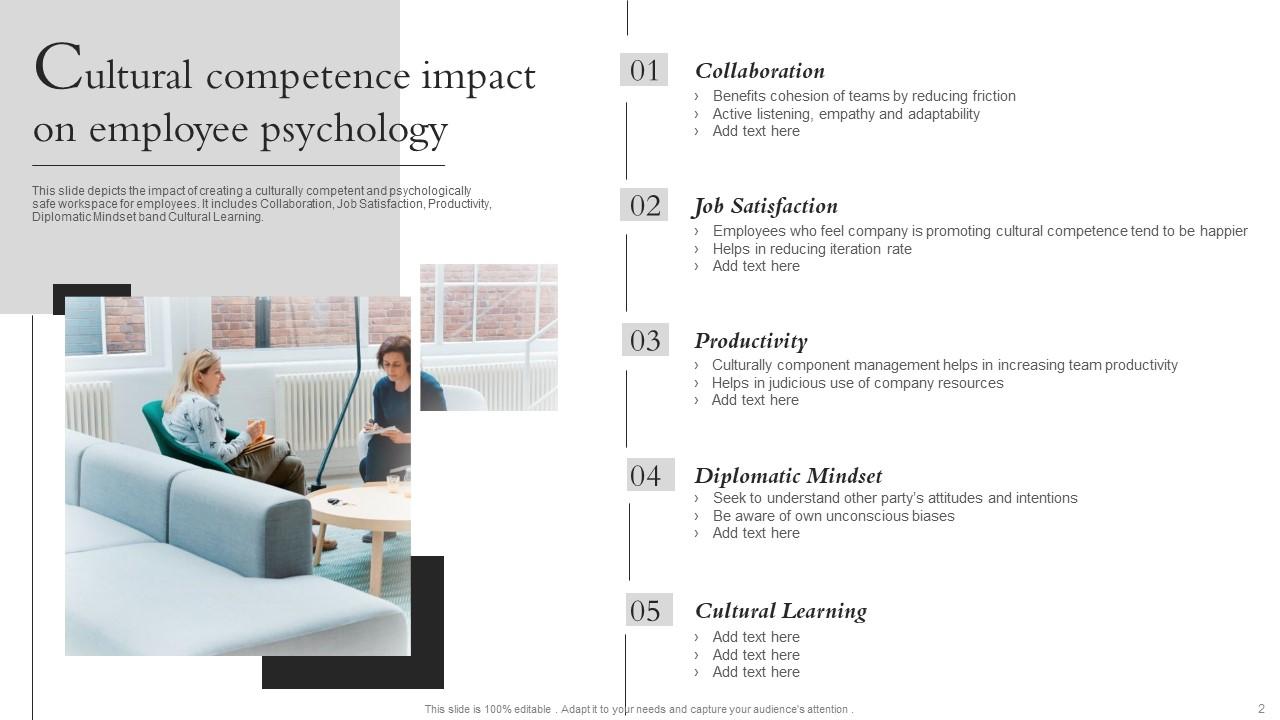
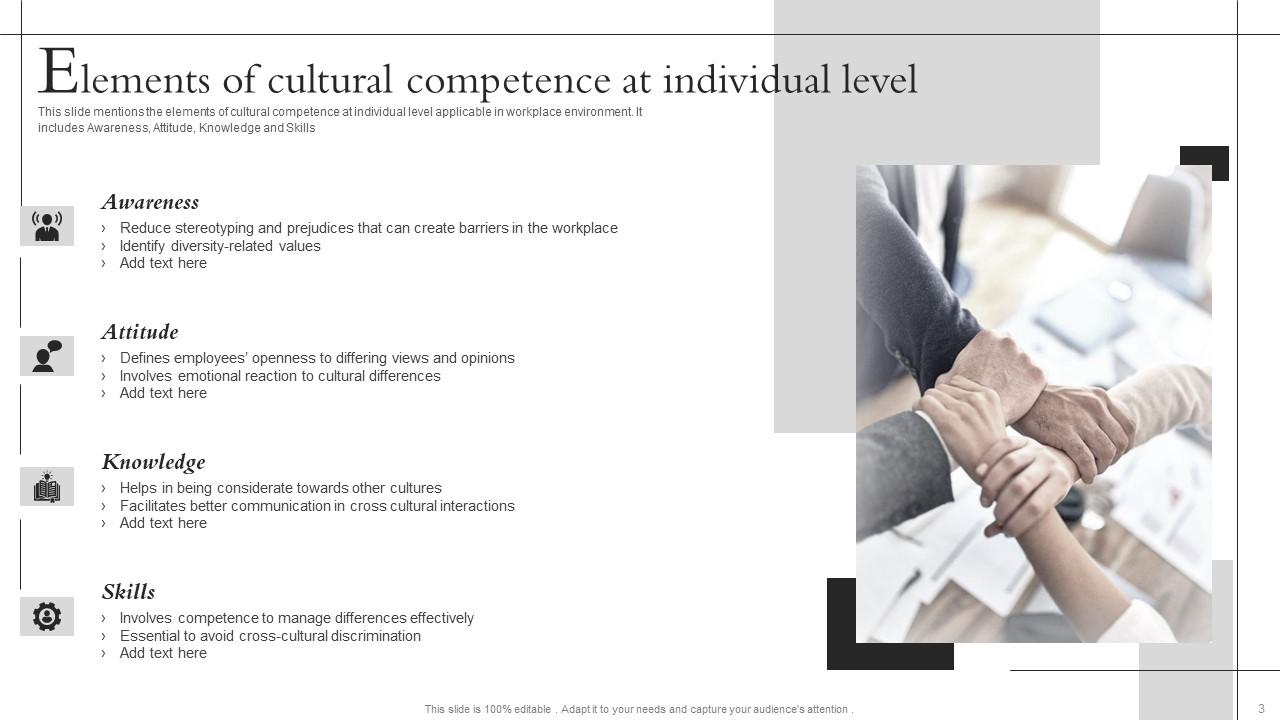
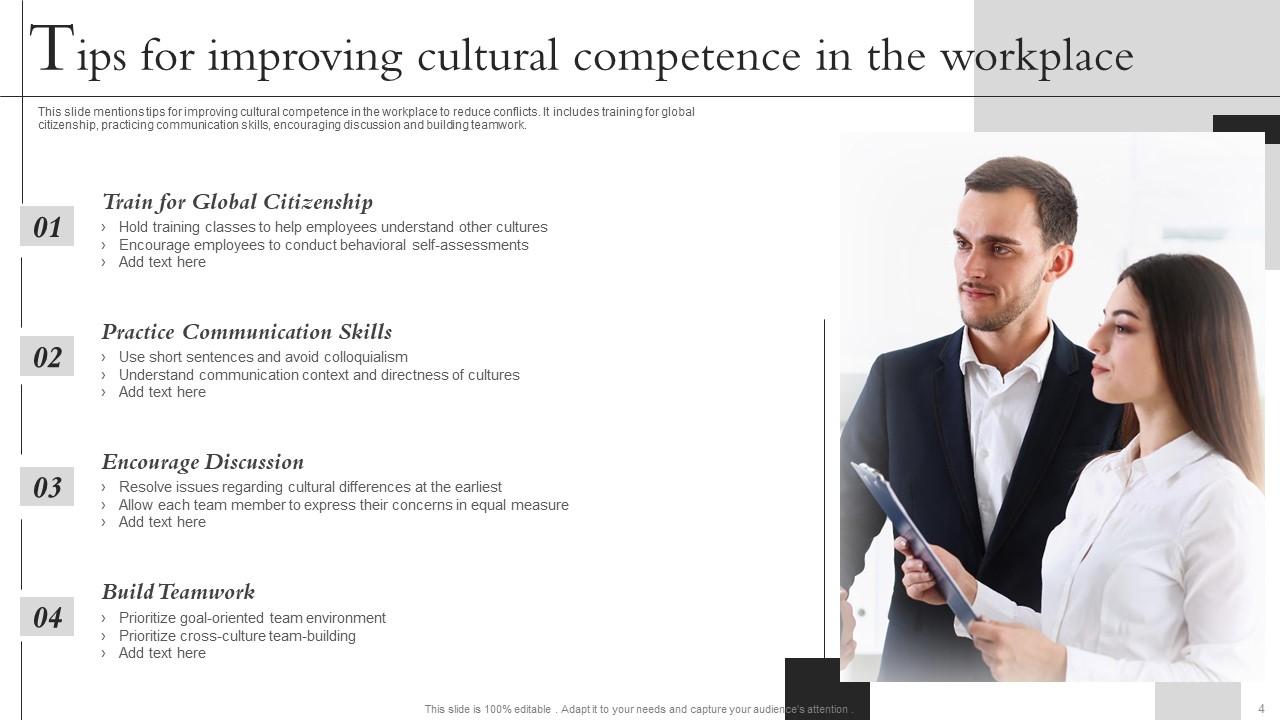
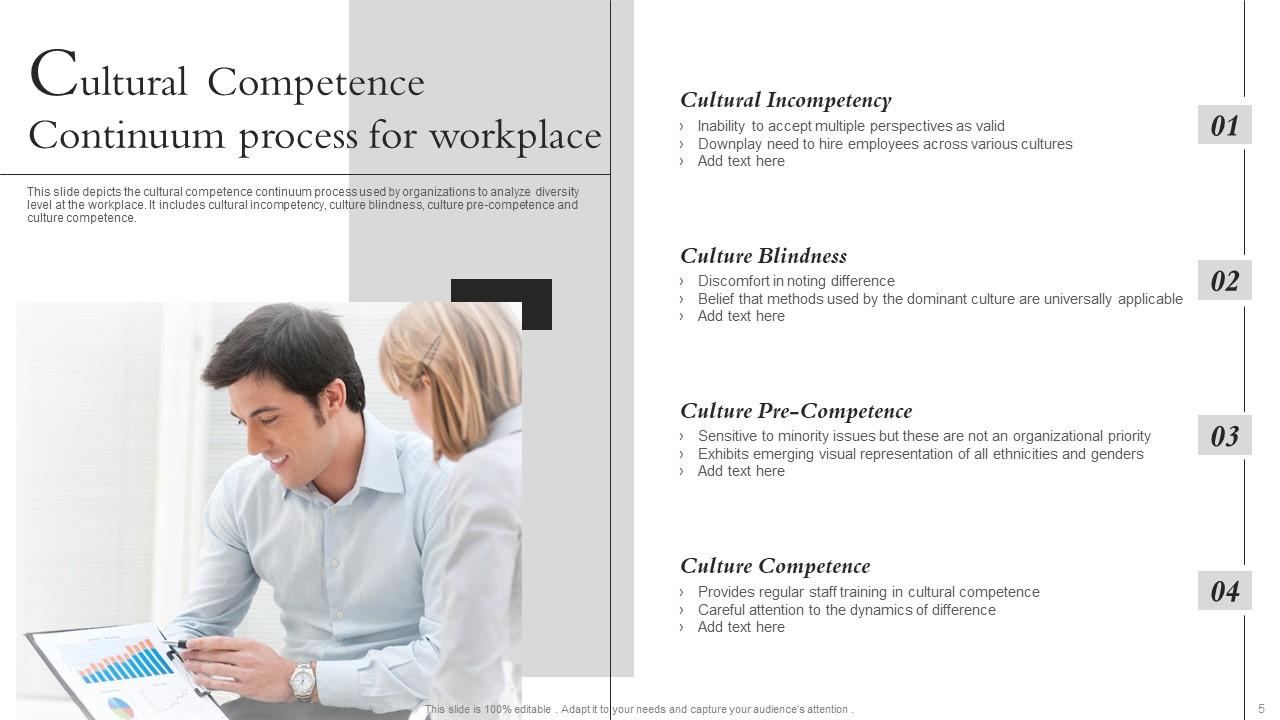
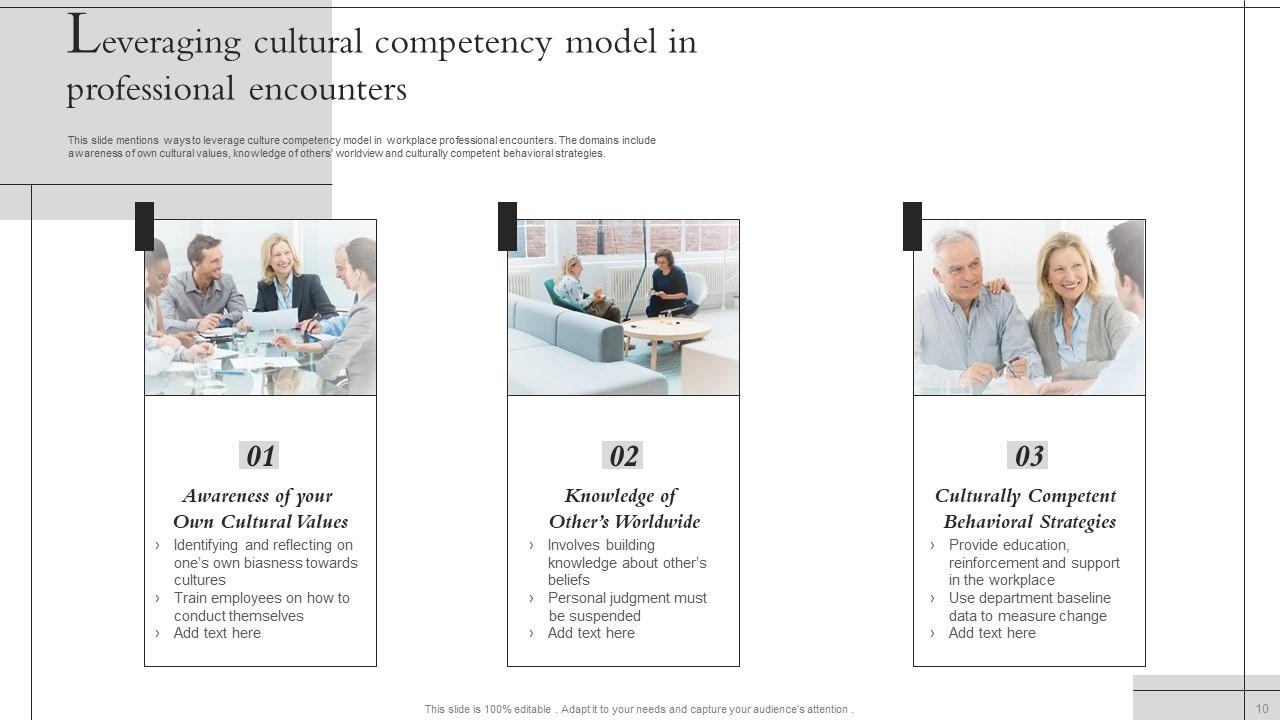
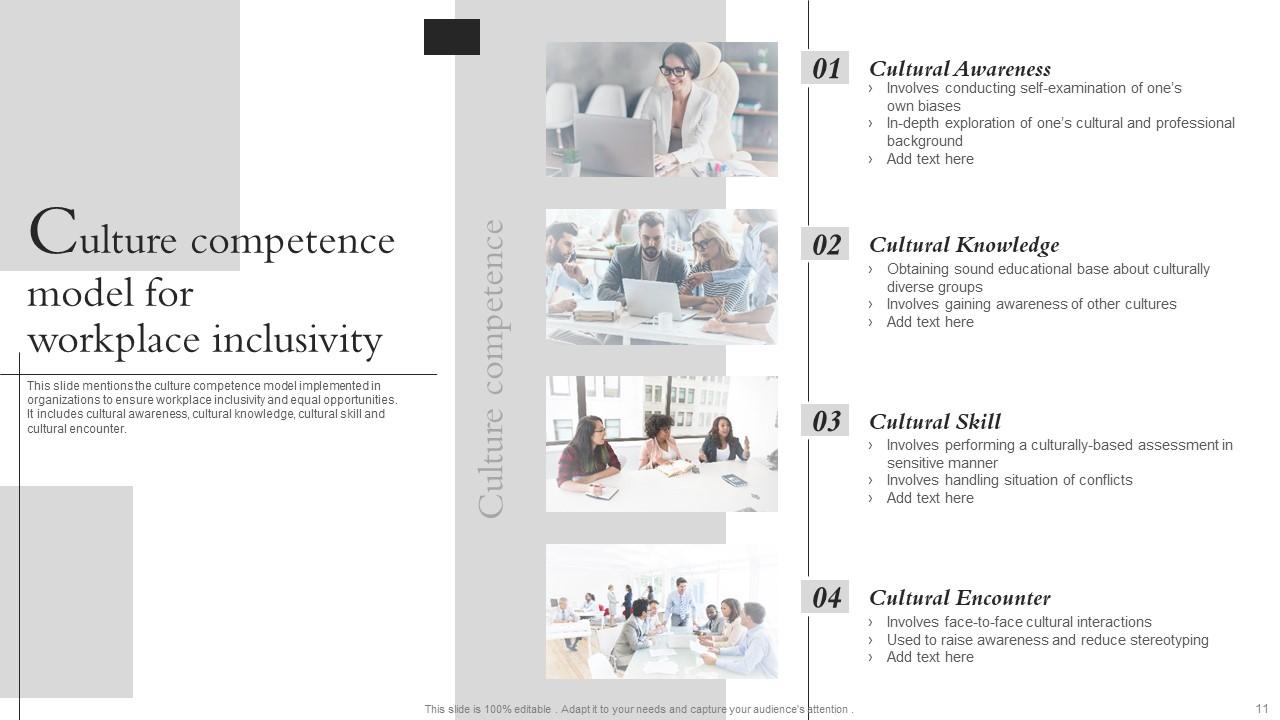
Cultural Competence Powerpoint Ppt Template Bundles
Try Before you Buy Download Free Sample Product
Audience
Editable
of Time
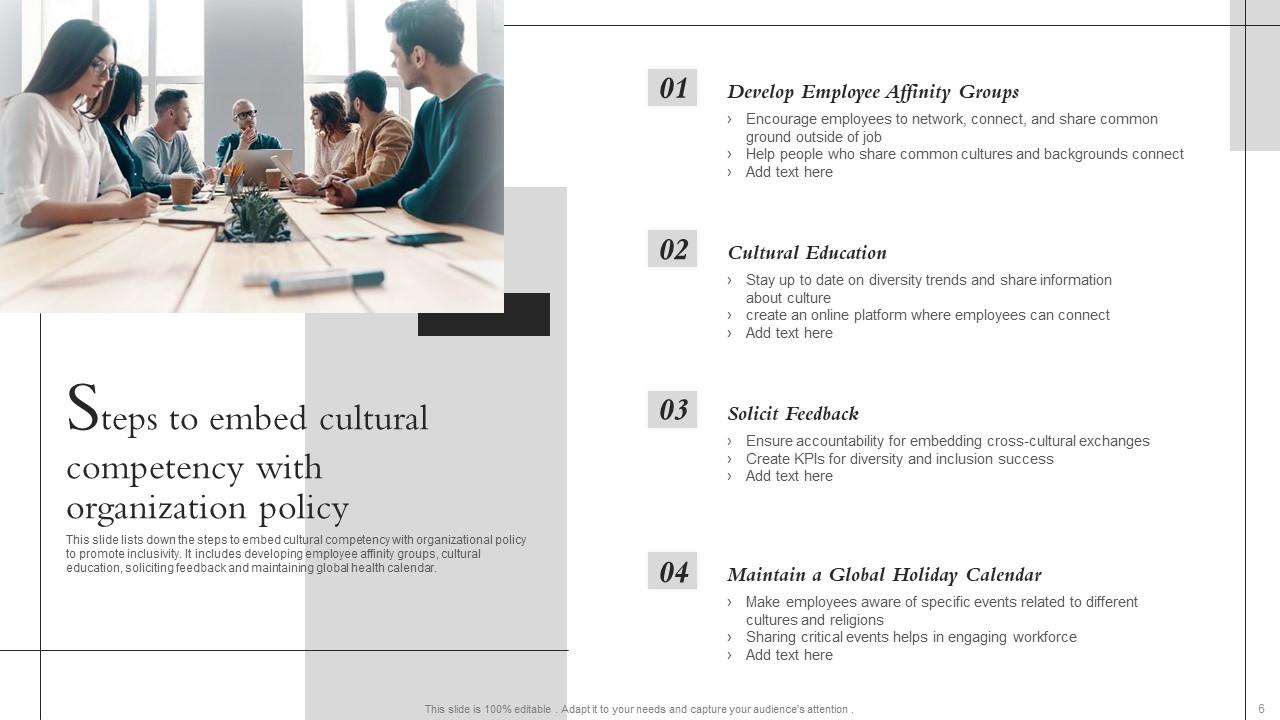
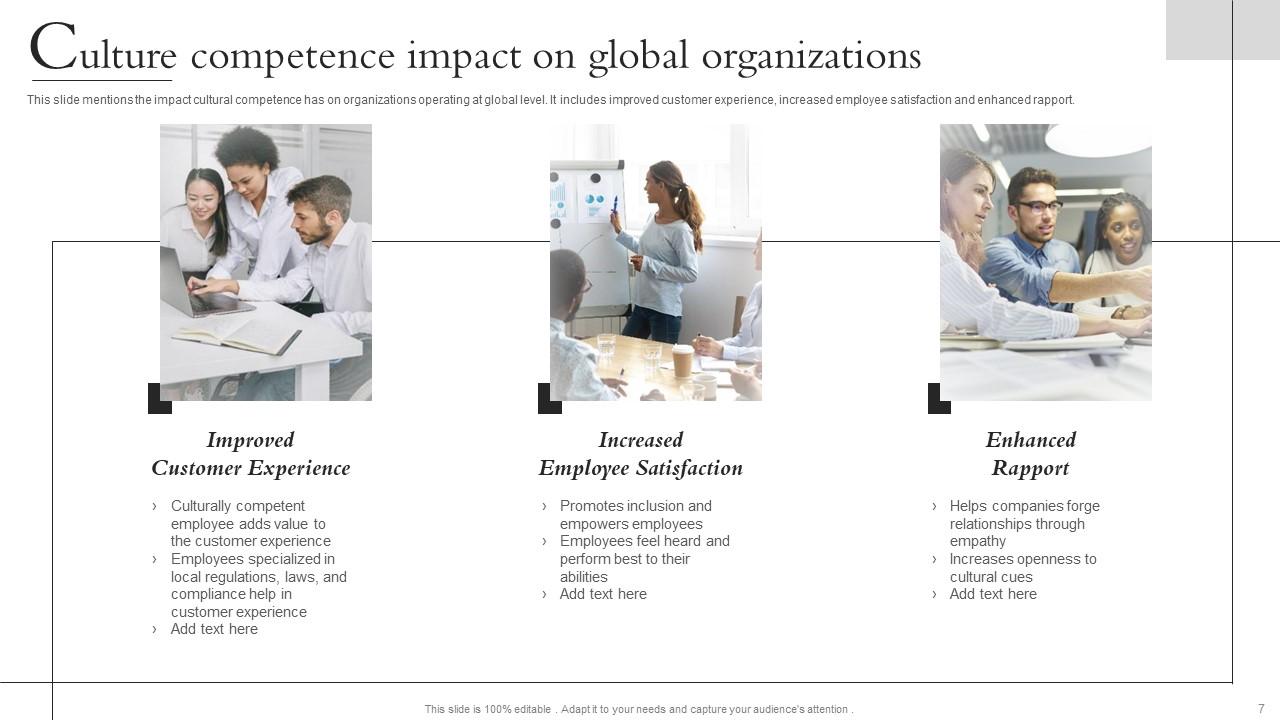
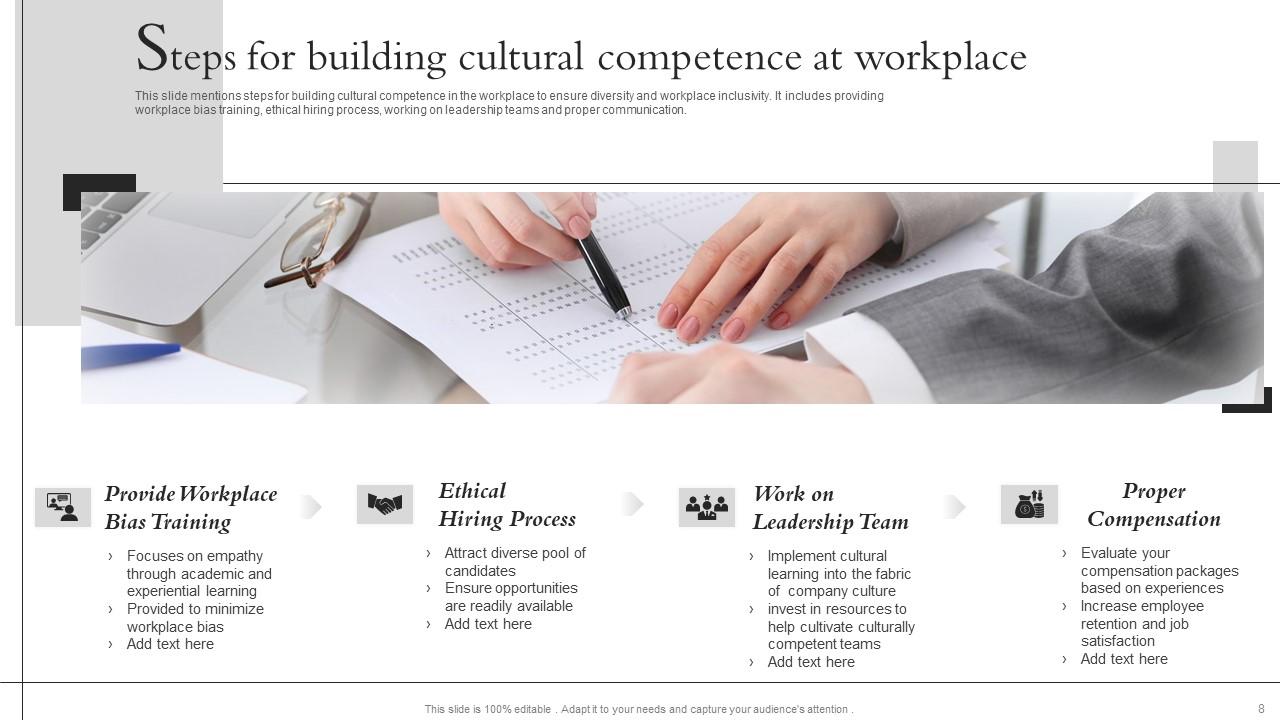
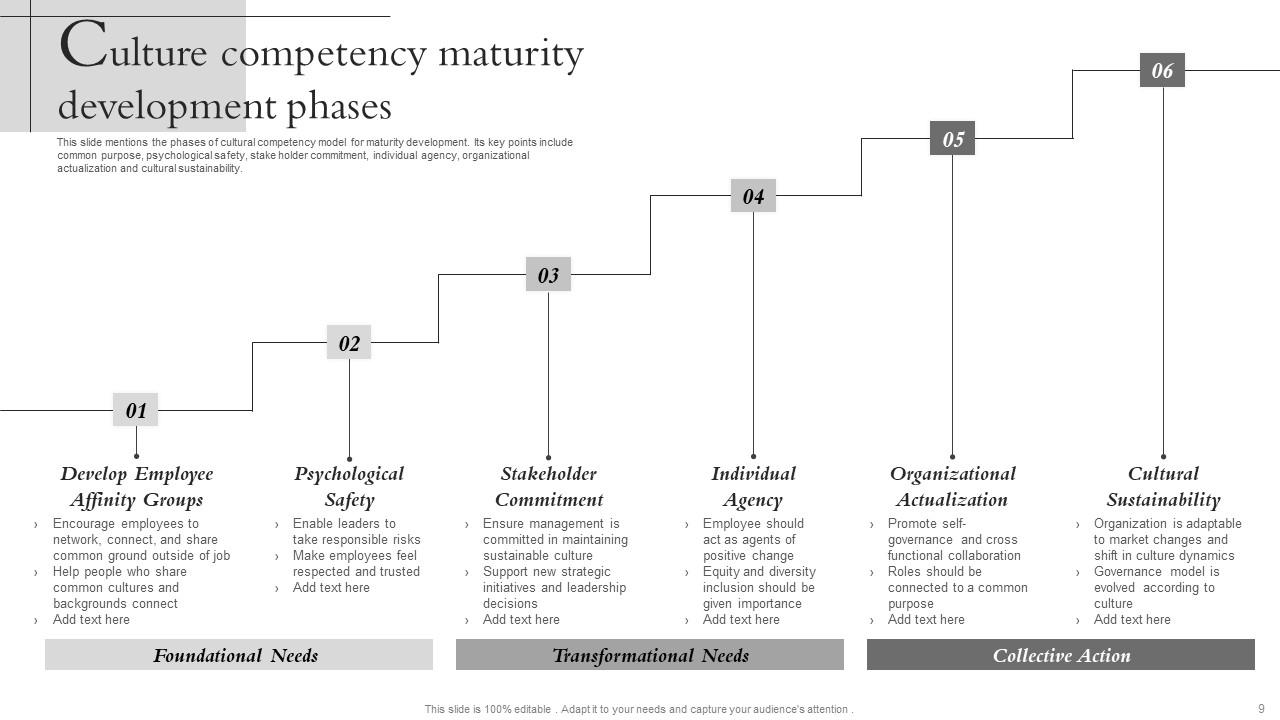
Our Cultural Competence Powerpoint Ppt Template Bundles are topically designed to provide an attractive backdrop to any subject. Use them to look like a presentation pro.
People who downloaded this PowerPoint presentation also viewed the following :
Cultural Competence Powerpoint Ppt Template Bundles with all 19 slides:
Use our Cultural Competence Powerpoint Ppt Template Bundles to effectively help you save your valuable time. They are readymade to fit into any presentation structure.
FAQs for Cultural Competence Powerpoint
So there's like five main parts to this. Cultural awareness means knowing your own biases first - that's honestly the hardest part. Then you need actual knowledge about other cultures, plus the skills to use it in real situations. You've gotta have genuine encounters with diverse people too, not just surface-level stuff. The desire piece is huge - you can't fake wanting to get better at this. I think the biggest thing is adapting how you communicate based on who you're with. Ask your colleagues what actually works for them instead of guessing. Way more effective than assuming everyone's the same.
Start with a cultural competence assessment tool - there's a bunch that measure policies, staff diversity, community engagement stuff. Focus groups with employees from different backgrounds work great too. Survey your clients about their experiences (honestly the data will probably surprise you). Also look at hiring practices and training programs. The trick is getting input from multiple perspectives instead of just what leadership thinks. Oh and don't skip reviewing decision-making processes - that's where bias really shows up. Once you've got baseline data, make an action plan with actual goals and deadlines.
Okay so self-awareness is basically everything for cultural competence. You gotta understand your own background and biases first - like, how can you work well with different people if you don't even know your starting point? It's kinda like GPS without knowing your location. Being self-aware helps you catch yourself making assumptions or stereotyping people. Plus you'll notice when your communication style isn't clicking with teammates from other cultures. I'd start by thinking about what shaped you culturally, then maybe ask people you trust for honest feedback about how you interact with others.
Honestly, skip the boring cultural awareness lectures. What actually works is getting people into workshops where they share their own backgrounds and work through real workplace scenarios together. Role-playing feels super awkward at first but it's surprisingly effective. Don't make it a one-off thing though - monthly sessions or pairing people up as mentors works way better. Give them actual tools they can use right away, like specific ways to communicate across cultures or handle conflicts. And measure if behavior actually changes, not just whether people liked the training.
Honestly, start by checking your own blind spots first - we all have them. Create space where people actually feel safe speaking up without getting judged. I've watched so many "diversity programs" that are basically performative BS. When you're hiring or running meetings, actively pull in different voices instead of just the usual suspects. Call out exclusionary stuff when it happens (this part's uncomfortable but necessary). The real trick is weaving this into how you lead every day, not just remembering it exists during mandatory training sessions. Make decisions? Seek out perspectives that aren't like yours.
Honestly, biases are like these sneaky filters that make us assume stuff about people before we actually know them. We all have them - even people who swear they don't (which is kinda funny if you think about it). The key is catching yourself when you make snap judgments. Question those first thoughts that pop up. Talk to people outside your usual crowd, read different perspectives, consume media that challenges your worldview. Cultural humility helps too - just admit when you don't know something and ask respectfully. Pick one bias you might have and actively fight against it this week. Small steps, but they add up.
Honestly, when people feel like you actually get their background and how they communicate, they're gonna be way more engaged at work. Makes total sense, right? Nobody's bringing their A-game when they feel left out or misunderstood. Your team will start speaking up more with ideas and collaborating better. Plus - and this might be the biggest win - you get way better problem-solving because different perspectives = more creative solutions. I'd start by just learning about your team's backgrounds and tweaking how you communicate with each person.
Look, cultural competence saves you from those awkward moments when you accidentally say something wrong or totally misread what a client means. You build real trust when you get their communication style and business customs. Your competitors who don't bother with this stuff? They're missing out big time. Do some homework on business etiquette and how decisions get made in your key markets. I know it sounds like extra work, but even tweaking your approach a little can make a huge difference with international clients. Trust me on this one.
Biggest mistake? Tokenism - like just checking diversity boxes without actually creating real inclusion. Also watch out for cultural appropriation or lazy stereotyping. Honestly, it's so easy to screw this up even with good intentions! Instead of guessing what communities need, actually center their voices. Get people from those cultures involved in your planning right from day one, not just brought in later to rubber-stamp decisions. That's really the whole thing - let them lead the conversation about their own experiences rather than you making assumptions about what works.
Honestly, this stuff is so interesting once you get into it. Different cultures communicate completely differently - like Japan tends to be super indirect and relies on context, while Germans are basically the opposite and just tell you straight up what they think. Then you've got things like how comfortable people are with silence, eye contact rules, respect for hierarchy... it's a lot. The trick is figuring out your teammates' styles and adapting. Give more background info to indirect communicators. Be more explicit with the direct ones. Oh, and just ask people how they prefer to communicate during your next one-on-one - works way better than guessing.

Oh totally! McDonald's is the classic example - they serve rice burgers in Asia and halal food in Muslim countries instead of just pushing Big Macs everywhere. Netflix gets this too. They dump crazy money into making shows for specific regions rather than expecting everyone to love American content. Airbnb had to completely redesign their whole photo thing because privacy expectations are so different across cultures. I think the biggest mistake is just translating stuff word-for-word. You've gotta actually figure out what matters to people in different places, you know?
Slack channels work great for cultural sharing - way better than trying to squeeze it into regular meetings. Set up video "lunch and learns" where people talk about their traditions. Miro's pretty solid for interactive workshops too. Don't lean too hard on translation apps though, they're helpful but miss a lot of nuance. Honestly, the biggest thing is just being deliberate about it. Try rotating "culture spotlights" in team meetings or use anonymous surveys to see how inclusive practices are actually landing. People need real opportunities to share their backgrounds, not just forced corporate moments.
Three big things trip up companies with these programs. Employee pushback is huge - people roll their eyes at "another mandatory training." Can't really blame them tbh. Then there's the measurement problem. Super easy to track who completed the training, way harder to see if anyone actually changed how they act. Leadership also tends to lowball the whole thing - thinking it'll take like 6 months when culture shifts need years. My advice? Don't force it on everyone at once. Start with people who are genuinely interested and let them be your champions. Way more effective than the top-down approach.
Look, gaps in cultural competence will bite you in the ass later - lost customers, good people leaving, missing entire markets. Track stuff like how included your employees actually feel, whether your diverse teams are crushing it, and if you're actually reaching different customer groups. Way better to catch problems now than try fixing broken relationships down the road. Companies that nail this see better retention and innovation (obvious but true). I'd honestly just pick 2-3 metrics that matter to your specific goals and check them every quarter. Don't overthink it.
Dude, you absolutely need to understand everyone's cultural background before jumping into conflict resolution. Different cultures have totally different communication styles - like silence might mean "I disagree" instead of "I'm on board." I've watched deals completely blow up over stuff like this. Research everyone's backgrounds first, then adjust how you facilitate. Maybe bring in mediators who get the cultural dynamics? The whole thing is about reading nonverbal cues and creating a process that actually feels fair to all parties. Oh and don't assume your way of doing things works for everyone - that's rookie mistake territory.
-
Great product, helpful indeed!
-
Amazing slides! Unique, attractive, and easy to understand.