Customer Churn Prevention Powerpoint Presentation Slides

Rating:
92%
Customer Churn Prevention Powerpoint Presentation Slides
Slide 1 of 44

or

Favourites Favourites

Try Before you Buy Download Free Sample Product

Audience Impress Your
Audience
Editable 100%
Editable
Time Save Hours
of Time
The Biggest Sale is ending soon in
0
0
:
0
0
:
0
0
Rating:
92%
Presenting Customer Churn Prevention Powerpoint Presentation Slides.This complete presentation has PPT slides on wide range of topics highlighting the core areas of your business needs. It has professionally designed templates with relevant visuals and subject driven content. This presentation deck has total of fourty four slides. Get access to the customizable templates. You can add or delete the content if required. You are just a click to away to have this ready-made presentation. Click the download button now.
Content of this Powerpoint Presentation

Without customers, there is no business. This truism makes one realize the importance of customer churn prevention, a legitimate worry that dogs the top management of any company. Studies show that it is three times as costly to acquire a new customer than to serve an existing one. Hence, businesses must be dead serious about the adage that 'once a customer, always a customer.'

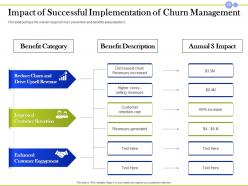
Customer churn prevention strategies have a definite positive impact on business performance, as shown here.

The important thing to remember about customer churn is that it affects even the best businesses and can be easily reduced to a level where it does not have a material impact on the company's bottom line and top line.

Businesses, thus, need to find a solution to showcasing customer churn prevention and devising strategies to curb it. A pain point in doing this is the tedium involved in preparing presentations and the time and resources spent on them. At SlideTeam, we have curated presentations that resolve all of these issues, providing you with a ready-made solution to address customer churn confidently before all stakeholders.

Understand the specific action on the impact of customer churn prevention strategies on business performance here.

Each template is 100% editable and customizable, giving you a starting point, the structure you want, and the capability to tailor each template to your audience profile.

Let's explore!

Template 1: Key Statistics Associated with Customer Churn PPT Template

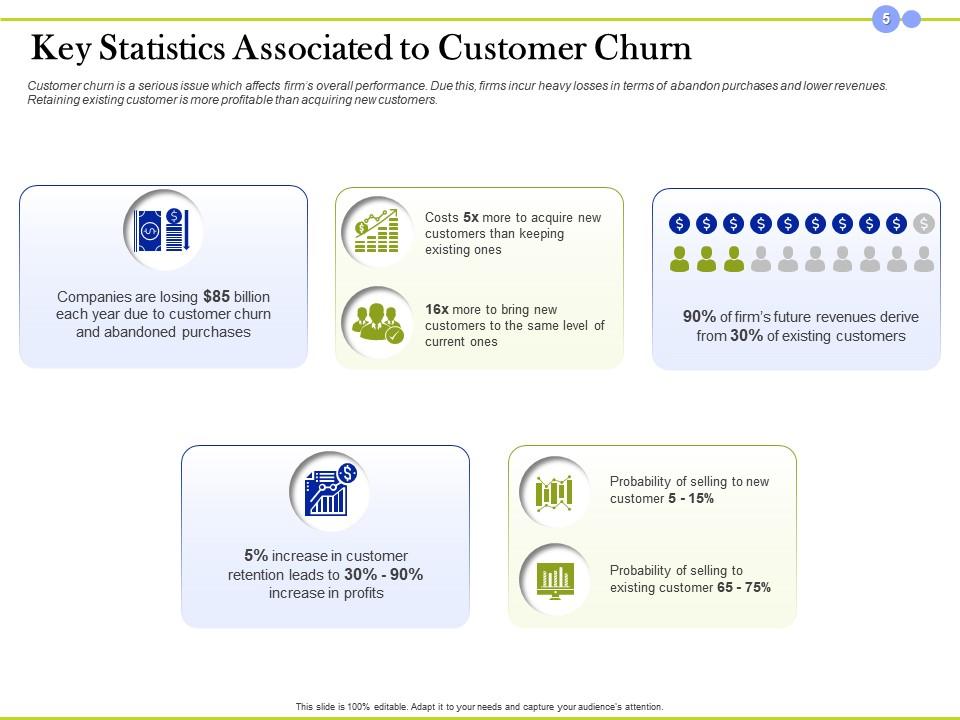
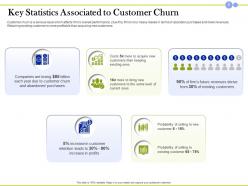
This PPT Template underscores that customer churn is a serious issue affecting a firm's overall performance. Due to this, firms incur heavy losses in abandoned purchases and lower revenues. Retaining existing customers is more profitable than acquiring new customers. On the slide, the major figures you can illustrate before stakeholders is that 90% of the firm's future revenues derive from 30% of existing customers. There are three other figures of note; download the template now to learn more!

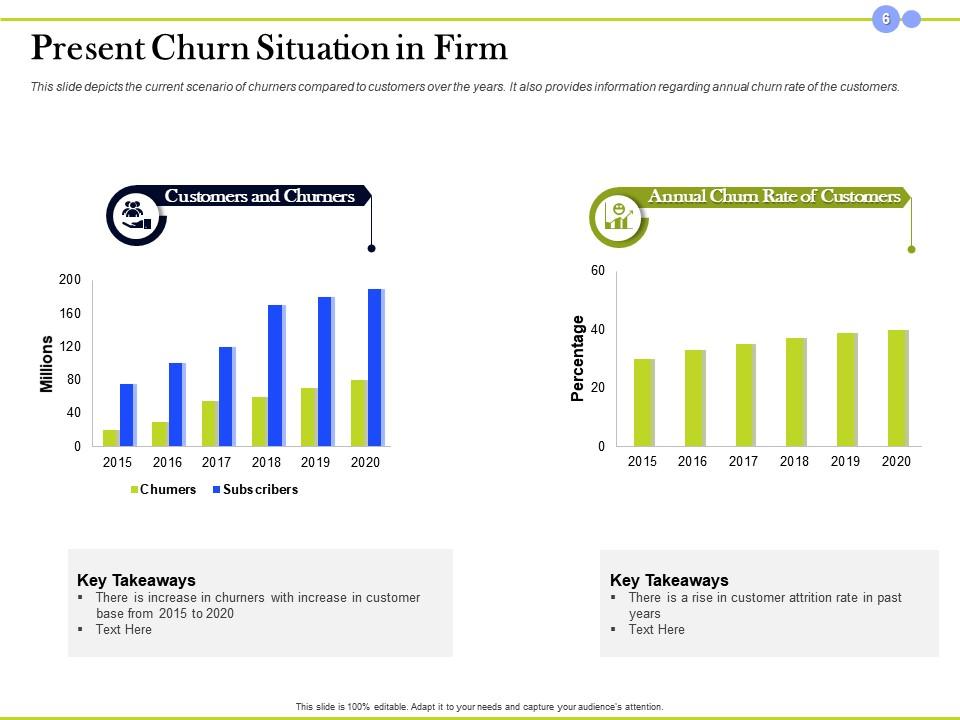
Template 2: Present Churn Situation in Firm

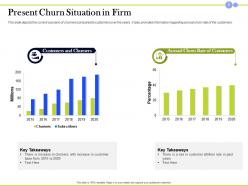
Use this slide to depict the current scenario of churners compared to customers over the years. It provides information regarding the annual churn rate of the customers. The vertical bar graph showcasing these variables is color-coded for churners and subscribers to be clear at a glance about what is happening within the firm. The annual churn rate compares the percentage of subscribers who left each year over time, while the combined churners and subscribers illustrate the loss of customers. The key takeaway segment allows for the user to record their observations.

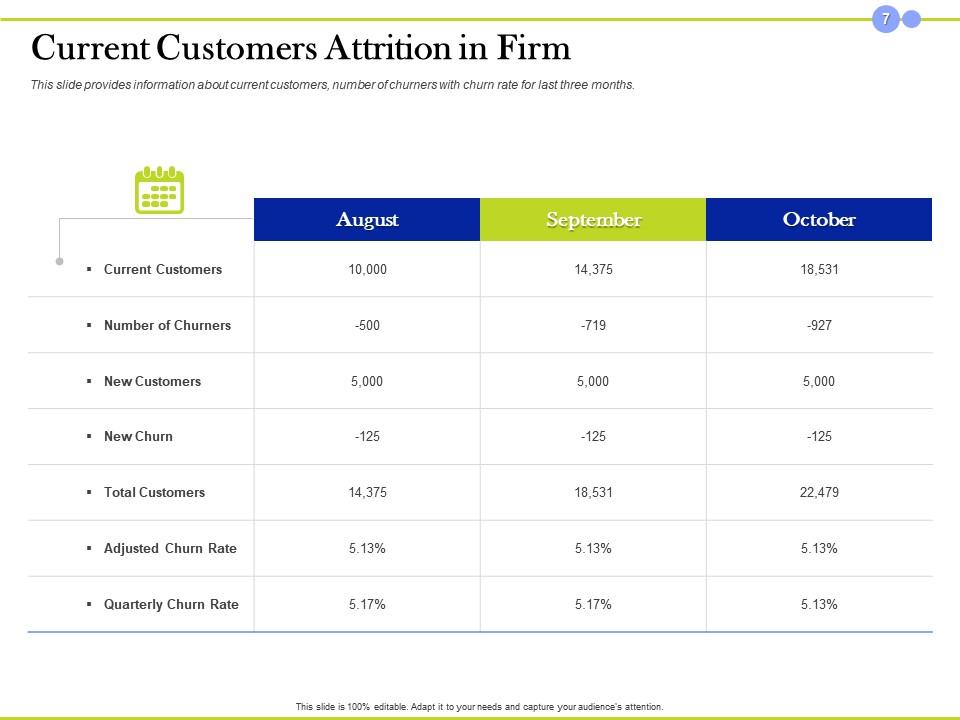
Template 3: Current Customers' Attrition in Firm

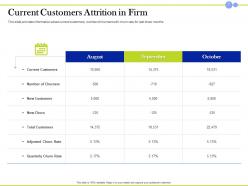
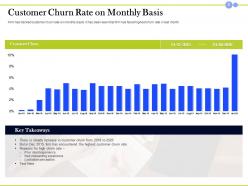
Use this PPT Template to get a clear idea and accurate information about current customers, the number of churners within them, and the churn rate for the last three months. Also, get a hang of the total customers, adjusted churn rate, and quarterly churn rate over the past three months. The idea is to be ready to tackle the issue head-on and make good progress in reducing churn.

Template 4: Types of Customer Churn

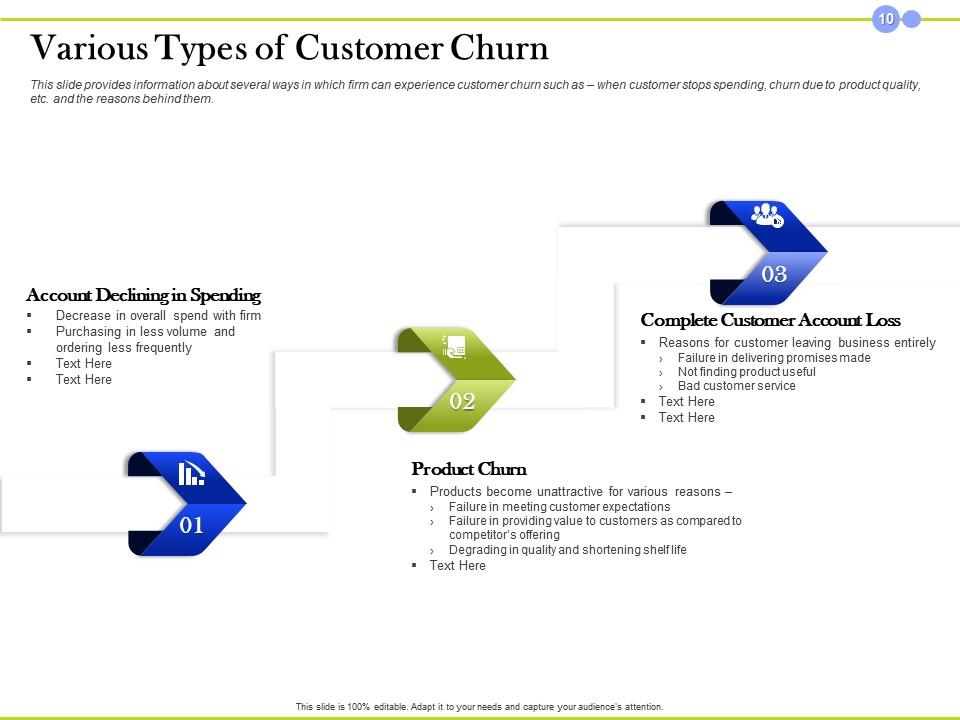
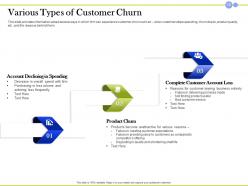
In this template, we dig head-on into how businesses and companies experience churn. The slide depicts account decline in spending, product churn, and, in some extreme cases, complete customer account loss. Failure to meet customer expectations leads to churn, as the product becomes less attractive. Dip and quality and decreasing shelf-life of the offering also cause churn. Overall, the slide is a great peek into knowing churn reasons and then working to prevent them.

Template 5: Four Stages of Churn Management PPT Template

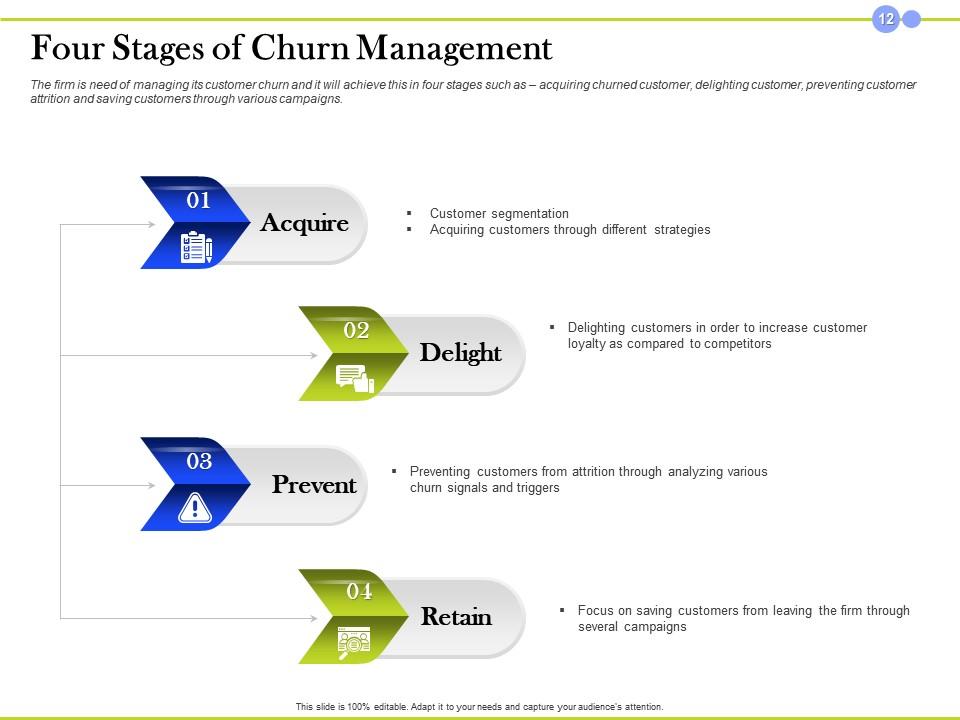
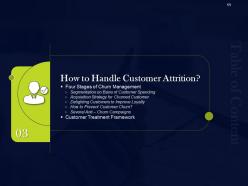
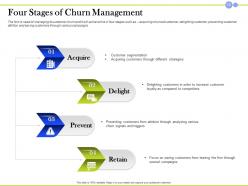
Managing customer churn is a customer necessity. This PPT Template lists four stages for achieving this: acquiring churned customers, delighting customers, preventing customer attrition, and retaining customers through campaigns. The slide highlights that by delighting customers, businesses can eliminate the possibility of churn. Download this slide for all this and more!

Template 6: Acquisition Strategy for Churned Customer

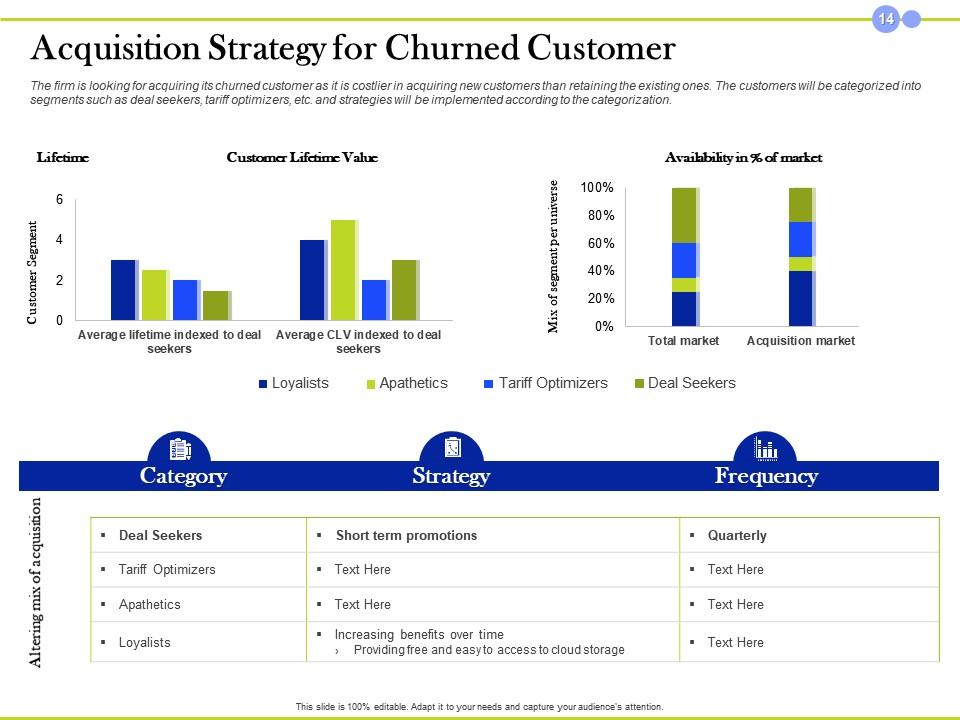
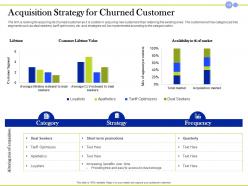
Wanna have it relatively easy to win back customers? Well, this PPT Template from SlideTeam has all the answers. This template depicts how customers get categorized into segments, such as deal seekers, tariff optimizers, etc. The acquisition strategy for the churned customers is designed and implemented according to the categorization. For instance, acquiring a confirmed deal-seeker involves short-term promotions at a quarterly frequency, and so on. The segment gives examples: download to make it part of your library. There is also a bar graph showing the availability of each kind of customer in the market.

Template 7: Delighting Customers to Improve Loyalty

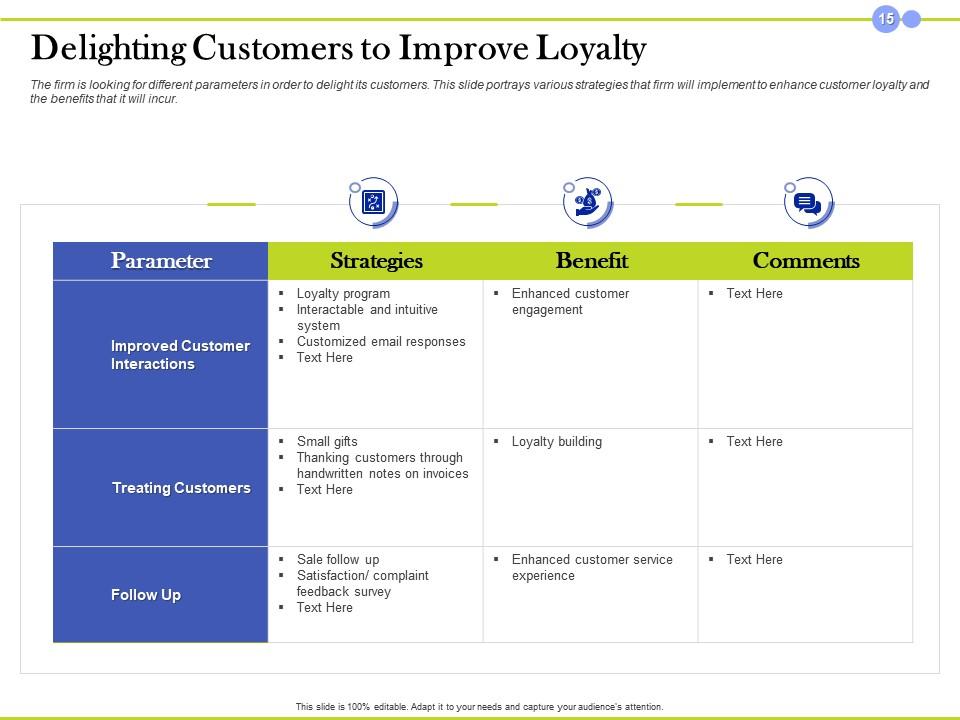
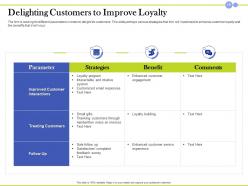
This slide will help you understand the three major ways to delight customers and improve loyalty. The content-ready PowerPoint Layout tabulates the three significant ways to achieve this: enhanced customer interactions, treating customers well, and follow-up. For each of the strategic tactics, the slide also provides implementable methods to carry out the goal.

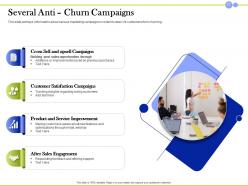
Template 8: Anti–Churn Campaigns

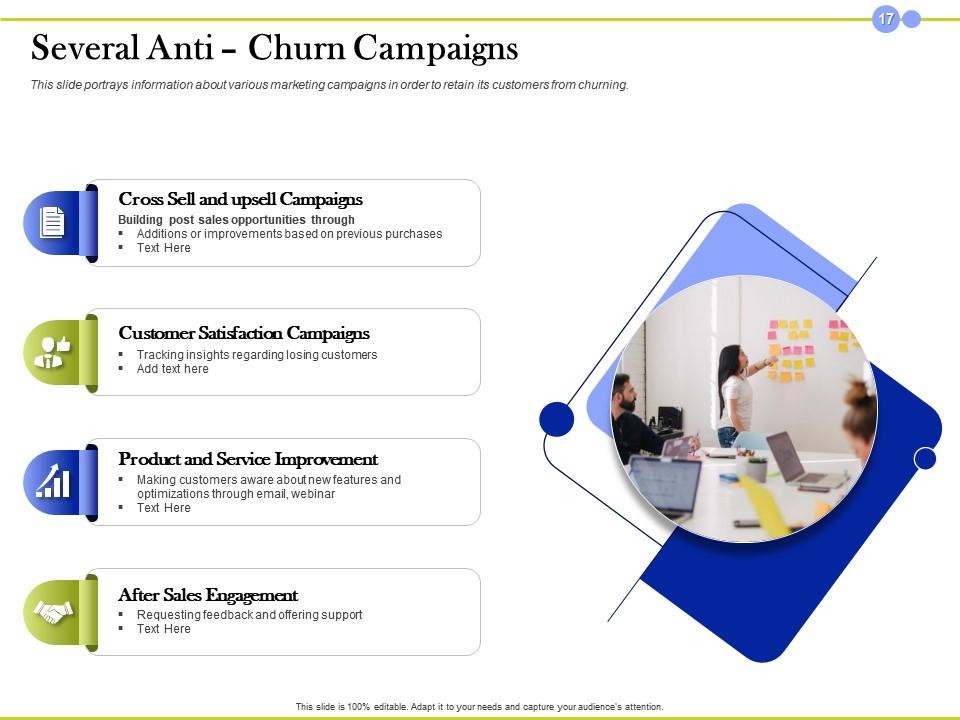
Use this PPT Preset to portray information about marketing campaigns to retain business customers and prevent them from churning. The four major anti-campaigns are cross-sell and upsell campaigns by building post-sale opportunities, customer satisfaction campaigns, product and service improvement, and after-sales engagement. In these, there is enough firepower to ensure your business can run smoothly.

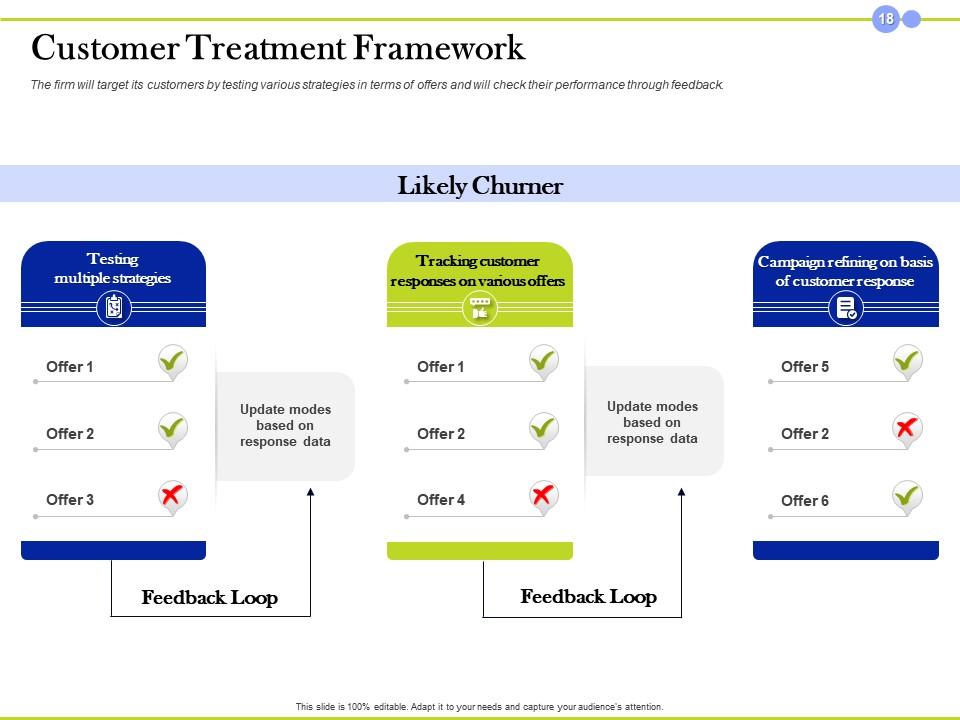
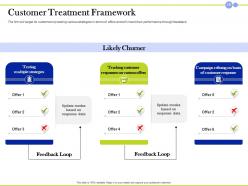
Template 9: Customer Treatment Framework

Use the slide to target customers by testing offers and even checking their performance through the feedback loop as part of the template. The interactive, clutter-free design showcases three ways, with the first being testing multiple strategies for a likely churner. The second and third approaches are tracking customer responses to varied offers and campaign refining based on the customer response.

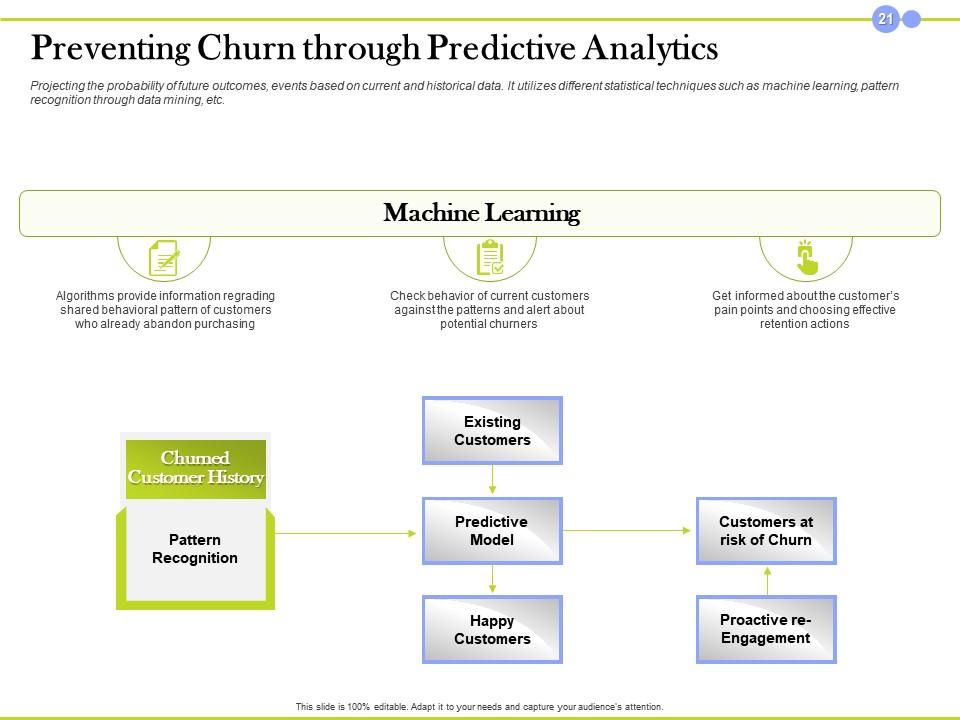
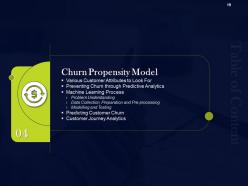
Template 10: Preventing Churn through Predictive Analytics

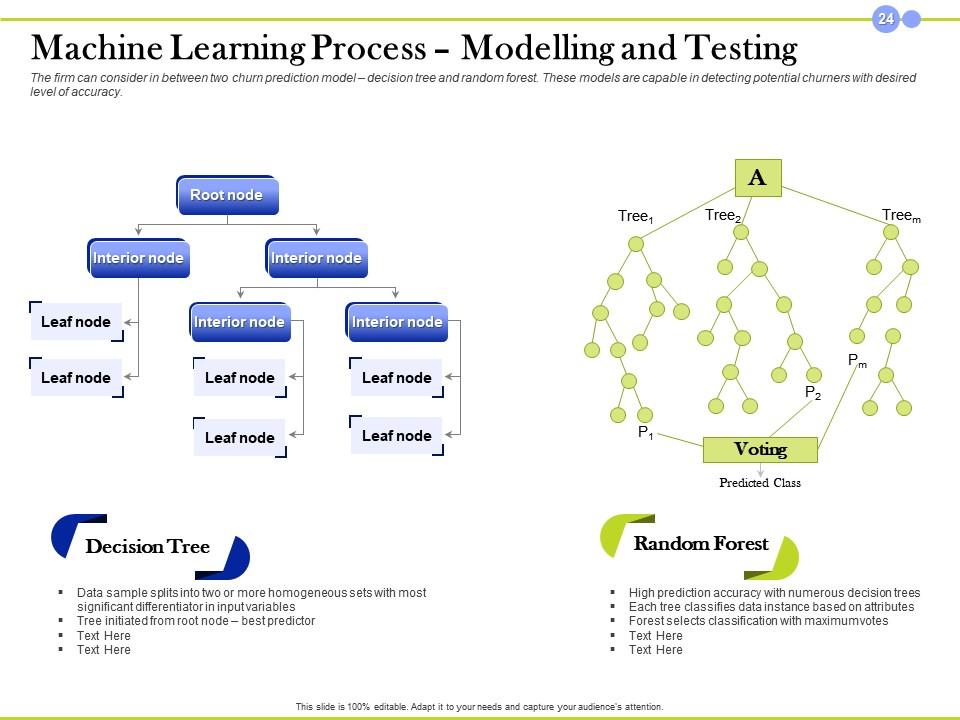
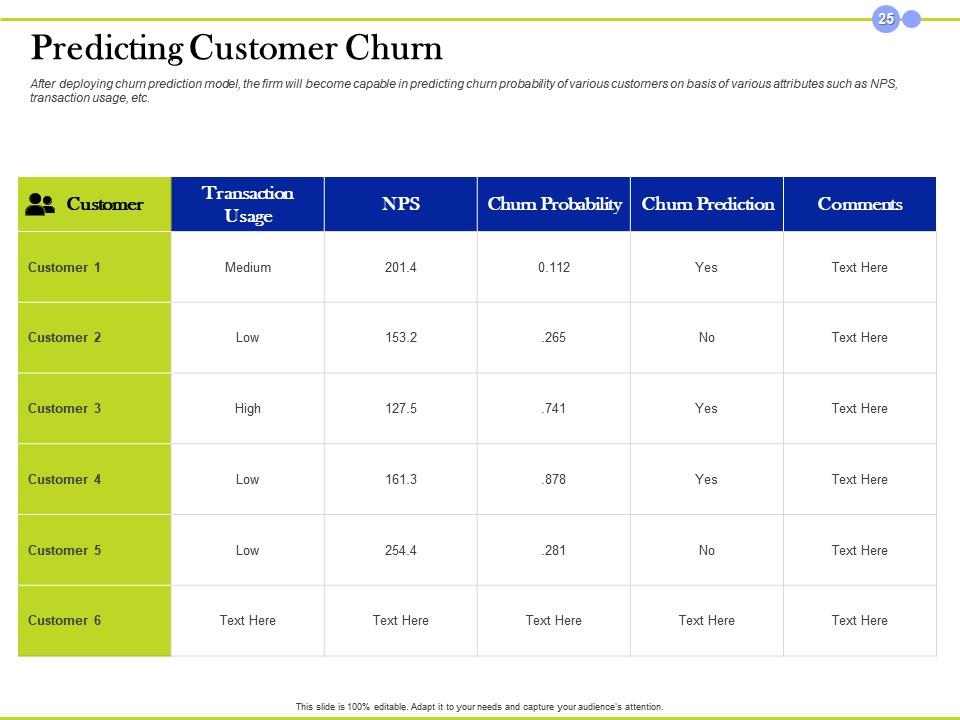
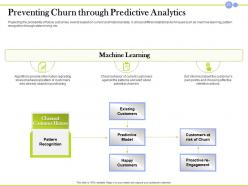
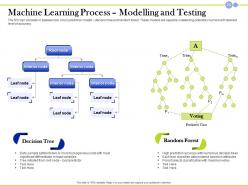
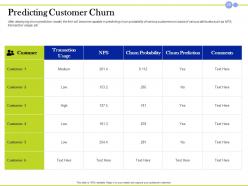
Do you wish to crack the code on churns and ensure you are always one step ahead? Download this slide to showcase how statistical techniques such as machine learning and pattern recognition through data mining help you predict future outcomes (in this case churners). When you know the customers are at risk of churn, your business can use proactive re-engagement with complete confidence that is in line with the stated choices of the customer. Also, the slide makes a very apt point about machine learning and its capability to keep businesses informed on the customers' pain points and choose practical retention actions.

CHURN INDICATES EFFICIENCY

In businesses, a customer can desert you for the slightest of reasons. These justifications might seem trivial or inconsequential to someone outside or within the business, but they could be meaningful and important for the customer. Hence, get this SlideTeam complete deck on customer churn to come to your aid and prevent costly loss of business through inexperience or sheer carelessness.

PS Get this promotional campaign for customer churn prevention to create a real impact now!

FAQs for Customer Churn Prevention

Honestly, most customers bail in the first 90 days because they never figured out how to actually use your product. Bad onboarding is killer. Then you've got people who don't see the value right away - no quick wins means they're out. Pricing issues come up a lot too. Oh, and get this - tons of businesses lose customers simply because their credit card expired and the payment failed. So dumb but it happens constantly. Competition steals people away, obviously. Sometimes your product just doesn't have what they need anymore. Terrible customer service doesn't help either. Track this stuff early though - you can usually save them before they're completely done.

Mix numbers with actual feedback - run NPS surveys and check CSAT after support chats. But people are so over surveys now, honestly. Watch for behavioral red flags instead: less logins, dropping feature usage, stuff like that. It catches problems before customers even know they're annoyed. Create a simple scoring system that blends survey data with how people actually use your product. Don't go crazy measuring everything though - pick 2-3 key things and start there. Way easier to manage.

Look, customer support can totally make or break whether people stick around. When someone's frustrated and reaches out for help, that's basically your final shot to keep them. Fast responses matter, but honestly? Actually fixing their problem instead of just saying "sorry" is what really counts. I've watched so many businesses shoot themselves in the foot with crappy support - like, their product was fine but the help desk was a nightmare. Your support people need real power to solve things, not just scripts to read. It's wild how one bad experience can tank an otherwise good relationship.

So you'd basically track stuff like how often people log in, when they last bought something, support tickets they've filed - that kind of behavioral data. Then throw it into a machine learning model to predict who's about to bail. Look for red flags like someone who used to be super active but now barely touches your product, or gaps getting longer between purchases. Honestly, complaints spiking is usually a dead giveaway too. Once you've flagged the risky customers, hit them up with retention offers or extra support before they actually walk away. Way cheaper than trying to win them back later.

Honestly, personalization is huge here. Send emails based on what they've actually bought before, not just generic stuff. Loyalty programs work if the rewards don't suck - make them actually worth it. I'd also check in with customers who seem like they're pulling away before they ghost you completely. Social media helps too since people want to feel heard. The trick is making every interaction feel valuable instead of annoying. Oh, and those random surprise discounts? Pure gold. Map out where people usually lose interest first though - that'll show you exactly where to focus your energy.

Oh man, personalized marketing is a game changer for keeping customers around. Think about it - when you get those generic "Dear Valued Customer" emails, you basically delete them instantly, right? Same thing happens to your customers. What works is segmenting people by how they actually behave and what they've bought before. Use their name, recommend stuff based on their history - honestly even small touches like that make people feel seen. I mean, nobody wants to feel like just another number in your database. Start simple with basic personalization and then get fancier as you figure out what clicks.

UX is probably your best bet for stopping churn tbh. When people can actually figure out your product without wanting to throw their laptop, they don't bail. Bad UX just pisses everyone off at every step. I've watched companies hemorrhage like 30-40% of users purely from terrible onboarding - it's wild how fast people give up. The flip side? Smooth UX cuts down support headaches and gets people hooked on your features. Makes switching to competitors feel like way too much work. Map out where your users get stuck first. Those frustrating spots are where you'll see the biggest wins.

Honestly, just make it super easy for people to complain to you - weird advice but it works! Post-purchase surveys are good. So are those little feedback widgets on your site. I'd also do check-in calls, maybe automated ones when you notice red flags like someone stopped using your product or opened support tickets. Oh and this is huge - actually tell people what you're doing about their feedback. Can't tell you how many companies just collect complaints and do nothing with them. Pick one method this week and go from there. You'll catch problems before they become disasters.

Honestly, just make day one stupidly simple. Get rid of all the annoying friction - single sign-on, pre-fill their data, walk them through getting their first quick win. Don't dump a 45-minute tutorial on them (nobody watches those anyway). Roll out features bit by bit as they actually start using stuff. Be upfront about how long things take and what good looks like. Oh, and give them a real person to contact for the first month or two. Schedule check-ins so you can fix problems before they bail on you entirely.

Okay so basically you want to group your customers by how likely they are to leave AND how much they're worth. Look at stuff like how often they buy, if they're engaging, support complaints - plus basic demo info. The seasonal bargain hunters are honestly such a pain to figure out. Create buckets like "at-risk VIPs" and "price-sensitive switchers." High-value customers going silent need VIP treatment, maybe exclusive stuff. Your regulars who are fading? Hit them with re-engagement campaigns. Price-sensitive folks respond to discounts obviously. Match what you do to why they're actually thinking about leaving in the first place.

Dude, pricing is probably why most customers bail - even when they blame other stuff. People are way more price-sensitive than you'd think, even the ones who seem super loyal. You've got to stay competitive but also make sure they feel like they're getting their money's worth. I'd definitely benchmark against competitors regularly and be upfront about why you charge what you charge. Oh, and throw loyal customers a bone with discounts or different pricing options before they start looking elsewhere. Trust me, it's so much easier than trying to win them back later.

So here's the thing - when customers are on the fence about leaving, social proof can totally save you. People see testimonials from others like them and think "okay, I'm not crazy for staying." It's exactly like checking restaurant reviews when you're already doubting your dinner plans, honestly. The trick is being smart about which testimonials you show. Match them to whatever specific worry that customer segment has. Maybe someone's complaining about response times? Show them a testimonial about your amazing support. Collect testimonials that tackle your biggest churn reasons, then use them in retention emails or show them to at-risk customers. Works way better than you'd expect.

Honestly, the best loyalty programs just reward what people already do instead of forcing weird new behaviors. Everyone's got those random point cards they never use, right? Tiered systems work way better - like Sephora's VIP thing or airline status. Makes customers feel actually special. Experiential rewards crush regular discounts because they hit you in the feels. I'd segment your customers first, then build different reward paths based on how each group shops. Short version: stop overthinking it and just make people feel valued for spending money with you already.

Look, most businesses hit that sweet spot around every 2-4 weeks, but it really comes down to your specific situation. SaaS companies can get away with weekly emails since people are already engaged. B2B? Maybe monthly or even quarterly works better. Mix up what you're sending too - nobody wants constant sales pitches. Throw in some helpful content, product updates, maybe a personalized deal here and there. I always tell people to watch their unsubscribe rates like a hawk. Start slow and ramp up gradually while keeping an eye on how people respond. Oh, and engagement metrics will be your best friend for finding that perfect balance.

So for the predictive stuff, check out AWS SageMaker or Azure ML - they're solid for analyzing customer patterns and flagging who might bail. Mixpanel and Amplitude are great for tracking what users actually do in real-time. You can also hook churn scores right into Salesforce if that's what you're using. But here's the thing - don't get caught up in fancy algorithms when your data's messy. Figure out what actually signals churn first (late payments, dropping usage, whatever), then grab tools that can handle those specific metrics. Way more important than the shiny tech honestly.

Ratings and Reviews

92% of 100
Review Form
Write a review
Most Relevant Reviews
  1. 100%

    by Donnell Bradley

    Innovative and Colorful designs.
  2. 100%

    by Darwin Mendez

    Use of icon with content is very relateable, informative and appealing.
  3. 80%

    by Cyrus Ellis

    Qualitative and comprehensive slides.
  4. 100%

    by Williams Nelson

    Excellent template with unique design.
  5. 80%

    by Domenic Spencer

    Use of different colors is good. It's simple and attractive.
  6. 80%

    by Damion Ford

    Great quality product.
  7. 100%

    by Dorsey Hudson

    Unique and attractive product design.
  8. 100%

    by Donn Hart

    Awesome presentation, really professional and easy to edit.
  9. 100%

    by Clarence Mendoza

    Great designs, really helpful.
  10. 80%

    by Johnson Morris

    Awesome presentation, really professional and easy to edit.

Items 1 to 10 of 12 total

    Page:
  • You're currently reading page 1
  • Page 2
  • Next
per page: