


Customer Data Platform Guide For Marketers Powerpoint Presentation Slides MKT CD V
A customer data platform CDP is software that combines and organizes customer data across various touchpoints. Grab our Customer Data Platform Guide for Marketers template. It facilitates organizations to understand audiences better and create more customized marketing campaigns. Our CDP implementation deck provides comprehensive guidelines for businesses to adopt customer data platforms. It mainly includes statistics showcasing CDP industry growth, budget, return on investments, safety, privacy trends, etc. Additionally, our Marketing automation PPT offers multiple reasons to invest in customer data platforms, along with a comparative assessment of CDP, Data management platform DMP and customer relationship management CRM, etc. It also comprises steps including determining data collection goals, analyzing customer data landscape, building architecture for a unified database, reviewing privacy regulations, etc. Moreover, our CDP architecture module presents steps to select the best CDP. Lastly, it provides vital insights into industry case studies and KPI dashboards and includes metrics such as ROI summary, email campaign evaluation, customer loyalty, etc. Get access to this powerful template now.

































You must be logged in to download this presentation.


Do you want to remove this product from your favourites?
 Impress your
 audience
 100%
100% Editable
 Save Hours
 of Time
PowerPoint presentation slides
Deliver an informational PPT on various topics by using this Customer Data Platform Guide For Marketers Powerpoint Presentation Slides MKT CD V. This deck focuses and implements best industry practices, thus providing a birds-eye view of the topic. Encompassed with sixty seven slides, designed using high-quality visuals and graphics, this deck is a complete package to use and download. All the slides offered in this deck are subjective to innumerable alterations, thus making you a pro at delivering and educating. You can modify the color of the graphics, background, or anything else as per your needs and requirements. It suits every business vertical because of its adaptable layout.

People who downloaded this PowerPoint presentation also viewed the following :
Content of this Powerpoint Presentation
Slide 1: This slide introduces Customer Data Platform Guide for Marketers. Commence by stating Your Company Name.
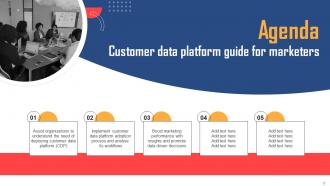
Slide 2: This slide depicts the Agenda of the presentation.
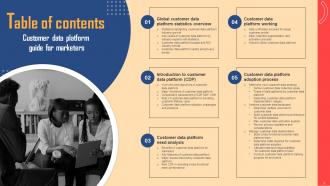
Slide 3: This slide incorporates the Table of contents.
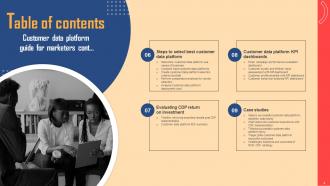
Slide 4: This is yet another slide continuing the Table of contents.
Slide 5: This slide highlights the Title for the Topics to be covered further.
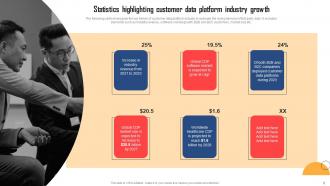
Slide 6: This slide reveals the Statistics highlighting customer data platform industry growth.
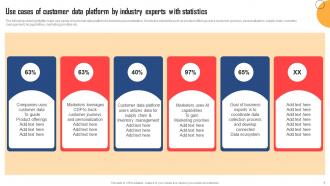
Slide 7: This slide depicts the Use cases of customer data platform by industry experts with statistics.
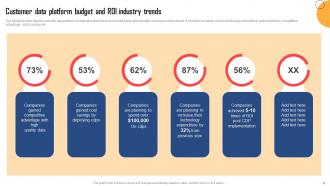
Slide 8: This slide displays the Customer data platform budget and ROI industry trends.
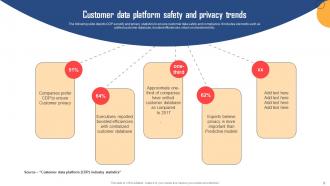
Slide 9: This slide talks about the Customer data platform safety and privacy trends.
Slide 10: This slide includes the Heading for the Contents to be discussed next.
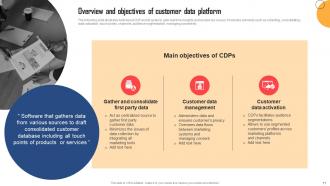
Slide 11: This slide illustrates brief about CDP and its goals to gain real time insights and resolve key issues.
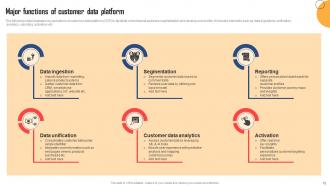
Slide 12: This slide states the Major functions of customer data platform.
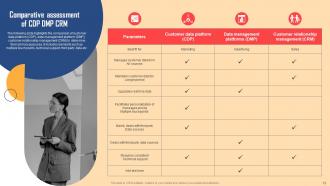
Slide 13: This slide highlights the Comparative assessment of CDP DMP CRM.
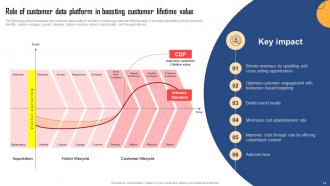
Slide 14: This slide portrays the Role of customer data platform in boosting customer lifetime value.
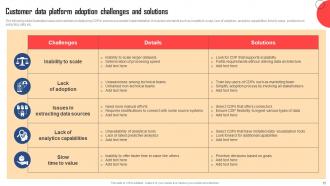
Slide 15: This slide displays the Customer data platform adoption challenges and solutions.
Slide 16: This slide includes the Title for the Ideas to be covered next.
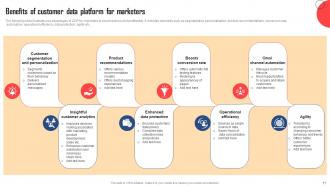
Slide 17: This slide exhibits the Benefits of customer data platform for marketers.
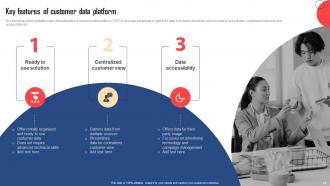
Slide 18: This slide presents the Key features of customer data platform.
Slide 19: This slide shows the Major issues resolved by customer data platform.
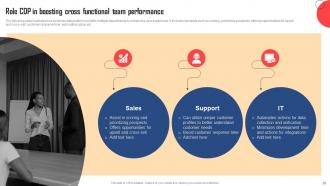
Slide 20: This slide illustrates how customer data platform benefits multiple departments by enhancing user experience.
Slide 21: This slide depicts the Heading for the Ideas to be discussed further.
Slide 22: This slide portrays the Data unification process for single customer profile.
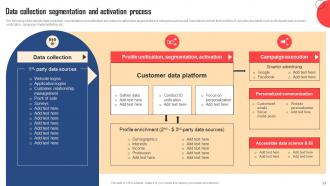
Slide 23: This slide reveals the Data collection segmentation and activation process.
Slide 24: This slide incorporates the Ways to utilize customer data platform.
Slide 25: This slide represents the Title for the Contents to be covered next.
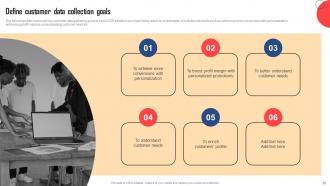
Slide 26: This slide covers various customer data gathering goals to boost CDP adoption and maximizing return on investments.
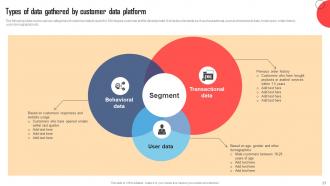
Slide 27: This slide states the Types of data gathered by customer data platform.
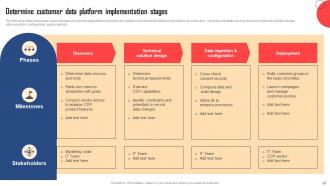
Slide 28: This slide aims to Determine customer data platform implementation stages.
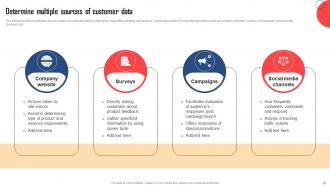
Slide 30: This slide highlights various origins of customer data to strengthen marketing strategy and analyze sales performance.
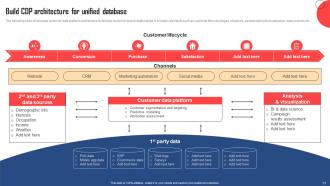
Slide 31: The following slide showcases customer data platform architecture to develop customer brand relationships.
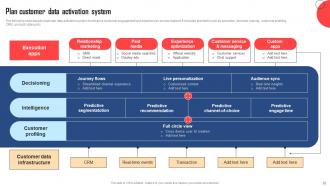
Slide 32: This slide depicts the Plan customer data activation system.
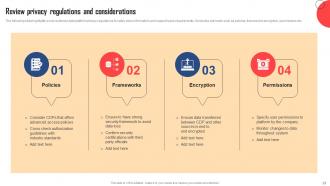
Slide 33: This slide showcases the Review privacy regulations and considerations.
Slide 34: This slide contains the Heading for the Topics to be discussed further.
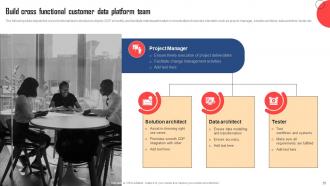
Slide 35: This slide aims to Build cross functional customer data platform team.
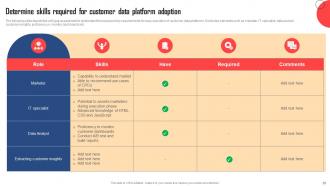
Slide 36: Tis slide depicts the skill gap assessment to understand the need and key requirements for easy execution of customer data platforms.
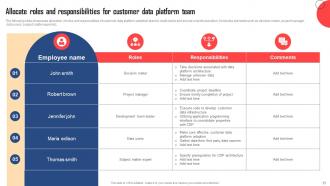
Slide 37: This slide Allocates roles and responsibilities for customer data platform team.
Slide 38: This slide covers customer data platform training plan for employees to minimize skill gap and enhance knowledge.
Slide 39: This slide contains the Title for the Topics to be covered in the following template.
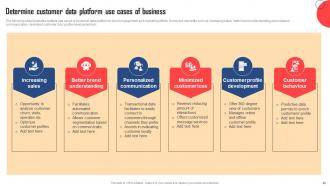
Slide 40: This slide aims to Determine customer data platform use cases of business.
Slide 41: This slide Compares best customer data platforms.
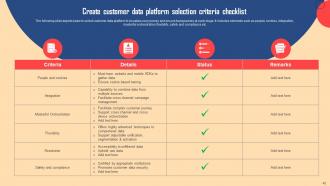
Slide 42: This slide depicts basis to select customer data platform to visualize user journey and ensure transparency at each stage.
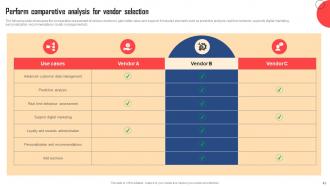
Slide 43: This slide outlines Performing comparative analysis for vendor selection.
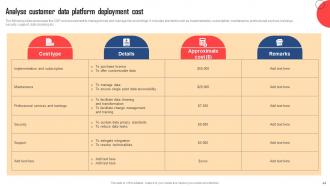
Slide 44: The following slide showcases the CDP cost assessment to manage funds and manage risk accordingly.
Slide 45: This slide incorporates the Heading for the Contents to be discussed further.
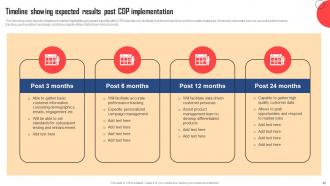
Slide 46: This slide depicts the Timeline showing expected results post CDP implementation.
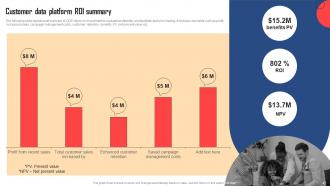
Slide 47: This slide presents the Customer data platform ROI summary.
Slide 48: This slide includes the Title for the Ideas to be covered in the forthcoming template.
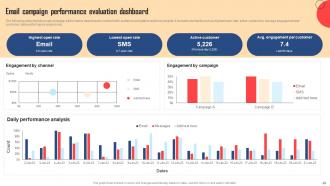
Slide 49: This slide reveals the Email campaign performance evaluation dashboard.
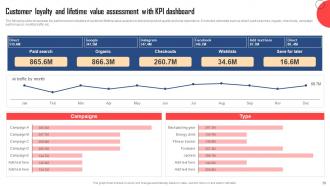
Slide 50: This slide displays Customer loyalty and lifetime value assessment with KPI dashboard.
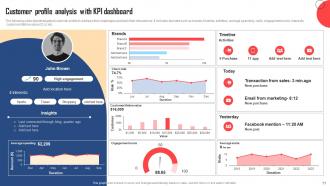
Slide 51: This slide presents the Customer profile analysis with KPI dashboard.
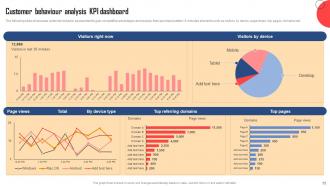
Slide 52: This slide showcases the Customer behaviour analysis KPI dashboard.
Slide 53: This slide depicts the Headingfor the Ideas to be discussed in the following template.
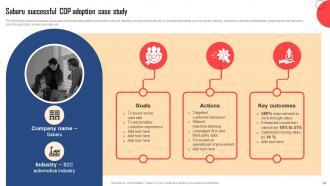
Slide 54: This slide reveals the Sabaru successful CDP adoption case study.
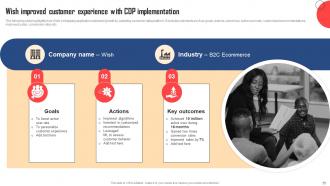
Slide 55: This slide talks about Wish improved customer experience with CDP implementation.
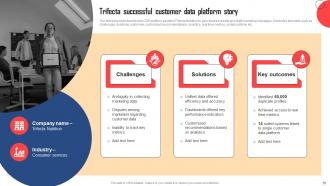
Slide 56: This slide depicts how CDP platform assisted Trifecta Nutrition to gain desired results and draft marketing messages.
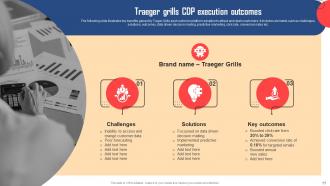
Slide 57: This slide illustrates key benefits gained by Trager Grills post customer platform adoption to attract and retain customers.
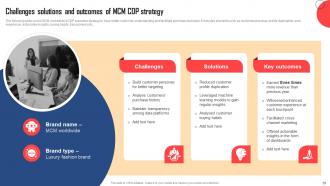
Slide 58: This slide exhibits the Challenges solutions and outcomes of MCM CDP strategy.
Slide 59: This is the Icons slide containing all the Icons used in the plan.
Slide 60: This slide is used for revealing some Additional information.
Slide 61: This slide represents the Clustered column.
Slide 62: This is the Stacked column slide.
Slide 63: This slide portrays the company's vision, mission & goal.
Slide 64: This slide contains the Post it notes for reminders and deadlines.
Slide 65: This is Meet our team slide for stating the team-related information.
Slide 66: This slide elucidates information related to the Financial topic.
Slide 67: This slide reveals the organization's vision, mission, & goal.
Slide 68: This slide presents the Timeline process.
Slide 69: This slide exhibits the Swot analysis.
Slide 70: This slide is used for the purpose of Comparison.
Slide 71: This slide indicates the firm's Location across the globe.
Slide 72: This is the Quotes slide for motivation.
Slide 73: This is the Venn diagram slide.
Slide 74: This is the Thank You slide for acknowledgement.
Customer Data Platform Guide For Marketers Powerpoint Presentation Slides MKT CD V with all 72 slides:
Use our Customer Data Platform Guide For Marketers Powerpoint Presentation Slides MKT CD V to effectively help you save your valuable time. They are readymade to fit into any presentation structure.
-
I loved the hassle-free signup process. A few minutes and, I had this giant collection of beautiful designs.
-
“Thank you to the SlideTeam. Your presentations look really skillful and have made my life so much easier.”
