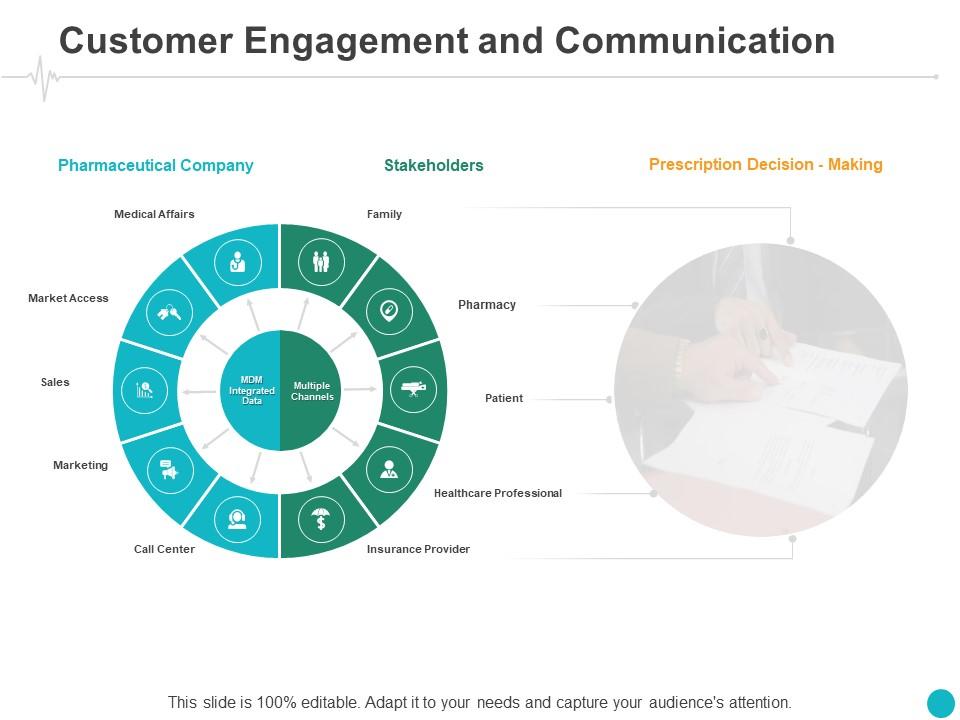
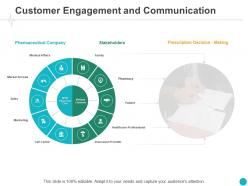
Customer engagement and communication stakeholders ppt powerpoint presentation icon
Try Before you Buy Download Free Sample Product
Audience
Editable
of Time
Break away from curbs with our Customer Engagement And Communication Stakeholders Ppt Powerpoint Presentation Icon. Experience the happiness of boundless freedom.
People who downloaded this PowerPoint presentation also viewed the following :
Customer engagement and communication stakeholders ppt powerpoint presentation icon with all 5 slides:
Our Customer Engagement And Communication Stakeholders Ppt Powerpoint Presentation Icon allow you boundless freedom. Feel happy to break away from curbs.
FAQs for Customer engagement and communication stakeholders ppt
Businesses can enhance customer engagement through interactive presentations, personalized content delivery, storytelling techniques, real-time polling, and visual data representations. These strategies streamline communication by creating immersive experiences, encouraging audience participation, and delivering tailored messaging, with many organizations finding that interactive elements and compelling visuals ultimately drive stronger customer connections and improved conversion rates.
Visual storytelling in presentations improves customer retention by creating emotional connections, simplifying complex information, and making brand messages more memorable and relatable. Through compelling narratives, infographics, and interactive visuals, companies enhance customer experiences, build stronger relationships, and communicate value propositions more effectively, ultimately delivering increased loyalty and long-term engagement.
Audience feedback serves as a critical compass for refining customer engagement presentations, enabling organizations to adapt messaging, adjust content depth, identify pain points, and optimize delivery methods for maximum impact. This iterative approach helps businesses create more targeted presentations that resonate with specific customer segments, ultimately driving higher conversion rates, stronger relationships, and improved customer satisfaction across industries from retail to financial services.
Companies use data analytics to analyze customer behavior patterns, purchase history, demographic information, and engagement preferences, enabling highly targeted presentation customization for distinct segments. Through predictive analytics and customer journey mapping, businesses can create personalized content, messaging, and visual approaches that resonate with specific audiences, ultimately delivering higher conversion rates and stronger customer relationships.
Interactive presentation best practices include using real-time polls, Q&A segments, multimedia elements, storytelling techniques, and audience participation features. These approaches enhance engagement by creating two-way dialogue, personalizing content delivery, and maintaining attention spans, with many sales teams and marketing departments finding that interactive formats increase conversion rates and customer retention significantly.
Businesses can incorporate storytelling through authentic brand narratives, customer success stories, behind-the-scenes content, emotional journey mapping, and values-driven messaging across touchpoints. These techniques enhance customer loyalty and brand affinity by creating memorable experiences, fostering trust, and differentiating from competitors, with many retail and service companies finding that narrative-driven engagement significantly increases customer retention rates.
Customer engagement metrics for presentations include audience participation rates, time spent viewing content, interaction frequency, completion rates, and follow-up actions taken. These metrics streamline performance assessment by tracking behavioral indicators, measuring content resonance, and identifying conversion opportunities, with many organizations finding that combining engagement data with sales outcomes delivers clearer ROI insights and competitive advantage.
Gamification elements can be effectively integrated through interactive polls, real-time quizzes, point-based participation systems, progress tracking visuals, and competitive leaderboards throughout presentations. These techniques transform passive audiences into active participants by creating immediate feedback loops, rewarding engagement, and fostering healthy competition, with many organizations finding that gamified presentations increase retention rates and audience interaction by over 40%.
Essential components include customer journey mapping, personalization frameworks, omnichannel touchpoint integration, feedback loop mechanisms, and performance analytics systems. These elements work together by identifying key interaction moments, delivering tailored experiences across platforms, and continuously optimizing engagement quality, with many organizations finding that strategic presentation of these components demonstrates measurable improvements in customer retention and satisfaction rates.
Social media enhances customer engagement during presentations by enabling real-time interaction through live polls, Q&A sessions, hashtag campaigns, and instant feedback collection. Platforms like Twitter, LinkedIn, and Instagram allow presenters to extend conversations beyond the room, create shareable moments with branded content, and build ongoing communities around their messaging, ultimately delivering broader reach and sustained audience connection.
Technologies facilitating real-time presentation engagement include interactive polling platforms, audience response systems, live Q&A tools, social media integration, and mobile-based feedback applications. These technologies enhance audience participation by enabling instant feedback collection, real-time sentiment analysis, and seamless two-way communication, ultimately delivering more dynamic presentations and deeper audience connection.
Companies can adapt presentation styles by incorporating visual aids, interactive elements, storytelling techniques, multimedia content, and hands-on demonstrations to address diverse learning preferences. Through personalized approaches like breakout sessions for kinesthetic learners, detailed handouts for analytical minds, and engaging narratives for visual processors, organizations enhance audience retention, improve message comprehension, and ultimately deliver more impactful communications that drive stronger customer relationships and business outcomes.
Companies should avoid overwhelming audiences with excessive data, using generic templates without brand customization, creating one-size-fits-all presentations for diverse customer segments, and focusing solely on product features rather than customer benefits. These pitfalls often result in disengaged audiences and missed opportunities, with many organizations finding that personalized, benefit-focused presentations significantly enhance customer relationships and drive better business outcomes.
Collaborative tools enhance customer engagement in team presentations by enabling real-time interaction, seamless content sharing, and dynamic visual storytelling that keeps audiences actively involved. These platforms streamline feedback collection, facilitate instant polling and Q&A sessions, and allow multiple team members to contribute expertise simultaneously, ultimately delivering more personalized experiences and stronger client relationships.
Innovative design elements include interactive polls, animated data visualizations, immersive storytelling frameworks, dynamic color transitions, and audience-responsive content modules. These design approaches enhance engagement by creating memorable visual experiences, encouraging active participation, and maintaining attention throughout presentations, with many organizations finding that strategic visual innovation significantly improves audience retention and message effectiveness.
No Reviews