

Cybersecurity Incident And Vulnerability Response Playbook Powerpoint Presentation Slides





Try Before you Buy Download Free Sample Product
 Impress Your
Audience
 100%
Editable
 Save Hours
of Time


Organizations are spending more money on cybersecurity incident management strategies to safeguard the private data of their assets and personnel. Grab our professionally curated Cybersecurity Incident and Vulnerability Response Playbook. It includes a standardized incident response methodology that organizations can use to manage cybersecurity risk events. Our Cybersecurity Incident Response deck educates new employees on effectively preparing and following up on an incident. Organizations may handle vital statistics relating to cyber dangers by using sections like the introduction to cyber security incidents. It discusses our five-phased incident response approach. The module also includes ransom payment and response language to help successfully handle any cybersecurity situation. The slides, like training programs and communication plans, deliver information about the training programs. These allow firms to promote cyber awareness and strategy to communicate and manage any event effectively. Lastly, the incident monitoring dashboard component will also aid in tracking security incidents at the departmental level and incident management in real time. Get access now.
People who downloaded this PowerPoint presentation also viewed the following :
Content of this Powerpoint Presentation
Slide 1: This slide introduces Cybersecurity Incident & Vulnerability Response Playbook. Commence by stating Your Company Name.
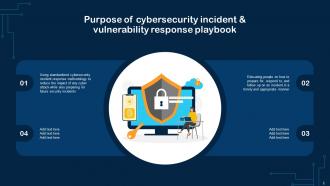
Slide 2: This slide depicts the Agenda of the presentation.
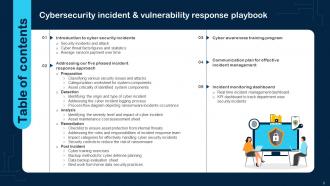
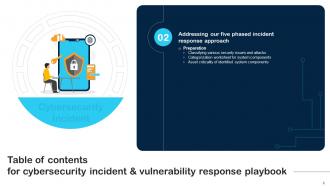
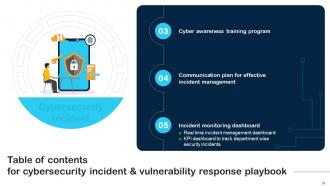
Slide 3: This slide incorporates the Table of contents.
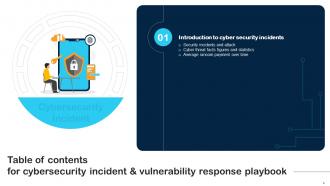
Slide 4: This slide highlights the Title for the Topics to be discussed next.
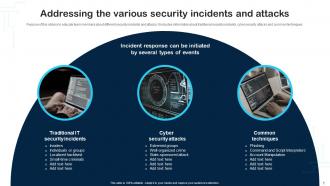
Slide 5: The Purpose of this slide is to educate team members about different security incidents and attacks.
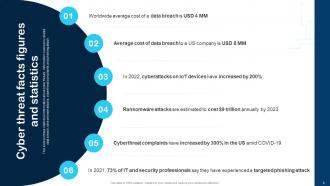
Slide 6: This slide portrays statistical information about cyber threats.
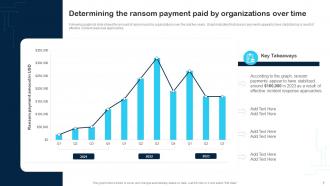
Slide 7: The Following graphical slide shows the amount of ransom paid by organizations over the last two years.
Slide 8: This slide presents the Heading for the Components to be discussed next.
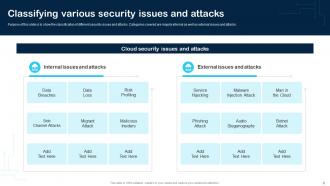
Slide 9: This slide deals with Classifying various security issues and attacks.
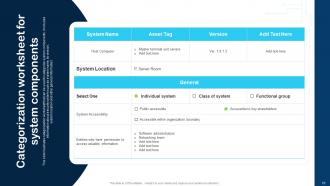
Slide 10: This slide illustrates categorization worksheet that can be used to categorize system components.
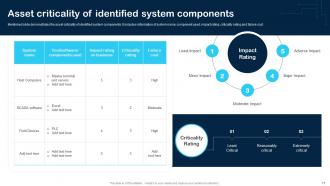
Slide 11: The Mentioned slide demonstrates the asset criticality of identified system components.
Slide 12: This slide indicates the Title for the Ideas to be discussed further.
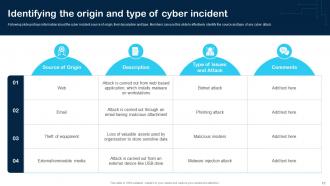
Slide 13: The Following slide portrays information about the cyber incident source of origin, their description and type.
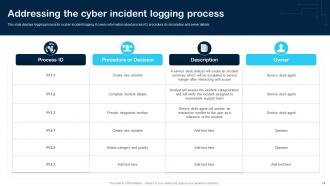
Slide 14: This slide displays logging process for a cyber incident logging.
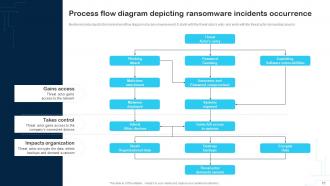
Slide 15: This slide depicts the incident workflow diagram of a ransomware event.
Slide 16: This slide reveals the Heading for the Topics to be covered in the upcoming template.
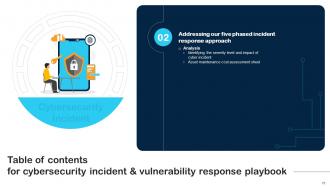
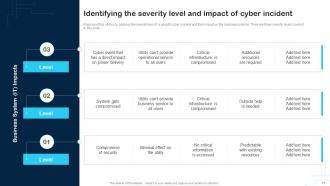
Slide 17: The Purpose of this slide is to address the severity level of a specific cyber incident and their impact on the business systems.
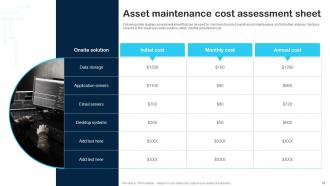
Slide 18: The Following slide displays assessment sheet that can be used by members to record overall asset maintenance cost for further analysis.
Slide 19: This slide incorporates the Title for the Components to be discussed next.
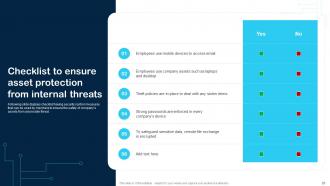
Slide 20: This slide slide exhibits the checklist having security control measures that can be used by members to ensure the safety of company’s assets from any insider threat.
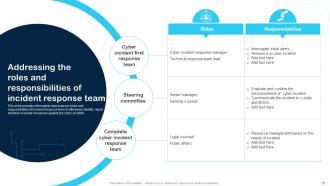
Slide 21: This slide provides information about various roles and responsibilities of incident response team to effectively identify, report and take accurate measures against any cyber incident.
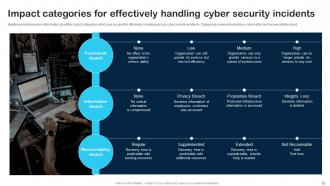
Slide 22: This slide showcases the Impact categories for effectively handling cyber security incidents.
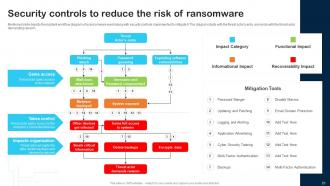
Slide 23: This slide deals with the Security controls to reduce the risk of ransomware.
Slide 24: This slide contains the Title for the Ideas to be covered further.
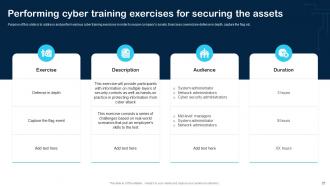
Slide 25: The Purpose of this slide is to address and perform various cyber training exercises in order to secure company’s assets.
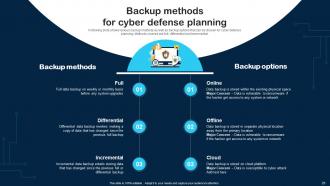
Slide 26: The Following slide shows various backup methods as well as backup options that can be chosen for cyber defense planning.
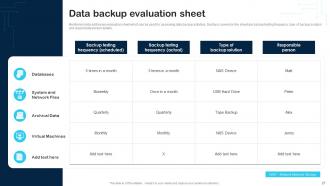
Slide 27: The Mentioned slide addresses evaluation sheet which can be used for assessing data backup activities.
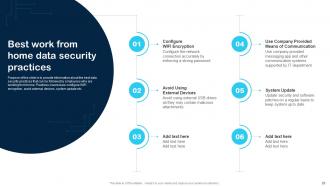
Slide 28: This slide focuses on the Best work from home data security practices.
Slide 29: This slide exhibits the Heading for the Components to be discussed next.
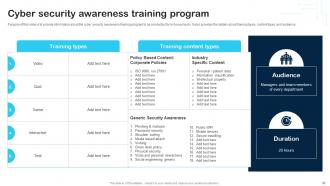
Slide 30: This slide elucidates the Cyber security awareness training program.
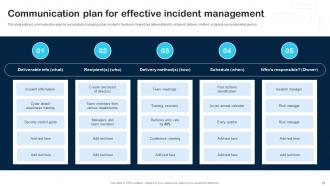
Slide 31: This slide portrays communication plan for successfully managing cyber incidents.
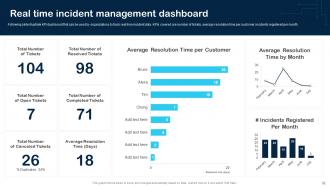
Slide 32: The Following slide illustrates KPI dashboard that can be used by organizations to track real time incident data.
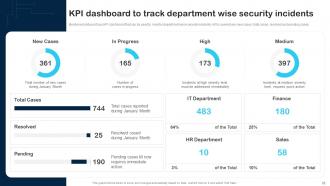
Slide 33: The Mentioned slide portrays KPI dashboard that can be used to monitor department wise security incidents.
Slide 34: This is the Icons slide containing all the Icons used in the plan.
Slide 35: The purpose of this slide is to elucidate Additional information.
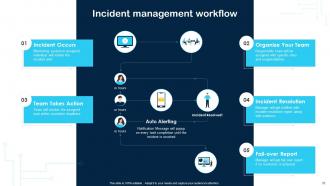
Slide 36: This slide talks about the Incident management workflow.
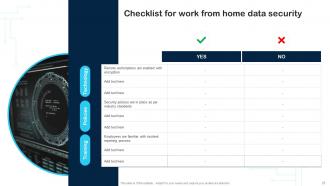
Slide 37: This slide exhibits the Checklist for work from home data security.
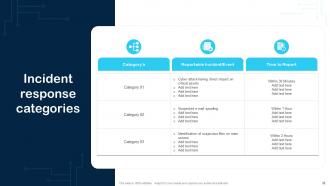
Slide 38: This slide reveals the Incident response categories.
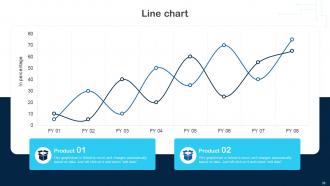
Slide 39: This slide presents the Line chart.
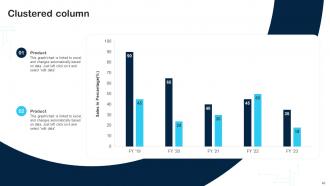
Slide 40: This slide illustrates the Clustered column.
Slide 41: This slide incorporates the Organization's mission, vision & goal.
Slide 42: This is Meet are awesome team slide. State the information related to your team members here.
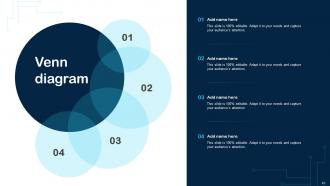
Slide 43: This is the Venn diagram slide.
Slide 44: This is the About us slide for listing the Company related information.
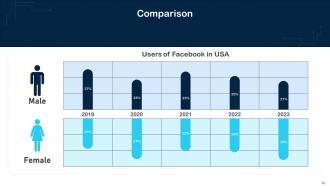
Slide 45: This slide is used for the purpose of Comparison.
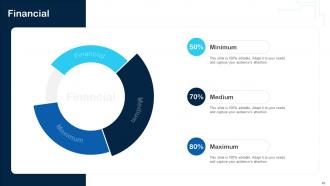
Slide 46: This slide displays information related to the Financial topic.
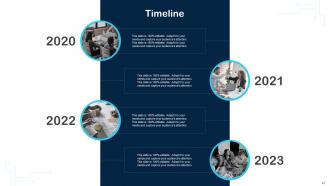
Slide 47: This slide represents the Timeline of the organization.
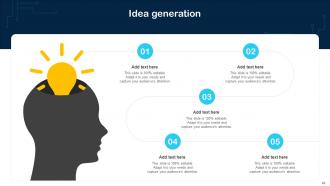
Slide 48: This is the Idea generation slide for encourage fresh and innovative ideas.
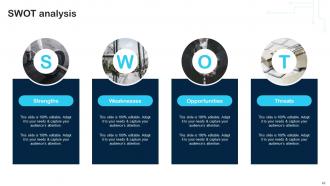
Slide 49: This slide exhibits the SWOT analysis.
Slide 50: This is the Thank You slide for acknowledgement.
Cybersecurity Incident And Vulnerability Response Playbook Powerpoint Presentation Slides with all 55 slides:
Use our Cybersecurity Incident And Vulnerability Response Playbook Powerpoint Presentation Slides to effectively help you save your valuable time. They are readymade to fit into any presentation structure.









FAQs for Cybersecurity Incident And Vulnerability Response Playbook
Okay so you'll want five main things: incident response procedures, threat detection stuff, asset inventory, communication plans, and recovery steps. Most teams totally bomb the incident response part tbh - get clear roles, escalation paths, and step-by-step actions for different scenarios. For threat detection, cover your monitoring tools, alert thresholds, and analysis workflows. Asset inventory needs to stay current (yeah right lol). Communication plans hit both internal notifications and external reporting requirements. Oh and actually test your playbook regularly - nothing worse than realizing it's garbage when you're in crisis mode.
Start with a solid security assessment - check your current tools, processes, and where you're vulnerable. Run some pen tests and look back at past incidents. Audit who has access to what across all your systems. Your team probably knows the real weak spots better than anyone, so ask them! You'll need to map your network, figure out what assets are critical, and document whatever policies already exist. Honestly, half the battle is just knowing what's actually broken versus what's missing completely. Then use that mess to figure out which playbook scenarios need attention first.
Honestly? Training is what makes or breaks the whole thing. Your fancy security tools won't matter if someone clicks a sketchy link or panics during an incident. I've seen companies with million-dollar systems get wrecked because Karen from accounting opened the wrong email (sorry, all the Karens out there). The playbook gives you structure, but people need to actually know what they're doing when stuff hits the fan. Run phishing tests regularly - they're kind of fun actually. Make sure everyone knows who to call and when. Your team can be your biggest weakness or your best defense.
Honestly, quarterly updates are bare minimum these days. Threats move way too fast for that. I'd do monthly reviews if you can swing it - set up some intel feeds and get on those vendor security bulletins. New attack pops up? Draft your response right away and run a tabletop exercise. Oh, and don't forget to ditch the old stuff that's not relevant anymore (I see so many playbooks with ancient threats still in there). The trick is building this into your regular routine instead of scrambling after something bad happens. Go schedule those review sessions right now before it slips your mind.
Honestly, start with the basics - prep, detect, contain, kill the threat, then recover. Set up your comms channels ahead of time and document *everything* while it's happening. Isolate infected systems fast so it doesn't spread like wildfire. Oh, and save evidence for forensics - learned that one the hard way. Your playbook needs crystal clear roles because panic makes people stupid. Run tabletop drills regularly to practice. Update contact lists quarterly too. Trust me, there's nothing more frustrating than frantically calling someone who quit months ago while your network's on fire.
Don't treat vendor security like some separate project - just build it into what you're already doing. Add security checks to your onboarding process, then keep monitoring them ongoing. So many companies do the assessment once and call it good, which is honestly pretty dumb. Make sure your incident response plan covers vendor breaches too (learned that one the hard way). Put security requirements directly in the contracts upfront. The whole thing needs to be systematic or stuff will definitely slip through. Oh, and automate whatever you can - saves tons of time later.
Focus on response times, detection accuracy, and how your team actually performs. Track how fast you spot and contain threats, plus false positive rates - chasing fake alerts sucks. Measure if people follow your playbook during real incidents and whether you're getting faster over time. Honestly, the best approach mixes technical stuff like containment times with whether your analysts feel confident running the steps. Oh, and start simple - pick 2-3 things you can measure right now instead of building some fancy dashboard you'll ignore.
So automation basically takes your security playbooks and makes them run themselves instead of your team doing everything by hand. When malware hits or someone's trying sketchy logins, the system just handles it automatically - isolates machines, gathers evidence, starts your response process. No more forgetting steps or scrambling around. Honestly, it's kind of a game-changer once you get used to it. I'd start with whatever you're doing most often since that's where you'll feel the difference right away. Your future self will thank you.
Start with data breach notification requirements - those timelines will destroy you if you're unprepared. GDPR, CCPA, HIPAA, plus whatever industry regs hit your company. Document when to call legal counsel and how to preserve evidence properly. Also map out incident reporting to regulators and law enforcement coordination. The legal stuff changes constantly (honestly gives me a headache). But here's the thing - you need clear decision trees so your team knows exactly who to contact during a real incident. No one thinks clearly when everything's on fire.
So first thing - figure out what regs you're actually stuck with. HIPAA if you're healthcare, PCI-DSS for finance stuff. Map those to your basic security controls, then think about who's gonna attack you. Healthcare orgs get absolutely demolished by ransomware, but tech companies? More worried about someone stealing their code. Honestly, just take NIST and tweak the risk scores for what actually keeps you up at night. Banks obsess over fraud prevention, manufacturers care way more about their operational tech getting messed with. Then bolt on some industry-specific incident response plans and threat feeds that make sense for your world.
Honestly, you've got to make this personal for each group. Figure out what's keeping them awake - finance is sweating compliance costs, ops teams are terrified of downtime, execs are worried about their reputation going down the drain. The "what happens if we get breached tomorrow" angle is pure gold for grabbing attention. Back it up with real numbers too - show them what a breach costs versus just investing in prevention upfront. But here's the thing that actually works: get people from each department involved in building the playbook. When they help create it, they'll actually buy into it instead of rolling their eyes at another security mandate.
Put decision trees and escalation paths right at the front - saves you so much time when chaos hits. Flowcharts work great for figuring out severity levels quickly. Honestly, I've watched teams scramble through pages of docs while their system's burning down, and it's painful. Contact info, message templates, step-by-step stuff for each incident type - organize it how you actually work, not some theoretical framework. Oh, and run tabletop exercises regularly. You'll find weird gaps you never thought about. Trust me, you don't want to discover your playbook sucks during a real emergency.
Set up clear escalation paths first - everyone needs to know who to contact when shit hits the fan. Standardized communication templates help too, saves time during actual incidents. War rooms with all the key people in one channel are honestly game-changers. Role-based playbooks let people cover for each other if someone's unavailable. Automated status updates are clutch for keeping leadership informed without you having to constantly send manual reports. Practice these workflows beforehand though - you don't want to figure it out mid-crisis.
Yeah, definitely add a data privacy section to your playbook. Start by figuring out what personal data you're actually collecting and where it all lives - this gets messy fast if you're not organized. Map out who has access to what, plus your retention policies. Don't forget compliance stuff like GDPR or CCPA if they apply to you. The incident response part is key too, but make it specific for data breaches, not just general security stuff. Honestly, I'd audit what you currently have first and work backwards from there. Way easier than starting from scratch.
You absolutely can't just write playbooks and forget about them - that's how you end up with useless procedures when stuff hits the fan. New threats pop up constantly, so quarterly reviews are a must. After every incident, update the relevant playbooks right away with whatever you learned. I've watched teams spend weeks crafting perfect documentation, then wonder why their response was garbage two years later. Your environment changes, attack methods evolve. What worked last month might be totally wrong now. Also, don't forget to actually test these things - paper plans fall apart fast in real scenarios.
-
“Slides are formally built and the color theme is also very exciting. This went perfectly with my needs and saved a good amount of time.”
-
“I've always gotten excellent slides from them and the customer service is up to the mark.”