

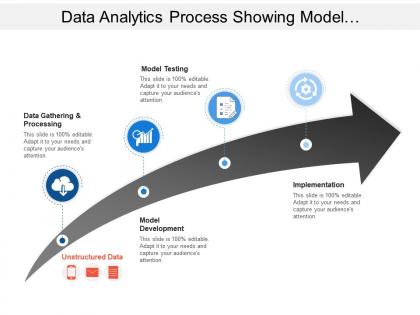
Data analytics process showing model development and implementation




Try Before you Buy Download Free Sample Product
 Impress Your
 Audience
 100%
100% Editable
 Save Hours
 of Time


The data analytics process can be daunting, but with the help of SlideTeam’s data analytics PowerPoint templates, you can make it easier than ever to get insights from your data. Our templates are easy to use and customizable, so you can create a presentation that tells the story of your data in a way that is clear and concise. Download our set of data analytics PowerPoint templates today and see how easy it is to get started with data visualization.
People who downloaded this PowerPoint presentation also viewed the following :
Data analytics process showing model development and implementation with all 5 slides:
Use our Data Analytics Process Showing Model Development And Implementation to effectively help you save your valuable time. They are readymade to fit into any presentation structure.
FAQs for Data analytics process showing model
So you've got five main stages: collecting data, cleaning it, exploring patterns, doing the actual analysis, then reporting everything out. Fair warning though - you'll probably want to quit during the cleaning phase because it's mind-numbingly tedious but somehow takes up like 70% of your time. Once that's done, you can actually explore what the data's telling you and run your statistical tests or ML models. The fun part is creating visualizations and reports for everyone else. Honestly, just budget way more time for cleaning than you think you'll need. Trust me on this one.
Start with basic data profiling - check for missing stuff, duplicates, weird outliers. I always do descriptive stats first because you'd be shocked how many obvious problems jump out from just looking at min/max values. Also make sure your data types are right - dates stored as text will mess you up later. Then validate against whatever business rules you have. Cross-check with source systems if you can. I know it's boring as hell, but trust me, it beats having to explain why your analysis was completely wrong in front of everyone. Set up automated checks if it's recurring data.
Oh man, data cleaning is basically the most important part - seriously can't skip it. You're fixing all the messy, inconsistent stuff before diving into analysis. Honestly feels like 60-80% of your time goes here, which is kinda annoying but whatever. Clean data = accurate results and visualizations that don't suck. Your stakeholders will actually trust what you show them too. I always start with duplicates first, then missing values, then get formats consistent. It's like meal prep - you wouldn't cook with spoiled ingredients, right? Trust me, garbage data in means garbage insights out.
Honestly, start with bar charts for comparing stuff and line charts when you're tracking trends over time. Scatter plots are clutch for showing how two things relate to each other. Heat maps? They're weirdly addictive once you get into them - perfect for big datasets where you need to spot patterns. Don't go crazy with pie charts (people kinda hate them but they work for simple breakdowns). Histograms show distributions really well. Oh, and dashboards let you combine everything, which is super useful. Just pick whatever fits your data and who you're presenting to, then tweak from there.
Honestly, just match your tools to three things: what kind of data you have, what your team actually knows, and how complex this thing is gonna get. Excel works great for simple stuff - don't overthink it. Python or R are solid for bigger datasets, but there's this whole "shiny tool syndrome" where people pick trendy stuff that doesn't fit. I've seen it happen so many times. Figure out your timeline and budget first. What questions are you trying to answer? Work backwards from there. Also consider what your team can realistically learn without losing their minds.
Descriptive analytics is just fancy talk for "what already happened" - your typical dashboards showing last month's sales numbers. Predictive takes that same data and tries to guess what's coming next, like which customers might bail or how much inventory you'll need. Prescriptive is where it gets interesting though - it actually tells you what to do about those predictions to get better outcomes. Honestly, most companies I've seen are still stuck doing basic reporting because it's way easier. But you can't really jump to the cool predictive stuff until your data doesn't suck. Start there first.
Stats are basically how you turn a pile of messy data into something that actually makes sense. You've got correlation analysis, regression, hypothesis testing - all that fun stuff. Without it, you're just staring at charts hoping you'll magically spot something useful (spoiler: you won't). The real trick is picking the right method for whatever you're trying to figure out. Start by getting super clear on your actual question first. Otherwise you'll end up doing fancy math on the wrong thing, which I've definitely done before. Stats help you tell the difference between real patterns and random junk.
Honestly, the consent and privacy stuff is huge - don't mess around with people's data without clear permission. Your models can be super biased if your training data is wonky, which happens more than you'd think. Be upfront about what your analysis can and can't do (overselling results is such a rookie move). Document everything you decide ethically-wise. Oh, and before launching anything, seriously ask yourself if it could hurt someone or make existing inequalities worse. The real-world impact question should keep you up at night if you're doing this right.
Big data's power is finding patterns you'd miss with small datasets. Collect info from everywhere - website, sales, customer service, social media. Then analyze it to predict what customers will do next and where markets are heading. Honestly, we're drowning in data these days, but that's actually good news. Analytics tools turn all that chaos into real insights about what people want, timing, and pricing. Don't try to boil the ocean though - pick one business question first and work backwards to find the data that'll answer it. Way more manageable that way.
First thing - nail down who does what and how you'll communicate. Trust me on this one. Don't just dump technical jargon on people either. Translate your findings into stuff they actually care about (like revenue impact). I'd schedule regular check-ins so you're not just hiding in spreadsheets for weeks. Share messy work-in-progress too, even when it's rough around the edges. Keeps everyone on the same page. Oh, and actually listen to the domain experts - they know business context you'll totally miss otherwise. Set up some shared space where people can see your current findings and bug you with questions.
Honestly, I'd track two main things - whether your analytics actually moved the needle on what matters (revenue, costs, whatever), and if people are genuinely using your work. Like, are they opening those dashboards or just ignoring them? Before starting any project, ask stakeholders what success looks like to them specifically. Then build your goals around that. I learned this the hard way - spent months on a beautiful model once that nobody cared about because I didn't align upfront. Business impact plus adoption rates, that's your combo right there.
So ML basically makes your analytics way faster by finding patterns you'd never catch manually. Like, you know how you spend forever digging through spreadsheets? Algorithms can spot complex trends across huge datasets in minutes. The coolest part is getting predictions instead of just reports - seeing what'll happen next, not just what already did. Oh and you can finally automate those boring repetitive tasks that make you want to cry. My advice? Don't go crazy at first. Pick one annoying analysis you do constantly and try automating that first.
Okay so basically data storytelling is just taking your messy spreadsheet findings and turning them into something people actually want to listen to. You know how everyone's eyes glaze over when you show them charts? This fixes that. Start with the problem, walk through what you found, then land on why it matters to them. Kind of like explaining a plot twist to someone who missed half the movie. Use visuals that make sense, not just because they look pretty. The whole point is getting people to remember your insights and do something about them instead of just pretending they care.
Ugh, data quality will be your biggest nightmare - seriously, you'll spend forever just cleaning stuff up. Messy datasets everywhere. Also watch out for vague project goals and systems that don't play nice together. Start by nailing down what questions you're actually trying to answer (sounds obvious but people skip this constantly). Set up some data governance early, automate the cleaning where you can. Oh and get everyone on the same page fast or you'll deal with endless scope changes. Always pad your timeline for data prep. Trust me on this one.
Honestly, I just stick to a couple solid sources instead of trying to read everything. Data Science Weekly and KDnuggets are pretty much my go-to newsletters - they actually filter out the fluff. Twitter's weirdly good for this stuff if you follow the right people. Virtual conferences are great when I can find time, but let's be real, who has hours for that every week? The trick is not overwhelming yourself with info. Maybe start with just one newsletter and see if you actually read it. There's way too much noise otherwise and you'll just end up ignoring it all.
-
Understandable and informative presentation.
-
Editable templates with innovative design and color combination.
-
Presentation Design is very nice, good work with the content as well.
-
Unique research projects to present in meeting.
-
Amazing product with appealing content and design.
-
Use of different colors is good. It's simple and attractive.
-
Editable templates with innovative design and color combination.