Demand forecasting presentation visuals
Try Before you Buy Download Free Sample Product
Audience
Editable
of Time
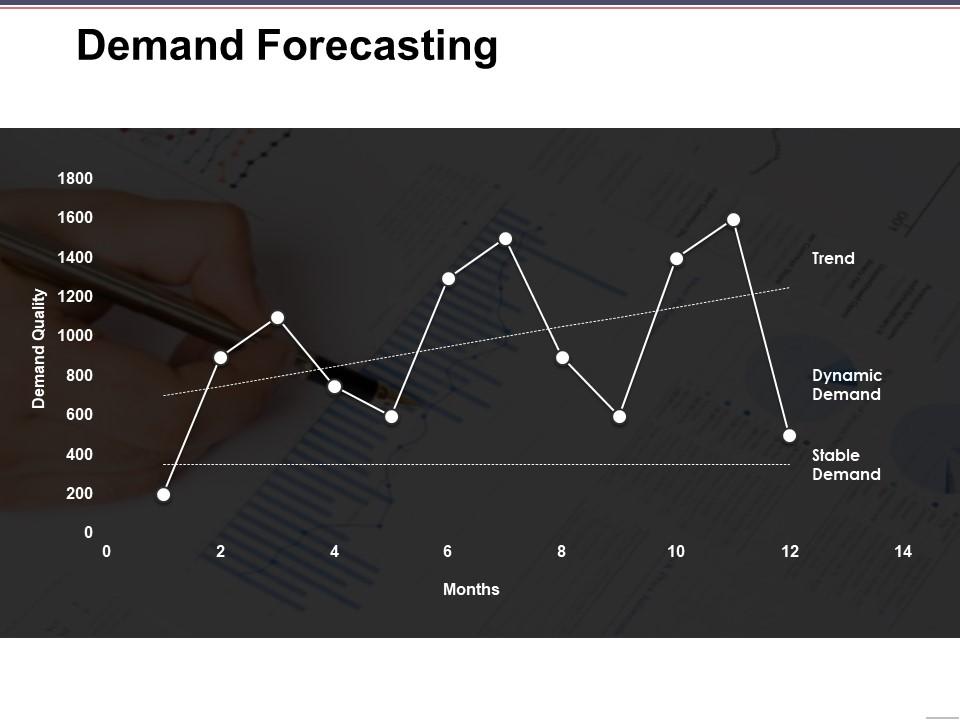
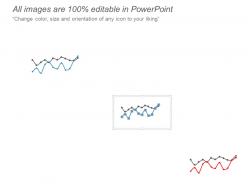
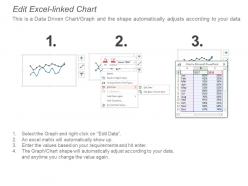
Predict the future demand under both controllable and uncontrollable factors by using Demand Forecasting Presentation Visuals. Develop the managerial plans and attain the long-term and short-term business objectives with the help of the market forecasting presentation template. Use the demand chain management PowerPoint graphic to analyze and track expenses and budgets that are required to accomplish the upcoming tasks or projects. Take the assistance of this statistical forecasting PPT slideshow to outline the several methods of demand chain management. Use a market forecasting presentation slide to list out different measures like quantitative, qualitative, average approach, naïve approach, and econometric forecasting. Highlight your career progression and performance graph in the market with the aid of a demand projection PPT template. Employ the statistical forecasting PowerPoint layout to fulfill the needs of your consumers. Hence, explain the difference between dynamic and stable demand by downloading our ready-to-use economic forecasting PPT theme.
People who downloaded this PowerPoint presentation also viewed the following :
Demand forecasting presentation visuals with all 5 slides:
Gear up for it with our Demand Forecasting Presentation Visuals. Be on the alert for any event.
FAQs for Demand
Key demand forecasting methods include time series analysis, causal modeling, qualitative techniques, machine learning algorithms, and econometric approaches, each varying in data requirements, complexity, and accuracy levels. Time series methods analyze historical patterns, causal models incorporate external factors like marketing spend, while machine learning approaches enable real-time adjustments, with many organizations finding that combining multiple methods delivers more reliable predictions and competitive advantage.
Businesses can improve demand forecast accuracy by integrating advanced analytics, historical data analysis, market trend monitoring, cross-functional collaboration, and real-time demand sensing technologies. Through machine learning algorithms and predictive modeling, companies in retail, manufacturing, and consumer goods streamline inventory management, reduce stockouts, and optimize resource allocation, ultimately delivering enhanced operational efficiency and competitive advantage in increasingly dynamic markets.
Historical data serves as the foundation for demand forecasting, providing patterns, trends, seasonal variations, and baseline metrics that algorithms analyze to predict future demand. Through statistical models and machine learning approaches, businesses in retail, manufacturing, and healthcare leverage past sales data, customer behavior, and market conditions to enhance inventory management, optimize production schedules, and ultimately deliver improved operational efficiency.
Seasonality and trends can be incorporated through advanced statistical methods like ARIMA modeling, exponential smoothing, machine learning algorithms, and decomposition techniques that separate historical data patterns. These approaches enable retailers, manufacturers, and supply chain managers to anticipate demand fluctuations more accurately, ultimately reducing inventory costs while improving customer satisfaction and operational efficiency.
Quantitative forecasting methods offer statistical accuracy, historical data analysis, automated processing, and scalable consistency across large datasets, while qualitative approaches provide expert insights, market intuition, flexibility for new products, and adaptability to sudden changes. While quantitative methods excel in stable environments with rich historical data, qualitative techniques prove invaluable during market disruptions or product launches, with many organizations finding that combining both approaches delivers superior forecasting accuracy and strategic decision-making capabilities.
Technology and AI enhance demand forecasting accuracy by analyzing vast datasets, identifying complex patterns, and processing real-time market signals that traditional methods miss. Machine learning algorithms continuously learn from historical sales data, seasonal trends, and external factors like weather or economic indicators, enabling retailers and manufacturers to reduce inventory costs, minimize stockouts, and ultimately deliver more responsive supply chain operations.
External factors like economic changes significantly impact demand forecasting by introducing volatility, altering consumer purchasing power, and shifting market dynamics across industries. These variables create both challenges and opportunities, with many organizations finding that incorporating economic indicators, seasonal trends, and market conditions into their forecasting models enhances accuracy and enables more strategic resource allocation decisions.
Organizations balance short-term and long-term demand forecasting by combining statistical models, market analysis, and seasonal data with strategic planning cycles. Through integrated forecasting systems, companies like retailers and manufacturers align quarterly operational planning with annual strategic goals, while continuously adjusting predictions based on real-time sales data, ultimately delivering improved inventory management and resource allocation.
Common demand forecasting pitfalls include over-relying on historical data, ignoring market trends, inadequate technology integration, poor cross-departmental communication, and insufficient external factor consideration. These challenges often result in inventory imbalances, missed revenue opportunities, and customer dissatisfaction, with many organizations finding that strategic forecasting improvements deliver enhanced operational efficiency and competitive advantage.
Collaborative forecasting improves demand predictability by integrating insights from sales teams, suppliers, distributors, and customers, creating more comprehensive market intelligence than isolated internal predictions. Through shared data platforms and regular stakeholder input sessions, organizations achieve significantly more accurate forecasts, reduce inventory costs, and enhance customer satisfaction, with many retail and manufacturing companies finding collaborative approaches deliver 15-20% better forecast accuracy.
Companies should track Mean Absolute Percentage Error (MAPE), forecast bias, Mean Absolute Deviation (MAD), tracking signal accuracy, and demand variability coefficients to evaluate forecasting performance. These metrics enable organizations to identify prediction patterns, adjust inventory levels, and optimize supply chain decisions, with many retail and manufacturing companies finding that systematic tracking ultimately delivers improved customer satisfaction and reduced operational costs.
Businesses can forecast demand for new products through market research, competitor analysis, customer surveys, pilot testing, and analogous product comparisons from similar industries. These methods enable organizations to gather insights by analyzing comparable launches, conducting focus groups, and leveraging industry benchmarks, ultimately delivering more accurate projections and reducing launch risks.
Demand forecasting significantly influences inventory management by enabling optimal stock levels, reducing carrying costs, minimizing stockouts, and improving cash flow management. Through predictive analytics, retailers and manufacturers can strategically time procurement, automate reorder points, and allocate resources more efficiently, ultimately delivering better customer satisfaction while reducing waste and storage expenses.
Market research supports demand forecasting by providing consumer behavior insights, competitive analysis, market trend identification, and seasonal pattern recognition through surveys, focus groups, and data analytics. These research methodologies enable retailers, manufacturers, and service providers to anticipate demand shifts, optimize inventory levels, and reduce forecasting errors, ultimately delivering improved resource allocation and enhanced customer satisfaction.
Ethical demand forecasting considerations include data privacy protection, algorithmic bias prevention, transparency in methodologies, fair pricing practices, and responsible resource allocation. These principles ensure forecasting models don't discriminate against specific customer segments, while maintaining trust through clear communication about data usage, ultimately delivering equitable market access and sustainable business practices across diverse consumer groups.
-
Topic best represented with attractive design.
-
Colors used are bright and distinctive.