Demographic audience analysis ppt powerpoint presentation infographics ideas cpb

Rating:
93%
Demographic audience analysis ppt powerpoint presentation infographics ideas cpb
Slide 1 of 2
Favourites Favourites

Try Before you Buy Download Free Sample Product

Audience Impress Your
Audience
Editable 100%
Editable
Time Save Hours
of Time
The Biggest Sale is ending soon in
0
0
:
0
0
:
0
0
Rating:
93%
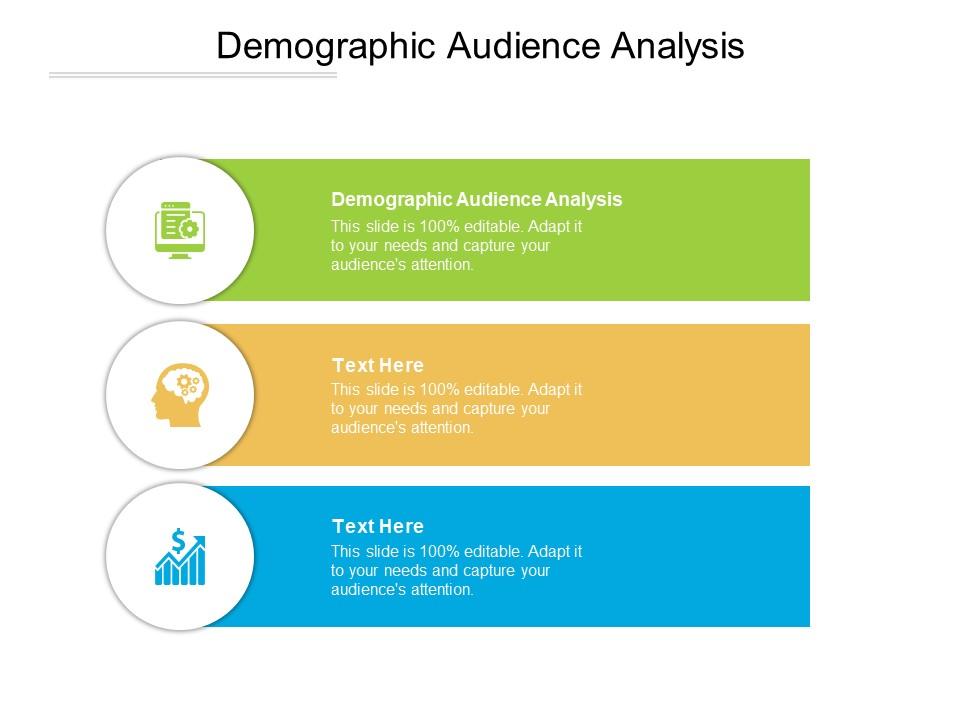
Presenting Demographic Audience Analysis Ppt Powerpoint Presentation Infographic Template Outfit Cpb slide which is completely adaptable. The graphics in this PowerPoint slide showcase three stages that will help you succinctly convey the information. In addition, you can alternate the color, font size, font type, and shapes of this PPT layout according to your content. This PPT presentation can be accessed with Google Slides and is available in both standard screen and widescreen aspect ratios. It is also a useful set to elucidate topics like Demographic Audience Analysis. This well-structured design can be downloaded in different formats like PDF, JPG, and PNG. So, without any delay, click on the download button now.

People who downloaded this PowerPoint presentation also viewed the following :

FAQs for Demographic audience analysis ppt powerpoint presentation

Key demographic factors include age, education level, professional background, cultural context, and industry experience, as these directly influence communication preferences, knowledge baseline, and decision-making authority. Understanding these elements enables presenters to tailor content complexity, choose relevant examples, and select appropriate delivery methods, with many organizations finding that demographic-aligned presentations achieve significantly higher engagement and more successful outcomes.

Understanding age demographics enhances engagement strategies by enabling presenters to tailor content delivery, visual design, communication styles, and technology integration to generational preferences. Different age groups respond to varying presentation formats, with younger audiences preferring interactive digital elements while older demographics often favor structured, detailed approaches, ultimately delivering more targeted messaging and improved audience connection.

Cultural background significantly influences how audiences interpret visual elements, communication styles, narrative structures, and persuasion techniques in presentations. Presenters must consider cultural preferences for directness versus context, hierarchical respect, color symbolism, and decision-making processes, with many organizations finding that culturally adapted content delivers higher engagement rates, stronger message retention, and more successful business outcomes across diverse markets.

Geographic location influences audience preferences through cultural values, economic conditions, climate considerations, local regulations, and regional business practices. Companies in retail, hospitality, and consumer goods increasingly find that location-based customization enhances customer engagement, drives regional sales growth, and delivers competitive advantage in diverse markets.

Psychographic segmentation enhances demographic analysis by revealing audience values, attitudes, interests, and lifestyle preferences that drive decision-making behaviors and engagement patterns. While demographics show who your audience is, psychographics explain why they act, enabling presenters to craft messaging that resonates emotionally, ultimately delivering higher engagement rates and more persuasive outcomes.

Techniques include adjusting vocabulary complexity, incorporating relevant examples and case studies, modifying visual design sophistication, and selecting appropriate data presentation methods. For technical audiences like engineers or researchers, detailed charts and industry-specific terminology enhance credibility, while general audiences benefit from simplified graphics and relatable analogies, ultimately ensuring message clarity and engagement across educational backgrounds.

Income level significantly influences presentation language and examples by determining formality, technical complexity, and relatability of content. Higher-income audiences often expect sophisticated terminology and premium brand examples, while broader audiences benefit from accessible language and everyday scenarios, with many presenters finding that matching economic context and aspirational references ultimately enhances engagement and message resonance.

Tools for conducting demographic audience analysis include Google Analytics, Facebook Audience Insights, Census Bureau data, survey platforms like SurveyMonkey, social media analytics, and customer relationship management systems. These resources enable businesses to streamline market research by tracking user behavior, analyzing purchasing patterns, and identifying target segments, with many organizations finding that strategic demographic insights ultimately enhance campaign effectiveness and deliver improved customer engagement across diverse markets.

Larger audiences typically require broader demographic analysis focusing on common denominators like industry trends, general age ranges, and shared professional interests, while smaller groups enable deeper, more granular segmentation. With intimate presentations, speakers can analyze specific job roles, individual pain points, and nuanced preferences, ultimately delivering more personalized content and targeted messaging that resonates with each stakeholder's unique business objectives.

Best practices for collecting demographic data include pre-event surveys, registration forms with targeted questions, social media analytics, organizational HR data, and stakeholder interviews with event organizers. These methods enable presenters to tailor content, examples, and communication styles appropriately, while many speakers find that combining multiple data sources delivers more comprehensive audience insights, ultimately enhancing engagement and message effectiveness.

Demographic analysis influences presentation format by examining audience age preferences, technological comfort levels, geographic distribution, and accessibility needs across different generational and professional segments. Younger professionals often prefer interactive digital formats with multimedia elements, while senior executives may favor traditional in-person presentations, with many organizations finding that hybrid approaches maximize engagement by accommodating diverse demographic preferences and delivering broader reach.

Ethical demographic data collection requires informed consent, data minimization, transparent usage policies, secure storage protocols, and respect for privacy preferences. Organizations must balance analytical needs with individual rights, ensuring demographic insights enhance customer experiences without compromising personal privacy, while maintaining compliance with regulations like GDPR and building sustainable trust-based relationships.

Demographic shifts reshape audience analysis by requiring presenters to consider evolving age distributions, cultural diversity, technological preferences, generational communication styles, and changing workplace dynamics. These trends enable more targeted content strategies, with many organizations finding that multi-generational approaches, inclusive messaging, and adaptive presentation formats ultimately deliver broader engagement and stronger business outcomes.

Going beyond basic demographics becomes essential when targeting complex purchase decisions, emotional products, or behavioral change initiatives, where age and income alone don't predict motivations. Healthcare organizations launching wellness programs, financial services promoting investment products, and technology companies introducing disruptive solutions increasingly find that understanding psychological drivers, cultural values, and personal aspirations delivers more effective messaging and higher conversion rates.

Demographic audience analysis improves messaging by tailoring content to specific age groups, income levels, education backgrounds, and cultural preferences, ensuring presentations resonate with audience values and communication styles. Through strategic demographic insights, marketers create more compelling narratives, select appropriate visual elements, and frame benefits that align with target segments' priorities, ultimately delivering higher engagement rates and conversion outcomes.

Ratings and Reviews

93% of 100
Write a review
Most Relevant Reviews
  1. 100%

    by O'Sullivan Evans

    Understandable and informative presentation.
  2. 100%

    by Rhys Moore

    Great product with effective design. Helped a lot in our corporate presentations. Easy to edit and stunning visuals.
  3. 80%

    by Jacob Brown

    Easy to edit slides with easy to understand instructions.
  4. 80%

    by Chester Kim

    Good research work and creative work done on every template.
  5. 100%

    by Joe Thomas

    Easily Editable.
  6. 100%

    by Dudley Delgado

    Commendable slides with attractive designs. Extremely pleased with the fact that they are easy to modify. Great work!
  7. 80%

    by James Lewis

    Top Quality presentations that are easily editable.
  8. 80%

    by Chase Howard

    Great designs, really helpful.
  9. 100%

    by Wilson Cooper

    I discovered this website through a google search, the services matched my needs perfectly and the pricing was very reasonable. I was thrilled with the product and the customer service. I will definitely use their slides again for my presentations and recommend them to other colleagues.
  10. 100%

    by Dewey Stephens

    Appreciate the research and its presentable format.

Items 1 to 10 of 11 total

    Page:
  • You're currently reading page 1
  • Page 2
  • Next
per page: