


Digital Transformation Of Retail Operations For Superior Experience And Efficiency DT CD
This comprehensive presentation Digital Transformation of Retail Operations for Superior Experience and Efficiency thoroughly assesses the challenges and performance indicators within the current retail landscape, highlighting the necessity for digital transformation. Through rigorous gap analysis, key issues in traditional brick-and-mortar retail models are pinpointed, driving the imperative for digital evolution. The overarching theme of digital transformation is introduced, outlining its pillars, significance, and industry impact. The industry analysis reveals market trends, statistics, and growth drivers fueling this transformation. Considerations for retail digital transformation encompass assessment strategies, goal setting, addressing challenges, technology selection, process integration, and workforce training. The transformation spans agile backend processes, digital supply chain advancement, technological enhancements in physical stores, and data-driven assortment planning. Omnichannel retailing, personalized experiences, data security, and supplier-retailer collaboration are scrutinized, followed by post-transformation analysis involving management strategies, impact assessment, and ROI measurement. Dashboard analytics conclude the journey, emphasizing supply chain efficiency and retail store performance monitoring, encapsulating the holistic essence of digital transformation in the retail sector. Experience the power of digital transformation reshaping retails landscape, ultimately improving customer experiences and operational efficiency. Download it now.



























































You must be logged in to download this presentation.


Do you want to remove this product from your favourites?
 Impress your
 audience
 100%
100% Editable
 Save Hours
 of Time
PowerPoint presentation slides
Deliver this complete deck to your team members and other collaborators. Encompassed with stylized slides presenting various concepts, this Digital Transformation Of Retail Operations For Superior Experience And Efficiency DT CD is the best tool you can utilize. Personalize its content and graphics to make it unique and thought-provoking. All the one hundred three slides are editable and modifiable, so feel free to adjust them to your business setting. The font, color, and other components also come in an editable format making this PPT design the best choice for your next presentation. So, download now.

People who downloaded this PowerPoint presentation also viewed the following :
Content of this Powerpoint Presentation
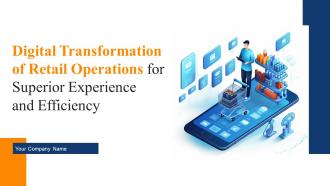
Slide 1: This slide showcase title Digital Transformation of Retail Operations for Superior Experience and Efficiency. State Your Company Name
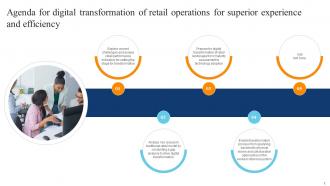
Slide 2: This slide showcase title Agenda for digital transformation of retail operations for superior experience and efficiency.
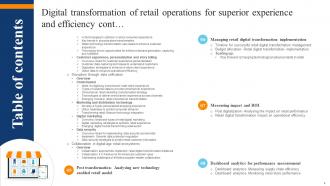
Slide 3: This slide exhibit Table of Content.
Slide 4: This slide exhibit Table of Content.
Slide 5: This slide exhibit Table of Content: Current scenario.
Slide 6: This slide examines the key challenges faced by retail companies due to lack of proper digitization initiatives in place.
Slide 7: This slide help analyse the declining performance of current key performance indicators of retail store.
Slide 8: This slide exhibit Table of Content: Gap analysis.
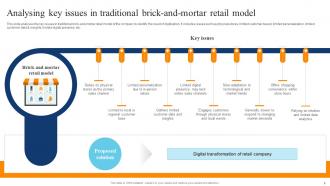
Slide 9: This slide analyses the key issues in traditional brick-and-mortar retail model of the company to identify the need of digitization.
Slide 10: This slide analyses the gap between current and desired future state of retail transformation and proposes potential solutions to reduce the gap.
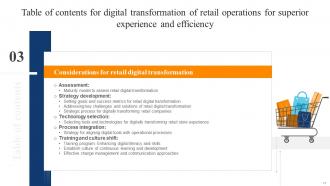
Slide 11: This slide exhibit Table of Content: Considerations for retail digital transformation.
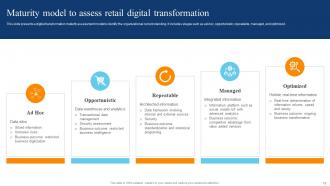
Slide 12: This slide presents a digital transformation maturity assessment model to identify the organizational current standing.
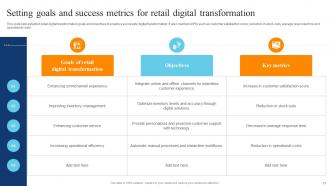
Slide 13: This slide help establish retail digital transformation goals and objectives to enable a successful digital transformation.
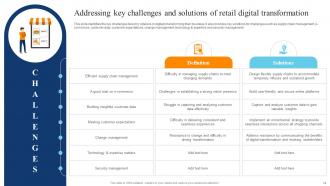
Slide 14: This slide identifies the key challenges faced by retailers in digitally transforming their business.
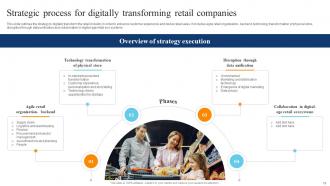
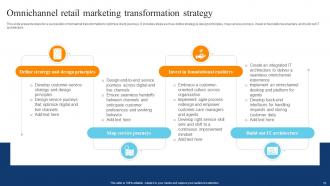
Slide 15: This slide outlines the strategy to digitally transform the retail industry in order to enhance customer experience and derive retail sales.
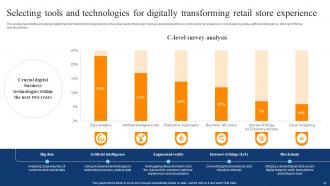
Slide 16: This slide presents the emerging digital transformation technology trends in the retail sector that help improve operational efficiency and customer experience.
Slide 17: This slide showcases a strategy for effectively aligning digital tools with operational processes to ensure successful integration.
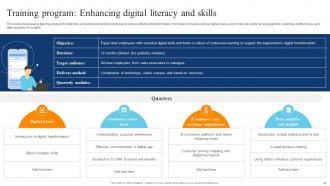
Slide 18: This slide showcases a training program for effective skill enhancement of employees to ensure effective transformation.
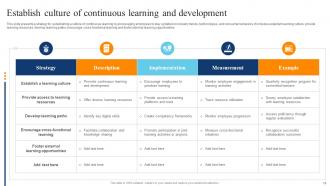
Slide 19: This slide presents a strategy for establishing a culture of continuous learning by encouraging employees to stay updated.
Slide 20: This slide present various approaches to ensure effective change management and communication to enable efficient digital transformation of retail.
Slide 21: This slide exhibit Table of Content: Supply chain.
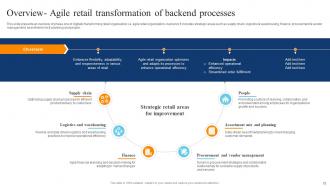
Slide 22: This slide presents an overview of phase one of digitally transforming retail organization i.e. agile retail organization- backend.
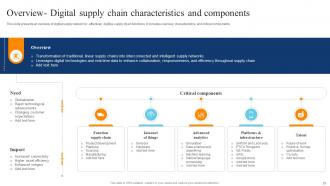
Slide 23: This slide presents an overview of digital supply network to effectively digitize supply chain functions.
Slide 24: This slide presents a framework to optimize supply chain with technology optimization to develop a digital supply network.
Slide 25: This slide presents key tools and technologies for transforming supply chain to deliver value framework.
Slide 26: This slide presents the use cases of various emerging technologies and techniques across various supply chain to optimize operations.
Slide 27: This slide exhibit Table of Content:Logistics and warehousing.
Slide 28: This slide presents the key pillars of movement-of-goods network that highlights the capabilities needed to optimize logistic operations.
Slide 29: This slide presents various approaches to apply the three pillars thus enabling technologies that will unlock values as they converge.
Slide 30: This slide showcases how companies can integrate warehouse management system to improve efficiency of businesses.
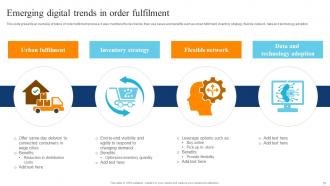
Slide 31: This slide presents an overview of future of order fulfilment process.
Slide 32: This slide presents the framework to digitize the reverse logistics life-cycle.
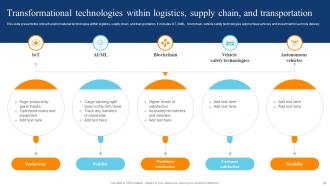
Slide 33: This slide presents the critical transformational technologies within logistics, supply chain, and transportation.
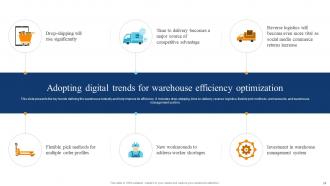
Slide 34: This slide presents the key trends defining the warehouse industry and help improve its efficiency.
Slide 35: This slide exhibit Table of Content:Finance.
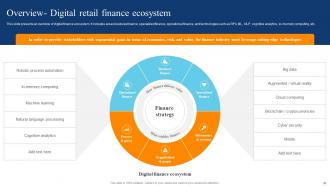
Slide 36: This slide presents an overview of digital finance ecosystem.
Slide 37: This slide examines in detail five cognitive tools in finance that can be used independently or in combination with others to enhance financial operations.
Slide 38: This slide presents various impact and types of cloud services that financial organizations can adopt to digitize functioning.
Slide 39: This slide exhibit Table of Content: Procurement and vendor management.
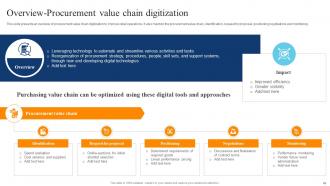
Slide 40: This slide presents an overview of procurement value chain digitization to improve retail operations.
Slide 41: This slide presents a table highlighting various features of digital procurement system that help digitize the procurement operations.
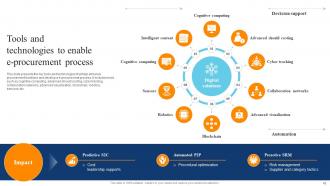
Slide 42: This slide presents the key tools and technologies that help enhance procurement functions and develop a e-procurement process.
Slide 43: This slide exhibit Table of Content: People.
Slide 44: This slide presents the five principles that frame the human focus for the social enterprise against which we can measure any action or business decision.
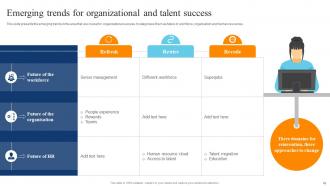
Slide 45: This slide presents the emerging trends in the area that are crucial for organizational success.
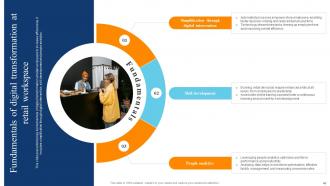
Slide 46: This slide presents the key fundamentals of digital transformation at retail workspace to increase efficiencies.
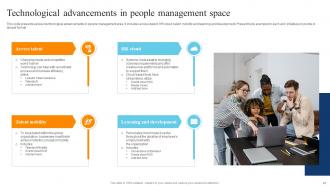
Slide 47: This slide presents various technological advancements in people management area.
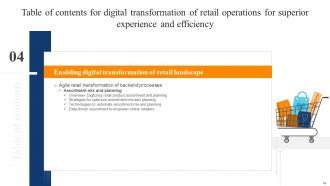
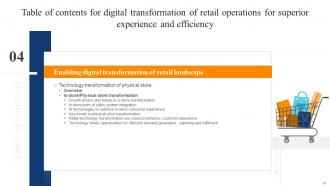
Slide 48: This slide exhibit Table of Content: Assortment mix and planning.
Slide 49: This slide presents an overview including need, meaning and impact of assortment & planning.
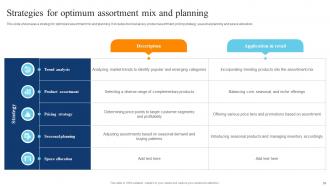
Slide 50: This slide showcases a strategy for optimized assortment mix and planning.
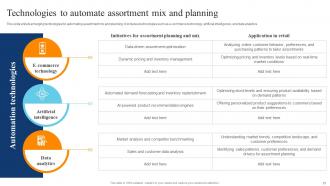
Slide 51: This slide enlists emerging technologies for automating assortment mix and planning.
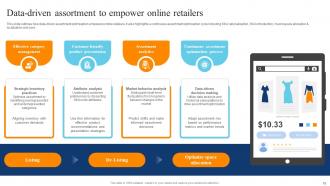
Slide 52: This slide outlines how data-driven assortment optimization empowers online retailers.
Slide 53: This slide exhibit Table of Content: In-store/Physical store transformation.
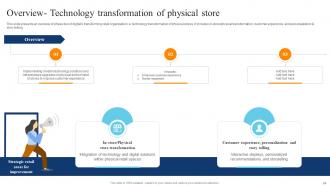
Slide 54: This slide presents an overview of phase two of digitally transforming retail organization i.e. technology transformation of physical stores.
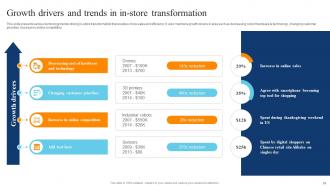
Slide 55: This slide presents various technology trends driving in-store transformation that enables more sales and efficiency.
Slide 56: This slide presents an overview of point of sales system that enables businesses to manage inventory, track sales, and process payments.
Slide 57: This slide presents information about various technologies that help optimize the in-store experience of consumers.
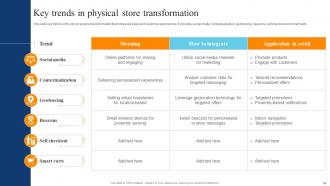
Slide 58: This slide key trends in the physical store transformation that increases sales and customer experiences.
Slide 59: This slide presents the use cases of technology that help enhance the instore purchase experience for customers.
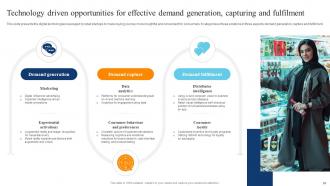
Slide 60: This slide presents the digital technologies leveraged by retail startups to make buying journey more insightful and convenient for consumers.
Slide 61: This slide exhibit Table of Content: Customer experience, personalization and story telling.
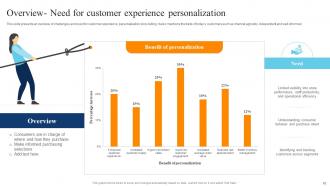
Slide 62: This slide presents an overview of challenges and need for customer experience ,personalization story-telling.
Slide 63: This slide presents various methods for gathering customer information to optimize buyer experience across different sales points.
Slide 64: This slide presents key strategies to digitize and enhance in-store experience and personalize customer journey.
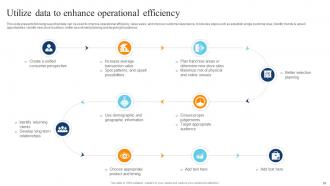
Slide 65: This slide presents following ways that data can be used to improve operational efficiency, raise sales, and improve customer experience.
Slide 66: This slide exhibit Table of Content: Omnichannel.
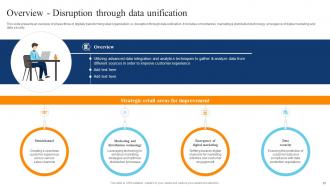
Slide 67: This slide presents an overview of phase three of digitally transforming retail organization i.e. disruption through data unification.
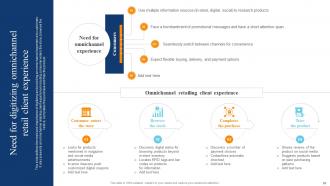
Slide 68: This slide defines the need and importance of digitizing and providing an omnichannel experience to customers.
Slide 69: This slide presents various types of data to be gathered for offering omnichannel retail experience and transformation.
Slide 70: This slide presents steps for a successful omnichannel transformation to optimize client journeys.
Slide 71: This slide present various technologies that are transforming the omnichannel experience across various channels.
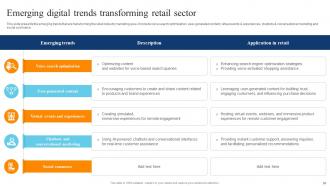
Slide 72: This slide presents emerging trends in the retail industry that are transforming the omnichannel experience.
Slide 73: This slide exhibit Table of Content: Marketing and distribution technology.
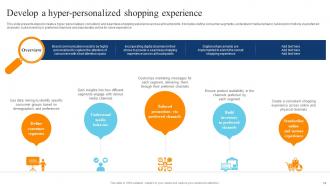
Slide 74: This slide presents steps to create a hyper personalized, consistent, and seamless shopping experience across all touchpoints.
Slide 75: This slide presents a strategy for utilizing heatmaps to capture and analyse customer data to increase sales within retail store.
Slide 76: This slide presents a strategy to effectively transform retail marketing and distribution through the use of beacon technology.
Slide 77: This slide exhibit Table of Content: Digital marketing.
Slide 78: This slide presents an overview and need of digital marketing in retail disruption.
Slide 79: This slide presents various digital marketing strategies for enhancing the retail experience and sales.
Slide 80: This slide presents the emerging trends that are transforming the retail industry marketing area.
Slide 81: This slide exhibit Table of Content: Data security.
Slide 82: This slide analyses the need of implementing data security initiatives to address key customer data challenges in retail industry.
Slide 83: This slide presents actions to establish a safe-custodian image in retail industry.
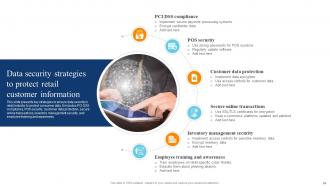
Slide 84: This slide presents key strategies to ensure data security in retail industry to protect consumer data.
Slide 85: This slide exhibit Table of Content: Overview.
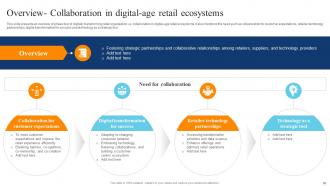
Slide 86: This slide presents an overview of phase four of digitally transforming retail organization i.e. collaboration in digital-age retail ecosystems.
Slide 87: This slide presents different approaches and structures through which retailers, suppliers, and technology providers work together.
Slide 88: This slide presents a framework for collaborating effectively to enhance operations and marketing.
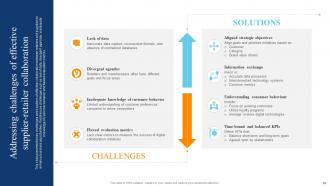
Slide 89: This slide presents the key challenges and solutions of effective collaboration between retailers and suppliers to enhance business opportunities.
Slide 90: This slide exhibit Table of Content: Post transformation- Analysing new technology enabled retail model.
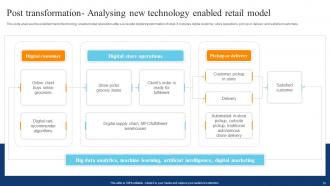
Slide 91: This slide analyses the establishment of technology enabled retail operations after successful digital transformation of retail.
Slide 92: This slide exhibit Table of Content: Managing retail digital transformation implementation.
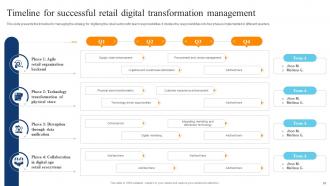
Slide 93: This slide presents the timeline for managing the strategy for digitizing the retail sector with team responsibilities.
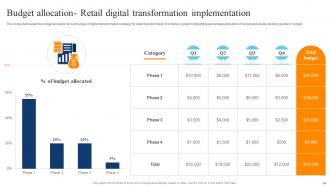
Slide 94: This slide showcases the budget allocation for each stage of digital transformation strategy for retail transformation.
Slide 95: This slide provide a glimpse into the future of retail, leading to technological advancements and evolving consumer expectations.
Slide 96: This slide exhibit Table of Content: Measuring impact and ROI.
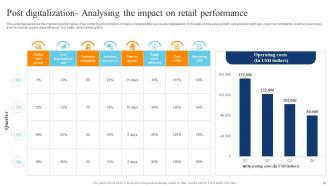
Slide 97: This slide help analyses the improving performance of key performance indicators of retail companies after successful digitalization.
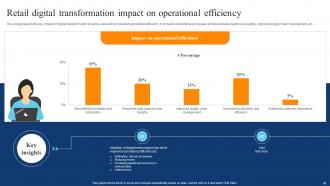
Slide 98: This slide presents the key impact of digital transformation in various areas that impacted operational efficiency.
Slide 99: This slide exhibit Table of Content: Dashboard analytics for performance measurement.
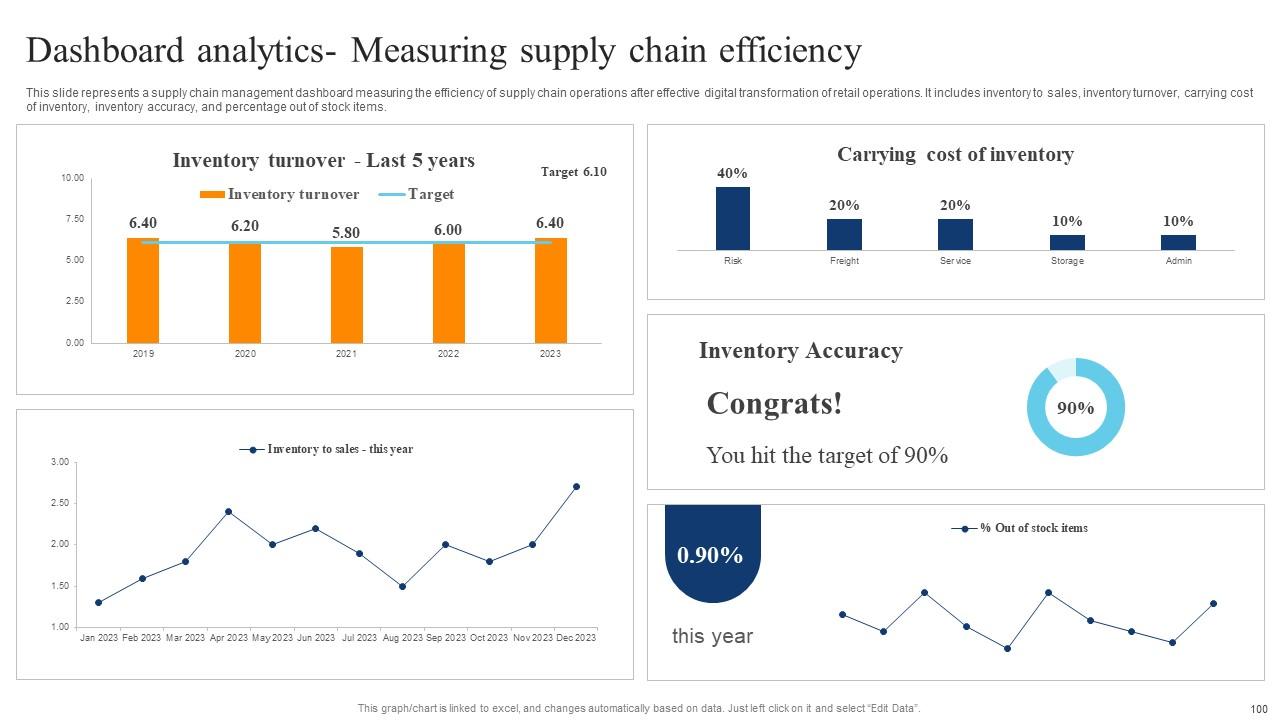
Slide 100: This slide represents a supply chain management dashboard measuring the efficiency of supply chain operations after effective digital transformation.
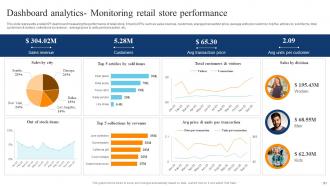
Slide 101: This slide represents a retail KPI dashboard measuring the performance of retail store.
Slide 102: This slide shows all the icons included in the presentation.
Slide 103: This is a Thank You slide with address, contact numbers and email address.
Digital Transformation Of Retail Operations For Superior Experience And Efficiency DT CD with all 112 slides:
Use our Digital Transformation Of Retail Operations For Superior Experience And Efficiency DT CD to effectively help you save your valuable time. They are readymade to fit into any presentation structure.
-
Informative presentations that are easily editable.
-
What an exhaustive collection of templates you guys have there in slideteam. Impressive!!!
