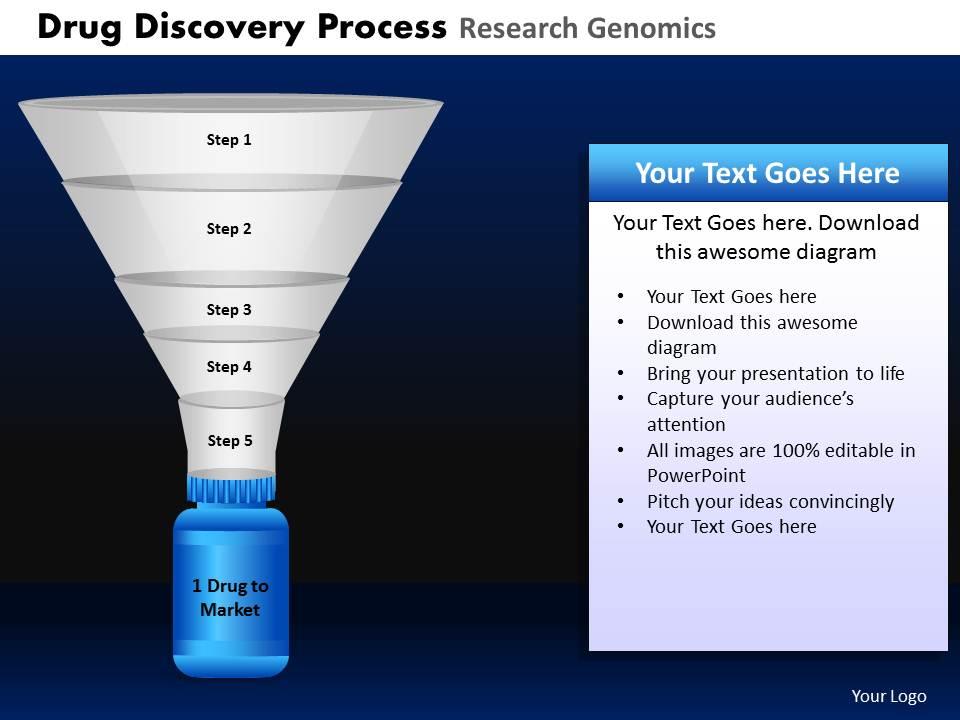
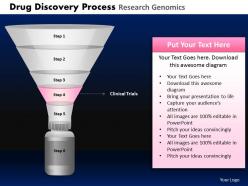
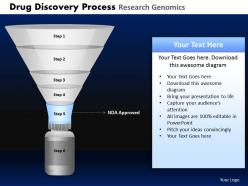
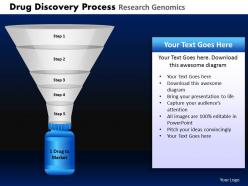
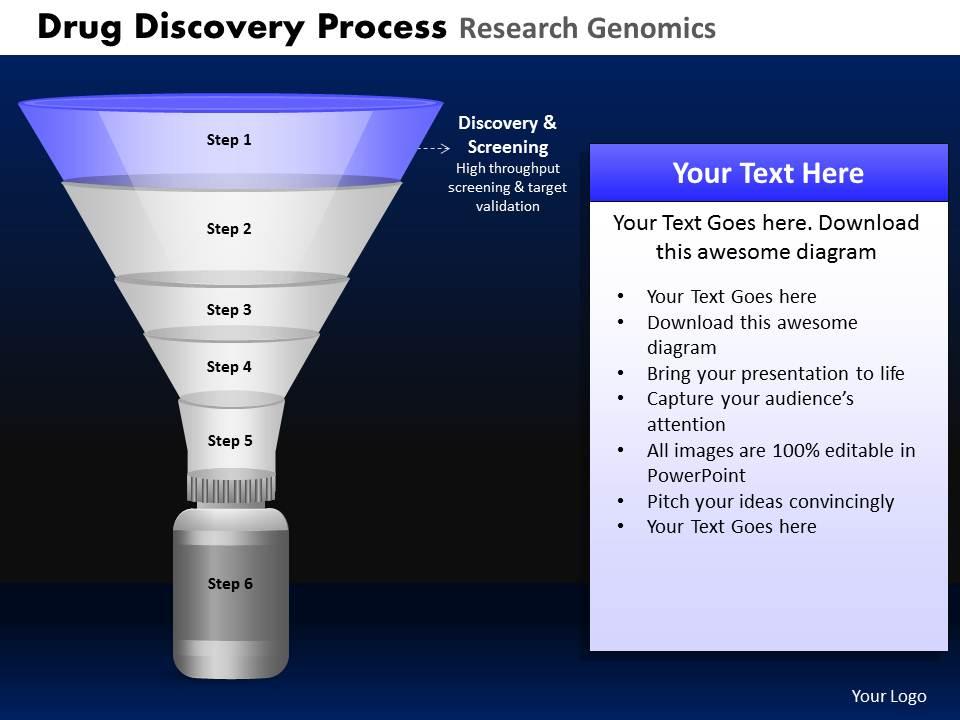
Drug discovery process research genomics powerpoint slides and ppt templates db
Try Before you Buy Download Free Sample Product
Audience
Editable
of Time
Give your ideas some tender loving care. Caress them with our Drug Discovery Process Research Genomics Powerpoint Slides And Ppt Templates DB.
People who downloaded this PowerPoint presentation also viewed the following :
Drug discovery process research genomics powerpoint slides and ppt templates db with all 10 slides:
Crown your thoughts with our Drug Discovery Process Research Genomics Powerpoint Slides And Ppt Templates DB. They will rule the minds of your team.
FAQs for Drug discovery process research genomics powerpoint slides and
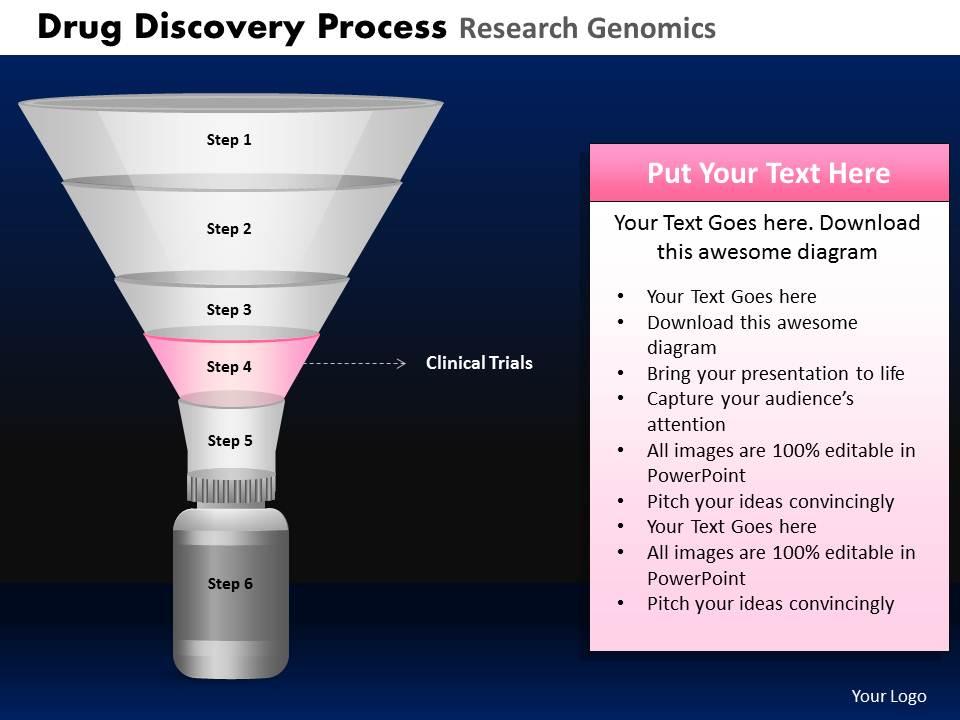
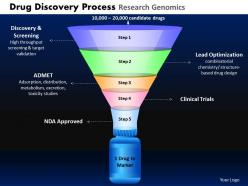
The key phases in drug discovery include target identification, lead compound discovery, preclinical testing, clinical trials (Phase I-III), and regulatory approval. These phases systematically reduce risk by validating biological targets, optimizing molecular compounds, and ensuring safety profiles, with pharmaceutical companies finding that structured approaches accelerate time-to-market while minimizing costly late-stage failures.
Target identification and validation significantly impact drug development success by determining therapeutic relevance, assessing druggability, and reducing late-stage failures through rigorous biological validation. These critical early phases enable pharmaceutical companies to focus resources on viable targets, minimize costly clinical trial failures, and accelerate time-to-market, with many organizations finding that robust validation ultimately delivers higher success rates and competitive advantage.
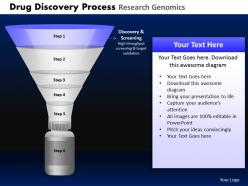
High-throughput screening enables pharmaceutical companies to rapidly test thousands of compounds against specific biological targets, identifying potential drug candidates through automated processes, robotic systems, and miniaturized assays. This technology accelerates early-stage discovery by filtering vast chemical libraries efficiently, with many biotechnology firms finding that HTS significantly reduces time-to-identification while enhancing their competitive advantage in drug development pipelines.
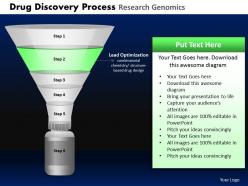
Structure-based drug design revolutionizes modern pharmacology by using three-dimensional protein structures to identify binding sites, predict molecular interactions, and optimize compound development through computational modeling. This approach streamlines the discovery timeline by enabling precise targeting of disease-related proteins, with pharmaceutical companies finding significantly reduced development costs, enhanced drug specificity, and accelerated pathways from laboratory research to clinical applications.
Ethical considerations in preclinical testing include animal welfare standards, minimizing harm through the 3Rs principle (replacement, reduction, refinement), ensuring scientific validity, and maintaining transparent reporting protocols. These frameworks enable pharmaceutical companies to balance necessary safety evaluations with responsible research practices, ultimately delivering safer drug candidates while meeting regulatory requirements and public trust expectations.
Artificial intelligence and machine learning enhance drug discovery by accelerating target identification, optimizing compound screening, and predicting drug interactions with unprecedented speed and accuracy. These technologies streamline research timelines from decades to years, reduce development costs significantly, and enable pharmaceutical companies to identify promising therapeutic candidates faster, ultimately delivering more effective treatments to market while minimizing costly late-stage failures.
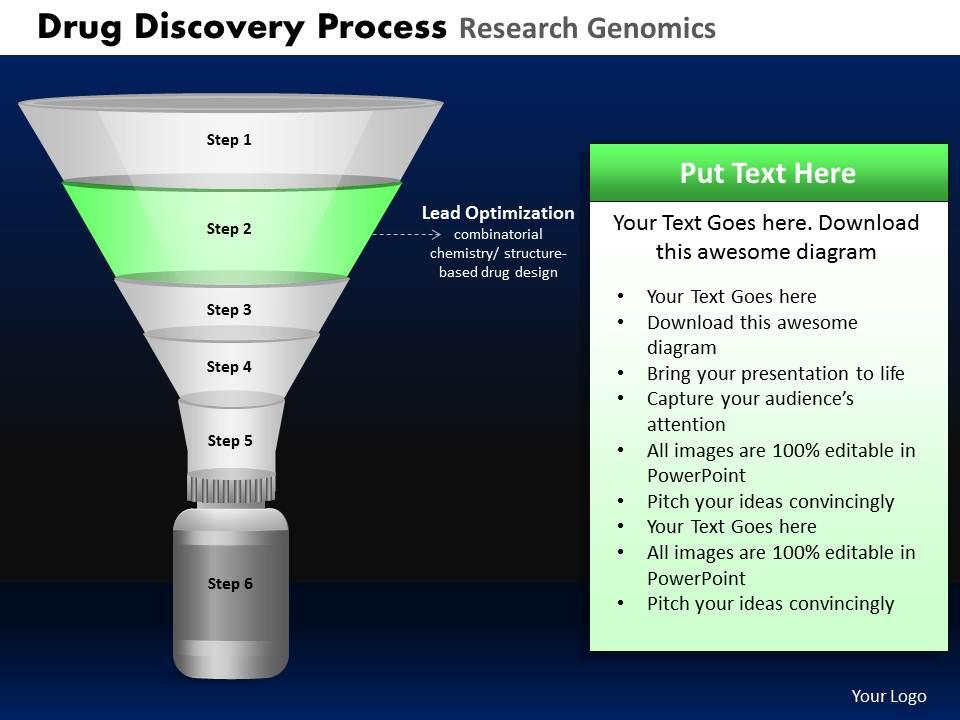
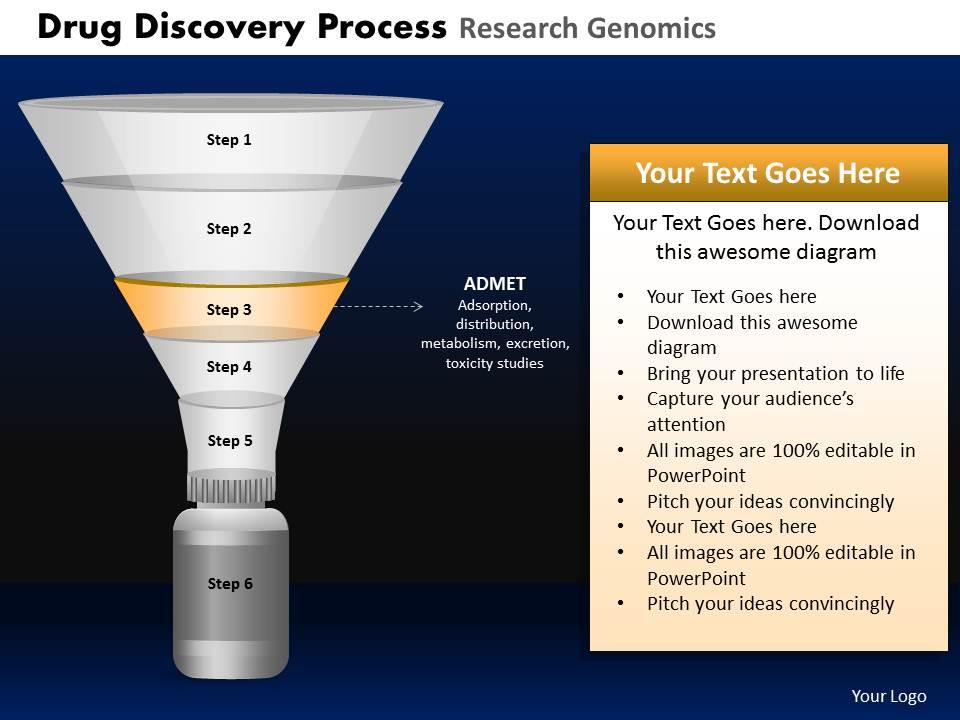
Lead optimization challenges include poor pharmacokinetic properties, insufficient target selectivity, toxicity issues, solubility problems, and metabolic instability. Through iterative medicinal chemistry approaches, pharmaceutical companies systematically address these hurdles by structural modifications, ADMET profiling, and safety assessments, with many organizations finding that strategic compound design ultimately delivers safer, more effective drug candidates.
Biomarkers enhance drug discovery by enabling earlier efficacy assessment, reducing clinical trial failures, and identifying optimal patient populations for targeted therapies. Through predictive biomarkers, pharmaceutical companies can streamline candidate selection, accelerate development timelines, and minimize costly late-stage failures, with many organizations finding that biomarker-driven approaches deliver faster approvals and improved therapeutic outcomes.
Pharmacokinetics and pharmacodynamics are critical for understanding how drugs move through the body and their therapeutic effects, determining optimal dosing, safety profiles, and efficacy parameters. These studies enable pharmaceutical companies to predict drug behavior, minimize adverse reactions, and streamline clinical trials, with many biotechnology firms finding that comprehensive PK/PD analysis significantly reduces development costs and regulatory approval timelines.
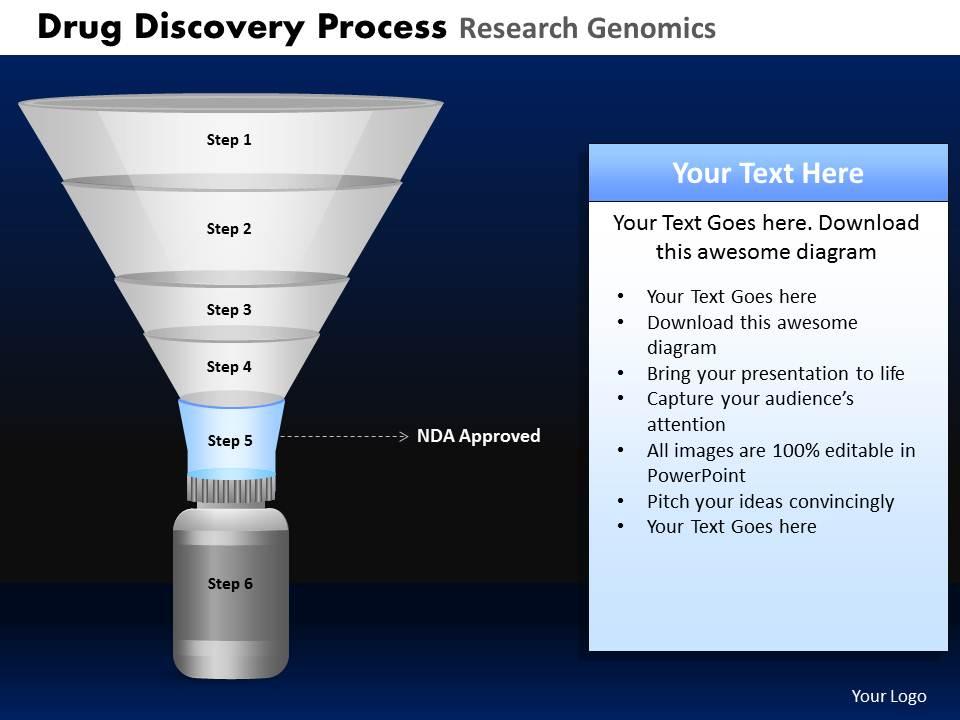
Regulatory guidelines significantly influence drug discovery by establishing safety standards, efficacy requirements, and quality protocols that shape preclinical research, clinical trial design, and manufacturing processes. These frameworks help pharmaceutical companies streamline development timelines, reduce approval risks, and ensure patient safety, with many organizations finding that early regulatory consultation ultimately delivers faster market access and competitive advantage.
Patient-derived models significantly enhance drug efficacy and safety testing by providing more accurate representations of human biology, disease progression, and individual patient responses compared to traditional cell lines. These models enable pharmaceutical companies to better predict clinical outcomes, reduce late-stage drug failures, and ultimately streamline development timelines while delivering more personalized therapeutic approaches.
Repurposing existing drugs streamlines discovery by bypassing early-stage safety testing, reducing development timelines, and leveraging established manufacturing processes. With known safety profiles and regulatory pathways already mapped, pharmaceutical companies can accelerate clinical trials by 3-5 years, ultimately delivering faster patient access while significantly reducing the typical $1-3 billion development costs.
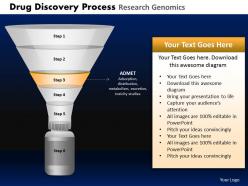
Early-stage toxicity assessment techniques include in vitro cell-based assays, computational toxicology models, organ-on-chip systems, high-throughput screening platforms, and predictive ADMET testing. These approaches streamline drug development by identifying potential safety issues early, reducing late-stage failures, and minimizing costly clinical trial setbacks, with pharmaceutical companies finding significantly improved candidate selection efficiency.
Academia-industry partnerships accelerate drug discovery by combining universities' foundational research capabilities with pharmaceutical companies' development expertise, regulatory knowledge, and commercialization resources. These collaborations enable shared risk in early-stage research, access to diverse compound libraries and clinical networks, ultimately delivering faster translation of scientific breakthroughs into viable therapies while reducing overall development costs.
AI-driven drug design, personalized medicine approaches, quantum computing applications, digital biomarkers, and organ-on-chip technologies are reshaping pharmaceutical research. These innovations streamline compound identification, accelerate clinical trials, and enhance precision targeting, with biotech companies and pharmaceutical giants finding that integrated digital platforms ultimately deliver faster drug development timelines and significantly reduced costs.
-
Really like the color and design of the presentation.
-
Helpful product design for delivering presentation.