


ECA Empathy Control Advocacy Approach For Dealing With Difficult Customers Edu Ppt




Try Before you Buy Download Free Sample Product
 Impress Your
 Audience
 100%
100% Editable
 Save Hours
 of Time


This PPT deck covers the ECA model to deal with difficult customers. It also contains exercises and checklists for empathy, control, and advocacy multiple aspects of the ECA framework to turn difficult customers into brand advocates.
People who downloaded this PowerPoint presentation also viewed the following :
Content of this Powerpoint Presentation
Slide
1
The
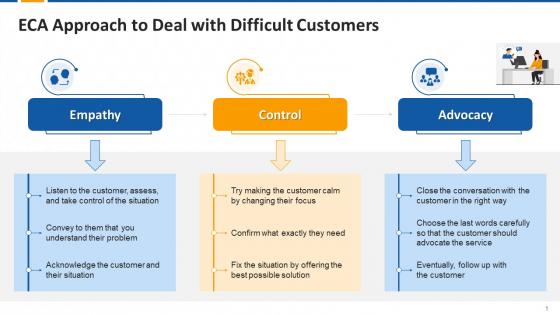
purpose of this slide is to showcase the ECA framework to deal with difficult
customers. The major components of the model are empathy, control, and
advocacy.
Slide
2
The
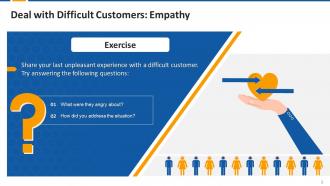
purpose of this slide is to showcase the exercise for dealing with difficult
customers with empathy.
Instructor's
Notes:
The key
objectives of the exercise are as follows:
·
Analyze why difficult situations were developed
·
To see what others have experienced and learn from their situations as
well
Exercise
is conducted to make the session more interactive. There are no right or wrong
answers.
Slide
3
This slide
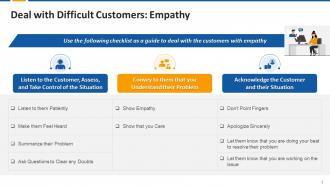
highlights the checklist that agents can use to deal with difficult customers
empathically.
Slide
4
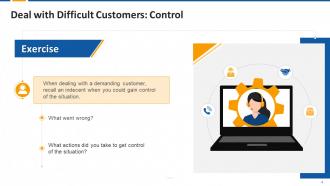
The
purpose of this slide is to showcase the exercise to take control of a
difficult situation to handle difficult customers.
Instructor's
Notes:
Each
person's answer will be unique. There are no correct or incorrect solutions in
this exercise.
Slide
5
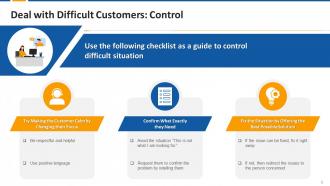
The slide
contains a checklist to guide service agents on how to take control of the
situation and deal with difficult customers.
Slide
6
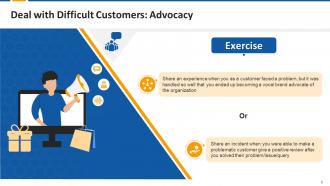
This slide
showcases the question for training session attendees when they turned a
challenging customer into brand advocate.
Instructor's
Notes:
Each
person's answer will be unique. There are no correct or incorrect solutions in
this exercise.
Slide
7
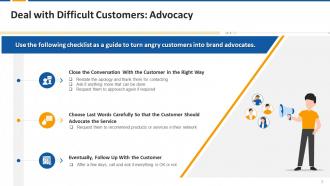
This slide
provides information regarding the checklist to convert angry customers into
brand advocates.
ECA Empathy Control Advocacy Approach For Dealing With Difficult Customers Edu Ppt with all 23 slides:
Use our ECA Empathy Control Advocacy Approach For Dealing With Difficult Customers Edu Ppt to effectively help you save your valuable time. They are readymade to fit into any presentation structure.







FAQs for ECA Empathy Control Advocacy Approach For Dealing With Difficult
Listen, it's pretty simple but harder than it sounds. Actually shut up and listen instead of planning what you'll say next. Then validate their feelings - you can think they're wrong about the facts but still acknowledge they're upset. The reflection thing feels super awkward at first, like you're just parroting them back, but trust me it works. Just repeat their main points and emotions before jumping into fix-it mode. I had to practice this with my team and honestly felt ridiculous doing it. But people need to feel heard before they'll listen to solutions. Try it next meeting.
Start with perspective-taking stuff - have people share what actually sucks about their jobs. Pair up folks from different departments for "shadow conversations" about daily frustrations. Works better than you'd think! Then do collaborative problem-solving where teams have to consider multiple viewpoints first. Making empathy active instead of just talking about it - that's what matters. Oh, and build in reflection time after exercises so people can actually process what they learned. Try starting your next session with a 10-minute empathy check-in. Honestly, it shifts the whole vibe.
So ECA Empathy is honestly a game-changer for workplace drama. Most fights aren't really about what people think they're arguing over anyway - there's always deeper stuff going on. You gotta listen for the emotions first, then worry about the facts later. I know it sounds backwards, but trust me on this. People will actually start opening up once they feel heard. Instead of getting caught up in surface-level arguments, you can dig into what's really bothering everyone. Then you're way more likely to find fixes that don't leave anyone feeling screwed over.
So ECA Empathy reads your customers' emotions during calls - voice tone, word choice, even how fast they're typing. Your agents get real-time alerts when someone's getting frustrated or confused. Then they can shift gears, maybe use a calmer voice with stressed customers. Honestly, it's kind of wild how well it works. Fewer angry escalations, better satisfaction scores. People actually feel like they're talking to humans instead of robots reading scripts. Oh, and definitely check your CSAT numbers before vs after - that's where you'll really see the impact.
Honestly, just listen first before jumping into fix-it mode. When someone's venting about work stuff, pause and say "yeah, that sounds really frustrating" before you start brainstorming solutions. People need to feel heard, you know? Also - and this might sound weird - share your own struggles sometimes. Makes you way more relatable as a leader. I always tell people to flip their one-on-ones around too. Instead of asking "what did you get done this week," try "how are you feeling about your workload lately?" Works every time.
Don't make it a whole separate class - that's where schools usually mess up. Just weave it into what you're already doing. Kids can analyze character feelings in English, debate ethical stuff in history, reflect on group work dynamics. Role-playing is honestly amazing - they get so into it! Train teachers to actually model empathy when conflicts happen. Start with just one department trying empathy activities, then see what clicks with your specific kids. The trick is keeping it natural, not some forced curriculum thing that everyone rolls their eyes at.
Start meetings with real check-ins - not just "how's everyone?" but actually listening to what they say. I've noticed people drop hints when they're struggling, so follow up privately if someone sounds off. Video calls are clutch for sensitive stuff since you can actually see their face. This might sound basic, but acknowledge when teammates share wins or problems instead of just moving on. Set up random coffee chats or casual Slack channels for non-work stuff. The biggest thing though? Don't just do this during crises - make it regular. Those random hallway conversations don't happen anymore, so you've gotta be way more deliberate about connecting.
Look, ECA Empathy is basically about getting where your coworkers are coming from - especially when they've got totally different backgrounds than you. You ask yourself "what's shaping how this person sees things?" before diving into conversations. It creates this safe space where people actually feel comfortable speaking up. The whole unconscious bias thing? Yeah, it naturally gets better when you're thinking about how your words land with others. I've seen it work - suddenly you've got way better teamwork happening and people aren't holding back their ideas anymore. Oh, and being intentional about listening makes a huge difference too.
Honestly, you should start seeing real changes within 6-12 months. Employee engagement scores go up, turnover drops, customers are happier - the usual good stuff. Most teams cut interpersonal conflicts by like 25-30%, and managers actually get better at handling tough conversations (which is kind of a game-changer). The culture surveys always show better psychological safety numbers too. That's been massive for keeping people around. ROI hits pretty fast since you're not constantly hiring replacements or dealing with HR drama. Just make sure you track engagement and conflict stuff beforehand so you can actually prove it worked.
Oh, this is actually pretty cool stuff! There are sentiment analysis tools and tone detection that can show you way more about your virtual conversations than you'd think. Some platforms will literally give you real-time prompts for empathetic responses while you're talking - kind of wild, honestly. You can also record calls to review later and spot patterns in how you connect with people. Facial expression recognition during video calls is becoming a thing too. I'd say pick just one tool to try first though. Don't go overboard right away - test it in a few meetings and see what you learn about yourself.
Honestly, the hardest part is convincing leadership that empathy isn't just touchy-feely stuff. They want hard numbers, and measuring empathy's ROI is genuinely tough. Your teams will push back too - understanding customers deeply takes time, which slows everything down at first. Most companies' systems aren't even built to capture emotional data from interactions, so that's another headache. Oh, and people hate change, obviously. My advice? Don't go big right away. Run small pilot programs where you can actually show wins, then use those results to get buy-in for the bigger rollout.
Honestly, ECA Empathy is pretty solid for this. Basically gives managers real data on how their team's actually feeling - stress levels, sentiment, all that stuff. No more guessing games when someone seems weird. Here's the thing though - you can catch burnout and disengagement way before people actually quit. Like, instead of finding out in exit interviews why someone left, you're spotting the red flags early. Then you can actually do something about it. Have those tough conversations, maybe adjust workloads or fix team drama before people completely check out. Way better than scrambling after the fact.
Honestly, mix surveys with actual conversations - that's where you'll get the real info. Do pre/post empathy assessments and 360 feedback for your data. But focus groups? That's gold. People will straight up tell you if they feel more understood or not. Track engagement metrics too if there's digital stuff involved. Oh, and definitely observe how people interact at work before and after - sometimes the most obvious changes are right in front of you. Just make sure you've got a baseline first so you're not shooting in the dark about what actually improved.
So ECA Empathy basically watches how your team communicates and picks up on emotional shifts that might signal mental health issues. Pretty neat actually - it catches changes in engagement levels, how people write, behavioral stuff that usually means someone's stressed or burning out. Think of it like having that one coworker who's crazy good at reading people, except it never takes a day off. The weekly reports show you patterns so you can have real conversations with team members before things get bad. When someone's struggling, you'll see it in the data and can step in with support or resources. Just check those reports regularly.
Stories work so much better than lecturing about empathy - people actually get it when you put them in someone else's situation. I've seen training sessions where everyone's glazed over until someone shares a real case study, then suddenly everyone's engaged and asking "what would I have done?" Your brain just processes stories differently than boring definitions. Plus they remember the lessons way longer. Honestly, most people tune out PowerPoint slides anyway. Pick scenarios that feel familiar to what they deal with daily. Next time, skip the textbook stuff and just start with a good story - watch how fast people perk up.
-
Exclusive and extensive collection of templates. Really helped me create a professional presentation in just no time.
-
Wonderful ideas and visuals. I'm really pleased with the templates, which are unique and up to date.