


Ecommerce business and financial model powerpoint presentation slides




Try Before you Buy Download Free Sample Product
 Impress Your
 Audience
 100%
100% Editable
 Save Hours
 of Time


Create an effective online marketing plan with our content ready Ecommerce Business and Financial Model PowerPoint Presentation Slides. Convey your message and ideas in a visually appealing manner to engage your viewers. The easy-to-use eCommerce management model PowerPoint complete deck contains topic-specific PPT slides like drop shipping business model, wholesaling and warehousing, white labelling, e-shops business model, e-malls, e-procurement food delivery example, subscription-based, type of revenue model, sharing economy revenue model, hook & bait, freemium, advertising revenue model transaction fee to name a few. Discuss the pros & cons of online business models using this professionally designed types of e-commerce model presentation deck. Create a professional-looking presentation with the help of this topic-specific & editable e-commerce management framework presentation deck in the shortest possible time. Just insert your text and you are ready to go. Therefore, download the professionally designed e-commerce trends PPT slides to educate your audience about the online business revenue models. Benefit from the cloud with our Ecommerce Business And Financial Model Powerpoint Presentation Slides. Get greater connectivity at a cheaper cost.
People who downloaded this PowerPoint presentation also viewed the following :
Content of this Powerpoint Presentation
Slide 1: This slide introduces Ecommerce Business and Financial Model. State Your Company Name and begin.
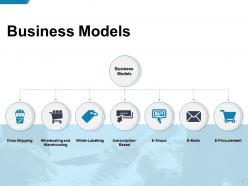
Slide 2: This slide shows Business Models describing- Drop Shipping, Wholesaling and Warehousing, White-Labelling, Subscription-Based, E-Shops, E-Malls, E-Procurement.
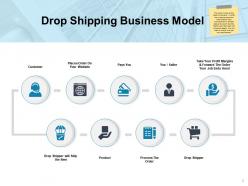
Slide 3: This slide presents Drop Shipping Business Model describing all the steps of process , in which the customer received order directly from manufacturer or another retailer.
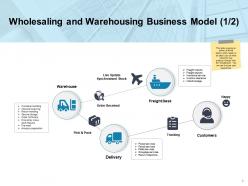
Slide 4: This slide displays Wholesaling and Warehousing Business Model outlining all the factors which needs to be taken care of while consumer buy products directly from the manufacturer.
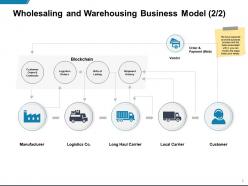
Slide 5: This is another slide for Wholesaling and Warehousing Business Model showing entire business process and the tasks associated with it.
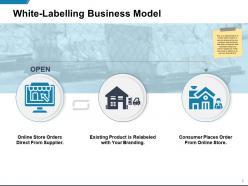
Slide 6: This slide represents White-Labelling Business Model where product or service produced by one company (the producer) that other companies (the marketers) rebrand to make it appear as if they had made it.
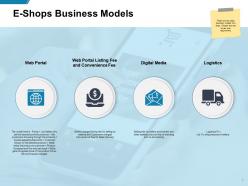
Slide 7: This slide showcases E-Shops Business Models as- Web Portal, Web Portal Listing Fee and Convenience Fee, Digital Media, Logistics.
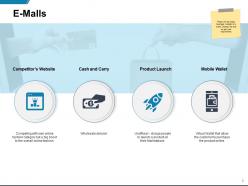
Slide 8: This slide shows E-Malls describing- Cash and Carry, Product Launch, Mobile Wallet, Competitor’s Website.
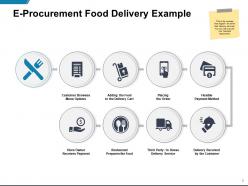
Slide 9: This slide presents E-Procurement Food Delivery Example describing- Customer Browses Menu Options, Placing the Order, Flexible Payment Method, Store Owner Receives Payment, Restaurant Prepares the Food, Third Party / in House Delivery Service, Delivery Received by the Customer, Adding the Food to the Delivery Cart.
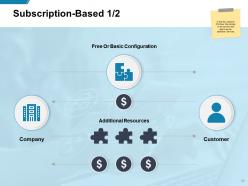
Slide 10: This slide displays Subscription-based model in which the customer first have free access to the service then they’ll pay for additional services.
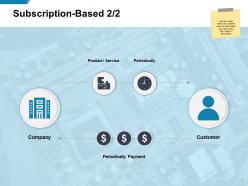
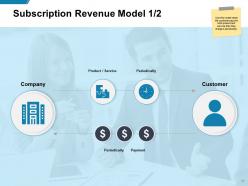
Slide 11: This slide represents another Subscription-Based model. In this the customer pays for both product and service then they charge it periodically.
Slide 12: This slide is titled as Revenue Model for moving towards such models.
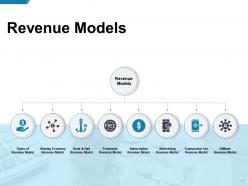
Slide 13: This slide showcases Revenue Models describing- Types of Revenue Model, Hook & Bait Revenue Model, Freemium Revenue Model, Subscription Revenue Model, Advertising Revenue Model, Transaction Fee Revenue Model, Affiliate Revenue Model, Sharing Economy Revenue Model.
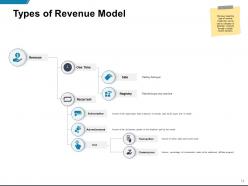
Slide 14: This slide shows Types of Revenue Model that can be used by company to generate revenues through multiple income streams.
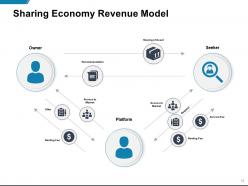
Slide 15: This slide presents Sharing Economy Revenue Model in which Private customers share access to products or services with other private customers through a platform.
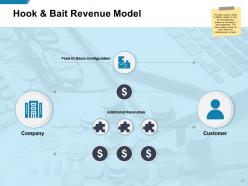
Slide 16: This slide displays Hook & Bait Revenue Model in which the basic product (hook) is offered cheaply or free; the complementary product or refill (bait) is sold expensively. The basic product cannot be used without the complementary product.
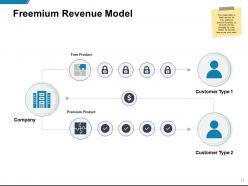
Slide 17: This slide represents Freemium Revenue Model in which the basic service is offered for free, additional premium functions or services are only available for a fee.
Slide 18: This slide showcases Subscription Revenue Model with related imagery.
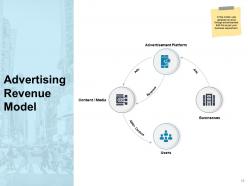
Slide 19: This slide shows Advertising Revenue Model in which the user generate revenue through advertisement.
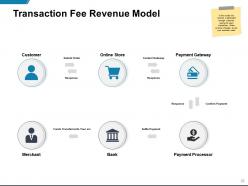
Slide 20: This slide presents Transaction Fee Revenue Model in which the revenue is generated through customer paying for each transaction.
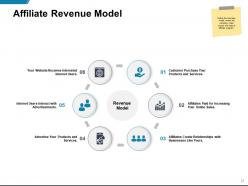
Slide 21: This slide displays Affiliate Revenue Model, where the company make money with help of affiliate program.
Slide 22: This slide showcases Ecommerce Business & Revenue Models Icons.
Slide 23: This slide reminds about a 15 minutes Coffee Break.
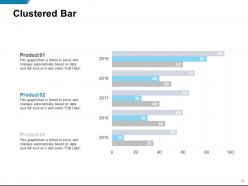
Slide 24: This slide presents Clustered Bar chart with three products comparison.
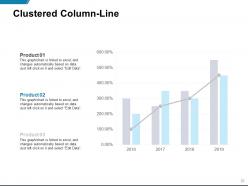
Slide 25: This slide displays Clustered Column - Line chart with three products comparison.
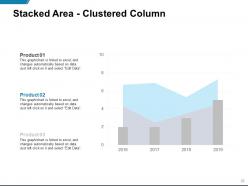
Slide 26: This slide shows Staked Area-Clustered Column with three products comparison.
Slide 27: This slide is titled as Additional Slides for moving forward.
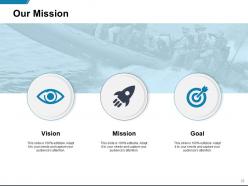
Slide 28: This is Our Mission slide with related imagery and text.
Slide 29: This is Meet Our Team slide with names and designation.
Slide 30: This is About Us slide to show company specifications etc.
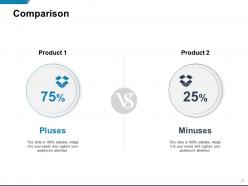
Slide 31: This is a Comparison slide to state comparison between commodities, entities etc.
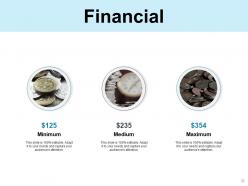
Slide 32: This is a Financial slide. Show your finance related stuff here.
Slide 33: This is a Quotes slide to convey message, beliefs etc.
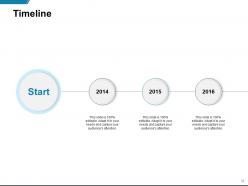
Slide 34: This is a Timeline slide to show information related with time period.
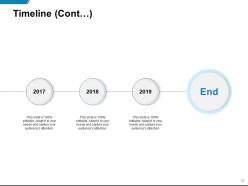
Slide 35: This is another slide continuing timeline.
Slide 36: This slide is titled as Post It Notes. Post your important notes here.
Slide 37: This is a Puzzle slide with text boxes.
Slide 38: This is a Venn slide with additional text boxes to show information.
Slide 39: This is a Bulb or Idea slide to state a new idea or highlight information, specifications etc.
Slide 40: This is a Thank you slide with address, contact numbers and email address.
Ecommerce business and financial model powerpoint presentation slides with all 40 slides:
Use our Ecommerce Business And Financial Model Powerpoint Presentation Slides to effectively help you save your valuable time. They are readymade to fit into any presentation structure.




FAQs for Ecommerce business and financial model
The main ecommerce business models include B2B (business-to-business), B2C (business-to-consumer), C2C (consumer-to-consumer), C2B (consumer-to-business), and marketplace platforms. These models differ by target audience, transaction volume, and revenue streams, with B2B focusing on bulk sales and long-term contracts, while B2C emphasizes individual purchases and customer experience optimization.
B2C ecommerce creates value by enabling direct consumer access to vast product selections, competitive pricing, personalized recommendations, and convenient shopping experiences, while businesses benefit from reduced operational costs, expanded market reach, and valuable customer data insights. Through digital platforms, retailers like Amazon and fashion brands streamline inventory management, automate customer service, and optimize marketing campaigns, ultimately delivering enhanced customer satisfaction and increased revenue growth.
Subscription-based ecommerce models enhance customer loyalty through predictable product deliveries, personalized experiences, exclusive member benefits, and convenience-driven purchasing patterns. These approaches streamline customer retention by reducing decision fatigue, building habitual consumption behaviors, and creating perceived value through bundled offerings, with many retailers finding that subscribers demonstrate significantly higher lifetime value and lower churn rates.
Marketplaces serve as intermediary platforms connecting buyers and sellers, offering built-in traffic, payment processing, logistics support, and customer trust mechanisms. These platforms enable businesses to reach broader audiences without significant upfront investments, streamline operations through shared infrastructure, and leverage established customer bases, with many retailers finding that marketplace integration accelerates growth while reducing operational complexity.
Ecommerce businesses utilize dropshipping by partnering with suppliers who handle inventory storage and fulfillment directly, eliminating upfront inventory investments and warehouse costs. This model enables retailers to test new products, expand into diverse categories, and scale operations rapidly, with many online stores finding they can focus resources on marketing and customer acquisition rather than inventory management, ultimately delivering improved cash flow and reduced operational overhead.
Omnichannel ecommerce strategies create seamless customer journeys across digital and physical touchpoints, enabling consistent product information, unified inventory visibility, personalized recommendations, and flexible fulfillment options. This integration enhances customer satisfaction through convenient shopping experiences, reduces friction between channels, and builds brand loyalty, with many retailers finding that omnichannel customers demonstrate significantly higher lifetime value and purchase frequency.
Social commerce platforms integrate ecommerce functions by embedding product catalogs, one-click purchasing, and secure payment processing directly within social media interfaces. Through features like shoppable posts, live shopping events, and influencer partnerships, retailers streamline the customer journey from discovery to purchase, ultimately reducing cart abandonment and increasing conversion rates by up to 30%.
Key ecommerce KPIs include conversion rate, customer acquisition cost, average order value, customer lifetime value, and cart abandonment rate. These metrics enable businesses to optimize marketing spend, enhance user experience, and streamline operations, with many retailers finding that tracking these indicators delivers improved profitability and sustainable growth.
Ecommerce businesses can leverage affiliate marketing by partnering with influencers, bloggers, content creators, and other websites to promote their products for commission-based compensation. This approach significantly expands market reach, reduces customer acquisition costs, and drives targeted traffic, with many online retailers finding that affiliate partnerships deliver measurable sales growth while minimizing upfront marketing investments.
Startups face challenges including limited capital for inventory and technology infrastructure, difficulty differentiating in saturated markets, complex logistics and fulfillment requirements, and uncertain customer acquisition costs. These obstacles present both operational and strategic considerations, with many emerging businesses finding that hybrid models combining dropshipping with selective inventory investment ultimately deliver greater flexibility and sustainable growth.
Personalization can be integrated through AI-driven product recommendations, dynamic pricing strategies, customized email marketing campaigns, tailored website experiences, and targeted advertising based on user behavior patterns. These approaches enhance customer engagement by delivering relevant content and offers, while streamlining the shopping journey, ultimately increasing conversion rates and customer lifetime value for ecommerce businesses.
Mobile commerce reshapes traditional ecommerce by prioritizing mobile-first design, location-based personalization, and seamless payment integration through digital wallets and one-click purchasing. This shift enables retailers to leverage push notifications, social commerce features, and augmented reality experiences, ultimately delivering faster customer engagement and higher conversion rates in an increasingly mobile-driven marketplace.
**INPUT**: What legal considerations must ecommerce businesses take into account as they operate globally? **OUTPUT**: Global ecommerce businesses must navigate data privacy regulations like GDPR, tax compliance across jurisdictions, consumer protection laws, intellectual property rights, and cross-border shipping regulations. These legal frameworks vary significantly by region, with companies like Amazon and Shopify investing heavily in compliance infrastructure to streamline operations while minimizing regulatory risks and maintaining competitive advantage. [Word count: 54 words]
Customer data privacy regulations impact ecommerce business models by requiring enhanced data protection measures, transparent consent processes, and secure storage infrastructure, while limiting certain tracking and personalization capabilities. These compliance requirements, though increasing operational costs initially, ultimately deliver stronger customer trust, reduced legal risks, and competitive advantage, with many retailers finding that privacy-first approaches enhance brand loyalty and customer retention.
Key innovations include artificial intelligence for personalization, augmented reality for virtual try-ons, voice commerce, blockchain for secure transactions, and IoT integration. These technologies streamline customer experiences by enabling predictive analytics, immersive shopping environments, and seamless omnichannel interactions, with many retailers finding that strategic adoption ultimately delivers enhanced customer loyalty and competitive advantage.
-
Informative presentations that are easily editable.