

Economic Potential Of Generative AI Technology Powerpoint Ppt Template Bundles AI MM




Try Before you Buy Download Free Sample Product
 Impress Your
 Audience
 100%
100% Editable
 Save Hours
 of Time


Our Economic Potential Of Generative AI Technology Powerpoint Ppt Template Bundles AI MM are topically designed to provide an attractive backdrop to any subject. Use them to look like a presentation pro.
People who downloaded this PowerPoint presentation also viewed the following :
Content of this Powerpoint Presentation
Slide 1: This slide introduces Economic Potential Of Generative AI Technology. State your company name and begin.
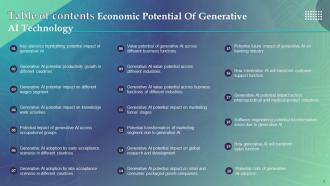
Slide 2: This slide shows Table of Content for the presentation.
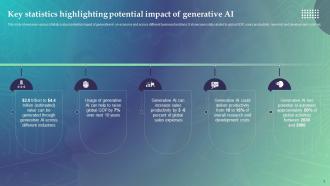
Slide 3: This slide presents Key statistics highlighting potential impact of generative AI.
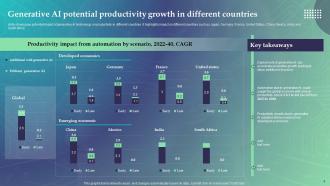
Slide 4: This slide displays Generative AI potential productivity growth in different countries.
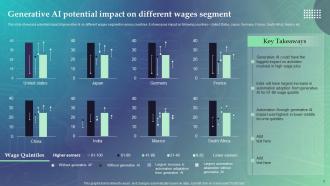
Slide 5: This slide represents Generative AI potential impact on different wages segment.
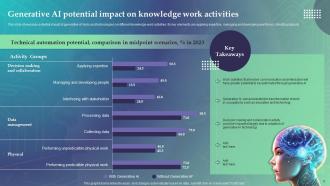
Slide 6: This slide showcases Generative AI potential impact on knowledge work activities.
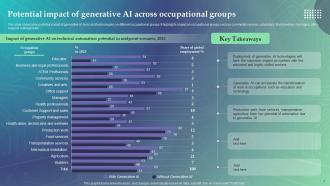
Slide 7: This slide shows Potential impact of generative AI across occupational groups.
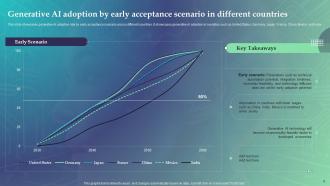
Slide 8: This slide presents Generative AI adoption by early acceptance scenario in different countries.
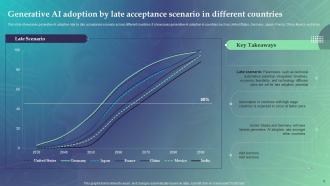
Slide 9: This slide displays Generative AI adoption by late acceptance scenario in different countries.
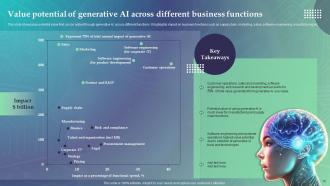
Slide 10: This slide represents Value potential of generative AI across different business functions.
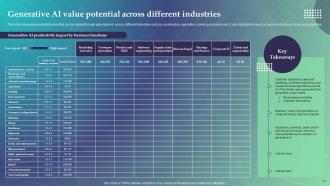
Slide 11: This slide shows Generative AI value potential across different industries.
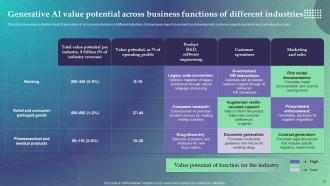
Slide 12: This slide presents Generative AI value potential across business functions of different industries.
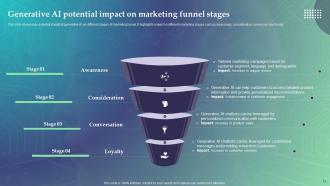
Slide 13: This slide displays Generative AI potential impact on marketing funnel stages.
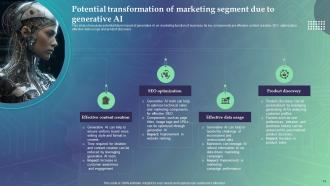
Slide 14: This slide represents Potential transformation of marketing segment due to generative AI.
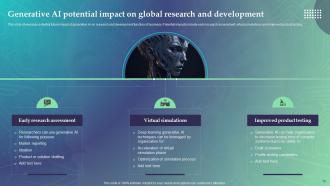
Slide 15: This slide showcases Generative AI potential impact on global research and development.
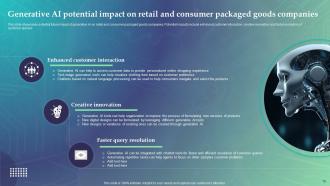
Slide 16: This slide shows Generative AI potential impact on retail and consumer packaged goods companies.
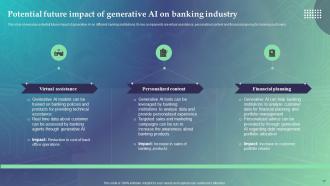
Slide 17: This slide presents Potential future impact of generative AI on banking industry.
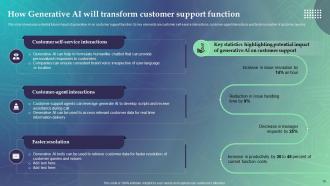
Slide 18: This slide displays How Generative AI will transform customer support function.
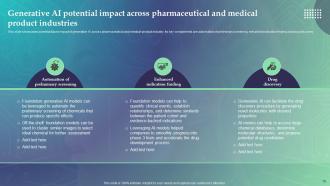
Slide 19: This slide represents Generative AI potential impact across pharmaceutical and medical product industries.
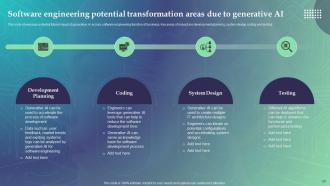
Slide 20: This slide showcases Software engineering potential transformation areas due to generative AI.
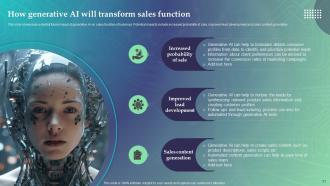
Slide 21: This slide shows How generative AI will transform sales function.
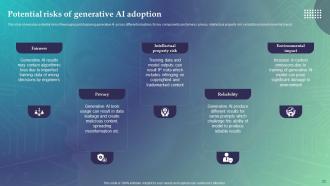
Slide 22: This slide presents Potential risks of generative AI adoption.
Slide 23: This slide contains all the icons used in this presentation.
Slide 24: This slide is titled as Additional Slides for moving forward.
Slide 25: This is About Us slide to show company specifications etc.
Slide 26: This slide provides 30 60 90 Days Plan with text boxes.
Slide 27: This is a Quotes slide to convey message, beliefs etc.
Slide 28: This is Our Target slide. State your targets here.
Slide 29: This is a Timeline slide. Show data related to time intervals here.
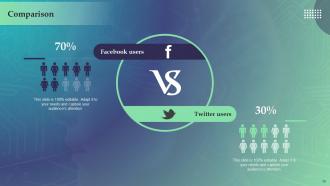
Slide 30: This is a Comparison slide to state comparison between commodities, entities etc.
Slide 31: This slide shows Post It Notes. Post your important notes here.
Slide 32: This slide presents Roadmap with additional textboxes.
Slide 33: This is a Thank You slide with address, contact numbers and email address.
Economic Potential Of Generative AI Technology Powerpoint Ppt Template Bundles AI MM with all 38 slides:
Use our Economic Potential Of Generative AI Technology Powerpoint Ppt Template Bundles AI MM to effectively help you save your valuable time. They are readymade to fit into any presentation structure.







FAQs for Economic Potential Of Generative AI Technology Powerpoint Ppt Template
Tech and media companies are crushing it right now with AI - they're getting instant wins from automated content and coding. Healthcare and finance have massive potential too, but they're crawling along because of all the regulatory headaches (can't really blame them though). Marketing teams are already doing crazy personalized campaigns, developers are coding way faster, and pharma is speeding up drug research. Honestly, any business drowning in data or churning out content constantly should be all over this. Start by looking at what boring, repetitive stuff your team does every day - that's where you'll see the biggest impact first.
Dude, generative AI is everywhere now and it's actually pretty useful. Manufacturing companies use it to fix supply chain issues and predict when machines will break down. Healthcare? Faster diagnoses and treatment plans. Retail gets personalized shopping experiences and better inventory management. What's cool is it won't steal your job - it just handles the tedious stuff. You get to focus on the creative work that actually needs a human brain. Look at your daily routine and spot the repetitive, data-heavy tasks. That's where you'll want AI help first.
Honestly, AI can be a total game-changer for product dev. I'd start small though - pick one piece of your process and mess around with it there first. The crazy thing is how fast it cranks out concept variations and prototypes. We're talking minutes instead of weeks for mockups, specs, user scenarios, even basic MVP code. Sometimes the suggestions get pretty wild (not always in a good way), but it's like having a brainstorming buddy who doesn't burn out. Best part? You can test way more ideas without blowing your budget or timeline. My team's been using it mostly for early-stage stuff and it's honestly changed how we approach ideation.
AI is wild right now - it's cranking out art, music, and copy in seconds. There's definitely two sides to this whole thing. Yeah, it can make you way more productive and help with brainstorming or boring stuff. Some of the artwork it creates is honestly mind-blowing. But people are freaking out about losing jobs and whether human creativity even matters anymore. I think the trick is treating it like a writing buddy, not your replacement. Focus on skills that work WITH AI instead of trying to beat it at its own game. Way smarter approach.
So generative AI can basically create super personalized content for tons of people at once. Email campaigns, product descriptions, social media posts - all customized based on what each customer actually likes and does. The AI digs through your customer data and spits out messaging that hits different for each person or group. Honestly, it's kinda scary how specific it gets lol. Dynamic website stuff works too, plus personalized videos and chatbot responses. Oh and you'll want to feed it solid customer data and brand guidelines - otherwise it might go rogue. But when it works? Your content feels way more personal without you doing all that manual work.
Okay so the big ones are job displacement, data privacy, and bias issues. Deploying AI at scale means you're basically automating away people's jobs - which sucks to think about tbh. Then there's all the messy stuff around training data - was it ethically sourced or just scraped from everywhere? Your AI might also amplify biases in hiring or lending decisions without you realizing. Oh, and IP concerns if it spits out something too similar to copyrighted work. Honestly I'd start with an ethical impact assessment before rolling anything out. Set up some governance rules early too.
Honestly, generative AI is a game changer for cutting supply chain costs. It automates demand forecasting and route optimization really well. Equipment failures? It'll predict those before they wreck your day. The cool part is watching it analyze huge datasets instantly - way faster than any human could. You won't deal with overstocking anymore since inventory management gets way smarter. Oh, and vendor communications become streamlined through automated reports. My advice? Start with just demand planning first. Once you see how much time it saves, you can expand from there. The ROI is usually pretty obvious after a few months.
Dude, AI is honestly a game-changer for startups right now. You can mock up products super fast, pump out marketing stuff without paying crazy agency fees, and if you're doing software - boom, it'll even write code for you. Your money lasts way longer since you don't need to hire as many people upfront. Plus you can test ideas quickly before dumping serious cash into them. I mean, it's pretty nuts what you can pull off with just your laptop these days. Figure out what boring, repetitive stuff AI can handle, then use that extra time for the big picture strategy work.
Yeah, AI is shaking things up for sure. Basic stuff like simple writing and data entry? That's getting automated pretty fast. Some jobs will vanish, no sugar-coating it. But here's the thing - new roles are popping up too. Someone's gotta train and manage all these AI tools, and that someone could be you. Creative work and people skills are still super safe though. Oh, and anything requiring real problem-solving. My advice? Don't try to beat AI at its own game. Learn to work with it instead.
Biggest thing to watch out for is your team getting rusty - when they rely on AI too much, critical thinking just disappears. Then what happens if the system crashes? You're toast. Also, AI loves amplifying whatever biases already exist, which gets messy fast. I've literally watched people forget how to do basic calculations because they're so used to having AI handle everything. It's wild. My advice? Figure out what's too important to automate completely. Always have someone double-checking the AI's work, especially on anything that actually matters.
Honestly, generative AI is a game-changer for data stuff. It'll automatically find patterns in huge datasets and whip up visualizations super fast - we're talking minutes instead of the usual hours of headache. Plus it handles messy data like customer reviews really well, which used to be such a pain. You can simulate different scenarios for planning and it'll even translate your complex findings into normal language for your boss or whoever. Oh, and automating those boring recurring reports? Chef's kiss. I'd say start with just one report you hate doing and see how much time it saves you. Trust me on this one.
Honestly, just be completely upfront about it from the start. Tell people exactly how you're using AI and why it actually helps them. The companies I've seen fail at this were way too secretive - that just makes everyone paranoid. Position it as something that kills the boring, repetitive stuff so your team can focus on the fun, strategic work instead. Get employees involved in choosing what to automate. They'll tell you what tasks they hate doing anyway. Then invest in training so people feel excited about the changes, not scared they're getting replaced.
So generative AI can actually help with sustainability stuff - pretty neat. It'll optimize your energy use and make supply chains way more efficient. Instead of building physical prototypes, you can create virtual ones (saves tons of materials). Oh, and it automates those tedious sustainability reports nobody wants to do manually. Here's the thing though - AI uses a lot of energy itself. Kinda ironic, right? Pick one process where AI could really cut your environmental impact, then actually measure both sides: what you're saving vs. what the AI costs you energy-wise. Don't just assume it's better.
Look, AI is still a massive advantage right now, but that window's closing. Early movers are crushing it with personalized experiences and faster development cycles. Once everyone gets the same tools though? It's all about execution. The companies winning are the ones building AI into everything they do, not just slapping it on top. Honestly, I'd start testing specific use cases yesterday if I were you. Otherwise you'll spend the next year just trying to catch up while your competitors lap you.
So basically, generative AI lets you create personalized stuff for each customer without doing it manually for thousands of people. Think custom product descriptions, emails that don't suck, chatbots that actually talk like humans instead of robots. It learns from how people behave on your site and adapts content in real-time - pretty cool honestly. The whole point is making interactions feel handcrafted rather than mass-produced spam. I'd start testing it on whatever touchpoints matter most to your business first. You'll probably be surprised how much better the engagement gets.
-
Professional and unique presentations.
-
Excellent Designs.