


Effectively Managing The Relationship With Partners To Ensure Business Growth Complete Deck
Partner relationship management PRM provides tremendous benefits to the organizations, such as business reputation, business expansion, and many more. Here is a competently designed template on Effectively Managing the Relationship with Partners to Ensure Business Growth. It will assist the organizations in improving their business performance by establishing new revenue streams, sales framework, etc. This presentation begins with a business performance overview section; companies can use the section to highlight revenue generation details, sales performance, customer churn rate, etc. Slides such as the need for more robust partner management, shareholders expectations, how we will meet, building new revenue streams will help the companies address the target audience about partner management importance, expectations of shareholders, ways to meet them, etc. Companies can use sections to develop healthier relations with partners, namely partner selection segmentation and relationship management, management plans, roadmaps, and improving sales performance. Slides such as support structure, communication plan, the checklist will assist the companies in maintaining effective communication, channel management, and identifying the right partner for their business. At last, the dashboard and scorecard section will assist organizations in measuring partner performance, capabilities, sales performance, and customer satisfaction level. Get access now.

























You must be logged in to download this presentation.


Do you want to remove this product from your favourites?
 Impress your
 audience
 100%
100% Editable
 Save Hours
 of Time
PowerPoint presentation slides
Deliver this complete deck to your team members and other collaborators. Encompassed with stylized slides presenting various concepts, this Effectively Managing The Relationship With Partners To Ensure Business Growth Complete Deck is the best tool you can utilize. Personalize its content and graphics to make it unique and thought-provoking. All the fifty one slides are editable and modifiable, so feel free to adjust them to your business setting. The font, color, and other components also come in an editable format making this PPT design the best choice for your next presentation. So, download now.

People who downloaded this PowerPoint presentation also viewed the following :
Content of this Powerpoint Presentation
Slide 1: This slide introduces Effectively Managing the Relationship with Partners to Ensure Business Growth. State Your Company Name and begin.
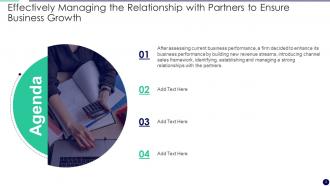
Slide 2: This is an Agenda slide. State your agendas here.
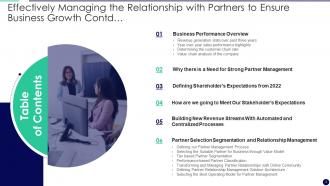
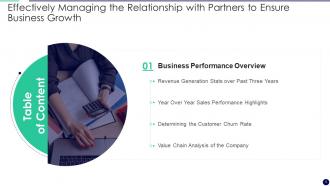
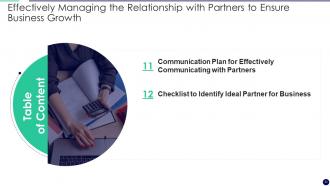
Slide 3: This slide presents Table of Content for the presentation.
Slide 4: This is another slide continuing Table of Content for the presentation.
Slide 5: This slide shows title for topics that are to be covered next in the template.
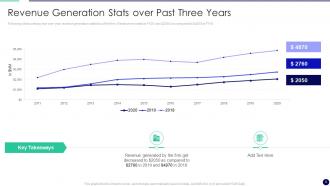
Slide 6: This slide presents Revenue Generation Stats over Past Three Years.
Slide 7: This slide displays Year Over Year Sales Performance Highlights.
Slide 8: This slide represents stats about customer churn rate in 2020.
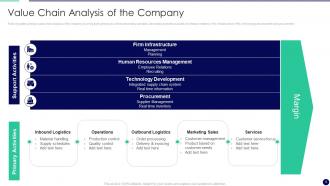
Slide 9: This slide portrays value chain analysis of the company covering both primary as well as secondary activities.
Slide 10: This slide shows title for topics that are to be covered next in the template.
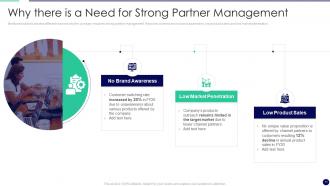
Slide 11: This slide presents Why there is a Need for Strong Partner Management.
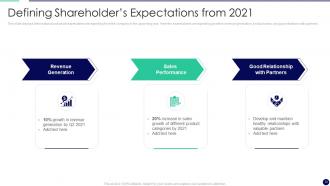
Slide 12: This slide displays information about what shareholders are expecting from the company in the upcoming year.
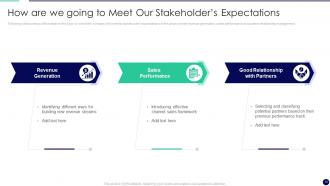
Slide 13: This slide represents How are we going to Meet Our Stakeholder’s Expectations.
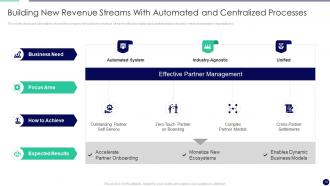
Slide 14: This slide showcases Building New Revenue Streams With Automated and Centralized Processes.
Slide 15: This slide shows title for topics that are to be covered next in the template.
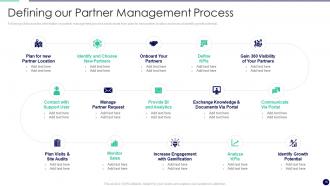
Slide 16: This slide presents Defining our Partner Management Process.
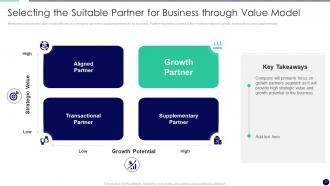
Slide 17: This slide displays Selecting the Suitable Partner for Business through Value Model.
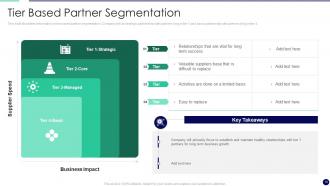
Slide 18: This slide illustrates information on tier based partner segmentation.
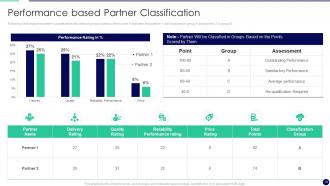
Slide 19: This slide represents partner’s classification into defined groups based on their score.
Slide 21: This slide showcases Transforming and Managing Partner Relationships with Online Community.
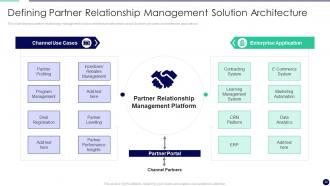
Slide 22: This slide shows Defining Partner Relationship Management Solution Architecture.
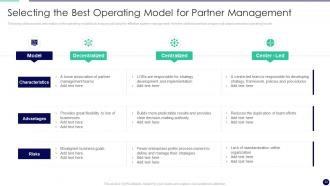
Slide 23: This slide presents Selecting the Best Operating Model for Partner Management.
Slide 24: This slide shows title for topics that are to be covered next in the template.
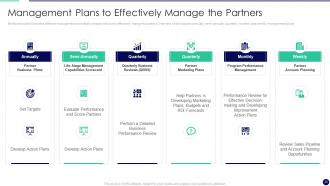
Slide 25: This slide displays Management Plans to Effectively Manage the Partners.
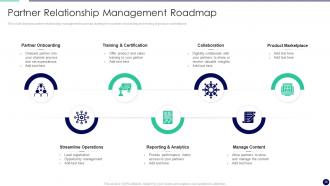
Slide 26: This slide represents partner relationship management roadmap starting from partner onboarding and ending at product marketplace.
Slide 27: This slide shows title for topics that are to be covered next in the template.
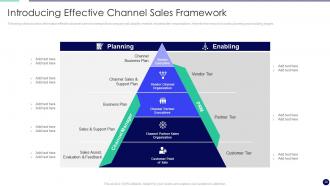
Slide 28: This slide presents information effective channel sales framework that company will adopt to meet its shareholder’s expectations.
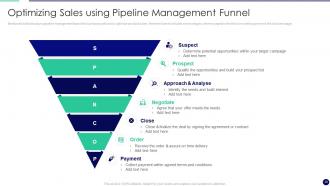
Slide 29: This slide displays Optimizing Sales using Pipeline Management Funnel.
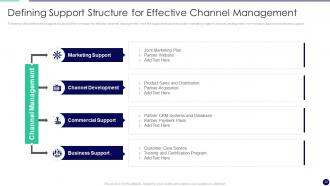
Slide 30: This slide represents Defining Support Structure for Effective Channel Management.
Slide 31: This slide shows title for topics that are to be covered next in the template.
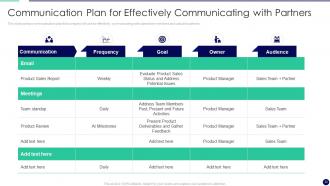
Slide 32: This slide showcases Communication Plan for Effectively Communicating with Partners.
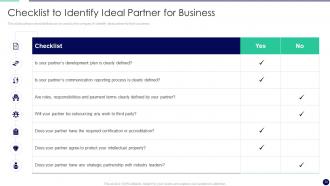
Slide 33: This slide presents Checklist to Identify Ideal Partner for Business.
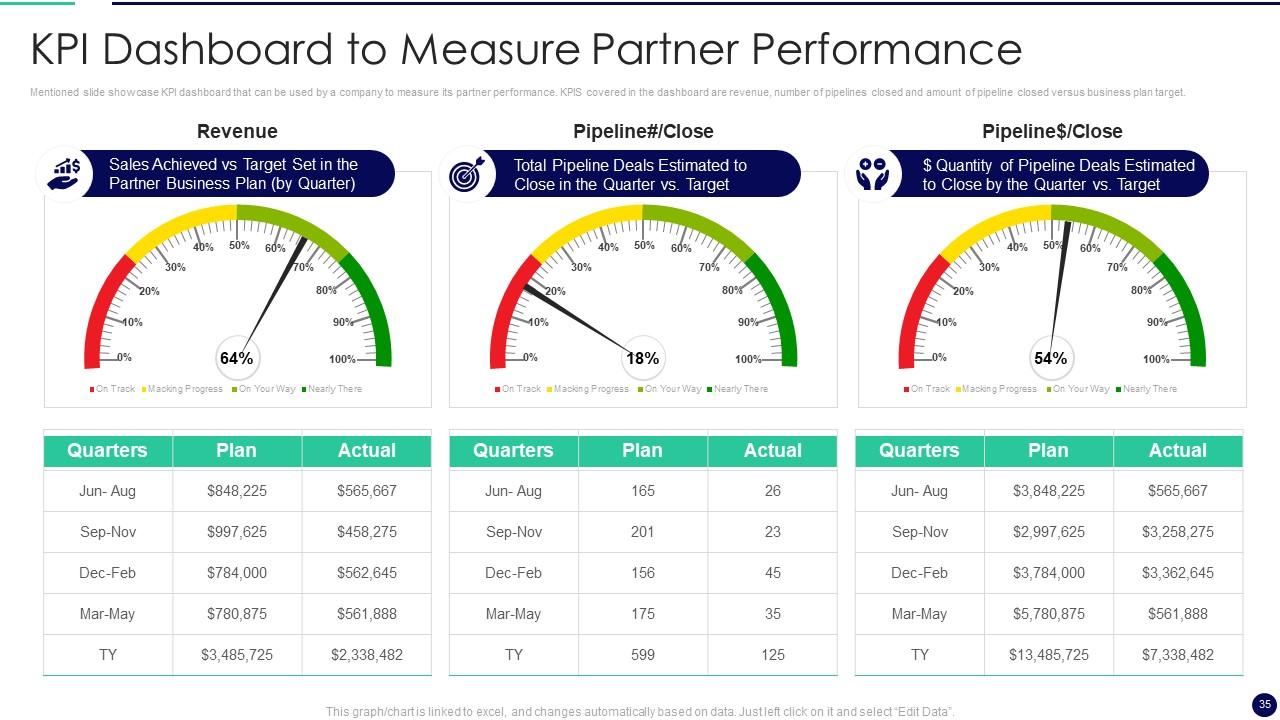
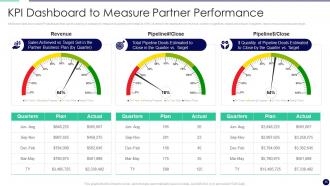
Slide 35: This slide displays Sales Achieved vs Target Set in the Partner Business Plan (by Quarter).
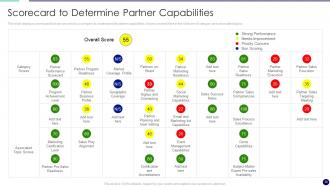
Slide 36: This slide represents scoreboard that can be used by a company to understand its partner capabilities.
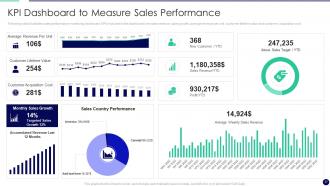
Slide 37: This slide showcases KPI Dashboard to Measure Sales Performance.
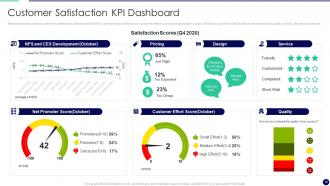
Slide 38: This slide presents customer satisfaction dashboard with KPIs namely net promoter score, customer effort score and satisfaction scores.
Slide 39: This slide displays Icons for Effectively Managing the Relationship with Partners to Ensure Business Growth.
Slide 40: This slide is titled as Additional Slides for moving forward.
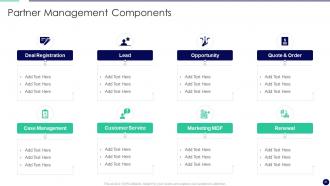
Slide 41: This slide represents Partner Management Components.
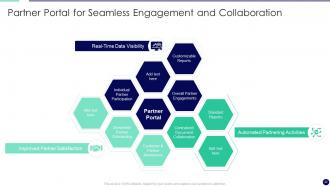
Slide 42: This slide showcases Partner Portal for Seamless Engagement and Collaboration.
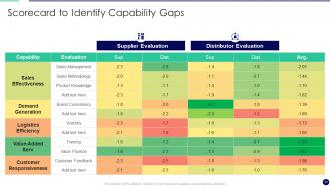
Slide 43: This slide displays Scorecard to Identify Capability Gaps.
Slide 44: This is About Us slide to show company specifications etc.
Slide 45: This slide provides 30 60 90 Days Plan with text boxes.
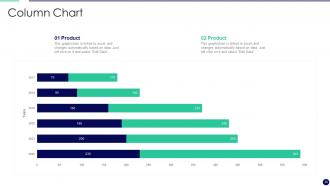
Slide 46: This slide displays Column chart with two products comparison.
Slide 47: This slide depicts Venn diagram with text boxes.
Slide 48: This is an Idea Generation slide to state a new idea or highlight information, specifications etc.
Slide 49: This slide shows Post It Notes. Post your important notes here.
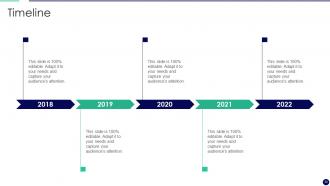
Slide 50: This is a Timeline slide. Show data related to time intervals here.
Slide 51: This is a Thank You slide with address, contact numbers and email address.
Effectively Managing The Relationship With Partners To Ensure Business Growth Complete Deck with all 56 slides:
Use our Effectively Managing The Relationship With Partners To Ensure Business Growth Complete Deck to effectively help you save your valuable time. They are readymade to fit into any presentation structure.
-
One-stop solution for all presentation needs. Great products with easy customization.
-
It makes easy work of my work presentations. I’ve never had to be nervous about my presentations for meetings.
