


Electronic Learning Investor Pitch Deck Ppt Template
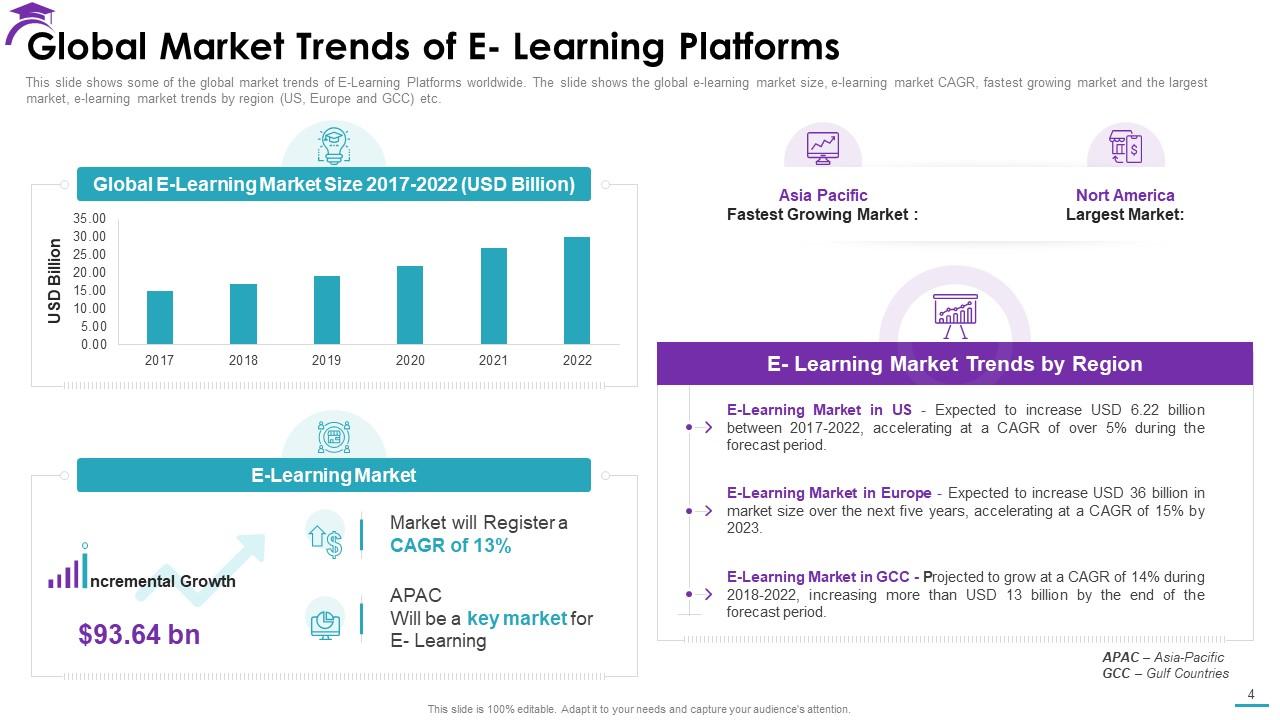
Electronic learning platform is a web portal for educational content and resources that provide students with everything they need in one location, including lectures, resources, opportunities to meet and chat with other students, and more. Check out our competently designed Electronic Learning Investor pitch deck that presents a summary of the platform Market, showing challenges and solutions offered by E-Learning Platforms, etc. The electronic learning industry globally is the fastest-growing market in the Asia Pacific APAC and the largest market in North America. This PPT template presents global market trends, top market players, growth drivers, etc. The PowerPoint presentation also exhibits information on pitfalls and challenges and market segmentation of electronic learning Platforms. Also, this deck provides details of electronic learning Platforms application overview, electronic learning Platforms key activities, electronic learning Platforms value proposition, competitive analysis, and business model of electronic learning Platforms. Additionally, this pitch deck provides information about the most popular electronic learning Platform and critical people involved in electronic learning Platform Leadership, addressing SWOT analysis for the electronic learning Sector and future initiatives by electronic learning Platforms. Download it now.
Electronic learning platform is a web portal for educational content and resources that provide students with everything th..


















-

- Google Slides is a new FREE Presentation software from Google.
- All our content is 100% compatible with Google Slides.
- Just download our designs, and upload them to Google Slides and they will work automatically.
- Amaze your audience with SlideTeam and Google Slides.
-

Want Changes to This PPT Slide? Check out our Presentation Design Services
-

- WideScreen Aspect ratio is becoming a very popular format. When you download this product, the downloaded ZIP will contain this product in both standard and widescreen format.
-

- Some older products that we have may only be in standard format, but they can easily be converted to widescreen.
- To do this, please open the SlideTeam product in Powerpoint, and go to
- Design ( On the top bar) -> Page Setup -> and select "On-screen Show (16:9)” in the drop down for "Slides Sized for".
- The slide or theme will change to widescreen, and all graphics will adjust automatically. You can similarly convert our content to any other desired screen aspect ratio.
Compatible With Google Slides

Get This In WideScreen
You must be logged in to download this presentation.


Do you want to remove this product from your favourites?
PowerPoint presentation slides
This in-depth and intuitively designed Electronic Learning Investor Pitch Deck Ppt Template. It is a resourceful tool for every organization. Use it to showcase your services and present a strategic outlay of your business activities. This complete deck helps give a quick overview of the companys viability. It also targets various topics of interest, thus being a comprehensive tool that you can download and use. Take advantage of this PowerPoint pitch deck to discuss your business plans and vision in an impressive manner. You can also use this deck to give a quick demonstration of your product and its USP that can be shared on Google Slides or PowerPoint. This complete deck comes in an editable format and two aspects ratios, thus increasing its applicability and visibility. It also acts as a visual reinforcer to make your presence felt in the industry.

People who downloaded this PowerPoint presentation also viewed the following :
Content of this Powerpoint Presentation
Slide 1: This slide displays title i.e. 'Electronic Learning Investor Pitch Deck'.
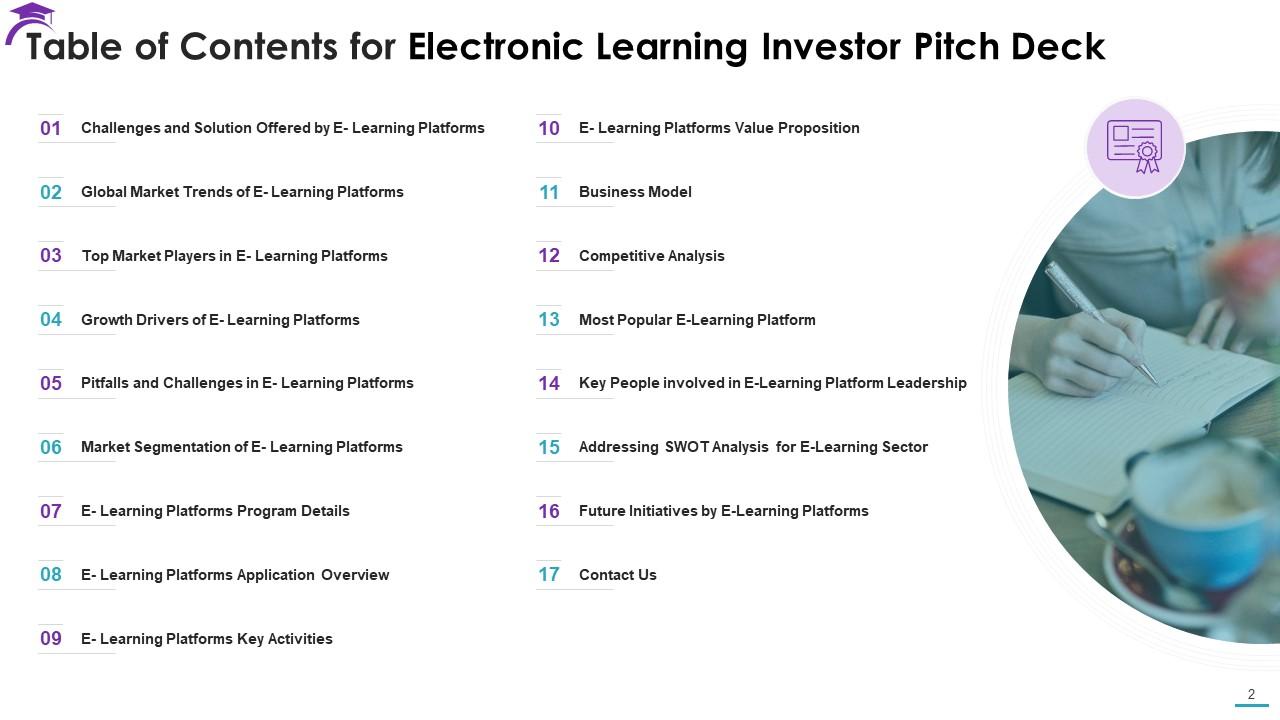
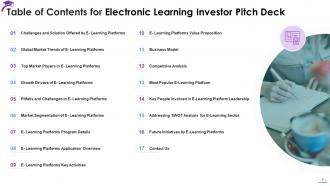
Slide 2: This slide presents table of contents.
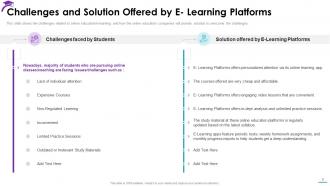
Slide 3: This slide shows the challenges related to online education/e-learning and how the online education companies will provide solution to overcome the challenges.
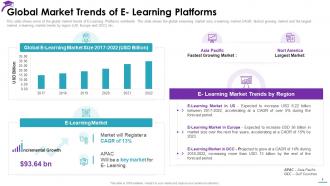
Slide 4: This slide shows some of the global market trends of E-Learning Platforms worldwide.
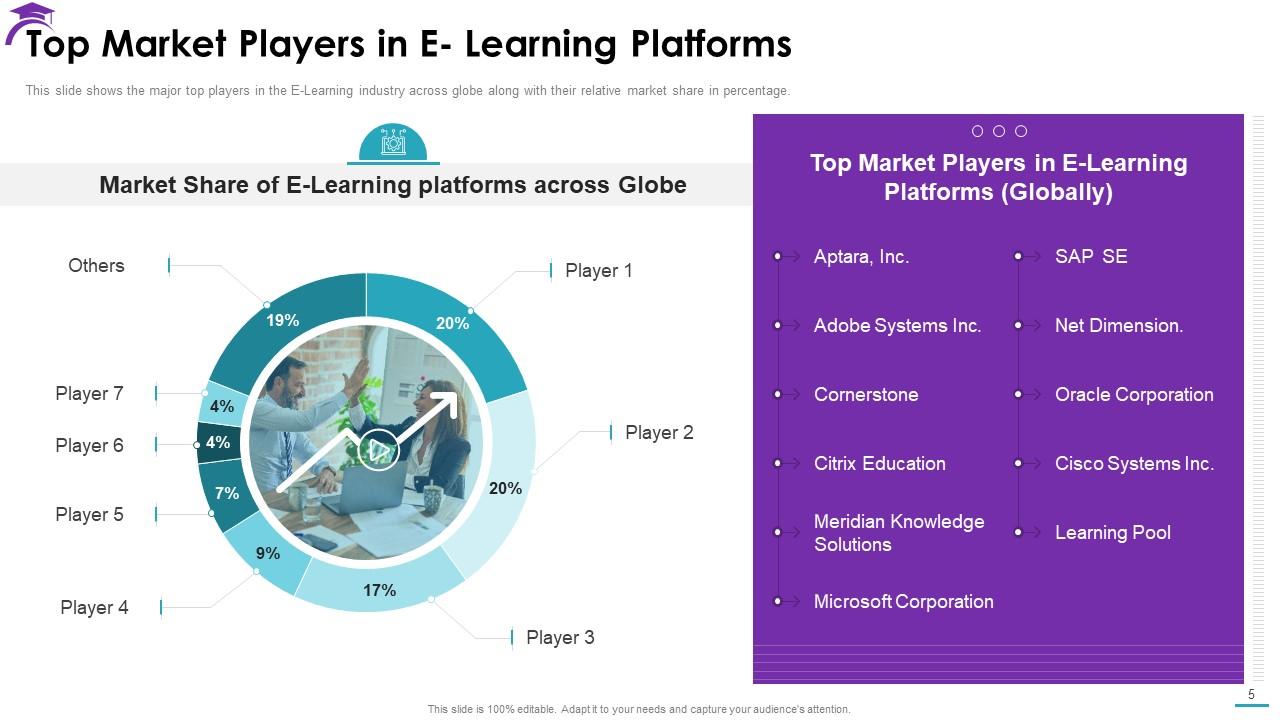
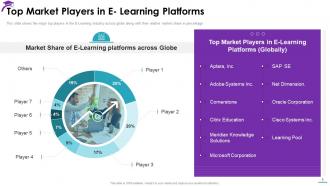
Slide 5: This slide shows the major top players in the E-Learning industry across globe along with their relative market share in percentage.
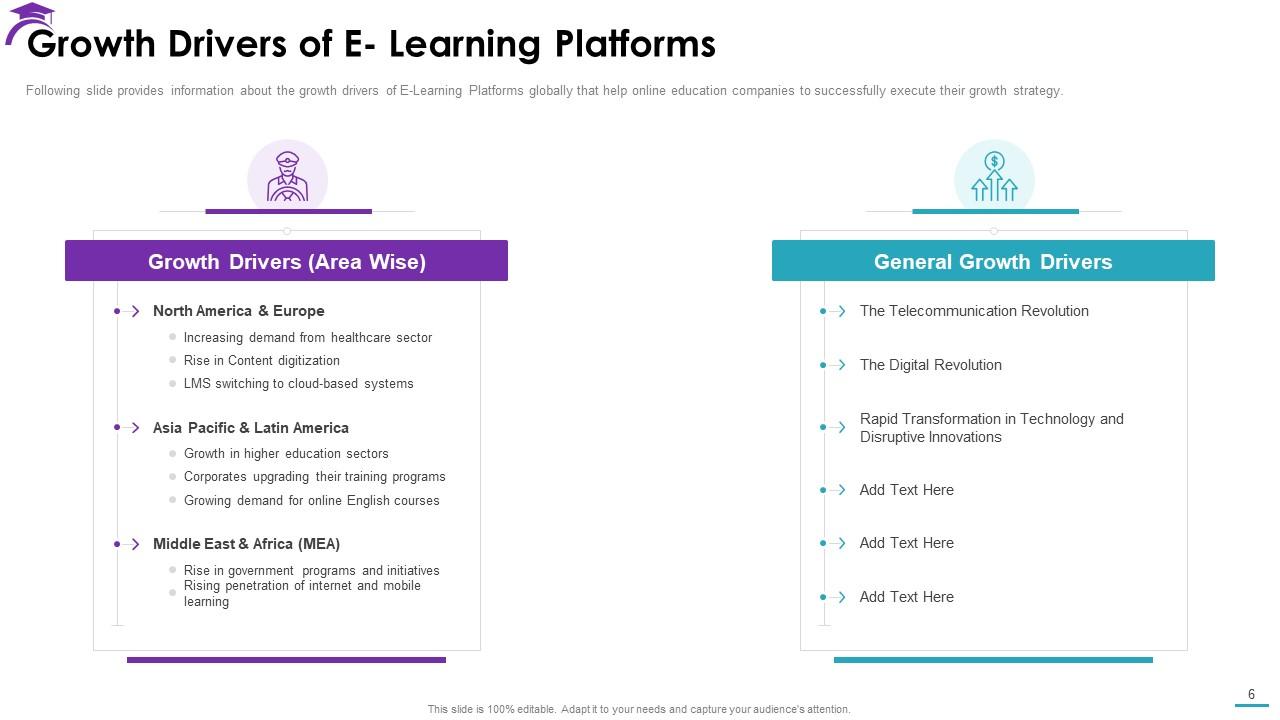
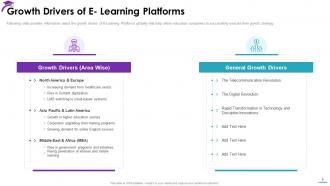
Slide 6: This slide provides information about the growth drivers of E-Learning Platforms globally.
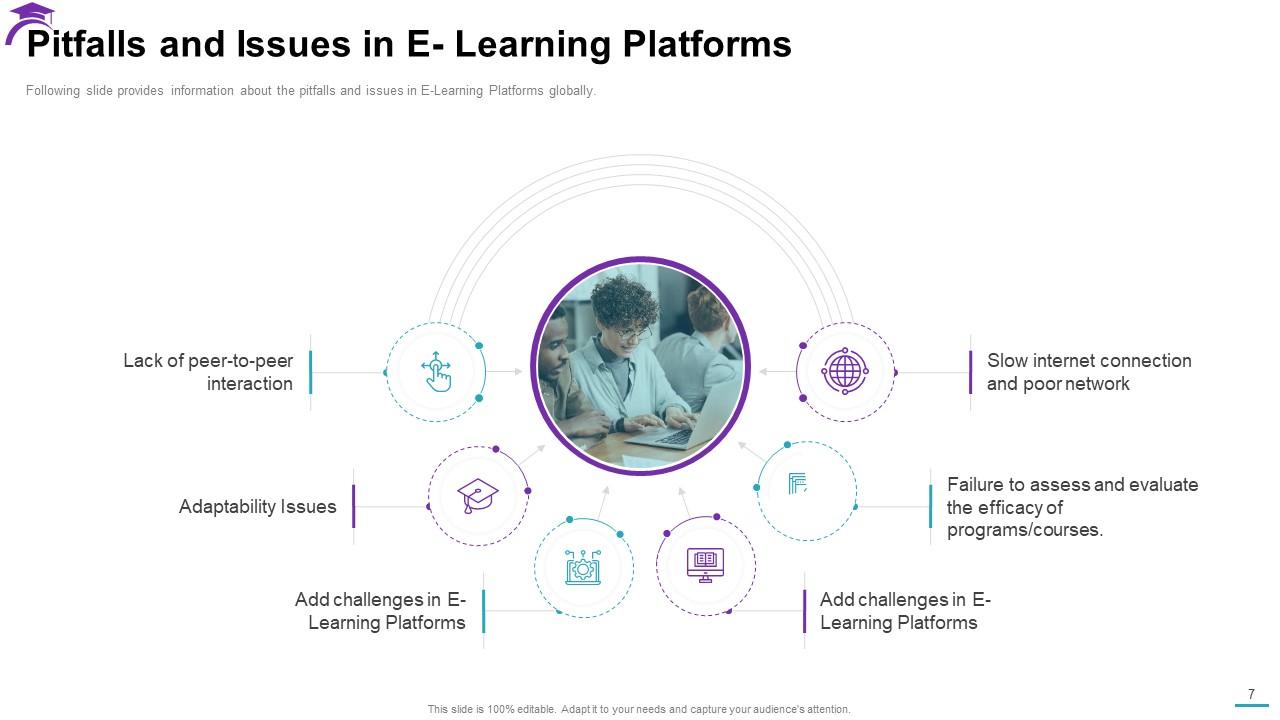
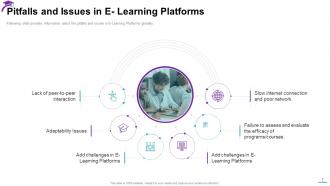
Slide 7: This slide provides information about the pitfalls and issues in E-Learning Platforms globally.
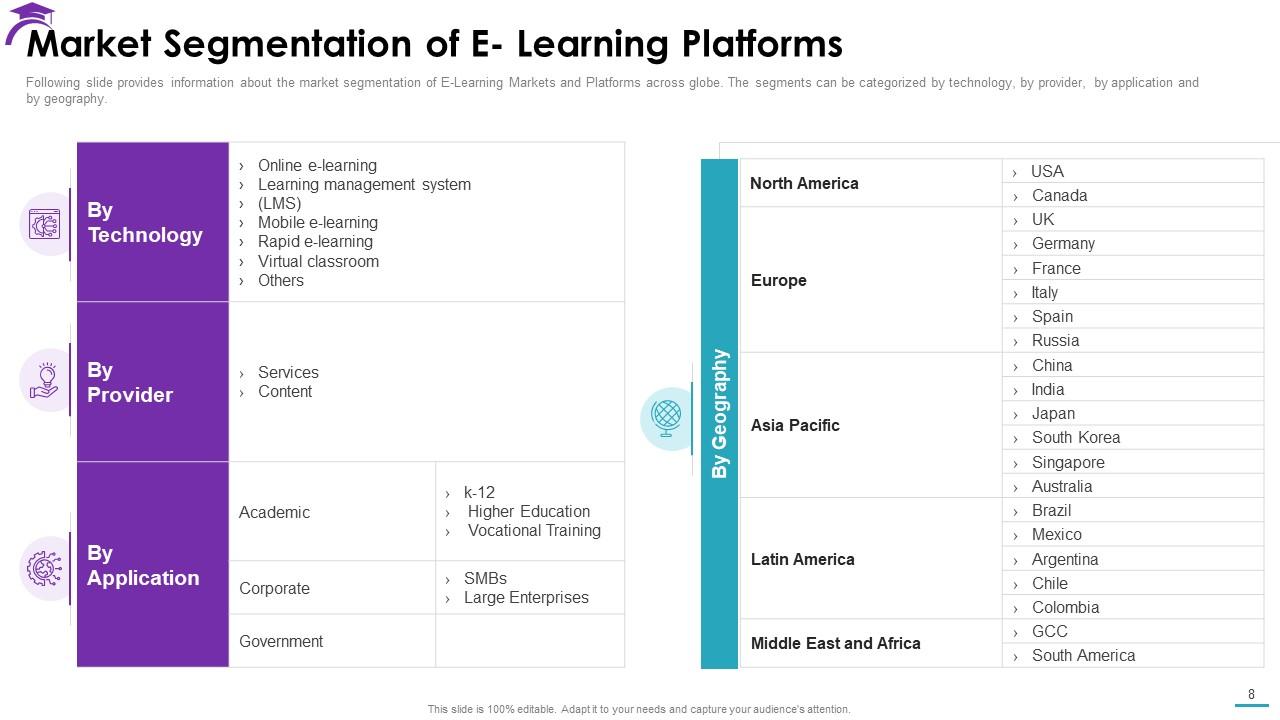
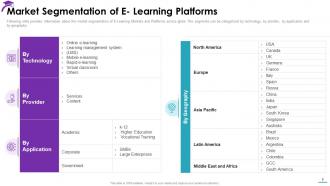
Slide 8: This slide provides information about the market segmentation of E-Learning Markets and Platforms across globe.
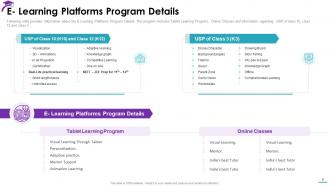
Slide 9: This slide provides information about the E-Learning Platforms Program Details.
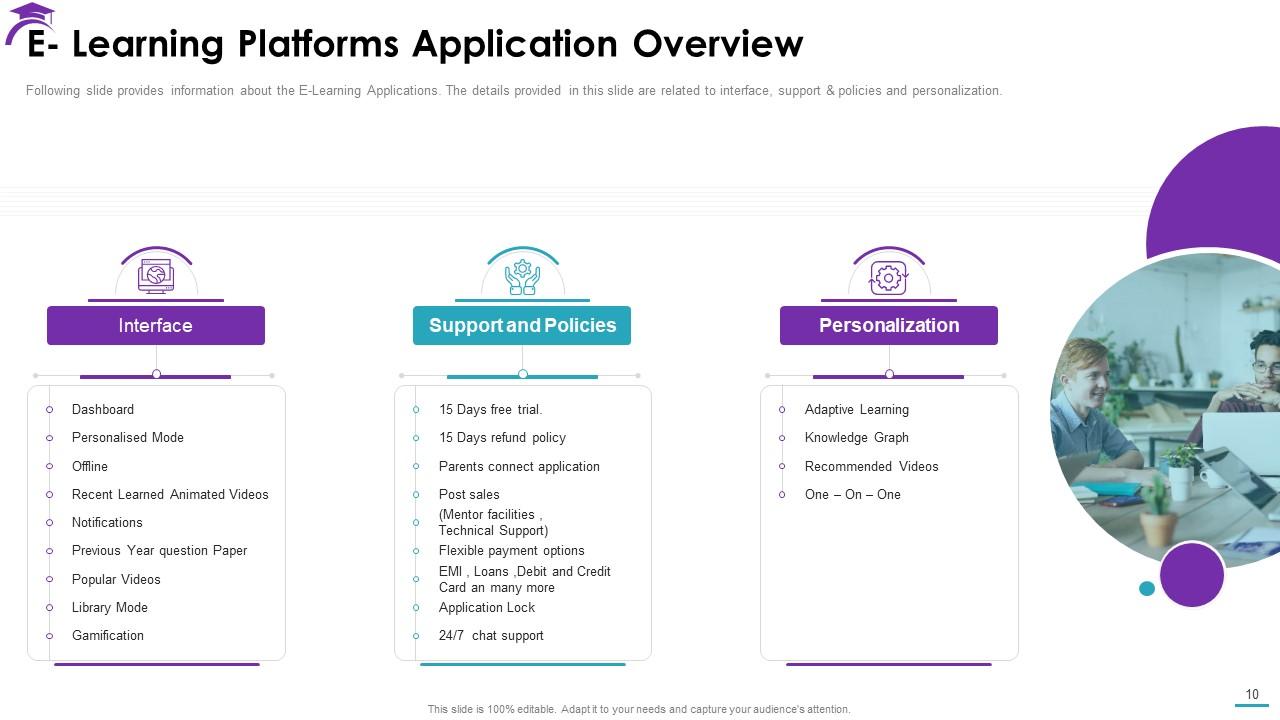
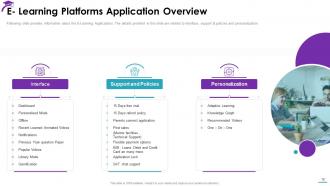
Slide 10: This slide provides information about the E-Learning Applications.
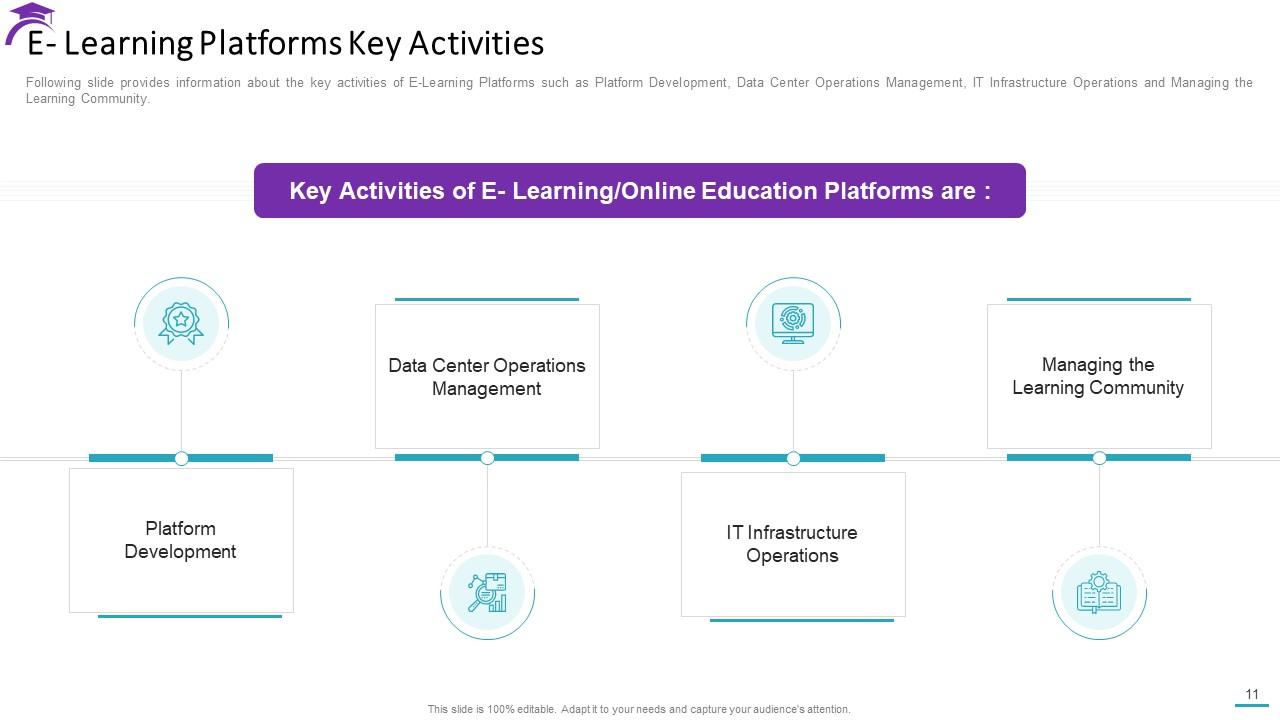
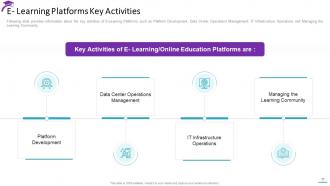
Slide 11: This slide provides information about the key activities of E-Learning Platforms such as Platform Development, Data Center Operations Management, etc.
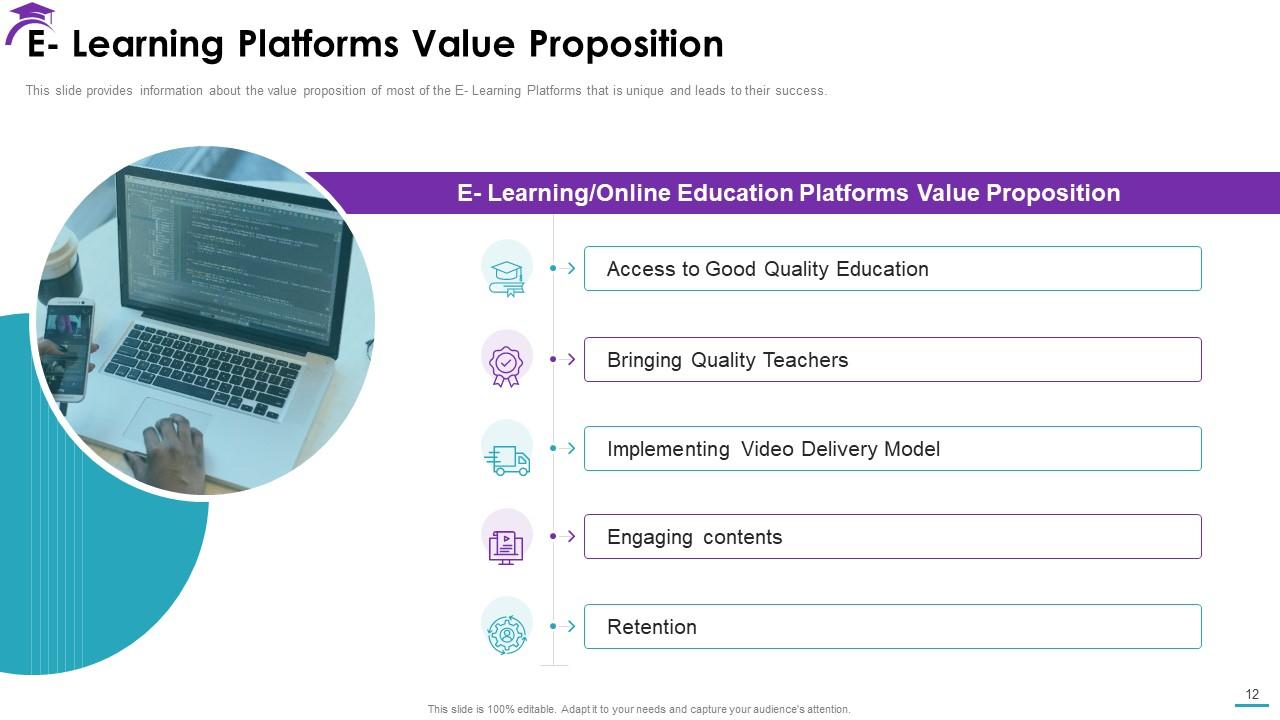
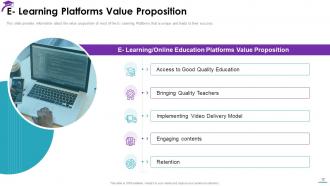
Slide 12: This slide provides information about the value proposition of most of the E- Learning Platforms that is unique and leads to their success.
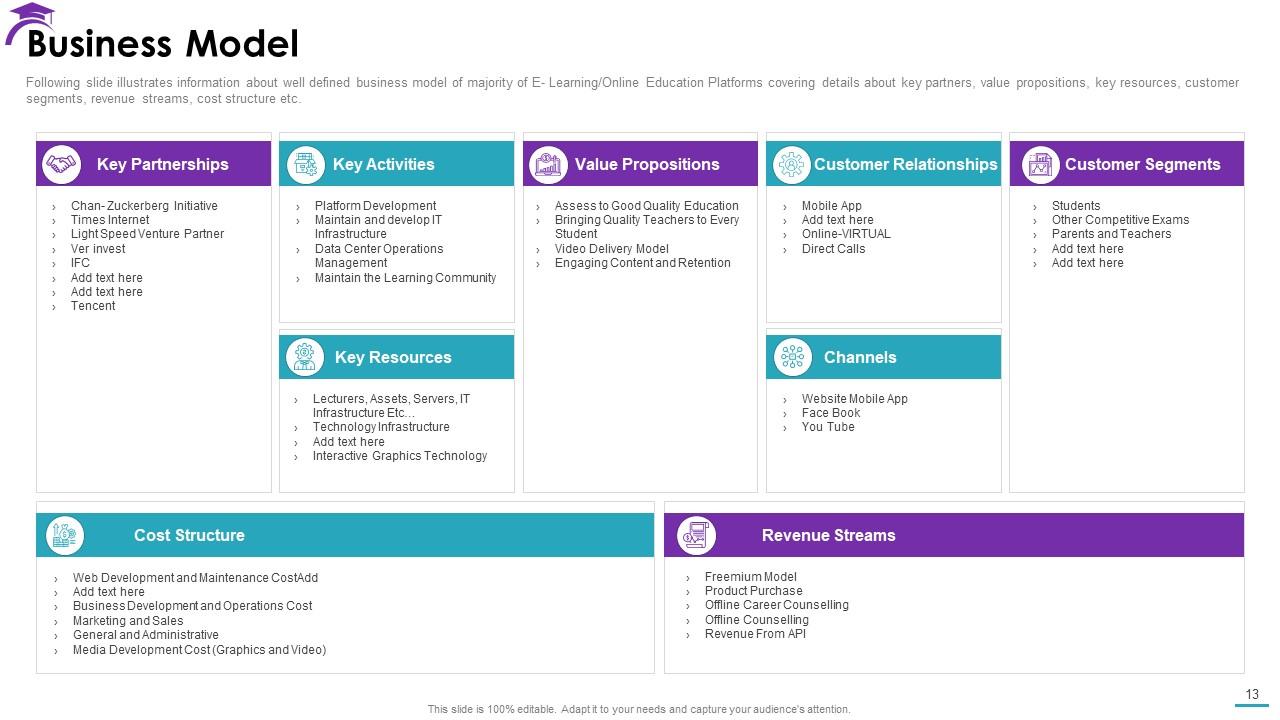
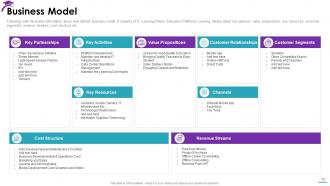
Slide 13: This slide illustrates information about well defined business model of majority of E- Learning/Online Education Platforms.
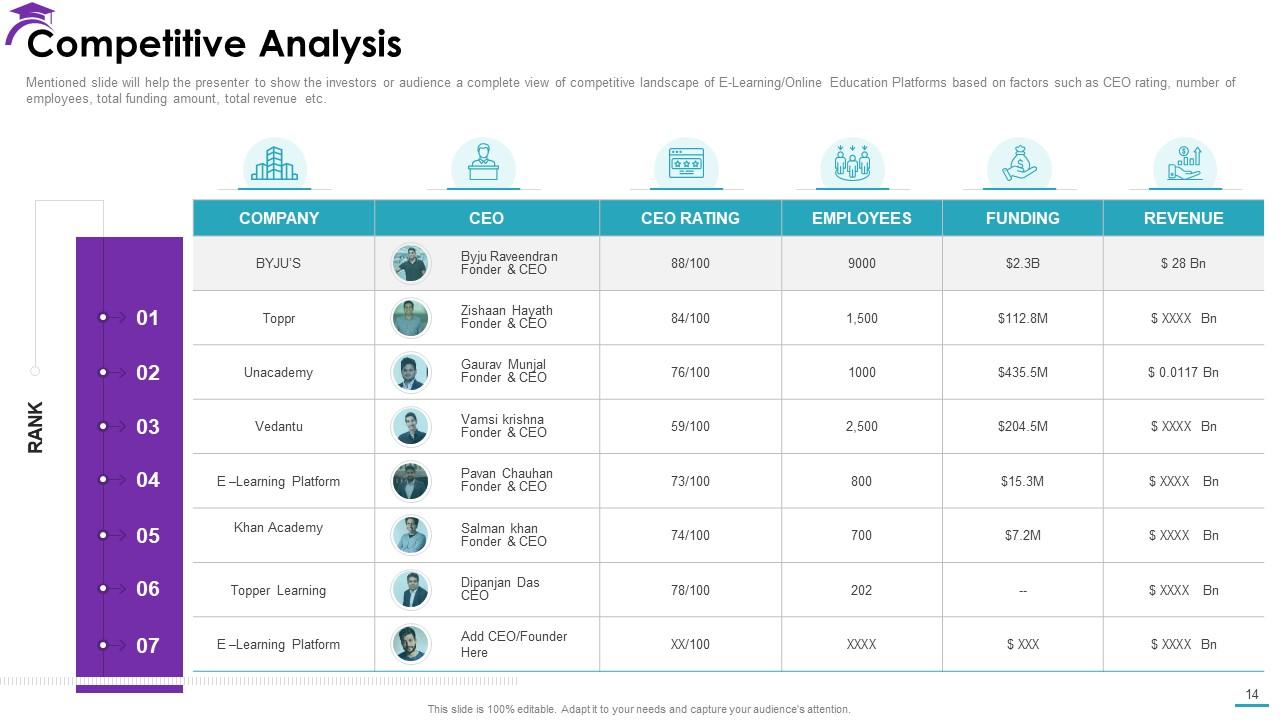
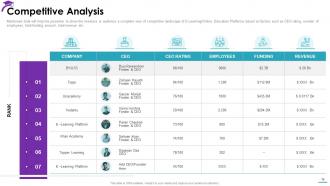
Slide 14: This slide will help the presenter to show the investors or audience a complete view of competitive landscape of E-Learning/Online Education Platforms.
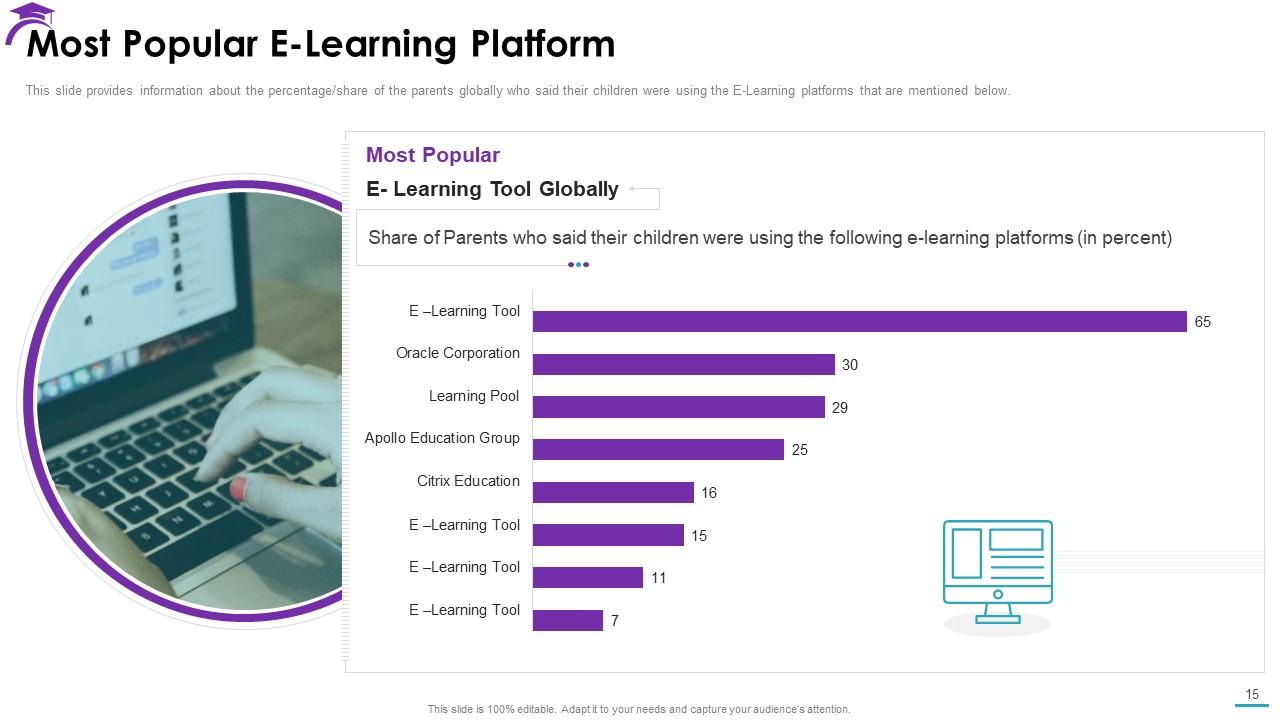
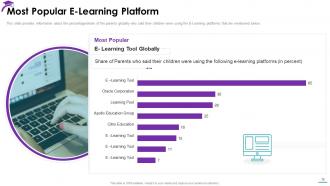
Slide 15: This slide provides information about the percentage/share of the parents globally who said their children were using the E-Learning platforms.
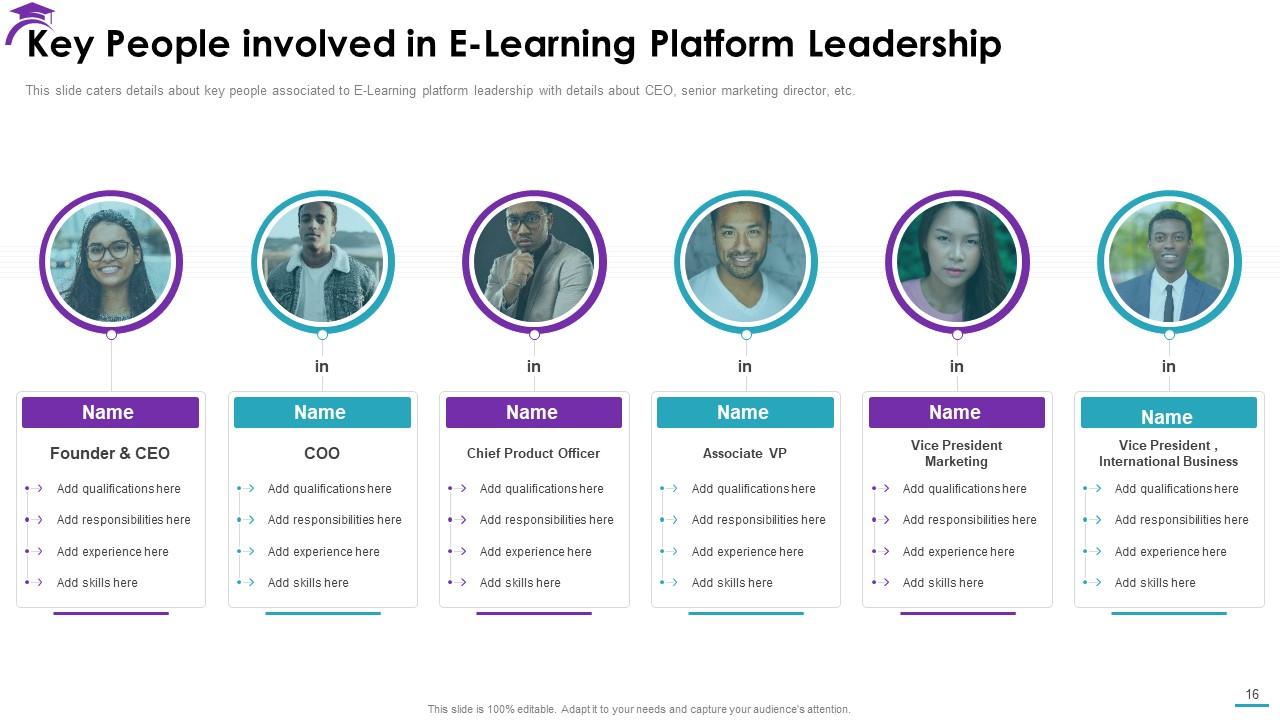
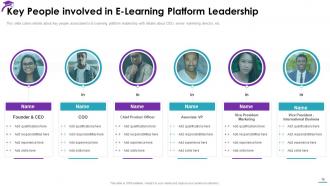
Slide 16: This slide caters details about key people associated to E-Learning platform leadership with details about CEO, senior marketing director, etc.
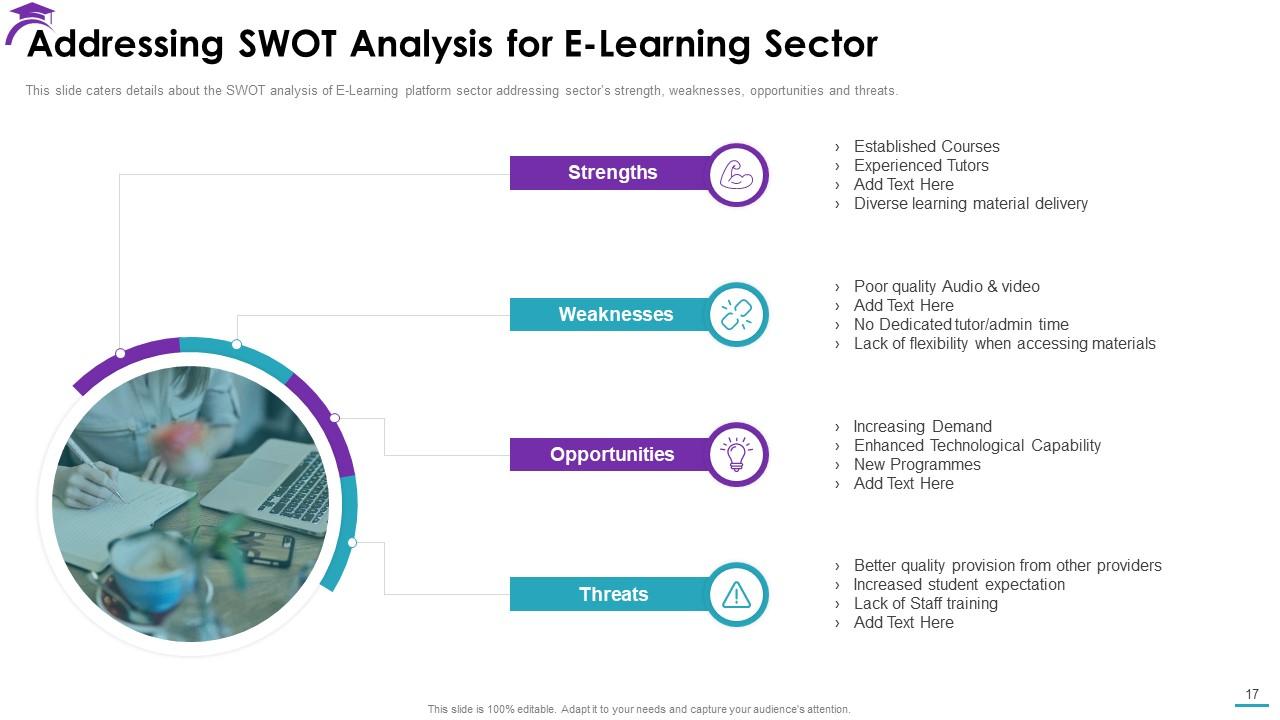
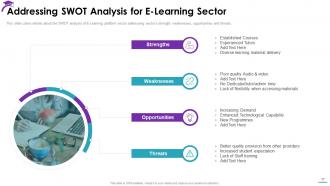
Slide 17: This slide caters details about the SWOT analysis of E-Learning platform sector addressing sector’s strength, weaknesses, opportunities and threats.
Slide 18: This slide caters details about future initiatives by e-learning platforms that will focus on leveraging relationships.
Slide 19: This slide showcases contact details of company.
Slide 20: This is the icons slide.
Slide 21: This slide presents title for additional slides.
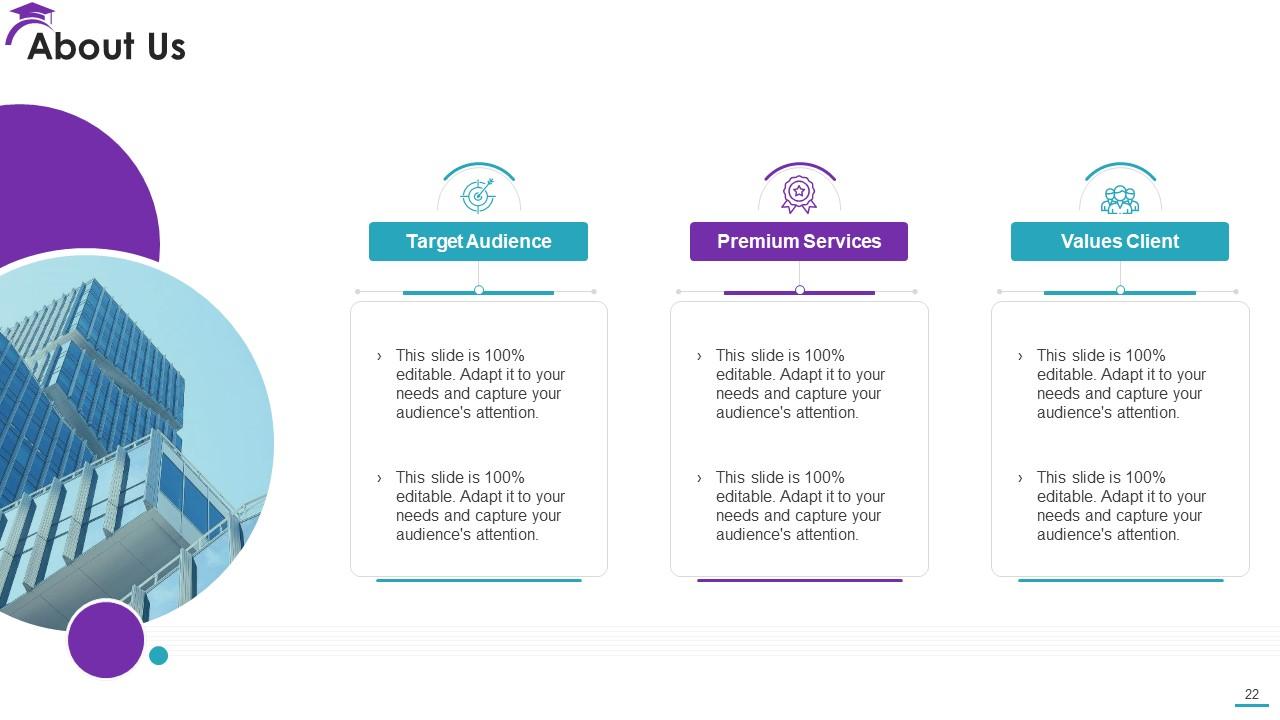
Slide 22: This slide shows about your company, target audience and its client's values.
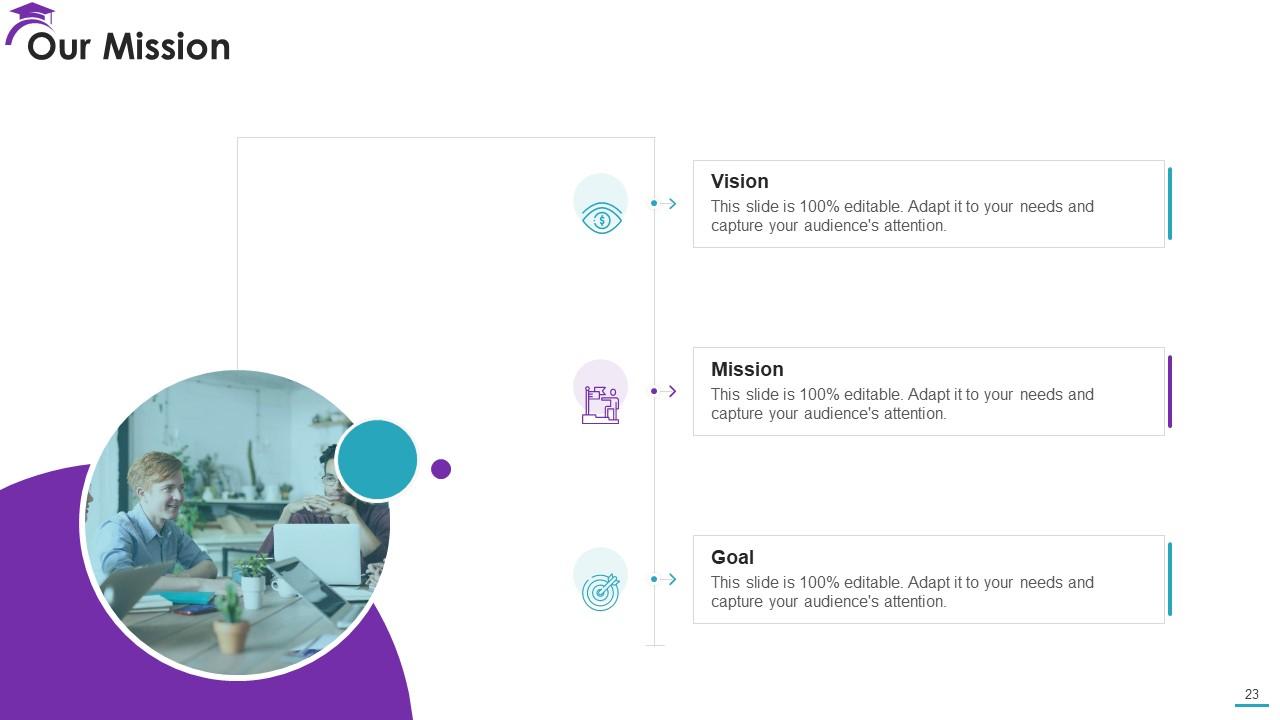
Slide 23: This slide presents your company's vision, mission and goals.
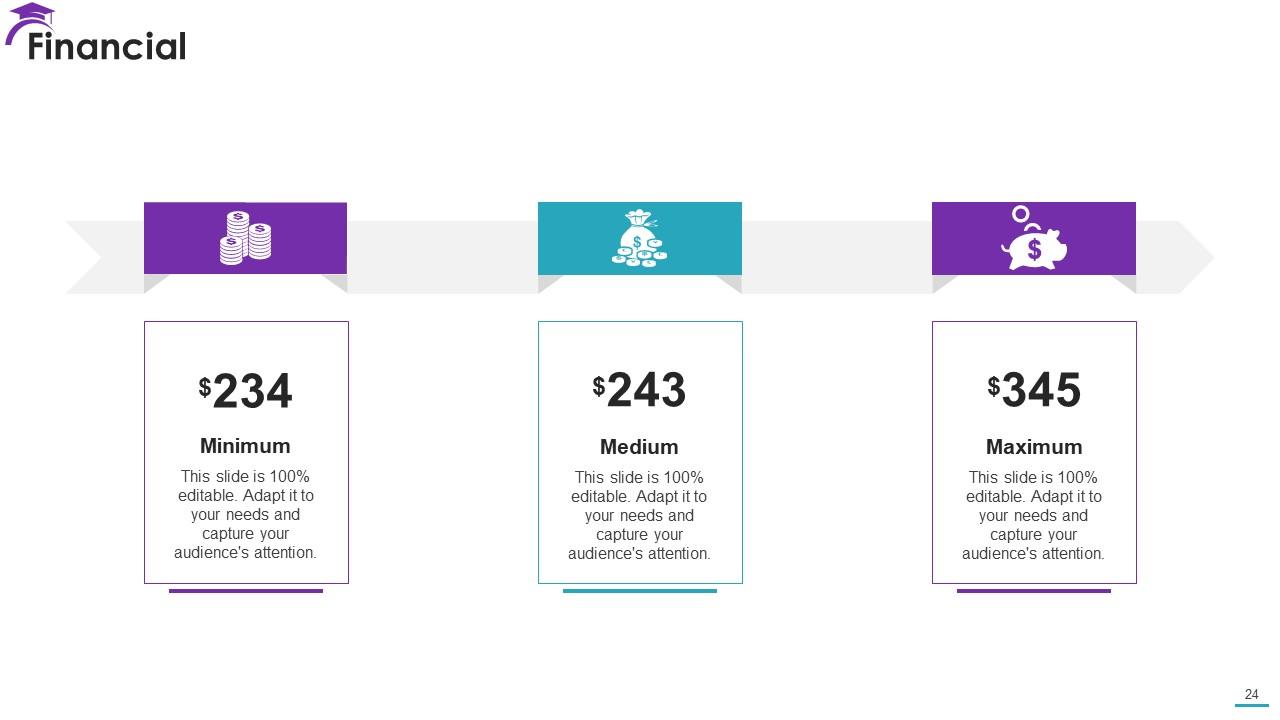
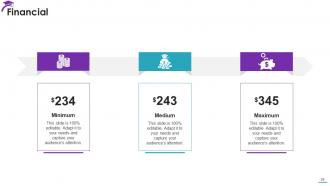
Slide 24: This slide showcases financials.
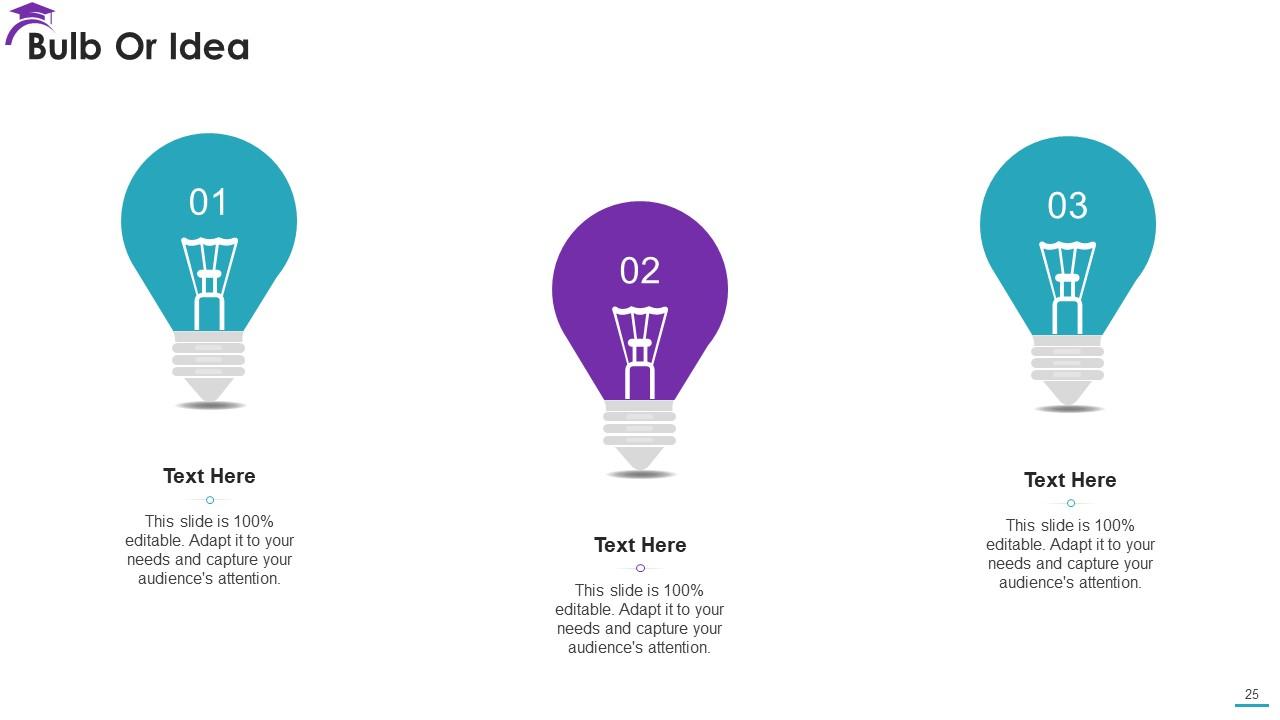
Slide 25: This slide exhibits ideas generated.
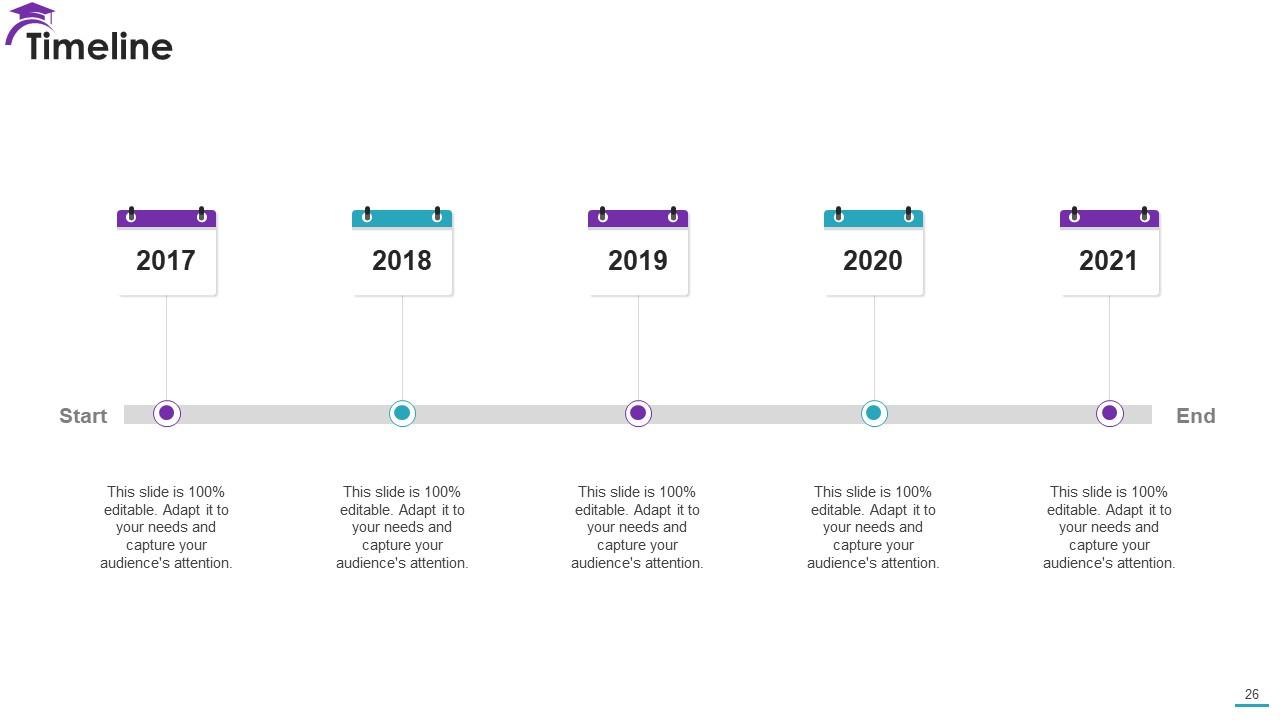
Slide 26: This slide exhibits yearly timeline.
Slide 27: This slide depicts posts for past experiences of clients.
Slide 28: This slide presents location of company in world map.
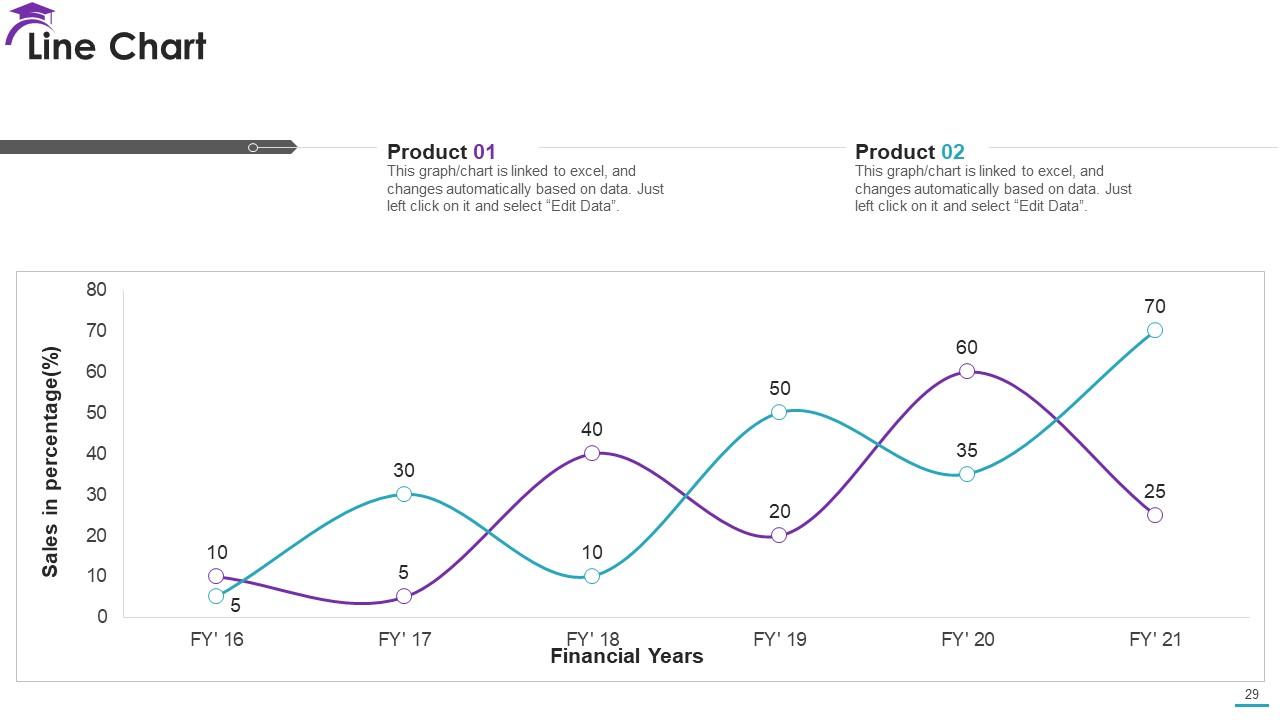
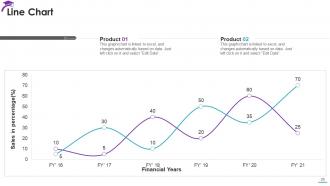
Slide 29: This slide exhibits yearly sales line charts for different products. The charts are linked to Excel.
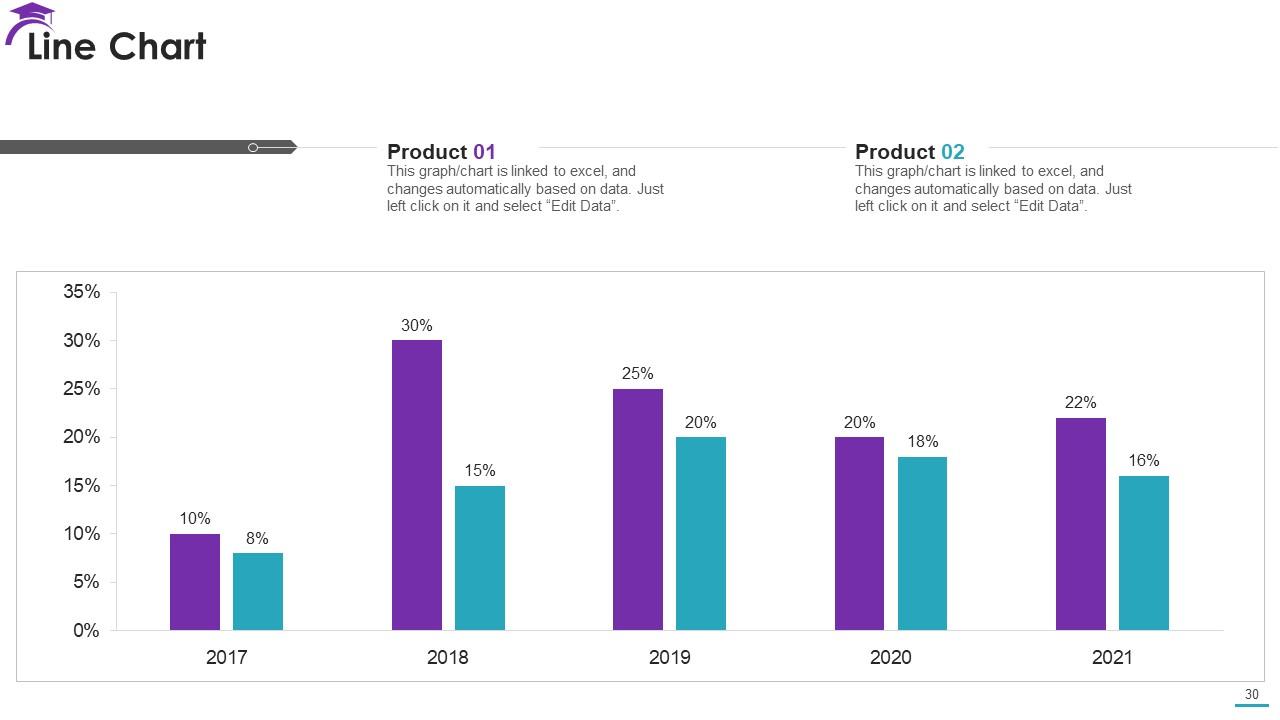
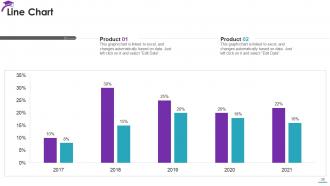
Slide 30: This slide shows yearly line charts for different products. The charts are linked to Excel.
Slide 31: This is thank you slide & contains contact details of company like office address, phone no., etc.
Electronic Learning Investor Pitch Deck Ppt Template with all 36 slides:
Use our Electronic Learning Investor Pitch Deck Ppt Template to effectively help you save your valuable time. They are readymade to fit into any presentation structure.
-
I never had to worry about creating a business presentation from scratch. SlideTeam offered me professional, ready-made, and editable presentations that would have taken ages to design.
-
I have just started downloading templates for my presentations and I must say this is a great design. It helped accelerate my presentation design process and made it more visually appealing.
