


Elements and types of brand narrative structures powerpoint presentation slides
The brand narrative structure is built upon the information and insights that focus on business related shifts for the central building block of business strategy. The elements guide you in finding your audience, keeping the narrative simple, narrowing the expertise, having a clear vision, and more. Check out our professionally designed template on Elements and Types of Brand Narrative Structures to connect your brand to the consumers smartly. Be assured of convertible audience email lists. The proposal highlights the complete flow of the events, along with details. Showcase various services and content offered creatively by specifying years of experience. Variant brand narrative strategies display the action plan of the podcast. The template provides multiple solutions in proving reasons for giving structure to your brand using several elements. Key hosts exhibit info of team members who are responsible for the project. The template mentions the vision, mission, and goals of the firm that attracts several monetization opportunities. Mention narrative details, brand details, and critical points effectively in the proposal structurally. Customers monitor each information and background of the company before accepting the brand narrative proposal. The proposal displays several pricing rates based on risk taking, performance, and audience number. Enhance the brand presence with our 100 percent editable and downloadable template on elements of Brand Narrative Structure. Book a free demo with our experts and download it now.
The brand narrative structure is built upon the information and insights that focus on business related shifts for the cent..










-

- Google Slides is a new FREE Presentation software from Google.
- All our content is 100% compatible with Google Slides.
- Just download our designs, and upload them to Google Slides and they will work automatically.
- Amaze your audience with SlideTeam and Google Slides.
-

Want Changes to This PPT Slide? Check out our Presentation Design Services
-

- WideScreen Aspect ratio is becoming a very popular format. When you download this product, the downloaded ZIP will contain this product in both standard and widescreen format.
-

- Some older products that we have may only be in standard format, but they can easily be converted to widescreen.
- To do this, please open the SlideTeam product in Powerpoint, and go to
- Design ( On the top bar) -> Page Setup -> and select "On-screen Show (16:9)” in the drop down for "Slides Sized for".
- The slide or theme will change to widescreen, and all graphics will adjust automatically. You can similarly convert our content to any other desired screen aspect ratio.
Compatible With Google Slides

Get This In WideScreen
You must be logged in to download this presentation.


Do you want to remove this product from your favourites?
PowerPoint presentation slides
Deliver this complete deck to your team members and other collaborators. Encompassed with stylized slides presenting various concepts, this Elements And Types Of Brand Narrative Structures Powerpoint Presentation Slides is the best tool you can utilize. Personalize its content and graphics to make it unique and thought provoking. All the thirty nine slides are editable and modifiable, so feel free to adjust them to your business setting. The font, color, and other components also come in an editable format making this PPT design the best choice for your next presentation. So, download now.

People who downloaded this PowerPoint presentation also viewed the following :
Content of this Powerpoint Presentation
Slide 1: This slide displays the title i.e. 'Elements and Types of Brand Narrative Structures' and your Company Name.
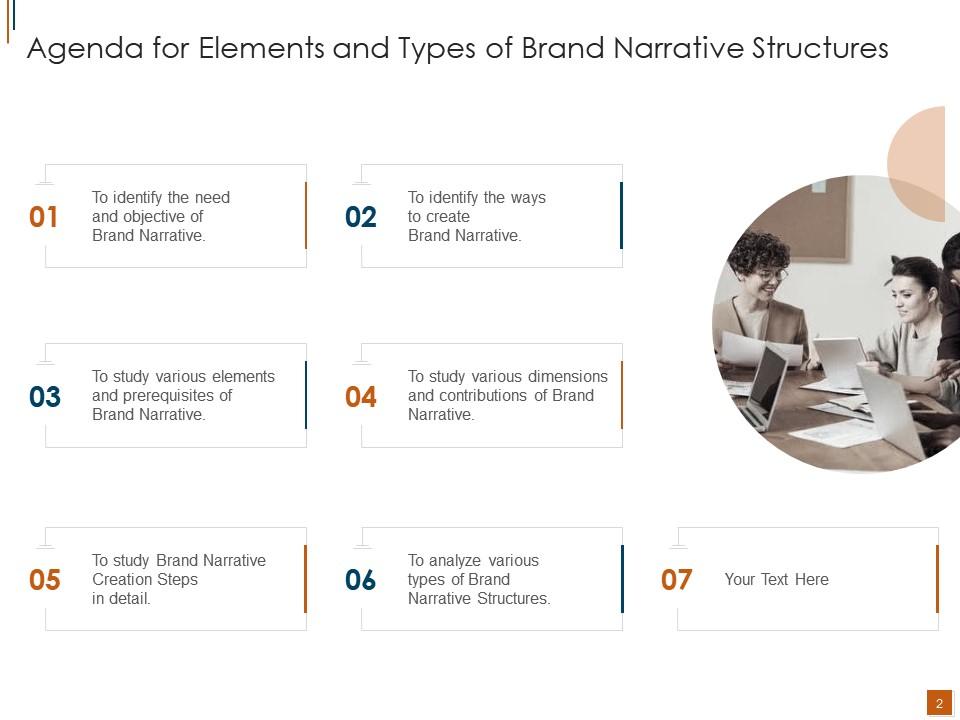
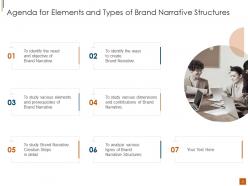
Slide 2: This slide presents the agenda for the project.
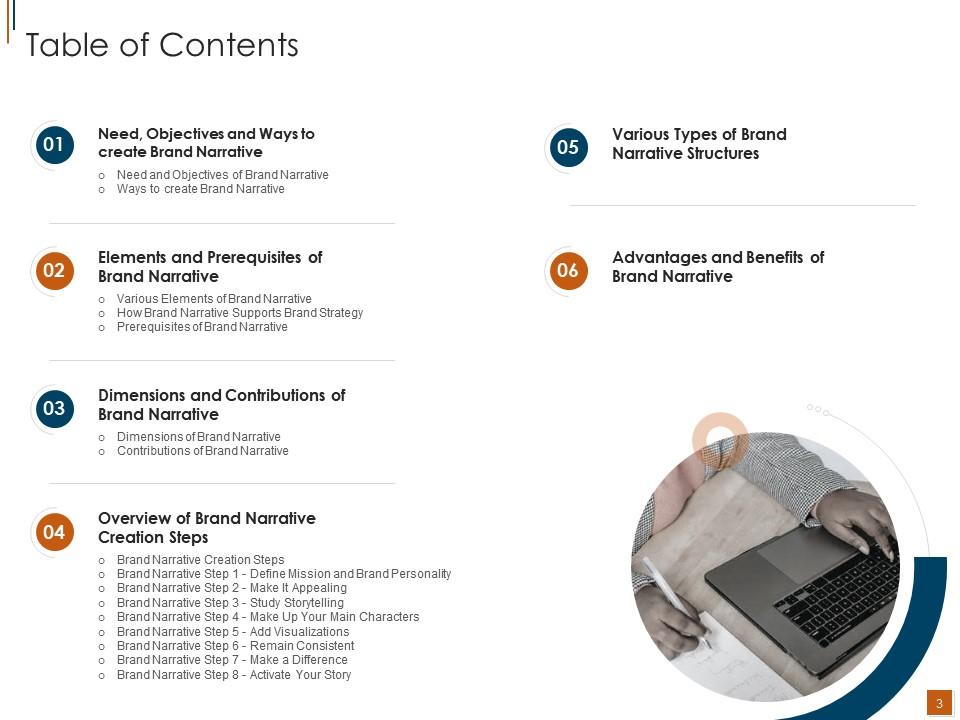
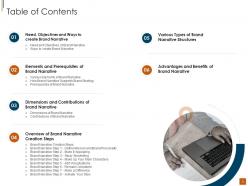
Slide 3: This slide exhibits the table of contents for the project.
Slide 4: This slide showcases the title for need, objectives to create a brand narrative.
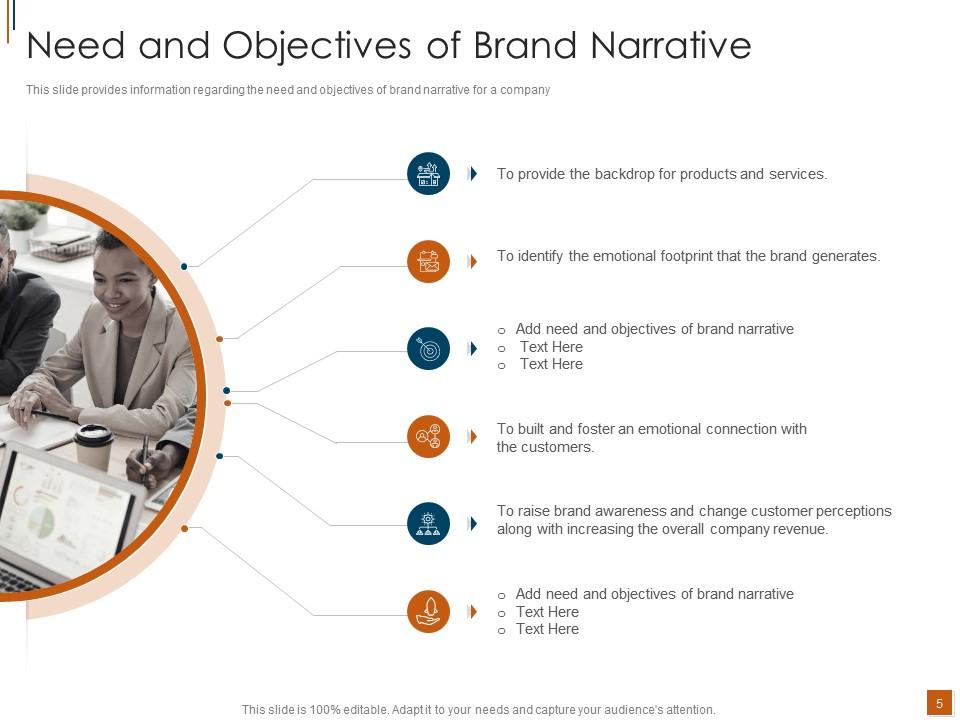
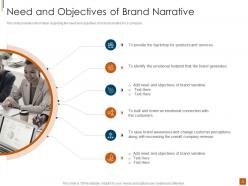
Slide 5: This slide provides information regarding the need and objectives of brand narrative for a company
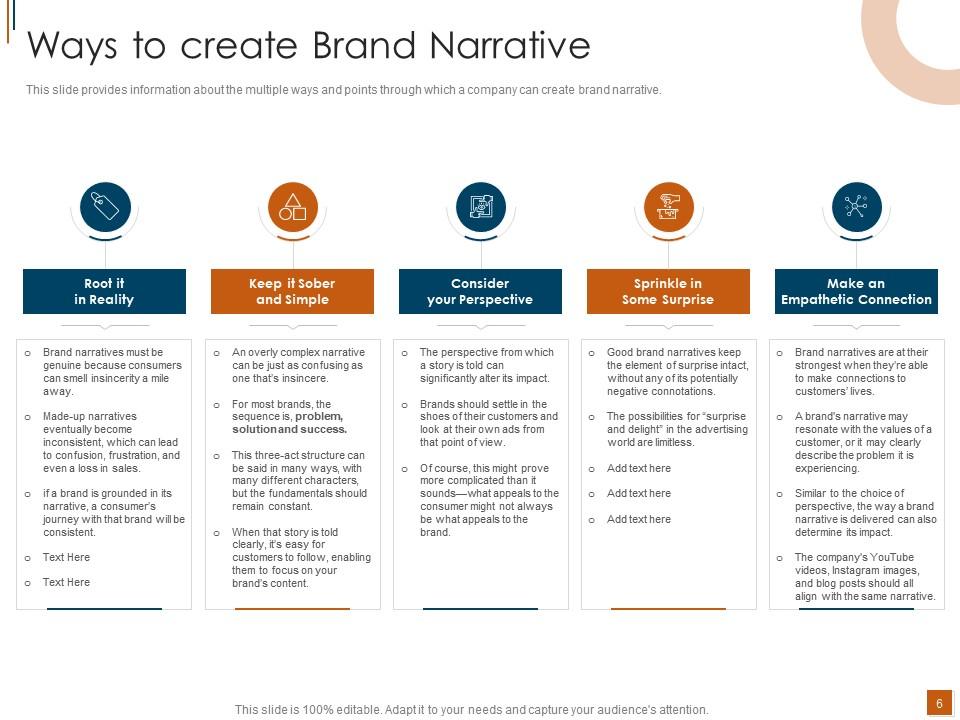
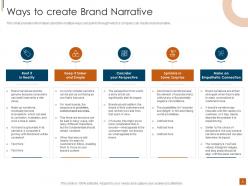
Slide 6: This slide provides information about the multiple ways and points through which a company can create brand narrative.
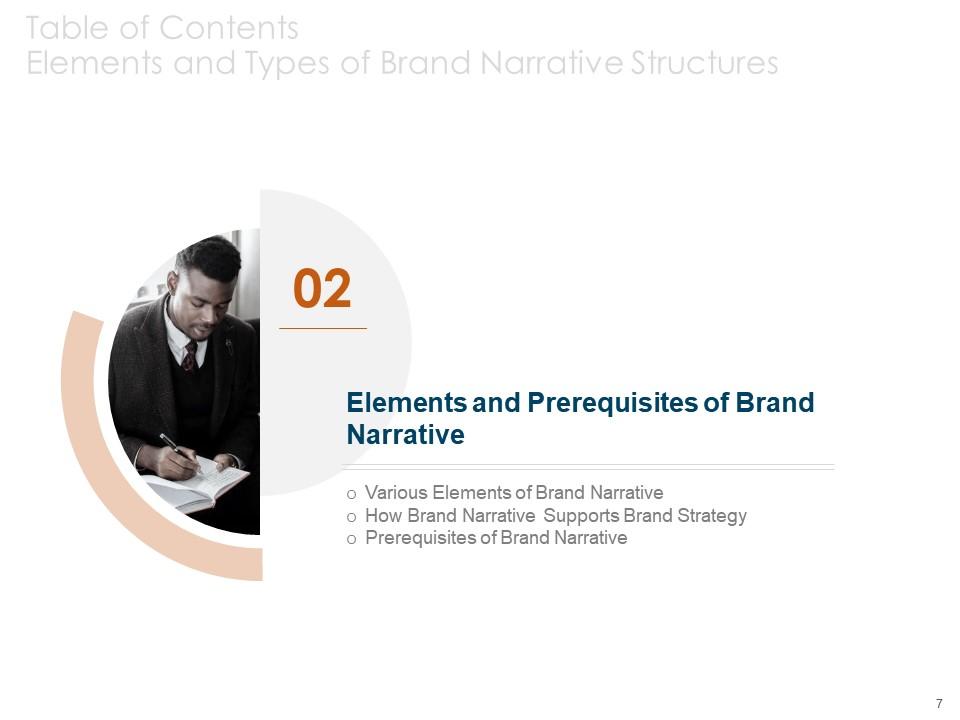
Slide 7: This slide displays the title for elements and prerequisites of brand narrative.
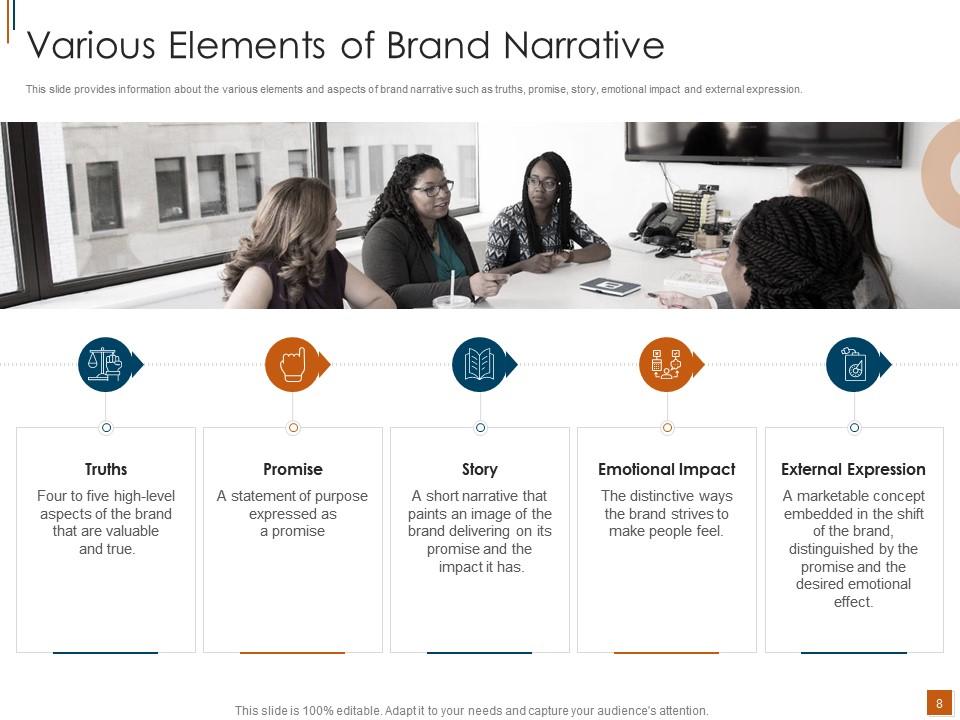
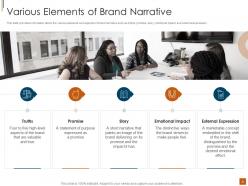
Slide 8: This slide provides information about the various elements and aspects of brand narrative such as truths, promise, story, emotional impact and external expression.
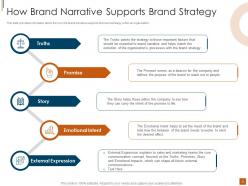
Slide 9: This slide provides information about the how the brand narrative supports the brand strategy within an organization.
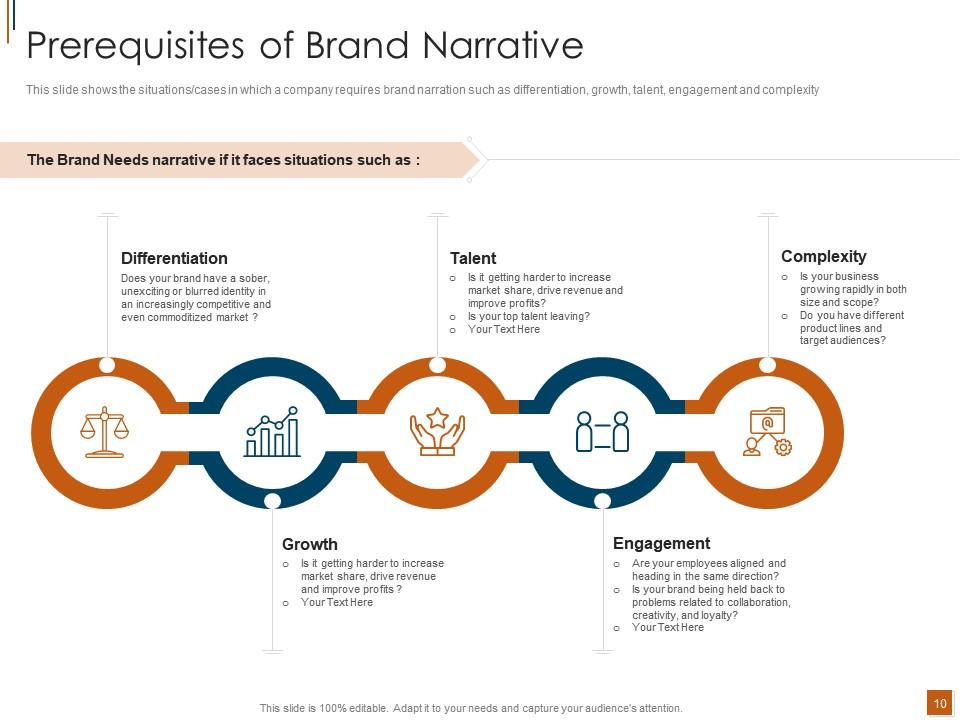
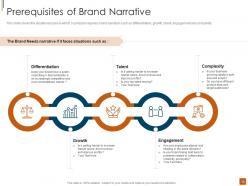
Slide 10: This slide shows the situations/cases in which a company requires brand narration such as differentiation, growth, talent, engagement and complexity.
Slide 11: This slide presents the title for dimensions and contributions of brand narrative.
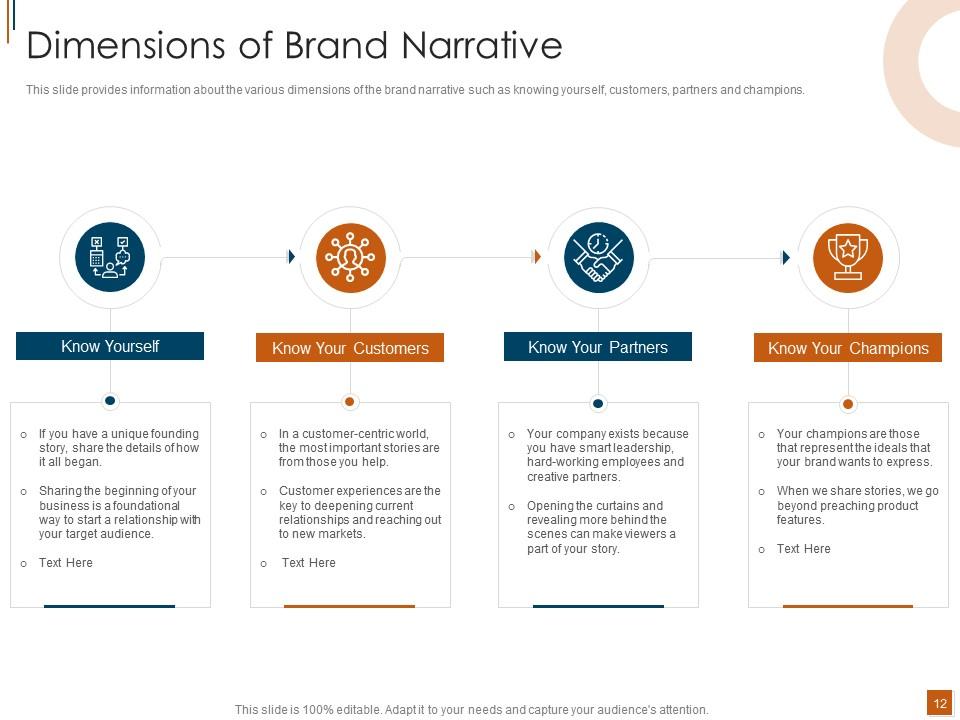
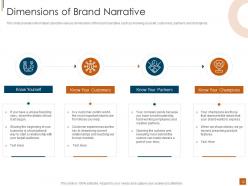
Slide 12: This slide provides information about the various dimensions of the brand narrative such as knowing yourself, customers, partners and champions.
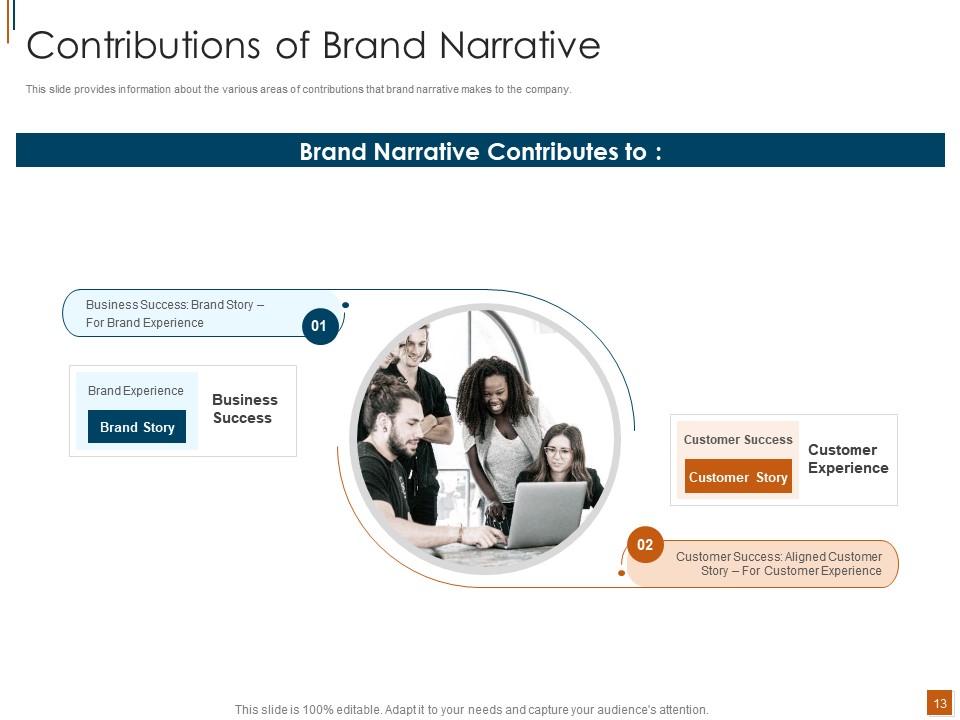
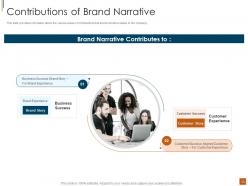
Slide 13: This slide provides information about the various areas of contributions that brand narrative makes to the company.
Slide 14: This slide exhibits the title for overview of brand narrative creation steps.
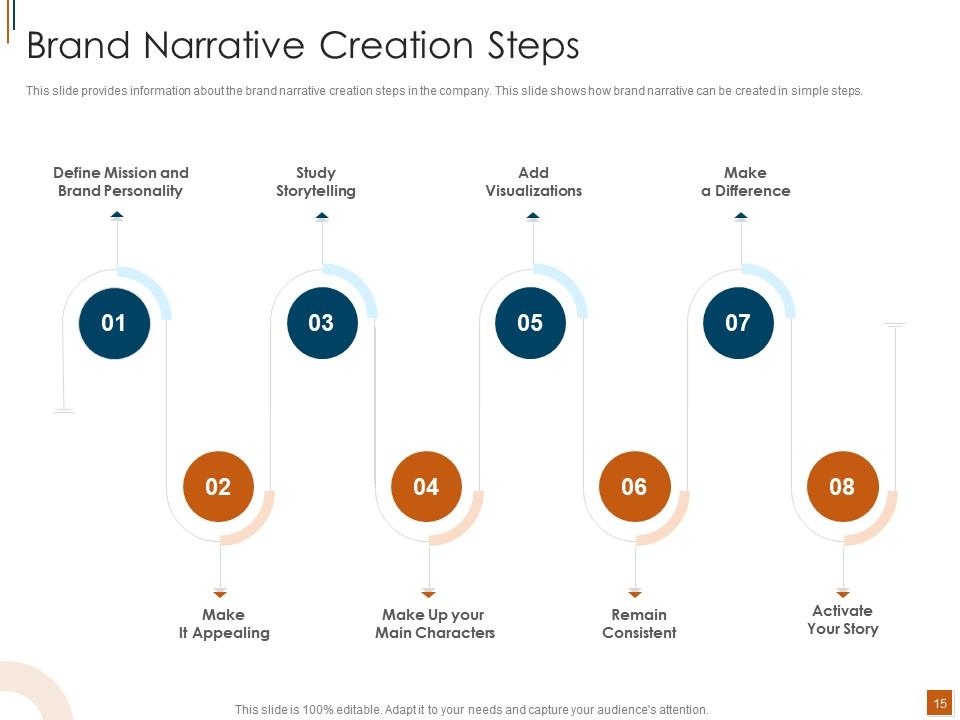
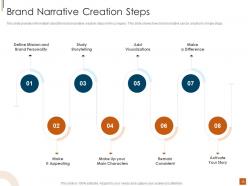
Slide 15: This slide provides information about the brand narrative creation steps in the company. This slide shows how brand narrative can be created in simple steps.
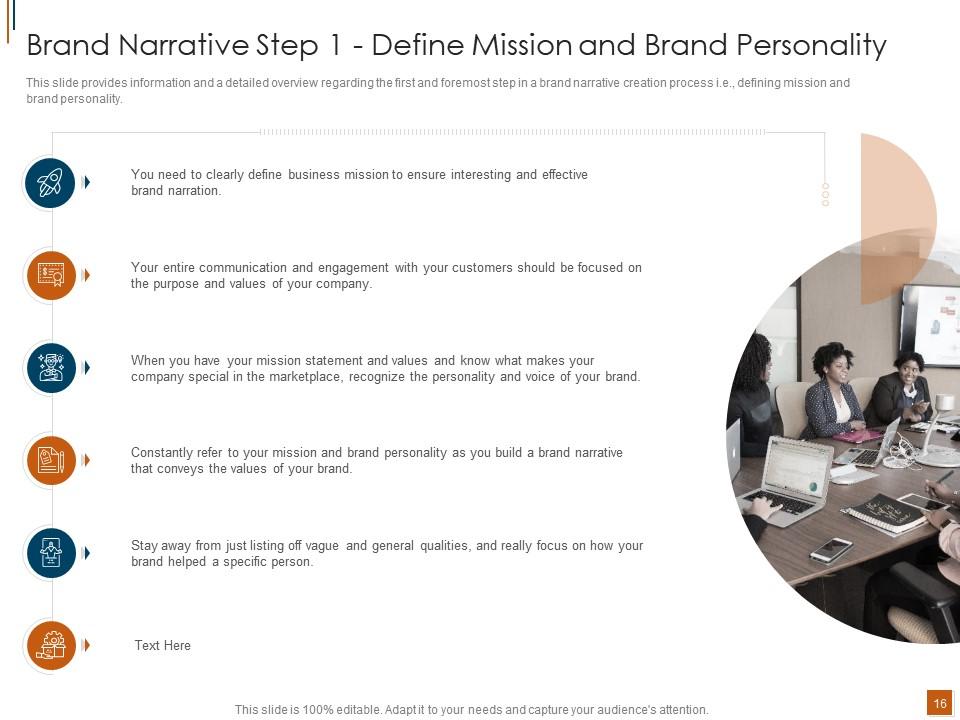
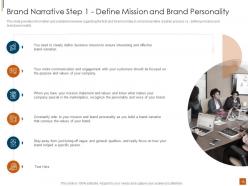
Slide 16: This slide explains detailed overview regarding the first and foremost step in a brand narrative creation process i.e., defining mission and brand personality.
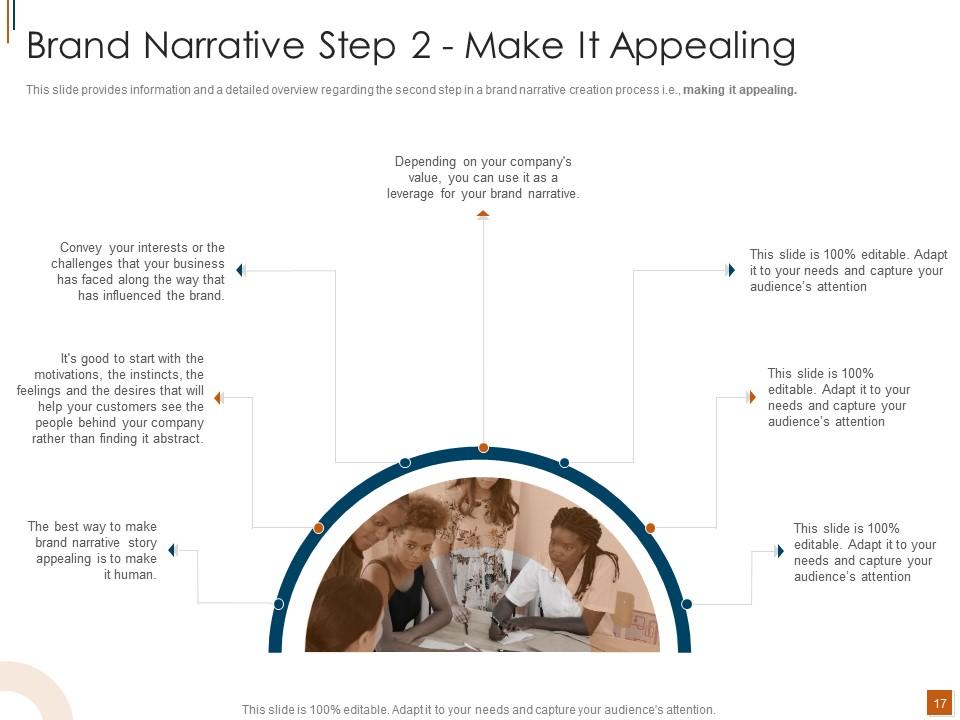
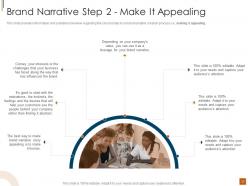
Slide 17: This slide provides information and a detailed overview regarding the second step in a brand narrative creation process i.e., making it appealing.
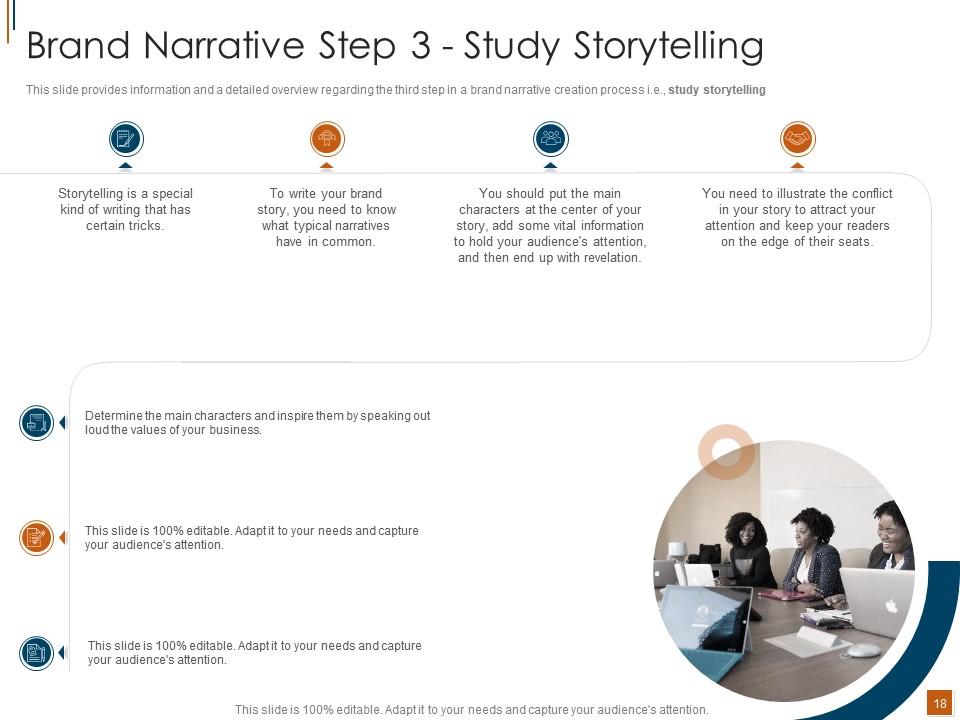
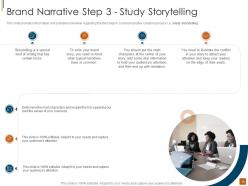
Slide 18: This slide provides information and a detailed overview regarding the third step in a brand narrative creation process i.e., study storytelling.
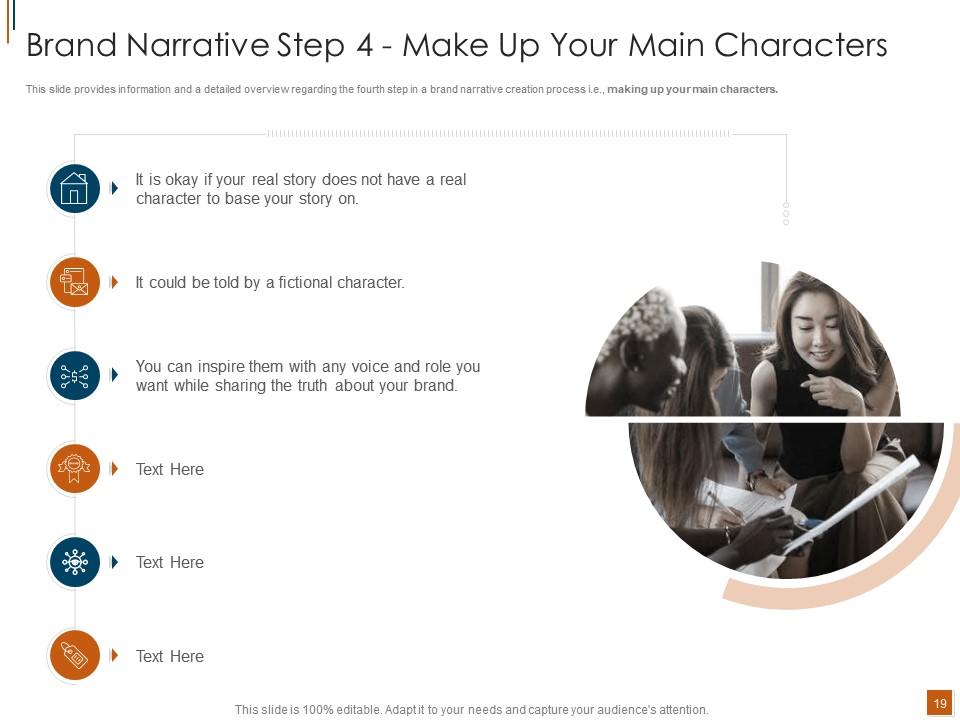
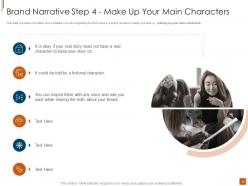
Slide 19: This slide provides information and a detailed overview regarding the fourth step in a brand narrative creation process i.e., making up your main characters.
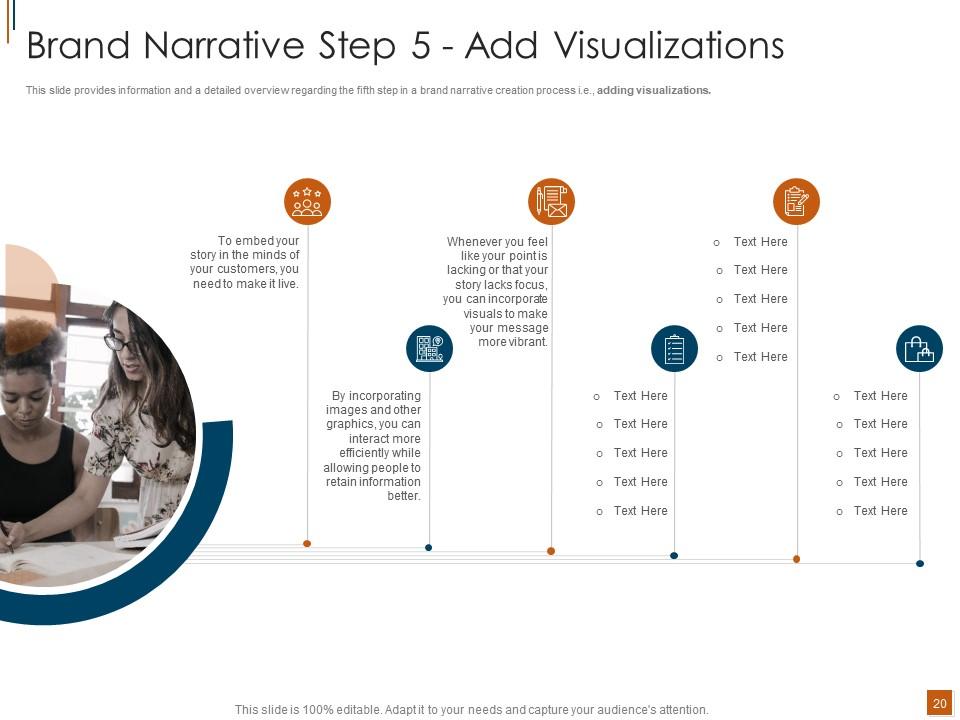
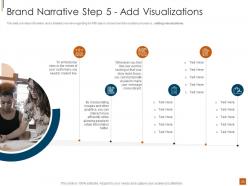
Slide 20: This slide provides information and a detailed overview regarding the fifth step in a brand narrative creation process i.e., adding visualizations.
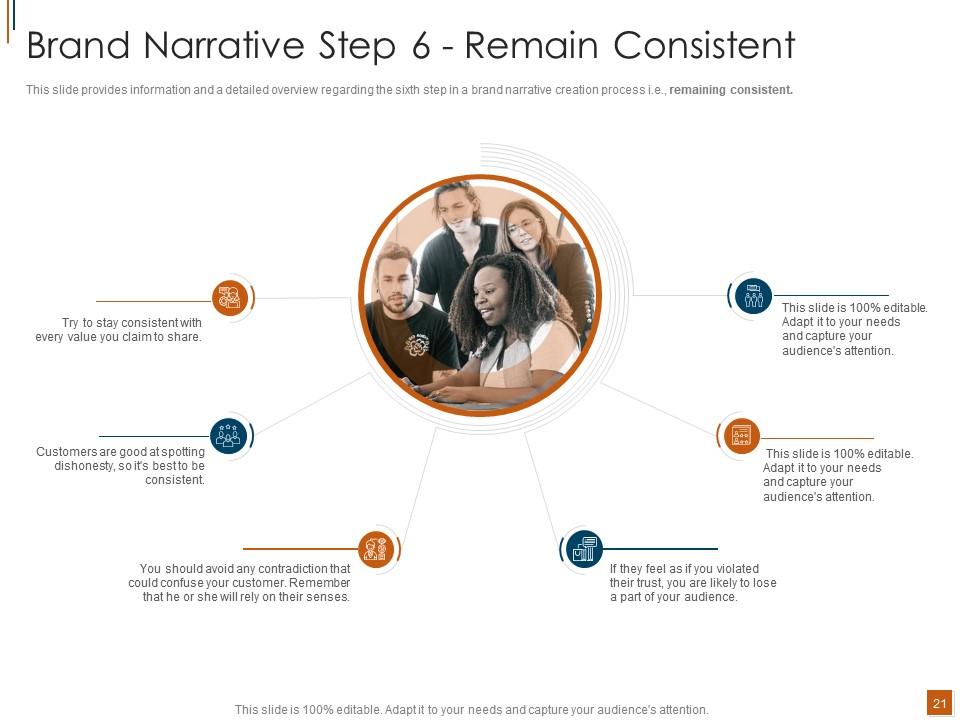
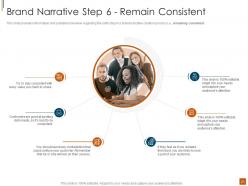
Slide 21: This slide provides information and a detailed overview regarding the sixth step in a brand narrative creation process i.e., remaining consistent.
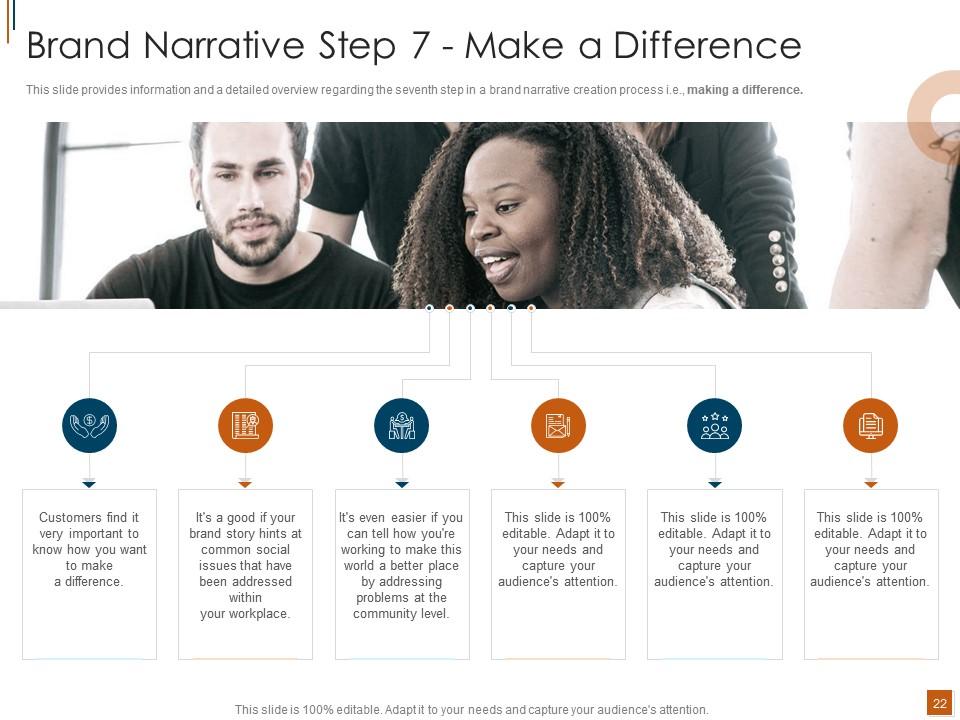
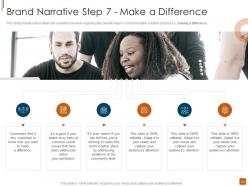
Slide 22: This slide provides information and a detailed overview regarding the seventh step in a brand narrative creation process i.e., making a difference.
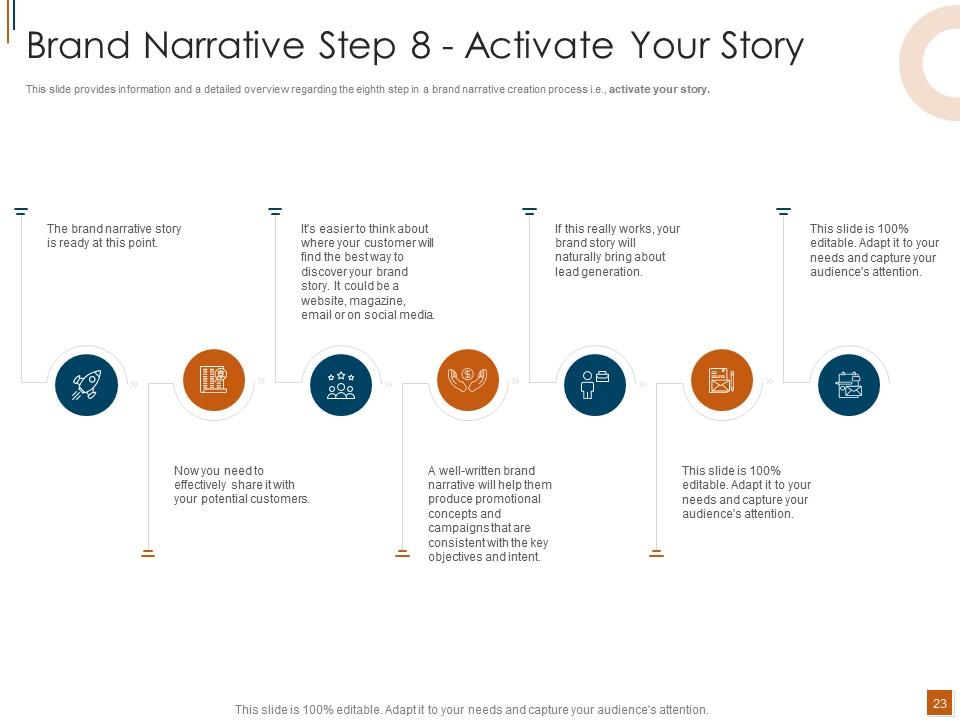
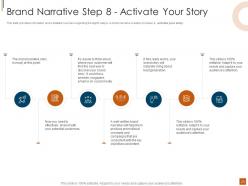
Slide 23: This slide provides information and a detailed overview regarding the eighth step in a brand narrative creation process i.e., activate your story.
Slide 24: This slide displays the title for various types of brand narrative.
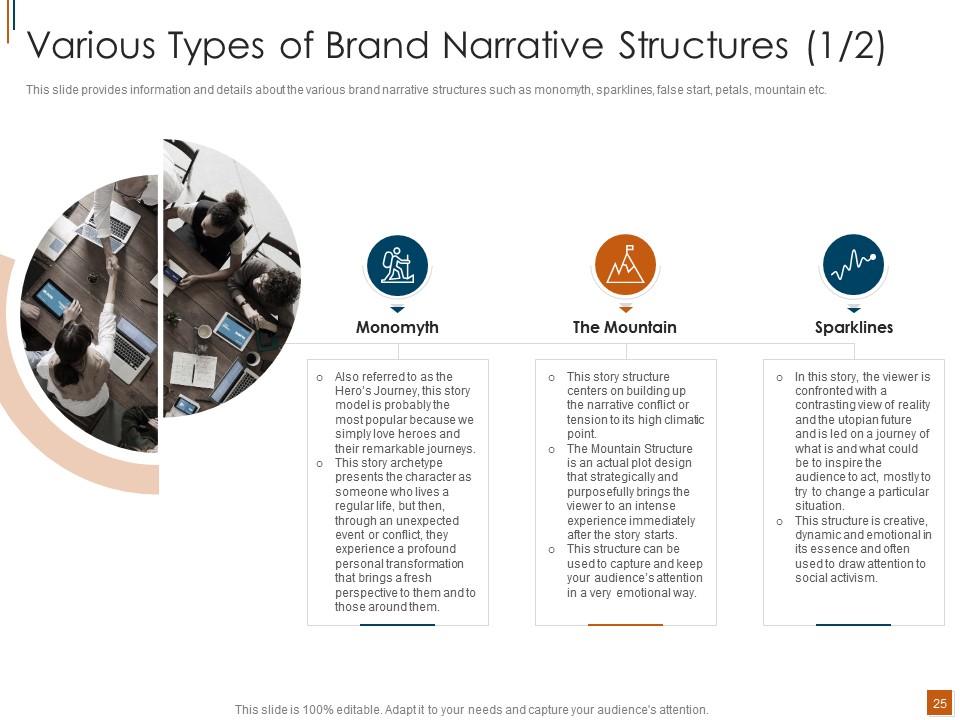
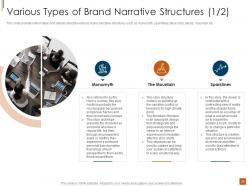
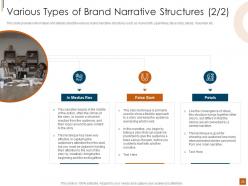
Slide 25: This slide provides information and details about the various brand narrative structures such as monomyth, sparklines, false start, petals, mountain etc.
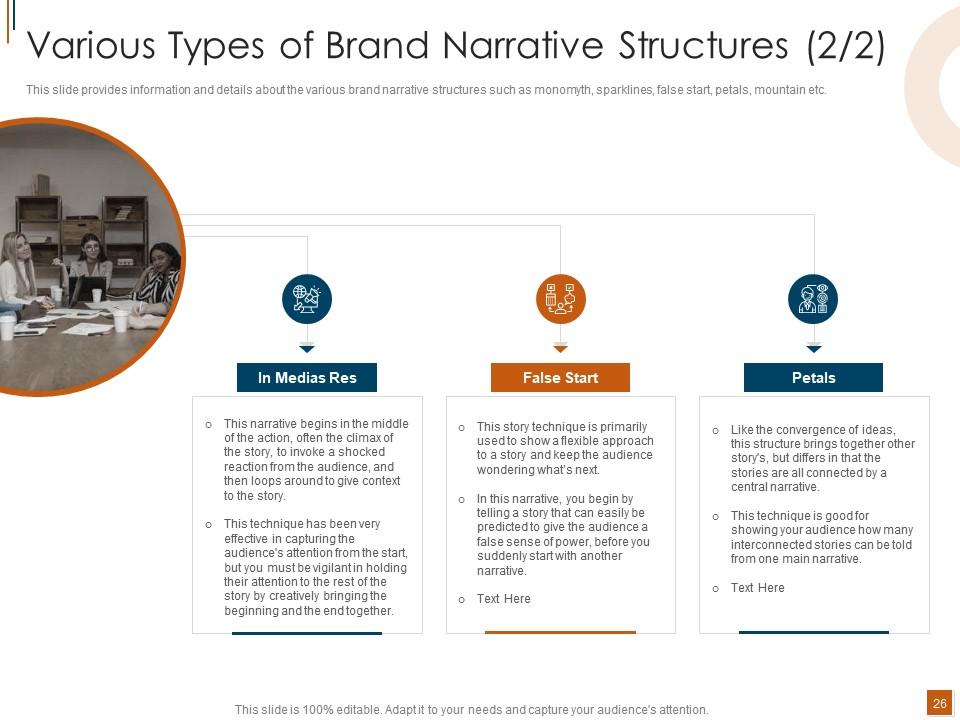
Slide 26: This slide provides information and details about the various brand narrative structures such as monomyth, sparklines, false start, petals, mountain etc.
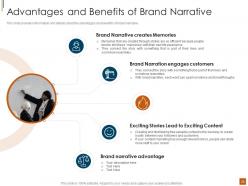
Slide 27: This slide showcases the advantages and benefits of brand narrative.
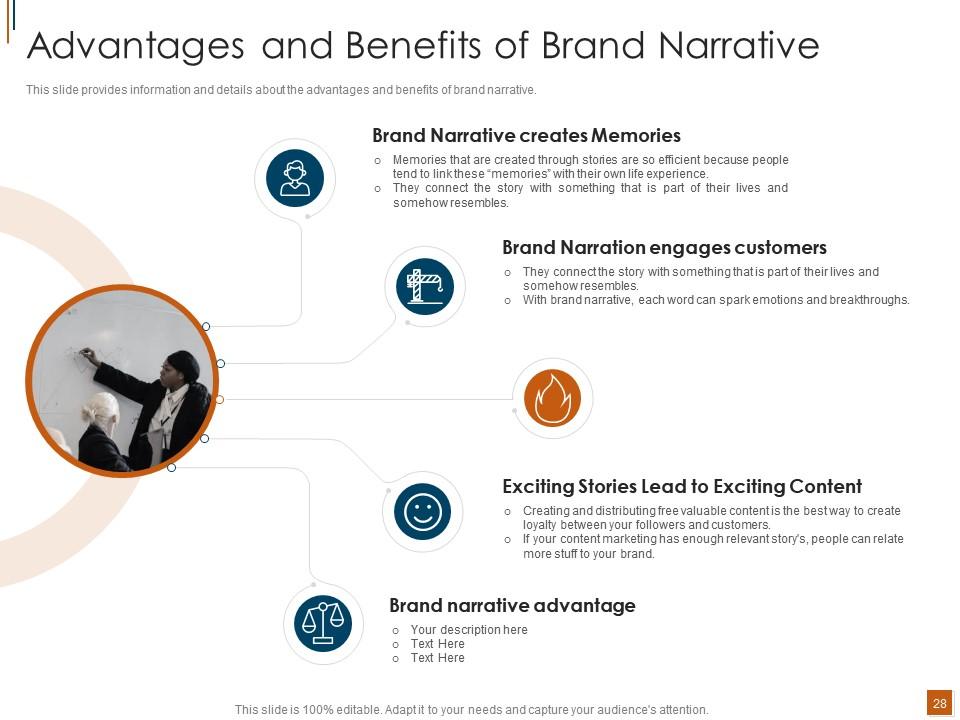
Slide 28: This slide provides information and details about the advantages and benefits of brand narrative.
Slide 29: This is the icons slide for the project.
Slide 30: This slide displays the title for additional slides.
Slide 31: This slide showcases about the company, target audience and its client's values.
Slide 32: This slide presents details of the team members responsible for the project.
Slide 33: This slide displays the 30-60-90 days plan for your project.
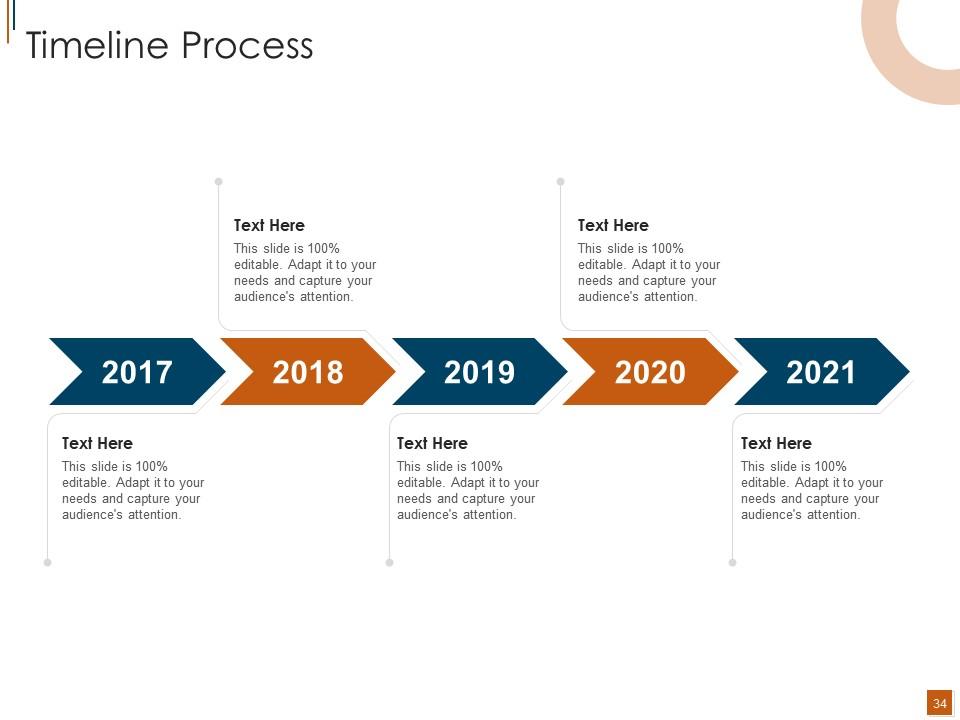
Slide 34: This slide exhibits the yearly timeline of the company.
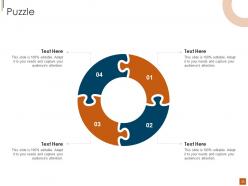
Slide 35: This slide explains the puzzle for your company.
Slide 36: This slide showcases the posts related to past experiences of clients.
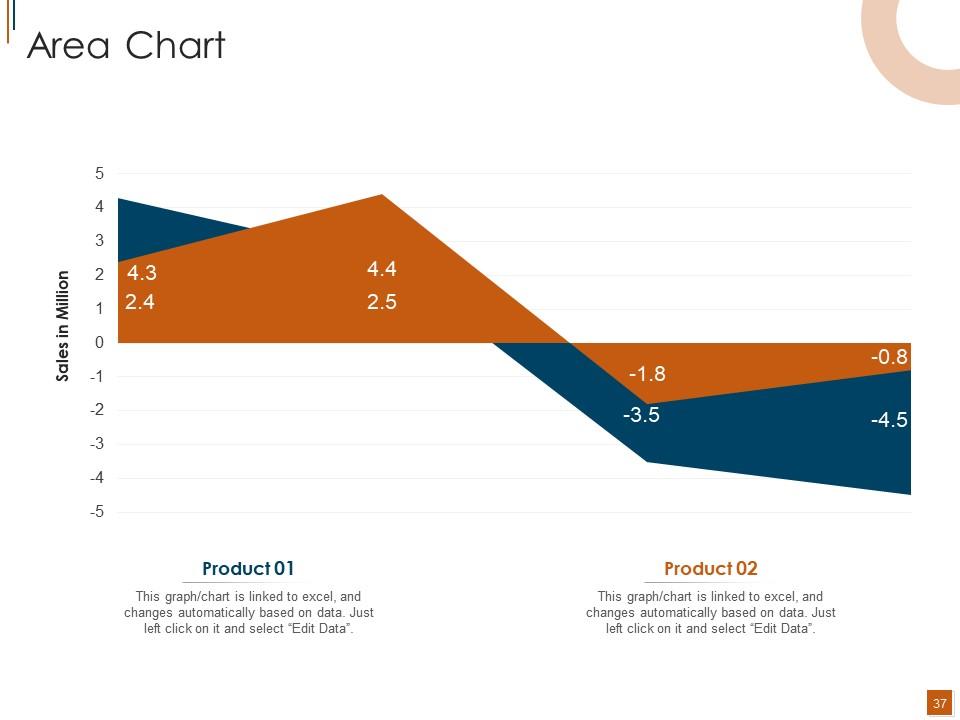
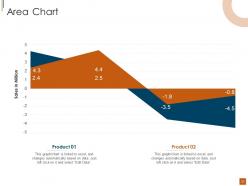
Slide 37: This slide exhibits the area charts for different products. The charts are linked to Excel.
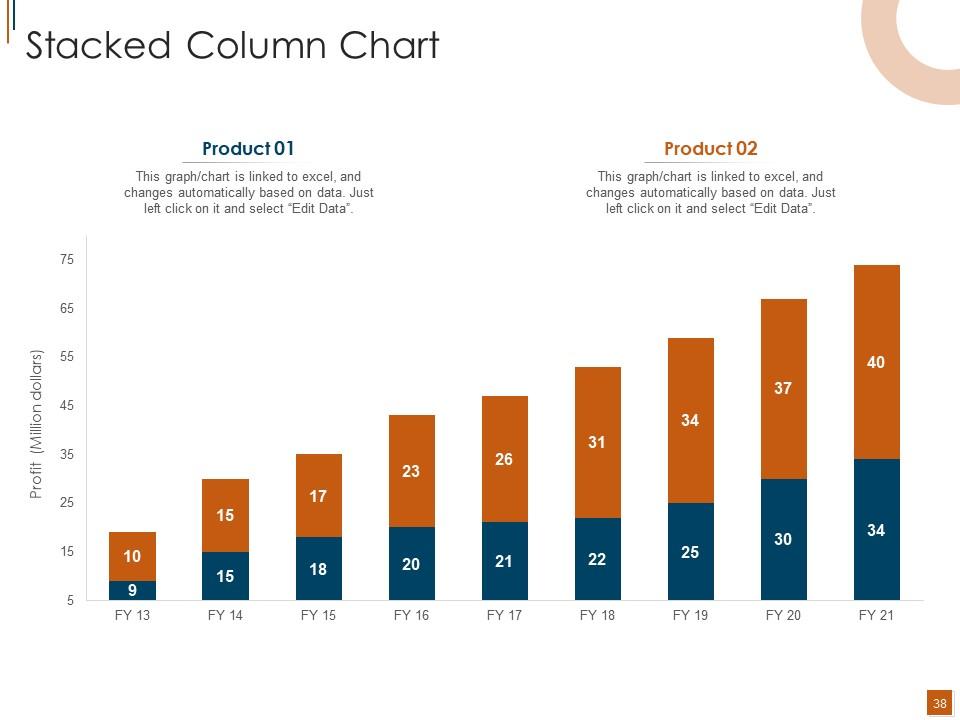
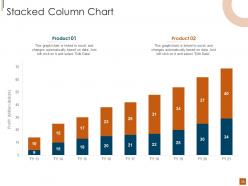
Slide 38: This slide exhibits the stacked column charts for different products. The charts are linked to Excel.
Slide 39: This is the thank you slide and displays the contact details of the company i.e. office address, contact number, etc.
Elements and types of brand narrative structures powerpoint presentation slides with all 39 slides:
Use our Elements And Types Of Brand Narrative Structures Powerpoint Presentation Slides to effectively help you save your valuable time. They are readymade to fit into any presentation structure.
-
Excellent template with unique design.
-
Unique design & color.
