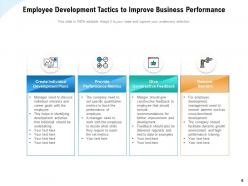
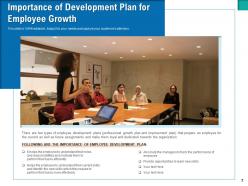
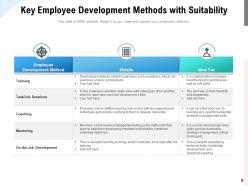
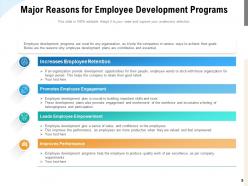
Employee Development Content Empowerment Engagement Workplace Performance Arrows

Rating:
91%
Employee Development Content Empowerment Engagement Workplace Performance Arrows
Slide 1 of 12
Favourites Favourites

Try Before you Buy Download Free Sample Product

Audience Impress Your
Audience
Editable 100%
Editable
Time Save Hours
of Time
The Biggest Sale is ending soon in
0
0
:
0
0
:
0
0
Rating:
91%
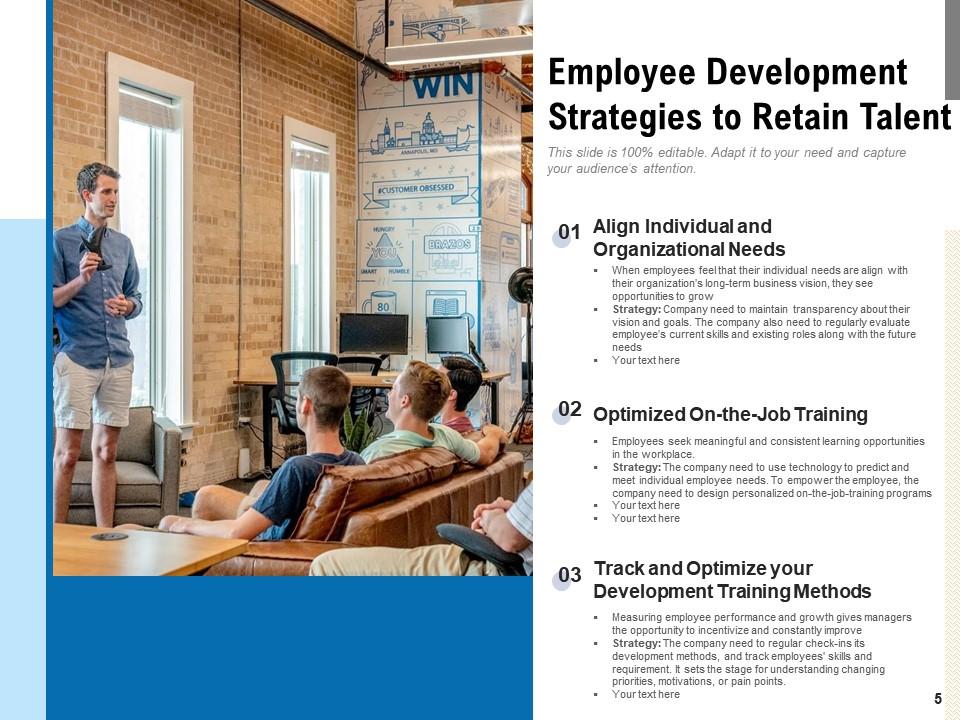
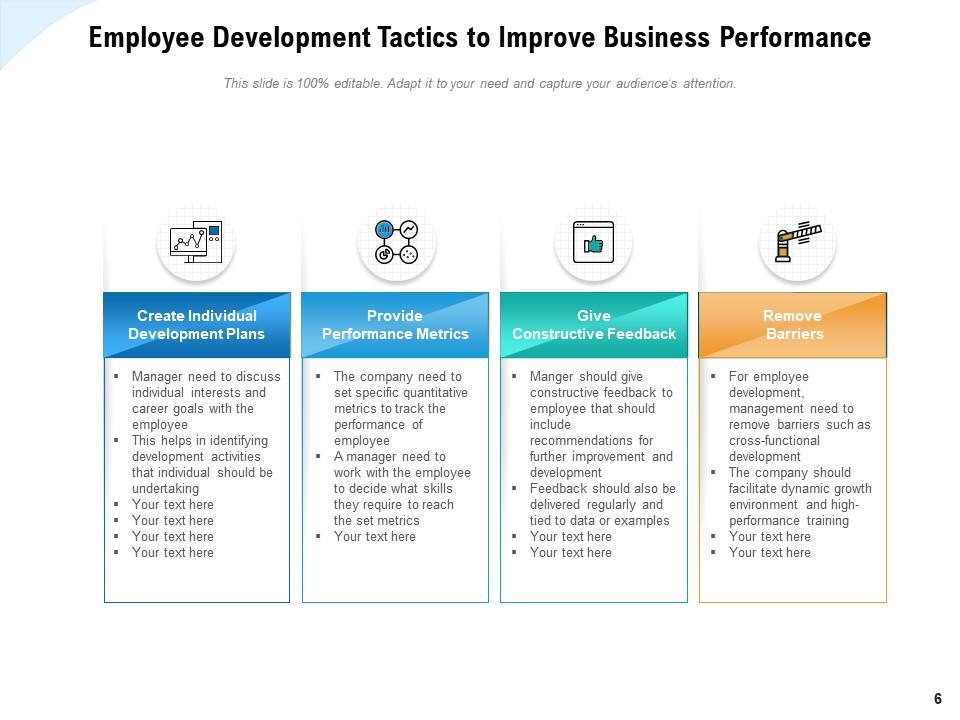
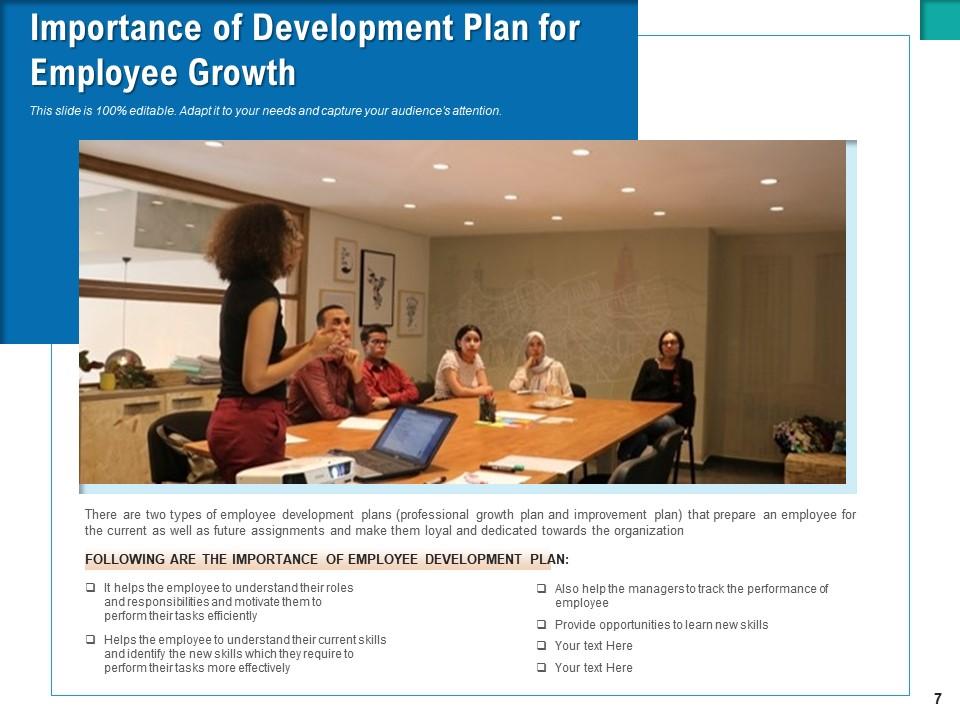
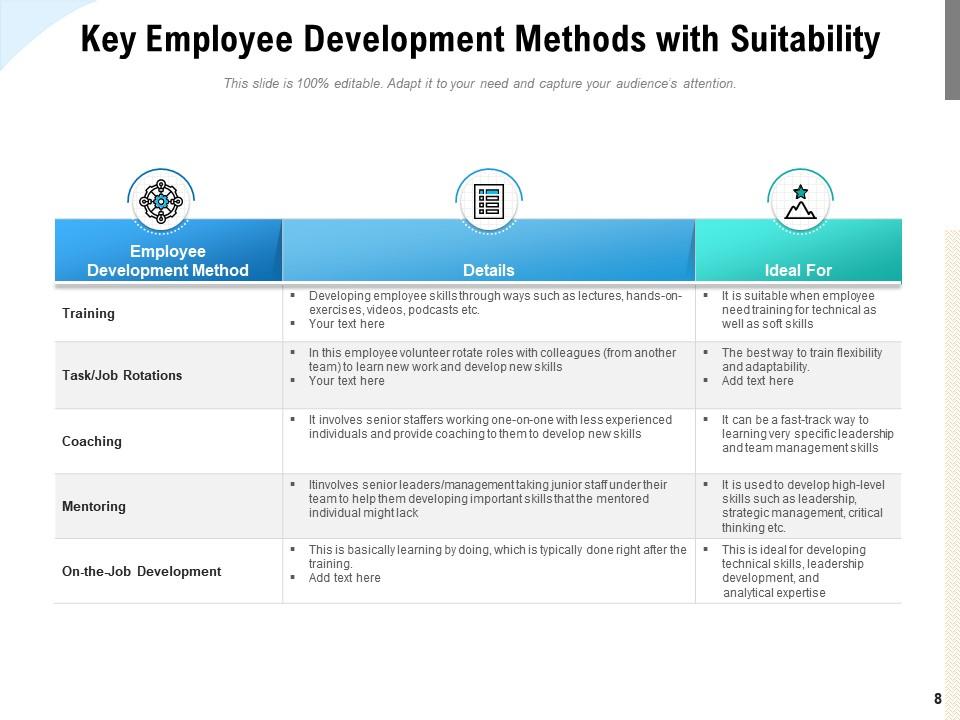
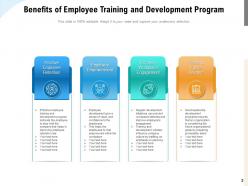
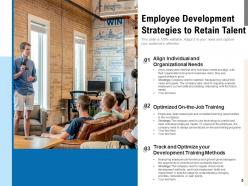
Engage buyer personas and boost brand awareness by pitching yourself using this prefabricated set. This Employee Development Content Empowerment Engagement Workplace Performance Arrows is a great tool to connect with your audience as it contains high-quality content and graphics. This helps in conveying your thoughts in a well-structured manner. It also helps you attain a competitive advantage because of its unique design and aesthetics. In addition to this, you can use this PPT design to portray information and educate your audience on various topics. With twelve slides, this is a great design to use for your upcoming presentations. Not only is it cost-effective but also easily pliable depending on your needs and requirements. As such color, font, or any other design component can be altered. It is also available for immediate download in different formats such as PNG, JPG, etc. So, without any further ado, download it now.

People who downloaded this PowerPoint presentation also viewed the following :

FAQs for Employee Development Content Empowerment Engagement

Key factors influencing remote employee engagement include clear communication channels, flexible work arrangements, regular feedback and recognition, virtual team-building activities, and access to professional development opportunities. These elements streamline remote collaboration by fostering connection, maintaining accountability, and supporting career growth, with many organizations finding that strategic investment in remote engagement technologies ultimately delivers higher productivity and employee retention.

Leaders can effectively measure employee engagement through performance metrics analysis, retention rates tracking, absenteeism monitoring, internal mobility patterns, and real-time feedback platforms. These approaches enable organizations to identify engagement trends across departments, predict turnover risks, and enhance workplace satisfaction, with many companies finding that combining multiple measurement methods delivers deeper insights and more strategic workforce optimization than surveys alone.

Company culture serves as the foundation for long-term employee engagement by establishing shared values, clear expectations, and meaningful connections between individual contributions and organizational purpose. A strong culture creates psychological safety, recognition systems, and growth opportunities that make employees feel valued and invested, with companies like Google and Patagonia demonstrating how aligned cultures significantly reduce turnover while enhancing productivity and innovation.

Employee feedback mechanisms can be optimized through regular pulse surveys, anonymous suggestion systems, real-time feedback platforms, structured one-on-one meetings, and multi-directional peer reviews. These approaches enhance engagement by creating transparent communication channels, enabling immediate issue resolution, and fostering recognition programs, with many organizations finding that continuous feedback loops ultimately deliver higher retention rates and improved workplace satisfaction.

Organizations can boost engagement among diverse teams through inclusive leadership training, flexible work arrangements, culturally aware recognition programs, employee resource groups, and mentorship initiatives that celebrate different perspectives. These strategies enhance collaboration by fostering psychological safety, accommodating varied work styles, and creating advancement pathways, with many companies finding that diverse engagement approaches ultimately deliver stronger innovation and improved retention rates.

Recognition and rewards significantly enhance employee motivation and engagement by acknowledging achievements, reinforcing desired behaviors, and creating emotional connections to organizational success. Through strategic recognition programs, companies across sectors like healthcare, retail, and manufacturing experience increased productivity, reduced turnover rates, and improved workplace culture, ultimately delivering stronger performance and competitive advantage in talent retention.

Hybrid work models present challenges including inconsistent communication across locations, difficulty building team cohesion, managing performance without micromanaging, and ensuring equal opportunities for remote and in-office employees. These challenges require strategic approaches combining flexible policies, enhanced digital collaboration tools, and intentional culture-building activities, with many organizations finding that structured hybrid frameworks ultimately deliver improved work-life balance while maintaining productivity and engagement.

Technology enhances employee engagement through collaboration platforms, performance analytics, mobile applications, virtual reality training, and AI-powered feedback systems. These solutions streamline communication, enable real-time recognition, and facilitate seamless remote collaboration, with many organizations finding that digital tools significantly boost productivity, reduce turnover, and create more connected workplace experiences.

Professional development and training significantly enhance engagement levels by demonstrating organizational investment in employees, providing clear career advancement pathways, and building job-relevant skills that increase confidence and performance. Through structured learning programs, employees experience greater job satisfaction, reduced turnover intentions, and stronger organizational commitment, with many companies finding that comprehensive training initiatives ultimately deliver higher productivity and improved retention rates.

Effective onboarding cultivates engagement through structured orientation programs, mentorship assignments, clear role expectations, interactive training modules, and early project involvement. These approaches streamline integration by connecting new hires with company culture, providing immediate support systems, and establishing meaningful responsibilities, with many organizations finding that comprehensive onboarding enhances retention and accelerates productivity significantly.

Organizational values align with employee engagement by creating shared purpose, establishing clear behavioral expectations, and fostering authentic workplace culture that resonates with individual motivations. When companies integrate values into recognition programs, career development pathways, and decision-making processes, employees experience greater connection and commitment, ultimately reducing turnover while enhancing productivity and organizational loyalty.

Effective re-engagement strategies include conducting one-on-one conversations to understand concerns, providing new challenges or learning opportunities, recognizing contributions, offering flexible work arrangements, and clarifying career advancement paths. These approaches work by addressing root causes of disengagement, with many organizations finding that personalized development plans and regular feedback sessions significantly restore motivation and productivity.

Managers can create personalized engagement plans by conducting individual assessments to understand each employee's motivations, career goals, strengths, and preferred work styles. Through regular one-on-one meetings, skill development opportunities, flexible work arrangements, and tailored recognition programs, managers enable stronger job satisfaction, improved performance, and reduced turnover, ultimately delivering enhanced team productivity and organizational success.

Organizations should track metrics including employee satisfaction scores, retention rates, productivity measurements, absenteeism levels, and participation rates in engagement programs. These indicators streamline assessment by revealing workforce sentiment, operational efficiency, and program effectiveness, with many companies finding that combining quantitative data with qualitative feedback ultimately delivers comprehensive insights for strategic improvements.

Employee engagement correlates strongly with organizational performance through enhanced productivity, reduced turnover, improved customer satisfaction, and increased profitability. Companies with highly engaged workforces typically experience 23% higher profitability and 18% higher productivity, with many organizations finding that engaged employees deliver superior customer experiences, drive innovation, and ultimately create sustainable competitive advantage in increasingly demanding markets.

Ratings and Reviews

91% of 100
Write a review
Most Relevant Reviews
  1. 100%

    by Colin Barnes

    Easily Understandable slides.
  2. 80%

    by Derrick Rice

    Much better than the original! Thanks for the quick turnaround.
  3. 80%

    by Douglas Lane

    Out of the box and creative design.
  4. 100%

    by Duncan Berry

    Awesomely designed templates, Easy to understand.
  5. 80%

    by Doyle Andrews

    Designs have enough space to add content.
  6. 100%

    by George Miller

    Easy to edit slides with easy to understand instructions.
  7. 100%

    by Edwin Valdez

    Easily Understandable slides.
  8. 100%

    by Daniel Robinson

    Very unique and reliable designs.
  9. 80%

    by Oscar Davis

    Great quality product.
  10. 100%

    by Dale Tran

    Easily Understandable slides.

Items 1 to 10 of 13 total

    Page:
  • You're currently reading page 1
  • Page 2
  • Next
per page: