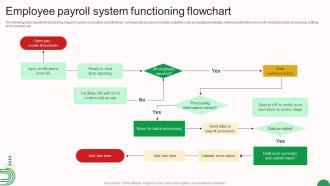
Employee Payroll System Functioning Flowchart

Rating:
100%
Employee Payroll System Functioning Flowchart Employee Payroll System Functioning Flowchart
Slide 1 of 6

or

Favourites Favourites

Try Before you Buy Download Free Sample Product

Audience Impress Your
Audience
Editable 100%
Editable
Time Save Hours
of Time
The Biggest Sale is ending soon in
0
0
:
0
0
:
0
0
Rating:
100%
The following slide depicts the functioning of payroll system to visualize and effectively communicate process. It includes activities such as creating timesheets, entering rectifications from HR, moving for batch processing, drafting error summary etc. Presenting our set of slides with Employee Payroll System Functioning Flowchart. This exhibits information on one stages of the process. This is an easy to edit and innovatively designed PowerPoint template. So download immediately and highlight information on Data Accepted, Processing Information Correct, Start Review Process.

FAQs for Employee Payroll

Automatic tax calculations are a must - trust me on that one. You'll also want direct deposit and time tracking built in. Pay stub generation should be standard, plus handling different pay schedules and benefit deductions. PTO tracking saves tons of hassle too. The compliance reporting stuff is boring but necessary since tax agencies don't mess around. Employee self-service portals are honestly a lifesaver - cuts down on all those "where's my pay stub" emails. Before you start looking at demos though, write down what you absolutely need versus what would just be nice to have.

Dude, you'll save SO much time once you automate payroll. No more sitting there for hours punching in timesheet data or doing math on deductions - the system just does it all for you. Your HR people can actually work on stuff that matters, like keeping good employees around. Honestly, the error thing alone makes it worth it because let's be real, nobody's sharp when they're doing payroll math on Friday afternoon. You can literally run everything in minutes instead of waiting days. Oh, and you'll have way more flexibility with when you actually pay people too.

Dude, compliance is hands down your worst nightmare with payroll. Tax laws change constantly and the penalties are no joke if you mess up. Get yourself some automated payroll software that updates with new regulations - it'll handle the tax calculations so you don't have to stress about it. Also find a good payroll specialist or HR person who can give you a heads up when stuff changes. I learned this the hard way, but keep crazy detailed records of everything. Regular audits help too. When the government comes knocking, you'll thank yourself for having all that paperwork ready to go.

Dude, payroll integration is honestly a game changer. All your employee data syncs automatically - no more copy/pasting stuff between systems or second-guessing if that promotion went through. Time tracking, benefits, performance reviews - it all talks to each other now. Your reports actually make sense since everything's pulling from the same place. Way fewer errors too. I'd map out which systems you use most together first, that's where you'll feel the biggest difference. Though honestly, even the small connections save you tons of time in the long run.

Honestly, payroll software is a lifesaver because it handles all that messy math automatically - tax brackets, overtime, deductions, the whole thing. Way better than spreadsheets where you're bound to screw something up eventually. It updates with new tax laws too, which is clutch during tax season (ugh). The best part? Everything connects with your time-tracking and HR stuff so data just flows between systems. I mean, I still check our setup every few months to make sure the automated rules match what we're actually doing policy-wise, but yeah - total game changer for accuracy and speed.

Okay so three big things to tackle: access controls, encryption, and audits. Only let HR and payroll people into the sensitive stuff - set up role-based permissions for that. Multi-factor authentication is a must now, no way around it. Encrypt everything when it's stored and sent. Your payroll software better meet SOC 2 standards too. Regular security audits will catch problems early. Train everyone on phishing - people always click the dumbest links, I swear. Oh, and check who has access to your system right now. That's probably scarier than you think. Tighten those permissions first.

Okay so payroll vendors - definitely demo like 2-3 before deciding. The software needs to actually handle your stuff (multi-state taxes, benefits, time tracking). Don't just look at base pricing either, they'll hit you with implementation and training fees later. Security's obviously critical with all that employee data, so check their certifications. Honestly though? Customer service is what'll save your butt when you're panicking at 5pm before payroll runs. Some of these companies are terrible about that. Try to chat with their existing customers if you can swing it - they'll tell you the real deal about what it's like day-to-day.

So basically you want a system that can handle all your different pay types in one place. Set up hourly folks with their overtime rules, salary people get their fixed amounts, and commission workers get those percentage calculations tied to sales. Honestly, commission setups are where things get messy - some of those formulas are absolutely bonkers depending on what you're selling. The system should just know which calculations to use for each person automatically. Also super helpful if you can easily switch someone's pay structure when they get promoted or change roles.

Oh man, gig workers are totally messing with traditional payroll! Your system probably works great for regular W-2 employees, but freelancers and contractors? Different beast entirely. You'll need to juggle 1099s, weird payment schedules, and rates that change constantly. Honestly, it's kind of a nightmare at first - I went through this last year with our team. The real problem is your payroll wasn't built for people who don't fit that standard "employee" box. My advice? Look into hybrid systems that can actually handle both types without making you want to pull your hair out.

Honestly, real-time payroll reporting is a game changer - your employees can check their hours and pay status whenever instead of constantly hitting up HR. You'll catch errors way earlier too, which is huge. Management gets instant visibility into labor costs and overtime trends, so no more month-end budget surprises (been there, it sucks). The transparency thing is real - people actually trust the process more when they can see exactly how everything's calculated. I'd start by figuring out what metrics your team asks about most. Saves everyone so many headaches.

Send them digital forms for W-4s and direct deposit stuff before they even start - trust me on this one. Nothing kills the first day vibe like paperwork chaos. Set up your HRIS to talk to payroll so you're not manually entering everything twice (been there, it sucks). Make a simple checklist they can follow themselves. Pull whatever info you already have from their application. Automated reminders work great for the stuff they forget. Oh, and pick one person to handle all their payroll questions that first week instead of bouncing them around.

Yeah, you definitely need employee self-service - it's pretty much expected now. People want to grab their pay stubs and update their tax stuff without calling HR constantly. Mobile access is huge too since everyone checks everything on their phone anyway. I mean, we're not living in 2010 anymore, right? Your HR team will thank you because they won't be drowning in basic requests all day. Honestly, if a payroll system doesn't have decent self-service features, I'd just skip it entirely. There are too many good options out there.

Oh man, remote work taxes are such a headache. Your payroll gets complicated fast when people work from different states than your HQ. Each state wants their cut based on where the actual work happens, not where you're incorporated. Some states play nice with reciprocity agreements, others are total jerks about it. You'll probably need to register for payroll in multiple places and track who's working where all year. Honestly? Get your payroll system upgraded ASAP and find a good tax person who deals with this stuff regularly.

Honestly, payroll data is way more useful than most people think. You'll spot stuff like which teams are blowing their overtime budget or whether your pay is actually competitive enough to keep good people around. I was surprised how much you can learn about seasonal hiring trends too. The cool thing is catching problems early - like weird spikes in labor costs before they spiral. Just don't make the mistake I see everywhere of only looking at this stuff during budget time. Set up monthly reports so you're actually staying on top of it.

Honestly, payroll's about to get way smarter. AI will handle the messy stuff automatically, and real-time payments are becoming the norm - nobody wants to wait for paychecks anymore. Everything's going mobile too since people expect to check their pay stubs on their phones. HR integration is getting deeper, which actually makes sense. Blockchain might happen for security but feels kinda overhyped right now. Oh, and predictive analytics will help you stay compliant and forecast costs better. My advice? Start looking at vendors who already have this stuff built in. Don't wait around for your current system to maybe catch up someday.

Ratings and Reviews

100% of 100
Review Form
Write a review
Most Relevant Reviews
  1. 100%

    by Byrne Cruz

    I really liked their customized design services. I got my desired template made by their expert team. Thank You!
  2. 100%

    by Wilson Campbell

    The customer care of SlideTeam is very responsive. I was having a payment issue and they fixed it for me in no time.

2 Item(s)

per page: