Engineering Company Profile Project Portfolio

Rating:
90%
Engineering Company Profile Project Portfolio
Slide 1 of 6
Favourites Favourites

Try Before you Buy Download Free Sample Product

Audience Impress Your
Audience
Editable 100%
Editable
Time Save Hours
of Time
The Biggest Sale is ending soon in
0
0
:
0
0
:
0
0
Rating:
90%
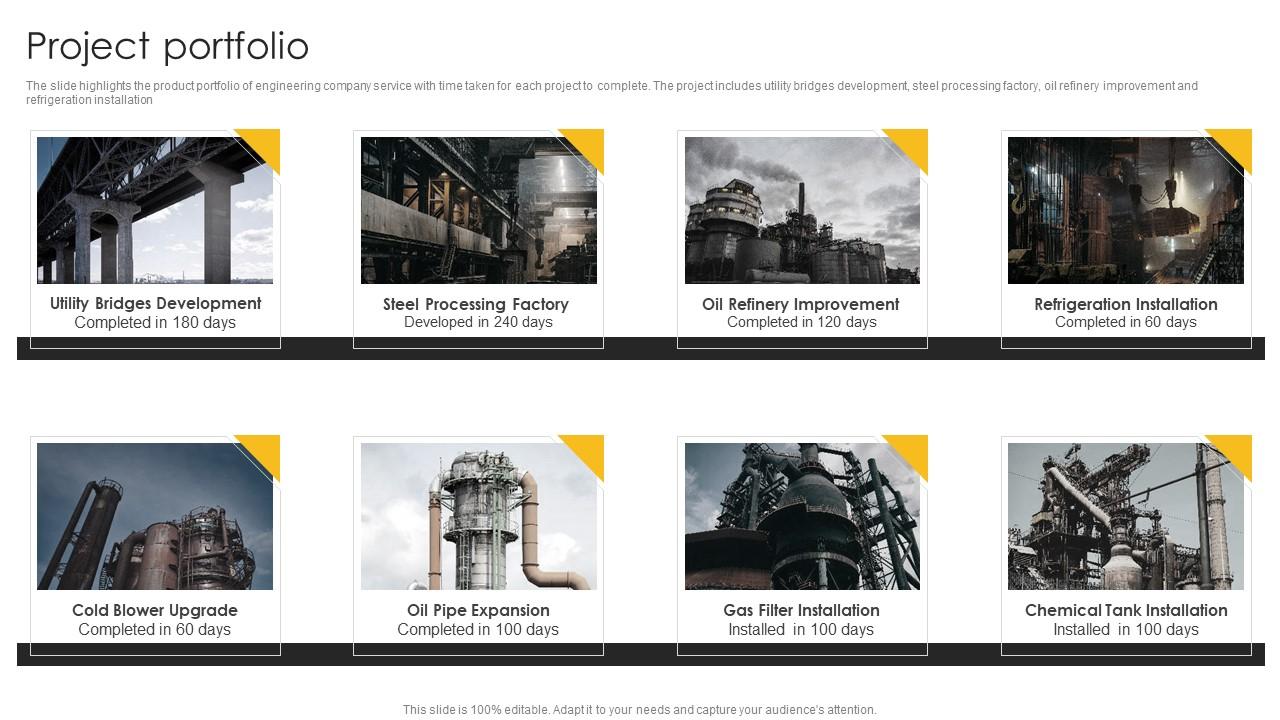
The slide highlights the product portfolio of engineering company service with time taken for each project to complete. The project includes utility bridges development, steel processing factory, oil refinery improvement and refrigeration installation Present the topic in a bit more detail with this Engineering Company Profile Project Portfolio. Use it as a tool for discussion and navigation on Development, Improvement, Installation. This template is free to edit as deemed fit for your organization. Therefore download it now.

FAQs for Engineering Company

So we do the big three - structural, mechanical, and electrical. Civil too, which comes up a lot for infrastructure stuff. The thing is, we've gotten really good at projects where you need multiple disciplines instead of hiring like five different consultants. Way less headache. Our PM team handles coordination so you're not managing a million vendors - honestly that alone saves people so much stress. Oh, and definitely hit us up early in your planning. We can usually help you figure out what services you actually need versus what you think you need, which can save you money.

Honestly, we're pretty different from most engineering firms out there. Instead of working separately and just handing stuff off, we actually put our engineers right on your team. Most companies still do that old-school thing where they toss you the specs and cross their fingers - it's kind of crazy that's still happening in 2024. Every two weeks we do quick prototype rounds, which catches problems way earlier. From the start, we mix hardware, software, and systems people together instead of keeping them apart. When you're shopping around, definitely ask other vendors about their feedback loops and iteration speed. That question alone will show you who actually gets it.

Check out our project portal if you get a chance - the case studies break down our technical approaches and might spark some ideas for your proposals. We just finished this smart building automation downtown that was pretty cool, combining electrical and software engineering. The Metro Bridge redesign really showed what our structural team could pull off. Solar farm integration highlighted our renewable energy side too. Honestly though? That water treatment facility upgrade was brutal - definitely our most complex project yet. Each one kind of demonstrates different capabilities we have.

So we've got some pretty solid tools that actually work. AI-powered CAD stuff handles optimization, plus digital twin sims for testing in real-time. Honestly the AI blew me away first time I saw it. But the cloud platform is where it gets interesting - your whole team can jump on 3D models together from wherever. IoT sensors give you live feedback during design too, which catches problems super early. Way better than old school methods. Oh and definitely try the demo environment first if you're curious - it'll make way more sense once you see it running.

Hey! So we build sustainability into everything from day one - material choices, energy assessments, waste planning, all that stuff. Your team gets a standardized checklist for design reviews, and we push for LEED certification whenever it makes sense. Clients just expect it now, honestly. Local suppliers are huge for us too - cuts down on shipping emissions plus it's nice supporting the community (win-win situation). One thing though - definitely bring up any green concerns early in your timeline. Trust me, changing direction during planning is SO much easier than trying to fix things mid-build.

Yeah, we've got a really solid team! Most of them have bachelor's or master's in mechanical, electrical, or civil engineering. Experience ranges from about 5-25 years across aerospace, manufacturing, infrastructure - you know, the usual suspects. Several have their PE licenses too. Oh, and we actually have a few former NASA engineers which I think is pretty badass. Everyone stays up on their continuing ed and certifications. Honestly, depending on what you're working on, I can probably hook you up with whoever's got the best background for your specific thing. Just let me know what you need!

So we do this mix of Agile sprints for the actual dev work plus traditional milestones for client stuff. Way less insane than my old job, trust me! You'll have dedicated PMs handling all the scheduling headaches. QA runs tests throughout instead of dumping everything at the end - thank god. Three main review points: design validation, prototype testing, then final sign-off. Oh and document literally everything as you go in their system. Sounds annoying but it'll save you when clients get picky or when people switch teams.

Dude, we basically live and breathe client collaboration here. Learned this the hard way - projects tank fast when you make assumptions about what people want. So we drag clients into everything from kickoff meetings to design reviews, plus tons of check-ins along the way. Your feedback literally changes how we build stuff technically. One thing though - come to those meetings ready with actual specifics. Like, "make this button bigger" works way better than "it needs more pizzazz" or whatever. Vague feedback just makes everyone spin their wheels for weeks.

Oh totally, we've done some really cool stuff! TechFlow Manufacturing cut their downtime by 40% after we optimized their processes - saved them like $2.3M a year. Then there's the Metro City water treatment thing where we dropped their energy use by 30%. Harbor Bridge was probably my favorite though - our redesign added 25 years to its life and saved them from a $50M rebuild. DataCorp's automation project boosted throughput by 60% too. Honestly, you should just browse our case studies page because there's way more detail there plus client quotes and all that.

So we get ENR and a bunch of IEEE stuff, plus ASCE sends us updates constantly. I'm always scrolling through LinkedIn engineering groups - honestly those discussions beat formal publications half the time. Also set up government alerts for reg changes so we don't miss anything important. Engineering blogs are clutch too, way more current than waiting for journals. The trick is doing all this setup work once instead of panicking when a new project drops and you're behind on everything. Saves so much headache later.

Ugh, scaling is kicking our ass right now. Growth is awesome but our processes are basically held together with duct tape. Three new engineers started last week and we're still scrambling to hit deadlines - total madness. Plus all that technical debt from when we moved fast and broke things? Yeah, it's catching up to us. Stakeholders keep changing their minds about requirements too, which... fun. At least we're finally getting better tools and actually writing documentation. Honestly though, you should carve out time this quarter to fix one major tech debt issue before it snowballs.

Honestly, they're pretty cool about letting us experiment. Every week we get dedicated time for passion projects or whatever tech you're curious about. Quarterly hackathons are a thing too - teams from different departments work on actual business problems (last one was chaos but in a good way). If you've got ideas, there's this "Innovation Pipeline" where you pitch directly to leadership. They'll actually fund stuff that sounds promising. Oh, and there's money for conferences and courses if you want to keep up with trends. My take? Just start building something you're excited about - don't wait around for someone to tell you it's okay.

So we've got pretty solid safety stuff in place - PPE requirements, regular training, hazard ID procedures for all sites. Environmental side covers waste disposal, air/water monitoring, spill response protocols. The documentation is honestly kind of a lot at first (I remember feeling buried in paperwork), but your PM will walk through everything specific to your site during onboarding. Oh, and definitely hit up the safety portal before heading to new locations - they update it regularly. Short answer: yeah, we're covered on both fronts pretty well.

You gotta bake feedback into every single step - seriously, don't wait until the end or you'll hate yourself. First thing I do is map out who actually matters for input. Then I set up regular check-ins during design and testing phases. Trust me, I learned this the expensive way when late changes nearly killed a project. Use templates for feedback so people give you real stuff instead of vague "this sucks" comments. Oh, and ask specific questions. Most people won't volunteer opinions unless you directly ask what they think about X or Y feature.

Honestly, the biggest shifts I'm seeing are AI tools completely changing how we design stuff, plus clients won't even consider projects that aren't sustainable anymore. Everything's going digital too - IoT sensors everywhere, digital twins, smart infrastructure. Remote work tools aren't going anywhere (thank god, because commuting sucked anyway). Climate resilience is huge now, and electrification is taking over every industry. My take? Start messing around with AI design tools today and get solid on green engineering practices. Those two skills alone will make you stupid valuable in like 2-3 years.

Ratings and Reviews

90% of 100
Review Form
Write a review
Most Relevant Reviews
  1. 100%

    by Cory Reynolds

    Nothing beats the well-formatted and professionally designed templates offered. Kudos to SlideTeam for their amazing collection of PPT slides.
  2. 80%

    by Desmond Garza

    “Thank you to the SlideTeam. Your presentations look really skillful and have made my life so much easier.”

2 Item(s)

per page: