


Environmental Impact Assessment For A Pharmaceutical Company Case Competition Complete Deck
Today, how will the global pharmaceutical firms cope with rising productions environmental impacts What policies and approaches do pharmaceutical companies follow as they grow internationally to handle the ecological implications of their operations Here is an efficiently designed template on Environmental Impact Assessment for a Pharmaceutical Company with operational challenges in the production. This will help the companies identify the new strategies, recommendations, and solutions to overcome the difficulties related to production, distribution, transportation, and patients. The strategy might help the company bring back its patients and boost the declining financials soon. The main objective of this template is to identify the effective strategies for environmental and operational challenges in a pharmaceutical company. This presentation includes various slides such as company details, company financials, facts and figures, problems faced by the company with their effective solutions, potential partners, key achievements, new business model, customer journey map, SWOT analysis, etc. In the end, this module covers the financial forecast of the pharmaceutical company for the next five years. It also covers profitability analysis after the implementation of strategies, etc. Get access to it now.
Today, how will the global pharmaceutical firms cope with rising productions environmental impacts What policies and approa..



















-

- Google Slides is a new FREE Presentation software from Google.
- All our content is 100% compatible with Google Slides.
- Just download our designs, and upload them to Google Slides and they will work automatically.
- Amaze your audience with SlideTeam and Google Slides.
-

Want Changes to This PPT Slide? Check out our Presentation Design Services
-

- WideScreen Aspect ratio is becoming a very popular format. When you download this product, the downloaded ZIP will contain this product in both standard and widescreen format.
-

- Some older products that we have may only be in standard format, but they can easily be converted to widescreen.
- To do this, please open the SlideTeam product in Powerpoint, and go to
- Design ( On the top bar) -> Page Setup -> and select "On-screen Show (16:9)” in the drop down for "Slides Sized for".
- The slide or theme will change to widescreen, and all graphics will adjust automatically. You can similarly convert our content to any other desired screen aspect ratio.
Compatible With Google Slides

Get This In WideScreen
You must be logged in to download this presentation.


Do you want to remove this product from your favourites?
PowerPoint presentation slides
Deliver this complete deck to your team members and other collaborators. Encompassed with stylized slides presenting various concepts, this Environmental Impact Assessment For A Pharmaceutical Company Case Competition Complete Deck is the best tool you can utilize. Personalize its content and graphics to make it unique and thought-provoking. All the fourty seven slides are editable and modifiable, so feel free to adjust them to your business setting. The font, color, and other components also come in an editable format making this PPT design the best choice for your next presentation. So, download now.

People who downloaded this PowerPoint presentation also viewed the following :
Content of this Powerpoint Presentation
Slide 1: This slide introduces Environmental Impact Assessment for a Pharmaceutical Company. State Your Company Name and begin.
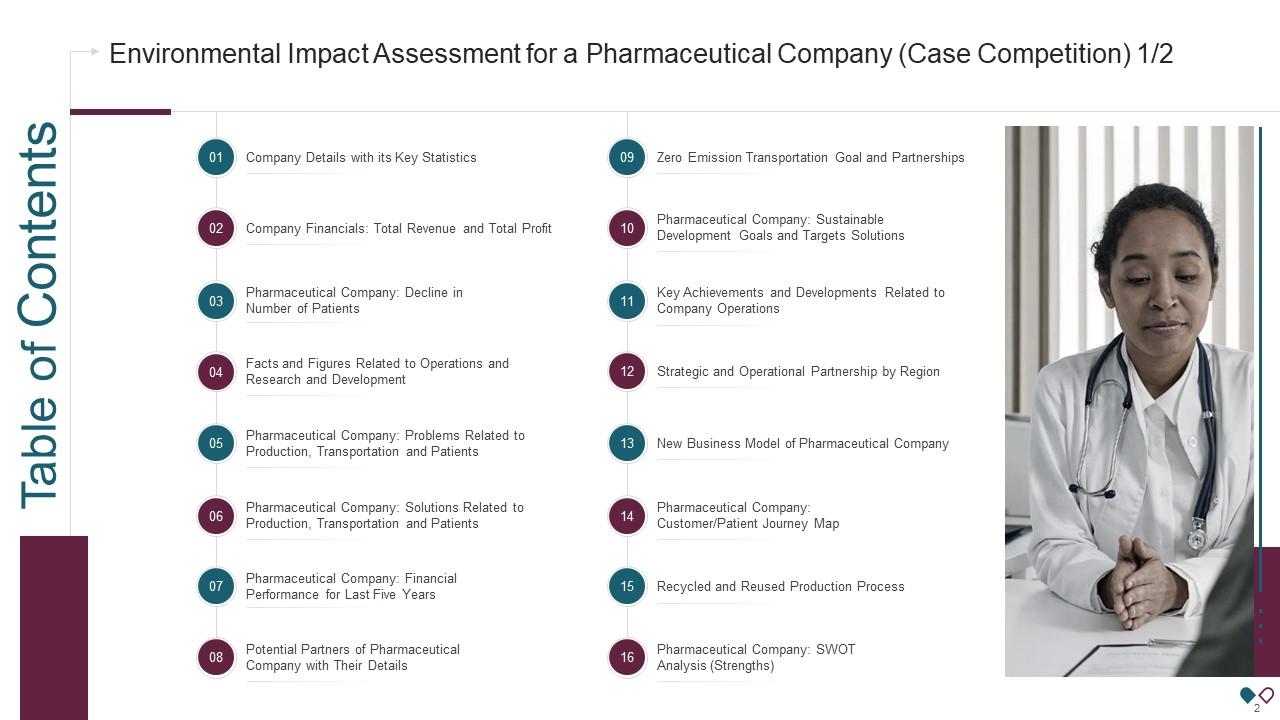
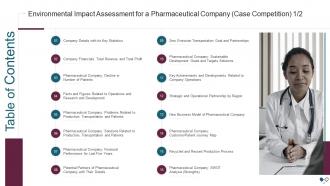
Slide 2: This slide shows the table of Contents.
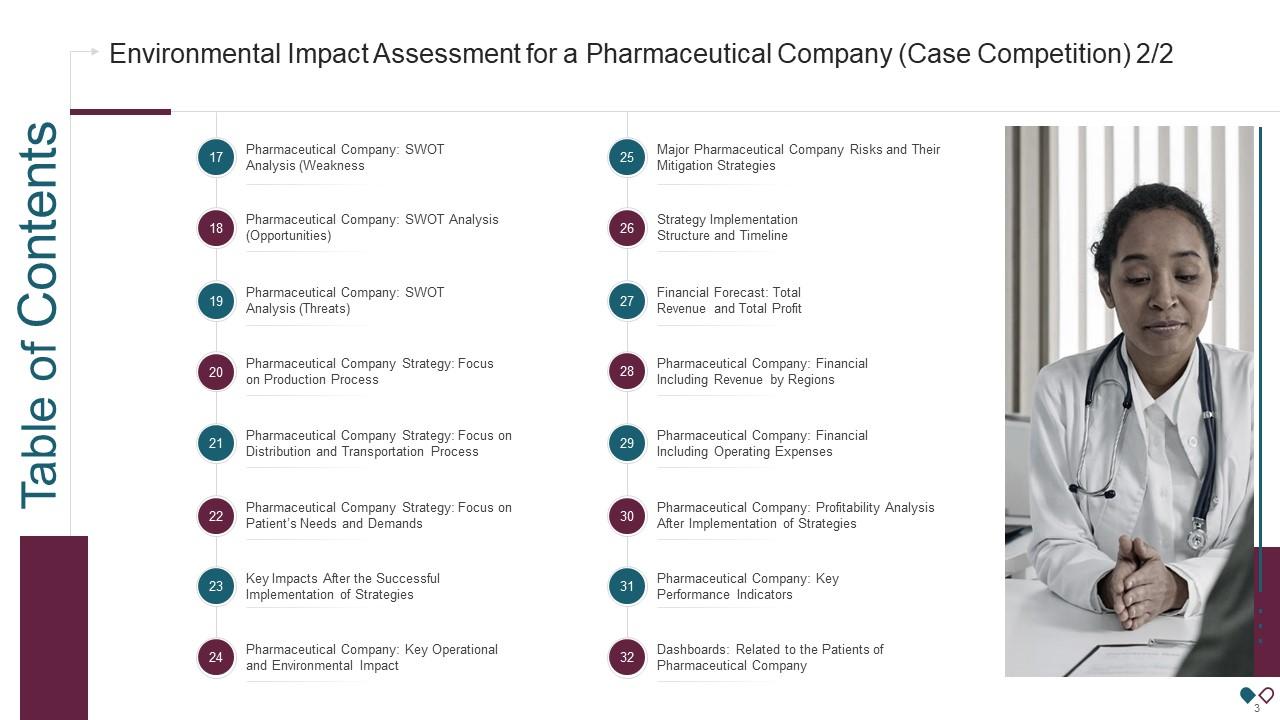
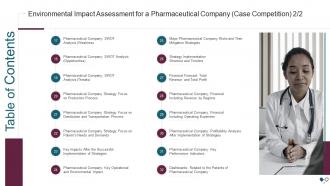
Slide 3: This is another slide continuing Table of Content for the presentation.
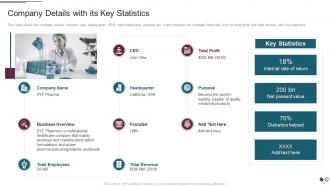
Slide 4: This slide shows the company details with key statitics.
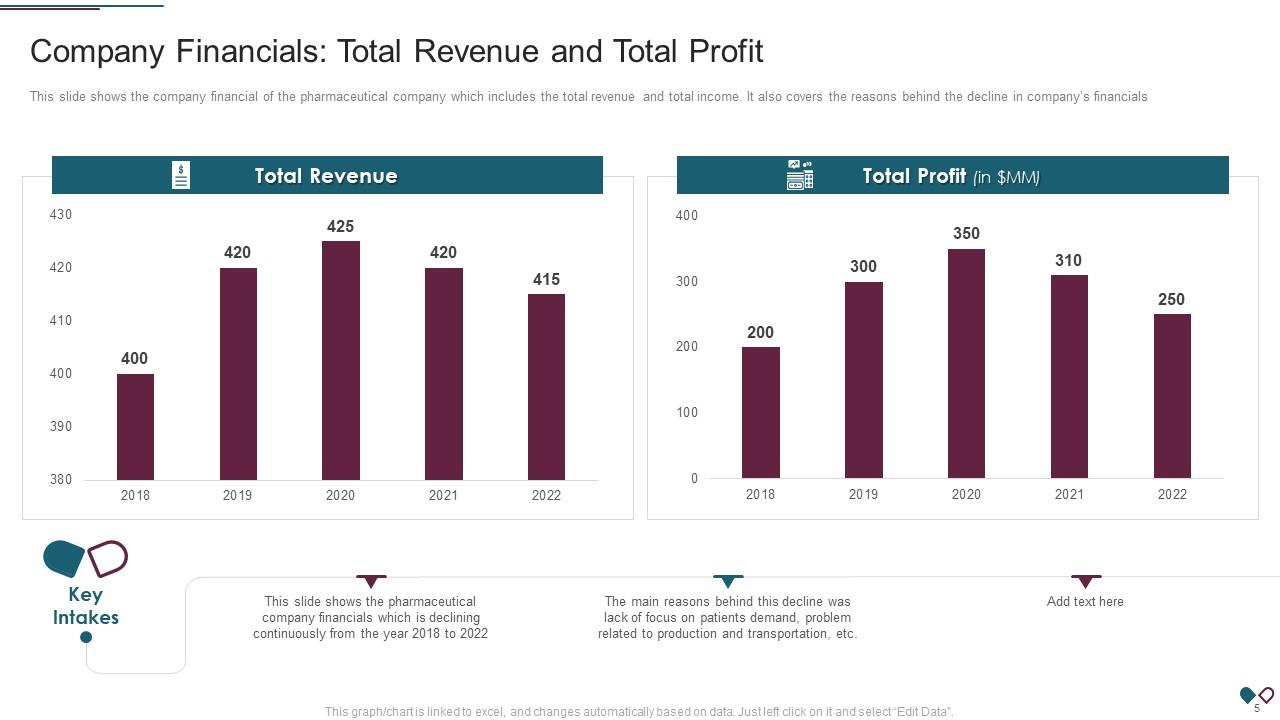
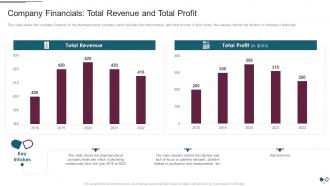
Slide 5: This slide shows the company financial of the pharmaceutical company including the total revenue and total income.
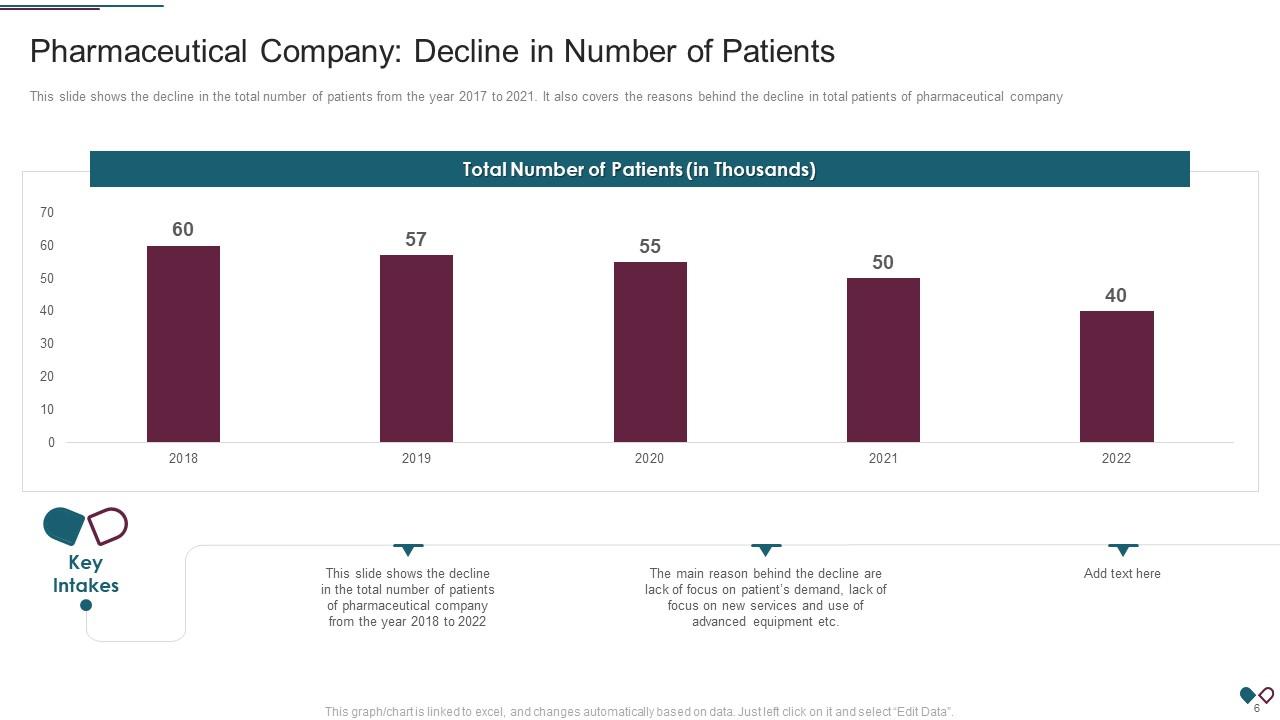
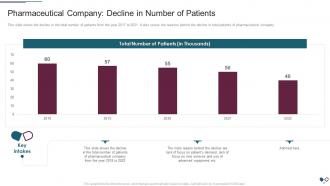
Slide 6: This slide shows the decline in the total number of patients from the year 2017 to 2021.
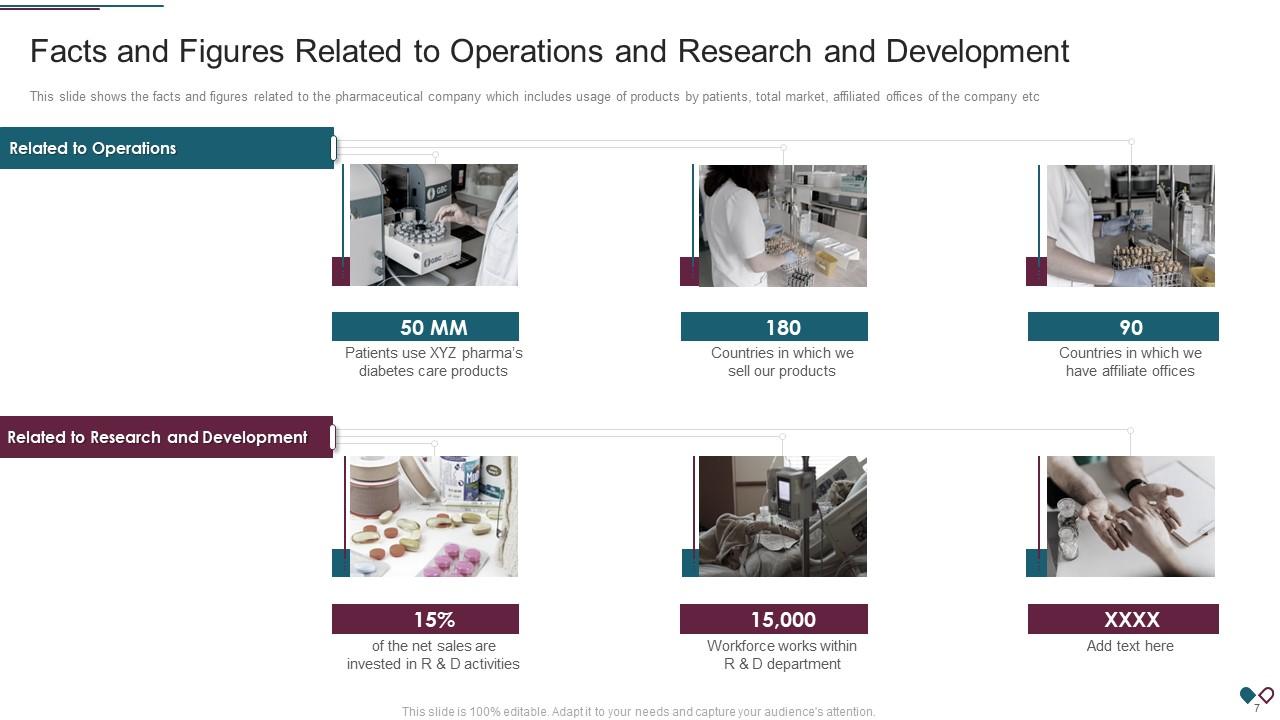
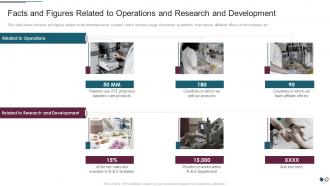
Slide 7: This slide shows the facts and figures related to the pharmaceutical company.
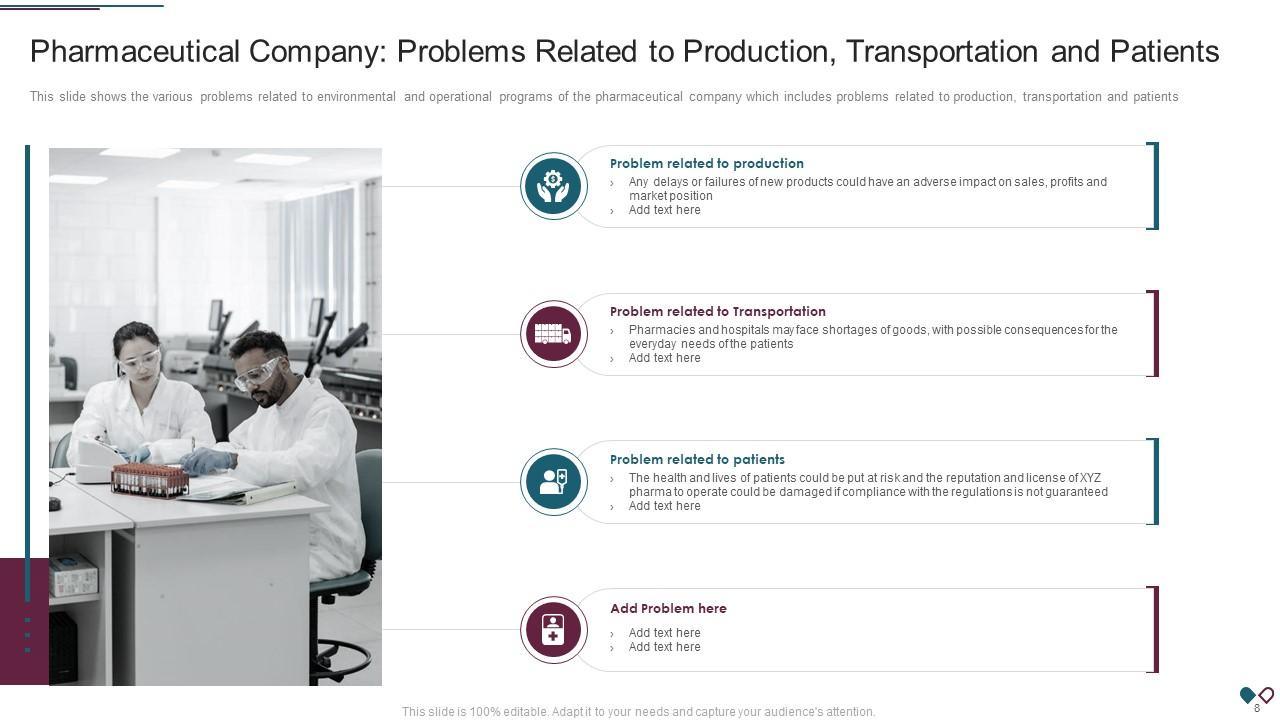
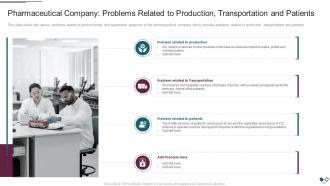
Slide 8: This slide shows the various problems related to environmental and operational programs of the pharmaceutical company.
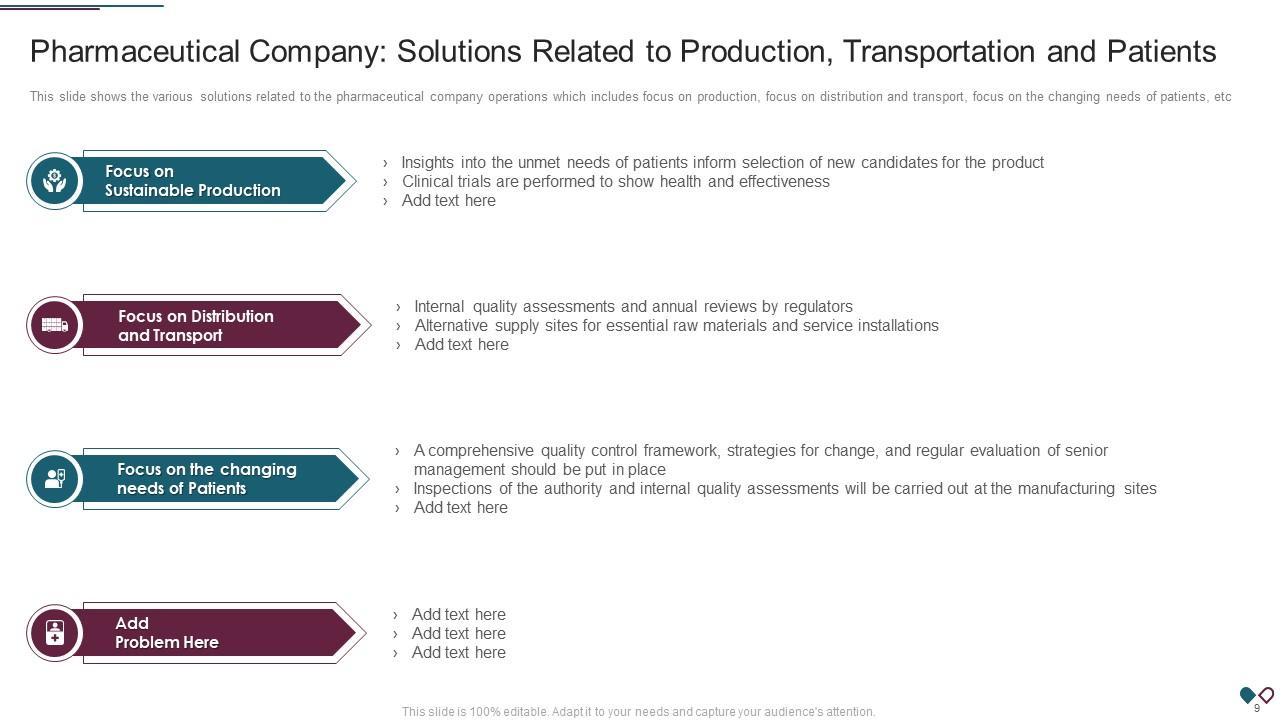
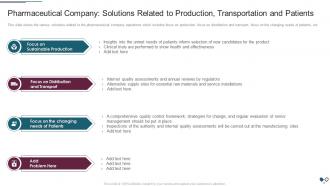
Slide 9: This slide shows the various solutions related to the pharmaceutical company operations.
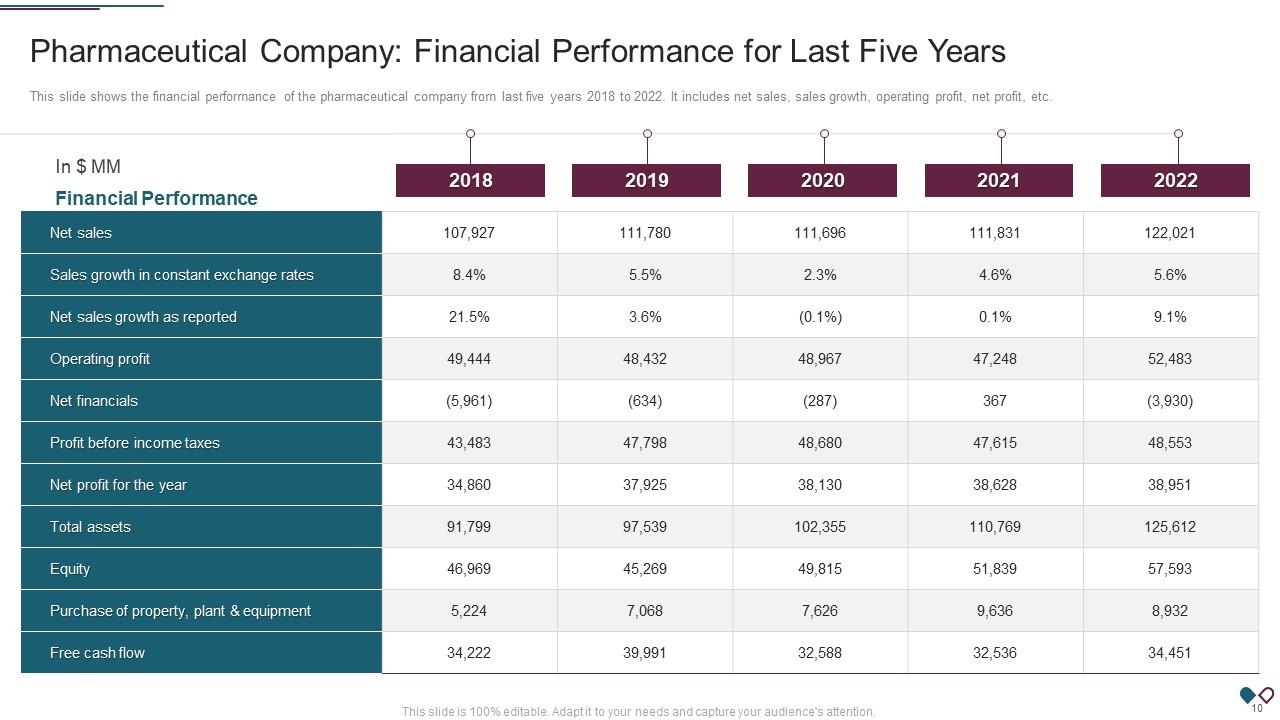
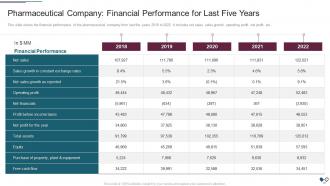
Slide 10: This slide shows the financial performance of the pharmaceutical company from last five years from 2017 to 2021.
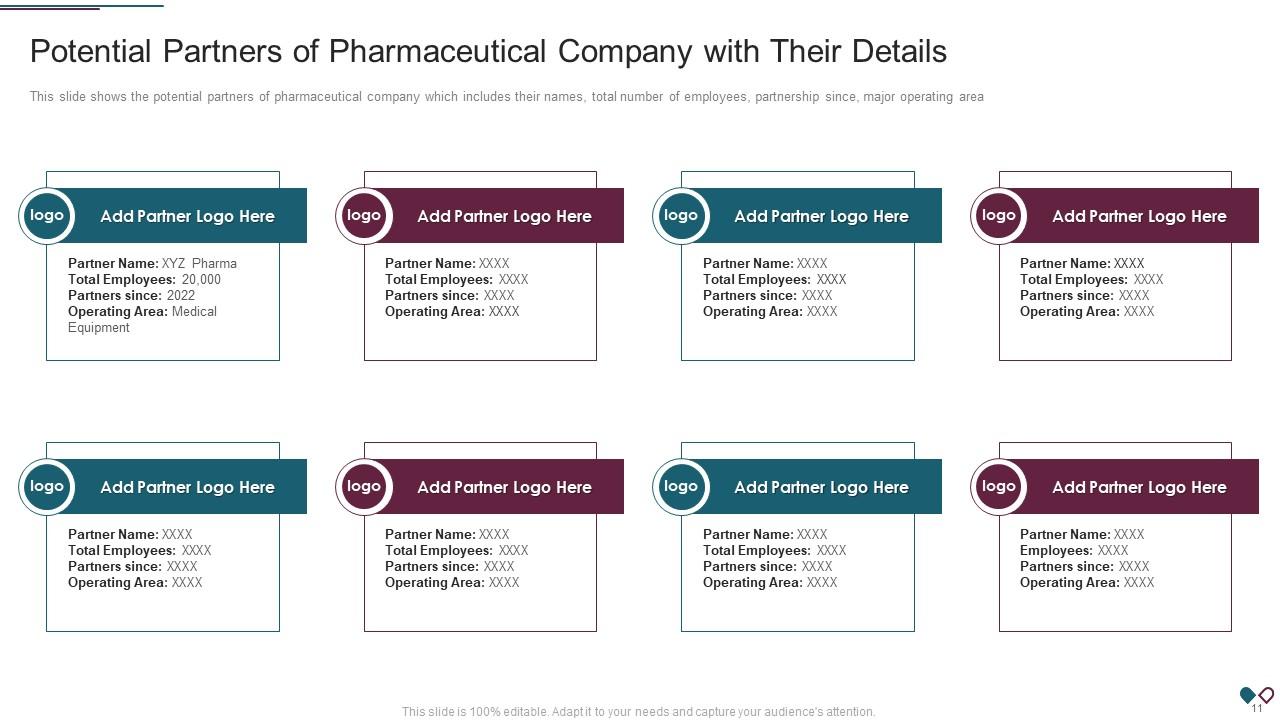
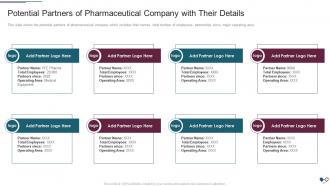
Slide 11: This slide shows the potential partners of pharmaceutical company.
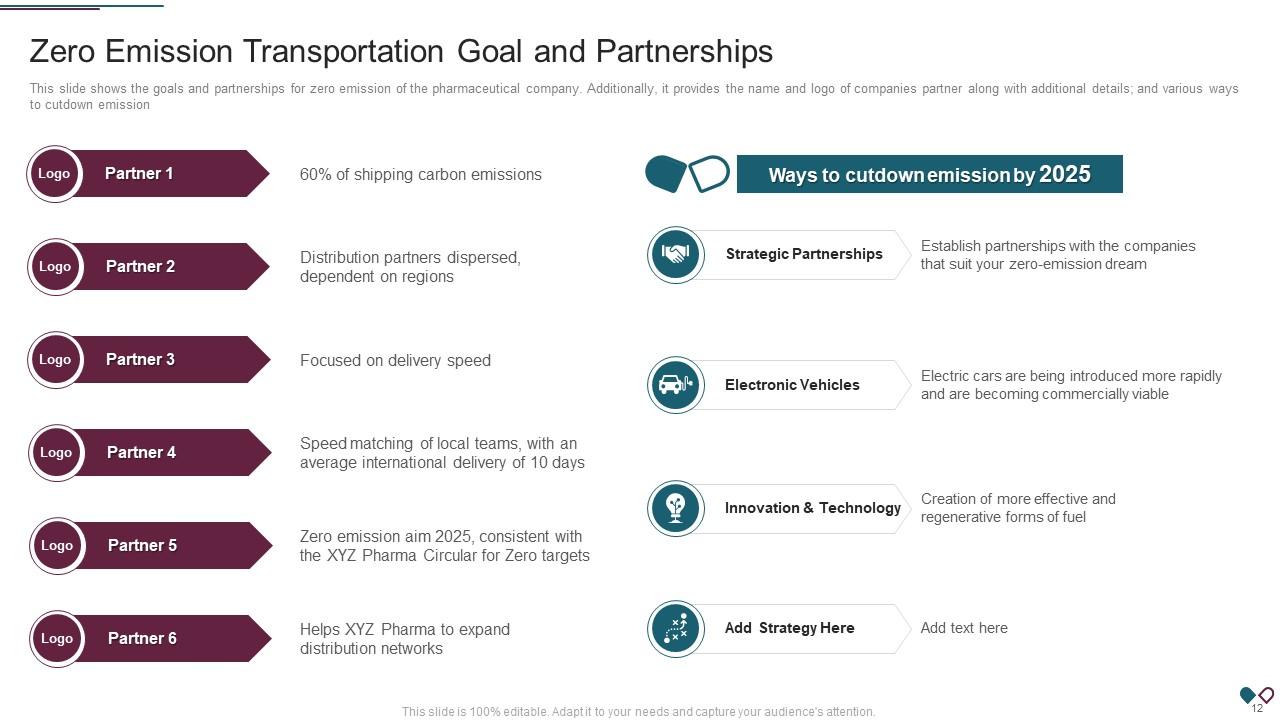
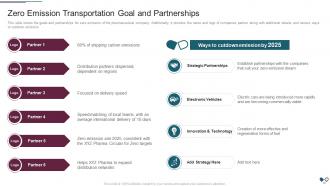
Slide 12: This slide shows the goals and partnerships for zero emission of the pharmaceutical company.
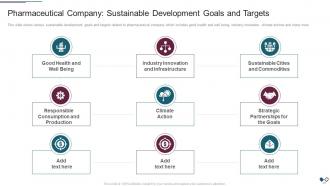
Slide 13: This slide shows various sustainable development goals and targets related to pharmaceutical company.
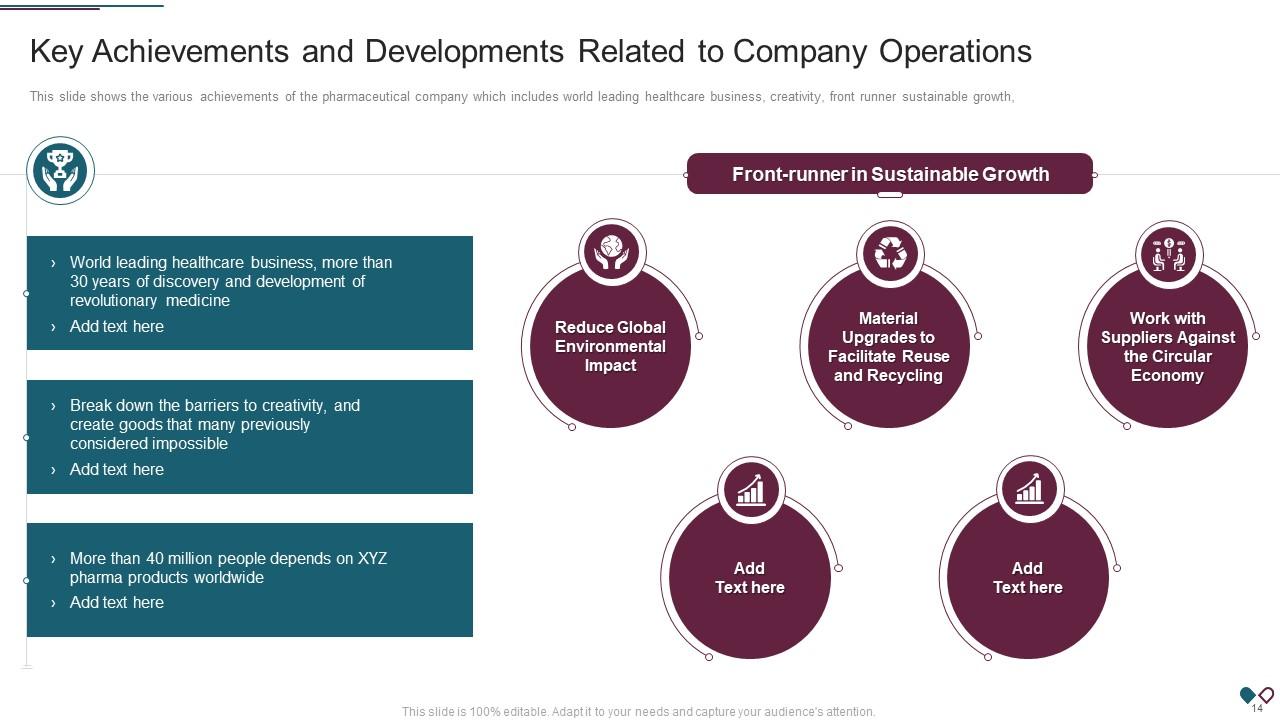
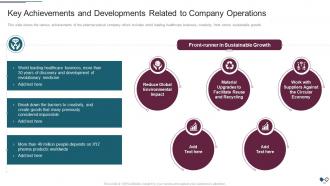
Slide 14: This slide shows the various achievements of the pharmaceutical company.
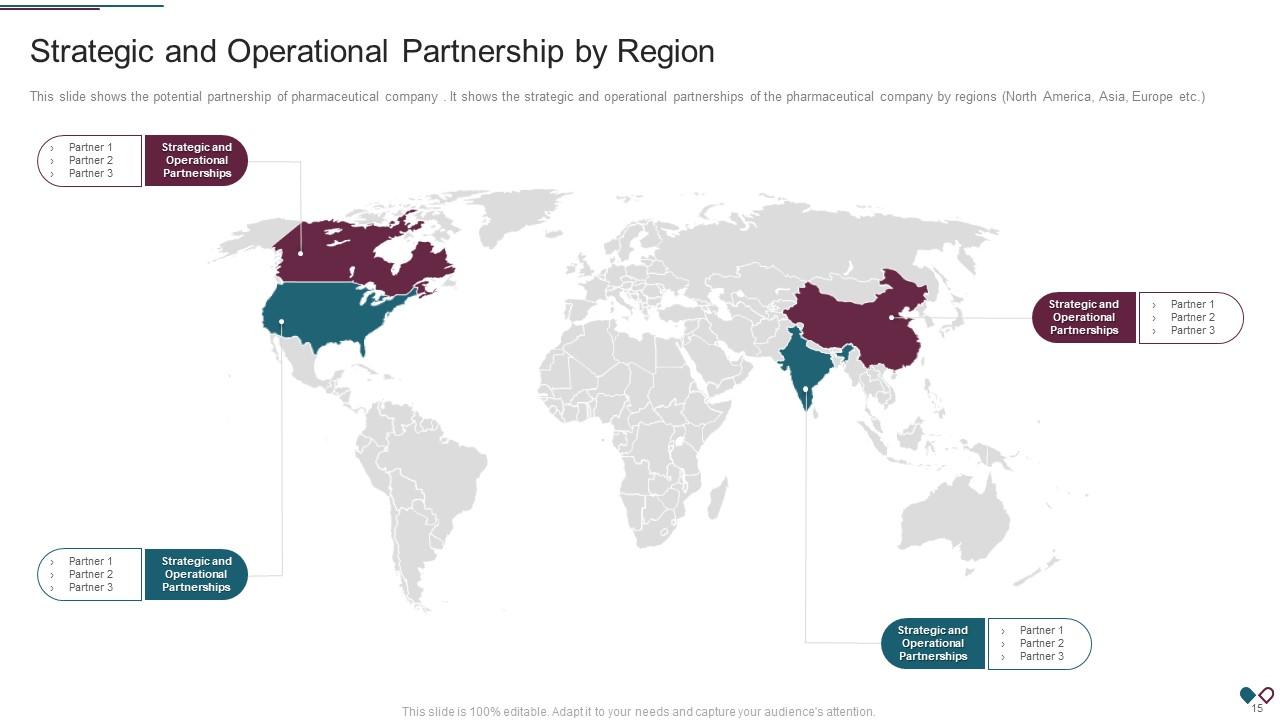
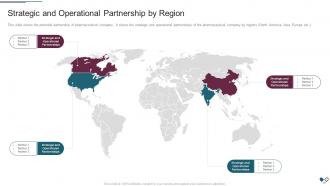
Slide 15: This slide shows the potential partnerships of pharmaceutical company .
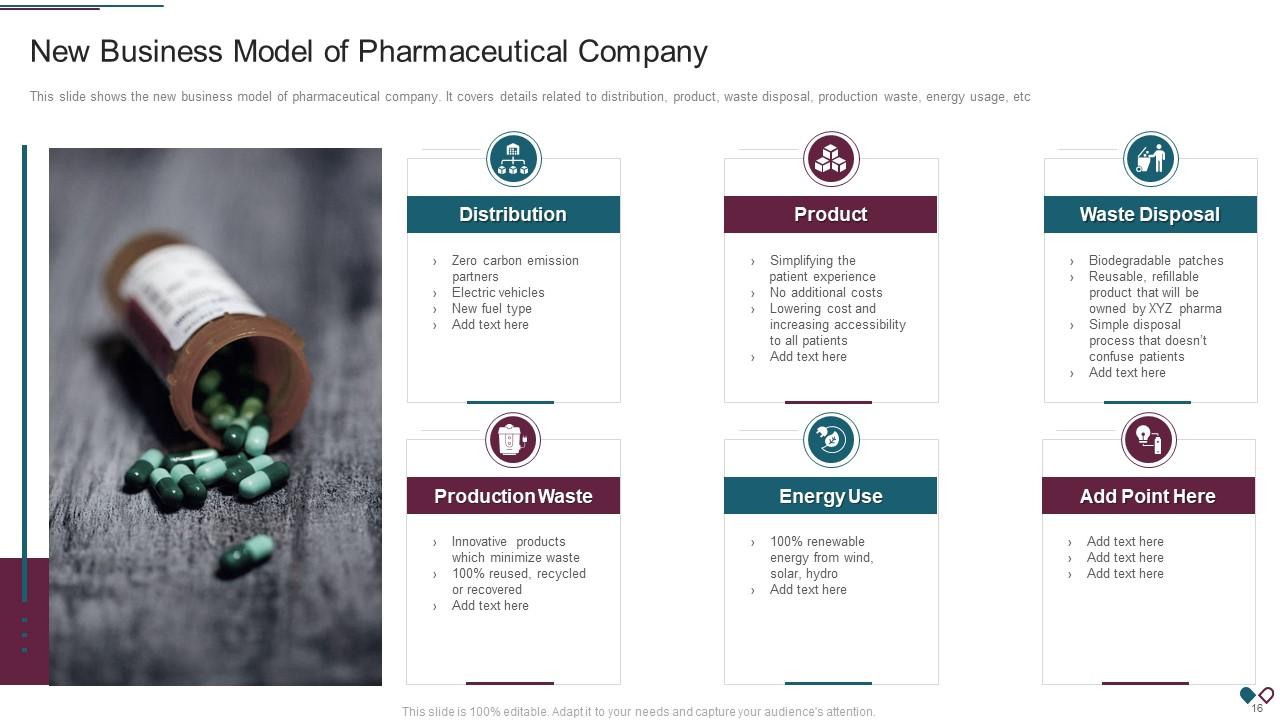
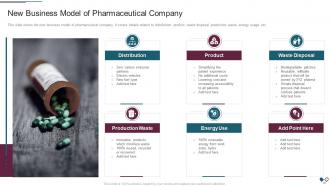
Slide 16: This slide shows the new business model of pharmaceutical company.
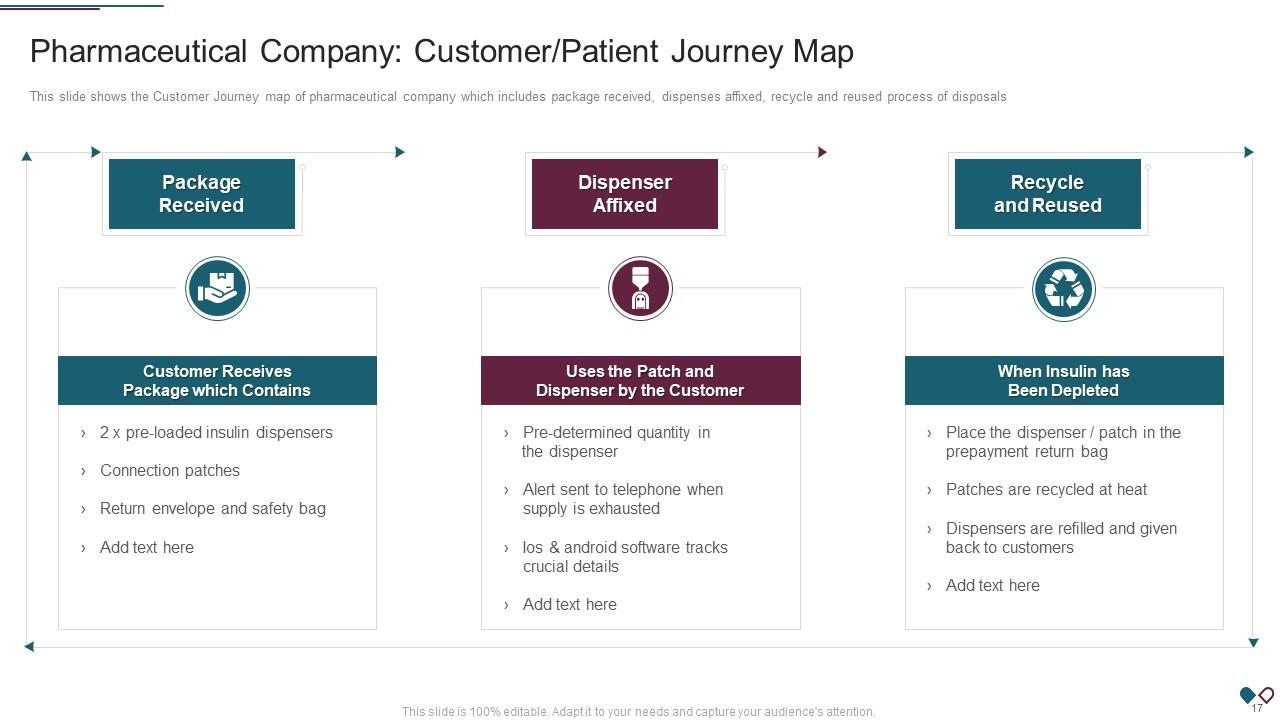
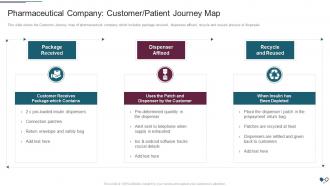
Slide 17: This slide shows the Customer Journey map of pharmaceutical company which includes package received etc.
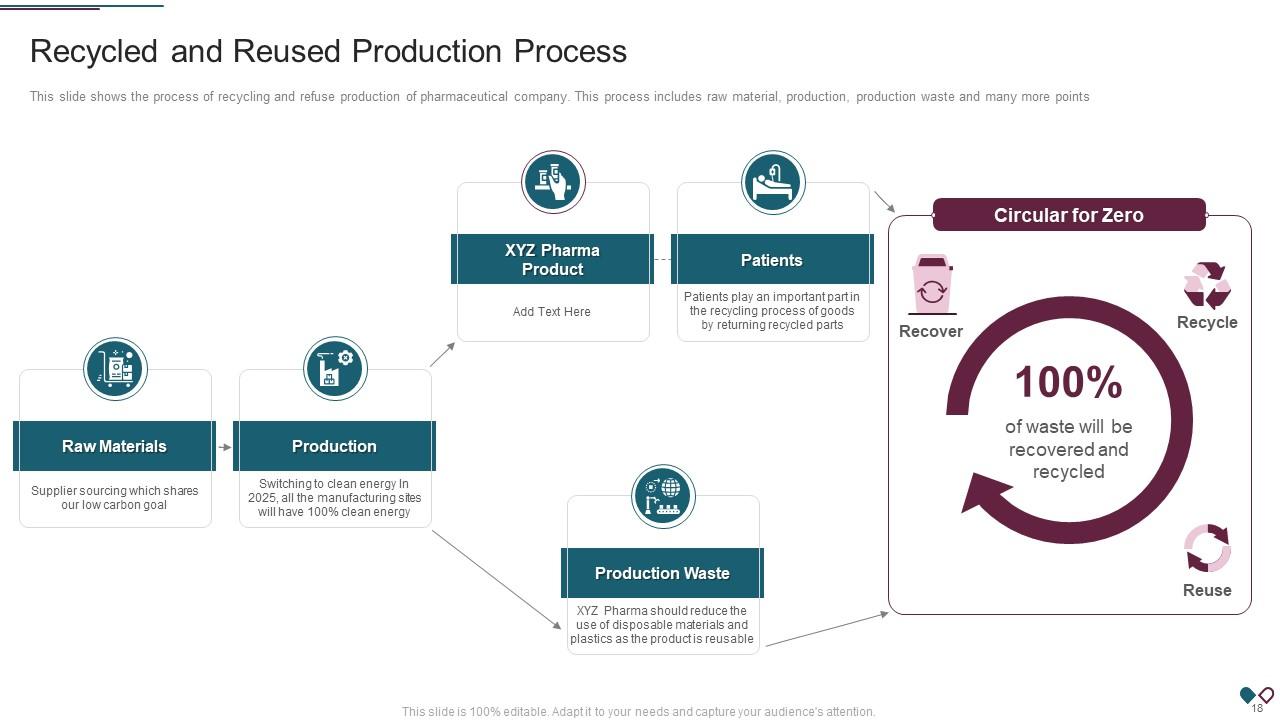
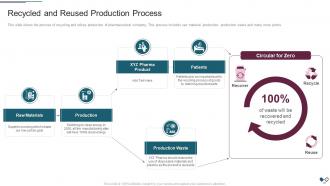
Slide 18: This slide shows the process of recycling and refuse production of pharmaceutical company.
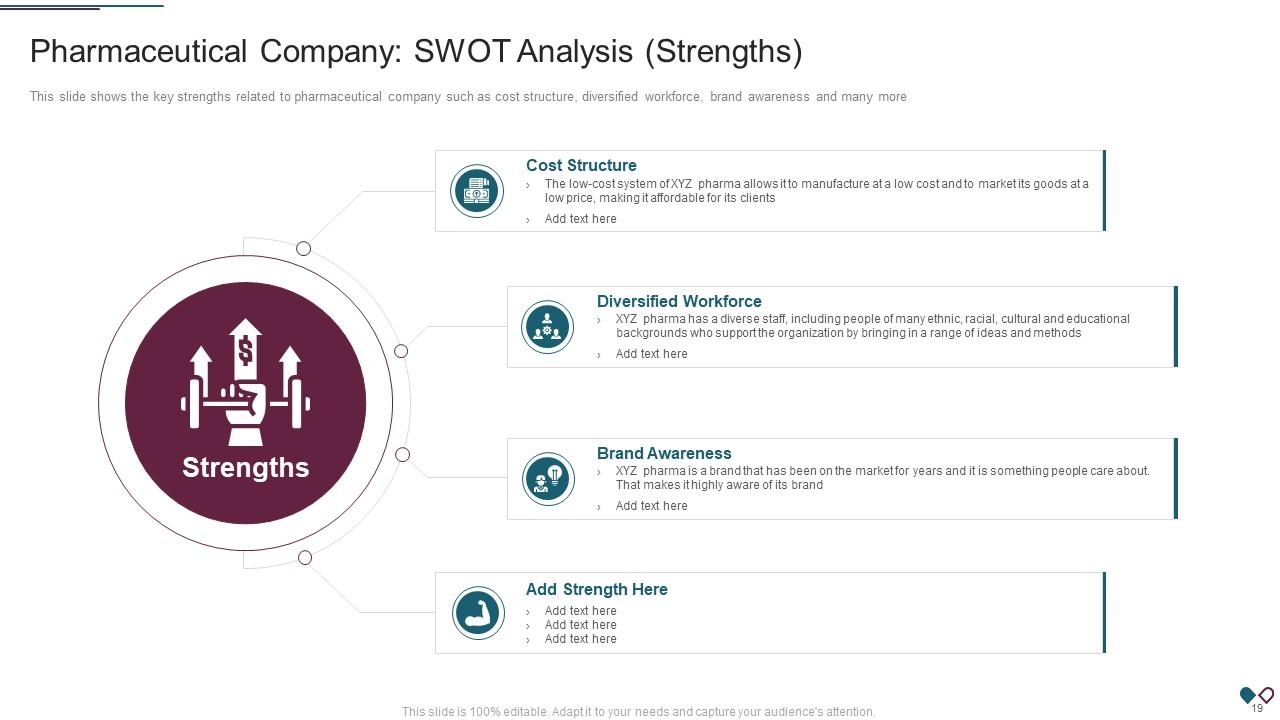
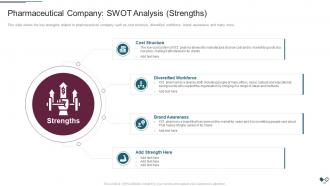
Slide 19: This slide shows the key strengths related to pharmaceutical company.
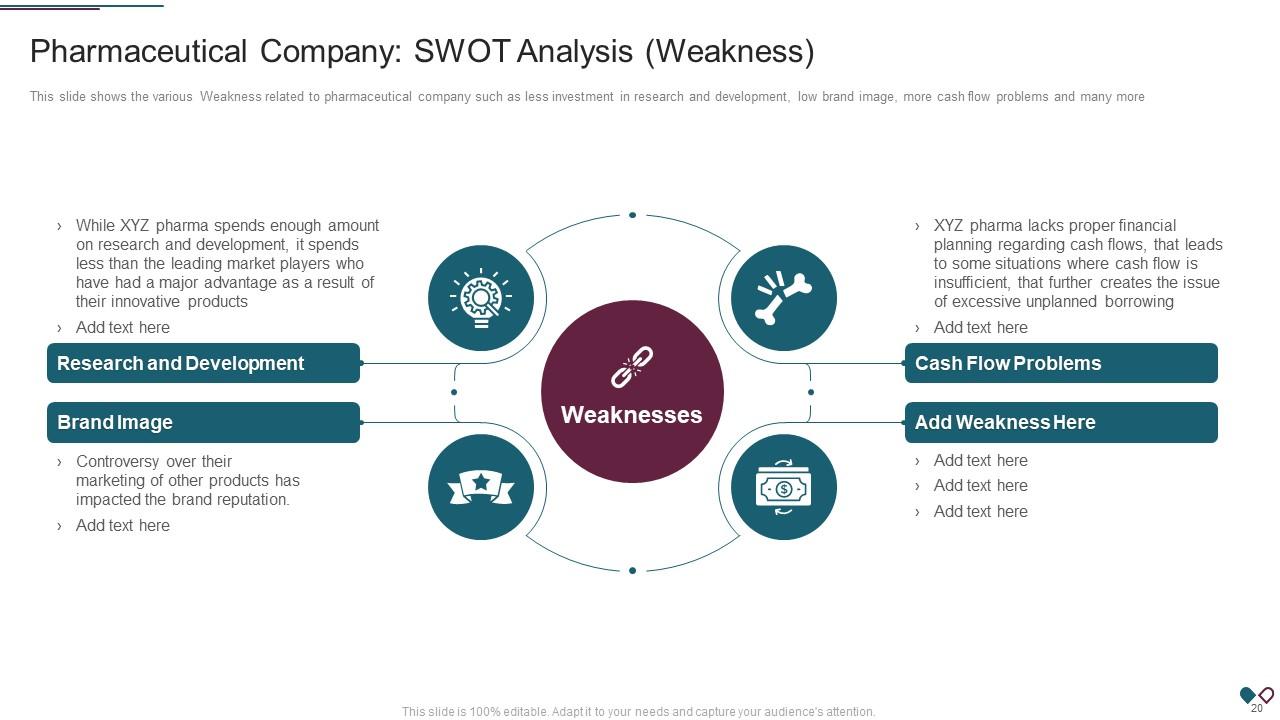
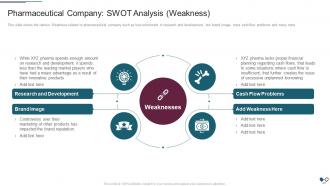
Slide 20: This slide shows the various Weakness related to pharmaceutical company such as less investment in research and development etc.
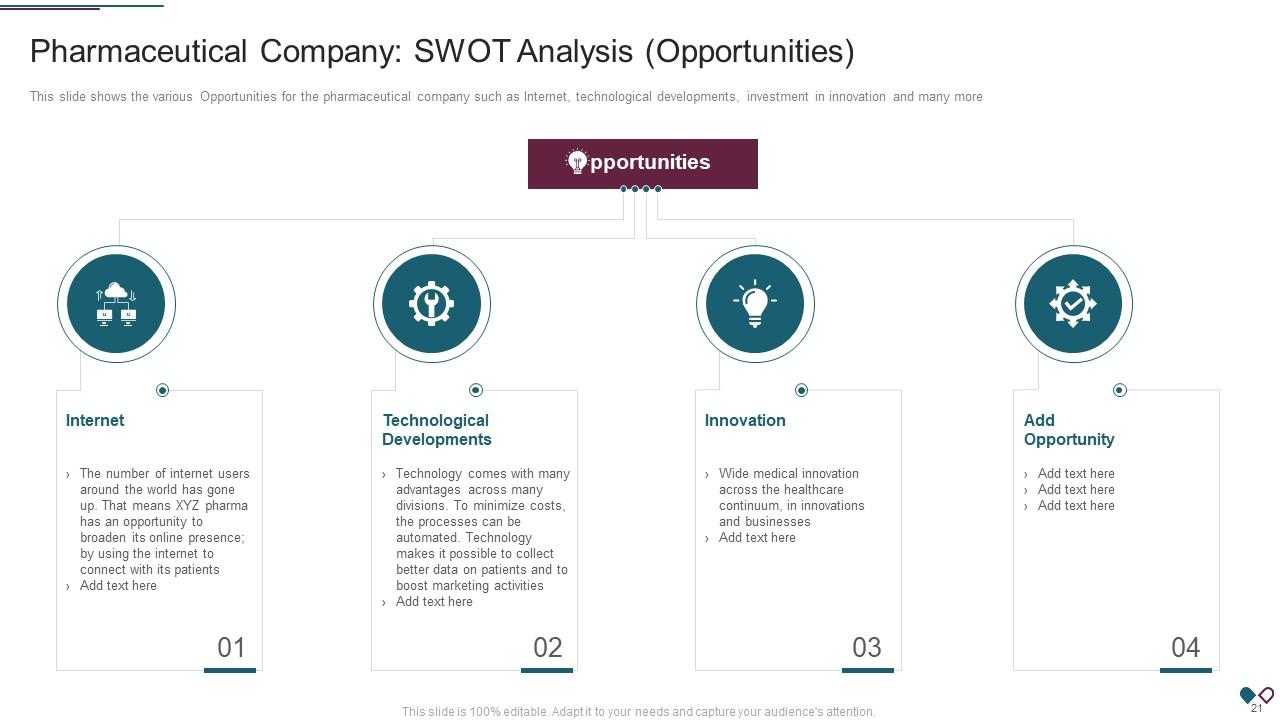
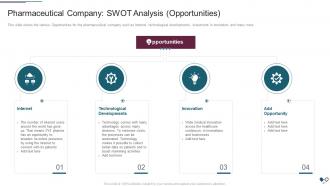
Slide 21: This slide shows the various Opportunities for the pharmaceutical company such as Internet, technological developments etc.
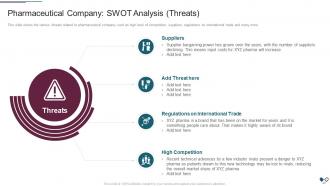
Slide 22: This slide shows the various threats related to pharmaceutical company such as high level of competition etc.
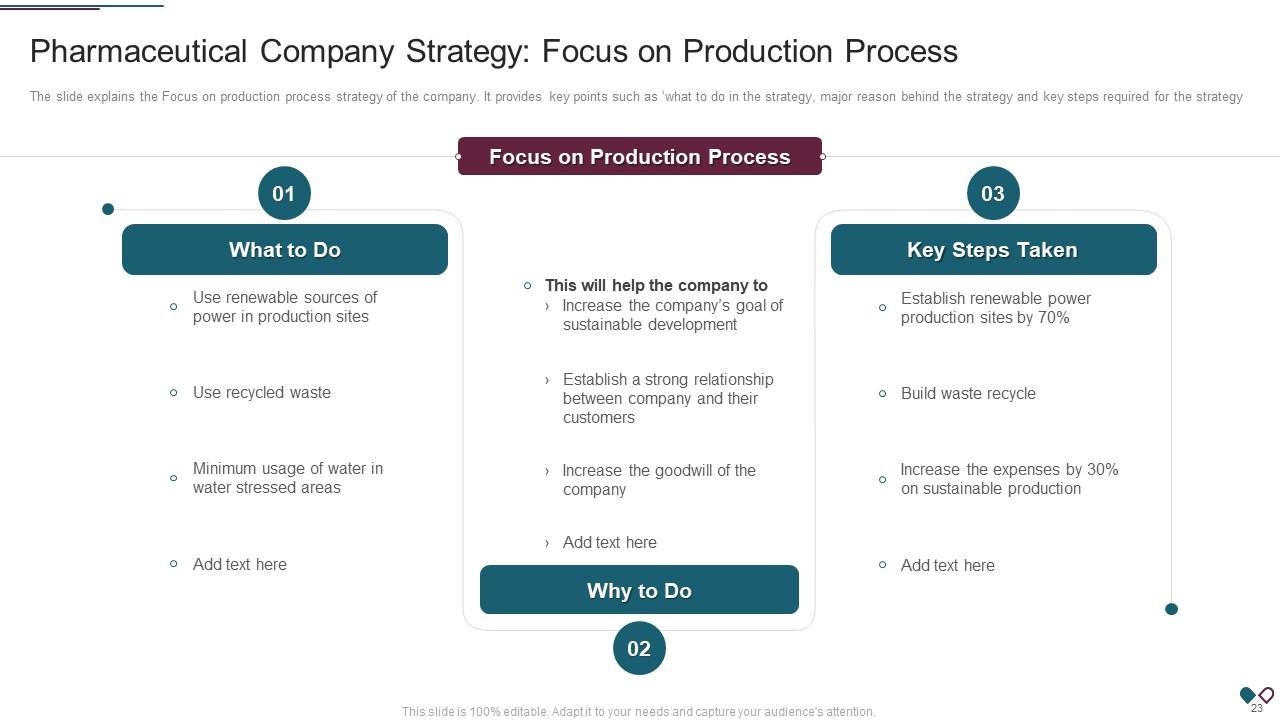
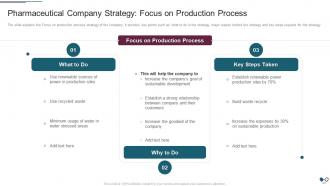
Slide 23: The slide explains the Focus on production process strategy of the company.
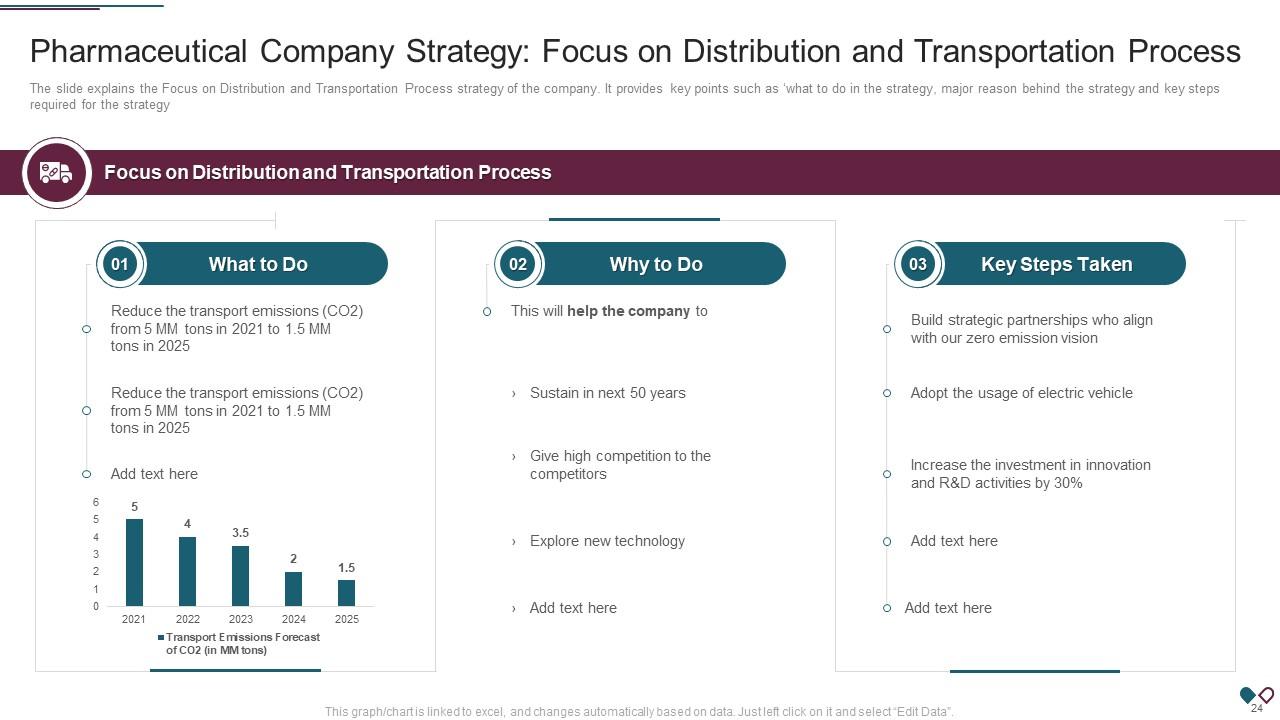
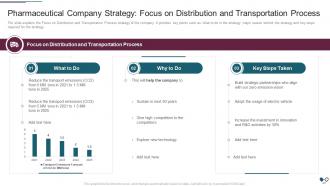
Slide 24: The slide explains the Focus on Distribution and Transportation Process strategy of the company.
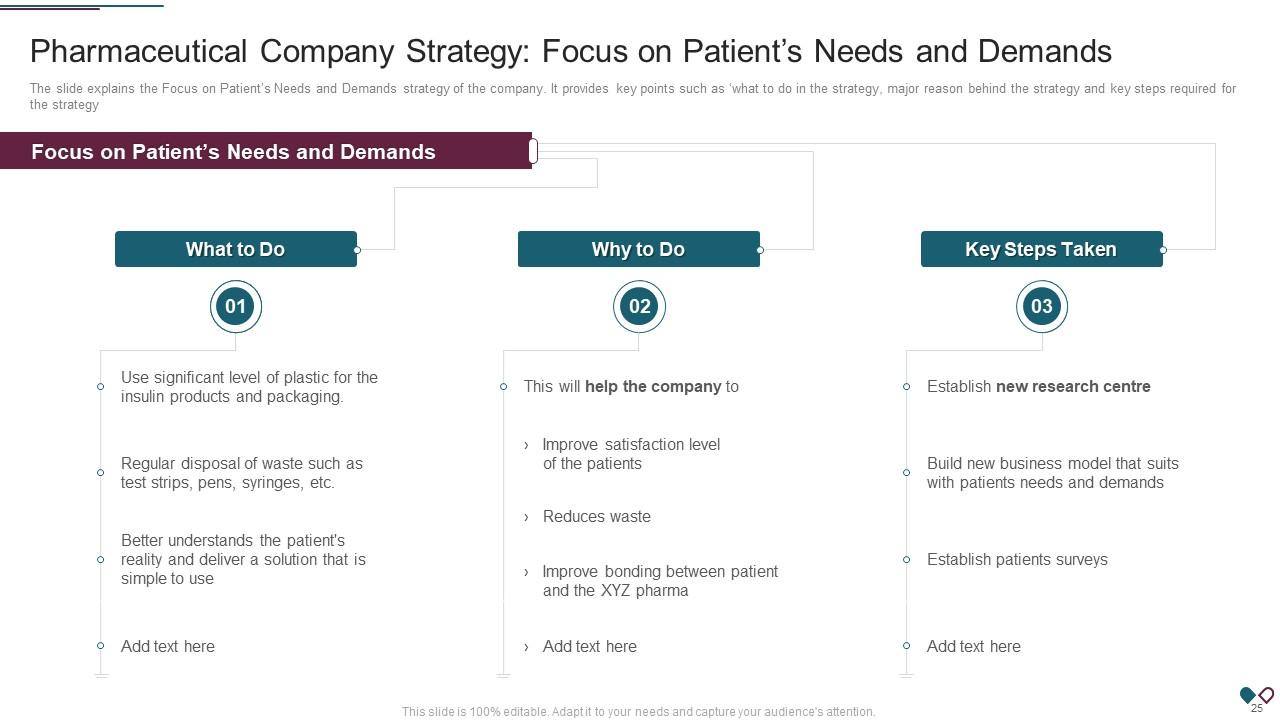
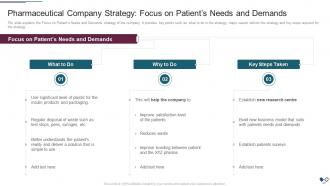
Slide 25: The slide explains the Focus on Patient’s Needs and Demands strategy of the company.
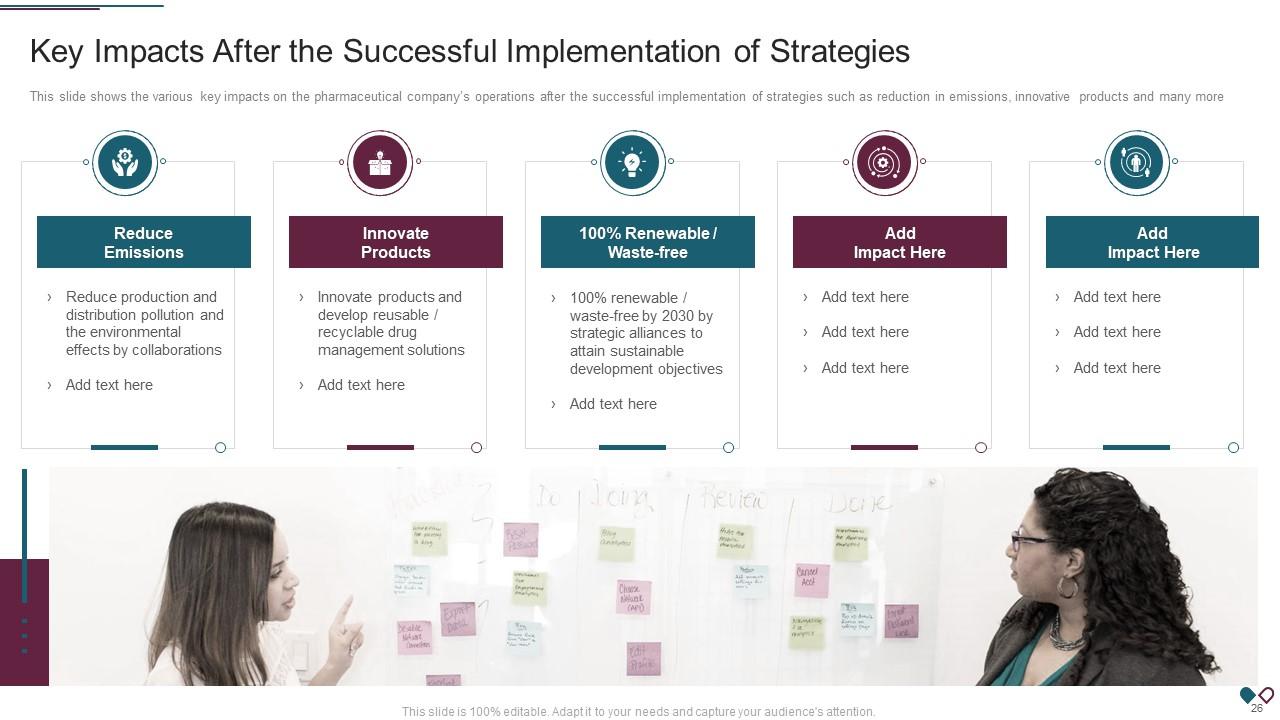
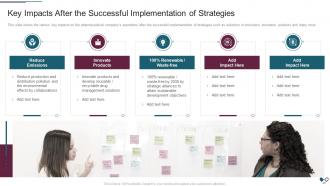
Slide 26: This slide shows the various key impacts on the pharmaceutical company’s operations after the successful implementation of certain strategies.
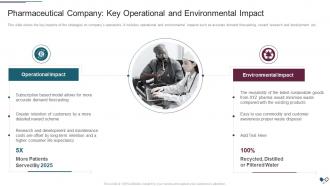
Slide 27: This slide shows the key impacts of the strategies on company’s operations incuding operational and environmental impacts.
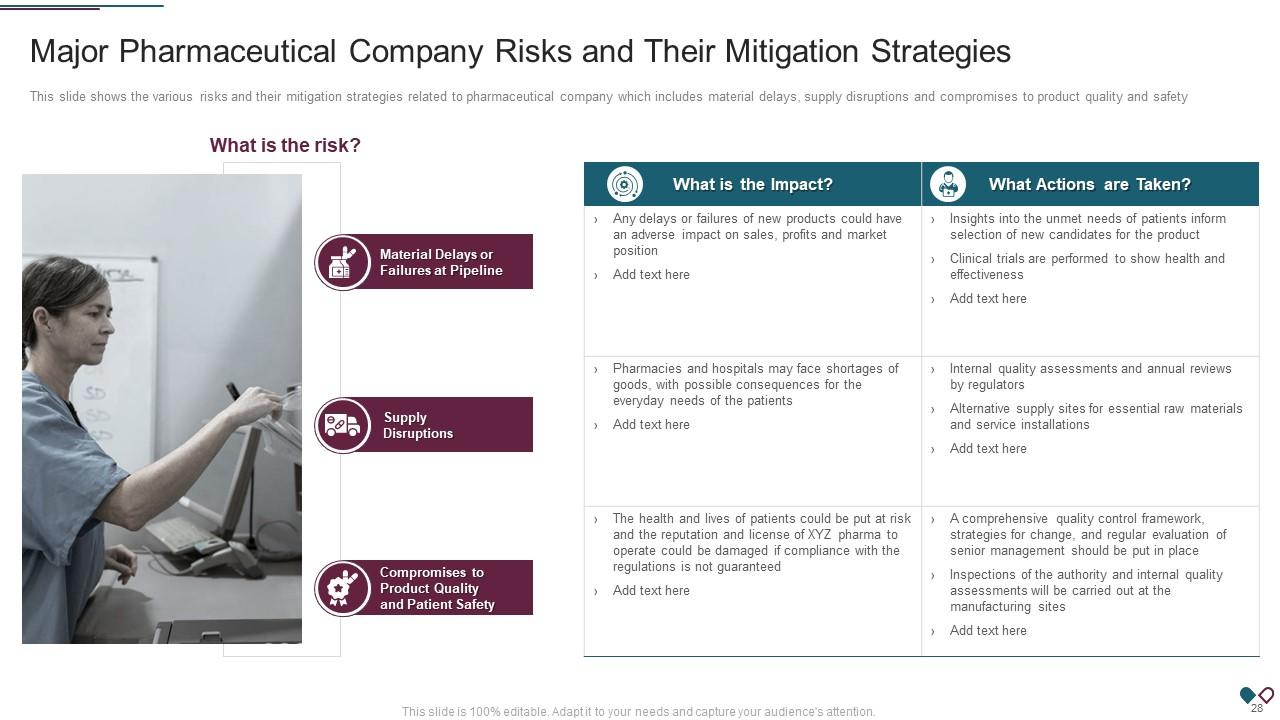
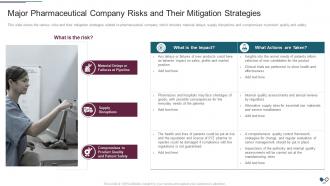
Slide 28: This slide shows the various risks and their mitigation strategies related to pharmaceutical company.
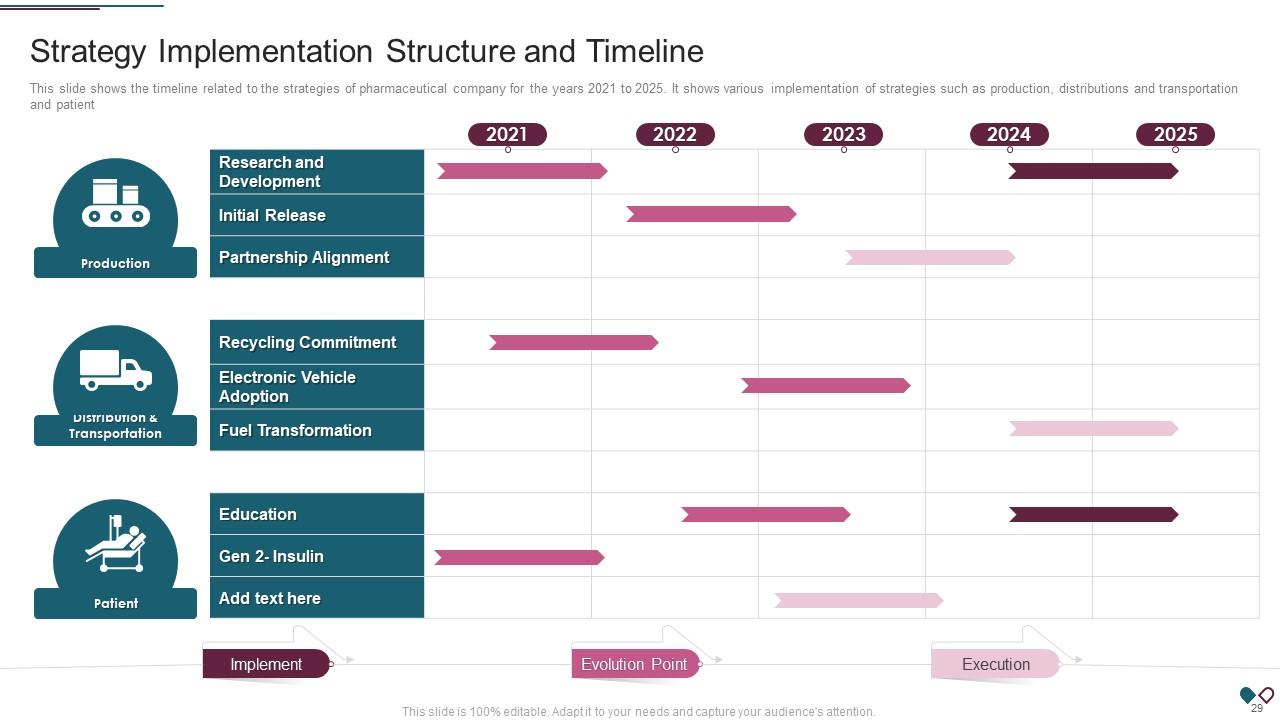
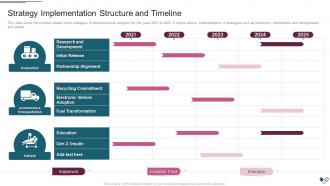
Slide 29: This slide shows the timeline related to the strategies of pharmaceutical company for the years 2021 to 2025.
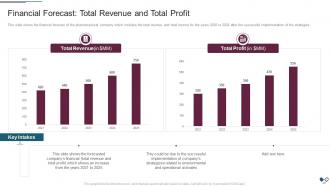
Slide 30: This slide shows the financial forecast of the pharmaceutical company which includes the total revenue and total income for the years 2021 to 2025.
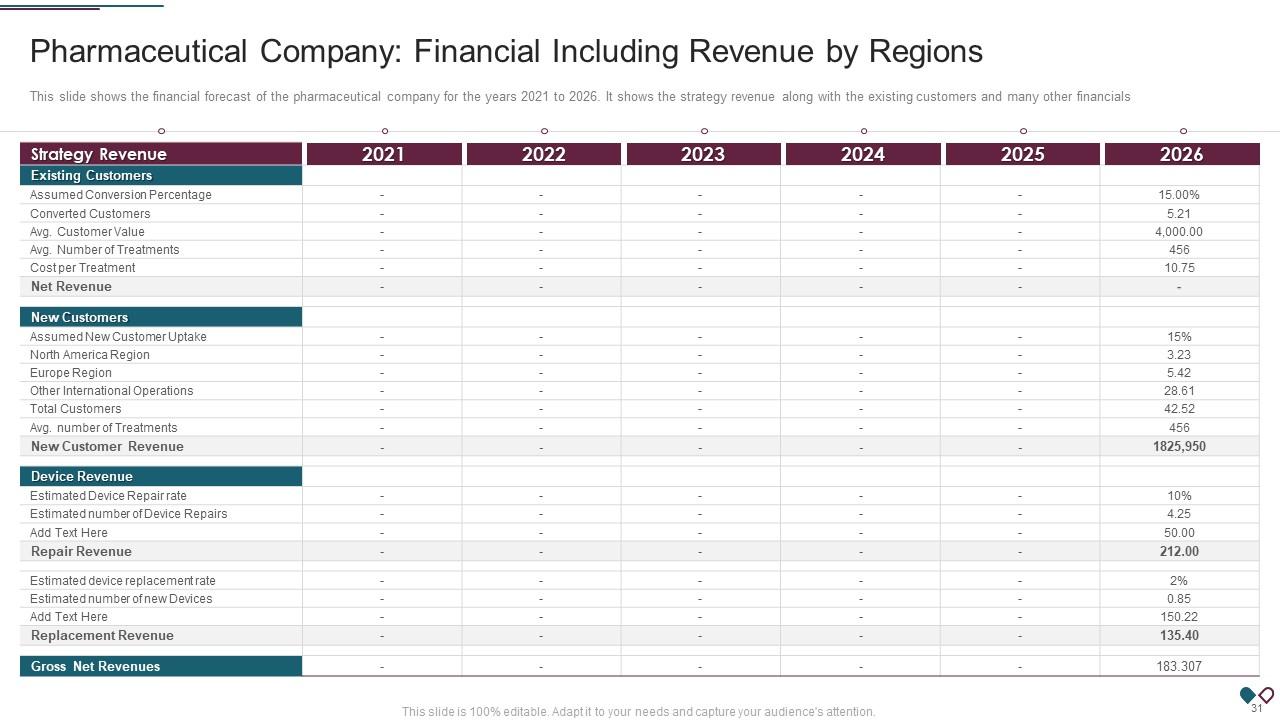
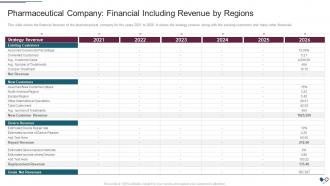
Slide 31: This slide shows the financial forecast of the pharmaceutical company for the years 2021 to 2026.
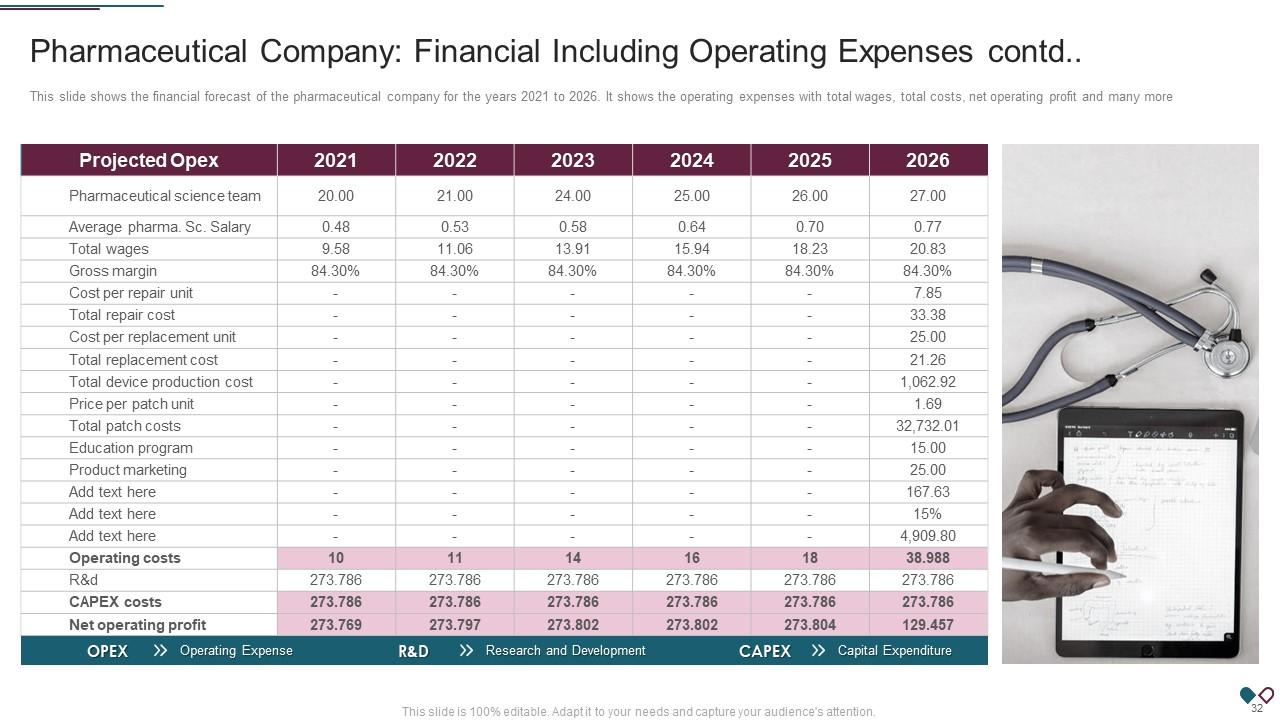
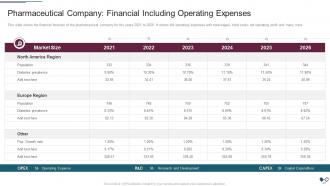
Slide 32: This slide again shows the financial forecast of the pharmaceutical company for the years 2021 to 2026.
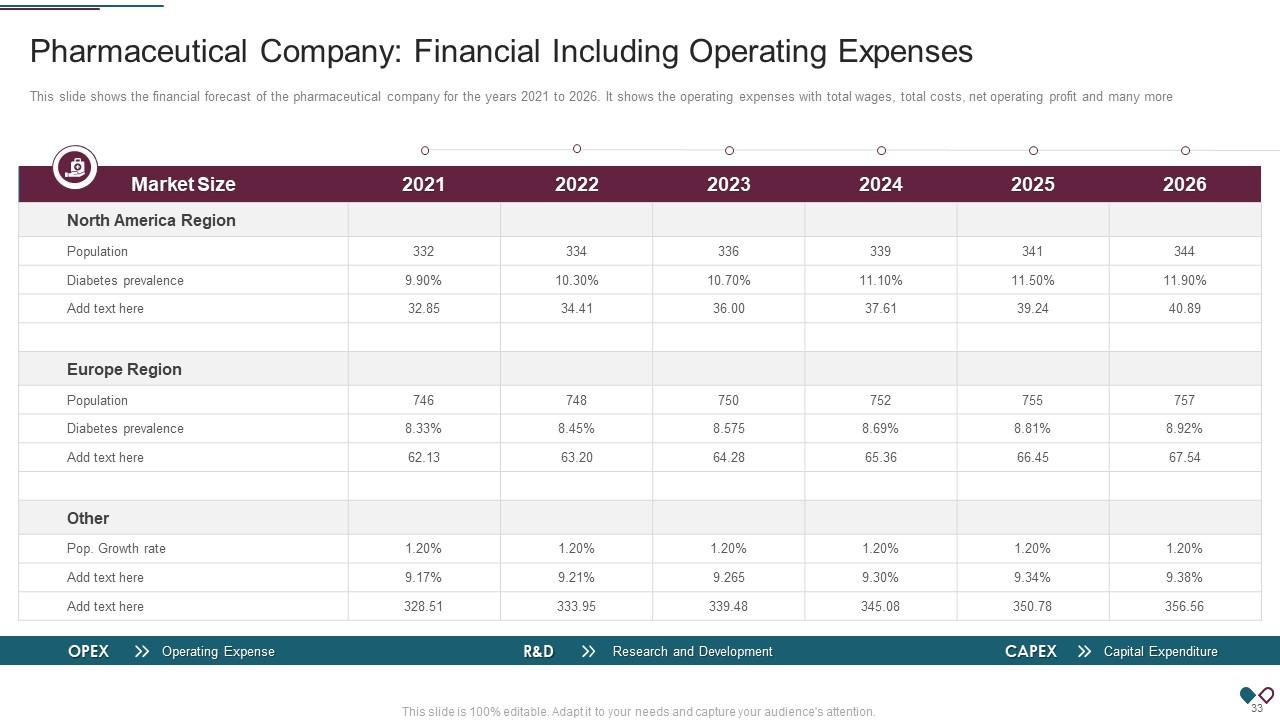
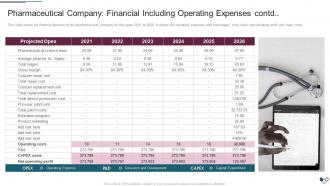
Slide 33: This slide also shows the financial forecast of the pharmaceutical company for the years 2021 to 2026.
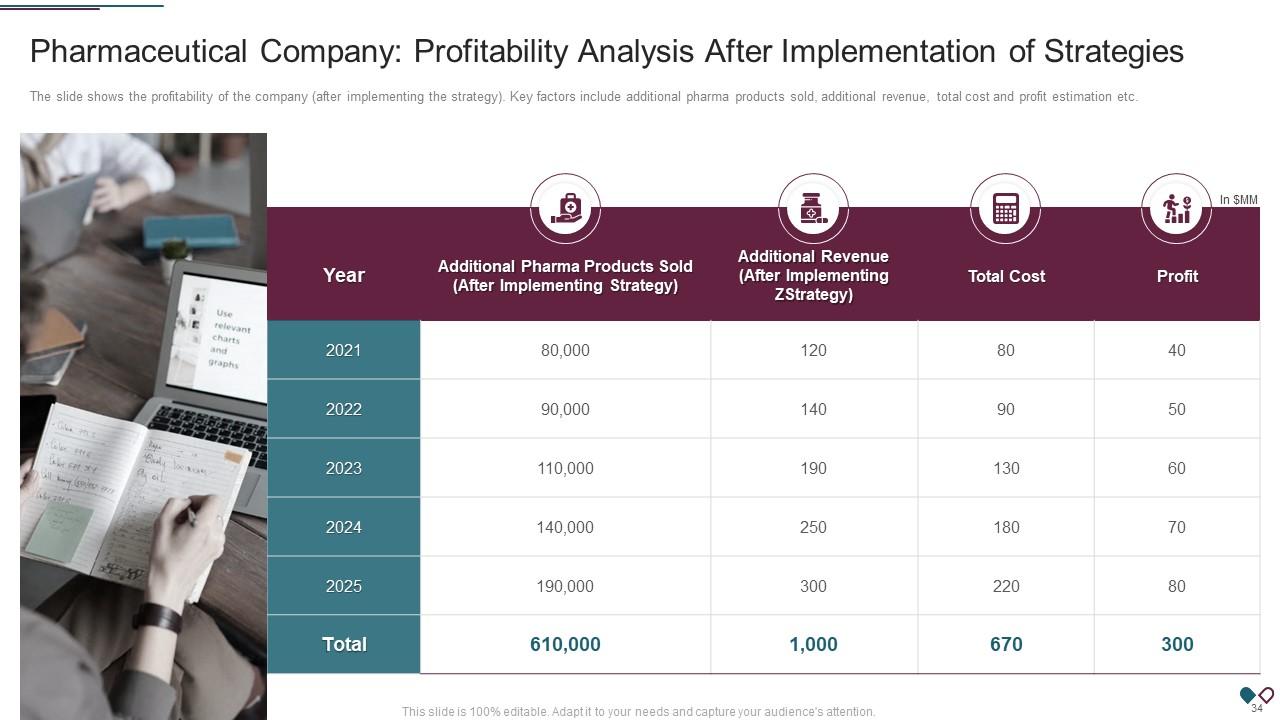
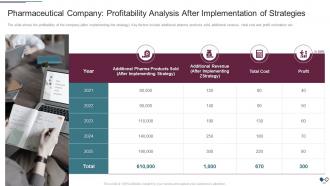
Slide 34: The slide shows the profitability of the company (after implementing the strategy).
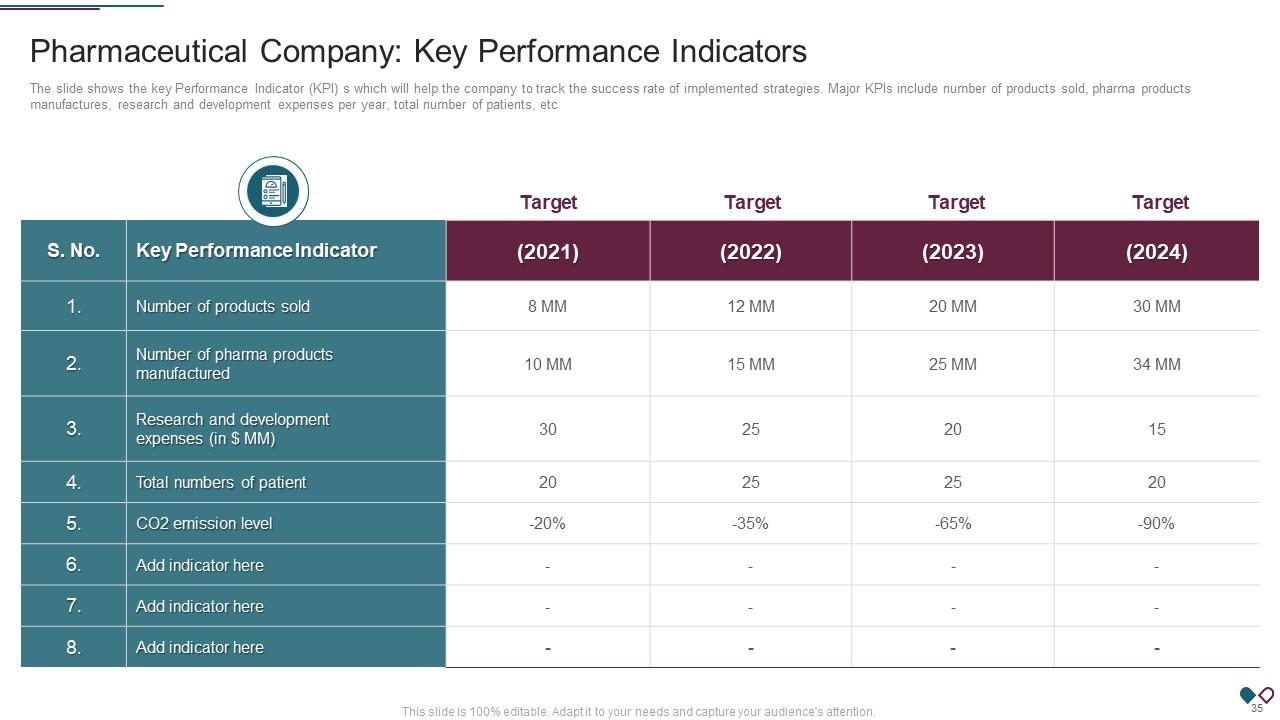
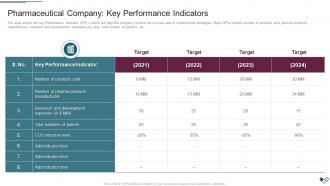
Slide 35: The slide shows the key Performance Indicator (KPI)s.
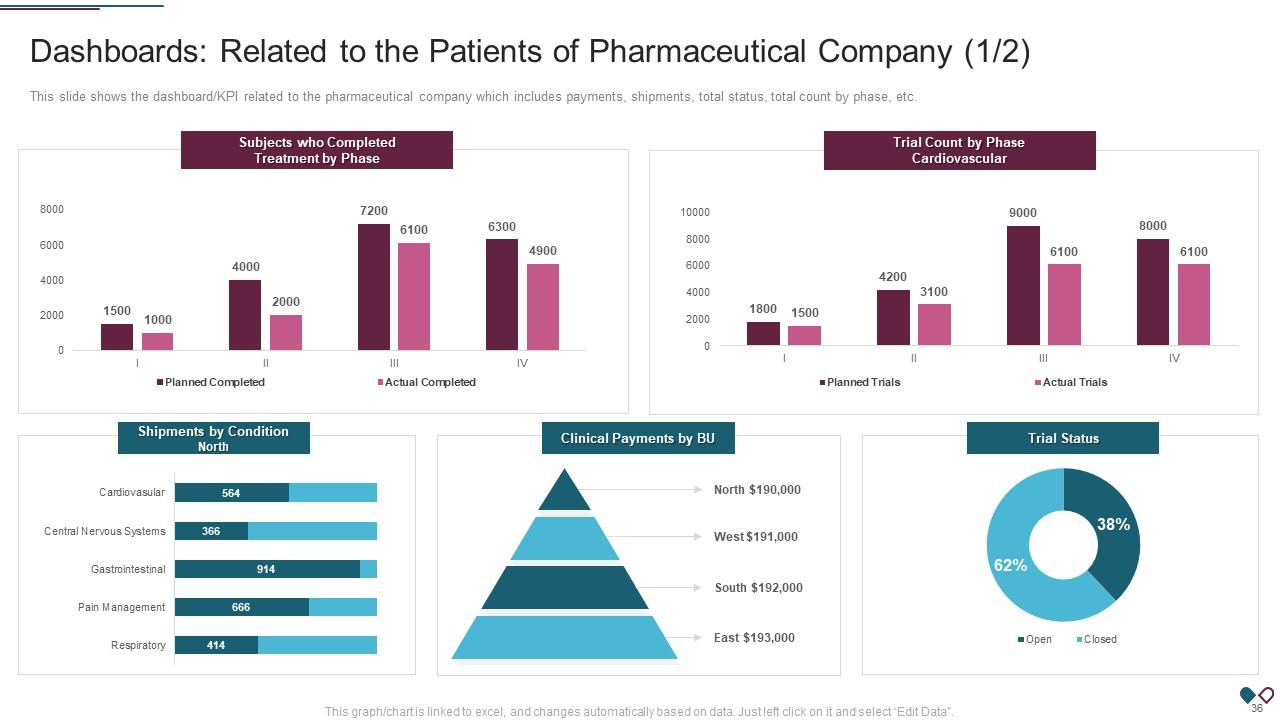
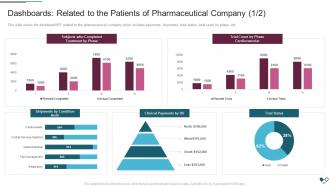
Slide 36: This slide shows the dashboard/KPI related to the pharmaceutical company which includes payments etc.
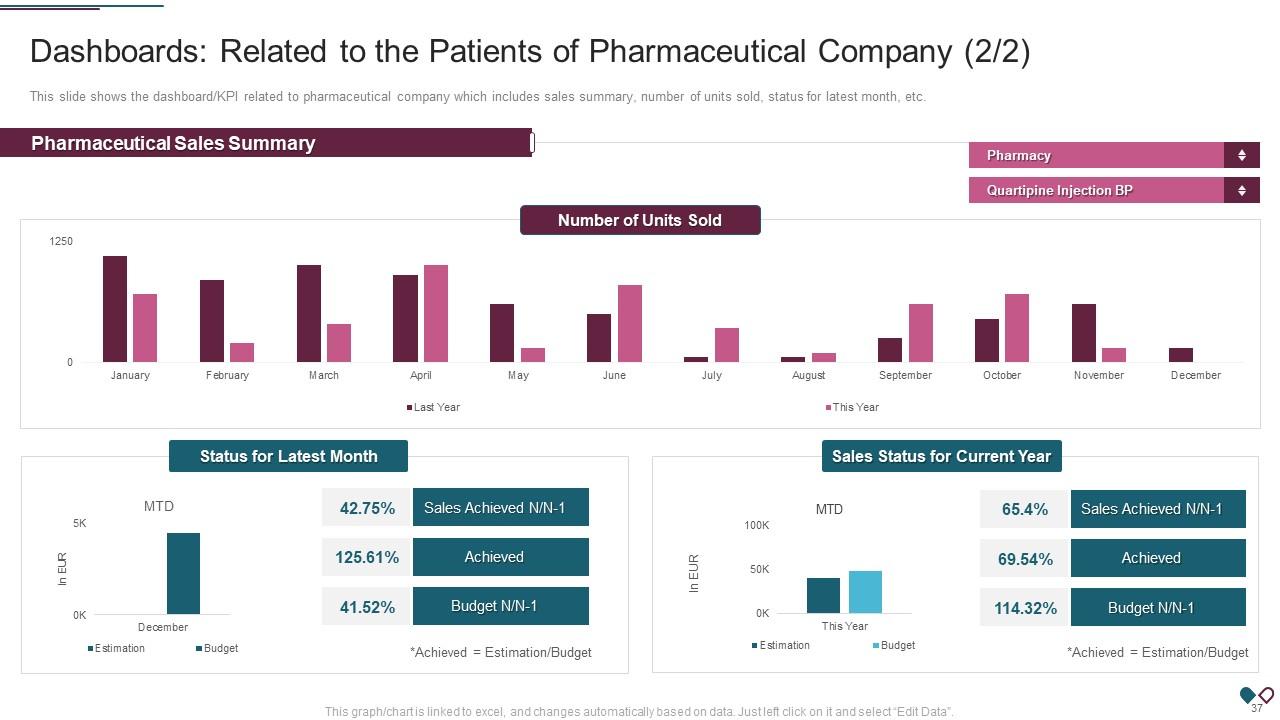
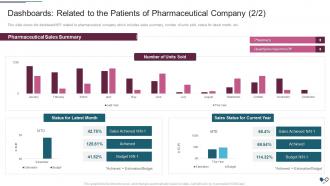
Slide 37: This slide shows the dashboard/KPI related to pharmaceutical company which includes sales summary, number of units sold etc.
Slide 38: This slide displays Icons for Environmental Impact Assessment for a Pharmaceutical Company.
Slide 39: This slide is titled as Additional Slides for moving forward.
Slide 40: This is About Us slide to show company specifications etc.
Slide 41: This is Our Mission slide with related imagery and text.
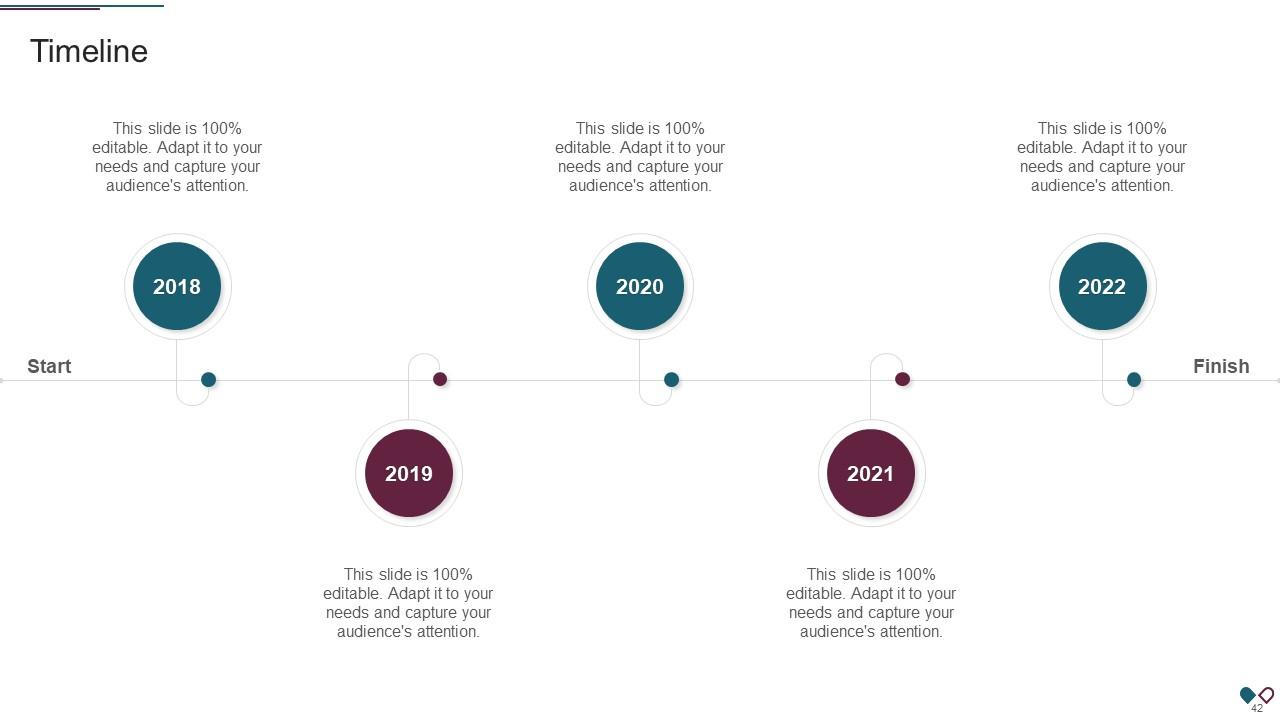
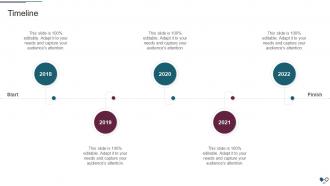
Slide 42: This is a Timeline slide. Show data related to time intervals here.
Slide 43: This slide shows Post It Notes. Post your important notes here.
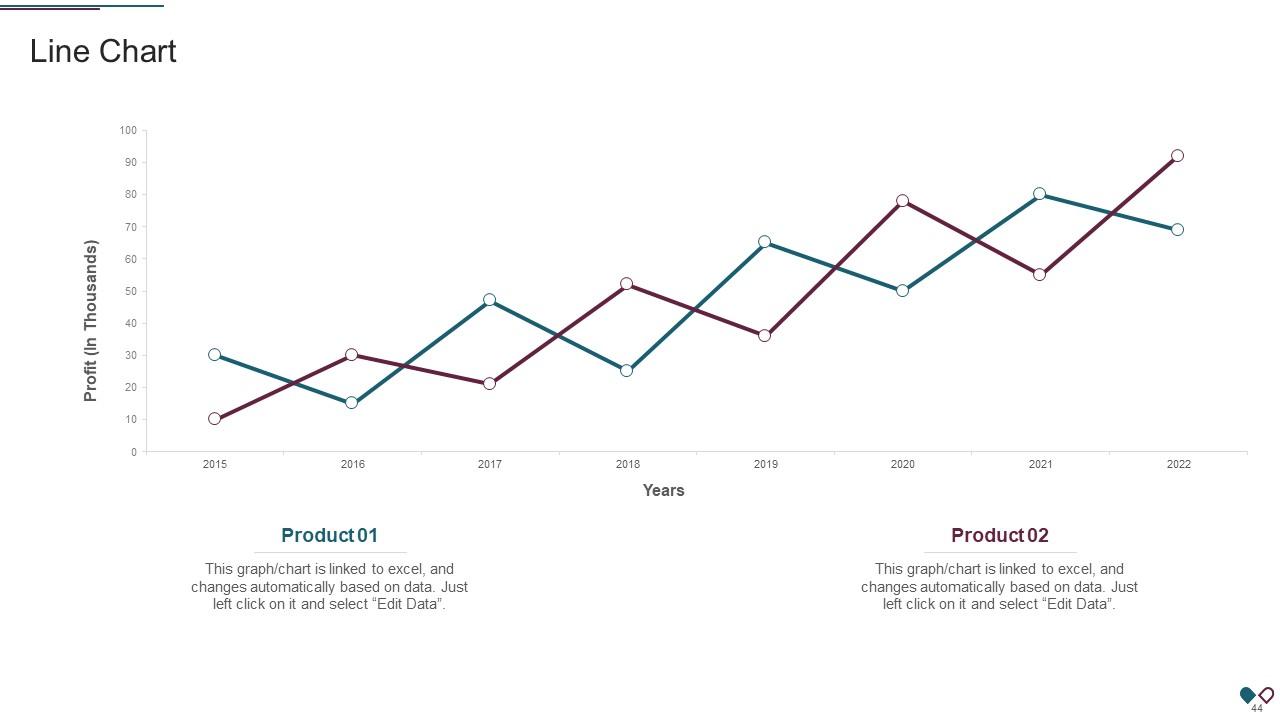
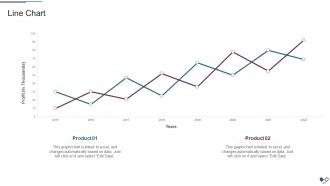
Slide 44: This slide describes Line chart with two products comparison.
Slide 45: This slide provides 30 60 90 Days Plan with text boxes.
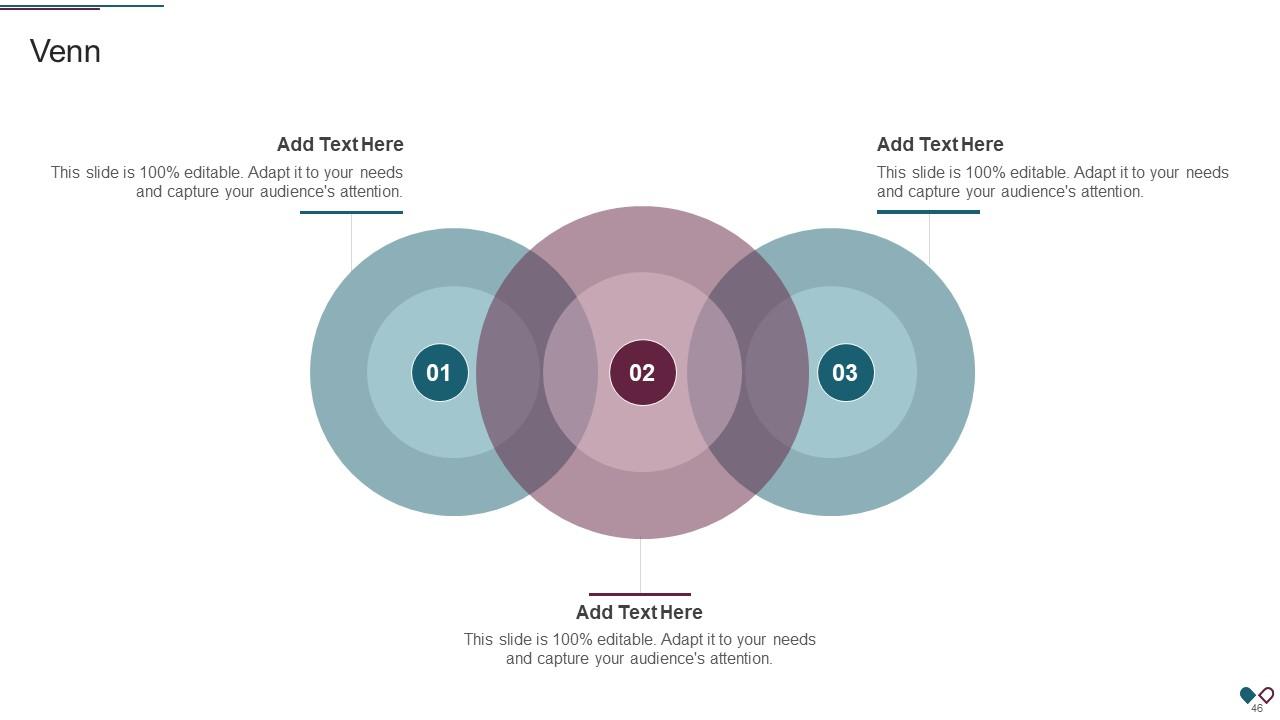
Slide 46: This slide depicts Venn diagram with text boxes.
Slide 47: This is a Thank You slide with address, contact numbers and email address.
Environmental Impact Assessment For A Pharmaceutical Company Case Competition Complete Deck with all 52 slides:
Use our Environmental Impact Assessment For A Pharmaceutical Company Case Competition Complete Deck to effectively help you save your valuable time. They are readymade to fit into any presentation structure.
-
Their products can save your time, effort and money. What else you need. All in one package for presentation needs!
-
One word for SlideTeam–Versatile!
