Estate planning presentation deck

Rating:
80%
Estate planning presentation deck
Slide 1 of 5
Favourites Favourites

Try Before you Buy Download Free Sample Product

Audience Impress Your
Audience
Editable 100%
Editable
Time Save Hours
of Time
The Biggest Sale is ending soon in
0
0
:
0
0
:
0
0
Rating:
80%
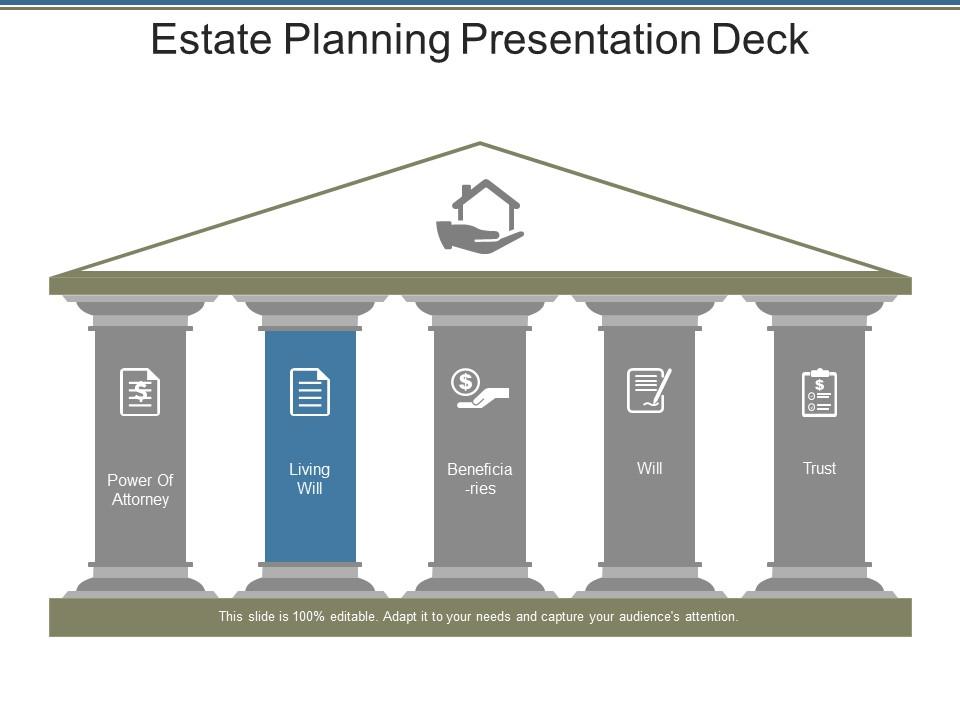
Presenting, our estate planning PowerPoint presentation deck. We have shown engaging and labeled PPT design to include your company data. High contrast layout which maintains its quality when projected on a widescreen. This estate planning PowerPoint presentation deck is available in both standard 4:3 and widescreen format 16:9 after downloading. This is a fully editable design and all the elements shown in this template can be resized and their colors can be modified according to your liking. You can instantly convert into pdf or jpeg format as per the need. Download in a snap and proceed.

People who downloaded this PowerPoint presentation also viewed the following :

FAQs for Estate

Key components of an effective estate plan include a will, trust structures, power of attorney documents, healthcare directives, and beneficiary designations. These elements work together by ensuring asset distribution aligns with intentions, minimizing tax burdens, and streamlining decision-making processes, with many families finding that comprehensive planning ultimately delivers financial security and peace of mind across generations.

Clear estate plan communication requires detailed written documentation, specific beneficiary designations, regular updates reflecting life changes, and comprehensive instructions for asset distribution. Through proper legal drafting and family discussions, individuals minimize ambiguity, reduce potential conflicts among heirs, and ensure seamless wealth transfer, with many families finding that transparent communication ultimately delivers peace of mind and preserves relationships.

A will directs asset distribution after death and names guardians for minor children, while a trust manages assets during your lifetime and beyond, avoiding probate. Trusts offer greater privacy and control, with many families finding that combining both instruments provides comprehensive estate planning, ensuring seamless wealth transfer and minimizing tax implications for beneficiaries.

Common estate planning mistakes include failing to update beneficiaries after major life events, not establishing power of attorney documents, inadequate tax planning, and choosing inappropriate executors or trustees. These oversights can result in unintended asset distribution, family disputes, and significant tax burdens, with many families finding that regular plan reviews and professional guidance help avoid costly probate complications while ensuring their wealth transfer objectives are met.

Digital assets can be incorporated into estate plans through detailed inventories of online accounts, cryptocurrencies, and digital files, alongside designated digital executors and secure password management systems. Many financial institutions and tech companies now offer legacy contact features, enabling seamless transfer of digital wealth, social media accounts, and stored documents, while specialized estate planning attorneys increasingly help clients navigate cryptocurrency inheritance and cloud-based asset management for comprehensive digital legacy protection.

Appointing a power of attorney enables trusted individuals to make financial, legal, and healthcare decisions when you become incapacitated, ensuring continuity in asset management and personal affairs. This strategic designation streamlines decision-making processes, minimizes family disputes, and maintains operational efficiency across investments, property transactions, and medical care, ultimately delivering peace of mind and comprehensive protection.

Estate plans should be updated through comprehensive document reviews, beneficiary adjustments, asset reallocation modifications, guardianship provisions, and tax strategy revisions following major life changes. These strategic updates enable families to maintain accurate wealth transfer intentions, protect new dependents, and optimize tax efficiency, with many estate planning professionals finding that regular reviews ultimately deliver better financial security and peace of mind for beneficiaries.

Estate planning presents several critical tax considerations including federal estate taxes, gift taxes, generation-skipping transfer taxes, state inheritance taxes, and capital gains implications for beneficiaries. These taxes significantly impact wealth transfer strategies, with many families finding that strategic timing of gifts, trust structures, and asset valuation planning can minimize overall tax burdens while maximizing inheritance preservation.

Living trusts offer several advantages over traditional wills, including avoiding probate court proceedings, maintaining privacy of asset distribution, providing incapacity protection, and enabling faster beneficiary access to assets. These estate planning tools streamline wealth transfer by eliminating court delays, reducing legal costs, and ensuring seamless management during incapacity, with many families finding that trusts deliver greater control and confidentiality than traditional wills.

Estate protection strategies include asset titling changes, domestic and offshore trusts, limited liability entities, homestead exemptions, and retirement account optimization. Through strategic combinations like irrevocable trusts and LLCs, families can shield wealth from potential creditors while maintaining operational flexibility, with many high-net-worth individuals finding that proactive planning delivers significantly better outcomes than reactive measures.

Blended families require careful consideration of inheritance rights, guardianship arrangements, and beneficiary designations to balance current spouse needs with children from previous relationships. These families often benefit from detailed trusts, clear will provisions, and updated beneficiary forms, with many finding that strategic planning prevents family conflicts while ensuring fair distribution across all family members, ultimately delivering peace of mind and financial security.

**INPUT**: How can beneficiaries be selected to minimize family conflict after death? **OUTPUT**: Beneficiaries can be selected through clear documentation, equal or justified distributions, contingent designations, and transparent communication about decisions during the planning process. Many families find that involving beneficiaries in discussions, establishing trusts for specific purposes, and regularly updating designations ultimately delivers greater family harmony and reduces post-death disputes. [Word count: 51 words]

Choosing the right executor is crucial because they handle asset distribution, debt settlement, legal compliance, and beneficiary communication during estate administration. This decision significantly impacts your estate's efficient management, with many families finding that a trustworthy, organized executor minimizes delays, reduces costs, and ensures your wishes are honored while providing peace of mind for beneficiaries.

State laws significantly impact estate planning through varying inheritance taxes, probate procedures, community property rules, and trust regulations across jurisdictions. These differences affect everything from asset distribution to tax obligations, with many families finding that strategic planning across state lines can minimize taxes, streamline probate processes, and ultimately deliver more efficient wealth transfer to beneficiaries.

**INPUT**: What resources are available for individuals who want to create their estate plan independently? **OUTPUT**: Estate planning resources for independent creation include online legal platforms, estate planning software, template libraries, educational guides, and state-specific forms. These digital tools streamline document preparation by offering step-by-step guidance, legal compliance checks, and customizable templates, with many individuals finding that combining multiple resources delivers comprehensive coverage while significantly reducing traditional legal costs. [Word count: 56 words]

Ratings and Reviews

80% of 100
Write a review
Most Relevant Reviews
  1. 80%

    by Joseph Torres

    Best way of representation of the topic.
  2. 80%

    by Oscar Davis

    Out of the box and creative design.

2 Item(s)

per page: