External micro environment components ppt presentation
Try Before you Buy Download Free Sample Product
Audience
Editable
of Time
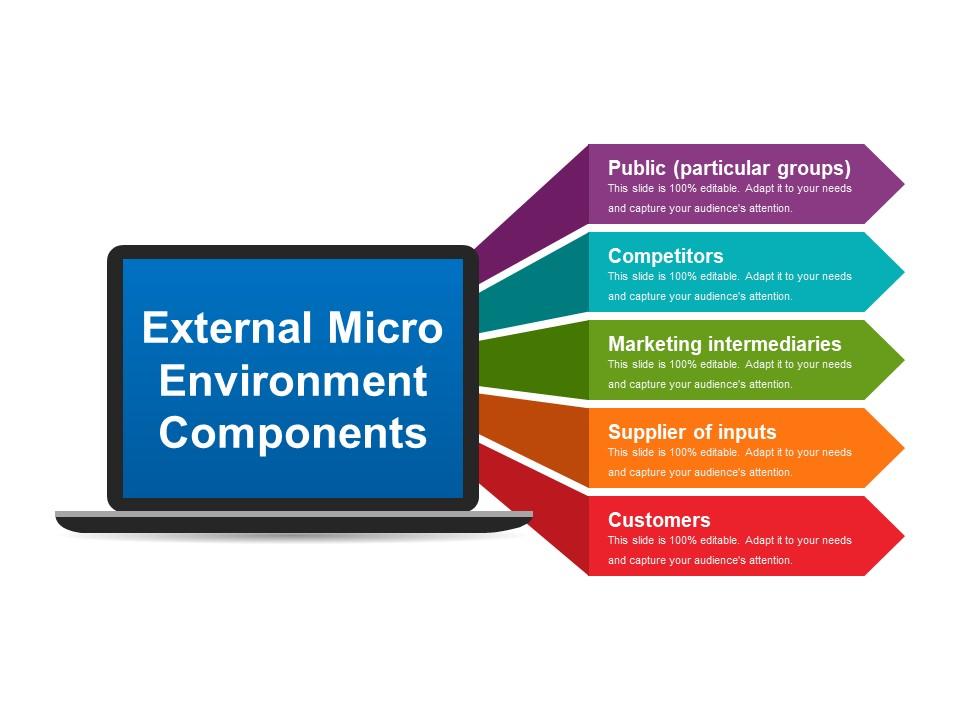
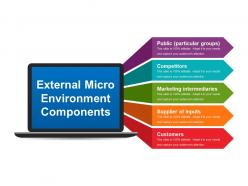
Help them figure out the best career to follow with our external micro environment components PowerPoint presentation. We have shown a five stage process focusing on marketing, business environment, business ecosystem. The PowerPoint slide shows the components of the external micro environment to be public groups, competitors, marketing intermediaries, supplier of inputs and customers. Even though these factors as beyond a marketers control, they still hold a strong influence in the decision making process when it comes to creating a strategic marketing strategy. Crucial to the understanding of the system, these components have been shown in a graphical representation to make it easier for your audience to comprehend. This deck has been carefully prepared by our team to give your audience an insight of the the external micro environment components. So simply use this PowerPoint as a basic template to showcase an overview of your content at the click of a button! Simply download and captivate your audience! Help them figure out the best career to follow with our External Micro Environment Components Ppt Presentation. Guide them in finding their calling.
People who downloaded this PowerPoint presentation also viewed the following :
External micro environment components ppt presentation with all 5 slides:
Our External Micro Environment Components Ppt Presentation will abide with you. They will remain true to your faith in them.
FAQs for External micro environment
Key external microenvironment components include customers, competitors, suppliers, distributors, stakeholders, and regulatory bodies that directly impact daily operations. These elements influence strategic decisions through market demand shifts, competitive pricing pressures, and supply chain dynamics, with many organizations finding that continuous monitoring of these factors enables faster adaptation, enhanced customer experiences, and sustainable competitive advantage in increasingly complex business landscapes.
The external microenvironment influences strategic decision-making by shaping competitive positioning, customer relationship strategies, and supply chain management through direct stakeholder interactions. Organizations analyze competitor moves, supplier capabilities, customer preferences, and distributor networks to inform market entry, pricing decisions, and resource allocation, with many companies finding that proactive microenvironment monitoring delivers sustainable competitive advantage.
Competitors significantly influence a company's strategic decisions, pricing strategies, product development, and market positioning through direct rivalry and competitive pressures. Their actions drive innovation cycles, force operational efficiency improvements, and shape customer expectations, with companies in sectors like telecommunications, retail, and financial services constantly adapting offerings to maintain competitive advantage and market share.
Businesses can effectively analyze demographic trends through market research surveys, census data analysis, consumer behavior studies, social media analytics, and industry reports. These methods enable organizations to identify shifting age distributions, income patterns, and lifestyle preferences across target markets, ultimately delivering more targeted marketing strategies and product development initiatives that align with evolving customer demographics.
Technological advancement reshapes companies' external microenvironments by transforming customer expectations, competitive dynamics, supplier capabilities, and stakeholder interactions. Digital innovations enable businesses to streamline operations, enhance customer experiences, and access new markets, while simultaneously creating pressure to continuously adapt, with many organizations finding that early technology adoption delivers significant competitive advantages.
Regulatory changes within the microenvironment affect business operations by altering compliance requirements, operational procedures, and strategic planning timelines. These modifications can reshape supply chain protocols, customer interaction standards, and competitive positioning, with industries like financial services, healthcare, and manufacturing finding that proactive regulatory adaptation ultimately delivers operational efficiency and sustained competitive advantage.
Social and cultural factors shape consumer behavior through values, lifestyle preferences, demographic shifts, cultural norms, and social media trends that directly impact purchasing decisions. These influences enable businesses to tailor marketing strategies, product development, and brand positioning by understanding generational differences, cultural sensitivities, and emerging social movements, ultimately delivering more targeted customer experiences and competitive market advantage.
Organizations can adapt to microenvironmental shifts through continuous market research, diversified supplier networks, flexible pricing strategies, enhanced customer engagement programs, and competitive intelligence systems. These approaches enable businesses to respond quickly to supplier changes, evolving customer preferences, and competitor actions, with many companies finding that proactive monitoring and strategic agility ultimately deliver sustained competitive advantage.
Businesses can leverage partnerships by forming strategic alliances with suppliers, distributors, technology providers, and complementary service companies to enhance operational efficiency, reduce costs, and expand market reach. Through collaborative partnerships, organizations in sectors like retail, manufacturing, and financial services streamline supply chains, access new customer bases, and share resources, ultimately delivering faster innovation cycles and stronger competitive positioning.
Neglecting external microenvironment monitoring creates significant risks including missed competitor innovations, supplier disruptions, regulatory non-compliance, customer preference shifts, and stakeholder relationship deterioration. These oversight gaps ultimately result in reduced market responsiveness, compromised competitive positioning, and operational vulnerabilities, with many organizations finding that proactive environmental scanning delivers strategic advantage and sustainable business resilience.
Economic fluctuations within the microenvironment influence product pricing strategies by altering consumer purchasing power, supplier costs, and competitor positioning strategies. During economic downturns, companies increasingly adopt value-based pricing, flexible payment options, and strategic bundling approaches, while growth periods enable premium pricing models, with many organizations finding that dynamic pricing frameworks deliver enhanced market responsiveness and sustained competitive advantage.
Companies can gather external microenvironment data through market research surveys, competitor analysis, customer feedback systems, industry reports, and social media monitoring. These methods enable organizations to track supplier relationships, analyze competitor strategies, and understand customer preferences across sectors like retail and financial services, ultimately delivering strategic insights that enhance competitive positioning and market responsiveness.
Global events fundamentally reshape the external microenvironment by disrupting supply chains, altering consumer behavior patterns, changing competitive dynamics, and forcing regulatory adaptations across industries. These disruptions create both challenges and opportunities, with many organizations finding that agile response strategies, digital transformation initiatives, and diversified partnerships ultimately deliver enhanced resilience and competitive advantage.
Environmental factors like climate change impact businesses through supply chain disruptions, regulatory changes, consumer behavior shifts, and operational cost fluctuations. These changes affect supplier reliability, create new compliance requirements, drive demand for sustainable products, and influence resource availability, with many organizations finding that proactive environmental adaptation strategies deliver competitive advantages and enhanced resilience.
Organizations utilize SWOT analysis to examine external microenvironment factors by mapping opportunities and threats against competitors, suppliers, customers, distributors, and regulatory changes. This strategic framework enables businesses to identify market gaps, assess supplier reliability, and anticipate customer shifts, with many companies finding that regular SWOT evaluations enhance competitive positioning and strategic decision-making.
-
Unique research projects to present in meeting.
-
Top Quality presentations that are easily editable.