Facility Management For Residential Buildings Powerpoint Presentation Slides

Rating:
80%
Facility Management For Residential Buildings Powerpoint Presentation Slides
Slide 1 of 65
Favourites Favourites

Try Before you Buy Download Free Sample Product

Audience Impress Your
Audience
Editable 100%
Editable
Time Save Hours
of Time
The Biggest Sale is ending soon in
0
0
:
0
0
:
0
0
Rating:
80%
Deliver this complete deck to your team members and other collaborators. Encompassed with stylized slides presenting various concepts, this Facility Management For Residential Buildings Powerpoint Presentation Slides is the best tool you can utilize. Personalize its content and graphics to make it unique and thought-provoking. All the Sixty slides are editable and modifiable, so feel free to adjust them to your business setting. The font, color, and other components also come in an editable format making this PPT design the best choice for your next presentation. So, download now.

Content of this Powerpoint Presentation

Slide 1: This slide introduces Facility Management for Residential Buildings.
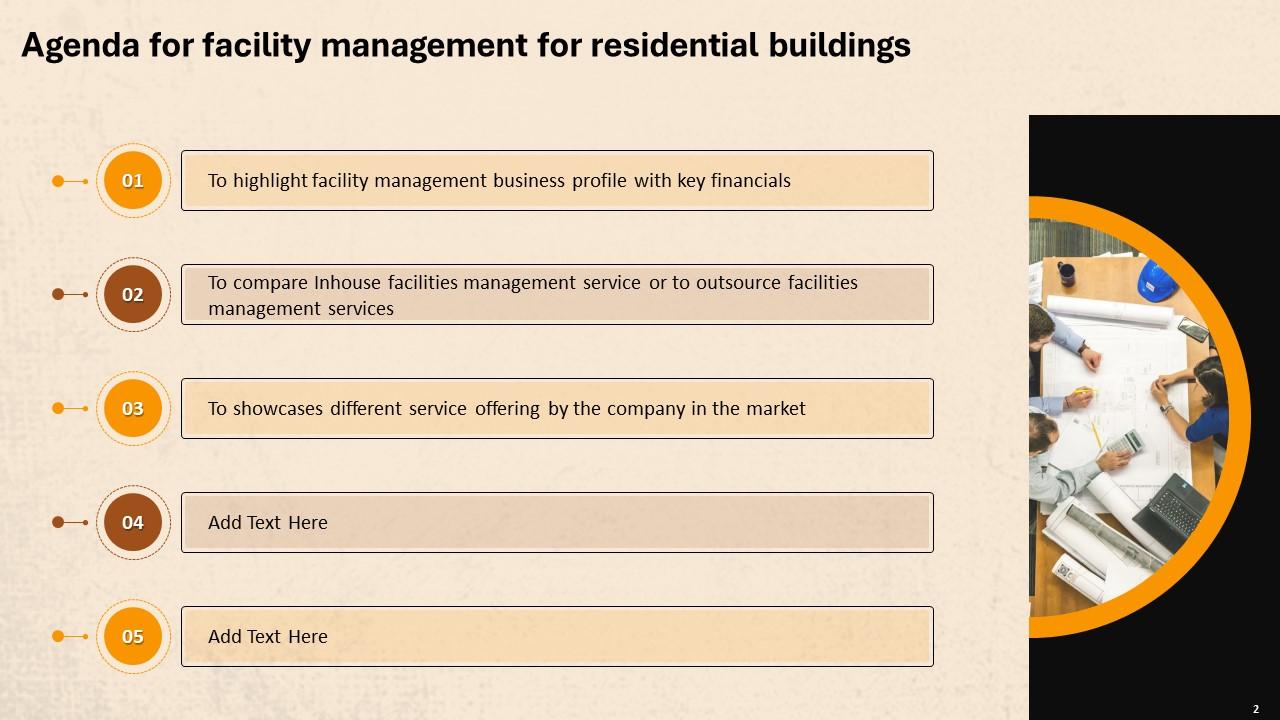
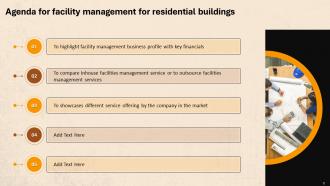
Slide 2: This slide depicts the Agenda of the presentation.
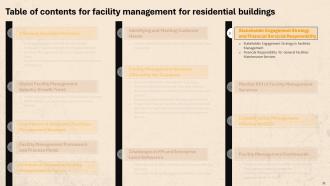
Slide 3: This slide includes the Table of Contents.
Slide 4: This slide depicts the Title for the Topics to be discussed further.
Slide 5: This slide highlights the business overview of facilities management company.
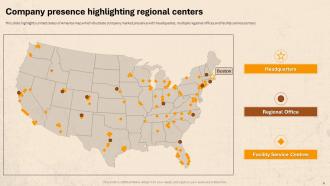
Slide 6: This slide showcases the Company presence highlighting regional centers.
Slide 7: This slide states the Facilities Management Functional Organizational Chart.
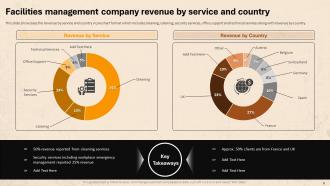
Slide 8: This slide depicts the Facilities management company revenue by service and country.
Slide 9: This slide includes the Heading for the Contents to be covered in the following template.
Slide 10: This slide exhibits the Facility management services global market scenario.
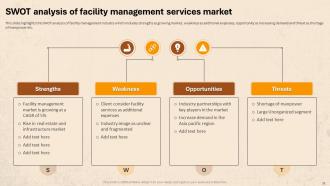
Slide 11: This slide portrays the SWOT analysis of facility management services market.
Slide 12: This slide contains the Title for the Ideas to be discussed in the upcoming template.
Slide 13: This slide reveals the Importance of integrated facilities management services.
Slide 14: This slide displays the Heading for the Ideas to be covered in the next template.
Slide 15: This slide highlights facility management framework and process model.
Slide 16: This slide shows the Title for the Contents to be covered in the next template.
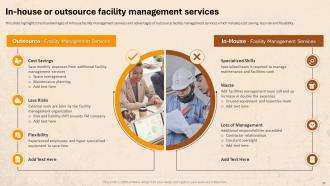
Slide 17: This slide highlights the In-house or outsource facility management services.
Slide 18: This slide incorporates the Heading for the Topics to be discussed further.
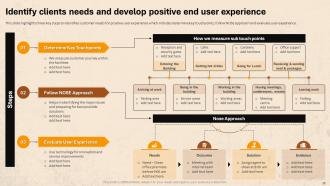
Slide 19: This slide highlights three key steps to identifies customer needs for positive user experience.
Slide 20: This slide contains the Title for the Topics to be covered in the next template.
Slide 21: This slide talks about the Facility management services offered by the company.
Slide 22: This slide highlights hard and soft facility management services which are offered by the company.
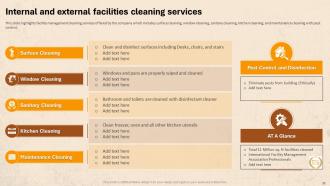
Slide 23: This slide displays the Internal and external facilities cleaning services.
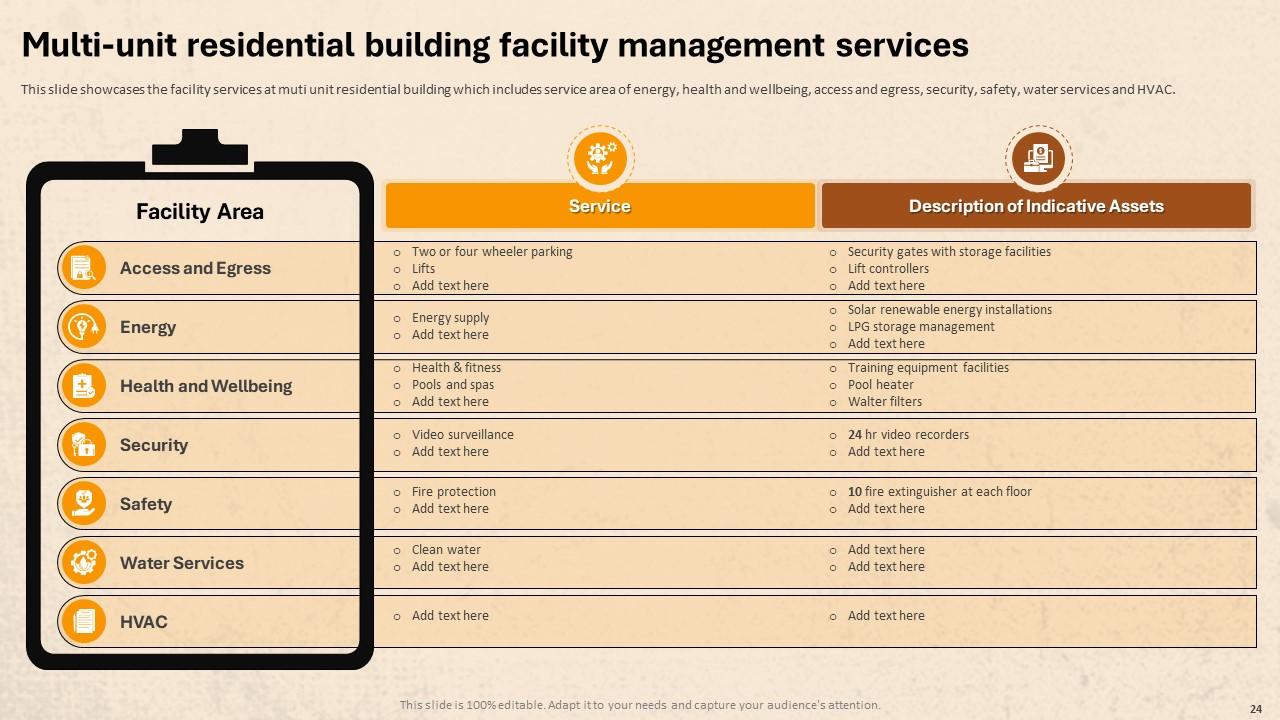
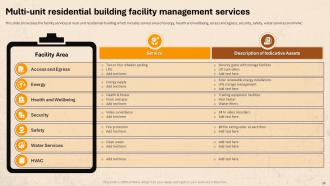
Slide 24: This slide depicts the Multi-unit residential building facility management services.
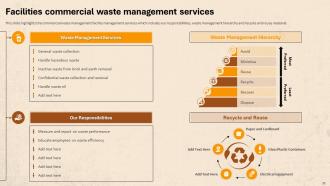
Slide 25: This slide highlights the commercial waste management facility management services.
Slide 26: This slide states the Project and program facilities management services.
Slide 27: This slide highlights the guarding and security services offered by the company.
Slide 28: This slide showcases the operation and maintenance facility management services.
Slide 29: This slide portrays the Heading for the Contents to be discussed next.
Slide 30: This slide exhibits the Challenges in facilities management services with key solutions.
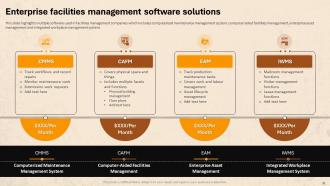
Slide 31: This slide talks about the Enterprise facilities management software solutions.
Slide 32: This slide indicates the Title for the Ideas to be covered next.
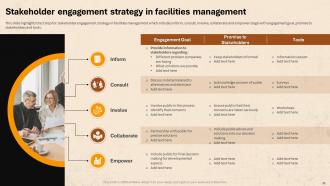
Slide 33: This slide reveals the Stakeholder Engagement Strategy in Facilities Management.
Slide 34: This slide highlights the financial responsibilities for facility maintenance service.
Slide 35: This slide depicts the Heading for the Ideas to be discussed in the following template.
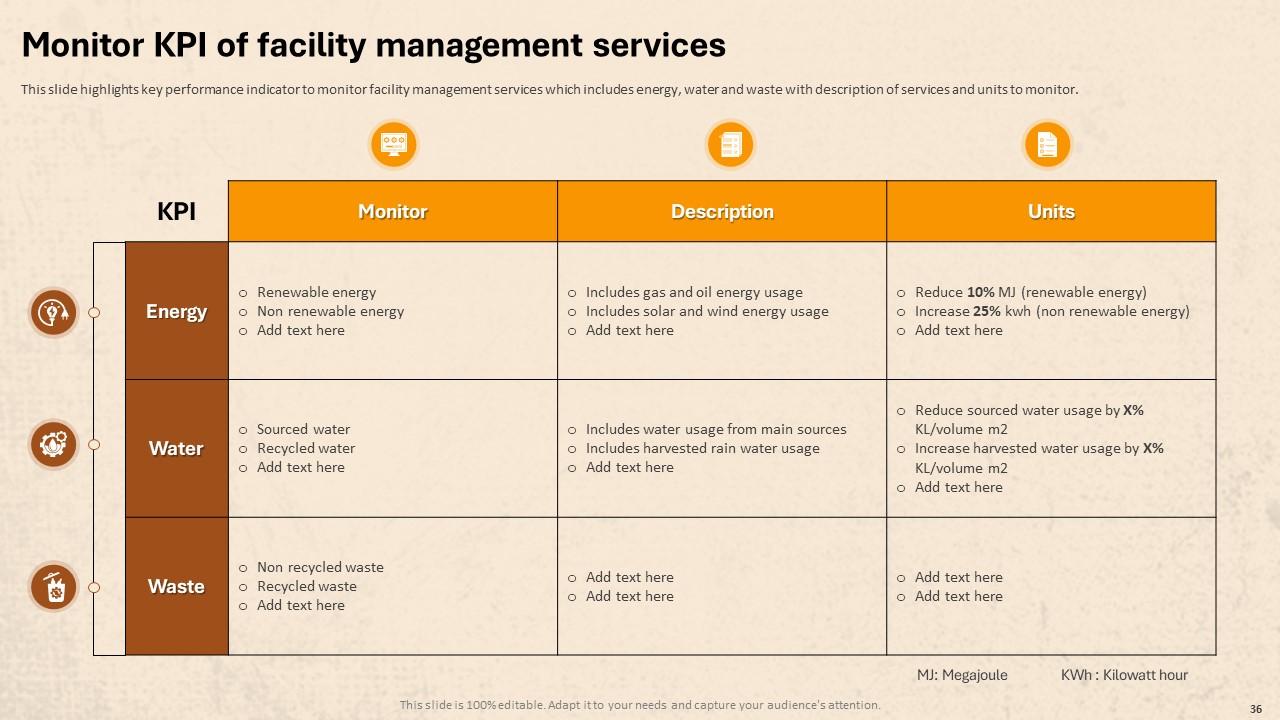
Slide 36: This slide highlights key performance indicator to monitor facility management services.
Slide 37: This slide includes the Title for the Contents to be covered in the upcoming template.
Slide 38: This slide aims to Expand facility management offering by 2025.
Slide 39: This slide contains the Heading for the Topics to be discussed in the further template.
Slide 40: This slide highlights the dashboard for facilities management.
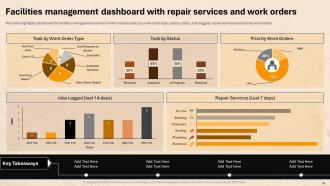
Slide 41: This slide exhibits the Facilities management dashboard with repair services and work orders.
Slide 42: This slide is used for depicting some Additional information.
Slide 43: This is the Icons Slide containing all the Icons used in the plan.
Slide 44: This slide illustrates the Funnel.
Slide 45: This is the About Us slide containing the comapny-related information.
Slide 46: This slide represents the Circular Process
Slide 47: This slide showcases the Mind Map.
Slide 48: This is the Puzzle slide with related imagery.
Slide 49: This is Our Goal slide. State
Slide 50: This slide covers the organization's Vision, Mission and Goal.
Slide 51: This slide exhibits the firm's Timeline.
Slide 52: This slide displays the Pie Chart of the company.
Slide 53: This slide is used for the purpose of Comparison.
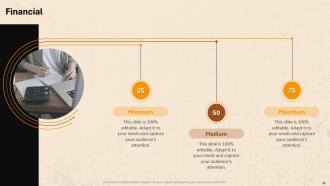
Slide 54: This slide elucidates information related to the Financial topic.
Slide 55: This slide contains the Post It Notes for reminders and deadlines.
Slide 56: This is the Idea Generation slide for encouraging fresh ideas.
Slide 57: This is the Bulb and Idea slide.
Slide 58: This is the Thank You slide for acknowledgement.

FAQs for Facility Management For Residential Buildings

You're basically running the whole office behind the scenes! Managing HVAC, lighting, security systems - all that building stuff. Plus handling maintenance, space planning when teams change, and working with vendors. Safety compliance is a big part of it too, along with budget management (which honestly can be stressful). You'll coordinate cleaning, catering, IT support - it's like being everyone's office mom sometimes, not gonna lie. My advice? Be proactive instead of just putting out fires. Build solid relationships with good vendors and set up maintenance schedules early. Trust me, it saves so much headache later.

Honestly, tech can be a game-changer for facility ops if you do it right. Start with something simple like CMMS software - beats the hell out of tracking maintenance on spreadsheets. IoT sensors are pretty cool too, they'll catch HVAC issues before you're dealing with angry tenants. Mobile apps let your team report problems instantly instead of waiting around. Space utilization monitoring is huge right now (everyone's obsessed with optimizing square footage). My advice? Don't try to digitize everything at once. Pick your biggest headache - usually maintenance scheduling - and nail that first. Real-time data insights will follow naturally once you get the basics down.

Dude, sustainability isn't optional in facility management anymore. Your tenants expect it, and honestly, it just makes financial sense. LED upgrades and smart HVAC systems cut your energy bills big time. Waste programs, green certifications - all that stuff actually boosts property value while saving money. I'd start with an energy audit first though, that's where you'll see the biggest returns. Oh, and sustainable procurement policies are huge now too. Most of this pays for itself within a few years anyway. It's wild how much you can save just by switching to efficient systems.

Okay so first thing - do a full risk assessment of your place. What could go wrong? Natural disasters, power cuts, security issues, all that stuff. Then map out exactly what you'd do for each scenario. Evacuation routes, who calls who, staff roles. Local emergency services are actually pretty cool about helping with this if you ask them. Here's the thing though - training is everything. Your plan means nothing if people panic and forget what to do. Run drills regularly, even if they're annoying. Oh and update it every year, plus always talk through what went wrong after any real incident.

Definitely start with cost per square foot and energy consumption - those hit your budget hard. Response times for maintenance requests matter big time too. I've seen tenants lose their minds over a broken AC that takes forever to fix. Space utilization rates help you figure out if you're actually using your building efficiently. After that, track work order completion rates and tenant satisfaction scores. Equipment uptime and preventive maintenance completion are solid metrics once you get the hang of things. Some places do cleaning scores and safety incidents, but honestly? Start simple with costs and response times first.

So basically, watch how your team actually moves around first - don't just guess. Put the stuff they use most in the busiest spots. Honestly, mixing quiet work areas with meeting spaces is such a mistake - keep them separate. Get furniture that can switch between different uses, and if people work from home sometimes, try hot-desking. Oh, and flexible setups save you from constantly rearranging things. You'll want to track the changes too - like how much time people waste walking around or if meeting rooms actually get used. Makes it way easier to show it's working.

Dude, start with a full safety audit to see where you stand right now. Then build your maintenance schedule from there. Regular inspections are key - don't slack on those. Create checklists for literally everything: fire systems, HVAC, electrical, emergency stuff. Documentation has to stay current or you're screwed during audits (trust me, they're rough). Your team needs consistent training too. Oh and local codes change way more than they should, so check those periodically. Track maintenance dates and any incidents religiously. Sounds like a pain but it'll save your butt later.
Honestly, it's mostly about scale. Residential is dealing with individual tenants - fixing their broken AC, leaky pipes, basic stuff. Commercial? Way more complex. You're managing entire office buildings or retail spaces where downtime costs serious money. Commercial hits you with tons more regulations too - fire codes, ADA compliance, environmental rules. It's a headache but necessary. Plus you're coordinating multiple vendors while keeping businesses running smoothly. Residential moves faster though. Tenant calls, you fix it, done. Commercial requires actual strategic planning for HVAC, security systems, all that jazz. Figure out which world your property lives in first, then build your maintenance approach around that.

Oh totally, employee wellness is huge for facilities now! Companies are finally getting that better air quality, natural light, and noise control actually keep people happier and working there longer. Temperature stuff, good chairs, quiet spots, even those meditation rooms - it all makes a difference in how people feel day-to-day. Honestly, even just adding plants or fixing crappy lighting cuts down stress and sick days. The best approach? Just ask your team what's bugging them instead of guessing. Then you can focus your facility budget on changes that'll actually matter to them.

Honestly, document EVERYTHING from day one. Contracts need super specific deliverables and timelines - I got burned once when our cleaning company's idea of "deep clean" was... let's just say very different from mine. Check in regularly, not just when stuff goes wrong. Build actual relationships with your main contacts at each company too. Don't wait to have those awkward performance conversations - address issues early before they snowball. Oh, and keep some kind of scorecard tracking who's actually worth their money versus who's just phoning it in.

Honestly, IoT sensors are popping up everywhere now - like, literally tracking everything. AI's handling predictive maintenance so stuff breaks way less often. Mobile apps finally ditched those ancient work order systems (thank god). Buildings are getting crazy smart with automated HVAC and real-time energy monitoring. Cloud platforms centralize your maintenance schedules, vendor stuff, all of it. Oh and sustainability tech is massive right now - carbon tracking, efficiency tools, the works. My advice? Just pick whatever's driving you nuts daily and see if there's a digital fix for it. That's honestly the easiest way to start modernizing without going overboard.

Honestly, most buildings are already collecting a crazy amount of data - energy usage, how spaces get used, maintenance stuff, tenant complaints. The trick is actually doing something with it instead of letting it sit there. Start small with one thing, maybe energy costs since those hurt the most. Check which HVAC zones are burning through power or when your equipment usually breaks down. I'd probably go after the easy wins first - like we found out our conference rooms were being heated 24/7 even though they're only used like twice a week. Once you nail down some patterns, you can make smarter decisions about where to spend money.

Honestly, budget issues are gonna be your biggest nightmare. HVAC always breaks when you need it most - I swear those systems have timing. Plus leadership keeps pushing sustainability stuff while you're just trying to keep the lights on. Finding good technicians is brutal right now, everyone's short-staffed. Oh, and don't get me started on managing hybrid spaces when half the team works from home randomly. Get cozy with solid vendors ASAP though. Preventive maintenance schedules will literally save your butt - learned that one the hard way.

Safety stuff first, obviously - can't mess around with compliance issues. Then hit preventive maintenance on your big-ticket items: HVAC, elevators, electrical systems. Way cheaper than waiting for things to break, and honestly, emergency repair bills will make you cry. Energy-efficient upgrades come next if they'll actually pay for themselves. Everything else? Rank it by how much it screws with daily operations and keeps tenants happy. Make a simple scoring system - safety, cost, business impact. That way when your boss asks why you're hemorrhaging money, you've got actual reasoning to back it up.

Honestly, you're gonna need to be good with people AND tech stuff. Project management is huge - you'll constantly be dealing with maintenance, vendors, budgets all at once. Plus communication skills since you're talking to executives one minute, maintenance crew the next. Learn some basic HVAC and electrical fundamentals. Not saying become an expert, but it helps when stuff inevitably breaks at 2am on a Friday. Crisis management is pretty much half the job lol. Get familiar with facility management software and maybe look into FMP or CFM certifications down the road.

Ratings and Reviews

80% of 100
Review Form
Write a review
Most Relevant Reviews
  1. 80%

    by Dan Marshall

    Enough space for editing and adding your own content.
  2. 80%

    by Charles Peterson

    Appreciate the research and its presentable format.

2 Item(s)

per page: