

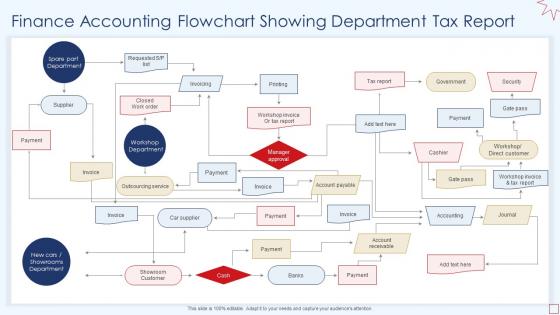
Finance Accounting Flowchart Showing Department Tax Report




Try Before you Buy Download Free Sample Product
 Impress Your
 Audience
 100%
100% Editable
 Save Hours
 of Time


Our Finance Accounting Flowchart Showing Department Tax Report are topically designed to provide an attractive backdrop to any subject. Use them to look like a presentation pro.
People who downloaded this PowerPoint presentation also viewed the following :
Finance Accounting Flowchart Showing Department Tax Report with all 6 slides:
Use our Finance Accounting Flowchart Showing Department Tax Report to effectively help you save your valuable time. They are readymade to fit into any presentation structure.





FAQs for Finance Accounting Flowchart Showing
So you'll need a few key pieces - data collection that pulls in all your transactions, then a calculation engine for the actual tax math based on current rules. Reporting modules generate your forms and filings (this part gets messy fast depending on your business setup, trust me). Don't forget compliance tracking for deadlines and when regulations change. Oh, and whatever you pick better play nice with your existing accounting software. I learned that one the hard way - spent weeks doing manual data entry because systems wouldn't talk to each other. Total nightmare.
Honestly, tax apps are total game-changers for cutting down prep time. You can sync them with your bank accounts so they automatically sort your transactions - no more shoebox full of crumpled receipts (though I still keep some paper ones just in case). The software basically walks you through deductions and catches mistakes before you submit. E-filing gets your refund way faster too. My advice? Start small this year. Pick one app just for tracking receipts, even if you do everything else the old way. Once you see how much time it saves, you'll never go back.
Dude, the worst thing you can do is mix personal stuff with business expenses - I've done it and it's a nightmare to untangle later. Most people totally miss obvious deductions too. Keep better records throughout the year instead of that shoebox method (trust me on this one). Also watch how you categorize things - office supplies aren't the same as equipment purchases. Oh, and don't forget those quarterly payments or you'll get slammed with penalties. Honestly just track everything monthly. Your accountant will actually like you, and tax time won't make you want to hide under a rock.
So basically it all comes down to how your business is set up. Sole proprietors just throw everything on Schedule C with their personal taxes - super easy. LLCs usually work the same way, profits and losses go straight to your personal return. Corporations though? They're a whole different beast. They file Form 1120 separately, but S-Corps get to pass things through while still filing their own 1120S. Partnerships file separately too but pass everything to the partners. Honestly, I'd just call an accountant because the deadlines alone will make your head spin.
Look, deductions bring down your taxable income - stuff like mortgage interest and charity donations. But credits? Way better deal since they cut your actual tax bill dollar-for-dollar. I learned this the hard way after years of just throwing receipts in a shoebox lol. Child Tax Credit and education ones can really boost your refund. Don't wait until April to figure this out either - track everything as you go. There's probably some random credit you qualify for that you've never heard of, so it's worth digging around a bit.
Honestly, tax law changes are the worst - they literally drop at random times. I'd set up Google alerts for tax stuff you care about and subscribe to IRS newsletters (boring but necessary). Your CPA probably sends updates too if you have one. Update your accounting software regularly since they usually roll out compliance features pretty fast. Check your reporting process every few months to see what might break when new rules hit. Oh, and definitely get tight with some tax pros now - you'll want that expert backup when things get messy later.
Dude, keep EVERYTHING. Seriously. If the IRS comes knocking, those records are the only thing standing between you and a major headache. Income, expenses, receipts, invoices - all of it needs to be documented. I once lost a $500 business receipt and couldn't deduct it, which honestly still bugs me. You'll miss out on legit deductions or face penalties without proof. Just snap photos of receipts and dump them in digital folders - way easier than shoebox method our parents used. Trust me, future you will thank present you for being organized.
Oh man, international tax reporting is such a pain. You're basically dealing with different rules in every country you operate in. Transfer pricing docs, country-by-country reports - the paperwork never ends. My old finance team used to complain about it constantly, and honestly I get why. The whole thing exists to stop tax dodging and make companies more transparent, which makes sense I guess. But tracking everything? Brutal. I'd start by figuring out what you owe each jurisdiction, then maybe look into some tax software to handle the repetitive stuff automatically.
Honestly, just track everything as it happens - don't wait until tax season like I did last year (nightmare). Get decent tax software or find a CPA who actually knows your state's rules because federal and state can be totally different. Keep copies of everything for three years minimum. I learned the hard way that staying organized throughout the year beats scrambling at the deadline every single time. Oh, and backup your digital stuff somewhere safe - lost receipts are the worst.
Dude, your tax reports are actually pretty useful for planning stuff out. Pull last year's and break down expenses by month - you'll spot patterns you totally missed. Like, I always forget how much I spend in December until I see it on paper. Check quarterly trends to predict when cash gets tight. Also look for deductible expenses you might've overlooked - there's usually something hiding in there. Your depreciation schedules are good for figuring out when equipment needs replacing too. Honestly, it's wild how different your actual spending is from what you think you're spending.
Ugh, yeah tax mistakes can really mess you up. You'll get hit with penalties and interest that pile up daily - failure to file fees, accuracy penalties, the whole thing. Audits become way more likely too. The good news? The IRS is actually pretty chill about honest mistakes if you fix them fast. Fraud charges are technically possible but only if they think you did it on purpose (which is super rare). My advice - file an amended return immediately if you catch errors. And honestly, just request an extension next time instead of filing late. Way easier than dealing with this headache.
So basically AI is making tax stuff way less painful - it'll auto-categorize your expenses and catch deductions you probably missed. Blockchain keeps permanent records that can't be messed with, which honestly makes proving your stuff way easier. The IRS is getting smarter with this tech too though, so you can't really fudge numbers anymore. I'd start looking into AI tax software for next year. Oh and keep everything digital since they're tracking more now anyway - paper receipts feel so 2010s at this point.
First thing - nail down your business structure and grab that EIN. Seriously, that's your baseline. Get a decent bookkeeping system going from the start because reconstructing months of messy transactions later? Pure hell. Track everything religiously - expenses, revenue, equity stuff. The IRS gets weirdly obsessed with those details. Oh, and find a CPA who actually gets startups. They'll hook you up with R&D credits and stock option tricks that'll save you real cash. Way better to spend money on solid systems now than panic when April rolls around.
Oh yeah, it totally depends on your industry. Healthcare, finance, and real estate are absolute nightmares with all their specialized forms. Manufacturing and retail have weird inventory stuff to deal with. Service businesses? They usually have it pretty easy, honestly. Don't even get me started on cannabis or alcohol - those guys are drowning in paperwork 24/7. My cousin's in that world and it's brutal. You'll want an accountant who actually gets your specific field, not just someone who knows basic tax stuff. Makes a huge difference.
Dude, seriously consider it. A good tax person will find deductions you'd never think of - I'm talking hundreds or thousands you're probably missing. The rules change constantly and they actually keep up with that stuff. If the IRS comes knocking? They handle it, not you. That alone is huge. They'll also spot mistakes before they become expensive problems. Oh and tax planning strategies - there's apparently a ton of ways to legally pay less that most of us just don't know about. Maybe start with just a consultation? See what you're potentially leaving behind.
-
“One of the best experiences with SlideTeam for my presentation.Everything on time, communication is efficient and price is reasonable. All good in one place.”
-
Out of the box and creative design.