

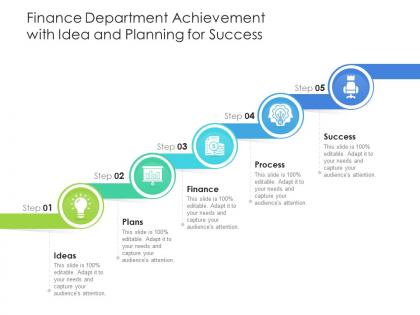
Finance department achievement with idea and planning for success




Try Before you Buy Download Free Sample Product
 Impress Your
 Audience
 100%
100% Editable
 Save Hours
 of Time


Our Finance Department Achievement With Idea And Planning For Success are topically designed to provide an attractive backdrop to any subject. Use them to look like a presentation pro.
People who downloaded this PowerPoint presentation also viewed the following :
Finance department achievement with idea and planning for success with all 2 slides:
Use our Finance Department Achievement With Idea And Planning For Success to effectively help you save your valuable time. They are readymade to fit into any presentation structure.
FAQs for Finance department achievement with idea and
So honestly, just stick to the basics - revenue growth, profit margins, and cash flow. Those three will tell you everything about whether a company's actually making money or just burning through it. ROE shows if they're smart with investor cash, and debt-to-equity tells you if they're drowning in loans. I'm always checking current ratio too for short-term health. Some people go crazy tracking like 20 different metrics (my brother does this lol), but these core ones are what matter. Track them quarter to quarter and you'll start seeing the real patterns. Way more useful than getting lost in spreadsheets.
Honestly, budgeting is what finally helped me stop being broke all the time. Instead of my money just vanishing, I started putting set amounts toward savings and investments every month. The compound interest thing is real - even like $100 a month adds up crazy fast over years. I thought it'd feel restrictive but it's actually the opposite once you see your accounts growing. Try the 50/30/20 split if you're starting out: half for bills and necessities, 30% for fun stuff, and 20% straight to savings. Game changer, seriously.
Your cash flow is honestly what separates people who stress about money from those who don't - even if they make similar amounts. Track when your money actually hits your account versus when bills are due. Timing is everything here! I used to have this problem where I'd look rich on paper but be broke between paychecks (so embarrassing). Map out your monthly pattern first, then figure out where you can create bigger cushions. Having liquid cash sitting around for gaps and random expenses will literally change your life. Trust me on this one.
So basically you don't want all your money in one place, right? Spread it around - stocks, bonds, different countries, whatever. If tech crashes but healthcare's doing well, you're not totally screwed. It's like having backup plans for your backup plans, honestly. The tricky part is figuring out how much risk you can actually handle without losing sleep. I'd start simple though - mix up your stocks first, then maybe throw in some international stuff later. Way better than going all-in on crypto and crying when it tanks.
Honestly, tackle your highest-interest debt first - that's the debt avalanche method. Pay minimums on everything else, then dump any extra money on whatever's charging you the most. Try negotiating with creditors too, you'd be surprised how often they'll work with you. Speed up your collections or offer payment incentives to boost cash flow. Consolidation can help if the rates are actually better, but watch out for those sketchy offers that sound too good. Oh, and go through your expenses again - I know it's boring, but cut anything not making you money. List everything out first though.
Think of financial forecasting like a GPS for your business - helps you see what's coming before you hit it. I'd start with cash flow projections 3-6 months out. Seriously, so many small businesses get wrecked by seasonal slowdowns they totally could've seen coming. Use those numbers to time your big moves - hiring, buying inventory, expanding, whatever. Update monthly when real data rolls in. Honestly, just start with a basic spreadsheet. Track what actually happened vs what you thought would happen. You'll start noticing patterns pretty quick, and that's when it gets useful for planning ahead.
Look, market research is basically your cheat code for not losing money on dumb decisions. You get actual data on what's happening with trends, customers, competitors - way better than just winging it. Helps you catch opportunities early and avoid those facepalm moments later. I swear, half the people I know who lost their shirts could've avoided it with some basic homework first. Doesn't need to be some expensive consultant thing either. Just grab industry reports, maybe run a quick survey. Pick one big question about your market and actually find the answer before you dive in.
Okay so tech basically changed how I handle money and it's amazing. Apps like Mint or YNAB automatically track everything across all your accounts - no more spreadsheets, thank god. They'll categorize your spending (every single Starbucks run gets logged automatically) and send alerts when you're about to blow your budget. The visual charts are actually helpful for spotting patterns. I can check my finances from anywhere since it all syncs. Honestly, automated budgeting just works better than doing it manually. Real-time tracking keeps you way more aware of where your money's going. Start with one app and you'll see the difference immediately.
Okay so first thing - set up conversion tracking on your site because you literally can't fix what you can't see. Then focus on CAC vs CLV, that's your real ROI indicator. Use Google Analytics or HubSpot to figure out which channels actually convert (not just bring traffic, because who cares about pretty numbers that don't pay bills). Track the whole journey from first click to purchase. Oh and don't sleep on retention rates - returning customers are goldmines. I learned this the hard way but attribution is everything.
Honestly, I'd start with pricing first - most businesses are way too scared to charge what they're actually worth. Look at your expenses and see what you can cut or negotiate down with suppliers. Streamline your processes too, maybe automate some of the boring repetitive stuff. Focus more on whatever makes you the most money and consider dropping the products that barely break even (I know, easier said than done). Don't try to fix everything at once though - pick one thing and nail it first.
Look, economic indicators are basically your business weather forecast. GDP slowing down? Hold onto your cash and maybe postpone that big expansion. Inflation creeping up means you should probably review your prices now and lock in those supplier deals before everything gets more expensive. Employment numbers hit you twice - affects who you can hire AND whether customers have money to spend. Interest rates obviously mess with your borrowing costs too. Honestly though, don't obsess over every data point. Pick maybe 3 or 4 that actually matter for your industry and check monthly. Daily tracking will just drive you crazy.
Honestly, it all comes down to your cash conversion cycle - how fast you get money back from inventory and what customers owe you. Three things to tackle: first, chase down those overdue invoices harder and maybe throw in early payment discounts. Second, don't let inventory just sit there eating up cash (though I know that's way easier said than done). Third, see if you can stretch out payment terms with suppliers without pissing them off. Calculate where you're at right now - you can't fix what you don't track. Check your working capital ratio every month and set some realistic targets.
Build some financial models to compare your options - NPV, IRR, payback periods, all that stuff. Excel's gonna be your go-to here (I know, I know, but it works). Test different scenarios with varying market conditions and costs. Best case, worst case, realistic - you want at least three models so you're not flying blind. The whole point is figuring out which investments actually give you solid returns without crazy risk. Way better than just winging it based on what feels right, trust me.
Honestly, you can't run a business without understanding money - I learned this the hard way. Reading financial statements isn't sexy but it's what separates successful owners from those who crash and burn. Cash flow management will save your ass more than any marketing strategy. Start tracking your numbers religiously, even if it feels tedious at first. Learn profit margins, basic accounting, how to spot red flags early. I've watched brilliant people with amazing products fail because they treated finances like an afterthought. Master your KPIs and budgeting basics - your future self will thank you.
Look, a solid financial team is basically your business GPS - stops you from driving straight off a cliff while mapping out the best growth routes. They'll spot cash flow disasters before they hit, help you make smart decisions based on actual data instead of just winging it, and figure out if you're truly profitable or just spinning your wheels (which honestly can feel identical sometimes). Oh, and they deal with all that compliance headache stuff so the IRS doesn't randomly wreck your day. The trick is finding people who can turn spreadsheets into real advice you can actually use.
-
Amazing product with appealing content and design.
-
Amazing product with appealing content and design.
-
Thanks for all your great templates they have saved me lots of time and accelerate my presentations. Great product, keep them up!
-
Excellent template with unique design.
-
Best way of representation of the topic.