Financial Data Science Powerpoint Ppt Template Bundles
Try Before you Buy Download Free Sample Product
Audience
Editable
of Time
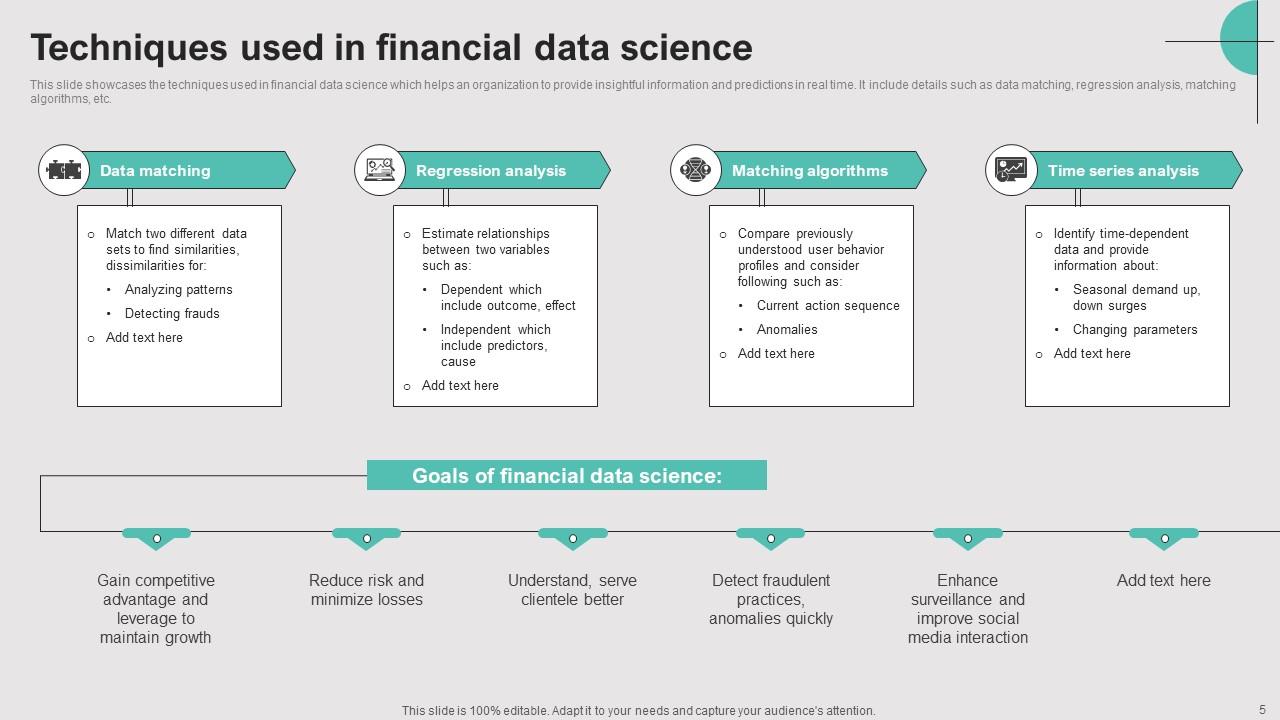
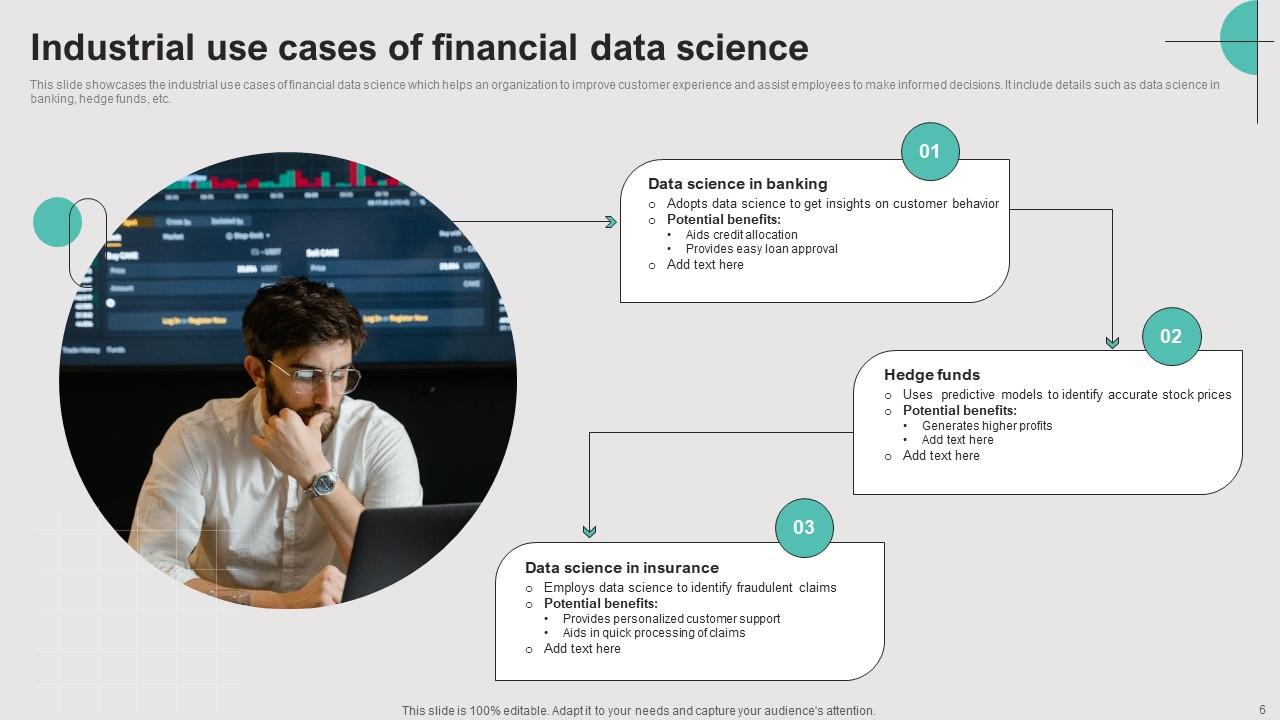
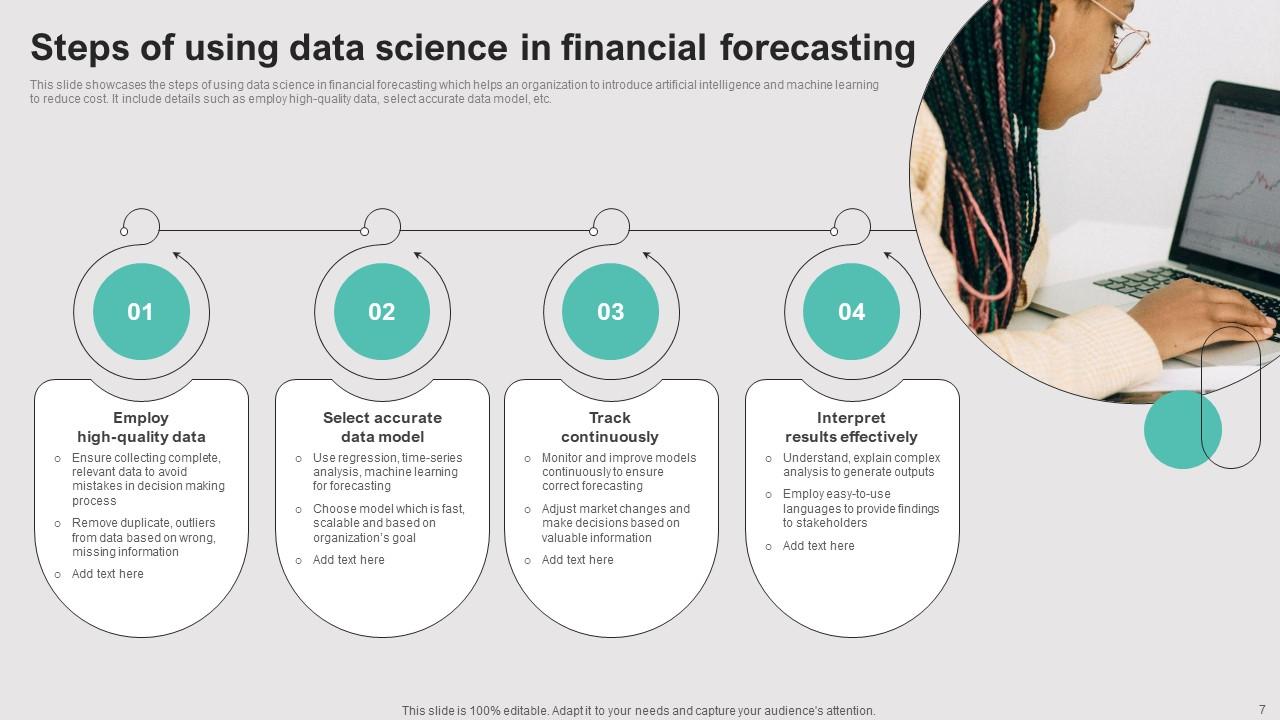
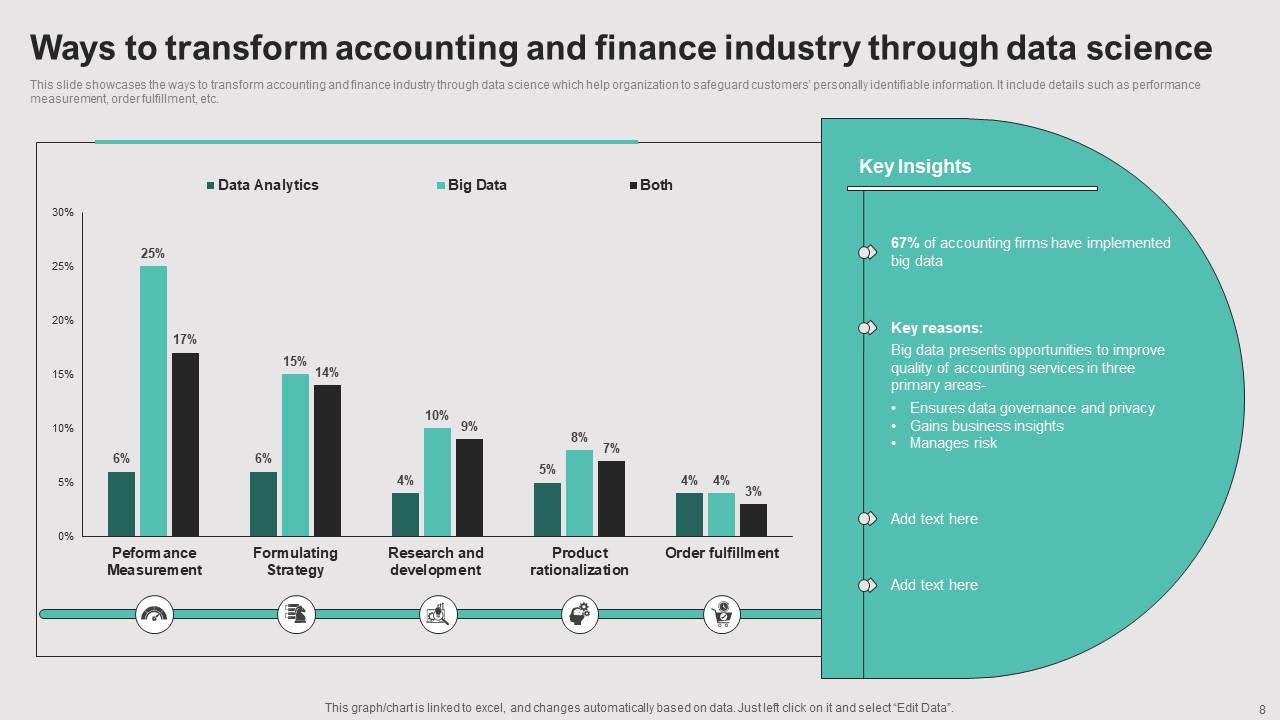
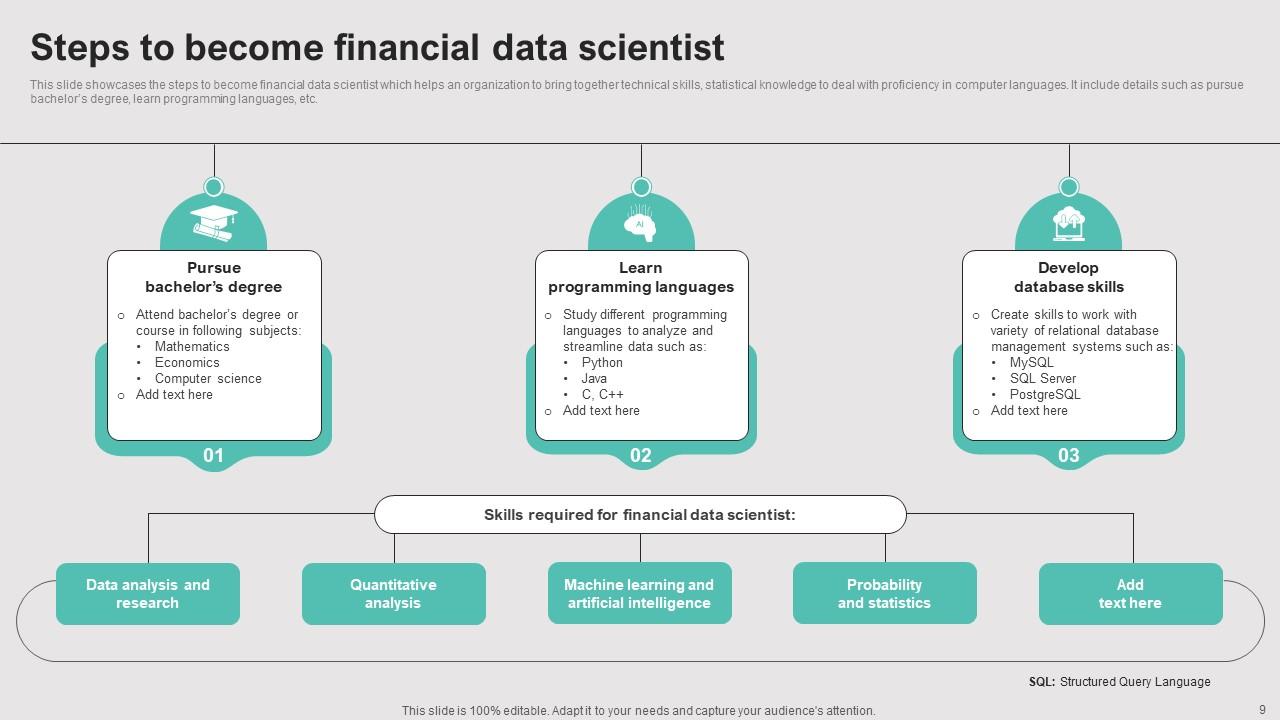
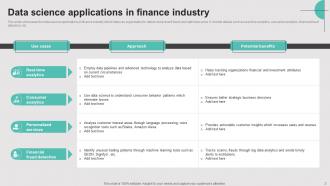
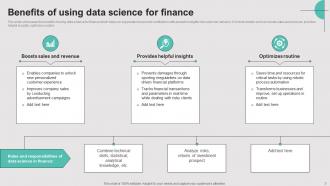
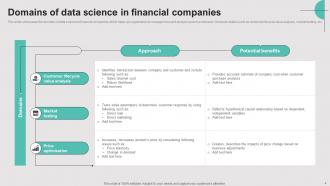
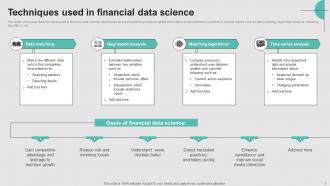
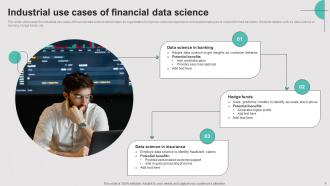
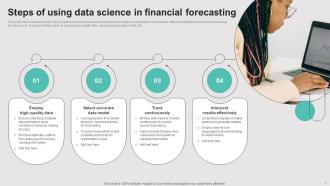
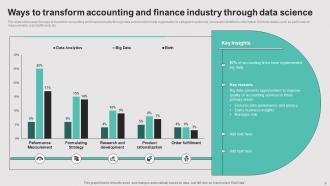
Introducing our dynamic Financial Data Science PPT, a game changer in the world of finance and data analytics. This comprehensive presentation delves into the seamless integration of data science and finance, unveiling the powerful applications of data analytics in the financial domain. Tailored for financial analysts and professionals, this PPT explores the transformative potential of data science in revolutionizing traditional financial practices. Uncover new perspectives on risk management, predictive modeling, and investment strategies, leveraging data driven insights to make informed decisions. With practical examples of real life financial data analysis projects, our PPT equips you with the tools to extract valuable information from complex financial datasets. Maximize your competitive edge by harnessing the potential of data science in finance. Elevate your financial prowess with our data science ppt and stay ahead in todays data driven financial landscape.

People who downloaded this PowerPoint presentation also viewed the following :
Financial Data Science Powerpoint Ppt Template Bundles with all 20 slides:
Use our Financial Data Science Powerpoint Ppt Template Bundles to effectively help you save your valuable time. They are readymade to fit into any presentation structure.
FAQs for Financial Data Science Powerpoint
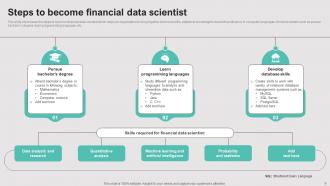
Financial data science careers require programming languages like Python and R, statistical analysis expertise, machine learning knowledge, financial modeling skills, and proficiency in database management and visualization tools. These competencies enable professionals to analyze market trends, assess risk portfolios, and develop algorithmic trading strategies, with many financial institutions finding that this strategic combination delivers enhanced decision-making capabilities and competitive market advantages.
Machine learning models enhance credit risk assessment by analyzing vast datasets, identifying complex patterns, and automating decision-making processes with greater accuracy than traditional methods. Banks and financial institutions leverage algorithms like random forests and neural networks to evaluate loan applications, predict default probabilities, and streamline approval processes, ultimately reducing losses while enabling faster, more precise lending decisions.
Big data enhances financial decision-making by providing comprehensive market insights, enabling real-time risk assessment, and facilitating predictive analytics for investment strategies. Through advanced data processing capabilities, financial institutions streamline portfolio management, automate trading decisions, and deliver personalized client recommendations, with many banks and investment firms finding that data-driven approaches significantly improve returns while minimizing operational risks.
Natural language processing enhances financial sentiment analysis by utilizing advanced algorithms like transformer models, named entity recognition, and contextual embeddings to process news articles, social media posts, and earnings reports. These techniques enable trading firms and investment banks to accurately gauge market sentiment, predict price movements, and automate risk assessments, ultimately delivering faster decision-making and competitive advantages in volatile markets.
Common challenges include data format inconsistencies, varying update frequencies, quality discrepancies, regulatory compliance requirements, and legacy system limitations. These integration obstacles often result in delayed decision-making and incomplete risk assessments, with many financial institutions finding that strategic data harmonization platforms ultimately streamline operations while ensuring regulatory adherence and enhanced analytical accuracy.
Financial institutions ensure data privacy and compliance through encryption, data anonymization, access controls, regulatory frameworks, and audit trails. These technologies streamline operations by enabling secure analytics, automated compliance monitoring, and risk assessment, with many banks and investment firms finding that strategic data governance ultimately delivers competitive advantage while maintaining customer trust.
Algorithmic trading has enhanced market efficiency by reducing bid-ask spreads, increasing liquidity, and enabling faster price discovery through automated execution. However, it presents both benefits and challenges, with many financial institutions finding that while algorithms minimize human error and transaction costs, they can amplify volatility during market stress, ultimately requiring sophisticated risk management strategies.
Predictive analytics enhances fraud detection by analyzing transaction patterns, customer behavior, and historical data to identify anomalies before fraudulent activities occur. Through machine learning algorithms, financial institutions can streamline real-time monitoring, automate risk scoring, and minimize false positives, ultimately delivering faster transaction processing and enhanced customer experiences while significantly reducing financial losses.
Key metrics for evaluating financial model performance include accuracy, precision, recall, F1-score, ROC-AUC, and mean squared error, alongside domain-specific measures like Sharpe ratio and maximum drawdown. These metrics enable institutions to assess predictive reliability, risk-adjusted returns, and model stability, with banks and investment firms finding that comprehensive evaluation frameworks ultimately deliver more robust trading strategies and enhanced portfolio management decisions.
Data visualization transforms complex financial datasets into accessible charts, graphs, and dashboards that enable stakeholders to quickly identify trends, risks, and opportunities. Through interactive visualizations, executives and investors can grasp portfolio performance, market volatility, and regulatory compliance metrics at a glance, ultimately accelerating decision-making and enhancing strategic planning across organizations.
Data scientists handling financial data must prioritize data privacy, algorithmic fairness, transparency in model decisions, consent for data usage, and bias mitigation across demographics. These ethical frameworks become increasingly critical in financial services, with banks and investment firms finding that responsible AI practices, robust data governance, and clear accountability measures ultimately deliver greater customer trust and regulatory compliance.
Economic indicators serve as foundational input variables for financial predictive models, with GDP growth, inflation rates, unemployment figures, and interest rate changes directly affecting model accuracy and forecasting capabilities. These indicators enable financial institutions to anticipate market trends, assess credit risks, and optimize investment strategies, with many banks and investment firms finding that incorporating real-time economic data significantly enhances their predictive precision and competitive advantage.
**INPUT**: What are emerging trends in financial data science that practitioners should watch for? **OUTPUT**: Emerging trends include explainable AI for regulatory compliance, real-time fraud detection systems, behavioral analytics for personalized banking, quantum computing applications, and ESG data integration. These technologies streamline risk assessment, enhance customer experiences, and automate compliance processes, with financial institutions finding that strategic adoption delivers competitive advantage and operational efficiency. [Word count: 54 words]
Financial data science enhances portfolio management by enabling predictive analytics, risk modeling, algorithmic trading, and real-time performance optimization across diverse asset classes. Through machine learning algorithms and quantitative analysis, investment firms can identify market patterns, automate rebalancing decisions, and minimize portfolio volatility, while ultimately delivering higher returns and more strategic asset allocation for their clients.
Monte Carlo simulations, scenario analysis, machine learning risk models, portfolio optimization algorithms, and regulatory capital modeling are most effective for financial stress testing. These methods enable banks and financial institutions to assess potential losses under adverse economic conditions, optimize capital allocation, and ensure regulatory compliance, while many institutions finding that combining multiple approaches delivers more robust risk assessments and competitive advantage.
-
A big thanks to SlideTeam! An incredible and diverse library of templates helped me with my business project presentation.
-
“I've always gotten excellent slides from them and the customer service is up to the mark.”