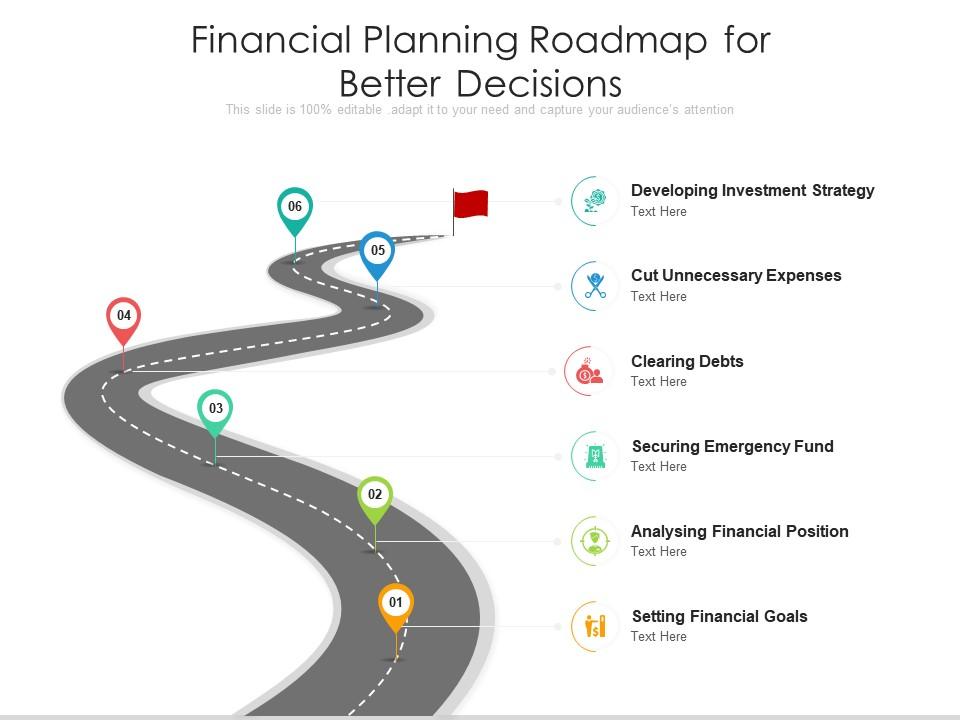
Financial planning roadmap for better decisions
Try Before you Buy Download Free Sample Product
Audience
Editable
of Time
Our Financial Planning Roadmap For Better Decisions are topically designed to provide an attractive backdrop to any subject. Use them to look like a presentation pro.
People who downloaded this PowerPoint presentation also viewed the following :
Financial planning roadmap for better decisions with all 2 slides:
Use our Financial Planning Roadmap For Better Decisions to effectively help you save your valuable time. They are readymade to fit into any presentation structure.
FAQs for Financial planning roadmap
Okay so there's basically five things you gotta get right with money stuff. Write down your biggest goals first - house, retirement, whatever. Then figure out a budget that actually works (not some fantasy version). Emergency fund is huge - like 3-6 months of expenses, though honestly that feels impossible sometimes. You'll want to pay off debt while also investing, which is tricky. Insurance matters too, even though it's boring as hell. Start with your top three money goals and just work backwards. Everything else gets way easier once you know what you're actually aiming for.
Okay so first thing - write down literally every income source you have, then list ALL your expenses. I'm talking rent, groceries, even that Netflix subscription you never use. Calculate your net worth by figuring out what you own minus what you owe. Check your spending from the last few months to see patterns. Credit score too while you're doing this whole assessment thing. Here's the brutal part though - you need to be completely honest about where money actually goes, not where you think it goes. Mint works great for tracking, or just use a basic spreadsheet.
Look, budgeting is honestly just figuring out where your cash actually goes vs where you *think* it goes. Spoiler alert - it's never the same! Track everything for like a month first, then sort it into needs, wants, and savings. That 50/30/20 split is pretty solid to start with. But real talk? The only budget that works is one you won't ditch after two weeks. Set up automatic transfers right when you get paid - that way you're saving before you can spend it on random stuff. Then tweak things as you figure out your patterns. I still can't believe how much I spend on coffee but whatever.
Okay so first thing - be brutally honest about what you're actually making and spending right now. Don't lie to yourself about that daily coffee habit lol. Figure out what you genuinely care about spending on versus what's just mindless purchases. Think about where you want to be in 1, 5, and 10 years, but keep it realistic. We've all made those crazy ambitious plans that lasted like two weeks. Break the big stuff into smaller chunks you can check on monthly. Your goals should push you a bit without making you miserable. Write this stuff down and check back every few months - you'd be surprised how much you forget otherwise.
First thing - write down every debt you have with the balance, interest rate, and minimum payment. Trust me, you need to see it all laid out. Pay the minimums on everything, then throw any extra money at either your highest interest rate debt or your smallest balance. The math says go for highest interest, but honestly? I've seen people have way more success with the smallest balance first because those quick wins keep you motivated. Don't take on any new debt while you're doing this - that's like trying to fill a bucket with holes in it. Oh, and set up autopay so you're not stressing about due dates every month.
Okay so before you start investing or throwing extra money at debt (except credit cards - those are evil), build your emergency fund first. Yeah it's boring as hell, but you'll thank me later. Stick 3-6 months of expenses in a high-yield savings account. Don't stress about the amount - even $25 a month adds up. Here's the trick: treat it like a bill you owe yourself, not something you fund with whatever's left over. Set up auto-transfers so you don't forget. Once you hit your target, then you can focus on retirement and fun stuff.
So it's pretty straightforward - when you're young like 20s/30s, go heavy on stocks since you've got time to ride out the crashes. I learned this the hard way in 2008 lol. Once you hit your 40s and 50s, start mixing in more bonds - maybe 60/70% stocks, rest in bonds. After 60 though? You can't really afford big losses anymore, so shift toward safer stuff like dividend stocks and bonds. There's actually this old rule where you subtract your age from 110 and that's your stock percentage. Works pretty well honestly. Just don't go crazy switching everything at once - gradual changes are your friend.
Honestly, tax planning is like a cheat code for your money. Max out your 401k first - that alone will save you a ton this year. Then look at timing when you take income and finding every deduction you can. Those tax-advantaged accounts? Use them strategically. All those savings compound over time, which is pretty sweet. The tax code makes it annoyingly hard to figure out, but there's basically free money sitting there if you know where to look. Don't just think about taxes in April though - work it into every big financial move you make.
Mint and YNAB are solid for budgeting - they'll sync with your bank and auto-categorize stuff. Personal Capital's great for tracking investments too. I've probably downloaded way too many finance apps over the years, but these actually work. Your 401k provider probably has decent retirement calculators, or try FidSafe. Don't go crazy downloading everything though. Pick maybe 2-3 apps max and stick with them. I'd say start with just one budgeting app this week and see how it feels after a month.
Dude, inflation is such a sneaky wealth killer. That $100k you're saving for retirement? It'll buy way less stuff in 30 years - like maybe half as much, which is honestly depressing when you think about it. Everything gets more expensive over time - your rent, groceries, especially healthcare (ugh). Most planners assume around 3% inflation yearly when they're doing projections. You gotta put your money in things that actually grow faster than inflation, like stocks or real estate. Cash just sits there losing value. I learned this the hard way watching my savings account basically go nowhere for years.
Look, financial advisors know stuff we don't - tax tricks, investment options, plus they'll catch things you miss. The big win though? They stop you from doing dumb stuff like panic-selling when the market tanks (guilty as charged lol). If you're super disciplined and have time to research everything, DIY can work. But most of us need help, especially with retirement planning or tax stuff that gets complicated. Even just meeting once a year to check your work is probably worth it. I mean, you wouldn't do your own root canal, right?
Look, estate planning is basically the last piece of your financial puzzle - it protects what you've built and gets your money to the right people without Uncle Sam taking a huge bite. Everything needs to work together though. Your investments, taxes, retirement stuff - it's all connected. I mean, what's the point of maxing your 401k if estate taxes are gonna crush your kids later? Get a basic will done first and update your beneficiary forms (seriously, people forget this all the time). Then talk to your advisor about how it all fits with your other goals. Trust me, your future self will thank you.
Dude, our brains are honestly trash when it comes to money decisions. Loss aversion is huge - you'll hold onto losing stocks way too long hoping they bounce back. Then there's confirmation bias where you only read stuff that backs up what you want to believe. Present bias makes you blow money now instead of saving for later (guilty as charged lol). Don't even get me started on lifestyle inflation and trying to keep up with Instagram flexing. Best thing? Automate everything you can. When the market tanks or life gets crazy, at least your savings are still happening without you having to think about it.
Honestly, major life stuff just turns your whole financial plan upside down. Getting married means you're suddenly juggling two people's money situations - debts, savings, all of it. Kids are expensive as hell, plus now you're stressing about college funds and life insurance. Losing a job? That's when you pray you actually built up that emergency fund everyone talks about. Even good changes mess with everything - got a promotion last year and I'm still figuring out how much extra I should throw at investments. The thing is, you can't just set a budget once and call it done. Every time something big happens, you've gotta sit down and rework the whole thing.
Honestly, Khan Academy's free courses are a solid starting point - they break down budgeting and investing pretty well. Your library probably runs workshops too (who knew libraries were actually cool for this stuff?). Banks sometimes offer free classes, though they can be kinda sales-y. Apps like Mint or YNAB are nice because you're learning while managing your actual money. Coursera has good stuff too if you want something more structured. I'd maybe start online to get the basics, then hit up a local workshop where you can ask real questions. Oh, and the National Endowment for Financial Education has tons of free resources.
-
Colors used are bright and distinctive.
-
Excellent design and quick turnaround.