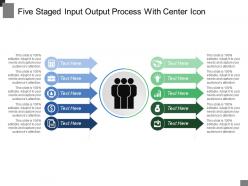
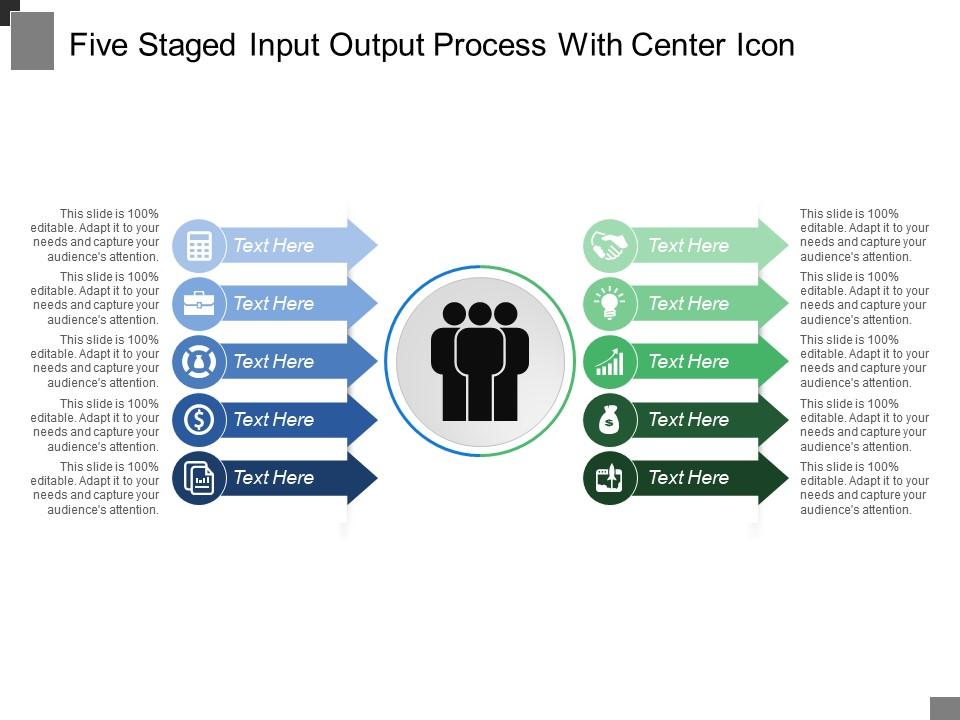
Five staged input output process with center icon
Try Before you Buy Download Free Sample Product
Audience
Editable
of Time
Take a bow with our Five Staged Input Output Process With Center Icon. The applause will be almost deafening.
People who downloaded this PowerPoint presentation also viewed the following :
Five staged input output process with center icon with all 5 slides:
Astound folks with your adept handling of our Five Staged Input Output Process With Center Icon. You will be able to pull it out of the hat.
FAQs for Five staged input output process
The key stages include input initiation, data validation, processing execution, output formatting, and completion confirmation. These stages streamline system operations by ensuring data integrity, minimizing errors, and optimizing resource allocation, with many organizations finding that this structured approach ultimately delivers faster processing times and enhanced operational efficiency.
The Five Staged I/O Process enhances organizational efficiency by systematically structuring input analysis, processing workflows, decision-making protocols, output delivery, and feedback integration. Through this structured approach, organizations streamline operations, reduce processing delays, and minimize resource waste, with many enterprises finding that standardized I/O frameworks ultimately deliver faster project completion and improved operational transparency.
Input/output processes typically include data collection, validation, transformation, processing, and delivery stages, each with distinct inputs and outputs. During collection, raw data enters and structured datasets emerge, validation receives these datasets and outputs verified information, transformation converts formats while processing generates results, and delivery distributes final outputs to users, with many organizations finding that this systematic approach streamlines operations and enhances decision-making efficiency.
Organizations can measure I/O process effectiveness through key performance indicators like throughput rates, response times, error frequencies, resource utilization metrics, and cost per transaction. Through systematic monitoring and analytics, companies in manufacturing, financial services, and healthcare can identify bottlenecks, optimize workflows, and enhance operational efficiency, ultimately delivering faster service delivery and improved competitive advantage.
Technology significantly enhances the Five Staged I/O Process by automating data collection, streamlining processing workflows, enabling real-time monitoring, and facilitating rapid error detection and correction. Advanced systems like AI-driven analytics and cloud-based platforms allow organizations across manufacturing, healthcare, and financial services to minimize processing delays, reduce manual intervention, and ultimately deliver faster, more accurate outputs with improved operational efficiency.
Different industries adapt the Five Staged I/O Process by customizing input parameters, processing algorithms, and output formats to match their operational requirements and regulatory standards. Manufacturing companies streamline production workflows, healthcare organizations enhance patient data processing, and financial services optimize transaction validation, with many finding that these tailored adaptations deliver faster decision-making and improved operational efficiency.
Successful I/O process implementations include Amazon's inventory management system, Netflix's content recommendation engine, banking transaction processing platforms, and manufacturing quality control systems. These organizations streamline data collection, processing, and output delivery by automating workflows, reducing manual errors, and enhancing response times, ultimately delivering improved customer experiences and significant operational efficiency gains.
Organizations face challenges including data integration complexities, legacy system compatibility issues, resource allocation constraints, staff training requirements, and change management resistance. While these implementation hurdles can initially slow adoption, many enterprises find that strategic phasing, comprehensive training programs, and gradual system integration ultimately streamline operations and deliver enhanced processing efficiency across departments.
The Five Staged I/O Process aligns seamlessly with Lean and Six Sigma methodologies by providing structured data collection, systematic analysis, and measurable output evaluation at each phase. This strategic combination enables organizations to identify waste, reduce variability, and optimize processes through consistent measurement frameworks, with many manufacturing and healthcare institutions finding that integrating these approaches delivers enhanced operational efficiency and sustainable quality improvements.
Common tools include enterprise resource planning (ERP) systems, business process management (BPM) software, workflow automation platforms, data analytics solutions, and integrated communication systems. These technologies streamline the Five Staged I/O Process by automating data collection, enhancing decision-making capabilities, and facilitating seamless information flow, with many organizations finding that strategic combinations ultimately deliver improved operational efficiency and faster response times.
Stakeholder engagement significantly enhances I/O process success by ensuring accurate requirement gathering, facilitating smoother implementation, and driving user adoption across all five stages. Through continuous collaboration, organizations streamline feedback loops, minimize resistance to change, and accelerate decision-making, with many finding that engaged stakeholders ultimately deliver higher process efficiency and sustainable operational improvements.
Common pitfalls include inadequate requirement gathering, insufficient testing phases, poor communication between stages, rushed implementation timelines, and neglecting user feedback integration. These oversights often result in system failures, budget overruns, and delayed deployments, with many organizations finding that thorough stage validation and stakeholder alignment ultimately delivers smoother operations and reduced project risks.
Organizations should review their I/O processes quarterly for performance metrics and annually for comprehensive strategic assessment, with additional reviews triggered by technology upgrades, capacity changes, or performance degradation. This structured approach enables businesses to identify bottlenecks, optimize resource allocation, and enhance system efficiency, with many enterprises finding that regular monitoring ultimately delivers faster application performance and improved user experiences.
Staff involved in the I/O process require data analysis skills, process mapping expertise, stakeholder communication abilities, change management training, and technical proficiency in relevant software systems. These competencies enable teams to streamline workflows, enhance operational efficiency, and deliver measurable outcomes, with many organizations finding that cross-functional training ultimately strengthens their competitive advantage.
Customer feedback acts as a continuous improvement catalyst across all five stages, influencing input refinement through user requirements, processing optimization based on user experience insights, and output enhancement through satisfaction metrics. Organizations leveraging systematic feedback loops find that customer insights streamline each transition, reduce processing bottlenecks, and ultimately deliver more targeted outcomes, with many businesses reporting significantly improved service delivery and competitive positioning.
-
Professional and unique presentations.
-
Colors used are bright and distinctive.