


Formulating Cybersecurity Plan To Safeguard Information Assets Powerpoint Presentation Slides




Try Before you Buy Download Free Sample Product
 Impress Your
 Audience
 100%
100% Editable
 Save Hours
 of Time


Risk assessment and management plan can help the organization identify the cybersecurity threats and implement a plan to mitigate the risks. Here is an efficiently designed template on Formulating Cybersecurity Plan to Safeguard Information Assets. It will help a company to safeguard information and critical data of organizational assets. This presentation covers different types of cybersecurity threats faced by firms worldwide and the process of managing the information security risks. A major chunk of the presentation covers an information security risk management plan that can help to identify assets vulnerable to information security risks. It also covers the assessment of information security risks through vulnerability rating and risk assessment matrix. It also showcases mitigation plans that can help an organization resolve information security risks promptly and strategies to avoid information breaches. This presentation also shows training that can help the organization train employees to respond and manage the information security threat. This presentation also covers the roles and responsibilities of the risk management team and budget allocation for managing cybersecurity risks. At last, our presentation highlights the impact of a risk management plan on the information security capabilities of the organization. Get access to our powerful cyber security ppt template now.
People who downloaded this PowerPoint presentation also viewed the following :
Content of this Powerpoint Presentation
Slide 1: This slide introduces Formulating Cybersecurity Plan to Safeguard Information Assets. State your company name and begin.
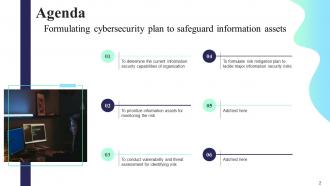
Slide 2: This slide states Agenda of the presentation.
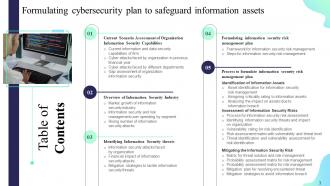
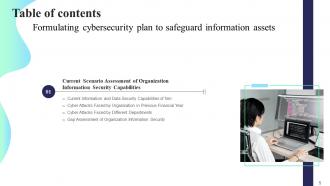
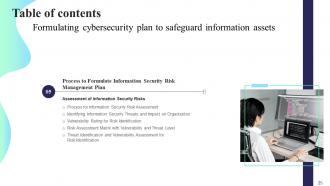
Slide 3: This slide presents Table of Content for the presentation.
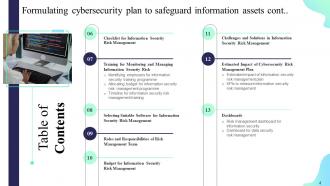
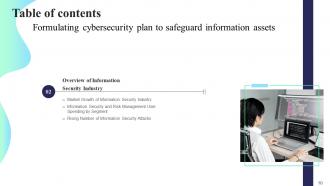
Slide 4: This is another slide continuing Table of Content for the presentation.
Slide 5: This slide highlights title for topics that are to be covered next in the template.
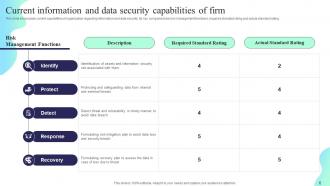
Slide 6: This slide shows Current Information and Data Security Capabilities of firm.
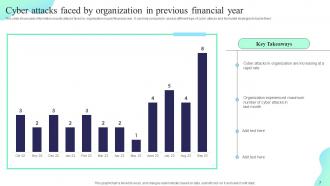
Slide 7: This slide presents Cyber Attacks Faced by Organization in Previous Financial Year.
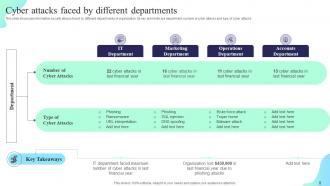
Slide 8: This slide displays Cyber Attacks Faced by Different Departments.
Slide 9: This slide represents Gap Assessment of Organization Information Security.
Slide 10: This slide highlights title for topics that are to be covered next in the template.
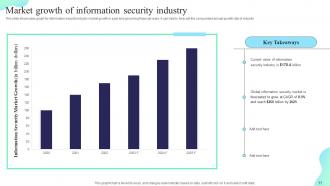
Slide 11: This slide showcases Market Growth of Information Security Industry.
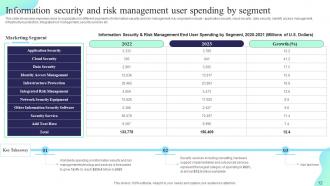
Slide 12: This slide shows Information Security and Risk Management User Spending by Segment.
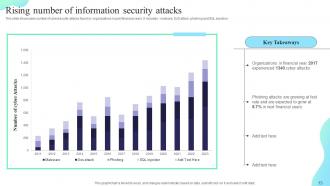
Slide 13: This slide presents Rising Number of Information Security Attacks.
Slide 14: This slide highlights title for topics that are to be covered next in the template.
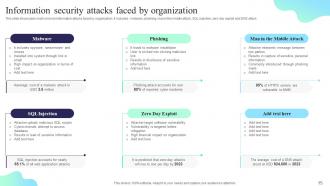
Slide 15: This slide displays Information Security Attacks Faced by Organization.
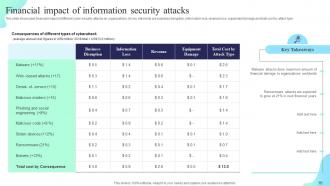
Slide 16: This slide represents Financial Impact of Information Security Attacks.
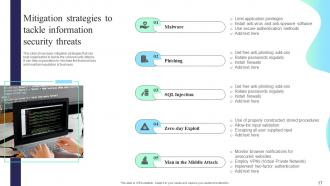
Slide 17: This slide showcases Mitigation Strategies to Tackle Information Security Threats.
Slide 18: This slide highlights title for topics that are to be covered next in the template.
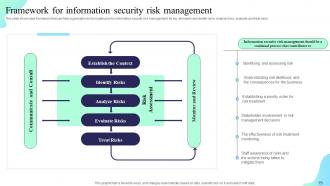
Slide 19: This slide shows Framework for Information Security Risk Management.
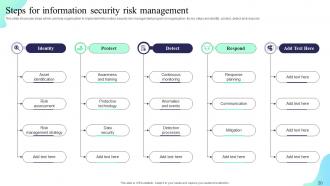
Slide 20: This slide presents Steps for Information Security Risk Management.
Slide 21: This slide highlights title for topics that are to be covered next in the template.
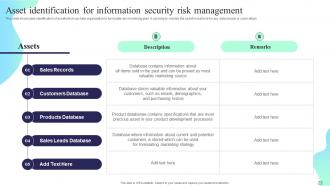
Slide 22: This slide displays Asset Identification for Information Security Risk Management.
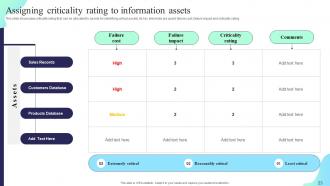
Slide 23: This slide represents Assigning Criticality Rating to Information Assets.
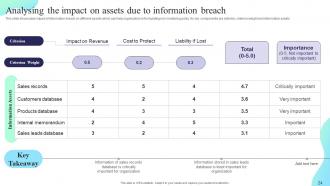
Slide 24: This slide showcases Analyzing the Impact on Assets due to Information Breach.
Slide 25: This slide highlights title for topics that are to be covered next in the template.
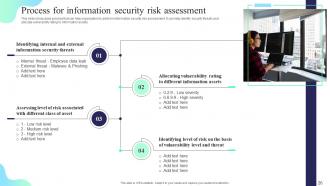
Slide 26: This slide shows Process for Information Security Risk Assessment.
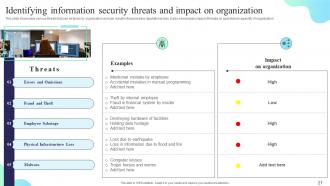
Slide 27: This slide presents Identifying Information Security Threats and Impact on Organization.
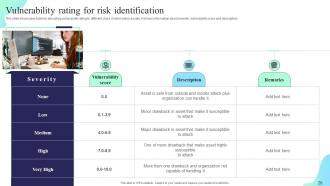
Slide 28: This slide displays Vulnerability Rating for Risk Identification.
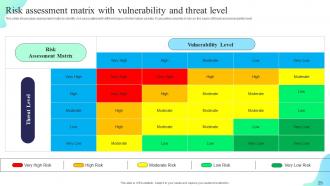
Slide 29: This slide represents Risk Assessment Matrix with Vulnerability and Threat Level.
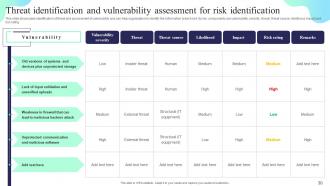
Slide 30: This slide showcases Threat Identification and Vulnerability Assessment for Risk Identification.
Slide 31: This slide highlights title for topics that are to be covered next in the template.
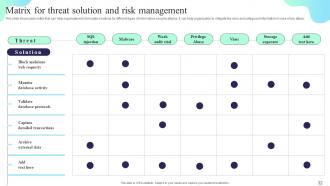
Slide 32: This slide shows Matrix for Threat Solution and Risk Management.
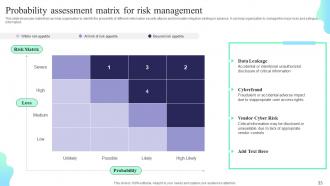
Slide 33: This slide presents Probability Assessment Matrix for Risk Management.
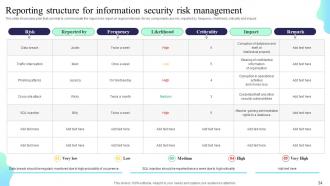
Slide 34: This slide displays Reporting Structure for Information Security Risk Management.
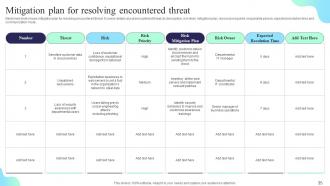
Slide 35: This slide represents Mitigation Plan for Resolving Encountered Threat.
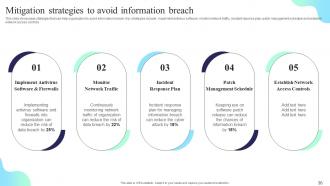
Slide 36: This slide showcases Mitigation Strategies to Avoid Information Breach.
Slide 37: This slide highlights title for topics that are to be covered next in the template.
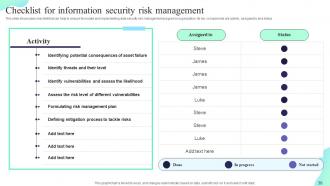
Slide 38: This slide shows Checklist for Information Security Risk Management.
Slide 39: This slide highlights title for topics that are to be covered next in the template.
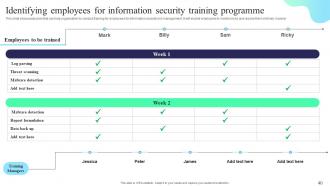
Slide 40: This slide presents Identifying Employees for Information Security Training Programme.
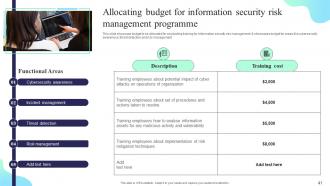
Slide 41: This slide displays Allocating Budget for Information Security Risk Management Programme.
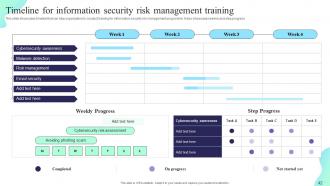
Slide 42: This slide represents Timeline for Information Security Risk Management Training.
Slide 43: This slide highlights title for topics that are to be covered next in the template.
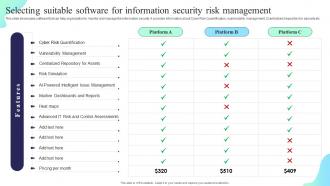
Slide 44: This slide showcases Selecting Suitable Software for Information Security Risk Management.
Slide 45: This slide highlights title for topics that are to be covered next in the template.
Slide 46: This slide shows Roles and Responsibilities of Risk Management Team.
Slide 47: This slide highlights title for topics that are to be covered next in the template.
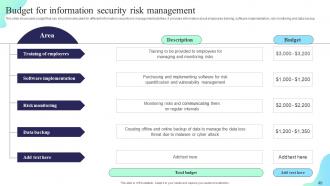
Slide 48: This slide presents Budget for Information Security Risk Management.
Slide 49: This slide highlights title for topics that are to be covered next in the template.
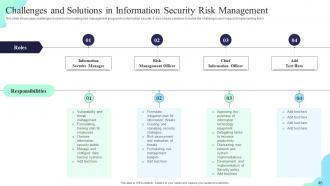
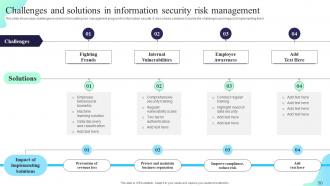
Slide 50: This slide displays Challenges and Solutions in Information Security Risk Management.
Slide 51: This slide highlights title for topics that are to be covered next in the template.
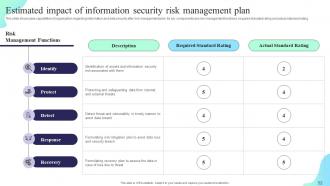
Slide 52: This slide represents Estimated Impact of Information Security Risk Management Plan.
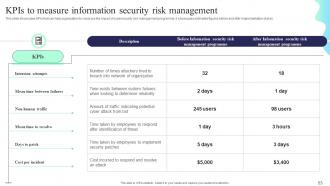
Slide 53: This slide showcases KPIs to Measure Information Security Risk Management.
Slide 54: This slide highlights title for topics that are to be covered next in the template.
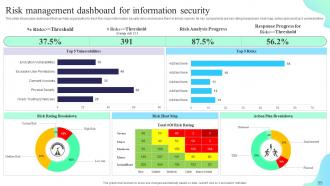
Slide 55: This slide shows Risk Management Dashboard for Information Security.
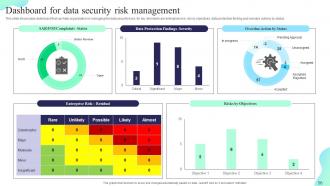
Slide 56: This slide presents Dashboard for Data Security Risk Management.
Slide 57: This slide contains all the icons used in this presentation.
Slide 58: This slide is titled as Additional Slides for moving forward.
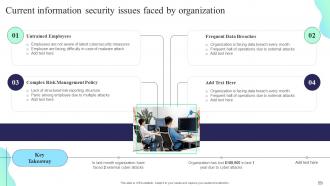
Slide 59: This slide presents Current information security issues faced by organization.
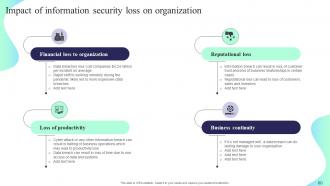
Slide 60: This slide displays Impact of information security loss on organization.
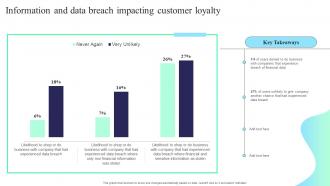
Slide 61: This slide represents Information and data breach impacting customer loyalty.
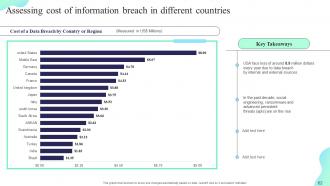
Slide 62: This slide showcases Assessing cost of information breach in different countries.
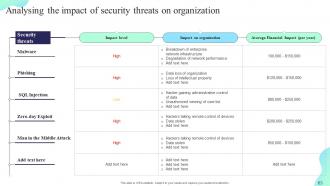
Slide 63: This slide shows Analysing the impact of security threats on organization.
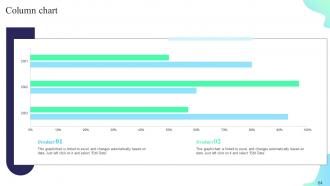
Slide 64: This slide displays Column chart with two products comparison.
Slide 65: This is About Us slide to show company specifications etc.
Slide 66: This is Our Goal slide. State your firm's goals here.
Slide 67: This is Our Team slide with names and designation.
Slide 68: This is a Timeline slide. Show data related to time intervals here.
Slide 69: This slide shows Post It Notes. Post your important notes here.
Slide 70: This slide presents Roadmap with additional textboxes.
Slide 71: This is a Thank You slide with address, contact numbers and email address.
Formulating Cybersecurity Plan To Safeguard Information Assets Powerpoint Presentation Slides with all 76 slides:
Use our Formulating Cybersecurity Plan To Safeguard Information Assets Powerpoint Presentation Slides to effectively help you save your valuable time. They are readymade to fit into any presentation structure.








FAQs for Formulating Cybersecurity Plan To Safeguard Information Assets
Critical components include risk assessment, access controls, incident response protocols, employee training programs, and regular security audits. These elements work together by identifying vulnerabilities, limiting unauthorized access, and ensuring rapid threat containment, with many organizations finding that comprehensive plans reduce breach risks while maintaining operational efficiency and regulatory compliance.
Organizations can assess their current cybersecurity posture through comprehensive security audits, vulnerability assessments, penetration testing, risk analysis, and compliance evaluations. These assessments enable businesses to identify critical gaps, prioritize resource allocation, and establish baseline security metrics, with many financial institutions and healthcare organizations finding that systematic posture reviews ultimately streamline plan development and enhance operational resilience.
Employee training and awareness serve as critical frontline defenses in cybersecurity plans, addressing human vulnerabilities through phishing recognition, password management, social engineering detection, and incident reporting protocols. These programs significantly reduce security breaches by empowering staff to identify threats, follow proper procedures, and maintain vigilant practices, with many organizations finding that well-trained employees ultimately become their strongest security assets.
Businesses ensure regulatory compliance by implementing comprehensive risk assessments, establishing documented security policies, conducting regular audits, and maintaining continuous monitoring systems. Many organizations in healthcare, finance, and retail find that integrating frameworks like GDPR, HIPAA, or PCI-DSS requirements directly into their cybersecurity architecture streamlines compliance processes while enhancing overall security posture.
Best practices for identifying and mitigating cybersecurity threats include continuous network monitoring, regular vulnerability assessments, employee training programs, multi-factor authentication, and incident response planning. These approaches streamline threat detection by combining automated monitoring tools, proactive risk evaluation, and human awareness training, with many organizations finding that this strategic combination delivers faster threat response, reduced security incidents, and ultimately enhanced operational resilience.
A cybersecurity plan should establish clear incident detection protocols, response team roles, communication procedures, containment strategies, and recovery timelines to minimize damage and restore operations. Through automated monitoring systems and predefined escalation paths, organizations streamline threat mitigation, reduce downtime, and maintain business continuity, with many finding that structured response frameworks significantly accelerate recovery while preserving stakeholder confidence.
Essential cybersecurity tools include firewalls, antivirus software, intrusion detection systems, endpoint protection platforms, and multi-factor authentication solutions. These technologies work together by monitoring network traffic, detecting malicious activities, and securing access points, with many organizations finding that strategic integration of these tools significantly reduces breach risks while enhancing operational security.
Organizations can prioritize cybersecurity risks by conducting comprehensive risk assessments, mapping potential threats against business impact, analyzing asset criticality, evaluating vulnerability exposure, and considering regulatory compliance requirements. Through risk matrices and scoring frameworks, businesses streamline resource allocation toward high-impact vulnerabilities, enhance protection of critical systems, and ultimately deliver stronger security postures while maximizing ROI on cybersecurity investments.
Cybersecurity plan updates should include quarterly threat assessments, annual policy reviews, incident response evaluations, employee training updates, and technology audits. These processes enable organizations to adapt to emerging threats, regulatory changes, and system upgrades, with many financial institutions and healthcare providers finding that structured review cycles significantly enhance their security posture and compliance readiness.
Organizations balance cybersecurity with convenience through adaptive authentication, single sign-on solutions, automated threat detection, risk-based access controls, and user-friendly security training programs. These approaches streamline security processes by reducing password fatigue, enabling seamless workflows, and providing intelligent protection that adapts to user behavior, ultimately delivering robust security without compromising operational efficiency.
**INPUT**: What metrics should be tracked to measure the effectiveness of a cybersecurity plan? **OUTPUT**: Cybersecurity effectiveness metrics include incident response times, threat detection rates, vulnerability remediation speeds, user training completion, and security awareness scores. These measurements enable organizations to streamline their defense strategies by identifying gaps, enhancing response protocols, and minimizing breach impacts, with many enterprises finding that comprehensive tracking ultimately delivers stronger security postures and reduced operational risks.
Smaller organizations can develop comprehensive cybersecurity plans by prioritizing risk assessments, implementing free or low-cost security tools, establishing employee training programs, and creating incident response procedures. Many small businesses find that focusing on essential protections like multi-factor authentication, regular backups, and staff education delivers significant security improvements while maintaining cost efficiency and operational sustainability.
Integrating cybersecurity into business strategy delivers enhanced risk management, operational resilience, regulatory compliance, competitive advantage, and strategic alignment across organizational functions. This approach enables companies to protect revenue streams, maintain customer trust, and respond faster to threats, while financial services and healthcare organizations increasingly find that integrated security frameworks reduce costs and accelerate digital transformation initiatives.
Companies ensure third-party vendor cybersecurity compliance through comprehensive vendor assessments, contractual security requirements, regular audits, and continuous monitoring of access privileges. These measures enable organizations to maintain security standards across their supply chain, with many financial institutions and healthcare providers finding that structured vendor risk management programs significantly reduce breach risks while ensuring regulatory compliance and protecting customer data.
Emerging technologies for cybersecurity plans include artificial intelligence for threat detection, zero-trust architecture, behavioral analytics, quantum-resistant encryption, and automated incident response systems. These technologies enhance security by providing real-time threat identification, continuous verification protocols, and predictive risk assessment, with many financial institutions and healthcare organizations finding that this strategic combination significantly reduces response times while strengthening overall defense capabilities.
-
I was able to find the right choice of PPT template for my thesis with SlideTeam. Thank you for existing.
-
Designs have enough space to add content.