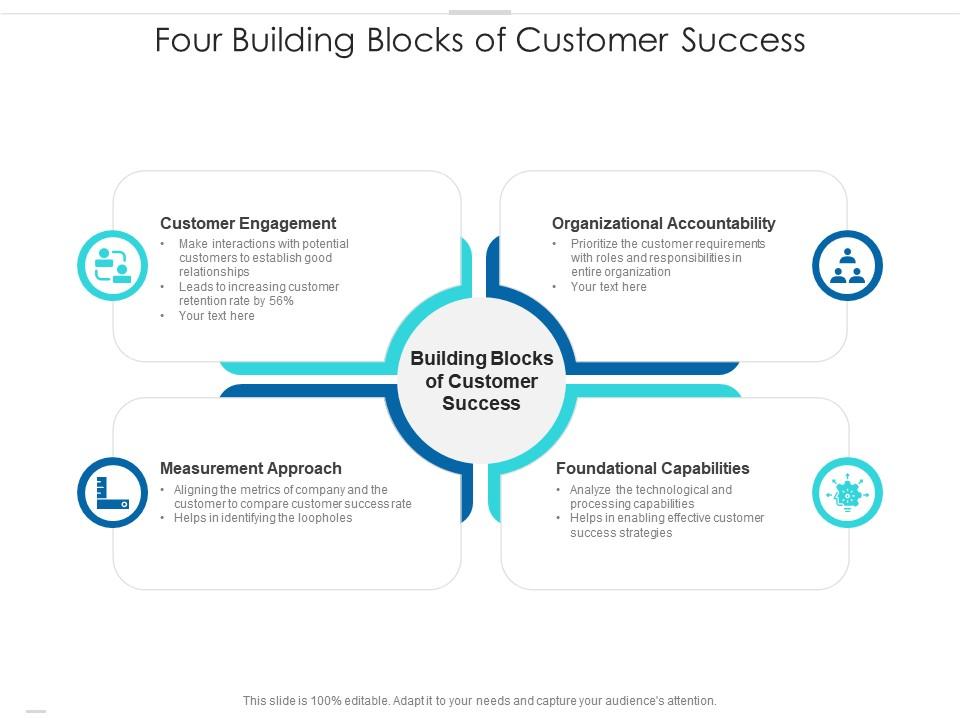
Four building blocks of customer success

Rating:
80%
Four building blocks of customer success
Slide 1 of 2
Favourites Favourites

Try Before you Buy Download Free Sample Product

Audience Impress Your
Audience
Editable 100%
Editable
Time Save Hours
of Time
The Biggest Sale is ending soon in
0
0
:
0
0
:
0
0
Rating:
80%
Introducing our premium set of slides with Four Building Blocks Of Customer Success. Ellicudate the four stages and present information using this PPT slide. This is a completely adaptable PowerPoint template design that can be used to interpret topics like Customer Engagement, Organizational Accountability, Measurement Approach. So download instantly and tailor it with your information.

People who downloaded this PowerPoint presentation also viewed the following :

FAQs for Four building blocks

Honestly, start with the big three: NRR, churn rate, and NPS - they'll tell you if customers are actually happy and sticking around. Customer lifetime value matters too, obviously. Product usage frequency shows engagement better than most metrics. Support ticket volumes are huge though - nobody renews when they're constantly frustrated with your product. Expansion revenue and renewal rates are gold if you're SaaS. Don't go crazy tracking everything at once - pick maybe 4 that actually predict what customers will do next, not just numbers that look good in meetings. Time-to-value is another solid one since it shows how quickly people see results.

Get everyone in the same room weekly - sales brings pipeline stuff, marketing talks campaigns, and you share customer health data. Yeah, these meetings suck at first but trust me they work. Build dashboards everyone can actually see so there's no "well I didn't know that" nonsense later. Here's the thing though - you've gotta agree on basic definitions first or you'll just argue in circles. What's a qualified lead? When does handoff happen? Pick one metric you can all obsess over together and start there.

Honestly, customer feedback is like your cheat sheet for everything. You can spot trends, see where people are struggling, figure out what's actually broken. Way better than just guessing what customers need. Use it to decide which features are worth pushing for and where your team should focus. The cool part? When customers see you actually made changes based on their suggestions, they trust you way more. I always set up regular check-ins and then - this is key - circle back to tell them what you fixed because of their input. Closes the loop nicely.

So CRM platforms are honestly game-changers - you can track every single customer interaction and set up automated check-ins based on how they're actually using your product. The analytics side is where it gets really interesting though, you can spot patterns that show which customers are about to bail before they even realize it themselves. All the repetitive follow-ups get handled automatically, which frees you up for the conversations that actually matter. I'd start by looking at what you're doing manually right now. Then figure out where technology can step in and handle the boring stuff.

Honestly, it's like playing whack-a-mole with fires everywhere. You're trying to reach out to new prospects while also keeping your current clients from losing their minds. Tracking who might bail on you is probably the hardest part - you need those health scores and usage data but good luck getting clean metrics across everyone. Oh and you'll be spread super thin between onboarding and keeping existing customers happy. Definitely prioritize like crazy and automate whatever boring stuff you can. Trust me on that one.

Okay so here's the thing - most onboarding sucks because companies just demo features instead of showing real results. Figure out what "winning" looks like for your customers at 30, 60, 90 days first. Then build your whole process around getting them there. I'd set up regular check-ins to track their actual progress, not just whether they clicked through tutorials. Mix some DIY stuff with personal touchpoints depending on the customer type. Oh and definitely be proactive about reaching out - waiting for people to ask for help is basically setting them up to churn. Quick wins early on are everything.

Honestly, you've gotta catch problems before your customers do. Set up those automated health checks and keep an eye on engagement metrics - when people stop using features, that's your red flag right there. I swear by regular check-ins even when things seem fine. Build some playbooks for the usual scenarios and teach your team what warning signs look like. Also, dig into support ticket patterns to fix stuff at the root cause level. The trick is nurturing relationships during the smooth sailing periods, not just when everything's on fire. Map out health metrics for your top 10 customers this week.

Yeah, totally! Proactive customer success beats reactive every time. You're basically doing relationship maintenance - checking in regularly, helping them hit their goals, catching problems early. Way better than scrambling after they're already frustrated. Companies with solid CS programs see retention jump 15-20%, which honestly makes sense when you think about it. Focus on spotting at-risk accounts before they bail and create those regular touchpoints. It's like... you're proving value constantly instead of hoping they remember why they signed up. Makes customers way stickier.

Definitely start with product training - how can they help customers if they don't get the product themselves? Communication skills are huge too, plus data analysis so they can actually make sense of health scores. Oh, and project management basics. Honestly, the soft skills piece gets overlooked but it's massive. Give them access to customer data platforms and scenario playbooks. Regular feedback sessions help a lot. The big thing is they need to understand not just what customers are doing, but why they're doing it. Product knowledge first, then build everything else on top of that foundation.

Okay so here's what I've learned the hard way - watch for drops in their actual product usage first. That's your biggest tell. When their support tickets suddenly disappear? That's actually bad news, means they've probably checked out mentally. You'll also notice they start missing calls or taking forever to respond. Budget conversations are brutal red flags too. Oh, and if they're asking about cancellation terms... yeah, you're already behind. The real trick is catching this stuff early through automated alerts. Once someone's actively talking about leaving, you're basically just doing damage control at that point instead of actually fixing things.

Honestly, case studies are where you can really show off your wins. Pick customers who had solid problems, used your stuff, and got results you can actually measure. The transformation angle works way better than just rattling off features - people connect with stories, not specs. Get real quotes from your customers too, because their words hit different than yours. I'd probably start with your top 3-5 success stories first. Oh, and make sure they match the pain points your prospects are dealing with. Nothing worse than a case study that doesn't relate to what people are actually struggling with.

Look for your happiest customers first - the ones crushing it with your product and actually like talking to your team. Map out who's getting real value. Give them cool stuff like beta access, invite-only events, maybe peek at your roadmap. Swag works too, obviously. Build something formal around them - advisory boards are solid, or user communities where they can actually shape what you're building. Here's the thing though: make it super easy for them to tell their stories. Case studies, testimonials, speaking gigs - whatever works. Give them the spotlight and they'll do the marketing for you. It's honestly way more authentic than anything you'd write yourself.

Here's the thing - happy customers are basically money machines. They'll stick around forever, buy more stuff, and tell their friends about you. Way better than burning cash trying to find new people constantly. Your existing customers will naturally expand too - upgrading plans, adding features, whatever. I always tell people to obsess over retention rates and expansion revenue because that's where you see real impact. Honestly, most companies overlook this but customer success is probably your cheapest growth strategy. Just help them win with your product and they'll basically sell for you.

So customer journey mapping is basically figuring out how people actually use your product - not how you think they do. Shows all the spots where they get stuck or confused, plus what moments actually matter to them. Most teams don't bother with this (then act shocked when customers bail). You can spot problems way earlier and jump in at those make-or-break moments instead of playing defense all the time. The cool part? You'll see exactly which interactions keep people around. I'd start with your best customers first - way easier to map.

Okay so first things first - hire people who give a damn about fixing problems, not just crushing numbers. Share customer feedback in every team meeting, the good AND the ugly stuff. Those disaster moments? Pure gold for learning what's broken. Get your whole crew thinking like customer advocates - yes, even Karen from accounting. Cross-department meetings are clutch so sales, support, and product aren't just doing their own thing in separate corners. Oh, and celebrate when customers win big, not just when revenue spikes. Trust me on this one.

Ratings and Reviews

80% of 100
Write a review
Most Relevant Reviews
  1. 80%

    by Chauncey Ramos

    Awesome use of colors and designs in product templates.
  2. 80%

    by Darron Hunter

    Great quality slides in rapid time.

2 Item(s)

per page: