

Global Cloud Kitchen Sector Analysis Powerpoint Presentation Slides




Try Before you Buy Download Free Sample Product
 Impress Your
 Audience
 100%
100% Editable
 Save Hours
 of Time


A cloud kitchen is a commercial kitchen that prepares food exclusively for delivery or takeout without any provision for dine-in customers. Check out Our Global Cloud Kitchen Sector Analysis template. It is designed to provide valuable insights for restaurateurs looking to expand their existing restaurants or start a digital brand at a low cost. Our Virtual Restaurant deck includes an overview of the cloud kitchen market, including market size, growth rate, and statistical highlights. It presents a comprehensive market landscape analysis, including market drivers, restraints, challenges, and more. Additionally, our Dark Kitchen PPT features market dynamics such as the impact of COVID-19, trending technologies, growth factors, and cloud kitchen and online food delivery growth rates. It further offers a detailed market analysis using frameworks like SWOT and Porters five forces analysis. Moreover, our cloud kitchen module provides a forecast of the kitchen as a service models growth and adoption by restaurant size. Finally, the template outlines various dashboards for managing cloud kitchen operations, financials, and performance. Do not miss out on this valuable resource. Get access now.
People who downloaded this PowerPoint presentation also viewed the following :
Content of this Powerpoint Presentation
Slide 1: This slide introduces Global Cloud Kitchen Sector Analysis. Commence by stating Your Company Name.
Slide 2: This slide depicts the Agenda of the presentation.
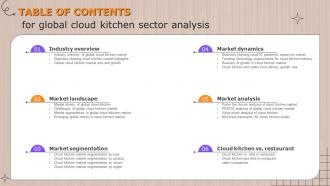
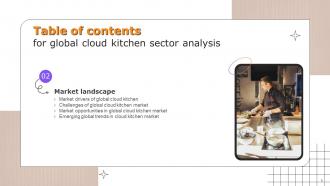
Slide 3: This slide includes the Table Of Contents.
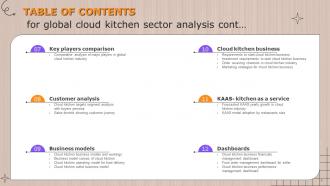
Slide 4: This is yet another slide continuing the Table Of Contents.
Slide 5: This slide highlights the Title for the Topics to be covered further.
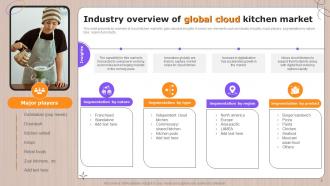
Slide 6: This slide presents an overview of cloud kitchen market to gain valuable insights.
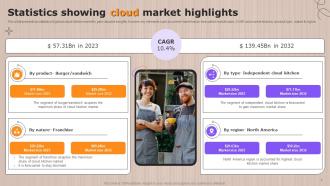
Slide 7: This slide depicts the Statistics showing cloud market highlights.
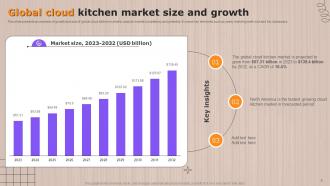
Slide 8: This slide reveals the Global cloud kitchen market size and growth.
Slide 9: This slide portrays the Heading for the Contents to be discussed next.
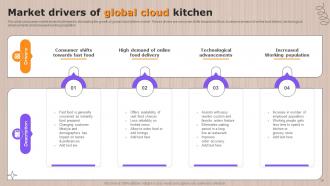
Slide 10: This slide showcases market drivers that helped in stimulating the growth of global cloud kitchen market.
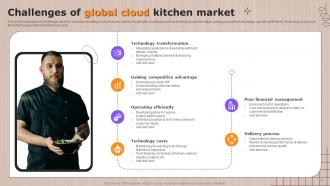
Slide 11: This slide mentions about the Challenges of global cloud kitchen market.
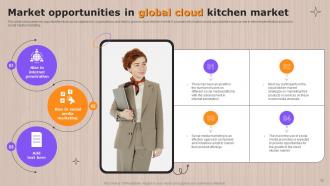
Slide 12: This slide exhibits the Market opportunities in global cloud kitchen market.
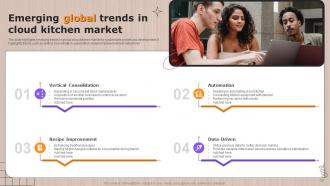
Slide 13: The slide highlights emerging trends in global cloud kitchen market for sustainable growth and development.
Slide 14: This slide includes the Title for the Ideas to be covered further.
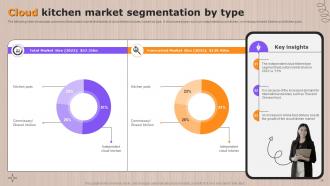
Slide 15: This slide presents Cloud kitchen market segmentation by type.
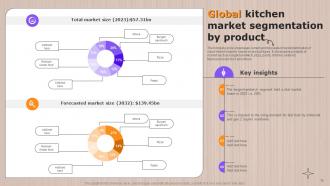
Slide 16: This slide illustrates the Global kitchen market segmentation.
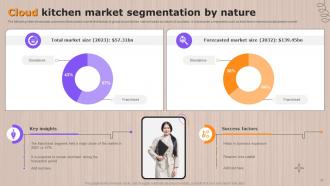
Slide 17: This slide presents Cloud kitchen market segmentation by nature.
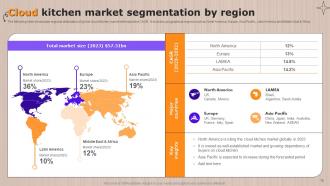
Slide 18: This slide reveals the Cloud kitchen market segmentation by region.
Slide 19: This slide contains the Heading for the Contents to be discussed next.
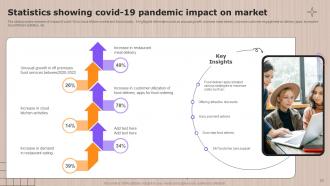
Slide 20: The slide provides overview of impact of covid-19 on cloud kitchen market and food industry.
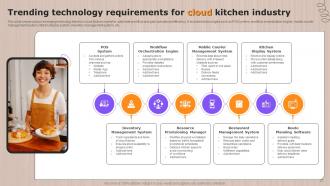
Slide 21: This slide talks about the Trending technology requirements for cloud kitchen industry.
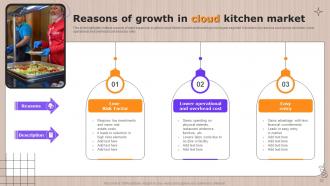
Slide 22: This slide portarys the Reasons of growth in cloud kitchen market.
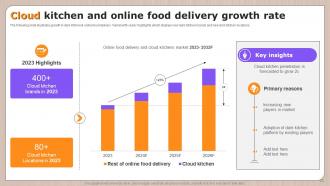
Slide 23: The following slide illustrates Cloud kitchen and online food delivery growth rate.
Slide 24: This slide exhibits the Title for the Ideas to be covered next.
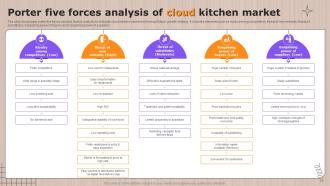
Slide 25: This slide depicts the Porter five forces analysis of cloud kitchen market.
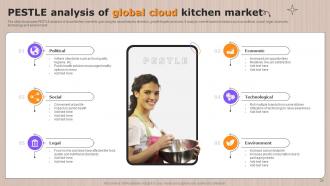
Slide 26: This slide reveals the PESTLE analysis of global cloud kitchen market.
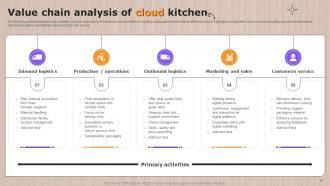
Slide 27: This slide portarys the Value chain analysis of cloud kitchen.
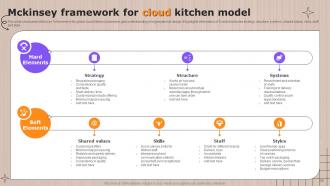
Slide 28: This slide displays the Mckinsey framework for cloud kitchen model.
Slide 29: This slide highlights the Heading for the Ideas to be discussed further.
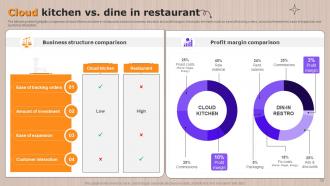
Slide 30: This slide showcases Cloud kitchen vs. dine in restaurant.
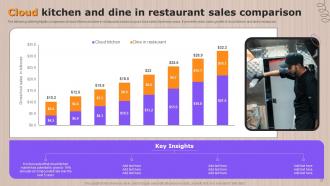
Slide 31: This slide reveals the Cloud kitchen and dine in restaurant sales comparison.
Slide 32: This slide contains the Title for the Contents to be covered in the forthcoming template.
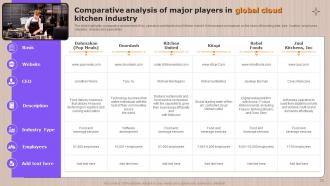
Slide 33: The slide highlights comparative assessment of key operators worldwide cloud kitchen market.
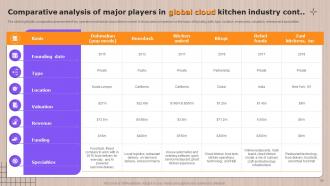
Slide 34: This slide continues the Comparative analysis of major players in global cloud kitchen industry.
Slide 35: This slide depicts the Heading for the Topics to be discussed further.
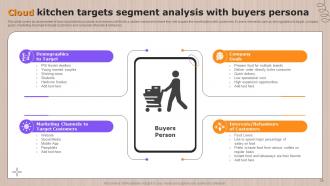
Slide 36: This slide portarys the Cloud kitchen targets segment analysis with buyers persona.
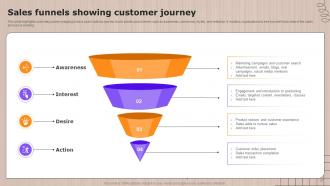
Slide 37: This slide covers the Sales funnels showing customer journey.
Slide 38: This slide incorporates the Title for the Contents to be covered next.
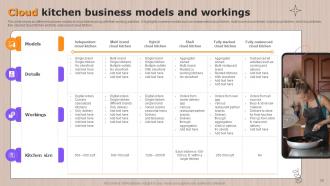
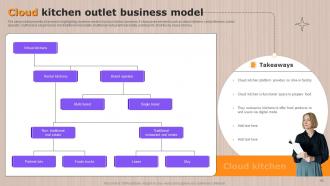
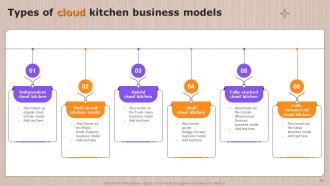
Slide 39: This slide shows six different business models of cloud kitchen along with their working activities.
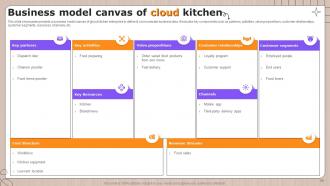
Slide 40: This slide states the Business model canvas of cloud kitchen.
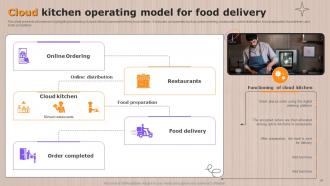
Slide 41: This slide presents a framework highlighting functioning of cloud kitchen business for timely food delivery.
Slide 42: This slide displays the Cloud kitchen outlet business model.
Slide 43: This slide mentions about the Heading for the Contents to eb discussed further.
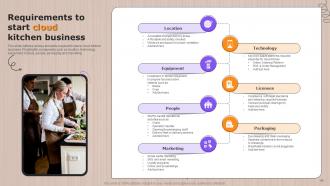
Slide 44: This slide outlines various elements required to start a cloud kitchen business.
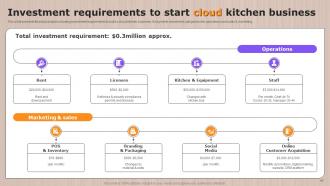
Slide 45: This slide depicts the Investment requirements to start cloud kitchen business.
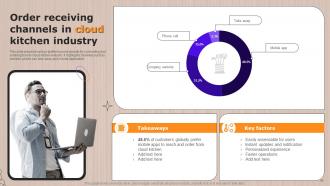
Slide 46: This slide presents various platforms used globally for connecting and ordering food in cloud kitchen industry.
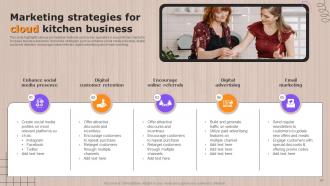
Slide 47: This slide highlights various promotional methods used by key operators.
Slide 48: This slide includes the Title for the Ideas to be discussed further.
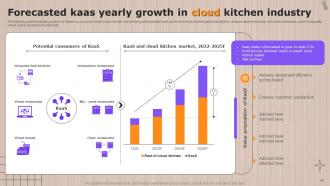
Slide 49: This slide illustrates Forecasted kaas yearly growth in cloud kitchen industry.
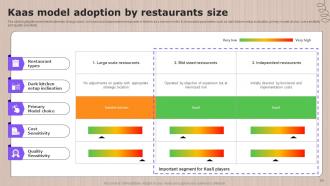
Slide 50: This slide displays the Kaas model adoption by restaurants size.
Slide 51: This slide represents the Heading for the Ideas to be covered in the next template.
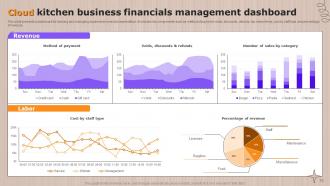
Slide 52: This slide illustrates the Cloud kitchen business financials management dashboard.
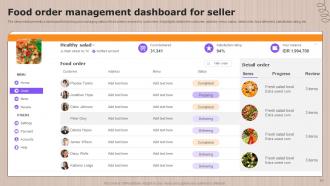
Slide 53: This slide highlights the Food order management dashboard for seller.
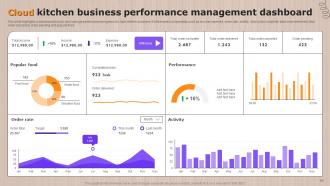
Slide 54: This slide showcases the Cloud kitchen business performance management dashboard.
Slide 55: This is the Icons slide containing all the Icons used in the plan.
Slide 56: This slide is used for revealing some Additional information.
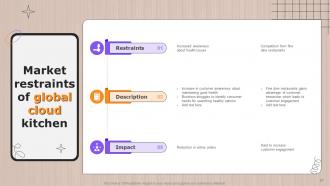
Slide 57: This slide talks about the Market restraints of global cloud kitchen.
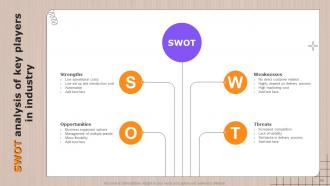
Slide 58: This slide portrays the SWOT analysis of key players in industry.
Slide 59: This slide states the Types of cloud kitchen business models.
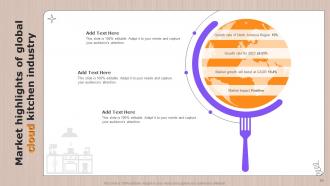
Slide 60: This slide presents the Market highlights of global cloud kitchen industry.
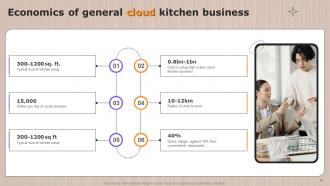
Slide 61: This slide talks about the Economics of general cloud kitchen business.
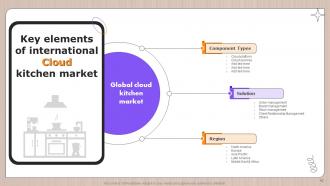
Slide 62: This slide mentions about the Global cloud kitchen market.
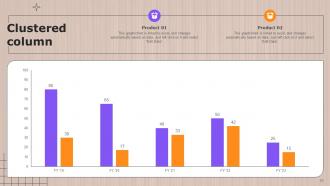
Slide 63: This slide showcases the Clustered column.
Slide 64: This is the About us slide for stating the company-related information.
Slide 65: This slide exhibits the organization's mission, vision, and values.
Slide 66: This is Meet our team slide. State your team-related information here.
Slide 67: This is the 30 60 90 days plan slide for effective planning.
Slide 68: This slide represents the SWOT analysis.
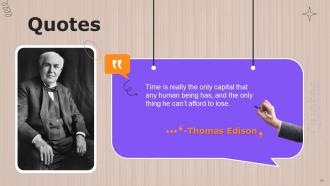
Slide 69: This is the Quotes slide for motivation.
Slide 70: This is the Idea generation slide for encouraging fresh ideas.
Slide 71: This slide reveals the organization's Roadmap.
Slide 72: This is the Venn diagram slide.
Slide 73: This slide elucidates information related to the Financial topic.
Slide 74: This slide contains the Posts it notes for reminders and deadlines.
Slide 75: This slide presents the firm's Timeline.
Slide 76: This is the Target slide for stating the company's targets.
Slide 77: This is the Thank You slide for acknowledgement.
Global Cloud Kitchen Sector Analysis Powerpoint Presentation Slides with all 82 slides:
Use our Global Cloud Kitchen Sector Analysis Powerpoint Presentation Slides to effectively help you save your valuable time. They are readymade to fit into any presentation structure.








FAQs for Global Cloud Kitchen Sector Analysis
Honestly, it's all about COVID changing how people eat - everyone got hooked on delivery and just stayed that way. Real estate costs are brutal right now, so traditional restaurants are bleeding money on rent and staff. Cloud kitchens cut costs by like 60-80% since you don't need servers or fancy locations. The delivery app boom made it possible to reach customers without any storefront. Smart move is you can test different food concepts from one kitchen without huge risk. Oh, and focus on markets where delivery is still growing fast - that's where the real opportunity is.
Dude, food delivery isn't just convenient anymore - it's basically expected now. COVID totally changed everything and people just never went back to the old ways. Delivery orders are up 3x since 2019, which is crazy when you think about it. Younger customers especially want everything fast and digital. I literally can't remember calling a restaurant directly in forever, it's all apps now. Speed matters more than the whole "dining experience" thing. If you're not focusing on delivery, you're honestly leaving money on the table. The trend's only getting bigger too.
Dude, you really need solid tech from day one or you'll hate your life during dinner rush. Order management systems pull everything from DoorDash, Uber Eats, etc. into one place. Kitchen display screens keep your cooks from losing their minds with tickets everywhere. Inventory tracking prevents those "oh shit we're out of chicken" moments. The analytics stuff is actually pretty cool - shows you exactly when to prep more food and which items are bombs. Smart fryers and prep equipment save you labor costs too. Trust me, trying to do this manually will destroy your margins.
Honestly, most successful cloud kitchens nail it by picking a lane and sticking to it - like specializing in Korean BBQ or keto meals instead of trying to do everything. Speed matters too. The good ones get orders out fast with solid packaging that doesn't turn your burger into mush. What's kinda cool is how some operators run like 5 different "restaurants" from one kitchen - totally different brands but same space. Smart move, tbh. They're constantly checking delivery app data to see what sells in their neighborhood and adjusting menus based on that rather than just guessing. Don't overthink it - find your thing, execute well, follow the numbers.
Honestly, cloud kitchens are tough to get off the ground. Equipment costs hit hard upfront, and don't even get me started on permits - total headache depending where you live. Building a customer base is tricky since nobody's walking by to randomly try your food. The delivery apps take huge cuts too, which sucks but you kinda need them at first. Here's what I'd do: keep it simple with maybe two killer dishes, test the waters small. Then work on your own ordering setup so you're not stuck paying DoorDash forever. Those commission fees add up fast.
Dude, location is everything with cloud kitchens - the regulations can totally screw you over. US cities all have their own weird health codes and zoning mess. Europe's actually more predictable, just stricter on food safety stuff. Singapore's killing it with digital licensing (so easy), but India? Good luck with all that paperwork. Middle East is getting better though, they really want ghost kitchens there. I learned this the hard way - always check local rules first before you expand anywhere. What flies in one place will literally get you shut down somewhere else.
Honestly, go digital first - that's where people are when they're hungry and scrolling. Social media and influencer stuff works great, plus targeted ads hit different when someone's already thinking about food. Get your delivery app game tight with good photos (seriously, invest here) and descriptions that pop up in searches. Email marketing is weirdly powerful for getting people back - there's something about that "your usual?" message that just works. Oh, and Google My Business is clutch for local searches. Partner with nearby spots or events if you can. I'd say pick one thing, get really good at it, then branch out from there.
Location is everything, seriously. You want delivery hotspots - places near offices, universities, dense neighborhoods where people actually order food regularly. The tricky part? Balancing high demand areas with reasonable rent costs. Map out your competitors first before you sign anything. Being centrally located cuts your delivery times and costs big time. Oh, and make sure there's decent parking for drivers - learned this the hard way when drivers started avoiding places with terrible parking situations. Kitchen infrastructure matters too, but honestly the customer density piece is what'll make or break you financially.
Dude, sustainability is actually becoming a huge selling point for cloud kitchens. Customers care about eco-friendly stuff now, plus investors are all over ESG metrics. Better demand forecasting helps cut food waste - also try smaller batch cooking and those apps that sell surplus food at discounts. Packaging is massive since everything's delivery. Your lower overhead versus regular restaurants? That's your secret weapon - you can actually spend on sustainable practices without destroying profits. Smart kitchens optimize energy use too, and local sourcing when it makes sense. Honestly, just start tracking your waste first. The numbers will probably blow your mind.
Honestly, those delivery partnerships can totally make or break you. Commission fees hit 15-30% per order - ouch. But the customer reach is insane, way more than you'd get solo. Once you're doing decent volume, negotiate better rates. Don't put all your eggs in one basket either - use multiple platforms. The real move though? Push people to order directly from you somehow. Maybe throw in a small discount for direct orders or something. Those repeat customers who skip the apps are pure gold since you keep all the profit.
So I've been noticing three big things happening right now. Hyper-local fusion is huge - Korean-Mexican, Indian-Italian, stuff that shouldn't work but totally does. Data-driven menus are everywhere too, where they'll test dishes and axe them in weeks if they're not selling (honestly kind of ruthless). Then there's this modular thing where you use the same ingredients across different virtual brands, which is pretty smart. Oh, and the collaboration trend! Lots of places are teaming up with local chefs for limited runs to create buzz. If you're starting out, I'd go with 2-3 flexible base recipes you can spin different ways.
Dude, cloud kitchens have had to get super scrappy with all the supply chain chaos. They're constantly switching suppliers - I've heard some even hit up Costco when their usual guys can't deliver. Most ditched their complicated 15-ingredient dishes for simpler stuff. Smart move honestly. They also team up with multiple vendors for the same ingredients so they don't run out. Some use data to spot shortages early, plus they're buying straight from local farms now. My advice? Build like three backup supplier relationships. Sounds excessive but that's just how it is now.
Revenue per square foot is huge since you're dealing with limited space. Also track average order value and customer acquisition costs. For operations - fulfillment time, delivery accuracy, and how well you're using your kitchen during rush hours. Those directly hit customer satisfaction. Food waste is easy to forget but it'll kill your margins. Customer lifetime value matters too, especially across different delivery apps - some platforms just perform better than others, honestly. Retention rates are key. Start with these basics first, then you can always add more detailed stuff once you've got a handle on the core numbers.
Ugh, food safety regs are gonna hit your wallet hard - ventilation systems, temp monitors, staff training, inspections, the whole nine yards. But here's the thing: you literally can't skip this stuff if you want to scale. Every city has different rules too, which is honestly super annoying when you're trying to expand. Map out what your local health department wants before you even look at spaces. The silver lining? Once you nail down solid protocols, customers actually trust you more and you won't get sued into oblivion. It becomes this weird competitive edge.
Most cloud kitchens grab feedback through delivery app ratings and automated texts after orders. Social media comments too, obviously. The trick is actually reading what customers say instead of just collecting it - crazy concept, right? If everyone's complaining your pasta's too salty, don't wait a month to fix it. Set up automated surveys so you're not hunting down reviews manually. I'd focus on post-order emails while the experience is still fresh. Use that data to tweak portions, packaging, whatever needs work. It's way easier than guessing what people want.
-
Great quality product.
-
Great experience, I would definitely use your services further.