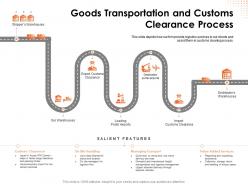
Goods transportation and customs clearance process storage powerpoint presentation format
Try Before you Buy Download Free Sample Product
Audience
Editable
of Time
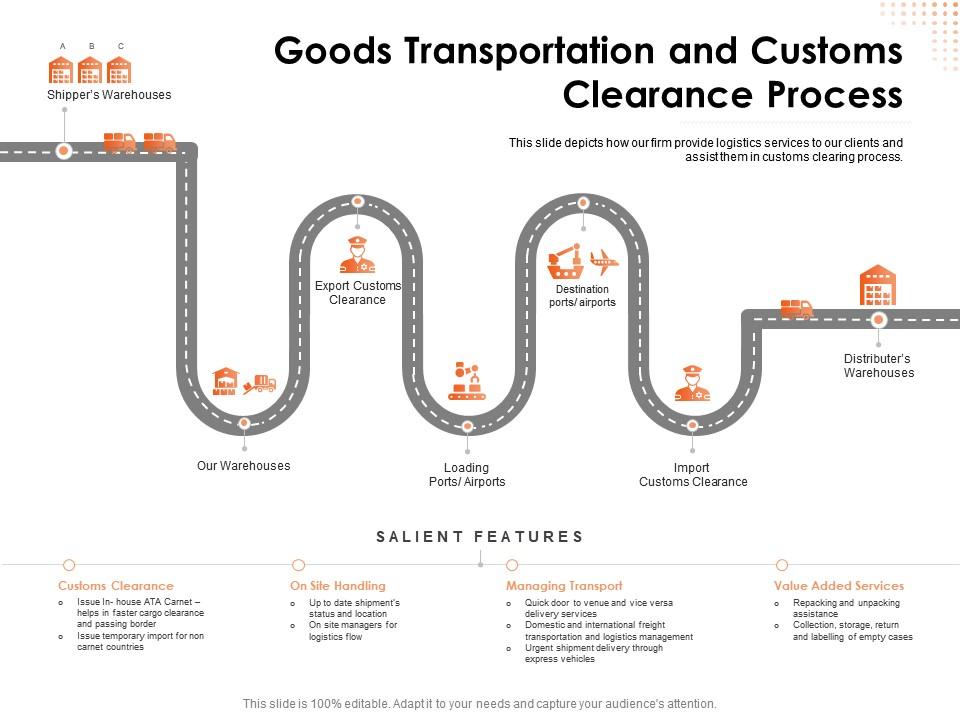
This slide depicts how our firm provide logistics services to our clients and assist them in customs clearing process.
People who downloaded this PowerPoint presentation also viewed the following :
Goods transportation and customs clearance process storage powerpoint presentation format with all 2 slides:
Give your audience a fulfilling experience. They will find our Goods Transportation And Customs Clearance Process Storage Powerpoint Presentation Format elevating.
FAQs for Goods transportation and customs clearance process storage
Honestly, the driver shortage is probably your biggest headache right now - it's getting brutal out there. Supply chain's still a mess, fuel costs are insane, and somehow customers want everything faster AND cheaper. Makes total sense, right? Your infrastructure's probably struggling to keep up too. All these new environmental rules aren't helping either, though I get why they're necessary. Labor costs are climbing everywhere, not just for drivers. For next year? Definitely look into automating what you can. Oh, and build some flexibility into your routes and partnerships - you'll need it.
Dude, the tracking capabilities now are insane - you can literally follow every shipment with GPS, plus IoT sensors that monitor if stuff gets too hot or cold. AI even predicts delays before they actually happen, which honestly blew my mind the first time I saw it work. Your team won't be stuck doing boring inventory updates anymore since automated systems handle that stuff. More time for the big picture decisions, you know? The data visibility compared to like 2019 is just crazy different. I'd say start small though - maybe just shipment tracking first, then build from there once you get the hang of it.
Dude, logistics is all about automation now. Warehouses have robots doing the picking and sorting, plus AI figuring out demand forecasting - it's pretty crazy actually. Route optimization, inventory tracking, the whole supply chain runs on automated systems these days. Speed and accuracy go way up while costs drop. Plus way fewer mistakes since machines don't get tired doing repetitive stuff like we do. Honestly, if you haven't looked into automation options yet, might be worth checking out what fits your budget and volume. The tech has gotten so much better lately.
Yeah so green logistics is totally changing how companies move their stuff around. Electric delivery trucks are everywhere now, plus they're using AI to plan better routes and cut down on gas. Even the old-school freight companies are getting into it because customers want it and there's more regulations coming. Last-mile delivery is where things get really interesting though - drones, bike messengers, those pickup lockers instead of sending trucks to every house. Honestly the speed of this whole shift surprised me. If you haven't looked at your supply chain's carbon footprint yet, that's probably the best place to start figuring things out.
Dude, e-commerce totally changes the game. Instead of shipping pallets to a few stores, you're suddenly managing thousands of tiny orders going everywhere. Your warehouses need way more products on hand, faster picking systems, and all that consumer packaging - it's honestly a nightmare sometimes. Plus everyone wants free shipping tomorrow, which is basically impossible but whatever. You'll need warehouses closer to customers, better forecasting so you don't run out of stuff, and deals with multiple shipping companies. I'd start by figuring out where you're currently losing money on shipping costs.
Start with good route planning software - honestly it'll save you tons on gas and time. Set up some local hubs if you can swing it. Peak season? Partner with gig workers, they're lifesavers. Customers eat up delivery options too - time slots, pickup spots, same-day if you're feeling ambitious. Communication is huge, like tell them about delays before they have to ask. Oh and track everything obsessively (learned that one the hard way). Just audit your current routes first though, find where you're bleeding time and money.
Automation is where I'd start - tackle your most repetitive stuff first and you'll see results fast. AI for supply chain optimization is pretty solid too. Customers are obsessed with sustainability now, so green shipping options and showing carbon footprints is basically required. Nearshoring's way hotter than offshoring lately, which makes sense honestly. People expect Amazon-level tracking for everything, so real-time visibility across your whole operation isn't optional anymore. The companies doing really well are going hard on last-mile delivery innovation and flexible fulfillment networks. Oh, and don't sleep on the ROI from basic automation - that's your quick win.
Look, data analytics basically stops you from making blind guesses about your supply chain. Track shipments in real-time, figure out demand patterns, optimize your routes - all that good stuff. Honestly, the best part is catching problems before they blow up your budget. You'll see which carriers actually do their job and where things keep getting stuck. My advice? Pick one annoying problem first - maybe late deliveries or your warehouse being a mess - then build from there. Way better than trying to fix everything at once.
Look, TMS systems are honestly game-changers - they'll slash your shipping costs by like 10-15% pretty much immediately. Real-time tracking becomes automatic. Route planning gets way smarter. Your customer service people will actually have accurate delivery times to give customers instead of just guessing. The reporting is solid too, not the usual junk that nobody reads. It automates carrier selection which saves tons of time. Before you buy anything though, write down what's driving you crazy about your current setup. Then demo a couple systems - you'll know pretty quickly which one feels right for how your team works.
Honestly, start with better tracking - customers hate being left in the dark about their stuff. Real-time updates are a game changer. Then add some automated messages so people aren't constantly calling to ask "where's my order?" Chatbots work great for basic questions too, though some people still prefer talking to humans (go figure). Predictive analytics can catch delays before they blow up into angry customer calls. Mobile apps with self-service features are pretty clutch these days. Most people just want to know what's happening without having to hunt you down for updates.
Okay so first things first - get your demand forecasting down and do regular cycle counts. ABC analysis will save you tons of headaches by letting you focus on high-value stuff instead of micromanaging every single item. You absolutely need real-time data though, trust me on this one. Calculate safety stock based on your lead times and how much demand bounces around. Oh and automate whatever processes you can - your team will thank you later. I'd start by looking at your current setup and finding the biggest messes. That's where you'll see results fast.
Oh man, international shipping is such a headache compared to domestic. Customs alone will make you want to pull your hair out - there's all these forms like commercial invoices and certificates of origin that you don't need domestically. Transit times? Forget about it. Way longer and totally unpredictable. Weather in some random country can screw your entire timeline. Then you've got duties, taxes, inspections that can hold everything up for weeks. Honestly, I always pad my international schedules with extra time now. Find a good freight forwarder who actually knows the rules for wherever you're shipping - trust me on this one.
Dude, sustainability in logistics is kinda everywhere now. Your customers expect it, regulations keep tightening, and honestly? It saves money too. Better fuel efficiency, less waste, smarter routes - all that adds up. Nobody wants to be the company trashing the planet while delivering packages. Start small though. Maybe consolidate some shipments or try electric vehicles for local deliveries. I'd pick one thing and actually track what happens - oh, and your brand reputation will thank you later. Green supply chains aren't just feel-good stuff anymore, they're legit business strategy.
Dude, you don't have to do everything yourself - that's what partnerships are for. Share warehouse space, combine shipments, split costs. Other companies might have trucks heading exactly where you need them, or they've figured out some routing software that actually works (unlike half the stuff out there). It's pretty simple math: their strengths cover your weak spots. Start by making a list of what's driving you crazy versus what you're crushing at. Then find partners who fit that puzzle. Sometimes another perspective on those messy delivery routes makes all the difference too.
Okay so first things first - get solid on supply chain basics, data analysis, and project management. You'll need to know logistics software like SAP or Oracle WMS. Excel too, obviously. Communication skills are absolutely crucial since you're basically herding cats all day - vendors, drivers, customers, everyone needs updates constantly. Problem-solving is huge because something always goes wrong lol. Delays, missed shipments, you name it. APICS or CSCMP certifications definitely help your resume stand out. If you're totally new to this stuff, start with some basic supply chain courses to get your feet wet first.
No Reviews