


Healthcare Administration Overview Trends Statistics And Functional Areas Powerpoint Presentation Slides




Try Before you Buy Download Free Sample Product
 Impress Your
 Audience
 100%
100% Editable
 Save Hours
 of Time


Healthcare management is the administration of core functional areas of a hospital, such as operations, financial management, human resource HR management, information technology IT, and marketing. With our professionally designed public health administration PowerPoint presentation, medical administrators can develop policies for each department to increase operational efficiency. The hospital administration deck starts with current trends and statistics related to medical administration, the roles and responsibilities of various stakeholders involved in the healthcare system, and multiple objectives for healthcare companies. It also includes administrative areas of the hospital, such as operations management, financial management, human resource management, information technology, and marketing. Further, the module caters to a section that covers different challenges faced by health service managers and solutions to mitigate them. Lastly, through key performance indicator KPI dashboards, the health services manager can evaluate the effectiveness of departmental strategies and healthcare facilities in a medical institute. Download our 100 percent editable and customizable template, which is also compatible with Google Slides.
People who downloaded this PowerPoint presentation also viewed the following :
Content of this Powerpoint Presentation
Slide 1: This slide introduces the Healthcare Administration Overview: Trends, Statistics and Functional Areas. Begin by stating Your Company Name.
Slide 2: This slide depicts the Agenda of the presentation.
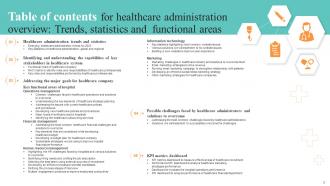
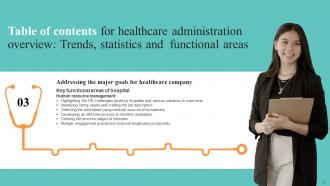
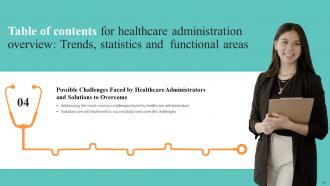
Slide 3: This slide includes the Table of contents.
Slide 4: This slide elucidates the Title for the Topics to be covered in the next template.
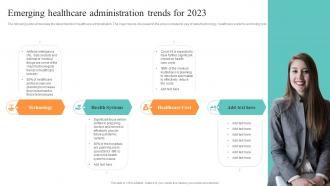
Slide 5: This slide showcases the Emerging healthcare administration trends for 2023.
Slide 6: This slide illustrates the Key statistics of healthcare administration: Global and regional.
Slide 7: This slide reveals the Heading for the Contents to be discussed further.
Slide 8: This slide provides a glimpse about the Functional chart of healthcare company.
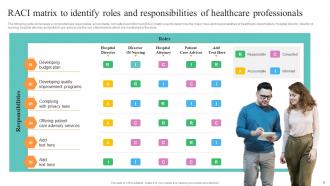
Slide 9: This slide exhibits information about the RACI matrix to identify roles and responsibilities of healthcare professionals.
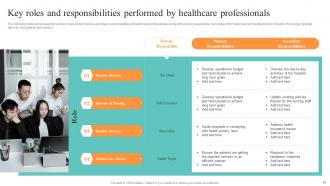
Slide 10: This slide states the Key roles and responsibilities performed by healthcare professionals.
Slide 11: This slide incorporates the Main Heading for the Ideas to be covered further.
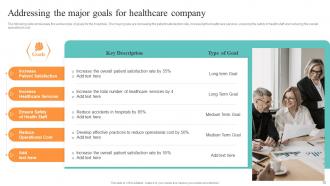
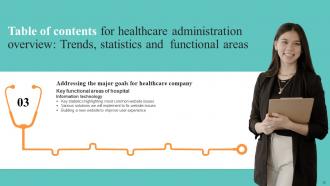
Slide 12: This slide Addresses the major goals for healthcare company.
Slide 13: This slide contains the Title for the Contents to be discussed in the forth-coming template.
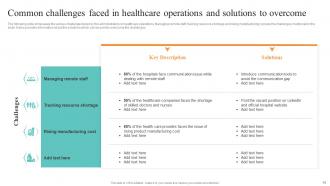
Slide 14: This slide indicates the Common challenges faced in healthcare operations and solutions to overcome.
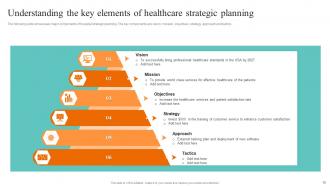
Slide 15: This slide helps in Understanding the key elements of healthcare strategic planning.
Slide 16: This slide focuses on Addressing the issues with current healthcare policies and procedures.
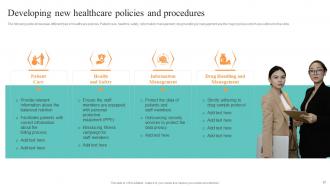
Slide 17: This slide deals with Developing new healthcare policies and procedures.
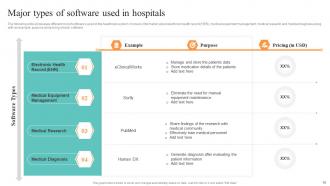
Slide 18: This slide showcases the Major types of software used in hospitals.
Slide 19: This is yet another slide continuing the Major types of software used in hospitals.
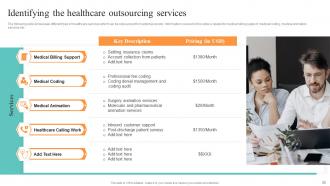
Slide 20: This slide includes Identifying the healthcare outsourcing services.
Slide 21: This slide incorporates the Title for the Topics to be covered in the upcoming template.
Slide 22: This slide deals with Addressing the most common healthcare financial challenges and solutions to overcome.
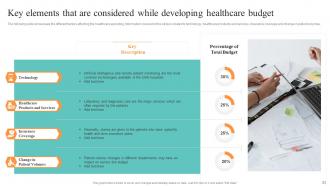
Slide 23: This slide highlights the Key elements that are considered while developing healthcare budget.
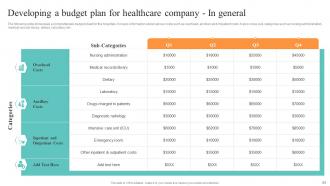
Slide 24: This slide showcases Developing a budget plan for healthcare company - In general.
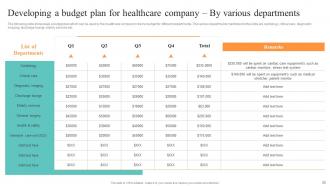
Slide 25: This slide elucidates Development of a budget plan for healthcare company by various departments.
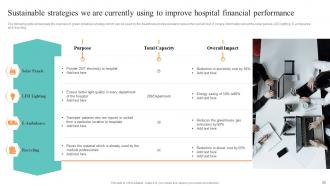
Slide 26: This slide exhibits information about the Sustainable strategies we are currently using to improve hospital financial performance.
Slide 27: This slide reveals the Title for the Contents to be discussed further.
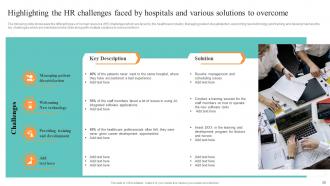
Slide 28: This slide Highlights the HR challenges faced by hospitals and various solutions to overcome.
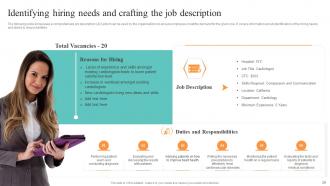
Slide 29: This slide shows the process of Identifying hiring needs and crafting the job description.
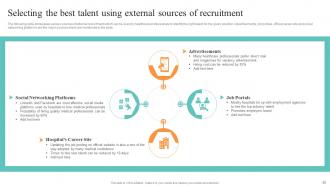
Slide 30: This slide focuses on Selecting the best talent using external sources of recruitment.
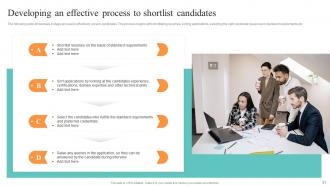
Slide 31: This slide deals with Developing an effective process to shortlist candidates.
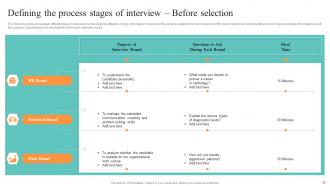
Slide 32: This slide Defines the process stages of interview before selection.
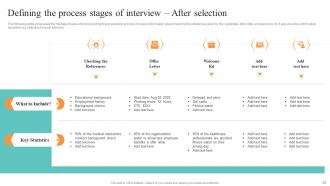
Slide 33: This slide Defines the process stages of interview After selection
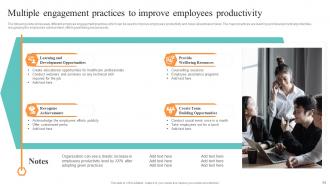
Slide 34: This slide represents the Multiple engagement practices to improve employees productivity.
Slide 35: This slide includes the Heading for the Topics to be discussed in the upcoming template.
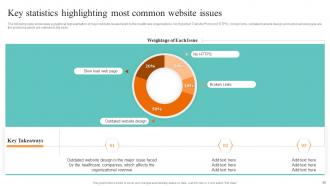
Slide 36: This slide displays the Key statistics highlighting most common website issues.
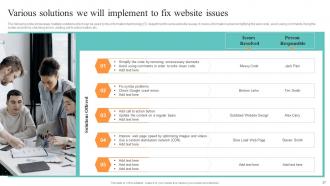
Slide 37: This slide provides information about the Various solutions we will implement to fix website issues.
Slide 38: This slide showcases Building a new website to improve user experience.
Slide 39: This slide contains the Heading for the Ideas to be covered in the forth-coming template.
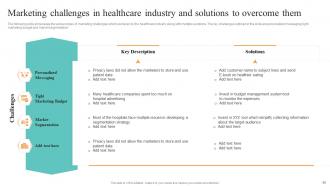
Slide 40: This slide lists the Marketing challenges in healthcare industry and solutions to overcome them.
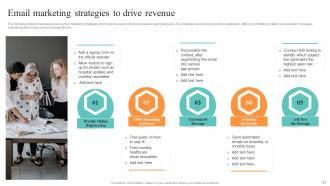
Slide 41: This slide presents the Email marketing strategies to drive revenue.
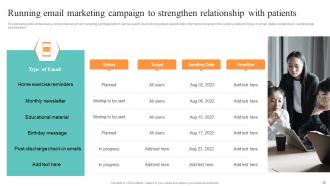
Slide 42: This slide showcases Running email marketing campaign to strengthen relationship with patients.
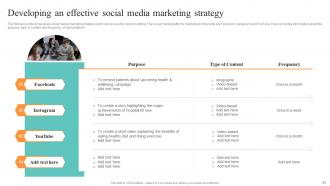
Slide 43: This slide focuses on Developing an effective social media marketing strategy.
Slide 44: This slide reveals the Other marketing strategies for healthcare companies.
Slide 45: This slide incorporates the Main heading for the Contents to be discussed further.
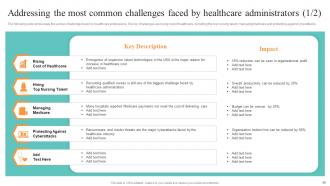
Slide 46: This slide Addresses the most common challenges faced by healthcare administrators.
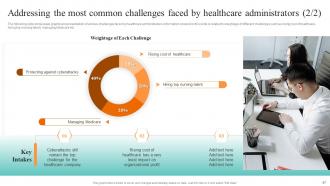
Slide 47: This is yet another slide continuing the most common challenges faced by healthcare administrators.
Slide 49: This slide reveals the Title for the Ideas to be discussed in the next template.
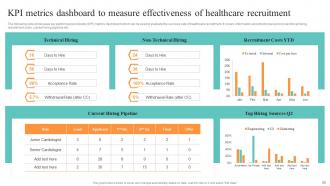
Slide 50: This slide shows the KPI metrics dashboard to measure effectiveness of healthcare recruitment.
Slide 51: This slide depicts the Performance KPI dashboard to analyze healthcare marketing strategies performance.
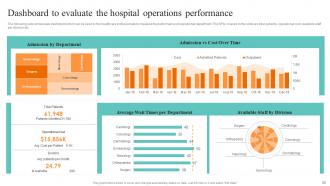
Slide 52: This slide presents the Dashboard to evaluate the hospital operations performance.
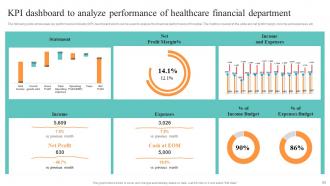
Slide 53: This slide showcases the KPI dashboard to analyze performance of healthcare financial department.
Slide 54: This is the Icons slide presenting all the Icons used in the plan.
Slide 55: This slide is titled as the Additional slides for revealing some extra information.
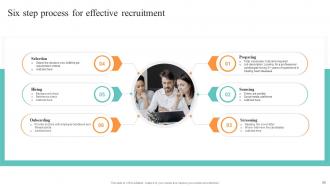
Slide 56: This slide elucidates Six step process for effective recruitment.
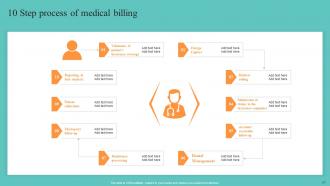
Slide 57: This slide includes 10 Step process of medical billing.
Slide 58: This slide exhibits a Comprehensive overview of lab report.
Slide 59: This is Our mission, vision and goal slide for revealing Company's long-term goals.
Slide 60: This slide contains the Post it notes for reminders and deadlines.
Slide 61: This slide represents the SWOT analysis.
Slide 62: This is the Venn diagram slide for depicting vital Company information.
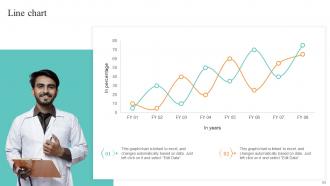
Slide 63: This slide elucidates the Line chart.
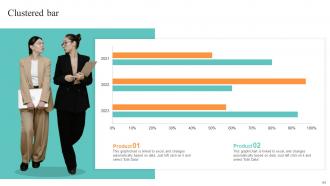
Slide 64: This slide shows the Clustered bar.
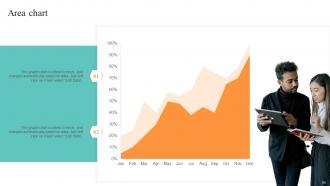
Slide 65: This slide displays the Area chart.
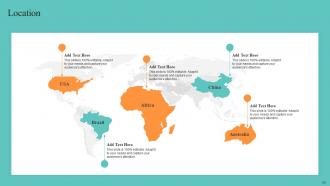
Slide 66: This slide reveals the Location.
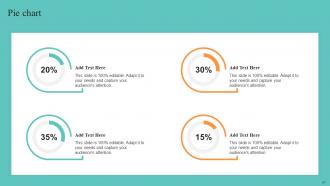
Slide 67: This slide indicates the Pie chart for some relevant Organization information.
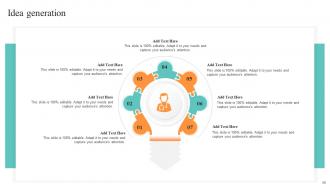
Slide 68: This is the Idea generation slide for encouraging fresh ideas.
Slide 69: This slide describes the Timeline process.
Slide 70: This is Our goal slide for stating Organization's long-term Goals.
Slide 71: This is the Thank You slide for ackowledgement.
Healthcare Administration Overview Trends Statistics And Functional Areas Powerpoint Presentation Slides with all 76 slides:
Use our Healthcare Administration Overview Trends Statistics And Functional Areas Powerpoint Presentation Slides to effectively help you save your valuable time. They are readymade to fit into any presentation structure.























FAQs for Healthcare Administration Overview Trends Statistics And Functional Areas
Healthcare administrators face escalating operational costs, complex regulatory compliance requirements, staffing shortages, aging infrastructure, and increasing patient expectations for digital services. These challenges create significant pressure on resource allocation and strategic planning, with many healthcare organizations finding that streamlined administrative processes, technology integration, and workforce optimization ultimately deliver improved patient outcomes and enhanced operational efficiency.
Data analytics enhances healthcare administration decision-making by identifying operational inefficiencies, predicting patient volumes, optimizing resource allocation, and analyzing cost patterns across departments. Through predictive modeling and real-time dashboards, hospitals streamline staffing schedules, reduce readmission rates, and improve patient flow management, ultimately delivering faster care delivery and significant cost reductions.
Technology revolutionizes healthcare by streamlining patient records, automating administrative tasks, enabling telemedicine consultations, and facilitating real-time monitoring through wearable devices and IoT sensors. These digital solutions enhance patient outcomes while reducing operational costs, with hospitals and clinics finding that integrated systems deliver faster diagnoses, improved care coordination, and significantly enhanced operational efficiency.
Healthcare administrators balance cost management with quality care by implementing strategic resource allocation, leveraging technology for operational efficiency, negotiating value-based contracts with suppliers, and adopting data-driven decision-making frameworks. Through predictive analytics and workflow optimization, hospitals and clinics streamline administrative processes, reduce waste, and enhance patient outcomes while maintaining financial sustainability, ultimately delivering both fiscal responsibility and superior care experiences.
Healthcare administrators can improve staff morale and reduce turnover through flexible scheduling, competitive compensation packages, professional development opportunities, recognition programs, and wellness initiatives. These strategies enhance workplace satisfaction by addressing work-life balance, career growth, and employee appreciation, with many hospitals and healthcare systems finding that comprehensive retention programs ultimately deliver reduced recruitment costs and improved patient care quality.
Regulatory compliance significantly impacts healthcare operations by mandating rigorous documentation protocols, staff training requirements, quality assurance procedures, and audit preparation processes. These compliance frameworks streamline patient safety standards, enhance data security measures, and improve care transparency, with many hospitals and healthcare systems finding that structured compliance ultimately delivers operational efficiency and competitive advantage in an increasingly regulated environment.
Best practices for implementing EHR systems include comprehensive staff training, phased rollout approaches, robust data migration planning, workflow optimization, and strong vendor support partnerships. These strategies streamline implementation by minimizing disruption, ensuring data accuracy, and maintaining patient care continuity, with many hospitals finding that structured change management and ongoing technical support ultimately deliver improved efficiency and better patient outcomes.
Healthcare administrators can effectively manage crises through comprehensive emergency preparedness planning, establishing clear communication protocols, implementing flexible resource allocation systems, and maintaining robust supply chain partnerships. These strategies enable hospitals and healthcare systems to rapidly scale capacity, coordinate with government agencies and community partners, and ensure continuity of patient care, with many organizations finding that proactive crisis management frameworks ultimately deliver improved operational resilience and better patient outcomes.
Essential leadership qualities for healthcare administration include adaptability, emotional intelligence, strategic thinking, data-driven decision-making, and collaborative communication skills. These competencies enable administrators to navigate complex regulatory environments, manage diverse clinical teams, and drive operational efficiency, with many healthcare systems finding that leaders who combine financial acumen with patient-centered vision ultimately deliver better outcomes and sustainable growth.
Patient engagement strategies integrate into healthcare administration through digital portals, personalized communication systems, shared decision-making protocols, and continuous feedback mechanisms. These approaches streamline care coordination by enhancing patient-provider communication, improving treatment adherence, and enabling proactive health management, with many healthcare organizations finding that engaged patients experience better health outcomes and reduced readmission rates.
Healthcare policies significantly influence administrative strategies by dictating compliance requirements, reimbursement structures, quality metrics, staffing protocols, and technology implementations across organizations. These regulatory frameworks drive hospitals and clinics to restructure operations, enhance documentation systems, and reallocate resources strategically, ultimately delivering improved patient outcomes while maintaining financial viability in an increasingly regulated environment.
Healthcare administrators can promote diversity and inclusion through targeted recruitment practices, cultural competency training, multilingual services, community partnerships, and inclusive leadership development programs. These strategies enhance patient care by reflecting diverse populations served, while fostering innovation, reducing healthcare disparities, and creating more empathetic care environments, ultimately delivering improved patient satisfaction and better health outcomes across all communities.
Telehealth revolutionizes healthcare administration by streamlining appointment scheduling, reducing administrative overhead, enhancing resource allocation, and enabling remote patient monitoring capabilities. Through digital platforms, hospitals and clinics deliver faster consultations, minimize wait times, and expand access to specialized care, while administrators optimize staffing and operational efficiency, ultimately improving patient experiences and reducing costs.
Performance metrics drive healthcare administrative improvement by identifying bottlenecks, measuring efficiency levels, tracking patient satisfaction scores, and monitoring cost management effectiveness. Through data-driven insights, healthcare organizations streamline appointment scheduling, reduce billing errors, and enhance resource allocation, with many hospitals finding that systematic metric analysis ultimately delivers faster patient services and significant operational cost reductions.
Healthcare cost reduction approaches include value-based care models, telemedicine expansion, AI-powered diagnostics, preventive care programs, and strategic resource optimization. These innovations streamline operations by eliminating redundancies, accelerating diagnoses, and shifting focus toward prevention, with many hospitals and health systems finding that combining technology with care coordination ultimately delivers lower operational costs while enhancing patient outcomes.
-
SlideTeam, Please don’t stop sharing discount coupons! I love your occasional discounts and tend to buy your products around that corner.
-
One word for SlideTeam–Versatile!