Hierarchical Structure Marketing Team Trade Marketing Plan To Increase Market Share Strategy SS
Try Before you Buy Download Free Sample Product
Audience
Editable
of Time
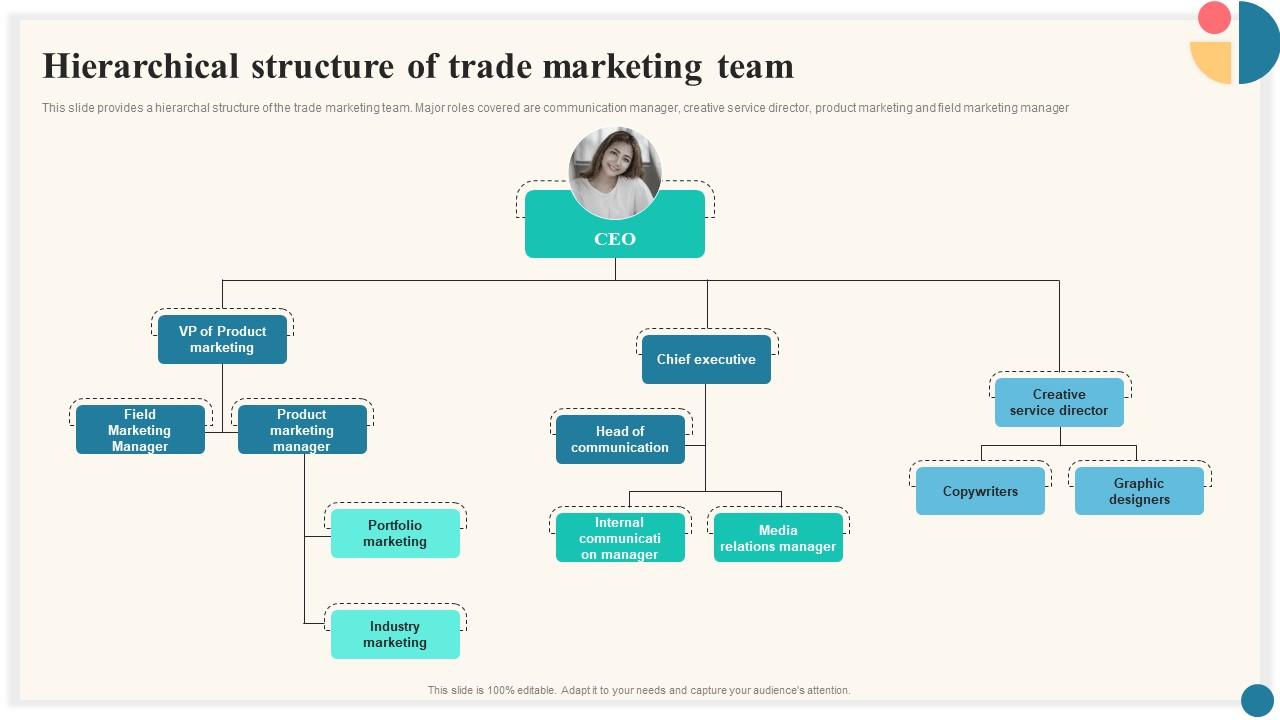
This slide provides a hierarchal structure of the trade marketing team. Major roles covered are communication manager, creative service director, product marketing and field marketing manager
People who downloaded this PowerPoint presentation also viewed the following :
Hierarchical Structure Marketing Team Trade Marketing Plan To Increase Market Share Strategy SS with all 9 slides:
Use our Hierarchical Structure Marketing Team Trade Marketing Plan To Increase Market Share Strategy SS to effectively help you save your valuable time. They are readymade to fit into any presentation structure.
FAQs for Hierarchical Structure Marketing Team Trade Marketing Plan To Increase Market
Start with your promotional calendar - trade allowances, co-op ads, volume incentives that actually drive sales. Building solid relationships with distributors and retailers is honestly make-or-break territory. You can't skip the merchandising support and sales training either. Performance analytics help you see what's actually working vs what's just burning cash. Map out your key retail partners first and figure out their specific needs - that's where I'd put my money initially. Oh, and don't underestimate how much hand-holding some of these partnerships need.
Basically you want your trade stuff to match whatever you're telling consumers. Same messages, same look - don't let your trade team go completely off-brand (seriously, I've watched companies torpedo themselves doing this). Share your consumer campaign materials with the trade folks so they can adapt them for retailer meetings. Your sales team needs to actually know the current messaging too, not some outdated pitch from six months ago. Oh, and sync up your calendars! If you're launching something big to consumers, your trade promotions should support that timing. Think of retailers as part of your brand story, not just random middlemen.
Honestly, data analytics is like having a crystal ball for your trade marketing. Instead of guessing what works, you'll actually see which promos boost sales and which retailers are killing it. Companies blow so much cash on hunches - it's crazy. Track promotional lift first, then expand from there. You can predict seasonal trends, optimize where you're spending trade dollars, and measure real ROI on campaigns. Oh, and you'll probably spot opportunities before your competition does too. Start simple though - nail one metric before going wild with complex stuff.
Hey! So for measuring trade marketing - start with sell-through rates and inventory turnover, those are your bread and butter. Sales lift during promos is honestly where you'll see if it's actually working or not. Also track if retailers are actually following your display setups (spoiler: half the time they don't). Market share changes by channel matter too. Oh, and monitor your shelf space quality - eye level vs bottom shelf makes a huge difference. I'd just pick 3-4 metrics you actually care about rather than tracking everything. Set up scorecards to compare different retail partners.
Okay so for creative trade marketing - pop-up shops are huge right now, or VR demos where retailers can actually try your stuff. Gamification works too, like point systems where your partners compete for rewards (people get weirdly competitive about this stuff). Mystery shopping is surprisingly effective - adds some fun intrigue. You could also do co-op advertising where you split costs with retailers. Win-win situation there. Oh, and exclusive launches for key accounts give them something special to push. Honestly, just pick whatever feels right for your brand and test it small first. Don't go all-in immediately.
Yeah so basically every store type needs its own game plan because people shop so differently. Grocery stores are all about getting good shelf spots and those end-cap displays - plus pricing deals since it's routine stuff. Big box places? Volume discounts and seasonal setups work best. Convenience stores are pure impulse buys, so you want eye-level placement and good point-of-sale materials. Amazon's a whole different beast though - forget physical displays, you're dealing with search rankings and managing reviews. Honestly, the trick is just figuring out how your customers actually decide to buy in each place.
Honestly, trade partnerships are like the secret sauce for your marketing. Your retail partners already know their customers inside and out - way better than you ever will. So when you work together, you get access to all that juicy customer data and can actually create campaigns that hit the mark. Joint promotions are amazing too because you're splitting costs while reaching people you'd never touch otherwise. I learned this the hard way with my first startup actually. The trick is finding partners who actually align with your brand, not just anyone willing to work with you. Don't treat them like vendors - make it a real partnership.
Build solid relationships with your retailers first - that's half the battle right there. Data is your best friend here, so use sales velocity numbers and shopping patterns to back up placement requests. Create flexible planograms showing optimal shelf spots, plus eye-catching POS materials. Category management insights work great too since they prove your product boosts overall category sales. Honestly, being persistent helps more than people admit. Oh, and tie your trade spend directly to specific placement deals instead of just general promo support - way more bang for your buck that way.
Definitely go with Salesforce for your CRM stuff - it's solid for retailer relationships. For tracking campaign ROI, check out Kantar or Nielsen's trade promotion tools. Power BI or Tableau are game-changers for visualizing your sell-through data. That's honestly where most teams have their biggest breakthrough moments. Mobile apps for field reps are clutch too - they can grab real-time shelf pics and see what competitors are doing. My advice? Pick one good analytics platform first. I've seen too many teams try to roll out everything simultaneously and just confuse the hell out of everyone.
Personas are honestly game-changers for trade marketing. They show you exactly which retailers to chase and what promos actually work. Budget millennials? Hit up Target with digital campaigns, not some fancy boutique. Your Walmart pitch has to be completely different from your Whole Foods one - those customers aren't even close to the same. Map your top personas to retail channels first, that's where you'll see results. Also helps you figure out where to blow your trade budget instead of just throwing money everywhere and hoping something sticks.
Start with super clear goals - what exactly do you want retailers doing? Make sure your promo actually creates new sales instead of just cannibalizing regular prices (trust me, been there). Time it right with their calendars and busy seasons. Build in tracking from the start so you can measure ROI properly. Honestly, keep execution dead simple - complex promos just collect dust. Negotiate win-win terms and always have a plan B ready. Oh, and definitely audit your last few promotions first to see what actually worked vs what flopped.
Dude, retailers are basically your secret weapon for trade marketing. They see everything - which displays customers actually stop at, what promos are duds, if your packaging is a nightmare to stock. Those store managers deal with cranky customers all day, so they know exactly what's not working. Use what they tell you to fix your timing, redo displays, maybe switch up where you position stuff. Honestly, some of the best insights I've gotten came from just chatting with store staff during visits. Set up regular calls with your key partners and don't just nod along - actually take notes when they're venting about what's happening on the floor.
Honestly, social media has flipped trade marketing on its head. Your distributors and retailers can now talk directly to customers and build their own followings - which is pretty wild when you think about it. They're not just moving your products anymore; they're actually influencing buying decisions through their posts and content. You'll get way better insights into what's happening at retail too through all the social data. The smart move? Start treating these partners like they're part of your marketing team. Help them with content strategies and make sure your trade programs actually support what they're doing online. It's a whole different game now.
Look, you gotta think way ahead of the actual seasons. Retailers are planning holiday candy displays in July - sounds crazy but that's their timeline. Map out all your category's seasonal moments first - holidays, weather shifts, back-to-school, whatever moves your products. Then work backwards 3-4 months for your trade calendar. Customize your promos and displays to match when buyers are actually making decisions, not when consumers are shopping. Make their lives easier with ready-made seasonal displays and promotional windows that don't mess with their other stuff. Weather changes are honestly just as important as major holidays for most categories.
Honestly, most people mess up by treating every retailer exactly the same when they all have totally different customers. Bad timing kills campaigns too - like if you launch something without checking what else they've got going on, you're screwed. I see this all the time. Map out what each key retailer actually cares about first. Then there's the whole ROI thing - actually track if your trade spend is working instead of just dumping money into displays and crossing your fingers. Oh, and don't ignore their calendar when planning promos. That's probably the fastest way to waste your budget.
-
Topic best represented with attractive design.
-
I didn’t expect such a good service for the money I am paying. But, they exceed my expectations. Great work SlideTeam.