

Hologram Technology Powerpoint Ppt Template Bundles





Try Before you Buy Download Free Sample Product
 Impress Your
Audience
 100%
Editable
 Save Hours
of Time


Our Hologram Technology Powerpoint Ppt Template Bundles are topically designed to provide an attractive backdrop to any subject. Use them to look like a presentation pro.
People who downloaded this PowerPoint presentation also viewed the following :
Content of this Powerpoint Presentation
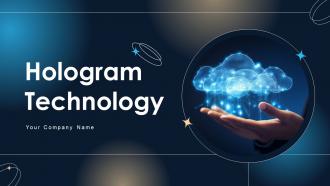
Slide 1: This slide introduces Hologram Technology. State your company name and begin.
Slide 2: This slide showcases the use of 5g technology in improving hologram technology. Its aim is to understand the benefits of incorporating 5g in holographic.
Slide 3: This slide displays the hologram technology to conduct virtual meetings with industry 4.0. Its aim is to make the training process smooth with virtual hologram imaging.
Slide 4: This slide showcases how to implement hologram with AI technology. Its aim is to personalise experience and create transformative decisions.
Slide 5: This slide presents the evolution of hologram technology. Its aim is to understand the development of hologram technology.
Slide 6: This slide showcases the importance of hologram technology in education sector. Its aim is to facilitate learning behaviour and promote the use of cutting edge technology.
Slide 7: This slide displays the analysis of hologram and augmented reality. Its aim is to compare features of both the technologies. This slide includes image, hardware, popularity, types and more.
Slide 8: This slide showcases the key components of hologram technology. Its aim is to use these components to generate an holographic image.
Slide 9: This slide displays the application of industry 4.0 with hologram technology. Its aim is to promote the use and benefits of hologram technology while controlling digital device.
Slide 10: This slide showcases the hologram technology cost breakdown analysis. Its aim is to forecast the reduction in the cost of hologram technology projects.
Slide 11: This slide displays the benefits of hologram technology. Its aim is to help in technology advancement. This slide includes visual experience, authentication, visualise data and research.
Slide 12: This slide showcases the segmented hologram technology in global market. Its aim is to segment the hologram on the basis of dimensions, holographic image, technology and end user.
Slide 13: This slide displays the technological growth of display in global market. Its aim is to look for new developments and check the growth factors.
Slide 14: This slide showcases the inspection and quality maintenance with hologram technology. Its purpose is to keep a check on the quality and reduce issues.
Slide 15: This slide presents the case study of hologram technology in event. Its aim is to demonstrate the abstract concept of product in 3D to the attendees.
Slide 16: This slide showcases the market growth use of medical hologram technology. Its aim is to expand use of devices to create devices at cheaper costs.
Slide 17: This slide showcases Hologram augmented reality technology icon.
Slide 18: This slide displays 3D electronic hologram technology icon.
Slide 19: This slide showcases Communication program for hologram technology icon.
Slide 20: This is a Thank You slide with address, contact numbers and email address.
Hologram Technology Powerpoint Ppt Template Bundles with all 28 slides:
Use our Hologram Technology Powerpoint Ppt Template Bundles to effectively help you save your valuable time. They are readymade to fit into any presentation structure.










FAQs for Hologram Technology Powerpoint
So basically you split a laser beam - one hits your object, the other's a reference. When they meet on film, they create this interference pattern that captures way more info than regular photos (like the actual wave phases, not just brightness). That's the crazy part honestly. Then when you shine light back through it, boom - 3D image pops out because it reconstructs the original light waves. I still think it's wild how that works. You should definitely check out some interference experiment videos if you want to see it in action - way easier to grasp visually.
So regular photos just capture how bright light is on a flat surface, right? But holograms are way cooler - they record both the brightness AND the phase of light waves. That means they're capturing actual 3D info. When you look at a hologram, you can move around and see different angles, depth, all that stuff. It's like the original light field gets reconstructed. I saw one at a science museum once and it blew my mind. You don't need glasses or anything - the 3D information is literally stored in the hologram itself.
So for hologram stuff, you've got three main materials to pick from. Photopolymers are definitely where I'd start - way more forgiving and no messy chemical processing. Silver halide films still give the sharpest results though, just more of a pain to work with. There's also dichromated gelatin but that's honestly pretty advanced/finicky. Oh and you'll need some kind of metallic backing for reflective ones. I'd probably grab some photopolymer materials from Covestro or DuPont first - good way to test the waters without getting too deep into it.
Dude, hologram tech is blowing up in entertainment - they're literally bringing dead musicians back for concerts which is honestly pretty creepy but cool. Healthcare's where the real action is though. Medical schools are ditching boring textbooks for 3D holographic anatomy models, and it's working way better. Retail's testing holographic product demos, cars are putting them in dashboards for GPS stuff. Oh, and if you're thinking about getting into this field? Go healthcare first. That's where the money actually is right now, plus you'd be doing something useful instead of just making dead celebrities sing again.
Dude, holograms in medicine are actually insane. Doctors can turn your MRI or CT scans into floating 3D models they walk around and examine from every angle. Way better than squinting at those flat slice images, right? Surgeons love them for practice runs - they'll literally rehearse on a holographic version of your exact organs before cutting you open. Honestly sounds like sci-fi but it's real. They're also great for explaining stuff to patients since seeing your actual heart in 3D beats confusing medical diagrams. Not sure how common they are yet, but definitely ask if your hospital has them!
Dude, the computational power thing is insane - you're basically rendering massive 3D datasets in real-time. Current displays can't handle the resolution we actually need either. Processing speeds aren't even close to where they should be for commercial use. And don't get me started on viewing angles, they're terrible right now. You move like two inches and the image falls apart. If I were you, I'd definitely dig into the computational challenges first. That's honestly where all the money and innovation needs to go. The display tech will probably catch up eventually.
Honestly, holograms are like magic for marketing - people literally stop and stare. You can show 3D products without having the real thing there, which is crazy helpful for demos. Interactive floating visuals? Your customers will definitely post that stuff online. Multiple product versions, impossible features - all displayable without extra inventory. The novelty factor alone gets people talking. I'd probably start with just one holographic setup at a trade show or busy store area first. See how folks react before going all-in, you know? It's way more memorable than boring old posters.
Dude, holographic storage is getting crazy good right now. Microsoft and some smaller companies are cramming hundreds of terabytes into sugar cube-sized crystals - which honestly sounds like sci-fi but it's real. The read/write speeds used to suck but they've fixed that bottleneck. Error correction is way better too. Materials don't break down as fast anymore, which was always annoying. If you're doing that long-term archival thing for your project, definitely watch this space. Could be a game changer in like two years, maybe less.
Yeah, hologram meetings are actually becoming a thing! Companies like Microsoft have AR headsets that let you project 3D versions of people into the same virtual space. It's wild - way better than staring at those awful Zoom squares all day. The tech uses depth cameras to capture everyone and beam them around in real-time. You need pretty good internet and the right gear though. Honestly feels like we're living in the future sometimes. If your team's curious, maybe check out some mixed reality platforms? Still early days but definitely beats regular video calls.
So holograms are gonna be pretty power-hungry - all that specialized hardware running 24/7. Manufacturing them needs rare earth elements too, which mining-wise isn't great. The e-waste thing when people upgrade is rough, but honestly that's most tech these days. They could cut down on printed stuff though, and maybe reduce business travel if remote meetings get good enough. Short sentences feel weird to write but whatever. If you're looking into this stuff, definitely grill vendors about energy efficiency and whether they'll actually take the old units back for recycling.
So basically, interactive holograms are like video games - your audience can gesture, touch stuff, or walk around to change what's happening in real-time. Static ones? They're just fancy 3D movies that play the same way every time. Don't get me wrong, even static ones look pretty sick. But with interactive, people can rotate 3D models, trigger animations, or actually work with the hologram during your presentation. Honestly, if you're trying to impress clients or make boring data more interesting, go interactive. It turns people from just sitting there watching into actually participating. Way more engaging.
Think of AR as where companies are learning everything about 3D interfaces before holograms actually happen. All those gesture controls you see in AR apps? That's them figuring out how we'll interact with real holograms later. Plus AR is solving the hard stuff - eye tracking, head movement detection - which holograms desperately need to work right. Honestly, the software being built for AR now will probably just get ported over to holographic displays. Oh and if you're working on either tech, definitely check out what the other side is doing. Lots of crossover.
Okay so holographic tech is basically making VR way less clunky - you don't need those heavy headsets anymore. Microsoft and Magic Leap are crushing it right now with mixed reality stuff that projects holograms right into your vision. The coolest part? Multiple people can mess around with the same holographic objects at once. You get actual depth perception too, which regular VR still kinda struggles with honestly. I watched some HoloLens demos last week and it's genuinely nuts how real it looks. Definitely worth checking out if you're curious about where this tech's heading.
Dude, holograms are about to get real in the next 10 years. We're talking way better resolution and cheaper tech - finally past the gimmicky stage. Gaming and concerts will be insane with holographic stuff. Hospitals are already using 3D medical imaging you can actually walk around, which is wild. Business meetings with 3D remote colleagues? That's happening soon. AR glasses will probably make everything click together - that's my bet anyway. Companies dumping money into spatial computing are worth watching. Oh, and the entertainment applications are gonna be ridiculous once this stuff gets affordable.
Honestly, consent is the big one here - you can't just make holograms of people without asking. Privacy's another nightmare since this tech grabs so much biometric data. Identity theft becomes way too easy when someone can impersonate others that convincingly. Oh, and accessibility is tricky too - not everyone interacts with 3D stuff the same way. The deepfake potential alone should freak you out. Start with solid consent protocols and data protection before you jump into anything. This stuff can go sideways fast if you don't think it through first.
-
I am glad to have come across Slideteam. I was searching for some unique presentations and templates for my business. There are a lot of alternatives available here.
-
Happy to found you SlideTeam. You guys are value for money. Amazing slides.