Hospital kpi for emergency triage rate number of observation patients presentation slide

Rating:
90%
Hospital kpi for emergency triage rate number of observation patients presentation slide
Slide 1 of 6
Favourites Favourites

Try Before you Buy Download Free Sample Product

Audience Impress Your
Audience
Editable 100%
Editable
Time Save Hours
of Time
The Biggest Sale is ending soon in
0
0
:
0
0
:
0
0
Rating:
90%
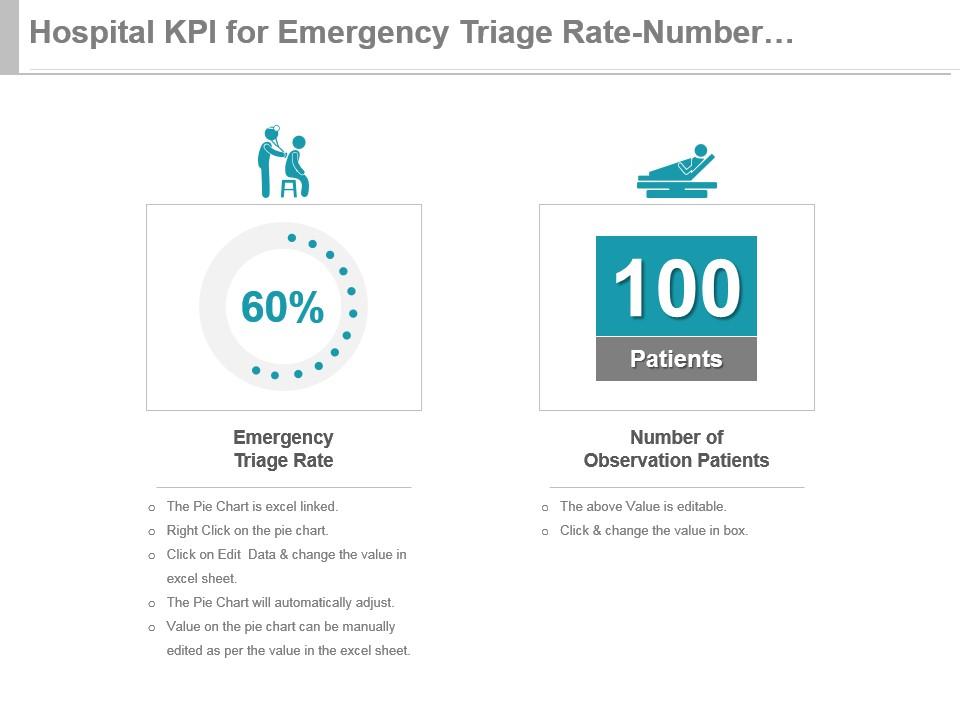
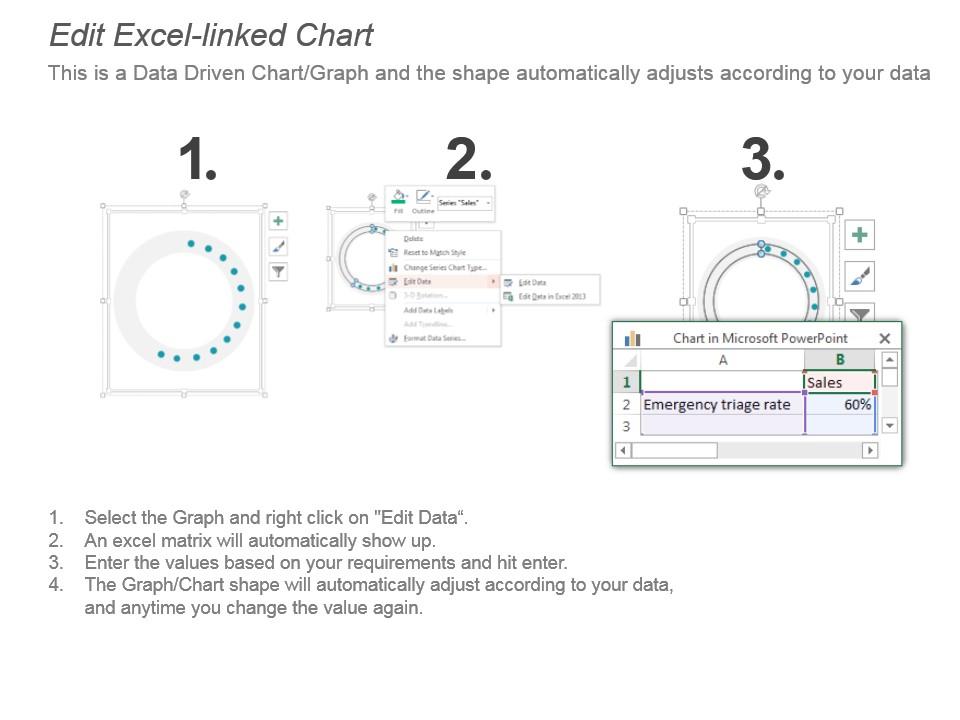
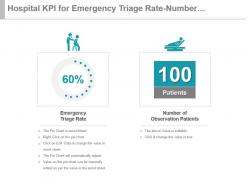
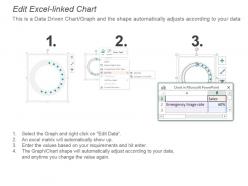
Presenting hospital kpi for emergency triage rate number of observation patients presentation slide. This presentation slide shows two Key Performance Indicators or KPIs in a Dashboard style design. The first KPI that can be shown is Emergency Triage Rate. The second KPI is Number of Observation Patients. These KPI Powerpoint graphics are all data driven, and the shape automatically adjusts according to your data. Just right click on the KPI graphic, enter the right value and the shape will adjust automatically. Make a visual impact with our KPI slides.

People who downloaded this PowerPoint presentation also viewed the following :

FAQs for Hospital kpi for emergency triage rate number of observation

Emergency triage KPIs include patient wait times, triage accuracy rates, throughput metrics, door-to-provider times, and left-without-being-seen percentages. These indicators streamline emergency department operations by identifying bottlenecks, optimizing resource allocation, and enhancing patient flow, with many hospitals finding that systematic KPI monitoring ultimately delivers faster care delivery and improved patient outcomes.

Emergency triage effectiveness can be measured through patient wait times, accuracy of priority assignments, door-to-provider intervals, and patient flow throughput rates. These KPIs enable hospitals to streamline operations by identifying bottlenecks, reducing overcrowding, and improving care delivery, with many emergency departments finding that data-driven triage optimization significantly enhances patient outcomes and operational efficiency.

Patient wait time serves as a critical triage performance indicator, reflecting how effectively emergency departments prioritize cases, allocate resources, and manage patient flow during peak volumes. By tracking wait times across different acuity levels, hospitals can identify bottlenecks, optimize staffing patterns, and enhance overall operational efficiency, ultimately delivering faster care and improved patient satisfaction in increasingly demanding healthcare environments.

Assessing triage classification accuracy involves comparing provider decisions against established protocols, tracking concordance rates between nurses and physicians, and monitoring patient outcome correlations with assigned urgency levels. Healthcare organizations measure inter-rater reliability through regular audits, analyze over-triage and under-triage rates, and utilize retrospective chart reviews, ultimately delivering improved patient safety and standardized emergency care across providers.

Staffing levels significantly impact triage KPIs by affecting patient wait times, assessment accuracy, throughput rates, and resource allocation efficiency. Adequate staffing enables hospitals to maintain optimal triage-to-treatment times, reduce bottlenecks, and improve patient satisfaction scores, while understaffing can compromise care quality and increase emergency department overcrowding, ultimately affecting overall operational performance.

Technologies that enhance triage KPI tracking include electronic health records (EHR), real-time dashboards, RFID patient tracking, automated alert systems, and mobile clinical applications. These solutions streamline data collection by monitoring wait times, patient flow, and resource utilization automatically, with many hospitals finding that integrated platforms deliver faster decision-making and improved emergency department efficiency.

Balancing speed and accuracy in triage requires implementing structured protocols, real-time decision support systems, continuous staff training, and regular performance monitoring. Through standardized assessment tools and technology integration, healthcare facilities streamline patient flow while maintaining clinical precision, with many emergency departments finding that systematic approaches ultimately deliver faster care decisions and improved patient outcomes without sacrificing safety.

Patient outcomes connect to triage KPIs through mortality rates, length of stay, readmission frequencies, and patient satisfaction scores, with accurate Emergency Severity Index classifications directly impacting treatment timelines. Hospitals tracking door-to-provider times alongside clinical outcomes find that faster triage decisions reduce complications and improve recovery rates, ultimately delivering better care quality while optimizing resource allocation and operational efficiency.

Data for triage KPIs is collected through electronic health records, patient tracking systems, time-stamping technologies, and automated monitoring tools that capture wait times, acuity levels, and patient flow metrics. However, challenges include data integration across multiple hospital systems, ensuring real-time accuracy during high-volume periods, and maintaining consistent documentation standards, with many healthcare facilities finding that standardized protocols and staff training ultimately enhance data reliability and operational efficiency.

Emergency triage KPIs in high-volume departments typically benchmark door-to-triage times under 10 minutes, triage-to-physician assessment within 30 minutes for urgent cases, and accuracy rates above 85% for priority assignments. These benchmarks enable hospitals to streamline patient flow, reduce wait times, and enhance care quality, with many large medical centers finding that consistent KPI monitoring ultimately delivers improved patient outcomes and operational efficiency.

KPIs enhance clinician training and performance in triage by identifying skill gaps, tracking decision accuracy, measuring response times, and monitoring patient outcome correlations. Through performance dashboards and targeted feedback systems, hospitals can deliver personalized training modules, simulate high-pressure scenarios, and benchmark individual progress against department standards, ultimately improving diagnostic precision and patient care quality.

Patient feedback provides critical insights into triage efficiency, communication effectiveness, wait time perceptions, and overall satisfaction with emergency care delivery. Through structured surveys and real-time feedback systems, hospitals enhance triage protocols, improve staff communication, and optimize patient flow processes, with many healthcare systems finding that patient perspectives reveal operational blind spots and drive measurable improvements in care quality.

Real-time data analytics enhances emergency triage efficiency by automating patient prioritization, predicting resource needs, and identifying bottlenecks before they escalate. Through continuous monitoring systems, hospitals can streamline patient flow, reduce waiting times, and optimize staff allocation, with many emergency departments finding that predictive analytics ultimately delivers faster treatment decisions and improved patient outcomes.

Regularly updating triage KPIs ensures they remain aligned with evolving healthcare standards, patient demographics, and operational realities, while reflecting new medical protocols and technology integrations. This strategic approach enables hospitals to maintain accurate performance measurement, optimize resource allocation, and enhance patient outcomes, with many emergency departments finding that quarterly reviews deliver improved efficiency and better clinical decision-making.

Triage KPIs vary significantly between urban and rural hospitals, with urban facilities prioritizing volume metrics like patient throughput and wait times, while rural hospitals emphasize resource optimization and transfer coordination. Urban emergency departments typically focus on reducing overcrowding and improving door-to-provider times, whereas rural settings concentrate on stabilization rates and inter-facility transport efficiency, ultimately reflecting each environment's unique operational challenges and patient demographics.

Ratings and Reviews

90% of 100
Review Form
Write a review
Most Relevant Reviews
  1. 100%

    by Alexander Ramirez

    Excellent Designs.
  2. 80%

    by Darrin Porter

    Awesomely designed templates, Easy to understand.

2 Item(s)

per page: