How visually map content strategy brand content map roadmap content strategy ppt styles show

Rating:
93%
How visually map content strategy brand content map roadmap content strategy ppt styles show
Slide 1 of 2
Favourites Favourites

Try Before you Buy Download Free Sample Product

Audience Impress Your
Audience
Editable 100%
Editable
Time Save Hours
of Time
The Biggest Sale is ending soon in
0
0
:
0
0
:
0
0
Rating:
93%
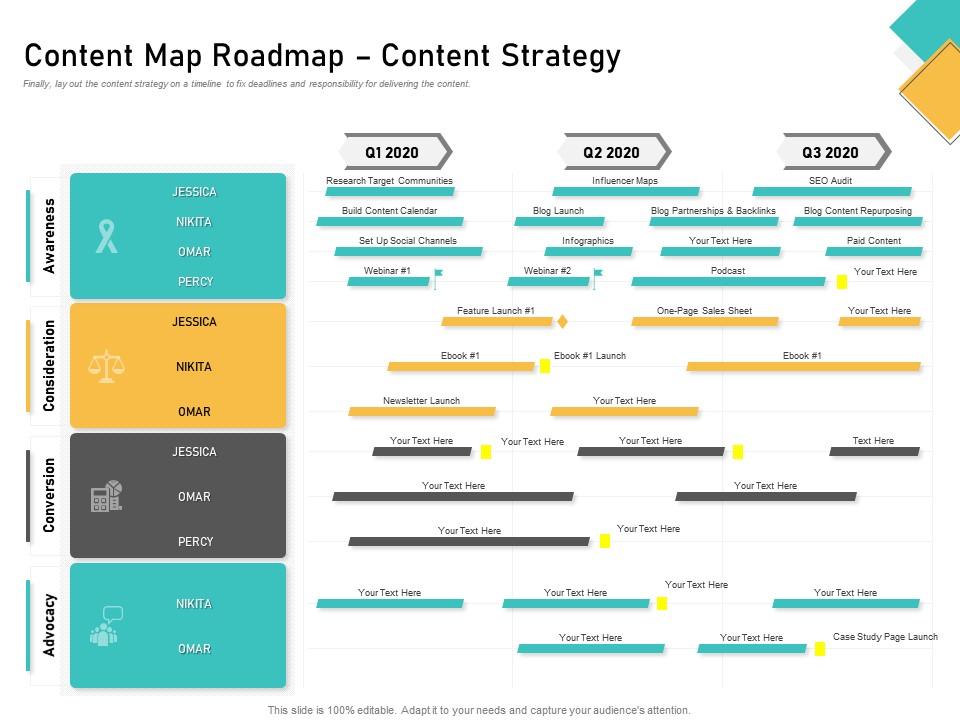
Finally, lay out the content strategy on a timeline to fix deadlines and responsibility for delivering the content. Present the topic in a bit more detail with this How Visually Map Content Strategy Brand Content Map Roadmap Content Strategy Ppt Styles Show. Use it as a tool for discussion and navigation on Conversion, Consideration, Awareness. This template is free to edit as deemed fit for your organization. Therefore download it now.

People who downloaded this PowerPoint presentation also viewed the following :

FAQs for How visually map content strategy brand content map roadmap content strategy

Effective content strategies for online presentations include audience analysis, clear objectives, engaging narrative structure, interactive elements, and performance metrics. These components work together by ensuring targeted messaging, maintaining viewer attention through polls and Q&As, and delivering measurable outcomes, with many organizations finding that strategic content planning significantly enhances audience engagement and presentation effectiveness.

Businesses can leverage content strategy to enhance presentation engagement by understanding audience needs, creating relevant narratives, incorporating interactive elements, and aligning messaging with business objectives. Through strategic content planning, organizations streamline their presentations while delivering personalized experiences, ultimately improving audience retention, fostering stronger connections, and achieving measurable presentation outcomes.

Audience analysis serves as the foundation for effective presentation content strategy, informing messaging approach, content depth, visual design choices, delivery format, and engagement tactics. Through demographic research, behavioral insights, and preference mapping, organizations can tailor presentations that resonate with specific stakeholder groups, ultimately delivering higher engagement rates and stronger business outcomes.

Visual storytelling techniques can be integrated through narrative arcs, data visualization, consistent visual themes, character-driven scenarios, and progressive disclosure methods. These approaches enhance audience engagement by transforming complex information into compelling visual journeys, with many organizations finding that strategic visual narratives increase presentation retention rates and drive stronger stakeholder buy-in.

Key metrics include audience engagement rates, message retention scores, conversion rates, time spent viewing content, and feedback quality assessments. These indicators streamline performance evaluation by measuring attention capture, comprehension effectiveness, and action generation, with many organizations finding that combining quantitative data with qualitative insights ultimately delivers comprehensive understanding of presentation impact and strategic communication success.

Template design significantly influences content strategy effectiveness by ensuring visual consistency, accelerating content creation, reinforcing brand identity, and enabling scalable presentation development across teams. Through strategic design elements, organizations streamline their presentation workflows, enhance audience engagement, and maintain professional standards, with many companies finding that well-designed templates reduce preparation time while improving message clarity and visual impact.

Different presentation formats significantly influence content strategy by requiring distinct approaches to audience engagement, interaction design, and content delivery mechanisms. Webinars demand more visual storytelling and interactive elements, in-person presentations allow for real-time feedback and dynamic adjustments, while hybrid formats require strategic content layering to serve both physical and virtual audiences simultaneously, ultimately delivering broader reach and enhanced audience experiences across multiple touchpoints.

Consistency in messaging across presentation templates requires establishing clear brand guidelines, standardized content frameworks, unified visual hierarchies, consistent terminology databases, and centralized template libraries. These practices streamline content creation by ensuring uniform tone, messaging, and design elements, while enabling teams across departments to deliver cohesive brand experiences, ultimately enhancing organizational credibility and professional impact.

A content strategy incorporates feedback mechanisms through audience surveys, analytics tracking, A/B testing different presentation formats, peer review processes, and social media engagement monitoring. Through these systematic approaches, organizations streamline content refinement, enhance audience alignment, and deliver increasingly effective presentations, with many marketing teams finding that continuous feedback loops ultimately boost engagement rates and competitive positioning.

Essential tools for presentation content strategy include content management systems, analytics platforms, design software, collaboration tools, and template libraries. These resources streamline content planning, audience analysis, and visual consistency while enabling teams to track engagement metrics, maintain brand standards, and accelerate production workflows, ultimately delivering more impactful presentations and measurable business outcomes.

Trending topics and current events can be integrated through real-time data incorporation, timely case studies, industry-specific news references, social media trend analysis, and seasonal content alignment. By weaving current developments into presentations, organizations enhance audience engagement, demonstrate market awareness, and establish thought leadership, with many companies finding that timely, relevant content significantly increases audience retention and brand credibility.

Content creators face challenges including maintaining consistent messaging across formats, adapting content depth for different audiences, managing resource allocation, ensuring visual coherence, and coordinating timeline dependencies between formats. These obstacles present both creative and logistical complexities, with many organizations finding that strategic planning tools and cross-functional collaboration ultimately streamline production workflows while delivering more cohesive, impactful presentations.

Storytelling frameworks enhance content strategy effectiveness by creating emotional connections, improving information retention, and guiding audience through logical progressions that build toward clear calls-to-action. Through narrative structures like problem-solution or hero's journey, businesses streamline complex presentations, deliver more memorable messages, and ultimately achieve higher engagement rates, with many organizations finding that story-driven content significantly increases audience buy-in and decision-making speed.

SEO plays a crucial role in content strategy by enhancing discoverability through strategic keyword integration, optimized metadata, descriptive file naming, and search-friendly formatting of presentation materials. When organizations optimize their slide decks, infographics, and visual content for search engines, they significantly increase organic visibility, drive targeted traffic, and ultimately expand their audience reach while delivering measurable content marketing results.

Content strategy adapts to global cultural contexts by incorporating localized messaging, culturally appropriate visual elements, region-specific examples, translated materials, and adapted communication styles that respect local business customs. Through strategic cultural research and collaboration with regional teams, organizations deliver more engaging presentations, build stronger international relationships, and achieve greater market penetration, while avoiding cultural missteps that could undermine business objectives.

Ratings and Reviews

93% of 100
Review Form
Write a review
Most Relevant Reviews
  1. 100%

    by Chester Kim

    Unique research projects to present in meeting.
  2. 100%

    by Eduardo Greene

    Awesome presentation, really professional and easy to edit.
  3. 80%

    by Charlie Reed

    Use of different colors is good. It's simple and attractive.
  4. 100%

    by Donnell Bradley

    Design layout is very impressive.
  5. 100%

    by Delmar Wagner

    Commendable slides with attractive designs. Extremely pleased with the fact that they are easy to modify. Great work!
  6. 80%

    by Darin Chen

    The content is very helpful from business point of view.

6 Item(s)

per page: