

Hr Capacity Development Powerpoint Presentation Slides





Try Before you Buy Download Free Sample Product
 Impress Your
 Audience
 100%
100% Editable
 Save Hours
 of Time


Hr Capacity Development PowerPoint Presentation Slides are ideal to frame a strategic human resource plan. Building HR capacity PowerPoint complete deck contains slides such as HRM plan, assessing the current HR capacity, forecasting HR requirements, skill gap analysis plan, organizational skills program matrix, company’s recruitment strategies, recruitment budget, etc. Process of talent management can be well explained with this content ready human resource planning presentation design. With a variety of visual and images, you can create a more engaging presentation for your audience. This allows users to plan, strategize and analyze HR policies and procedures. Develop HR strategies to close the gap. Furthermore, the ready to use human resource capacity development presentation layout is completely customizable. You can add or delete the content from templates. Our team of experts has also included icons for your convenience. Download strategic human resource development PowerPoint templates for performance and productivity improvement.
People who downloaded this PowerPoint presentation also viewed the following :
Content of this Powerpoint Presentation
Slide 1: This slide introduces HR Capacity Development. State Your Company Name and begin.
Slide 2: This slide shows Content of the presentation.
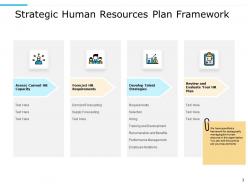
Slide 3: This slide presents Strategic Human Resources Plan Framework with categories as- Develop Talent Strategies, Assess Current HR Capacity, Forecast HR Requirements, Review and Evaluate Your HR Plan.
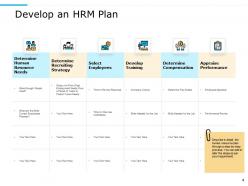
Slide 4: This slide displays Develop an HRM Plan describing in detail, the human resource plan through a step-by-step process.
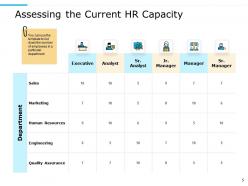
Slide 5: This slide represents Assessing the Current HR Capacity among different departments.
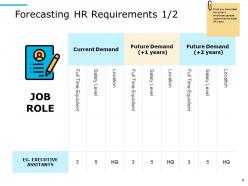
Slide 6: This slide showcases Forecasting HR Requirements with current and future demands.
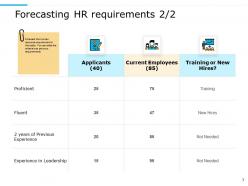
Slide 7: This is another slide for Forecasting HR Requirements.
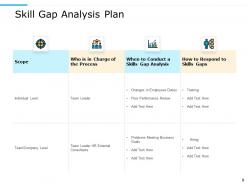
Slide 8: This slide shows Skill Gap Analysis Plan estimating the skills gap both at Individual & team level and also specify the remedial measures to be taken to fill the gap.
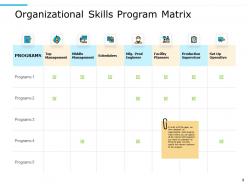
Slide 9: This slide presents Organization Skills Program Matrix where you can specify all the relevant skill programs you intend to undertake for filling the gaps and also specify the relevant audience for the program.
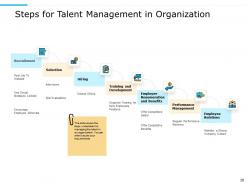
Slide 10: This slide displays Steps for Talent Management in Organization as- Recruitment, Selection, Hiring, Training and Development, Employee Renumeration and Benefits, Performance Management, Employee Relations.
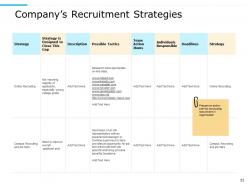
Slide 11: This slide represents Company’s Recruitment Strategic to prepare an action plan for conducting recruitment in organization.
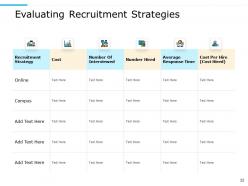
Slide 12: This slide showcases Evaluation Recruitment Strategies with categories as recruitment strategies, cost, number of interviewed, number hired, average response time and cost per hire.
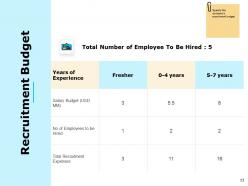
Slide 13: This slide specifies the company's Recruitment Budget.
Slide 14: This slide displays HR Capacity Development Icons.
Slide 15: This slide is titled as ADDITIONAL SLIDES for moving forward.
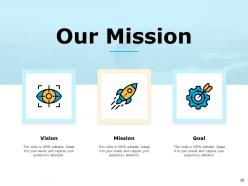
Slide 16: This is Our Mission slide with related imagery and text.
Slide 17: This is Our Team slide with names and designation.
Slide 18: This is About Us slide to show company specifications etc.
Slide 19: This is a Quotes slide to convey message, beliefs etc.
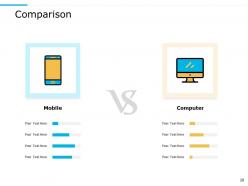
Slide 20: This is a Comparison slide to state comparison between commodities, entities etc.
Slide 21: This is a Financial slide. Show your finance related stuff here.
Slide 22: This slide displays SWOT Analysis.
Slide 23: This is Our Goal slide. Show your goals here.
Slide 24: This is a Timeline slide to show information related with time period.
Slide 25: This is a Thank You slide with address, contact numbers and email address.
Hr Capacity Development Powerpoint Presentation Slides with all 25 slides:
Use our Hr Capacity Development Powerpoint Presentation Slides to effectively help you save your valuable time. They are readymade to fit into any presentation structure.

FAQs for Hr Capacity Development
Start by figuring out what skills your team actually lacks - don't just throw generic leadership training at everyone (honestly, those workshops are usually terrible). Build learning paths that target those specific gaps. Mix technical HR stuff with soft skills like communication and change management. Set up mentoring between your team members, maybe bring in external coaches for senior people. Track how it's working through performance data and feedback from employees. Oh, and don't try to do everything at once - pick one area first then build from there. Makes it way less overwhelming.
Start by figuring out what skills your HR team actually has vs what you need. Survey everyone, look at job descriptions, and be real about how they're doing with recruiting, employee issues, strategic stuff. Honestly, getting people to admit their weaknesses is the worst part of this whole thing. Compare yourselves to other companies your size - see where you're behind on both technical skills (data analysis) and people skills (managing change). Make a simple chart showing the gaps. Focus on the biggest mismatches first.
Honestly, tech is huge for building up your HR team. Learning management systems can deliver targeted training to each person. AI tools help spot skill gaps you might miss otherwise. Analytics let you track who's actually improving in real time - pretty neat stuff. The best part? You can ditch those boring one-size-fits-all workshops. Instead, create personalized learning paths based on each person's role and goals. VR training for soft skills is getting really good too (still feels weird though, not gonna lie). Start by checking what digital tools you already have access to, then match them up with your team's biggest needs.
Make learning part of the regular routine instead of this extra thing people dread. I always share what I'm reading or dumb mistakes I've made - honestly, people notice way more than you'd think when you're genuinely curious about stuff. Set up knowledge-sharing sessions where your team teaches each other. Short ones work fine. Celebrate when someone actually uses a new skill or goes out of their way to learn something. Here's the kicker though - you've got to give them real work time for learning and then protect it when deadlines hit. Otherwise it's just lip service.
Look at both hard numbers and gut-check stuff. Pre/post training assessments are obvious but solid. Track how fast new people get productive - bosses eat that up. Internal promotions and retention tell you if skills actually stick. 360 feedback's clutch too. But honestly? Engagement surveys matter more than people think. I've seen super skilled teams bail because they're miserable. Short pulse surveys work better than those marathon annual ones nobody fills out properly. Check these quarterly so you can pivot fast when something's off.
Honestly, pairing junior HR people with experienced ones works great - both inside your company and out. Start small with just a few pilot pairs first though. Set some actual goals together like improving recruiting skills or learning comp analysis, then do regular check-ins to see how it's going. The structure part is key from what I've seen, but don't make it too rigid or people will hate it. Oh, and reverse mentoring is pretty cool too - having younger staff teach the senior folks about digital stuff. Makes everyone feel valued. Track progress but keep things flexible enough that real relationships can actually form naturally.
Ugh, honestly the cultural stuff will mess with your head the most. Each country has completely different work expectations and legal requirements. Language barriers slow everything down during training. Time zones make scheduling a total pain. What crushes it in your home office might bomb somewhere else - I've seen it happen so many times. Skill levels between regions are all over the place too. Start with small pilot programs first, maybe in 2-3 key spots. Get your local HR people involved from day one, and give yourself way more time than you think for adapting everything culturally.
Honestly, just weave D&I throughout the whole thing instead of treating it like a checkbox. Get diverse facilitators and speakers - way more interesting that way anyway. Your content should include different perspectives and case studies from various backgrounds. Design with different learning styles in mind too. Oh, and create spaces where people can actually talk about bias without walking on eggshells. I'd start by auditing what you've got now to see where you can naturally fold in more inclusive stuff. Don't make it feel tacked on at the end - that's when it gets awkward and people tune out.
Oh man, engagement makes or breaks everything in HR development. I've watched so many training programs just die because nobody cared enough to actually use what they learned. When people are genuinely engaged though? They jump into learning opportunities. Actually retain the skills. Use them daily instead of forgetting by next week - which honestly happens way too often. Plus engaged employees become your best advocates internally, sharing knowledge and mentoring others without you even asking. My advice? Get people excited and invested first. Then build your development programs on top of that foundation. You'll actually see results instead of wasted budget.
Okay so you need feedback at different stages - definitely do surveys right after each session. Then hit them up again in like 30-60 days to see what they actually remember (I'm terrible at remembering to do this part but it's where you get the real insights). Get their managers involved too since they'll notice if people are actually changing how they work. Oh and don't forget the trainers themselves - they catch stuff you totally miss. The whole thing only works if you actually make changes based on what people tell you though. Otherwise it's just busywork.
Honestly, skip the one-time training sessions - they're pretty useless. What actually works is ongoing practice with real stuff your team deals with. Set up role-playing for those cringe conversations nobody wants to have. Pair your seasoned people with newbies for mentoring. 360 feedback is clutch too, even though it can sting a bit. The whole point is giving people space to screw up without it mattering. I'd start with maybe monthly workshops? Oh, and make sure people actually feel safe to be awkward while they're learning.
Honestly, partnering up can be a game-changer for building HR capacity. Universities are great for research and finding talent. Consulting firms can handle specialized training you don't have in-house. I've seen some wild cross-industry collaborations that actually worked - stuff nobody would've predicted. Other companies might share best practices if you ask nicely. The trick is figuring out what you're missing first, then finding organizations that are strong in those exact areas. Whether it's tech skills, different perspectives, or just fresh expertise, there's probably someone out there who'd want to collaborate.
So basically, HR development makes your team way more flexible when stuff hits the fan. Cross-training and leadership programs turn your people into Swiss Army knives - they can handle whatever gets thrown at them. The cool part? Good HR systems spot skill gaps before they blow up into real problems. I've seen companies totally fail at this, honestly. You'll build better change management too, plus people start actually wanting new challenges instead of running from them. Map what skills you have now versus what you'll need later. Then just build programs to fill those holes.
Honestly, remote work flipped everything upside down for HR training. Most companies are still figuring it out, tbh. You can't just do those big classroom sessions anymore - people need bite-sized stuff they can actually use when they're stuck on something. Virtual platforms are huge now. Manager training became way more important too since leading remote teams is totally different. I'd start by looking at what you've got and figuring out what's completely broken for remote work. The whole one-size-fits-all approach? Yeah, that's dead. Everything needs to be more personalized and accessible.
Honestly, break up those boring classroom sessions with bite-sized modules people can actually digest. VR training for awkward stuff like firing someone or handling complaints is pretty cool - way better than role-playing in front of everyone. Let your team teach each other in small groups, and throw in some competitive elements because apparently adults still love gold stars and leaderboards. Mobile learning's huge since people will literally study during their commute if you make it easy enough. Oh, and chatbots for quick HR questions save everyone time. Just ask your team what they prefer first - some people hate gamification while others eat it up.
-
Awesomely designed templates, Easy to understand.
-
Informative presentations that are easily editable.
-
Unique design & color.
-
Much better than the original! Thanks for the quick turnaround.
-
Awesomely designed templates, Easy to understand.