Human capital management dashboard with attrition rates

Rating:
87%
Human capital management dashboard with attrition rates
Slide 1 of 2

or

Favourites Favourites

Try Before you Buy Download Free Sample Product

Audience Impress Your
Audience
Editable 100%
Editable
Time Save Hours
of Time
The Biggest Sale is ending soon in
0
0
:
0
0
:
0
0
Rating:
87%
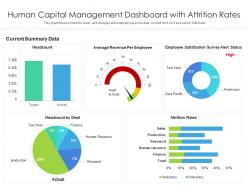
Introducing our Human Capital Management Dashboard With Attrition Rates. set of slides. The topics discussed in these slides are average revenue per employee, employee satisfaction survey alert status. This is an immediately available PowerPoint presentation that can be conveniently customized. Download it and convince your audience.

FAQs for Human capital management dashboard

So you'll want the basics covered first - talent acquisition, performance management, learning & development, succession planning. Compensation strategies and employee engagement stuff too, obviously. Workforce analytics is honestly where the magic happens though - gives you actual data instead of just guessing what's wrong with your team. But here's the thing: none of this matters if everything's working in silos. I'd start with auditing what you already have. Figure out your biggest gaps that are actually hurting business goals. Don't try to fix everything at once or you'll go crazy.

Track your turnover costs first - that's usually the easiest win to show your boss. Compare what you're spending (software, training time, all that) against what you're saving from people actually staying and faster hiring. I'd grab maybe 3-4 metrics that actually matter to your company and check them every quarter. Employee productivity, engagement scores, time-to-fill roles. Revenue per employee is solid too, though that one can be tricky depending on your industry. Honestly, the math part gets pretty interesting once you start digging into it. Just don't try to track everything at once or you'll go crazy.

Look, talent acquisition is basically everything when it comes to building your team. You're not just filling open roles - you're literally shaping what your company becomes. Get the hiring wrong and it's like... well, imagine casting the wrong actors for a movie. Total disaster. The people you bring in today? They'll determine how innovative you are, how well teams perform, whether you can actually compete. So yeah, definitely think beyond just "we need bodies in seats right now." Your recruitment strategy should match where you want the business to go long-term. Otherwise you'll end up with a workforce that can't grow with you.

Honestly, tech has totally flipped HR on its head. Everything's data-driven now - you can see employee engagement happening live, AI handles recruiting and reviews, plus people just do their own HR stuff through portals. COVID really pushed this forward too since everyone suddenly needed remote onboarding. Those old clunky HR systems? Gone. Cloud platforms give you way better analytics and can actually predict who's about to quit, which is pretty wild. I'd start by looking at what manual processes you're still grinding through that could be automated instead.

Honestly, I'd start by looking at who's already crushing it through performance reviews and getting feedback from their teams. Assessment centers are solid for testing leadership skills, but sometimes the real gems show up when you throw people into challenging projects they've never done before. That's where you see who actually steps up. Set up mentoring programs and rotate high-potential folks through different departments so they get the full picture. Oh, and don't just wing it when promotion season hits - track how everyone's developing so you're not scrambling. Way better than promoting based on whoever speaks up loudest in meetings.

Look, engaged employees just perform better - it's that simple. They stick around longer, which saves you a fortune on hiring. Better productivity too. Your customers actually get decent service because people give a damn about their work. I've seen companies totally transform their numbers just by getting this right. The ROI becomes obvious pretty fast once you track it. Focus on three things: regular feedback, growth paths, and actually recognizing good work. Those move the needle more than anything else. Oh, and don't overthink it - sometimes it's the basic stuff that makes the biggest difference.

So here's the thing - D&I actually pays off in hard numbers. You'll pull from a way bigger talent pool when recruiting, and people stick around longer when they feel like they belong. Diverse teams just make smarter decisions, period. Different backgrounds = different ways of tackling problems. Oh, and innovation goes up too since people aren't scared to pitch weird ideas. I'd honestly focus less on counting demographics and more on tracking stuff that matters - like turnover rates, how engaged your teams are, actual performance metrics. That's where you'll see if it's working.

Honestly, it comes down to three main things. Pay people what they're actually worth - if you're cheap, they'll bounce for better offers. Career growth is huge too. People want to see where they're going, so give them real advancement paths and training opportunities. But here's the thing that really matters: your workplace culture can't suck. Forget the pizza parties - nobody cares about that anymore. Flexible schedules, genuine recognition, and managers who don't micromanage? That's what keeps people around. Oh, and definitely ask your best employees what would make them stick around long-term. They'll tell you exactly what's missing.

Honestly, it's all about making learning feel exciting instead of like another chore on their plate. Give people actual time for it - even a couple hours each month helps. When someone messes up, turn it into a teaching moment rather than pointing fingers. Leaders need to do this stuff too, not just preach it. Try lunch-and-learns or pair people up for mentoring. Oh, and definitely show that learning actually leads somewhere - like promotions or better projects. People need to see that investing in themselves pays off. Recognition goes a long way too when someone's really putting in effort to grow.

Honestly, you'll want to get solid at data analytics first - measuring talent metrics and ROI is pretty much everything now. Strategic thinking matters too so you can actually connect workforce planning to what the business needs. But here's the thing - don't ignore the people side. Communication and change management skills are what'll get leadership and employees on board. Oh, and you definitely need to be comfortable with tech since most HCM stuff runs through digital platforms these days. I'd figure out which area you're shakiest in and start there.

Look at your hiring patterns and turnover data - that's your starting point. Big data shows you which roles you'll need and when, plus what skills gaps are coming. Way better than just winging it, honestly. I'd also dig into performance trends and retention stuff for succession planning. Oh, and exit interviews are gold mines for this kind of analysis. Even basic number-crunching on workforce demographics beats making decisions in the dark. You don't need fancy software right away either - start simple and build from there.

Honestly, data migration is gonna be your biggest nightmare - all that old messy info never transfers as cleanly as you'd hope. Plus getting people to actually USE the new system? Good luck with that. Everyone's gonna whine about learning new processes, especially managers who think the old way was perfectly fine. Oh, and don't believe vendors when they say integration will be seamless - your payroll system will probably throw a fit. I learned this the hard way last year. Set aside way more training time than you think you need, and maybe get someone who's good at handling change resistance involved early on.

So performance management is basically what ties your whole HR strategy together. You're connecting hiring decisions to development plans to who gets promoted - it all flows from those performance conversations. The data you collect helps spot your top talent for succession planning and figures out where people need more training. Plus it makes compensation decisions way more fair since you're basing raises on actual results. Though honestly, I've seen so many companies just track metrics that don't even matter to the business. Short version: make sure what you're measuring actually connects to company goals, otherwise you're wasting everyone's time.

So employer branding is just your company's reputation as a place to work - what people think before they even apply. Strong branding pulls in candidates who actually match your culture, which cuts down turnover big time. It's like when you see a company's Instagram and think "yeah, these seem like my people." You can compete for good talent even without the highest salaries. My old boss was obsessed with this stuff, but honestly it works. Get clear on what makes your workplace different, then show that off authentically on your careers page and social. Don't overthink it though.

Look, you need to connect your hiring to what you're actually trying to accomplish as a business. Expanding into Asia? Get people who speak the languages or know those markets. I've watched way too many companies just hire whoever and then scratch their heads when nothing moves the needle. Build your whole people strategy around your real priorities - training, performance reviews, pay structures, everything. Don't just fill seats. Honestly, most places treat HR like an afterthought when it should be giving them a serious edge over competitors.

Ratings and Reviews

87% of 100
Review Form
Write a review
Most Relevant Reviews
  1. 100%

    by O'Connor Collins

    Innovative and Colorful designs.
  2. 80%

    by Alexander Ramirez

    Enough space for editing and adding your own content.
  3. 80%

    by Cornelius Alexander

    Innovative and attractive designs.

3 Item(s)

per page: