


Identify Candidate Persona For Recruitment Marketing Employer Branding




Try Before you Buy Download Free Sample Product
 Impress Your
 Audience
 100%
100% Editable
 Save Hours
 of Time


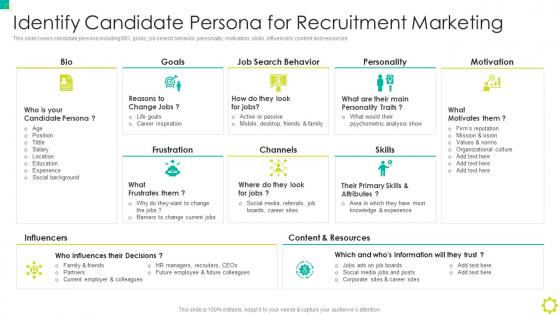
This slide covers candidate persona including BIO, goals, job search behavior, personality, motivation, skills, influencers, content and resources
People who downloaded this PowerPoint presentation also viewed the following :
Identify Candidate Persona For Recruitment Marketing Employer Branding with all 6 slides:
Use our Identify Candidate Persona For Recruitment Marketing Employer Branding to effectively help you save your valuable time. They are readymade to fit into any presentation structure.





FAQs for Identify Candidate Persona For Recruitment
Honestly, I'd start with the basics that actually matter for the job - experience, education, skills. Those are must-haves. Location and salary range come next, plus where they are career-wise. You can totally look at generational work styles (just not actual age, obvs). Industry background is huge if you need someone who won't need months to get up to speed. But don't go overboard with this - you're sketching a person, not doing market research. Once you've got that down, it'll help you figure out where to post and how to write job descriptions that actually connect.
Honestly, knowing your ideal candidate inside and out is a total game-changer. You can write job posts that actually speak to the right people instead of drowning in irrelevant applications. Trust me, there's nothing worse than sifting through 200+ resumes from people who clearly didn't read the posting. Your interviews get way more focused too - you'll know exactly what to ask and which answers should worry you. Your recruiting team can stop the spray-and-pray approach and hunt more strategically. Start by looking at what your best employees have in common. That's your blueprint right there.
Your ATS has tons of useful data already - demographics, where people apply from, typical patterns. Interview some recent hires about what their job search was actually like. Career page analytics show which content people click on most. Exit interviews with people who turned down offers? Pure gold - they'll be brutally honest about what sucked in your process. You can survey current candidates too, though honestly the response rates are pretty terrible. LinkedIn listening helps you see what candidates really talk about when they think you're not watching. Pick one method and just start there.
Every 6-12 months, or whenever your hiring gets weird. I literally forgot about mine for two years once - total rookie mistake! The job market moves crazy fast these days. What worked in 2023? Probably useless now. Watch for shifts in salary expectations, remote work demands, or when roles that used to fill easily suddenly don't. That's your wake-up call right there. Also keep an eye on which skills people actually want vs what you think they want. Set a quarterly reminder to at least glance at them - future you will thank you.
Think of it as having the inside scoop on what your dream hires actually want. You'll ditch the boring "we're awesome" stuff and speak their language instead - like if they care about remote work or career growth. Job posts, social media, even interviews become way more focused. Honestly, most companies totally skip this step and wonder why their hiring sucks. Start by talking to your best employees about what drew them in. Their answers become your roadmap for everything else you put out there.
Honestly, candidate personas are game-changers for job descriptions. They help you skip the boring "5+ years experience required" stuff and actually connect with people you want. Say you're after career-switchers – focus on growth potential instead of demanding tons of industry background. Your tone matters too. Formal works for C-suite roles, but startups can get away with being way more casual. The whole point is figuring out what gets your ideal candidates excited, not just what makes them technically qualified. I've seen it make a huge difference in application quality, no joke.
Honestly, candidate personas can backfire hard if you're not careful with them. Most companies just end up describing their current team, which means you keep hiring the same types of people over and over. Not exactly groundbreaking for diversity, right? But here's the thing - when you actually think about it strategically, personas help you target totally different backgrounds and experiences. You've got to challenge your own assumptions though. Include people from underrepresented groups when you're building these profiles. Then use them to figure out where else you should be looking for talent and how to write job posts that don't suck.
Definitely get your whole team involved in this! Recruiters see what makes people apply in the first place. Hiring managers know who actually crushes the interviews and does well once they're hired. Your current employees can tell you what originally attracted them - though honestly, they sometimes romanticize it after the fact. I'd set up quarterly reviews where everyone who deals with candidates can share what they're noticing. The real trick is actually using that feedback instead of just going with your gut. You'll be surprised how wrong your assumptions can be when you start collecting real data from people who interact with candidates daily.
Honestly, getting accurate data is your biggest headache here. People lie on surveys or tell you what sounds good. Your hiring team has their own biases too, which throws things off. Then there's the whole balance thing - make personas too specific and you'll miss great candidates, too general and they're basically worthless. Different roles need totally different approaches anyway, so don't expect one persona to work everywhere. Start with data from your recent star hires, actually talk to real candidates to check your assumptions. Oh, and update these things every few months - you'll be surprised how much you learn.
Honestly, personas are game-changers for recruiting. They show you exactly where to find people and what actually matters to them. So instead of generic job posts, you're speaking their language and hitting the benefits they care about. Senior devs? Skip the "we're family" stuff - they want to hear about technical challenges and solid comp. Post where they actually spend time, not just LinkedIn. Oh and timing matters too, which personas help with. I'd start simple though - pick your top 2-3 personas, match them to specific channels and messages. Makes everything way more focused than just throwing stuff at the wall.
So customer personas are about buyers - what makes them actually purchase your stuff, their problems, spending habits. Candidate personas? That's for recruiting - what job seekers want in terms of culture, salary, career growth, all that. Same research approach basically, but customer personas guide your marketing while candidate personas help with hiring and making your company look appealing to talent. (Plus good employees often become your best promoters anyway, which is kinda cool.) I'd figure out which gap is hurting you more first - can't find customers or can't find good people?
Here's what I'd do - pull data from your ATS to see which candidate sources actually turn into hires. Most personas are honestly just guesswork that nobody's checked in forever. LinkedIn Analytics and Google Analytics will show you where your good candidates really come from vs where you assume they do. Quick win: audit your last 50 solid hires first. Look at their backgrounds, skills, how they job hunt. Then see if your current personas even match up (spoiler: they probably don't). Set up quarterly reports that automatically pull this hiring data. It's way easier than you'd think and you'll spot patterns fast.
So basically, candidate personas change up your whole interview game. You'll ask different questions depending on who you're talking to - like senior devs care about technical stuff and independence, but new grads want to hear about mentorship and growth opportunities. Your job postings hit different too. Even the vibe changes - sometimes you're more formal, sometimes casual. Honestly, I think 2-3 personas is the sweet spot so your team knows what to emphasize. Otherwise you're just winging it every time, which... doesn't usually end well.
Look at your application quality first - are you actually getting people who fit the role? Then check which channels bring in your best candidates. Time-to-hire matters too since solid personas should speed things up. Offer acceptance rates tell you a lot. Early retention is huge - honestly nothing's worse than someone bouncing after two months. Your hiring managers' happiness counts, and if budget's an issue, track cost-per-hire. Don't overwhelm yourself though. Pick maybe 2-3 metrics that hit your biggest pain points right now and start there.
Look, your ideal candidate should basically be someone who'd actually fit in at your company. Like if you're all about innovation, find the creative types who question everything instead of just following orders. Team-focused culture? Skip the lone wolves - trust me on this one. I've watched companies hire amazing talent who were completely wrong for their vibe and it's always a disaster. Map out what personality traits match your actual day-to-day reality, not just what sounds good on paper. Then use those traits as your filter when you're screening people.
-
They guys always go the extra mile to meet the expectations of their customers. Almost a year has been associated with them.
-
Happy to found you SlideTeam. You guys are value for money. Amazing slides.