


Integrated Facility Management Services And Solutions Powerpoint Presentation Slides
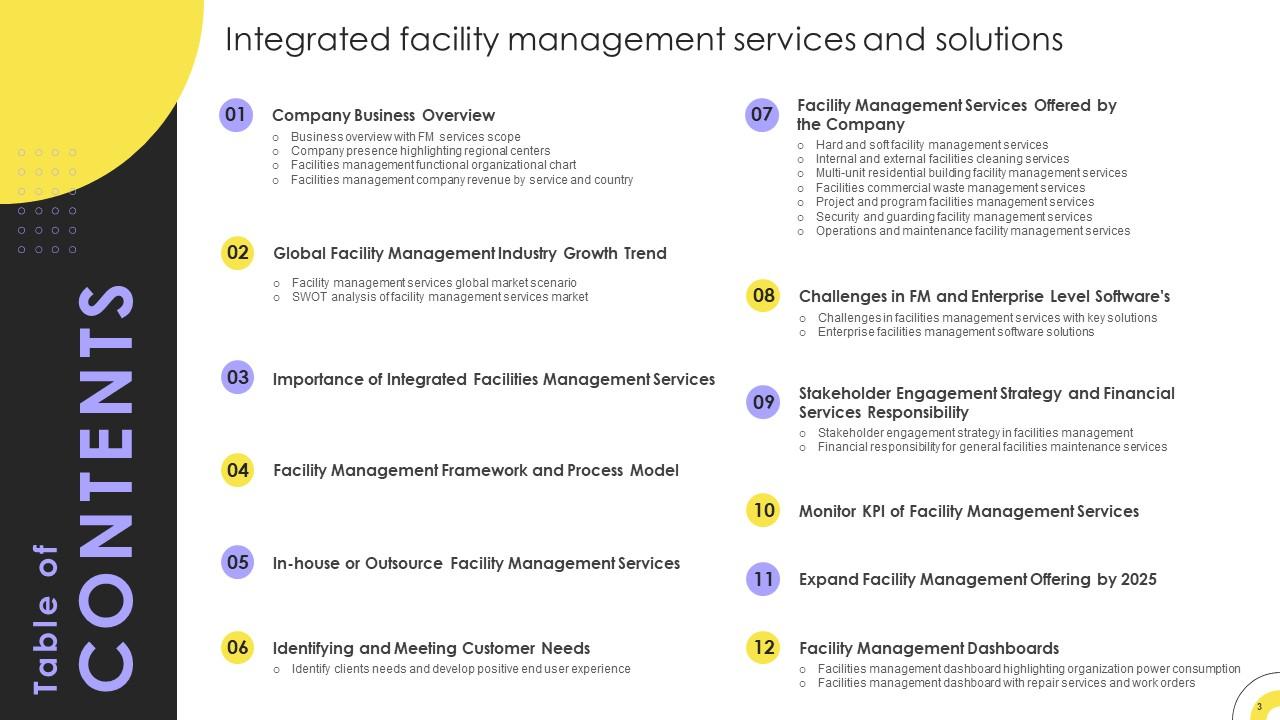
Facilities management focuses on the services that support the functionality, safety, and sustainability of property, grounds, infrastructure, and real estate. Check out our professionally designed Integrated Facility Management Services and Solutions PowerPoint presentation. At first, this module covers the FM company overview, which includes company presence, organization chart, company revenue by services, and country. Additionally, our Facilities Management PPT includes FM industry growth trends with FM market SWOT analysis. The In-house Facility Management Services deck also includes the importance of FM services, FM framework, and In-house or outsourced facility management services. Moreover, it mentions the companys FM services, including hard and soft FM services, cleaning services, building management services, commercial waste management services, and security and guarding FM services with operational and maintenance services. At last, this Facility Management Company deck focuses on the stakeholder engagement strategy with financial responsibility for general facilities maintenance services, KPIs of FM services, and facility management dashboards. Get access to this powerful template now.
Facilities management focuses on the services that support the functionality, safety, and sustainability of property, groun..































-

- Google Slides is a new FREE Presentation software from Google.
- All our content is 100% compatible with Google Slides.
- Just download our designs, and upload them to Google Slides and they will work automatically.
- Amaze your audience with SlideTeam and Google Slides.
-

Want Changes to This PPT Slide? Check out our Presentation Design Services
-

- WideScreen Aspect ratio is becoming a very popular format. When you download this product, the downloaded ZIP will contain this product in both standard and widescreen format.
-

- Some older products that we have may only be in standard format, but they can easily be converted to widescreen.
- To do this, please open the SlideTeam product in Powerpoint, and go to
- Design ( On the top bar) -> Page Setup -> and select "On-screen Show (16:9)” in the drop down for "Slides Sized for".
- The slide or theme will change to widescreen, and all graphics will adjust automatically. You can similarly convert our content to any other desired screen aspect ratio.
Compatible With Google Slides

Get This In WideScreen
You must be logged in to download this presentation.


Do you want to remove this product from your favourites?
PowerPoint presentation slides
This complete presentation has PPT slides on wide range of topics highlighting the core areas of your business needs. It has professionally designed templates with relevant visuals and subject driven content. This presentation deck has total of fifty three slides. Get access to the customizable templates. Our designers have created editable templates for your convenience. You can edit the color, text and font size as per your need. You can add or delete the content if required. You are just a click to away to have this ready-made presentation. Click the download button now.

People who downloaded this PowerPoint presentation also viewed the following :
Content of this Powerpoint Presentation
Slide 1: This slide introduces Integrated Facility Management Services and Solutions. State your company name and begin.
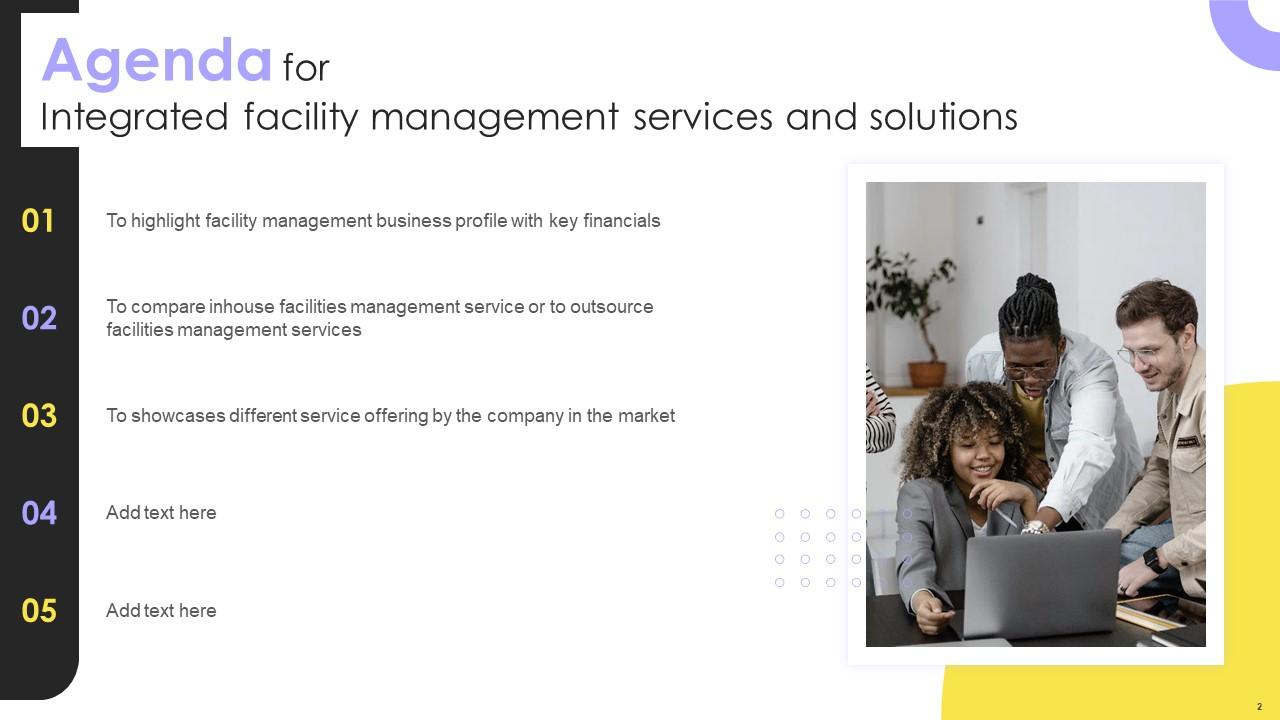
Slide 2: This slide states Agenda of the presentation.
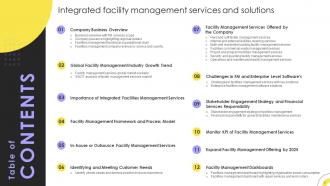
Slide 3: This slide shows Table of Content for the presentation.
Slide 4: This slide highlights title for topics that are to be covered next in the template.
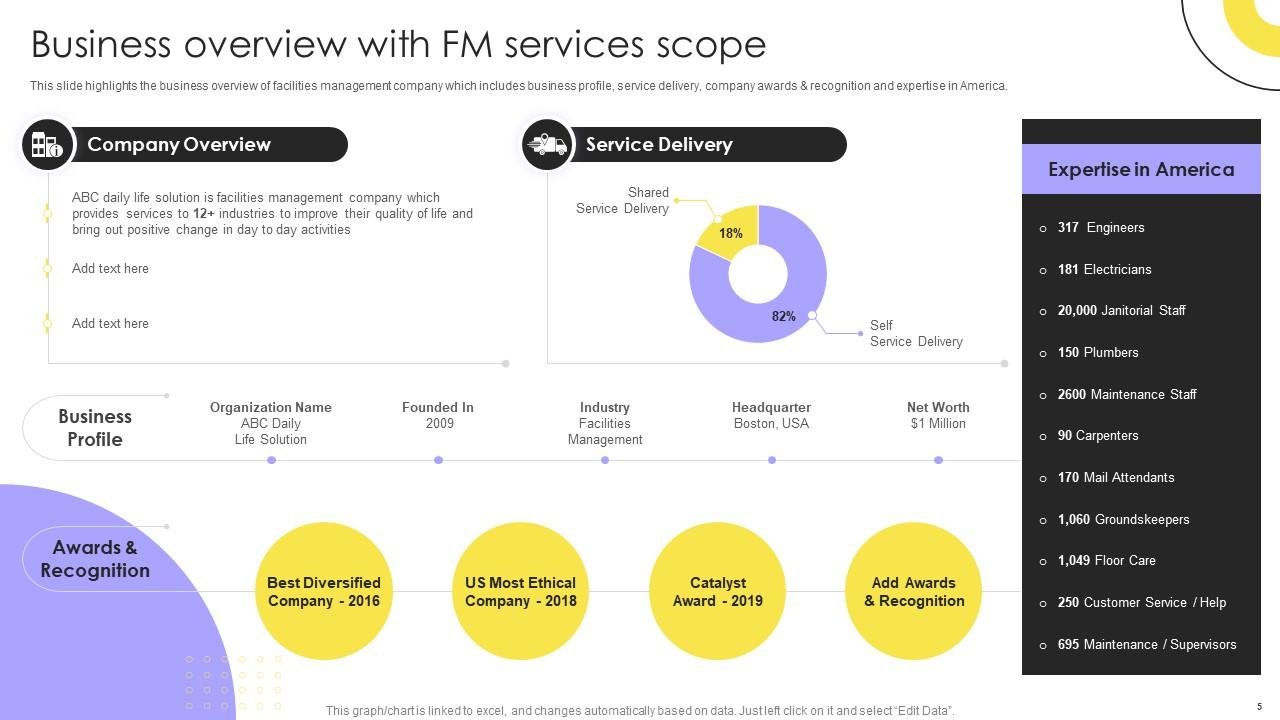
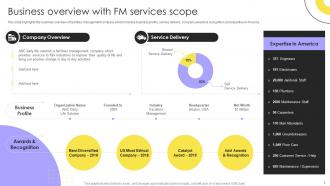
Slide 5: This slide presents Business overview with FM services scope.
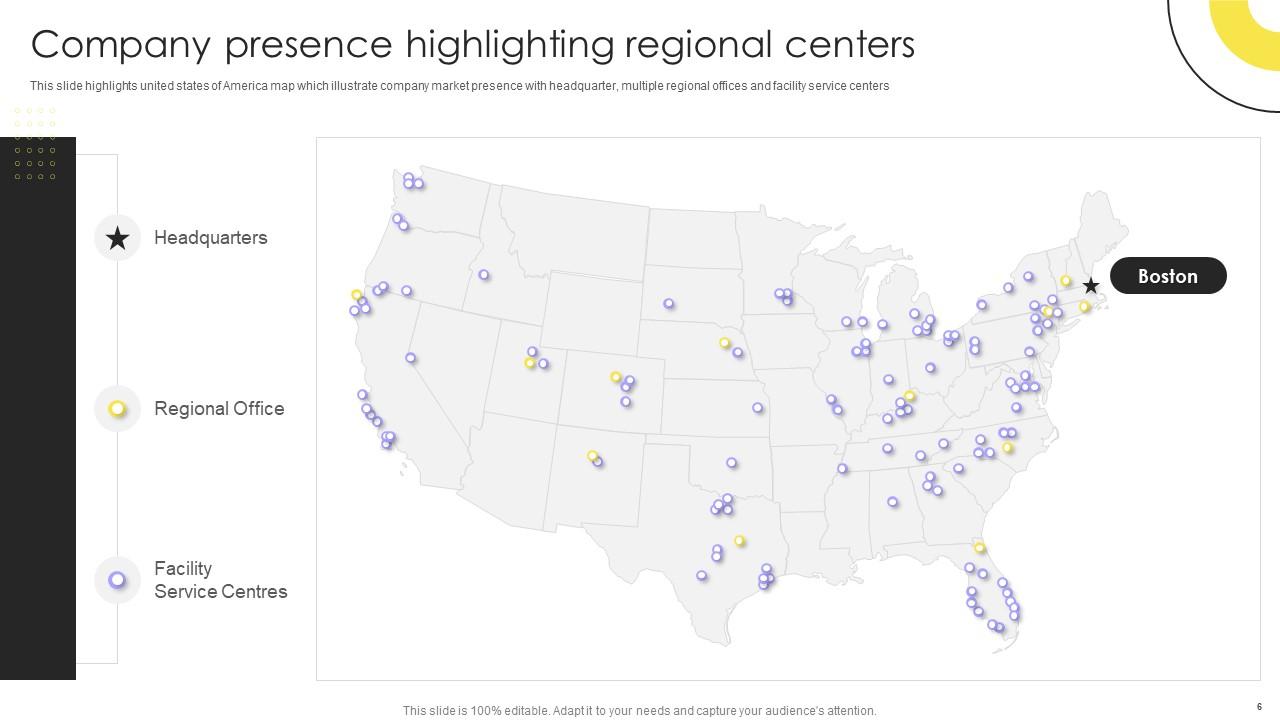
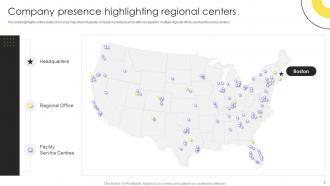
Slide 6: This slide displays Company presence highlighting regional centers.
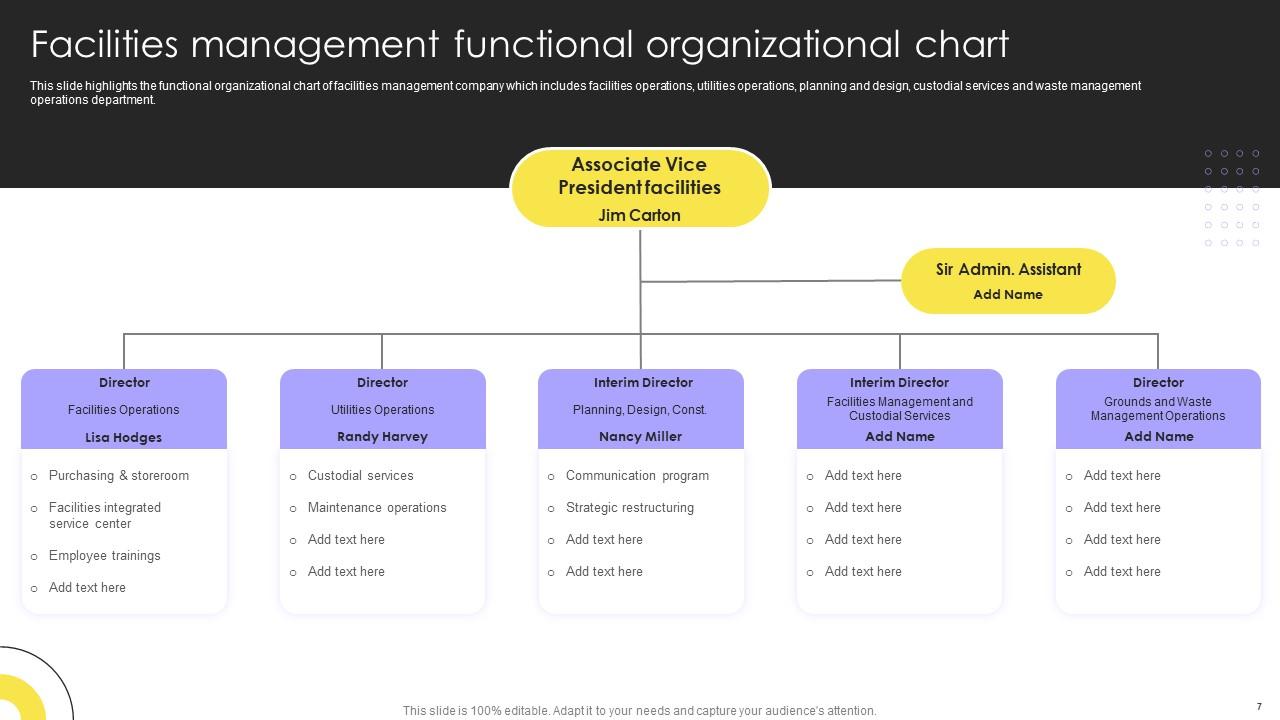
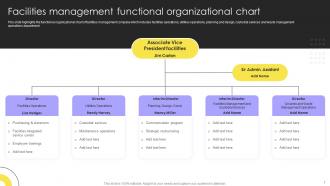
Slide 7: This slide represents Facilities management functional organizational chart.
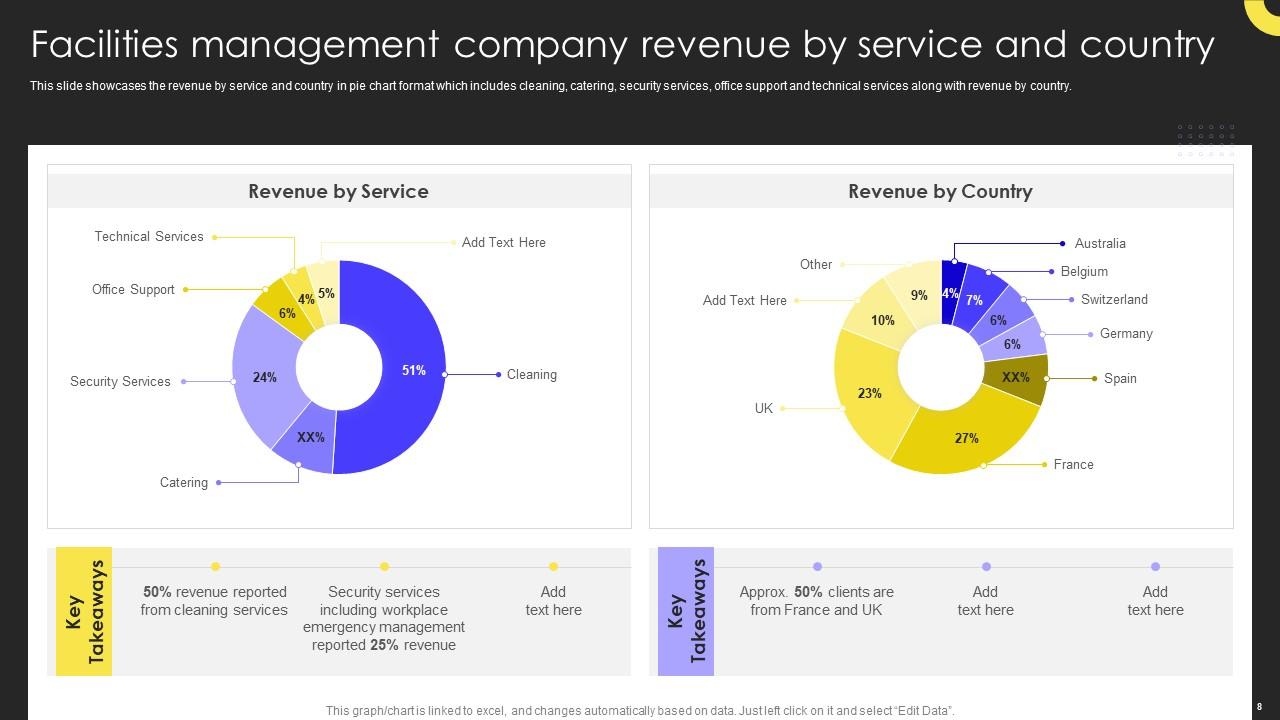
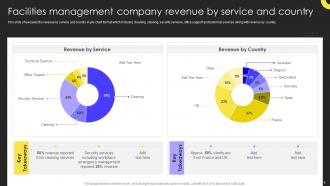
Slide 8: This slide showcases Facilities management company revenue by service and country.
Slide 9: This slide highlights title for topics that are to be covered next in the template.
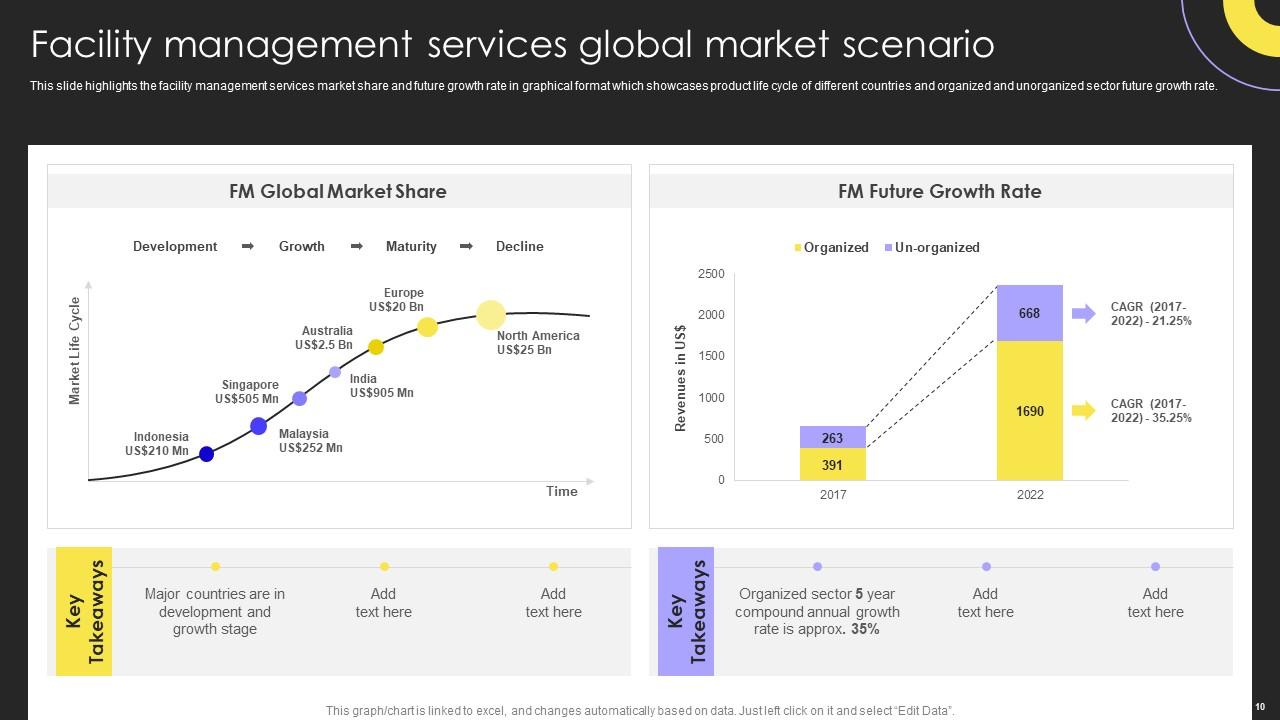
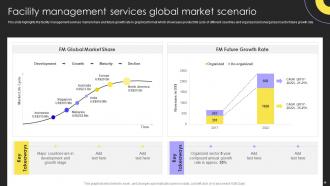
Slide 10: This slide shows Facility management services global market scenario.
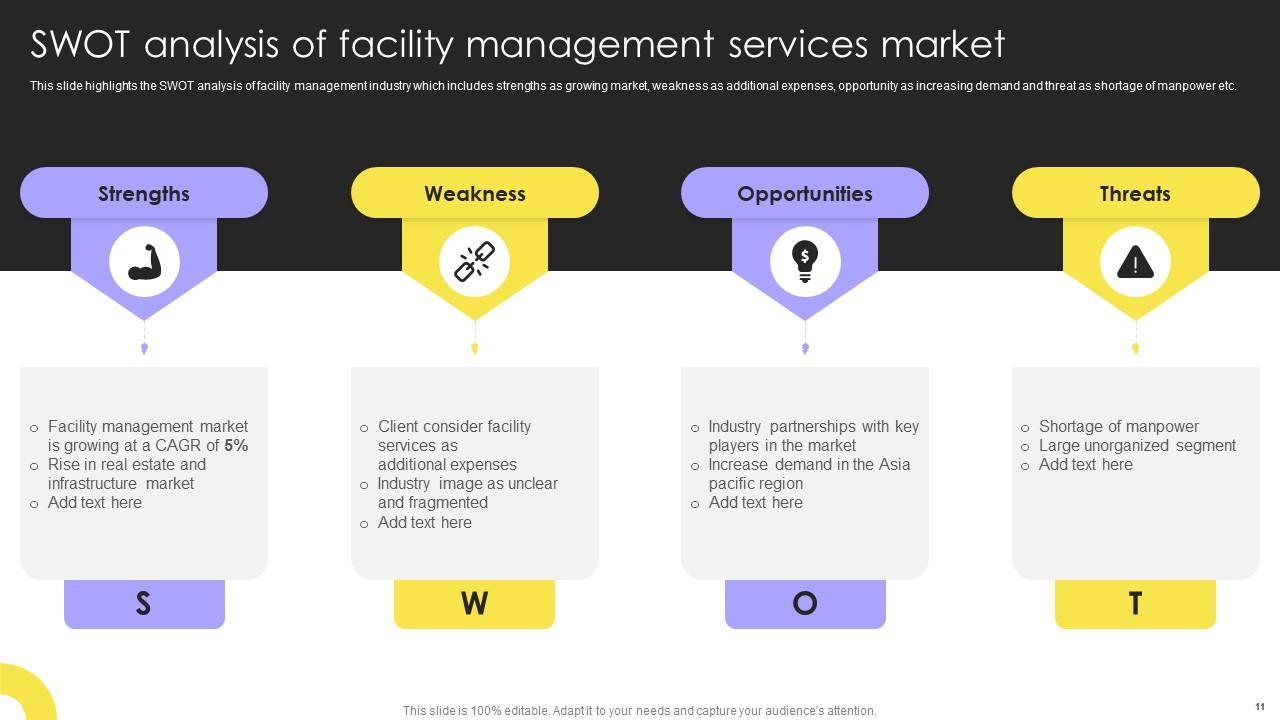
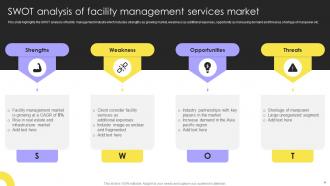
Slide 11: This slide presents SWOT analysis of facility management services market.
Slide 12: This slide highlights title for topics that are to be covered next in the template.
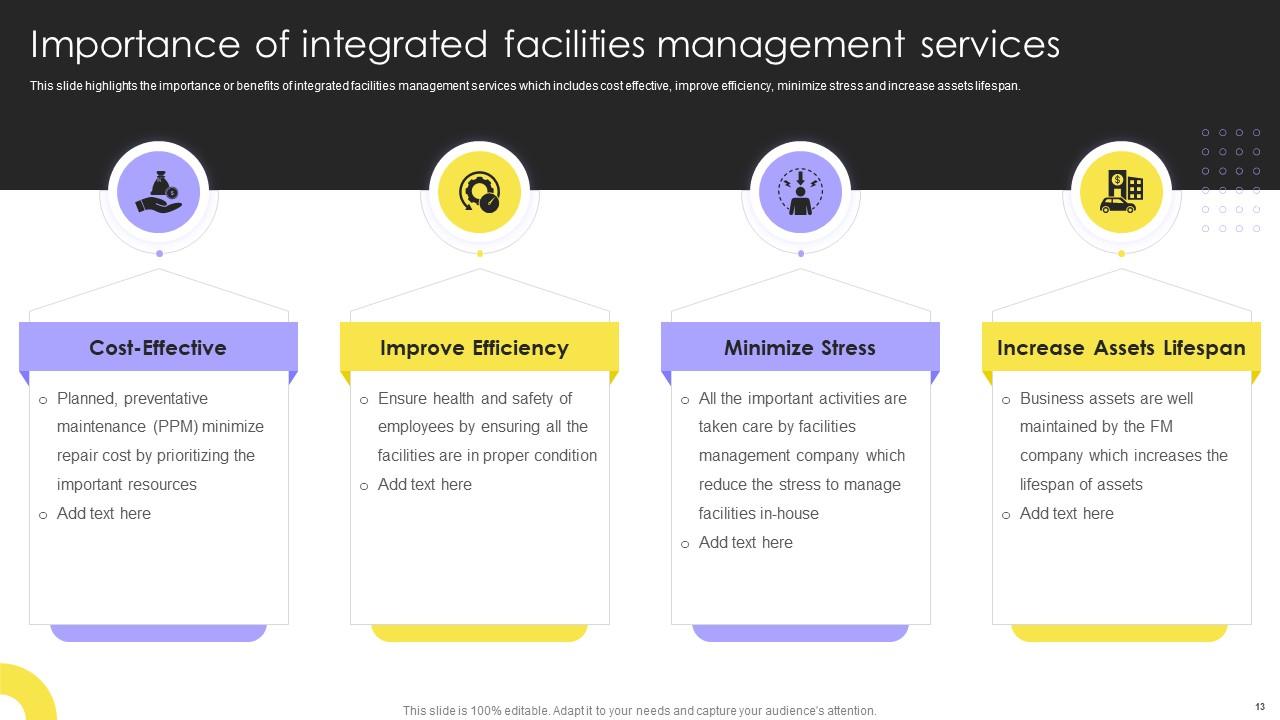
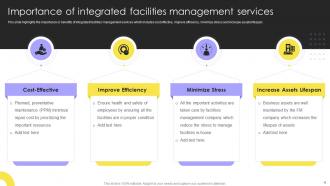
Slide 13: This slide displays Importance of integrated facilities management services.
Slide 14: This slide highlights title for topics that are to be covered next in the template.
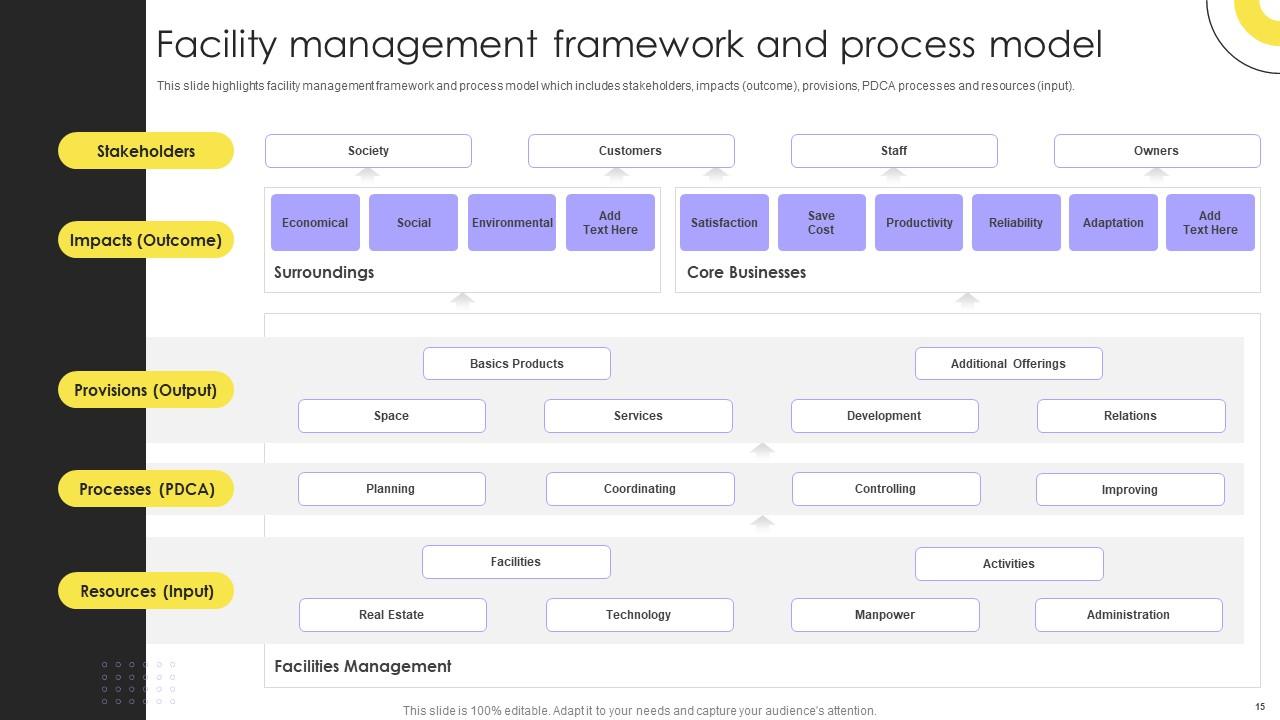
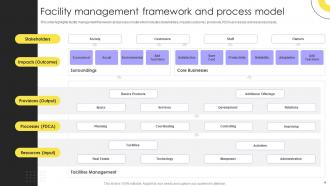
Slide 15: This slide represents Facility management framework and process model.
Slide 16: This slide highlights title for topics that are to be covered next in the template.
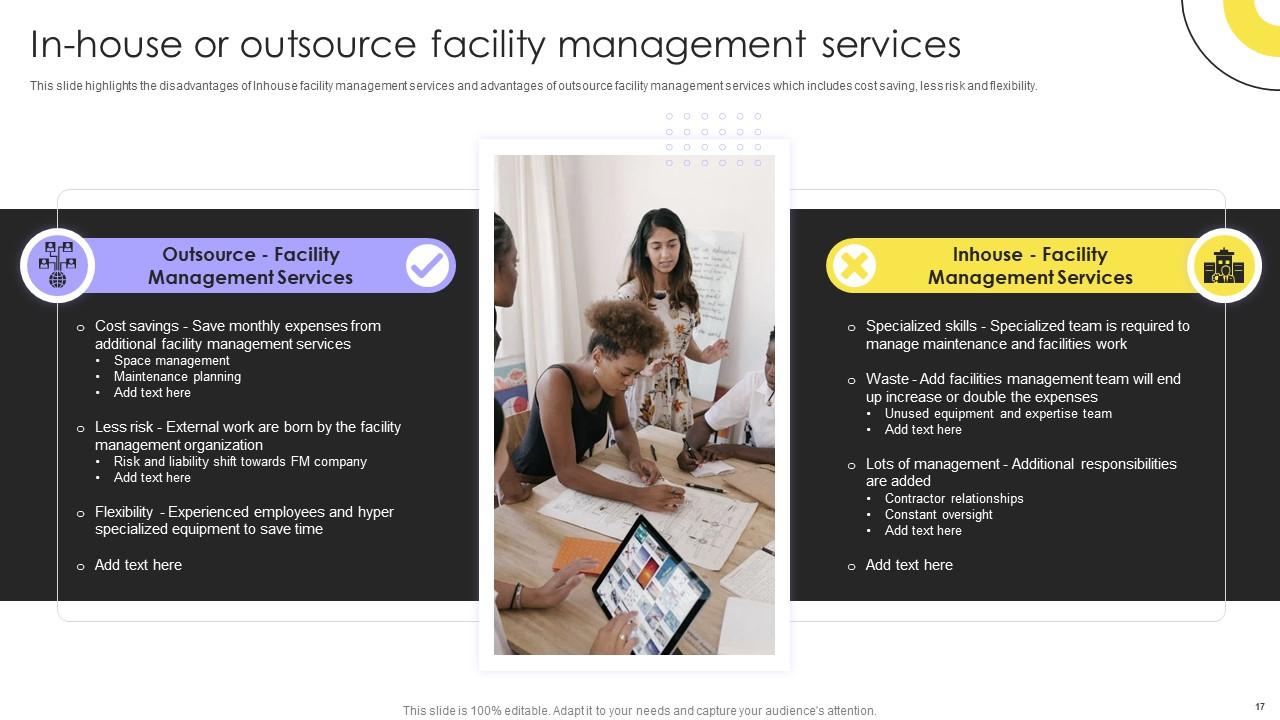
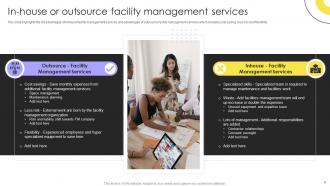
Slide 17: This slide showcases In-house or outsource facility management services.
Slide 18: This slide highlights title for topics that are to be covered next in the template.
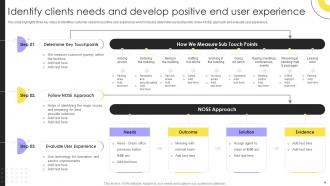
Slide 19: This slide shows Identify clients needs and develop positive end user experience.
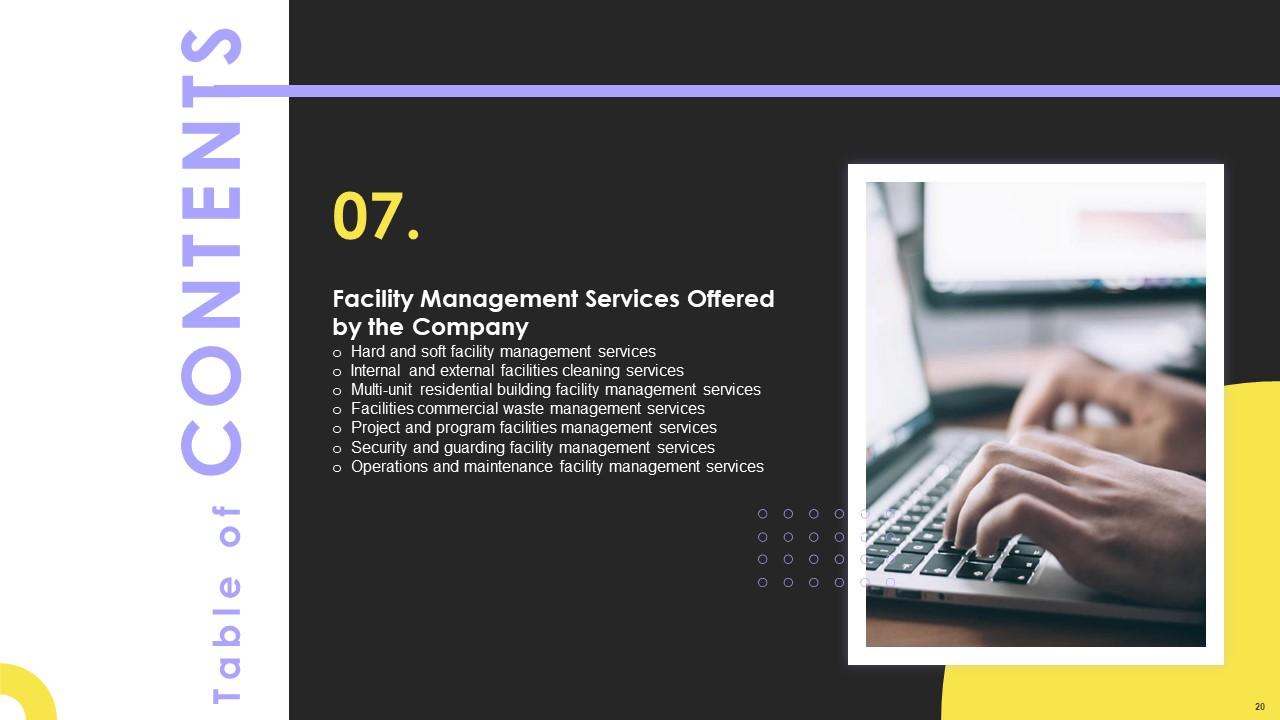
Slide 20: This slide highlights title for topics that are to be covered next in the template.
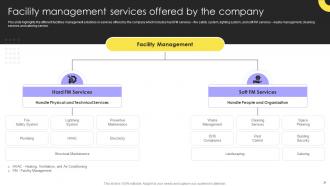
Slide 21: This slide presents Facility management services offered by the company.
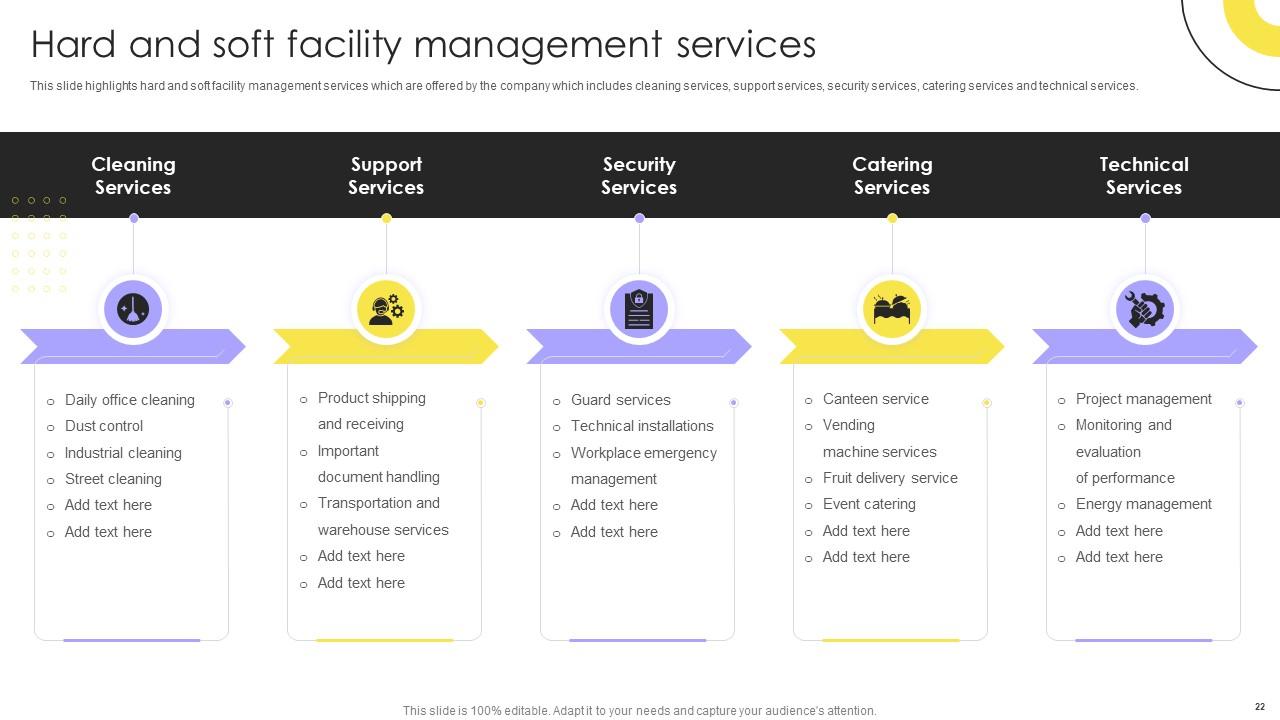
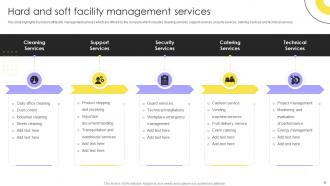
Slide 22: This slide displays Hard and soft facility management services.
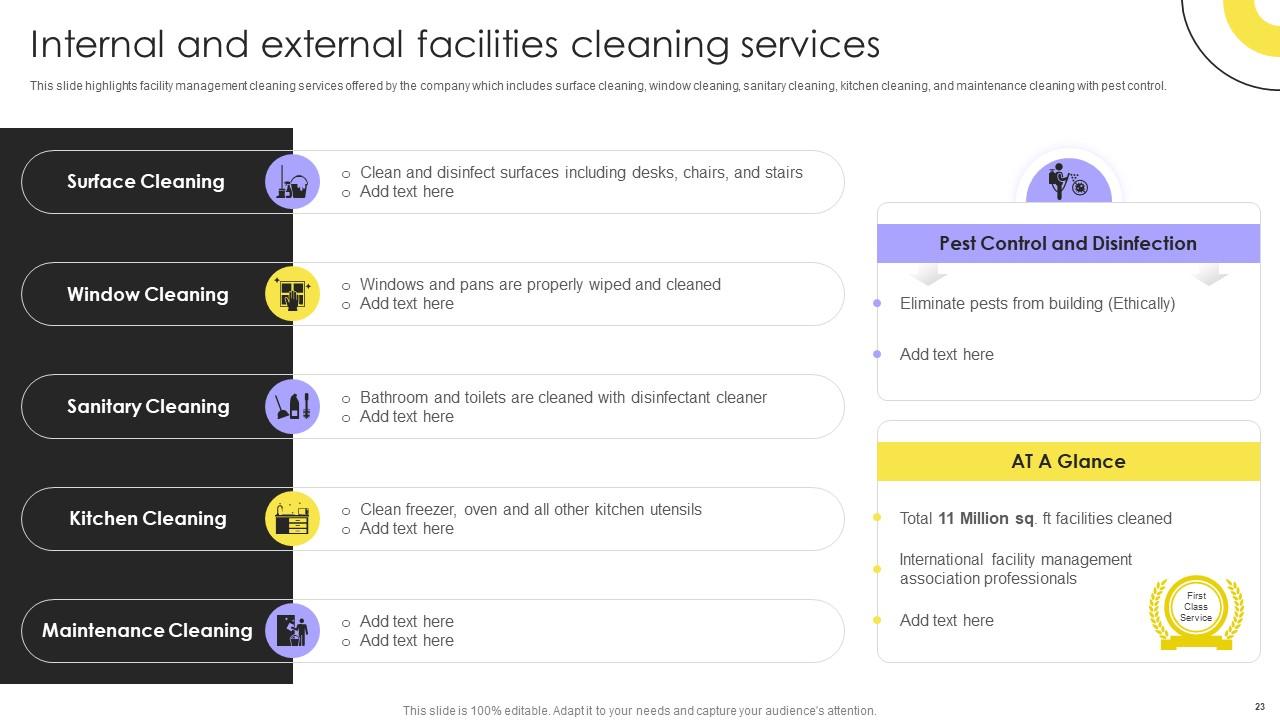
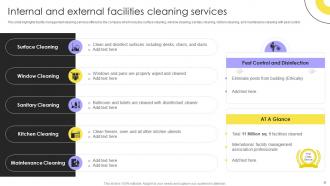
Slide 23: This slide represents Internal and external facilities cleaning services.
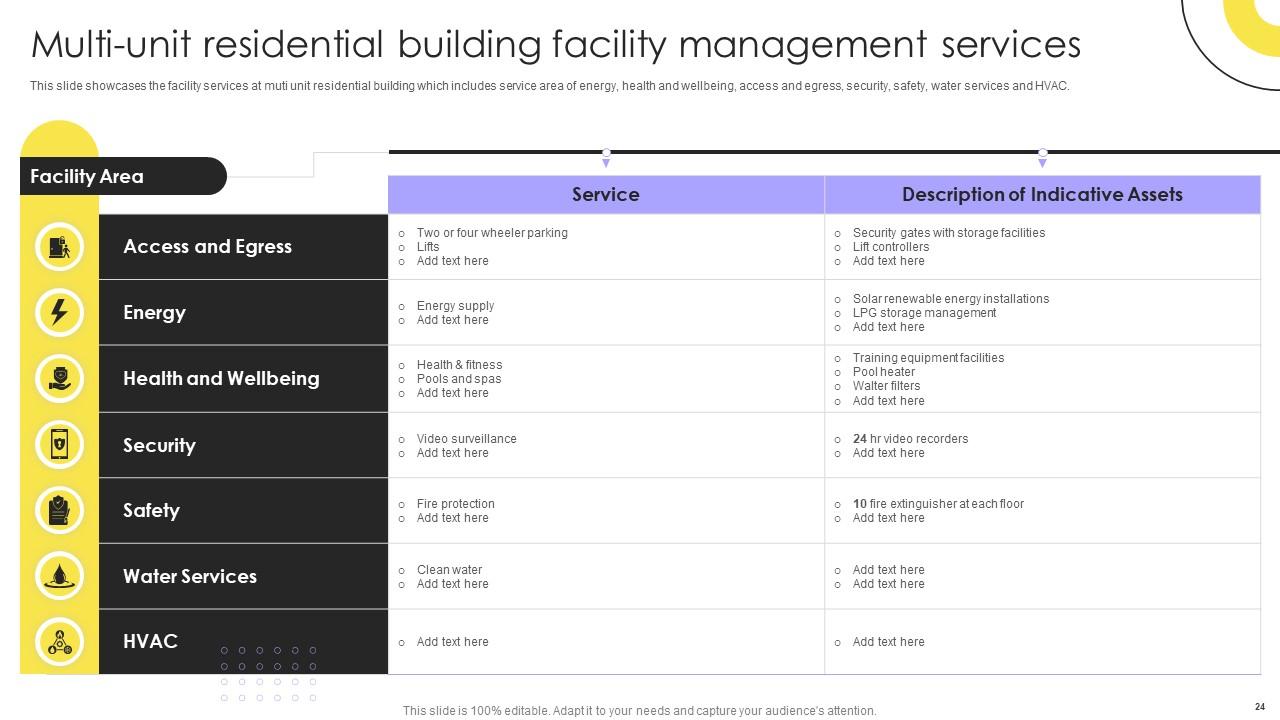
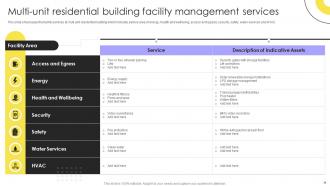
Slide 24: This slide showcases Multi-unit residential building facility management services.
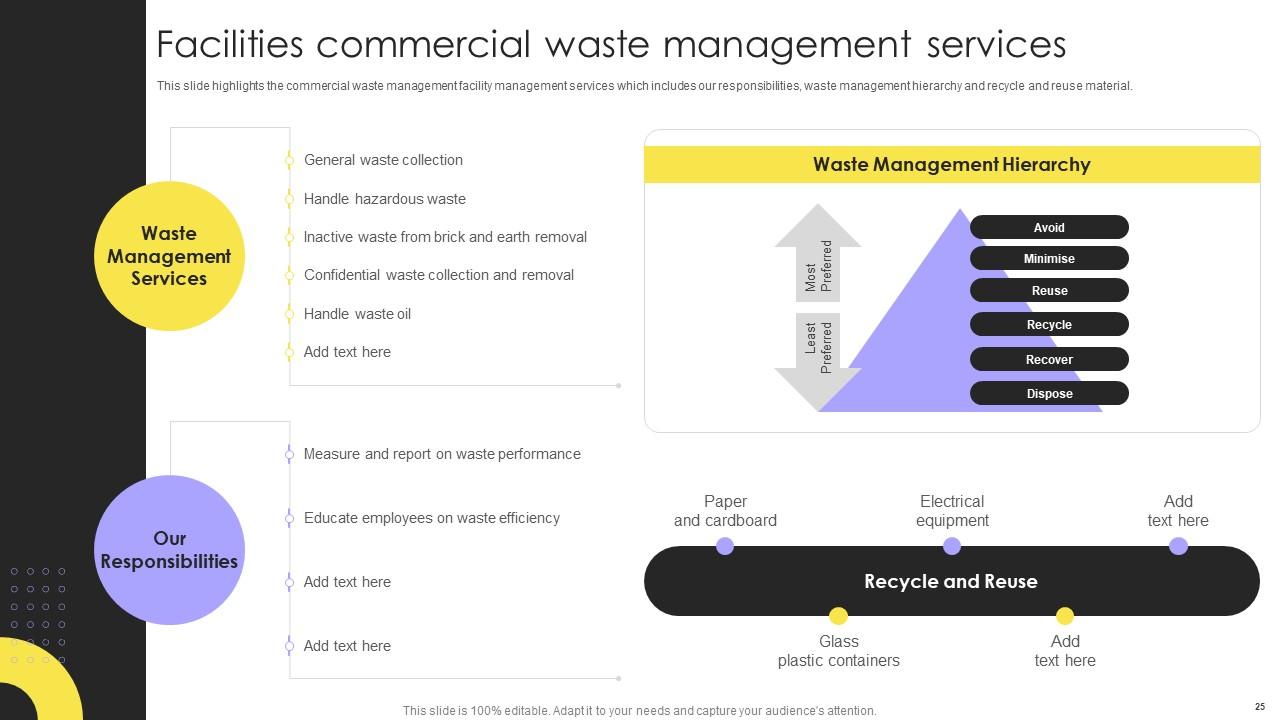
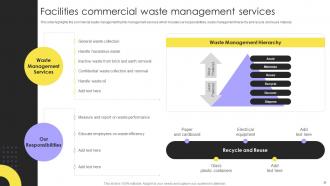
Slide 25: This slide shows Facilities commercial waste management services.
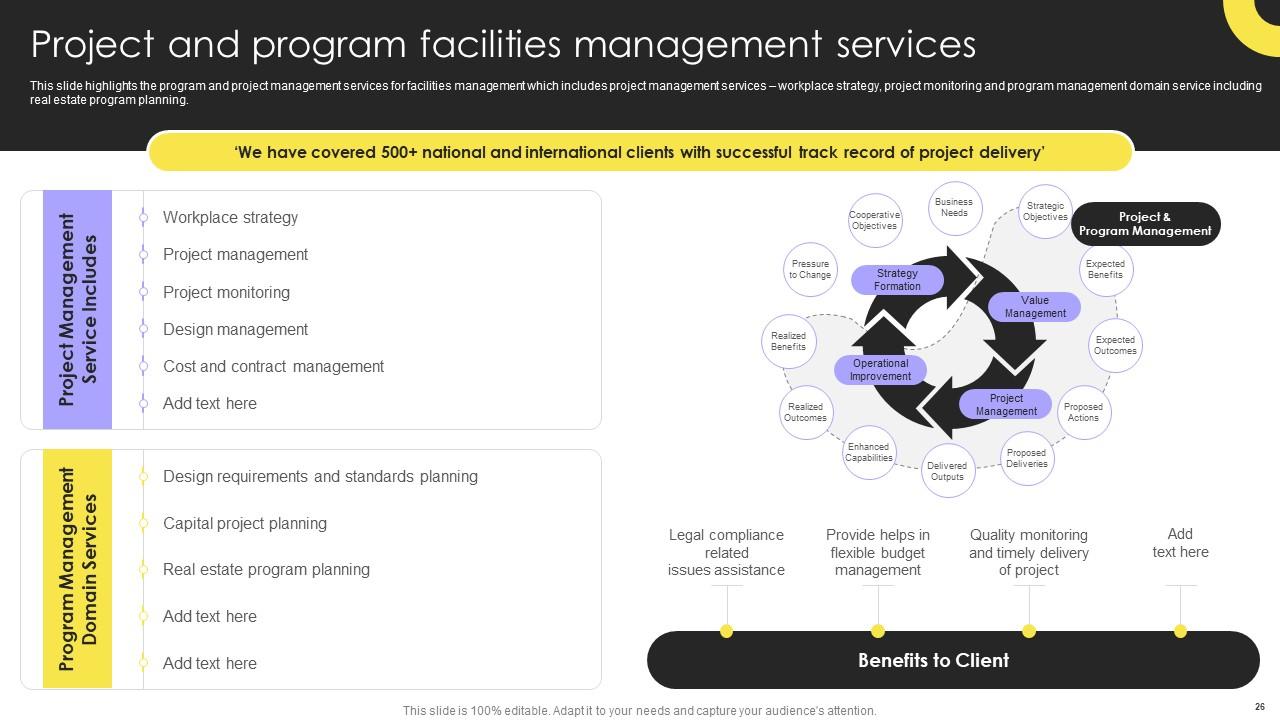
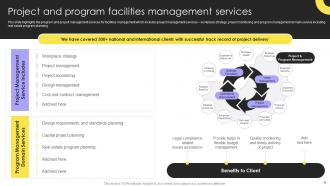
Slide 26: This slide presents Project and program facilities management services.
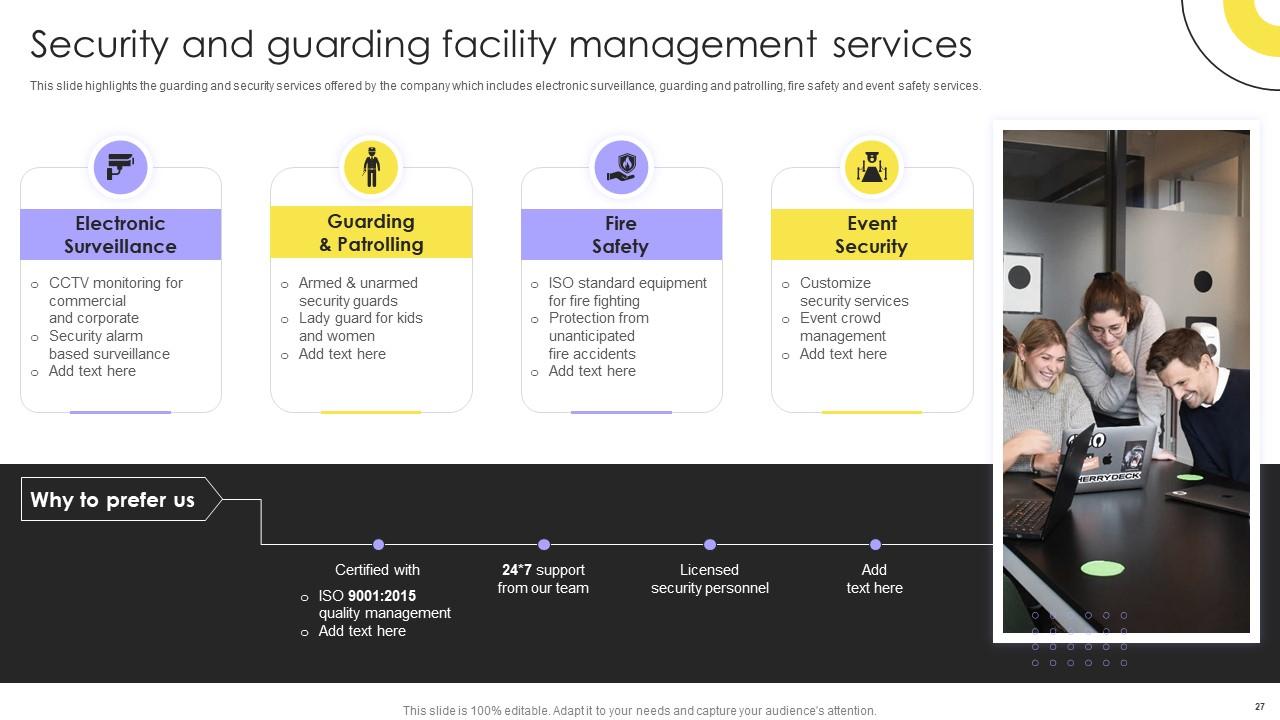
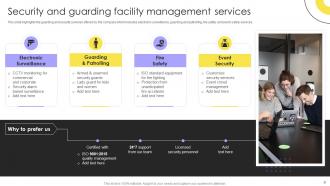
Slide 27: This slide displays Security and guarding facility management services.
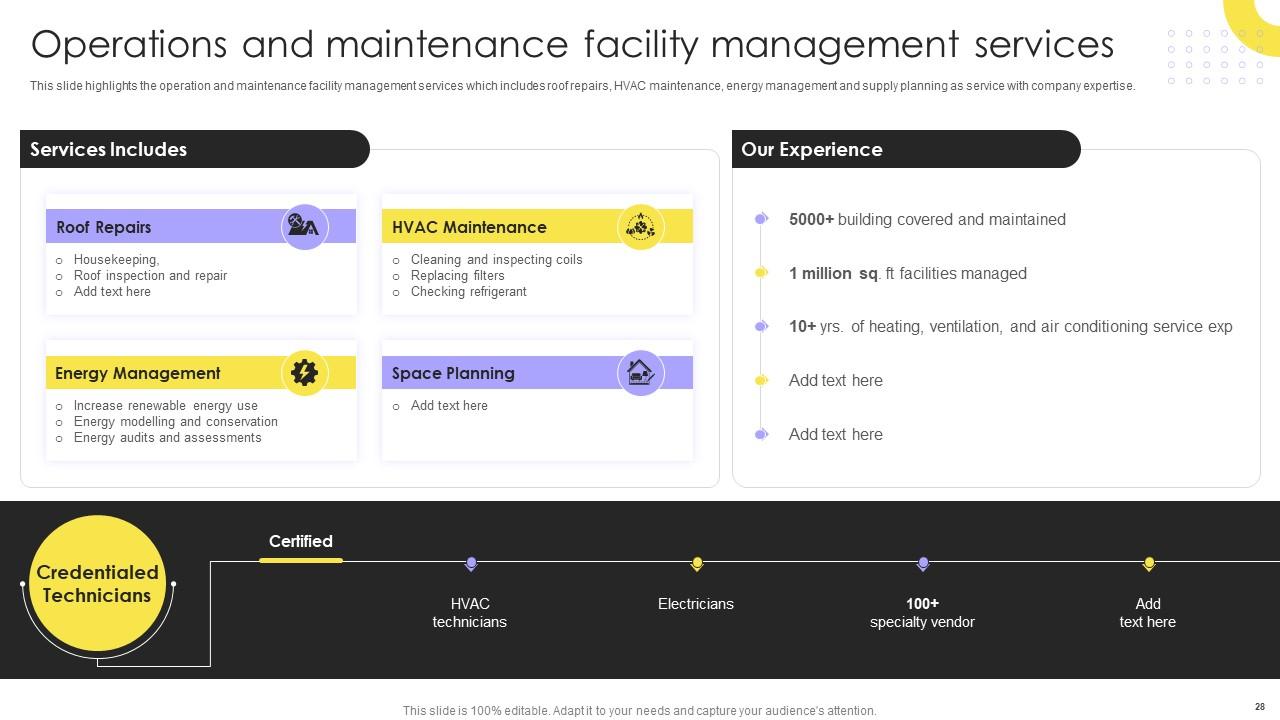
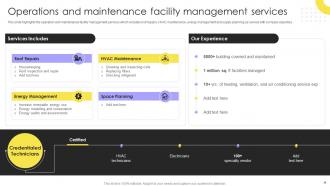
Slide 28: This slide represents Operations and maintenance facility management services.
Slide 29: This slide highlights title for topics that are to be covered next in the template.
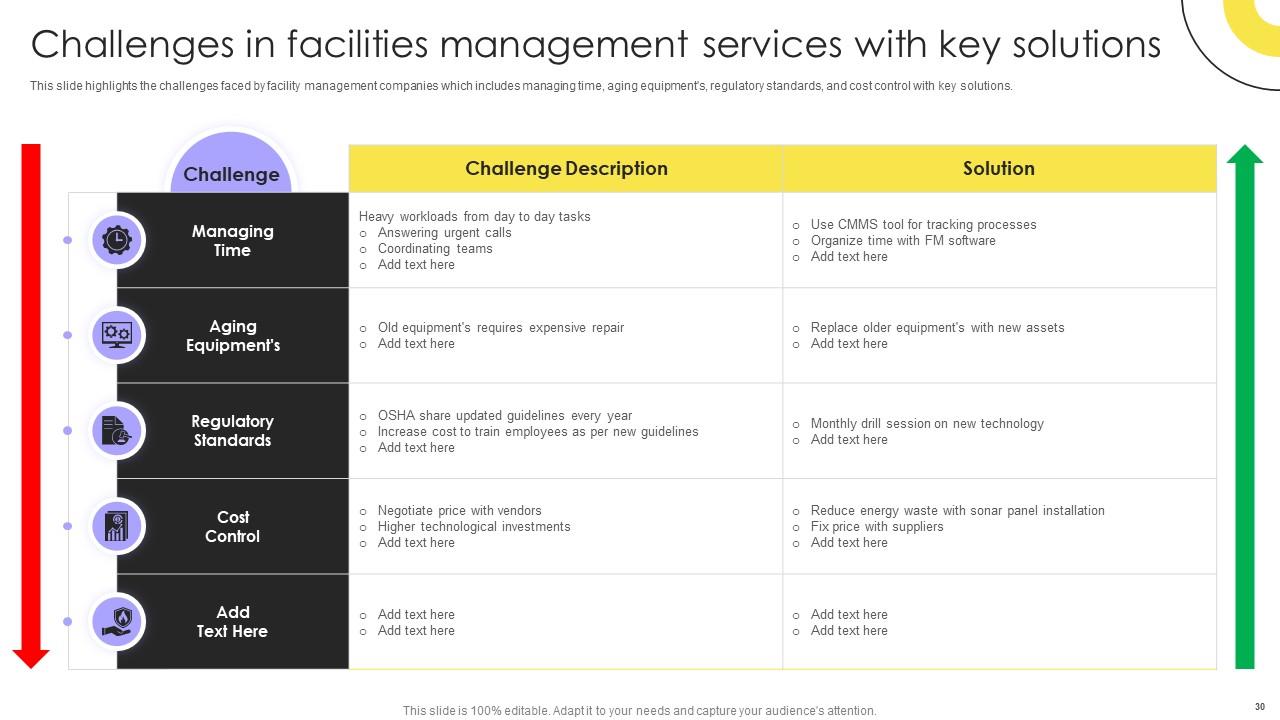
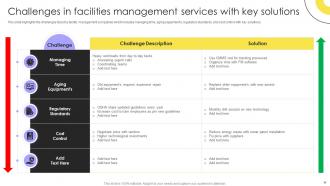
Slide 30: This slide showcases Challenges in facilities management services with key solutions.
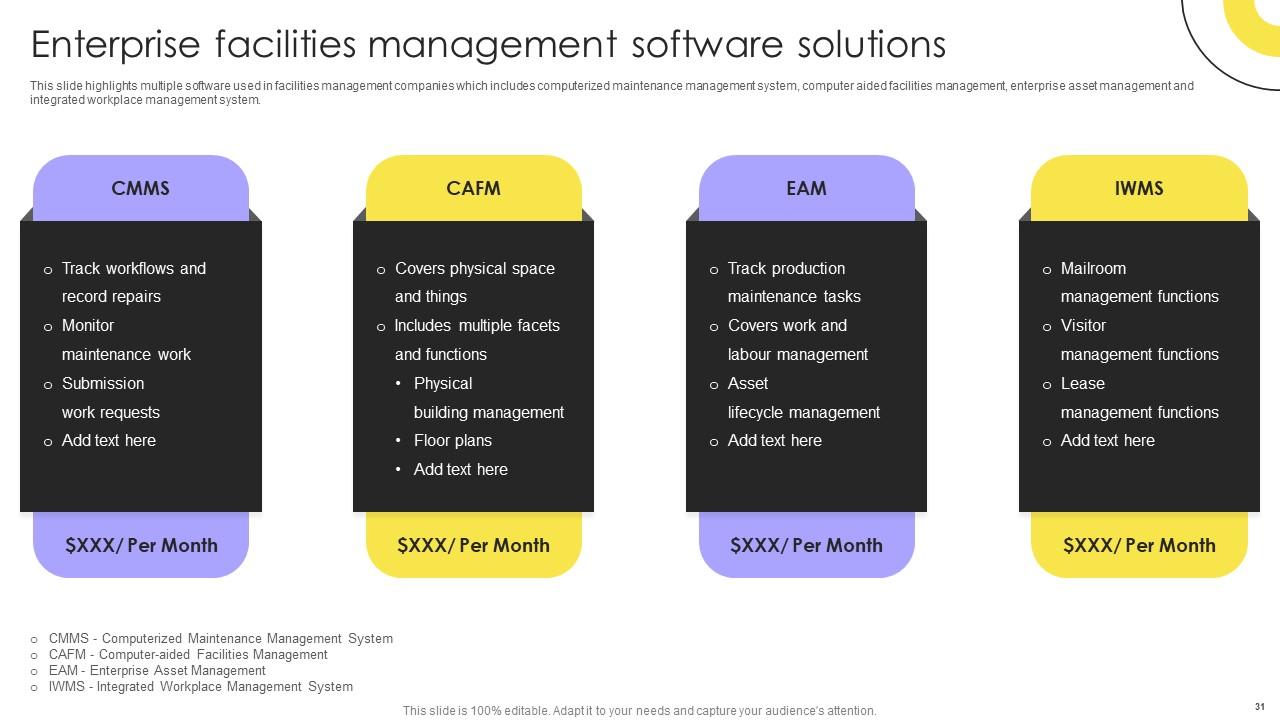
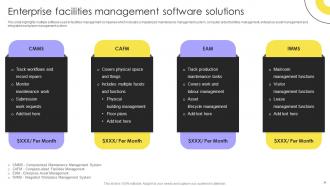
Slide 31: This slide shows Enterprise facilities management software solutions.
Slide 32: This slide highlights title for topics that are to be covered next in the template.
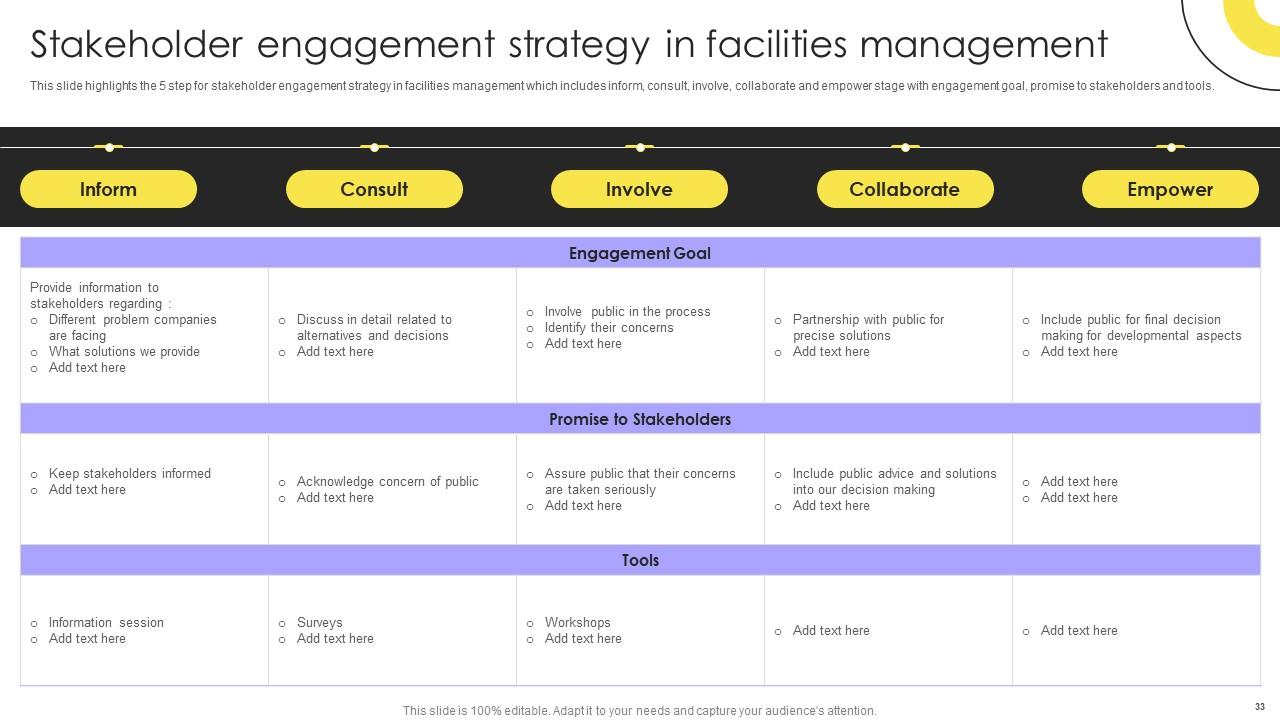
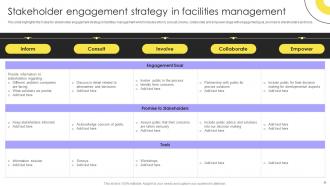
Slide 33: This slide presents Stakeholder engagement strategy in facilities management.
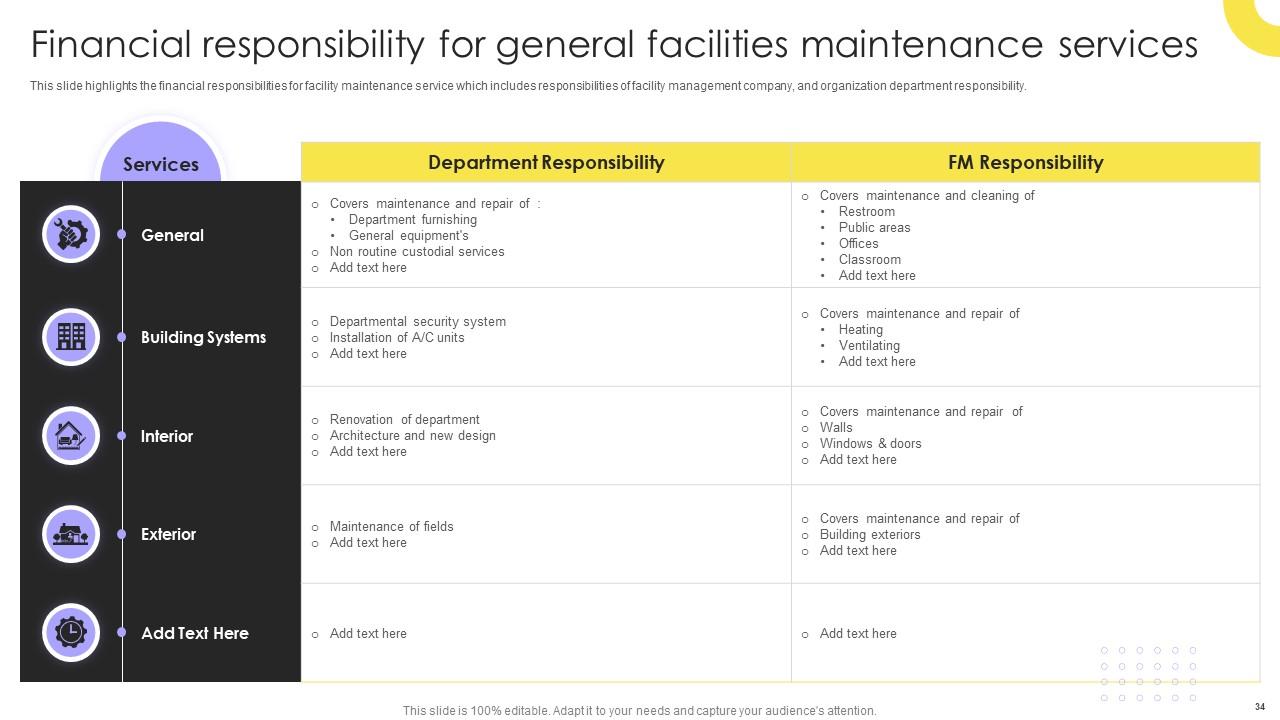
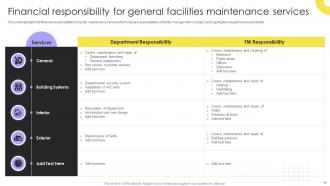
Slide 34: This slide displays Financial responsibility for general facilities maintenance services.
Slide 35: This slide highlights title for topics that are to be covered next in the template.
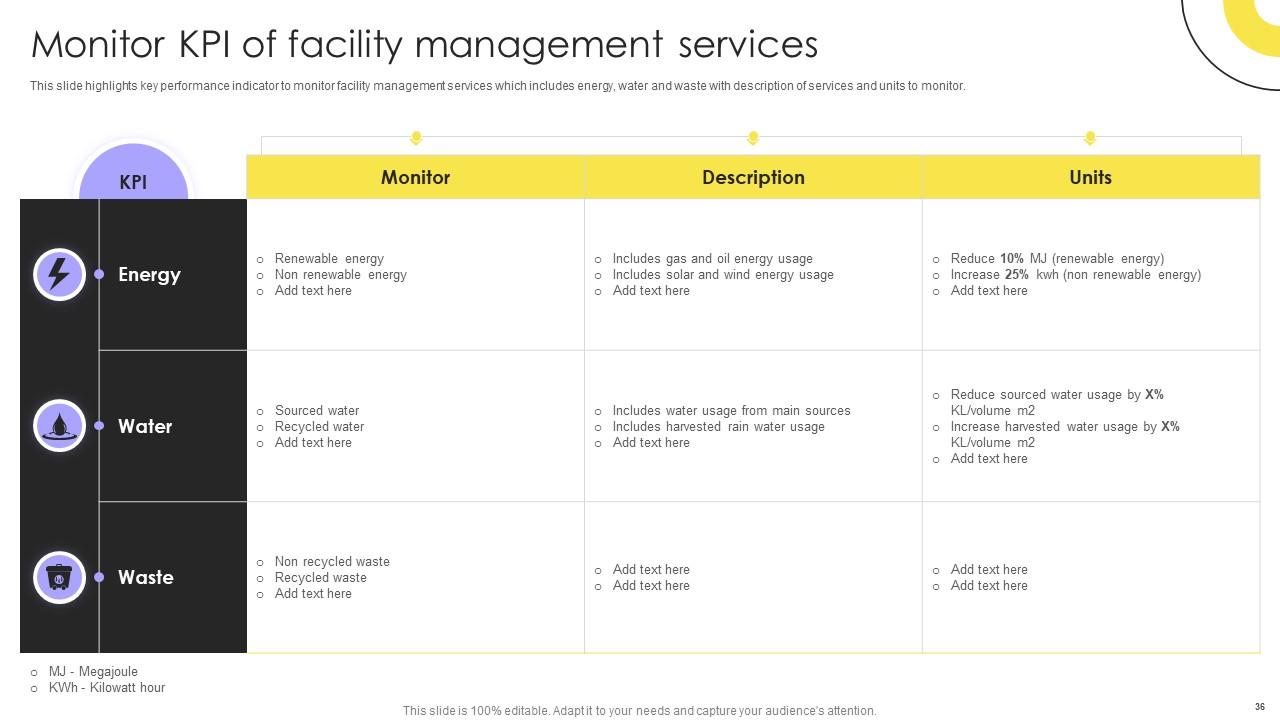
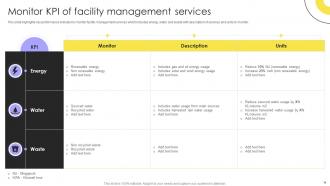
Slide 36: This slide represents Monitor KPI of facility management services.
Slide 37: This slide highlights title for topics that are to be covered next in the template.
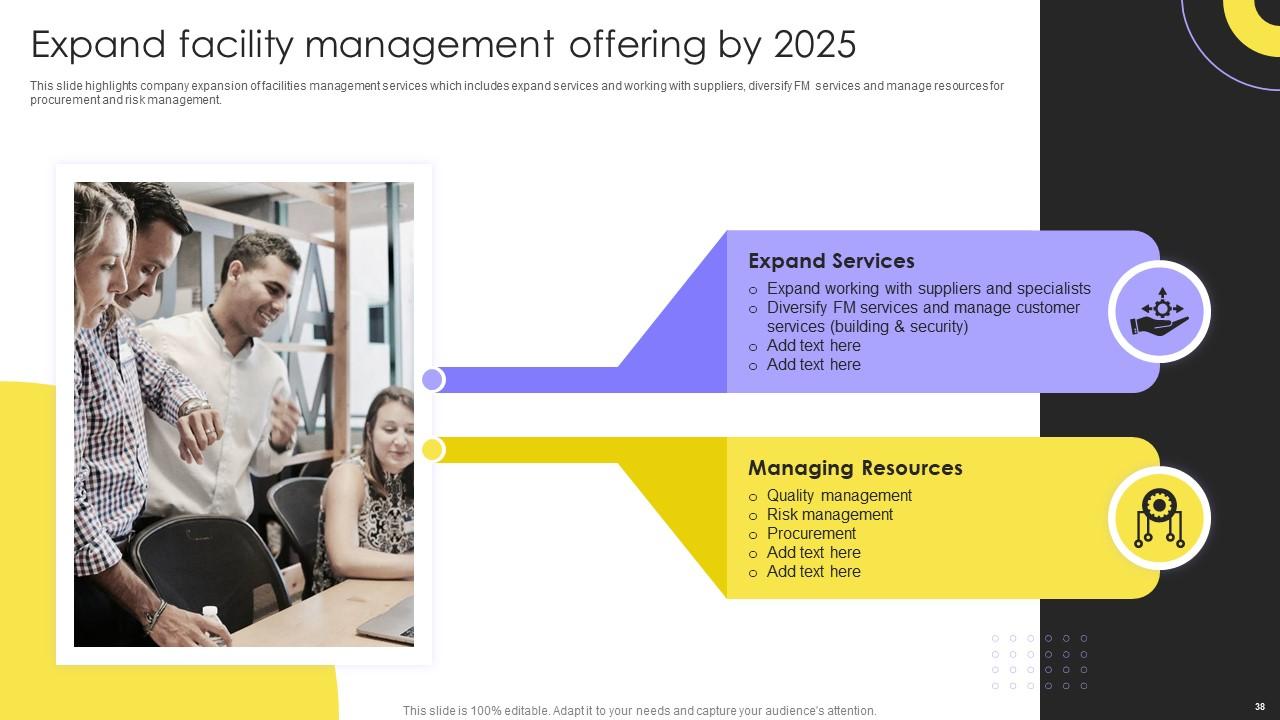
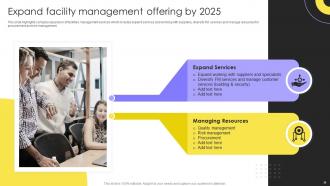
Slide 38: This slide showcases Expand facility management offering by 2025.
Slide 39: This slide highlights title for topics that are to be covered next in the template.
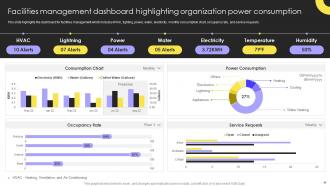
Slide 40: This slide shows Facilities management dashboard highlighting organization power consumption.
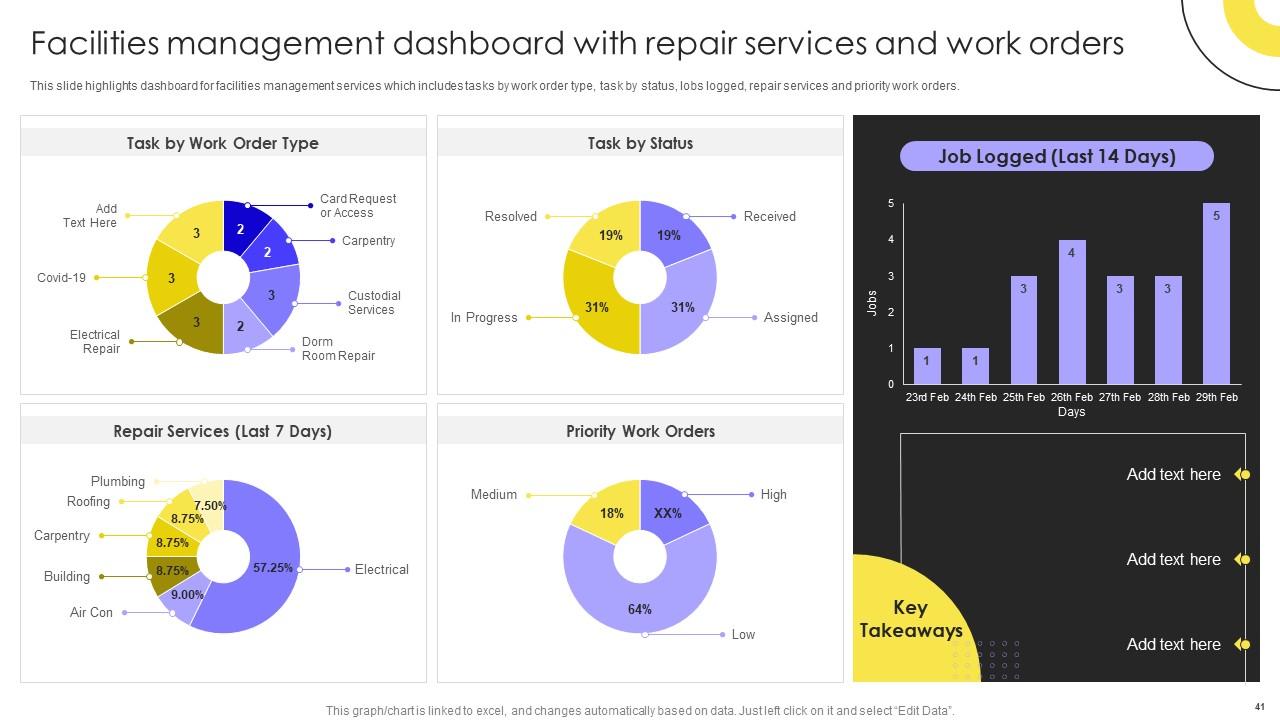
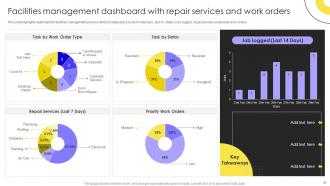
Slide 41: This slide presents Facilities management dashboard with repair services and work orders.
Slide 42: This slide contains all the icons used in this presentation.
Slide 43: This slide is titled as Additional Slides for moving forward.
Slide 44: This is About Us slide to show company specifications etc.
Slide 45: This is Our Mission slide with related imagery and text.
Slide 46: This is Our Team slide with names and designation.
Slide 47: This slide provides 30 60 90 Days Plan with text boxes.
Slide 48: This is a Timeline slide. Show data related to time intervals here.
Slide 49: This slide shows Post It Notes. Post your important notes here.
Slide 50: This is Our Target slide. State your targets here.
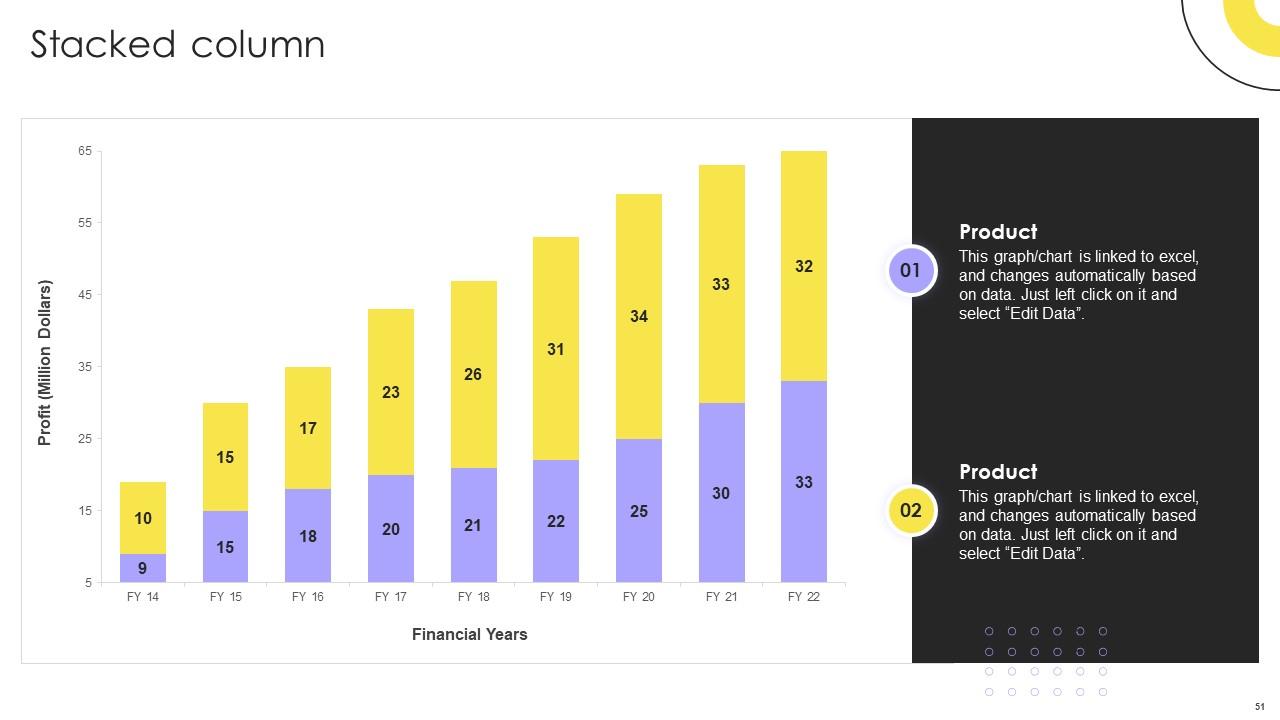
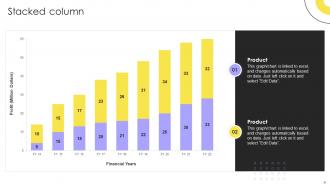
Slide 51: This slide represents Stacked column chart with two products comparison.
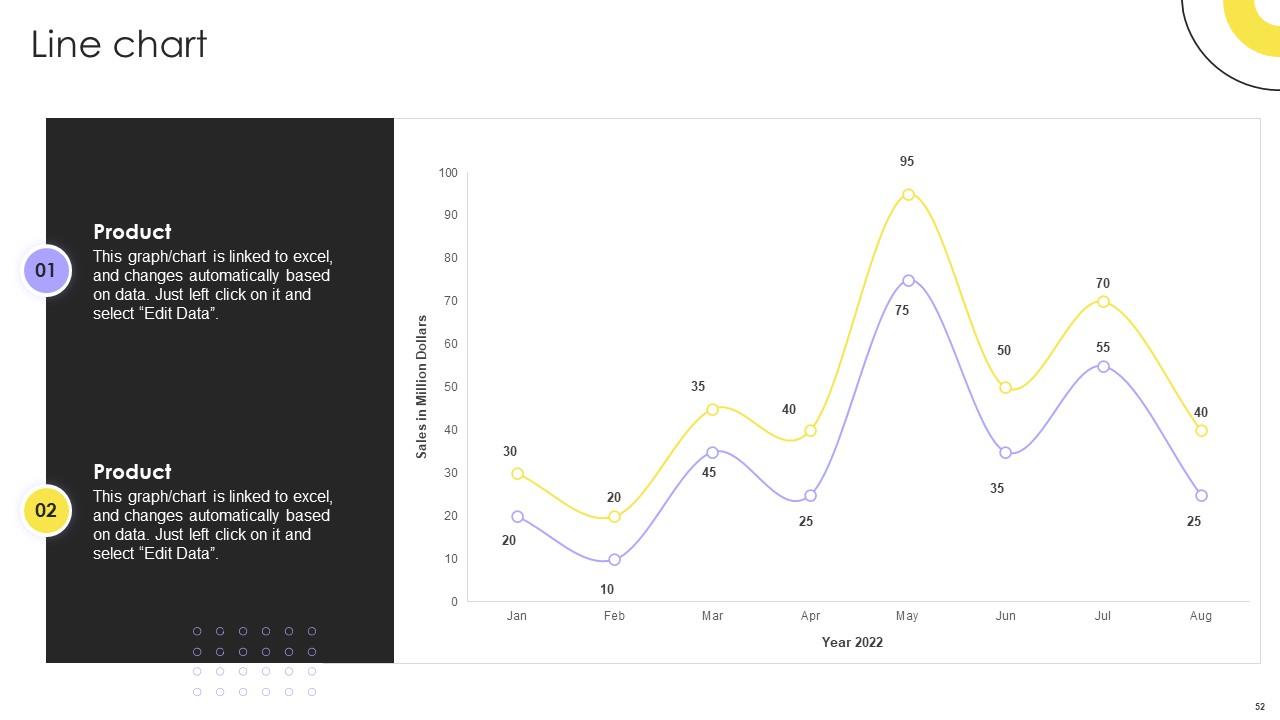
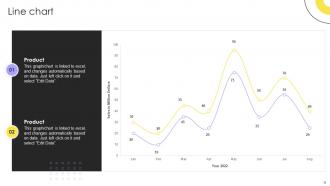
Slide 52: This slide describes Line chart with two products comparison.
Slide 53: This is a Thank You slide with address, contact numbers and email address.
Integrated Facility Management Services And Solutions Powerpoint Presentation Slides with all 58 slides:
Use our Integrated Facility Management Services And Solutions Powerpoint Presentation Slides to effectively help you save your valuable time. They are readymade to fit into any presentation structure.
-
Happy to found you SlideTeam. You guys are value for money. Amazing slides.
-
Crisp and neat slides. Makes it fun and easier to curate presentations.
