


Intellectual Property Strategic Management Dashboard




Try Before you Buy Download Free Sample Product
 Impress Your
 Audience
 100%
100% Editable
 Save Hours
 of Time


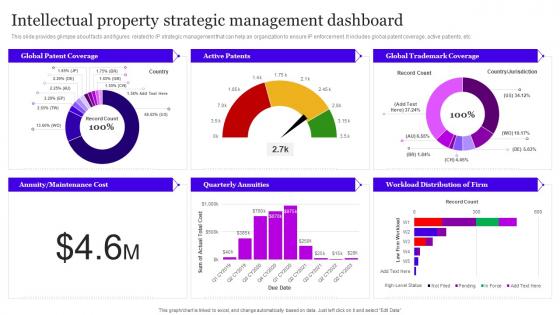
This slide provides glimpse about facts and figures related to IP strategic management that can help an organization to ensure IP enforcement. It includes global patent coverage, active patients, etc.
People who downloaded this PowerPoint presentation also viewed the following :
Intellectual Property Strategic Management Dashboard with all 7 slides:
Use our Intellectual Property Strategic Management Dashboard to effectively help you save your valuable time. They are readymade to fit into any presentation structure.






FAQs for Intellectual Property
Honestly, think of it like four buckets: find your stuff, protect it, watch for copycats, then have a game plan ready. Do an IP audit first - patents, trademarks, copyrights, trade secrets, all of it. You'll probably discover things you forgot about. Get everything properly registered and documented (yeah, boring but necessary). There are decent monitoring tools that'll alert you when someone's ripping you off. Have your enforcement strategy mapped out beforehand so you're not scrambling later. Treat it like any other asset you actually care about with regular check-ins.
Look, each IP type protects different stuff and makes money in its own way. Patents let you own inventions exclusively - license them out or shut down competitors for straight revenue. Your trademarks? They're protecting brand recognition and customer loyalty, which is huge for marketing ROI. Copyrights cover creative work like software and marketing content. Most companies totally sleep on their copyright portfolio until someone steals their stuff. Here's the thing - treat IP like actual business assets, not boring legal docs. Do a quick audit and you'll probably find valuable assets you didn't even realize you had sitting around.
Dude, protect your IP early - it's literally the only thing stopping big companies from stealing your ideas and crushing you with their budgets. Patents, trademarks, whatever fits your product. I learned this the hard way watching other startups get burned. Investors also take you way more seriously when you've got some IP lined up. Yeah, provisional patents cost money upfront, but they're cheaper than watching someone else profit off your work later. Even if you're broke, at least document everything you're building. Trust me on this one.
Here's what I'd do: set up Google alerts for your trademarks and check patent databases regularly. Document everything - when you started using your IP, how you're using it, all that boring stuff. Trust me, it matters later. If someone's ripping you off, send a cease and desist first before going nuclear with lawyers. There are IP monitoring services too if you've got cash to spare - they catch things you'll probably miss. Oh, and don't wait around if you find infringement. The longer you sit on it, the weaker your case gets.
Honestly, the hardest part is just knowing what IP you actually own - half the time it's scattered everywhere. Your dev team probably built something amazing last month and nobody thought to document it properly. Then there's the nightmare of tracking all your renewal dates and figuring out what's worth the money vs. what's just draining your budget. If you're dealing with multiple countries, that adds a whole other layer of complexity. Plus you've got to constantly watch for people ripping off your stuff. I'd start with an IP audit to get your arms around everything, then set up some basic tracking system so nothing falls through the cracks.
Ugh, globalization makes IP stuff so messy. Different countries have totally different laws and ways of enforcing them - what works in the US might be useless in China or Europe. Your IP gets exposed to way more competitors too, which sucks. But honestly? The opportunities are massive if you do it right. You'll need local experts in each market you care about. Don't make the mistake of assuming your home country protections mean anything elsewhere. Start thinking globally from day one or you'll be scrambling later trying to catch up.
Ugh there's honestly way too many options which makes it confusing lol. Big platforms like PatSnap, Anaqua, or Clarivate's stuff handle everything - searching, portfolio management, renewals, the works. Smaller setups might just need CPA Global's renewal tracker or stick with free tools like Google Patents. Most integrate with legal case systems anyway. I'd figure out what's driving you crazy first - missing deadlines? Need better prior art searches? Portfolio analytics? Then pick based on that. Don't overthink it though, you can always switch later if something isn't working out.
Track your revenue from IP stuff against what you spent - licensing fees, patent costs, legal bills, the whole deal. Figure out which assets actually make money first (patents you license out, trademarks boosting brand value, trade secrets keeping competitors away). Revenue minus costs, divided by costs - basic math works fine here. Those complex valuation models are honestly overkill unless you're a massive corp. I'd check this every quarter and double down on whatever's performing best while ditching the dead weight. Way easier than it sounds.
First thing - nail down exactly what rights you're giving them and what's off limits. Payment terms, termination stuff, and liability protection are non-negotiables (learned that the hard way). Check if they can actually pull off commercializing your IP - some companies talk big but have zero execution. Build in reporting requirements so you know what's happening with your stuff. Oh, and definitely get an IP lawyer to review everything before you sign. I know it costs more upfront, but those online templates are garbage and will bite you later.
Timing is everything with IP filings - don't just hoard stuff as trade secrets. File patents early enough to protect your big innovations, but not so early that competitors see your whole roadmap before you're ready. Honestly, I've watched companies mess this up both directions and it's painful. Maybe look into open innovation partnerships where you can collaborate but still protect the really important stuff through selective NDAs. Oh and definitely set up an IP committee that meets quarterly - sounds boring but trust me, you need people regularly deciding what needs formal protection vs what stays internal. Just make sure your filing timeline actually matches your business plans.
Dude, IP infringement will absolutely destroy your business. We're talking lawsuits, massive damages, potential shutdowns - the works. But honestly? The reputation hit is way worse than the money stuff. Once customers think you're stealing ideas, good luck getting that trust back. Criminal charges are even possible in really bad cases. Your stock tanks, partnerships fall apart, investors bail - it's a nightmare. Oh and don't even get me started on how expensive good lawyers are these days. Just do yourself a favor and get proper IP audits done before launching anything. Trust me on this one.
Honestly, don't do the boring one-time training thing everyone hates. Instead, run actual workshops where people learn what they can protect - patents, trade secrets, all that stuff from their real work. Tie it to performance reviews if you can swing it. People respond when there's something in it for them, you know? Lunch sessions work too, especially with industry examples. Oh and set up an easy way for employees to flag potential IP stuff or new ideas. The whole point is making it feel connected to what they're already doing, not like busywork dumped on top of everything else.
Oh man, IP stuff can totally make or break these deals. Do the due diligence super early - you'll want to know what patents, trademarks, and trade secrets they actually own vs just license. I've watched deals completely implode because nobody caught messy ownership issues until way too late (so painful to watch). Tech companies especially - sometimes their IP portfolio is literally worth more than their actual revenue. Also check for any licensing restrictions or litigation that might screw with your integration plans later. Trust me on this one.
Look, your IP can make money in ways you probably haven't thought about. License your patents to other companies. Use trademarks as loan collateral - banks actually accept that stuff. Joint ventures love when you bring solid IP to the table. That random process you invented last year? Could be worth more than you think. Investors get way more interested when you've got a decent IP portfolio, and it definitely bumps up your valuation if someone wants to buy you out. Start with figuring out what you actually own first, then get creative about monetizing it.
Honestly, the whole "patent everything then sue people" thing is getting old fast. AI analytics for IP are huge right now, plus blockchain tech for protecting patents. Open innovation platforms are going mainstream too. Trade secrets are becoming more popular than patents, especially if you're in fast-moving tech stuff. Companies aren't just playing defense anymore - they're actually collaborating on IP strategy, which makes way more sense. Everything's getting more data-driven and strategic now. I'd probably audit what you've got first and see where these trends actually help your business instead of just following them blindly.
-
What a stunning collection of customizable templates! Really a time-saver..
-
“I always have a wonderful experience with SlideTeam. It's my ""go to"" when I need a template.”