

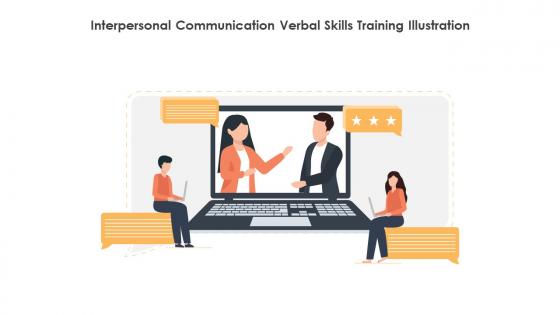
Interpersonal Communication Verbal Skills Training Illustration




Try Before you Buy Download Free Sample Product
 Impress Your
 Audience
 100%
100% Editable
 Save Hours
 of Time


This Interpersonal communication verbal skills training illustration is a 100 percent editable Illustration. The downloaded file will have this Illustration in EPS, PNG and Powerpoint pptx format and is perfect for your next project. It has a simple yet stylish design.
People who downloaded this PowerPoint presentation also viewed the following :
Interpersonal Communication Verbal Skills Training Illustration with all 6 slides:
Use our Interpersonal Communication Verbal Skills Training Illustration to effectively help you save your valuable time. They are readymade to fit into any presentation structure.





FAQs for Interpersonal Communication Verbal
Non-verbal communication accounts for approximately 55% of interpersonal interactions, including body language, facial expressions, gestures, tone of voice, and spatial positioning. These visual and auditory cues enhance relationship building by conveying emotions, establishing trust, and reinforcing verbal messages, with many professionals finding that mastering non-verbal skills significantly improves workplace collaboration and client relationships.
Active listening enhances interpersonal communication by demonstrating genuine engagement, encouraging open dialogue, and minimizing misunderstandings through focused attention and thoughtful responses. This approach enables stronger workplace relationships, more effective team collaboration, and improved conflict resolution, with many organizations finding that active listening training significantly reduces communication barriers and enhances overall operational efficiency.
Common barriers to effective interpersonal communication include cultural differences, emotional states, language barriers, distractions, and preconceived assumptions about others. These obstacles significantly impact workplace collaboration, customer relationships, and team dynamics, with many organizations finding that addressing communication barriers through training and awareness programs ultimately enhances productivity, reduces conflicts, and delivers stronger business outcomes.
Cultural differences significantly impact interpersonal communication through varying directness levels, nonverbal interpretations, hierarchy expectations, relationship-building approaches, and conflict resolution styles. These variations create both challenges and opportunities in global organizations, with many multinational companies finding that cultural awareness training enhances team collaboration, reduces misunderstandings, and ultimately delivers stronger international partnerships and operational efficiency.
Emotional intelligence significantly enhances interpersonal interactions by enabling better recognition of emotions, improved empathy, and more effective communication responses. Through heightened self-awareness and social skills, professionals in healthcare, management, and customer service build stronger relationships, resolve conflicts more efficiently, and create more collaborative work environments, ultimately delivering improved team performance and organizational outcomes.
Effective conflict resolution strategies include active listening, empathy acknowledgment, finding common ground, reframing perspectives, and collaborative problem-solving approaches. These techniques streamline workplace dynamics by reducing misunderstandings, enhancing team productivity, and building stronger professional relationships, with many organizations finding that structured communication training ultimately delivers improved employee satisfaction and operational efficiency.
Constructive feedback can be delivered by focusing on specific behaviors rather than personal traits, using "I" statements to express observations, timing conversations appropriately, and offering actionable suggestions for improvement. This approach enhances workplace relationships, reduces defensiveness, and promotes professional growth, with many organizations finding that structured feedback conversations ultimately deliver improved performance and stronger team collaboration.
Techniques to improve verbal clarity include active listening, structured messaging, appropriate pacing, strategic pausing, and concise language choices. These approaches enhance understanding by eliminating ambiguity, ensuring message alignment, and creating space for feedback, with many organizations finding that clear communication protocols reduce miscommunication by up to 40%, ultimately delivering stronger collaboration and improved project outcomes.
Technology transforms interpersonal communication by enabling instant connectivity, facilitating remote collaboration, and providing multiple communication channels like video calls, messaging, and social platforms. While digital tools streamline professional workflows and maintain personal relationships across distances, they also present challenges including reduced face-to-face interaction and potential miscommunication, with many organizations finding that strategic technology integration enhances overall communication effectiveness.
Assertive communication involves expressing needs clearly while respecting others, passive communication avoids confrontation by suppressing personal needs, and aggressive communication prioritizes personal needs while disregarding others' feelings and rights. These styles significantly impact workplace dynamics, with assertive approaches enabling better team collaboration, clearer project outcomes, and stronger professional relationships, ultimately delivering enhanced organizational efficiency and reduced conflict.
Interpersonal communication skills develop through active listening practice, regular feedback seeking, empathy building, nonverbal awareness training, and consistent self-reflection on interactions. These approaches enhance professional relationships by improving clarity, reducing conflicts, and building trust, with many organizations finding that employees with strong communication skills drive better team collaboration, customer satisfaction, and ultimately deliver competitive advantage in increasingly relationship-driven business environments.
Body language significantly influences interpersonal communication by conveying emotions, building trust, and reinforcing verbal messages through facial expressions, posture, and gestures. These nonverbal cues enhance workplace interactions, client relationships, and team dynamics, with many organizations finding that effective body language training improves collaboration, reduces misunderstandings, and ultimately delivers stronger professional relationships and business outcomes.
Empathy can be cultivated through active listening, perspective-taking exercises, mindfulness practices, seeking diverse experiences, and regular self-reflection on emotional responses. These approaches enhance interpersonal relationships by building deeper understanding, fostering trust, and improving conflict resolution, with many organizations finding that empathy-focused training ultimately delivers stronger team collaboration and more effective leadership communication.
Storytelling enhances interpersonal communication by creating emotional connections, making complex information memorable, and building trust through shared experiences. Through narrative structures, professionals can simplify technical concepts, influence decision-making, and foster deeper relationships with colleagues and clients, ultimately delivering more persuasive presentations and stronger workplace collaborations.
Navigating difficult conversations requires active listening, empathy, and focusing on solutions rather than blame, while maintaining respect and acknowledging different perspectives throughout the dialogue. By using "I" statements, asking clarifying questions, and finding common ground, professionals can address challenging topics constructively, ultimately strengthening relationships through transparent communication and mutual understanding.
-
Amazing slides! Unique, attractive, and easy to understand.
-
They had the topic I was looking for in a readymade presentation…helped me meet my deadline.