Introducción a la fabricación inteligente para optimizar el proceso de producción Diapositivas de presentación en Powerpoint DK MD

Rating:
90%
Introduction Of Smart Manufacturing To Optimize Production Process Powerpoint Presentation Slides DK MD
Slide 1 of 18
Favourites Favourites

Try Before you Buy Download Free Sample Product

Audience Impress Your
Audience
Editable 100%
Editable
Time Save Hours
of Time
The Biggest Sale is ending soon in
0
0
:
0
0
:
0
0
Rating:
90%

Características de estas diapositivas de presentación de PowerPoint:

cautive a su audiencia con esta Introducción a la fabricación inteligente para optimizar el proceso de producción Diapositivas de presentación de PowerPoint DK MD. Aumente el umbral de su presentación implementando esta plantilla bien diseñada. Actúa como una gran herramienta de comunicación debido a su contenido bien investigado. También contiene iconos estilizados, gráficos, imágenes, etc., que lo convierten en un captador de atención inmediato. Con trece diapositivas, esta plataforma completa es todo lo que necesitas para llamar la atención. Todas las diapositivas y su contenido se pueden modificar para adaptarse a su entorno empresarial único. No solo eso, también se pueden modificar otros componentes y gráficos para agregar toques personales a este conjunto prefabricado.

Contenido de esta presentación de Powerpoint

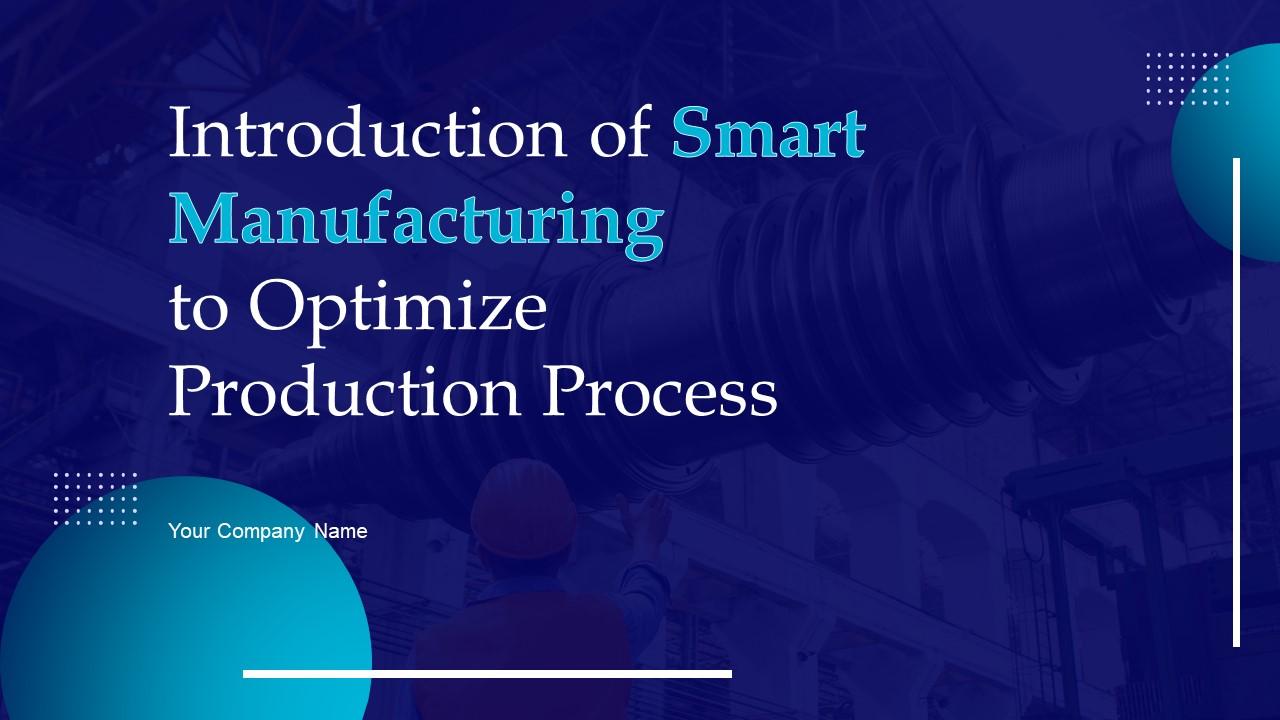
Diapositiva 1 : esta diapositiva muestra la introducción de la fabricación inteligente para optimizar el proceso de producción.
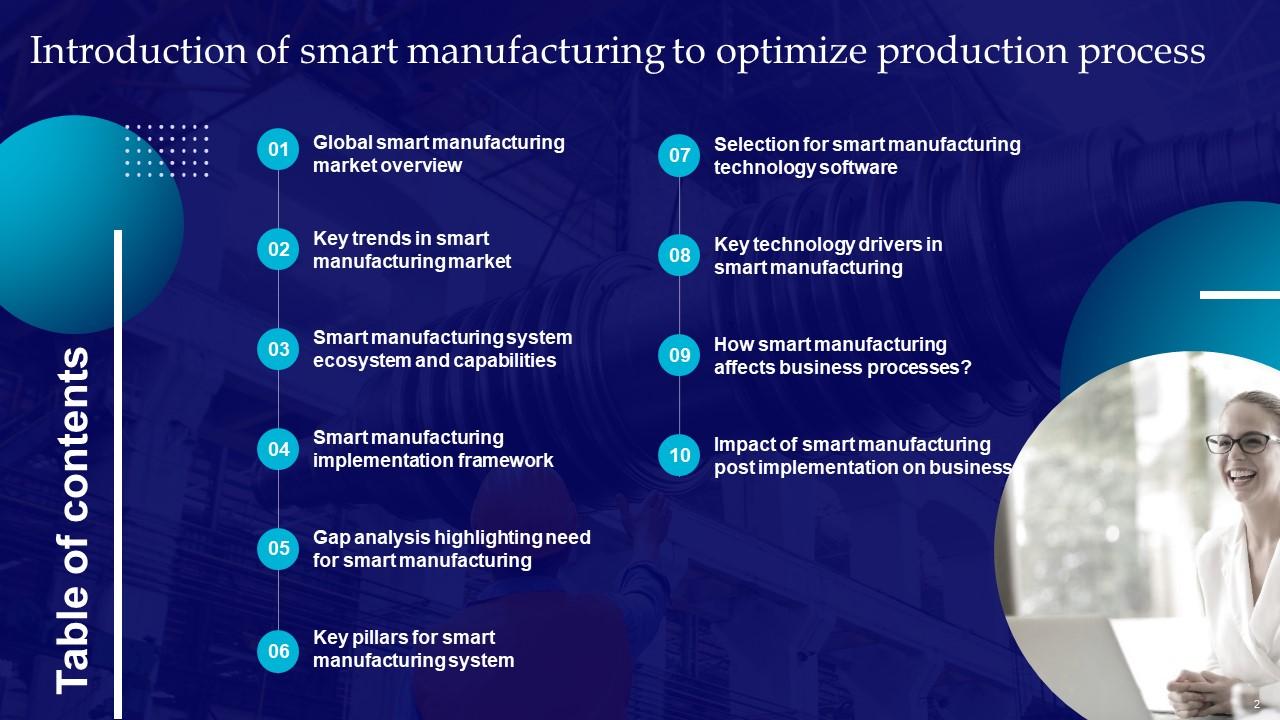
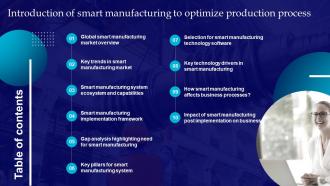
Diapositiva 2 : esta diapositiva muestra la tabla de contenido de la presentación.
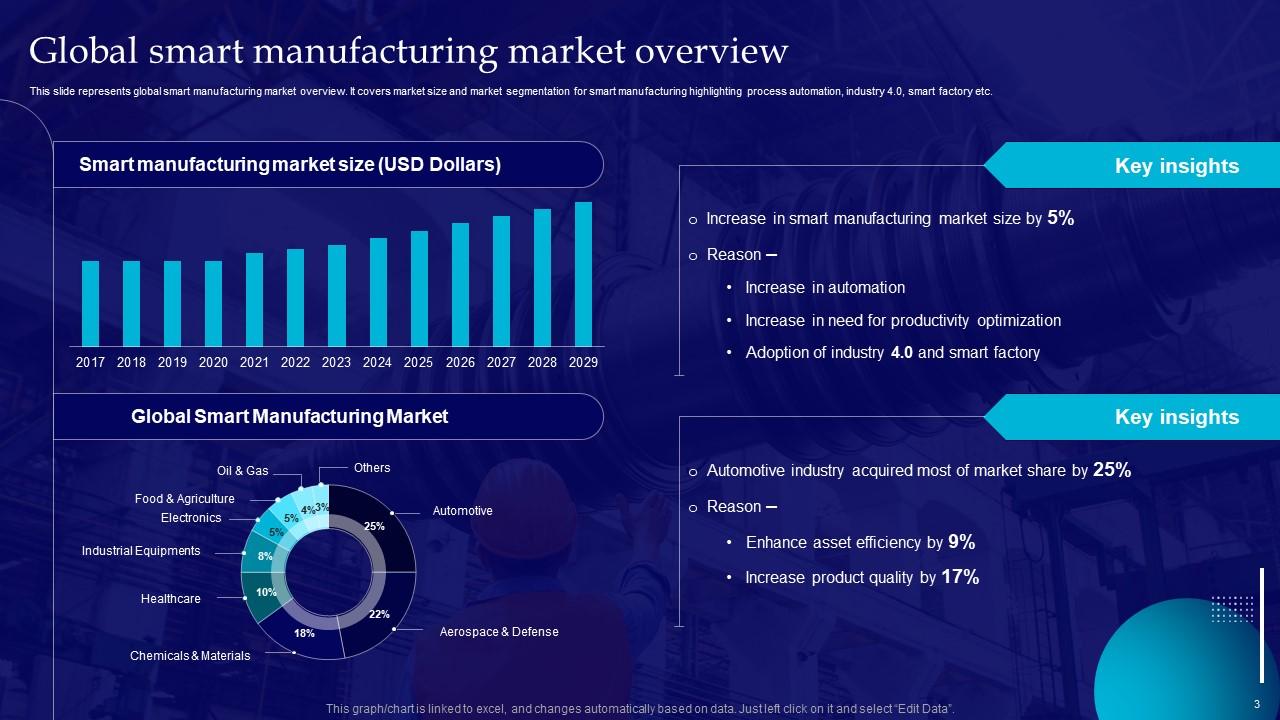
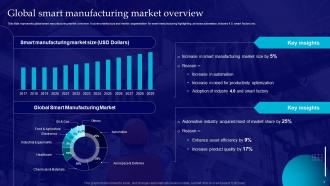
Diapositiva 3 : Esta diapositiva presenta una descripción general del mercado mundial de fabricación inteligente.
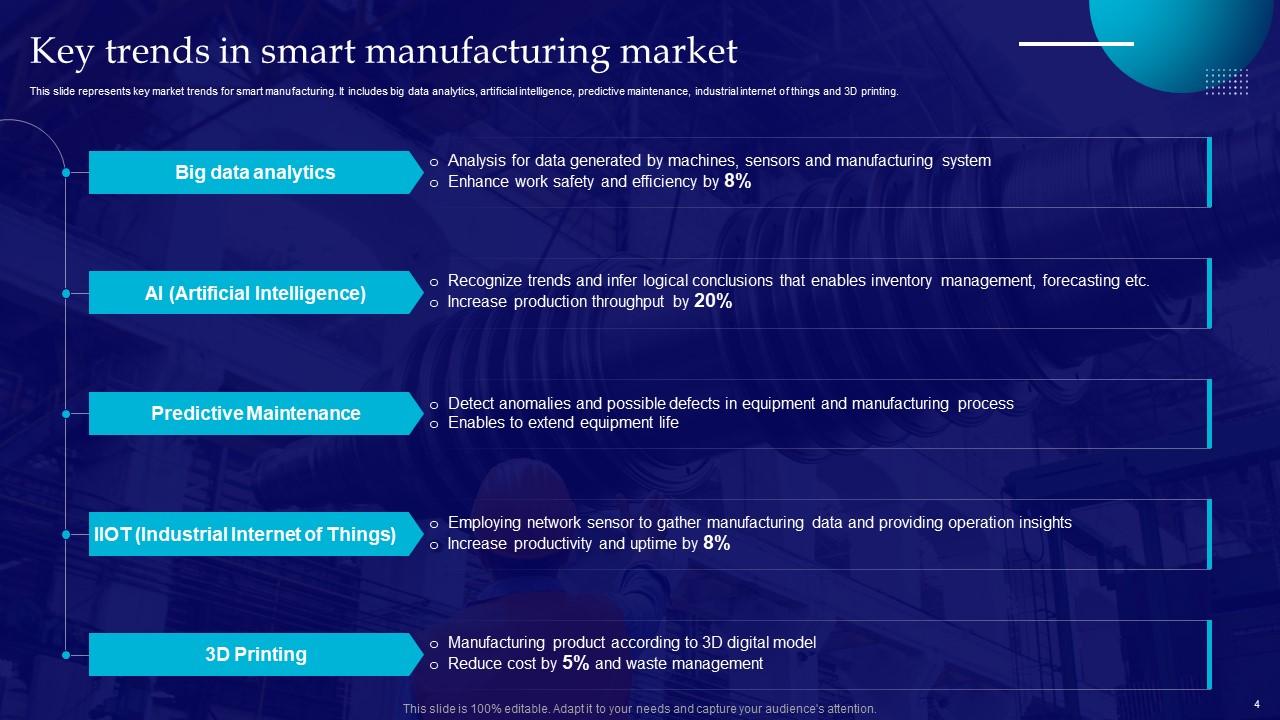
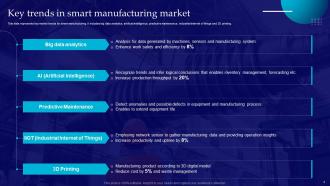
Diapositiva 4 : Esta diapositiva muestra las tendencias clave en el mercado de fabricación inteligente.
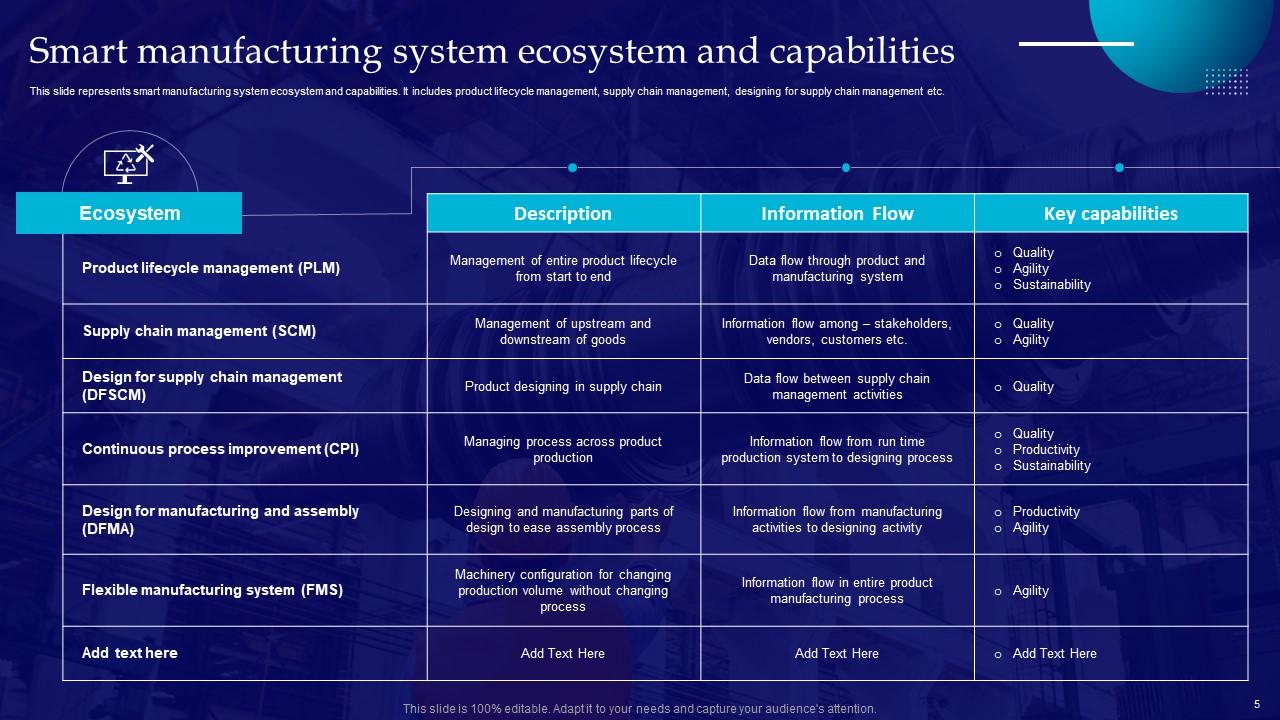
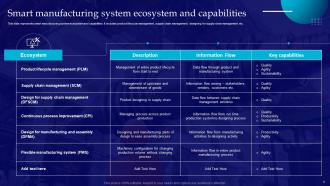
Diapositiva 5 : Esta diapositiva representa el ecosistema y las capacidades del sistema de fabricación inteligente.
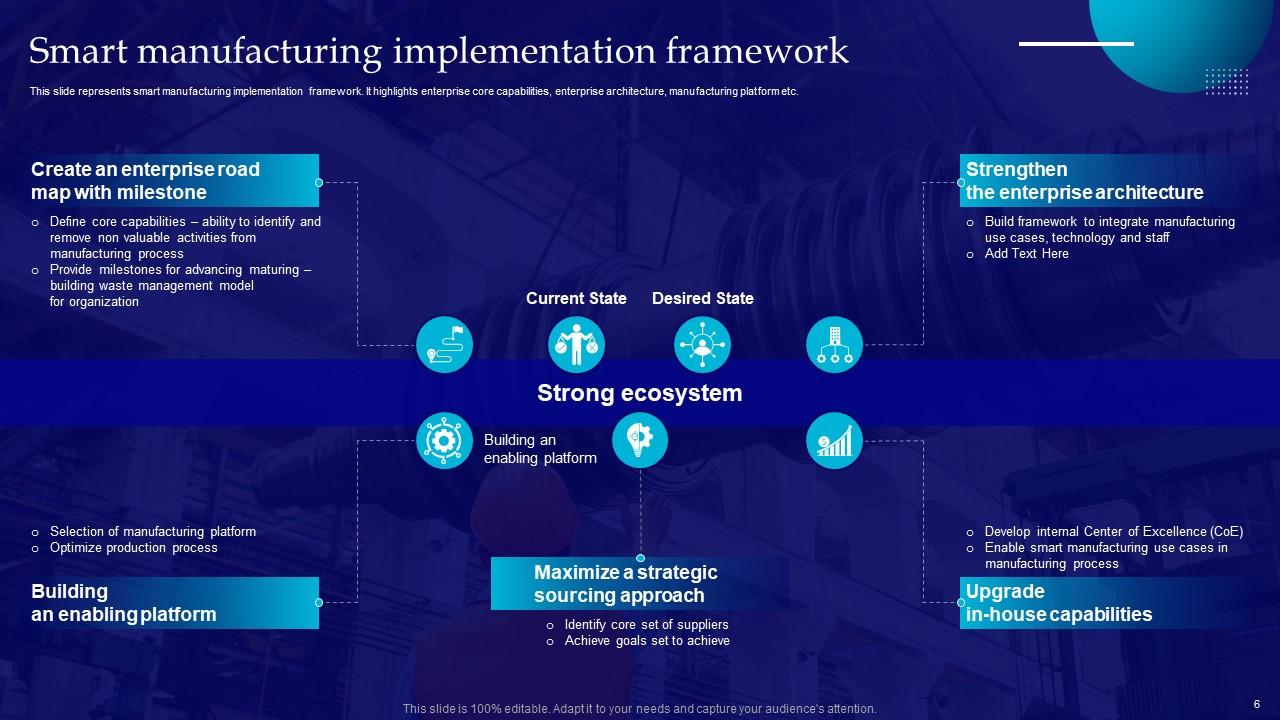
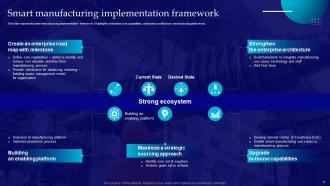
Diapositiva 6 : Esta diapositiva muestra el marco de implementación de la fabricación inteligente.
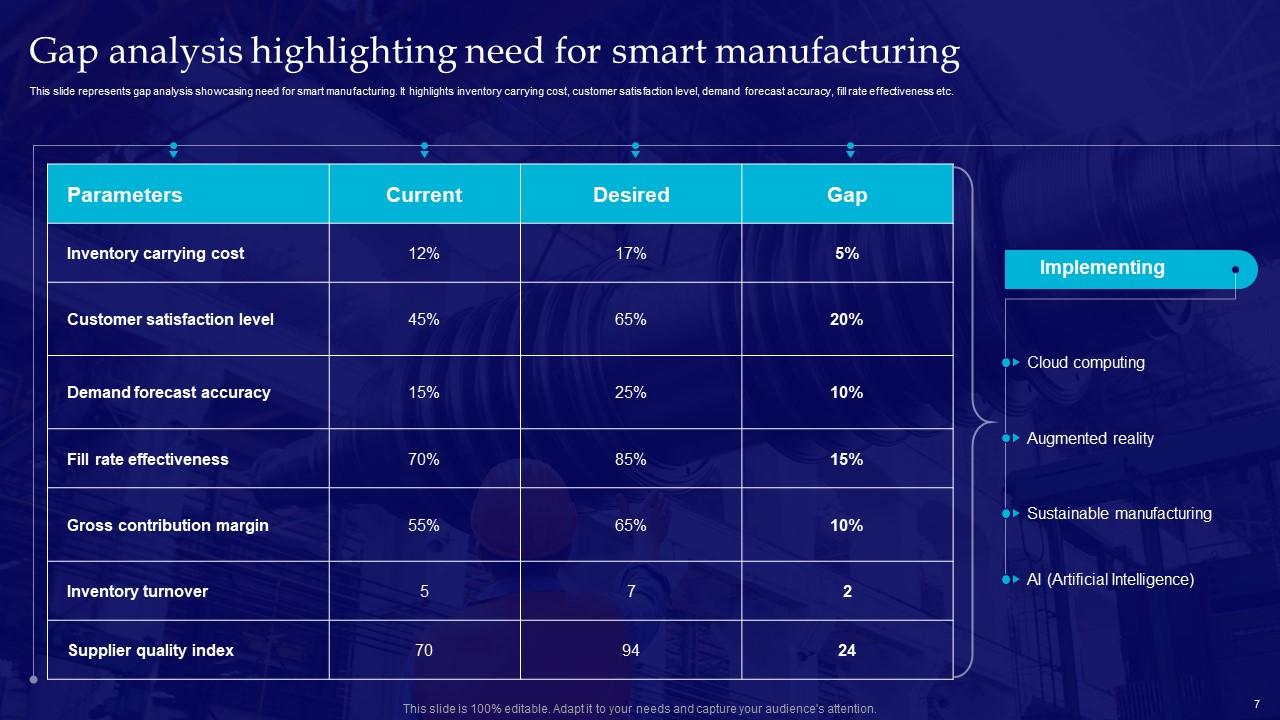
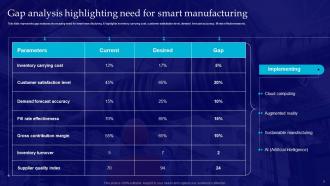
Diapositiva 7 : Esta diapositiva muestra un análisis de brechas que destaca la necesidad de una fabricación inteligente.
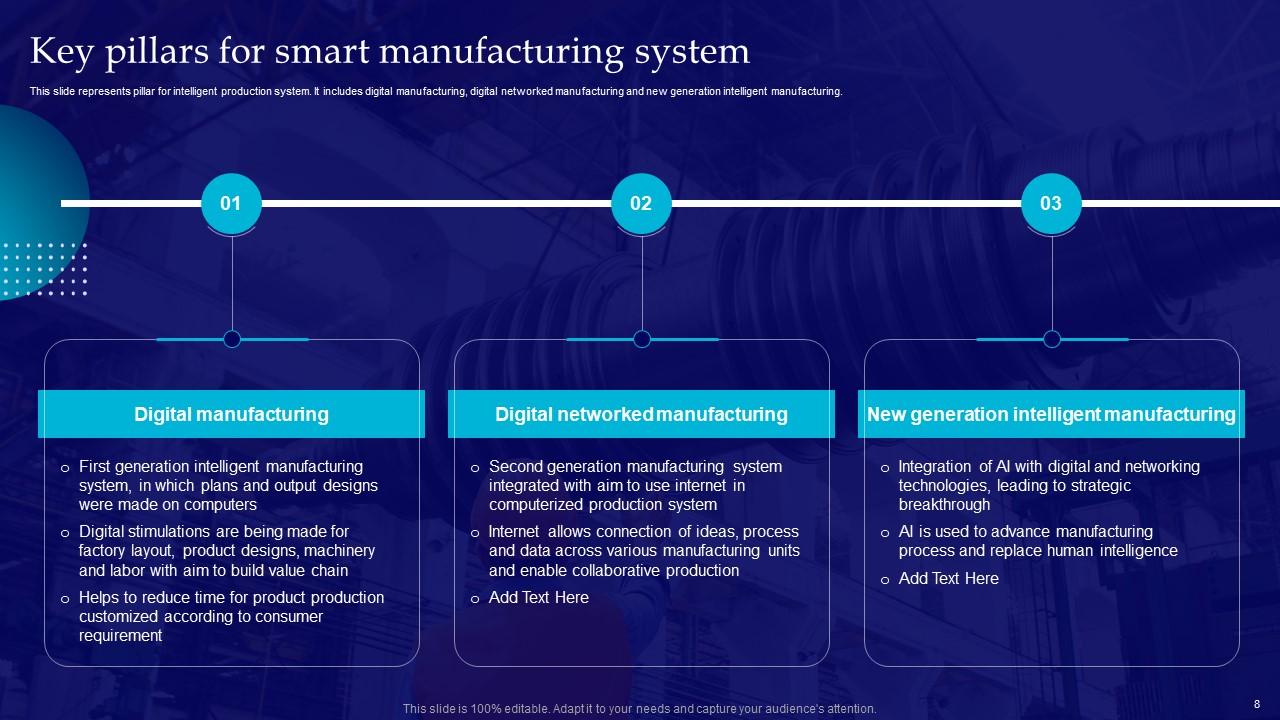
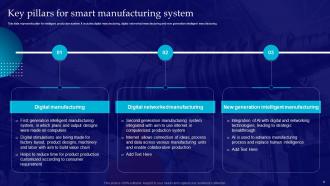
Diapositiva 8 : Esta diapositiva presenta los pilares clave para el sistema de fabricación inteligente.
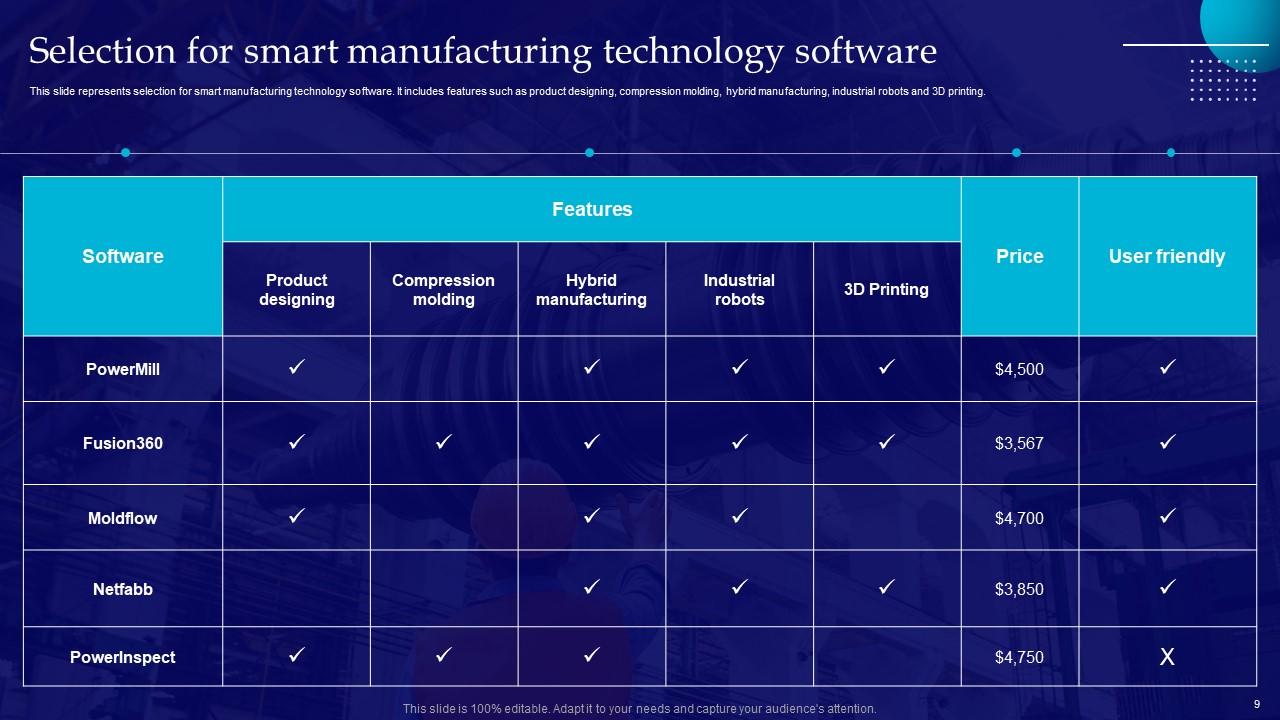
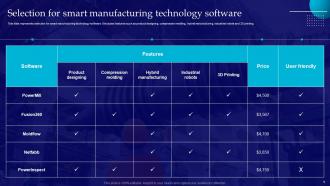
Diapositiva 9 : Esta diapositiva muestra Selección de software de tecnología de fabricación inteligente.
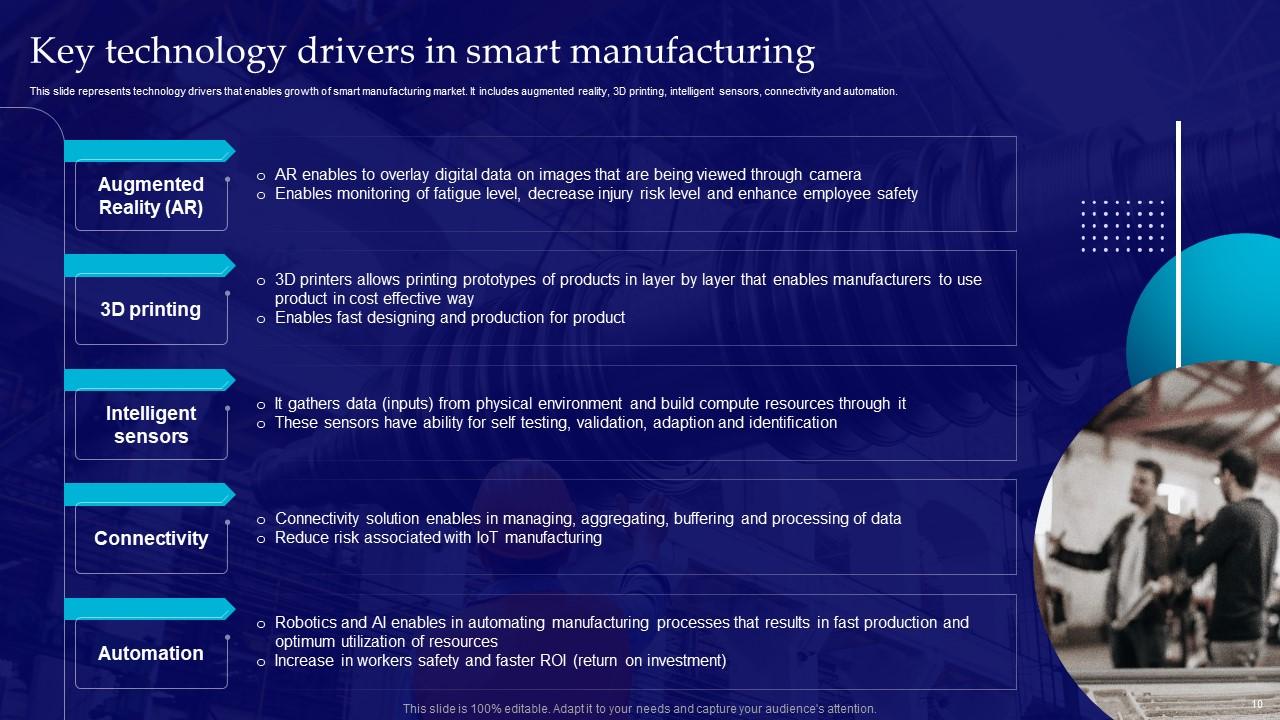
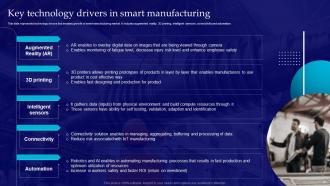
Diapositiva 10 : Esta diapositiva representa los impulsores tecnológicos clave en la fabricación inteligente.
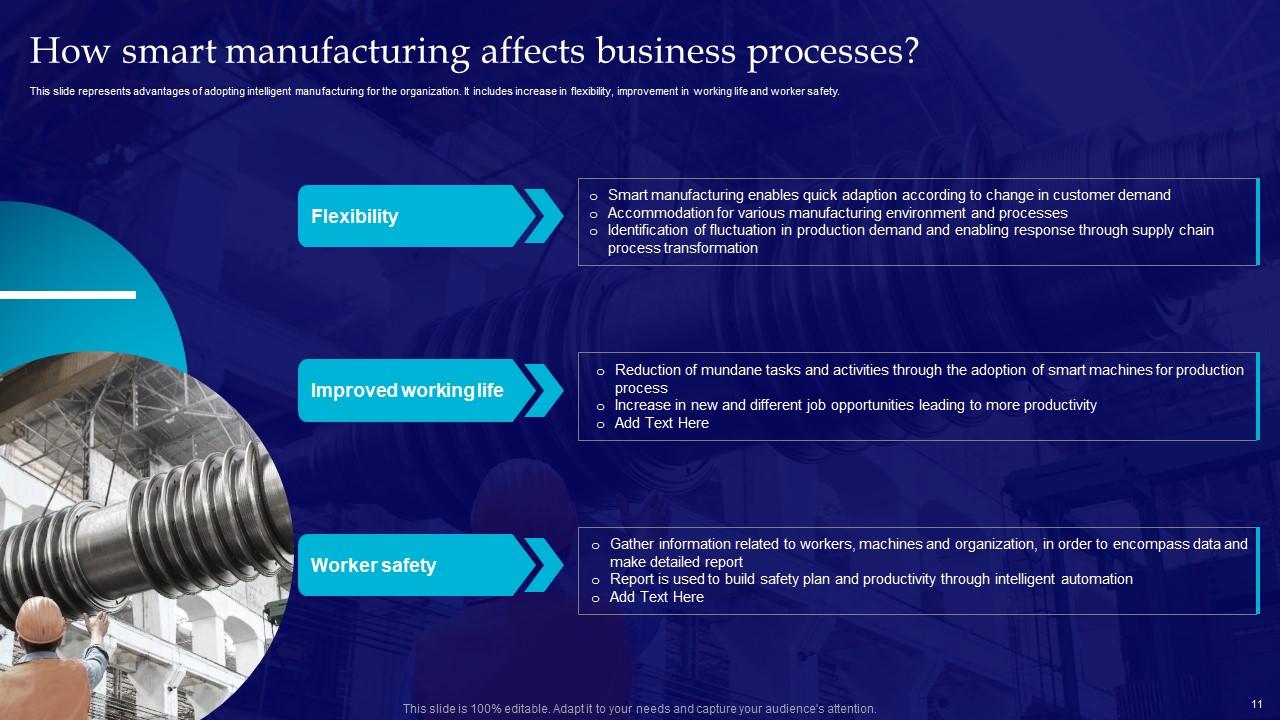
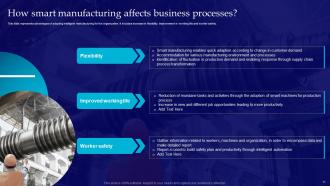
Diapositiva 11 : Esta diapositiva muestra cómo la fabricación inteligente afecta los procesos comerciales.
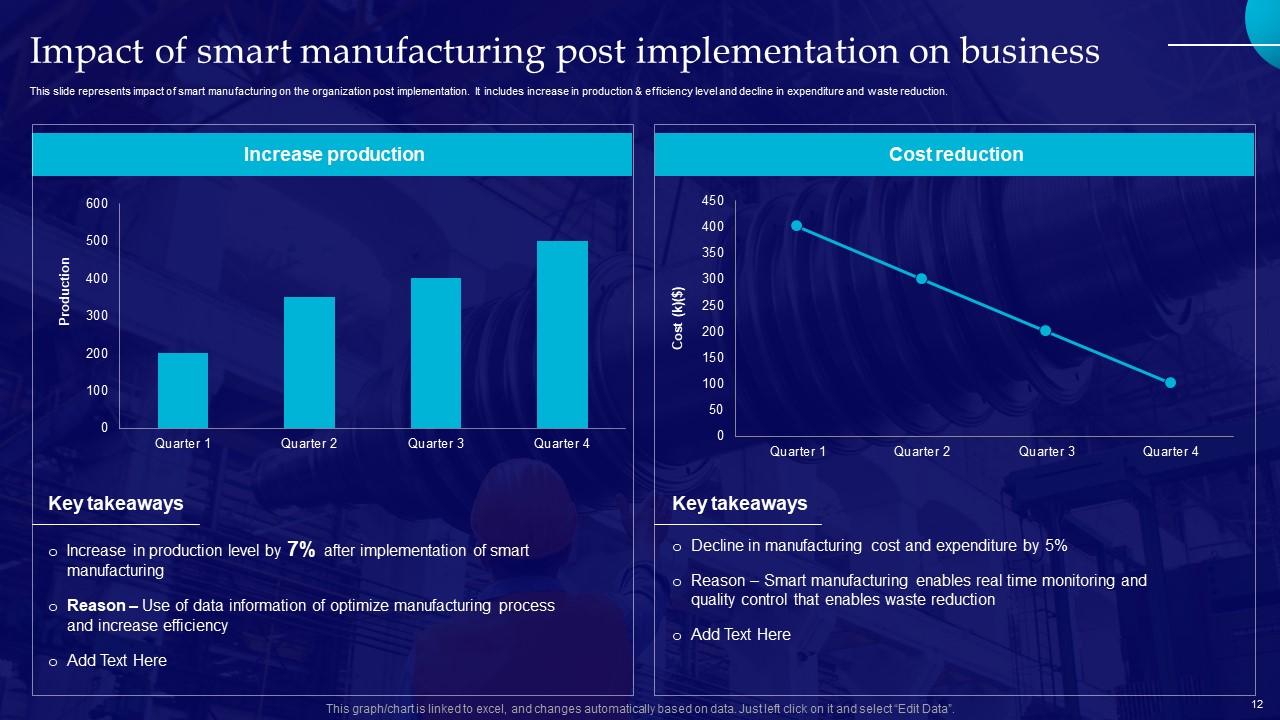
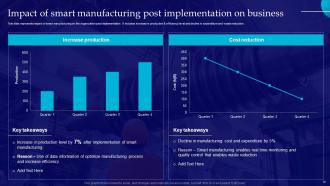
Diapositiva 12 : esta diapositiva muestra el impacto de la implementación posterior de la fabricación inteligente en los negocios.
Diapositiva 13 : Esta es una diapositiva de agradecimiento con dirección, números de contacto y dirección de correo electrónico.

FAQs for Introduction Of Smart Manufacturing To Optimize Production Process Powerpoint Presentation

So the main game-changers are IoT sensors, AI/machine learning, and digital twins. Sensors are literally everywhere now - tracking temperature, vibrations, you name it. AI takes all that data and figures out when your equipment might crap out or how to run things more efficiently. Digital twins are actually pretty slick - they're virtual copies of your real machines so you can mess around with different scenarios without breaking anything. Oh, and edge computing's massive too since you need that processing right there on the floor for split-second decisions. Honestly though, I'd figure out what's driving you crazy first, then pick the tech that'll actually fix those headaches.

Dude, the real-time data is a game changer - you'll actually see bottlenecks happening instead of finding out about them in some boring report three weeks later. Machines start talking to each other and automatically shift production around, plus they'll tell you when they need maintenance before breaking down. Energy costs drop too since everything optimizes itself. I swear, the amount of waste that just disappears is crazy once data starts flowing properly. Oh, and don't go full-scale right away - test it on one line first. Way easier to get buy-in when you can actually show the money you're saving.

So data analytics is like the brain behind smart manufacturing - takes all that sensor info from your machines and makes it actually useful. You'll get real-time updates on production efficiency, quality stuff, equipment health. Honestly the predictive side is where it gets interesting - you can catch problems before they wreck your budget. Plus it helps optimize maintenance timing, energy use, even demand forecasting. My advice? Start with just one production line though. Focus on whatever metrics hit your wallet hardest first, then expand from there.

So basically predictive maintenance tracks your equipment with sensors before stuff actually breaks. Way smarter than dealing with random shutdowns, you know? It's like getting that low oil warning vs your engine dying on you - no contest there. The sensors watch vibrations, temps, pressure, all that. Most places cut unplanned downtime by like 20-30% which is huge. I'd probably start with your most critical machines first, just throw some basic sensors on those. Makes way more sense than trying to monitor everything at once.

Honestly, you're gonna be dealing with a ton of new attack points from all those IoT devices everywhere. Legacy equipment is the worst - it wasn't built thinking about hackers at all. Your whole network becomes this big data vulnerability mess. Insider threats are real too, plus ransomware loves going after operational stuff now. Real-time machine communications? Yeah, that's another headache to secure. Most places can't even handle basic stuff like patching regularly or splitting up their networks properly - which is kinda nuts when you think about it. Do a security audit first, then focus on protecting your most critical production gear.

Look, automation doesn't just wipe out jobs - it shifts them around. Yeah, some repetitive stuff disappears, but that's nothing new. What changes is your workers need to get comfortable with tech to work alongside robots and AI systems. The new roles? Think system monitoring, data analysis, equipment maintenance - basically higher-skill stuff. Here's what I've noticed though: companies do way better when they retrain their current people instead of hiring from outside. Makes sense, right? I'd start by figuring out which employees are already tech-curious and build from there.

Basically, smart manufacturing catches defects way before they screw up your whole batch. Sensors monitor everything in real-time and auto-adjust when stuff goes off track. The traceability is insane - you'll know exactly what happened where. Oh, and the AI learns from past data to predict equipment failures before they hit. Honestly think it's one of those things that sounds complicated but isn't once you start small. I'd begin with basic IoT sensors on whatever process gives you the most headaches, then slowly build up your data game from there. Much easier than trying to do everything at once.

So smart manufacturing basically helps the environment in a few big ways. Energy use drops when you optimize equipment schedules and do predictive maintenance - no more surprise breakdowns wasting power. Material waste gets cut way down too since real-time monitoring catches defects early instead of scrapping whole batches. Plus better resource planning means you're not overproducing stuff. The energy savings can be honestly pretty huge. Carbon footprint shrinks from efficiency gains and less transportation when you make exactly what's needed. Oh, and definitely audit your current energy usage first to track improvements later.

So basically, digital twins are like having a virtual copy of your entire manufacturing setup that updates in real-time. Pretty cool stuff. You can mess around with different scenarios and test changes without actually touching your production line - kind of like a sandbox game but for factories. The best part? You'll spot bottlenecks and problems way before they hit your actual equipment. No more expensive trial-and-error disasters. Plus you can run endless "what-if" scenarios and make smarter decisions faster. Honestly beats the old method of crossing your fingers and hoping for the best.

Don't try to do everything at once - that's where most small companies mess up. Pick your biggest headache first, maybe inventory or equipment maintenance, and test something small there. Cloud stuff is way cheaper than building your own tech setup. Government grants are actually pretty decent for this kind of thing if you dig around. I'd find vendors who get that you're not Amazon and won't try to sell you some massive system. Oh, and make sure you can actually measure whatever you're trying to fix - sounds obvious but you'd be surprised. Once that's working, then you can think bigger.

Yeah, those initial costs are brutal - sensors, automation gear, analytics software, plus training everyone. Most places break even in 2-3 years though from less downtime and better quality control. Monthly software licenses and maintenance add up fast, but your electricity bill might actually drop since everything runs more efficiently. Oh, and don't forget cybersecurity - that's not cheap either. Honestly? Start with just one area as a test run. I've seen too many companies try to go all-in and completely wreck their budgets.

Honestly, smart manufacturing is a game-changer for supply chains. Instead of always playing catch-up when stuff goes wrong, you get predictive insights that let you stay ahead. Real-time visibility across suppliers, automated forecasting, AI inventory optimization - basically you can see problems coming before they hit. Your suppliers stop being separate headaches and become actual partners through shared data platforms. No more managing everything through endless email chains (thank god). The systems automatically reroute shipments and predict quality issues. I'd start with your main tier-1 suppliers first, then work outward from there.

Real-time monitoring is a total game changer for smart factories. Instead of finding out about problems hours later, you catch them immediately and fix stuff before it turns into an expensive mess. Machine performance, quality issues - you see it all happening live. Way better than the old school approach of just checking things every now and then, honestly. Your AI systems get fed continuously with fresh data for predictive maintenance. My advice? Don't go crazy trying to monitor everything at first. Pick your biggest headaches and start there.

So AI can crunch massive amounts of real-time data from your production line way faster than any human. It'll spot quality patterns, predict equipment failures before they happen, and automatically optimize scheduling. Honestly, it's pretty wild - like having a genius coworker who doesn't need coffee breaks. Plus it adjusts parameters instantly when demand shifts or supply gets wonky. My advice? Start small though. Pick something specific like inventory management first and let the AI prove it works there. No point going all-in until you see results.

You'll run into ISO 9001 for quality stuff, plus IEC 62443 and ISA-95 for cybersecurity and system integration. NIST's cybersecurity framework is basically mandatory reading now. Industry-specific ones depend on your field - FDA regs if you're doing pharma, IATF 16949 for automotive. Cybersecurity standards are honestly the biggest pain right now since everything's connected. IEC 62443 is where I'd start - it's becoming the go-to for industrial cybersecurity. Your compliance folks should have the full list of what actually applies to you though.

Ratings and Reviews

90% of 100
Review Form
Write a review
Most Relevant Reviews
  1. 80%

    by Evans Mitchell

    Nothing beats the well-formatted and professionally designed templates offered. Kudos to SlideTeam for their amazing collection of PPT slides.
  2. 100%

    by Smith Flores

    Great combination of visuals and information. Glad I purchased your subscription.

2 Item(s)

per page: