


Introduction To AIOps And Its Use Cases Powerpoint Presentation Slides AI CD V
AIOps stands for Artificial Intelligence for IT Operations Management. It involves the implementation of advanced analytics, including machine learning ML and artificial intelligence AI, to automate and enhance IT operations. Our presentation, the Introduction to AIOps and Its Use Cases, provides a concise introduction to AIOps, its various types, and the key benefits of utilizing AIOps to streamline IT operations. AIOps presentation focuses on the reasons to adopt AIOps, such as managing the increasing volume of alerts, improving customer experience, and handling analytics. Moreover, AIOps KPI dashboard deck illustrates the key steps involved in deploying AIOps in the workplace and emphasizes AIOps use cases, including anomaly detection, application performance monitoring, event correlation, and IT service management. The presentation delves into how AIOps benefits various industries such as entertainment, banking, logistics, healthcare, finance, manufacturing, telecom, and more. Furthermore, our Root cause analysis module spotlights the top five AIOps platforms simplifying incident management Dynatrace, AppDynamics, Splunk, Moogsoft, and BigPanda. It also highlights the impact of implementing AIOps in enhancing business performance and provides essential dashboards and KPIs like MTTD, MTTR, downtime, mean time between failures, service availability, ticket to incident ratio, and more. Access this invaluable resource now.
AIOps stands for Artificial Intelligence for IT Operations Management. It involves the implementation of advanced analytics..































-

- Google Slides is a new FREE Presentation software from Google.
- All our content is 100% compatible with Google Slides.
- Just download our designs, and upload them to Google Slides and they will work automatically.
- Amaze your audience with SlideTeam and Google Slides.
-

Want Changes to This PPT Slide? Check out our Presentation Design Services
-

- WideScreen Aspect ratio is becoming a very popular format. When you download this product, the downloaded ZIP will contain this product in both standard and widescreen format.
-

- Some older products that we have may only be in standard format, but they can easily be converted to widescreen.
- To do this, please open the SlideTeam product in Powerpoint, and go to
- Design ( On the top bar) -> Page Setup -> and select "On-screen Show (16:9)” in the drop down for "Slides Sized for".
- The slide or theme will change to widescreen, and all graphics will adjust automatically. You can similarly convert our content to any other desired screen aspect ratio.
Compatible With Google Slides

Get This In WideScreen
You must be logged in to download this presentation.


Do you want to remove this product from your favourites?
PowerPoint presentation slides
Deliver an informational PPT on various topics by using this Introduction To AIOps And Its Use Cases Powerpoint Presentation Slides AI CD V. This deck focuses and implements best industry practices, thus providing a birds-eye view of the topic. Encompassed with one hundred nine slides, designed using high-quality visuals and graphics, this deck is a complete package to use and download. All the slides offered in this deck are subjective to innumerable alterations, thus making you a pro at delivering and educating. You can modify the color of the graphics, background, or anything else as per your needs and requirements. It suits every business vertical because of its adaptable layout.

People who downloaded this PowerPoint presentation also viewed the following :
Content of this Powerpoint Presentation
Slide 1: This slide displays the title Introduction to AIOps and Its Use Cases. Put your Company name and begin.
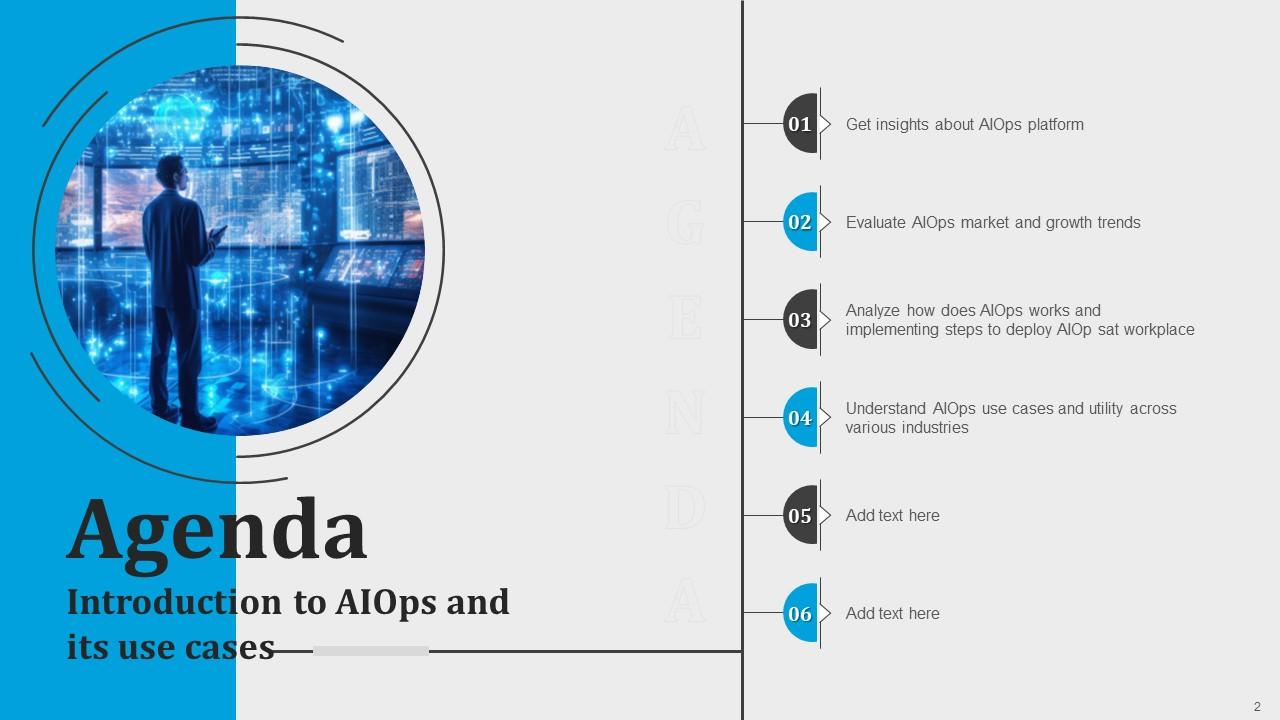
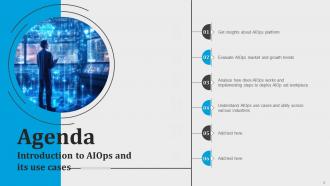
Slide 2: This slide displays the title Agenda.
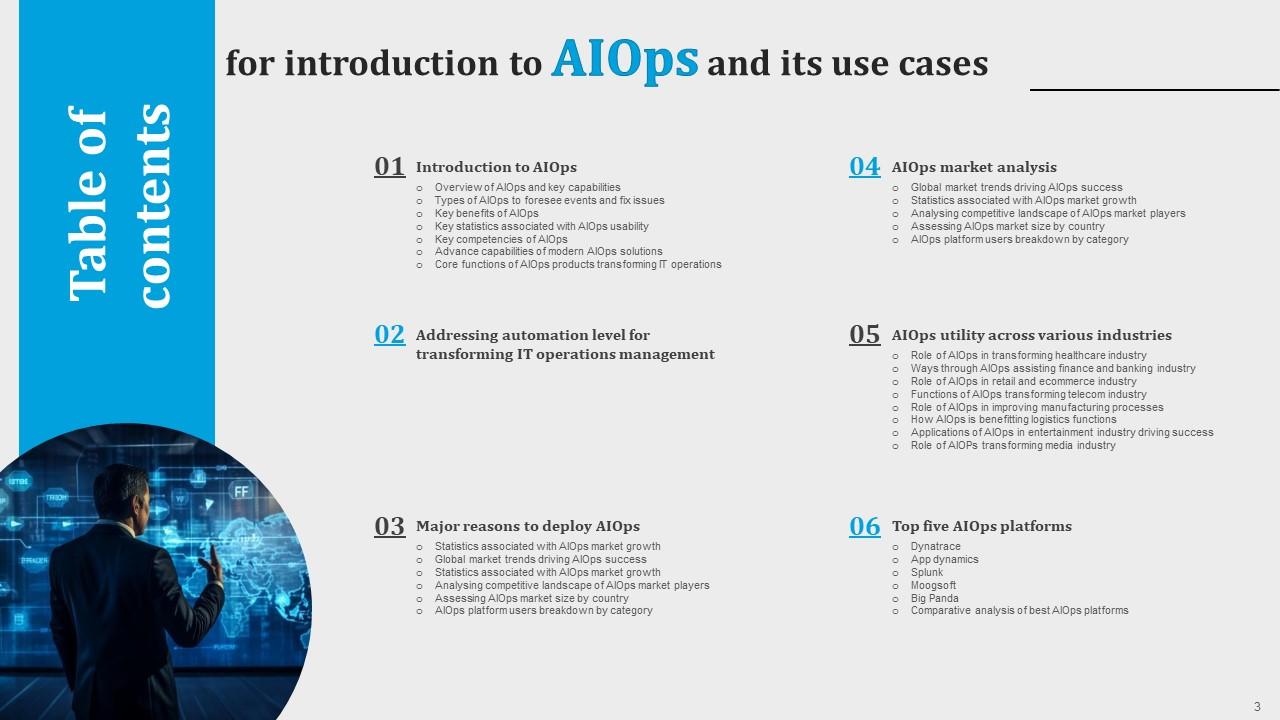
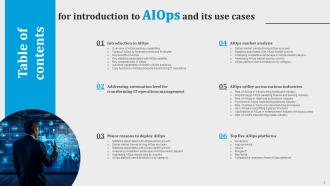
Slide 3: This slide exhibit table of content.
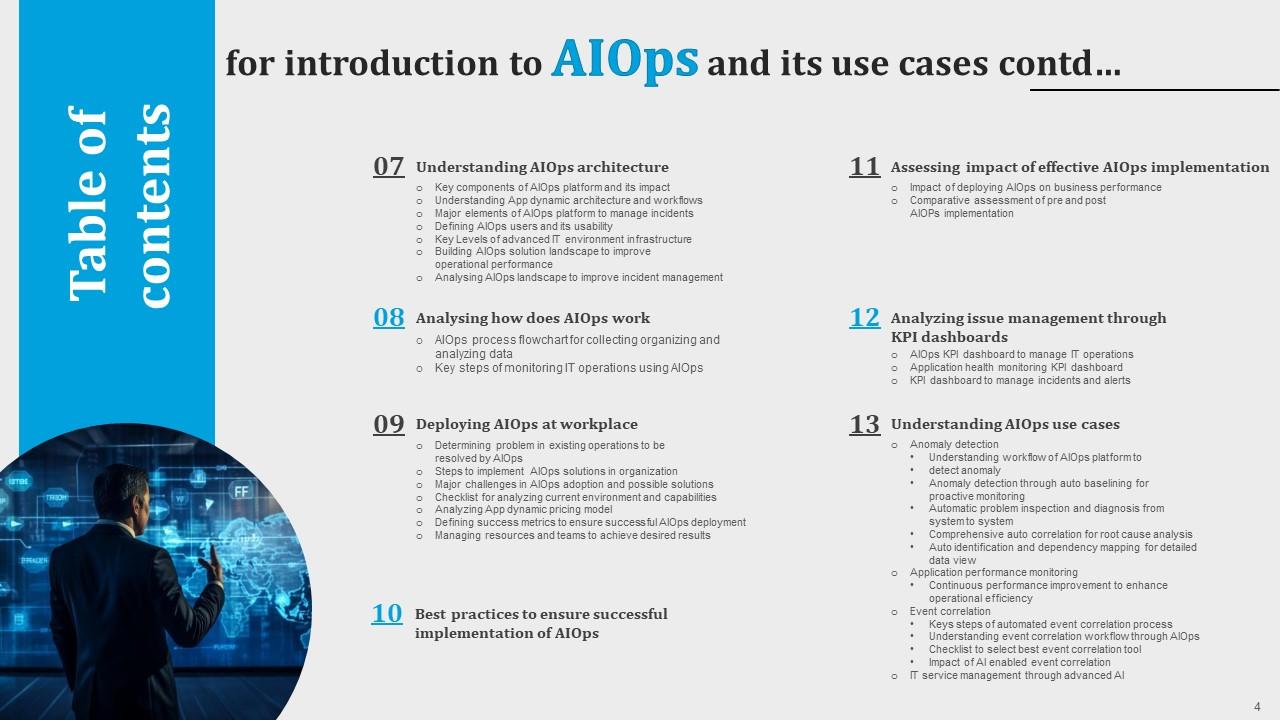
Slide 4: This slide exhibit table of content.
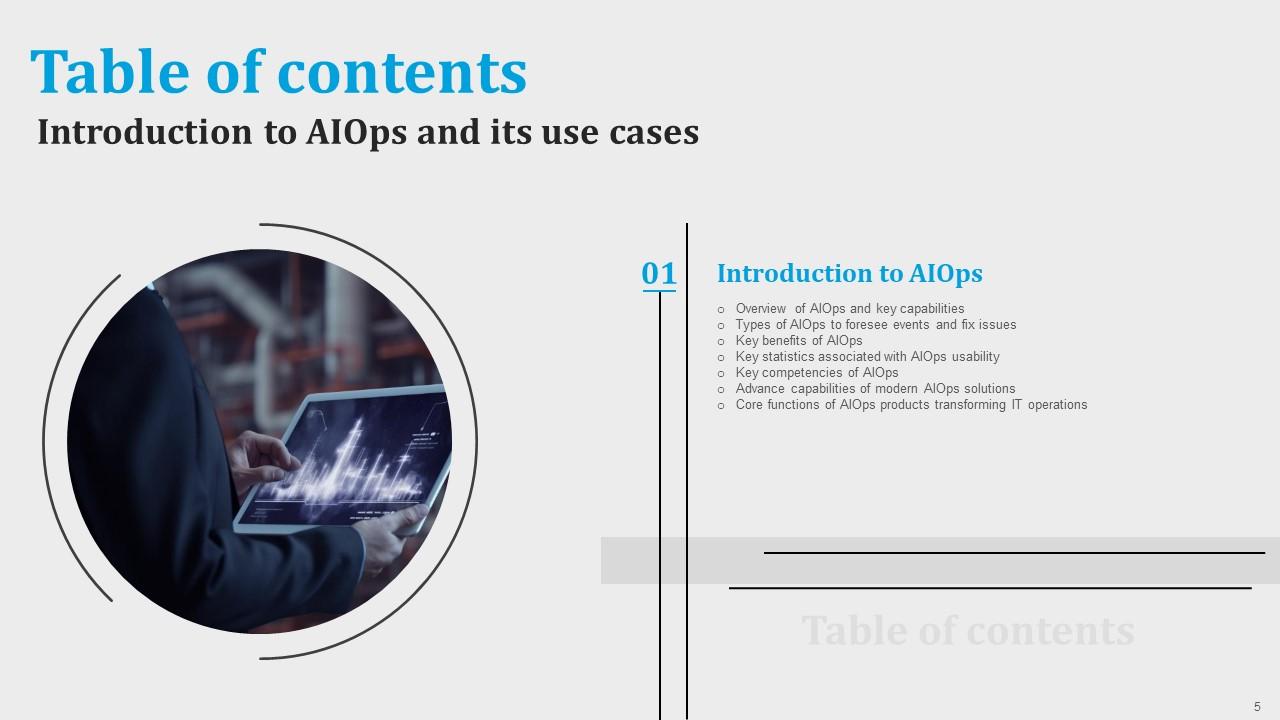
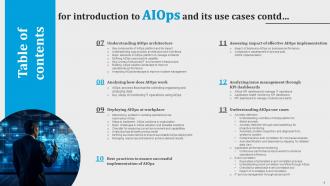
Slide 5: This slide exhibit table of content that is to be discuss further.
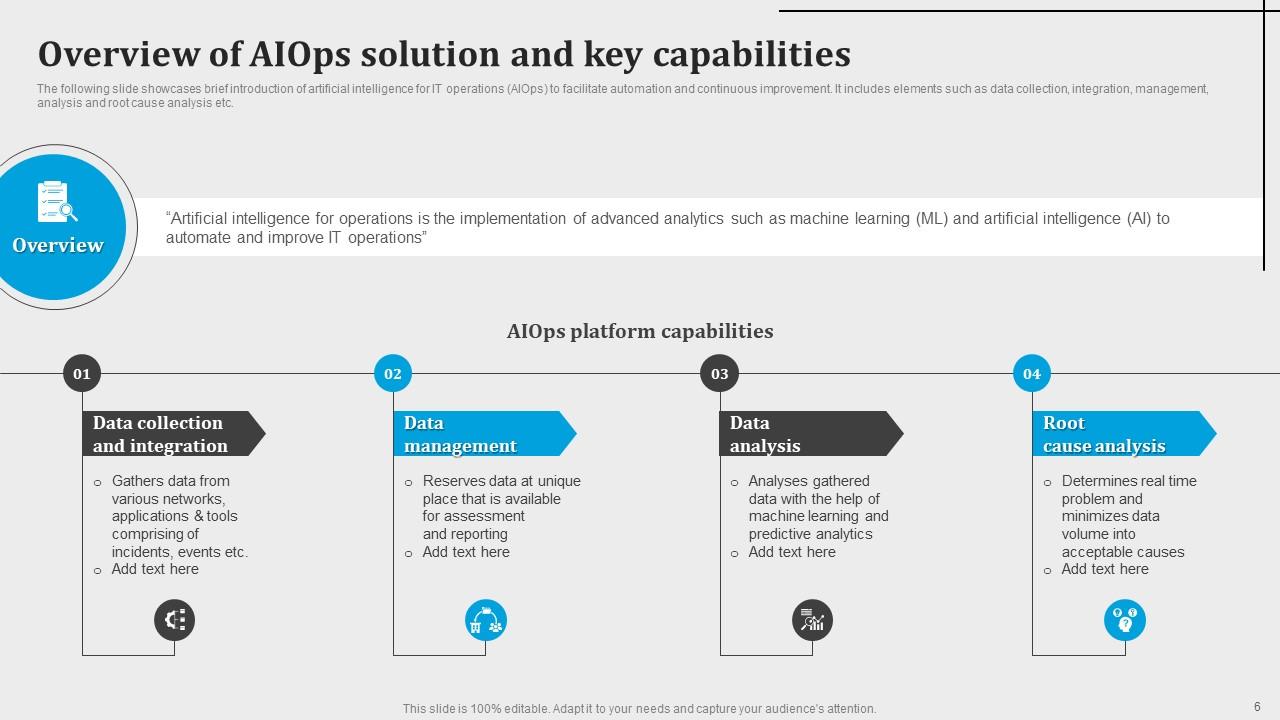
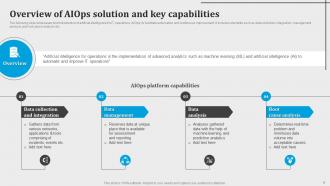
Slide 6: The following slide showcases brief introduction of artificial intelligence for IT operations (AIOps) to facilitate automation and continuous improvement.
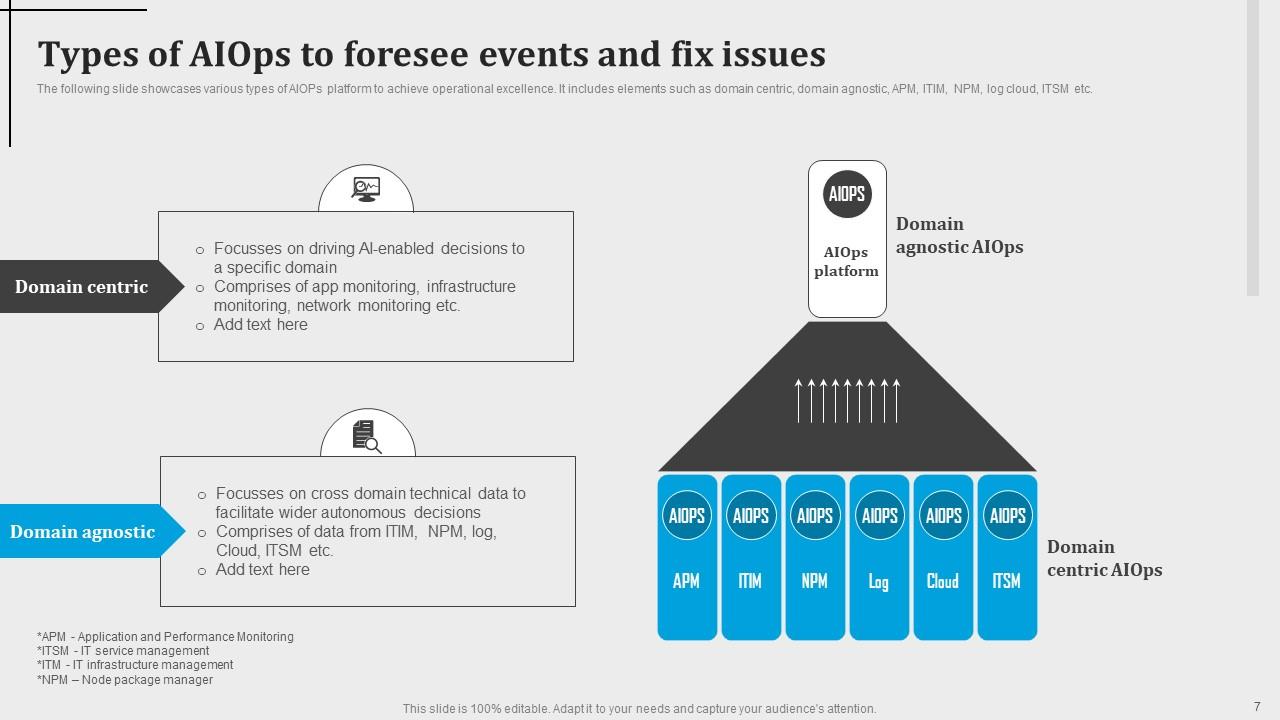
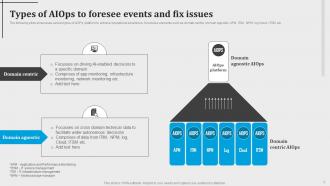
Slide 7: The following slide showcases various types of AIOPs platform to achieve operational excellence.
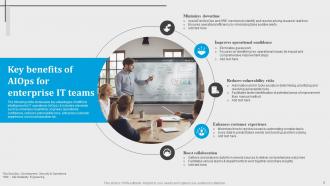
Slide 8: The following slide showcases key advantages of artificial intelligence for IT operations (AIOps).
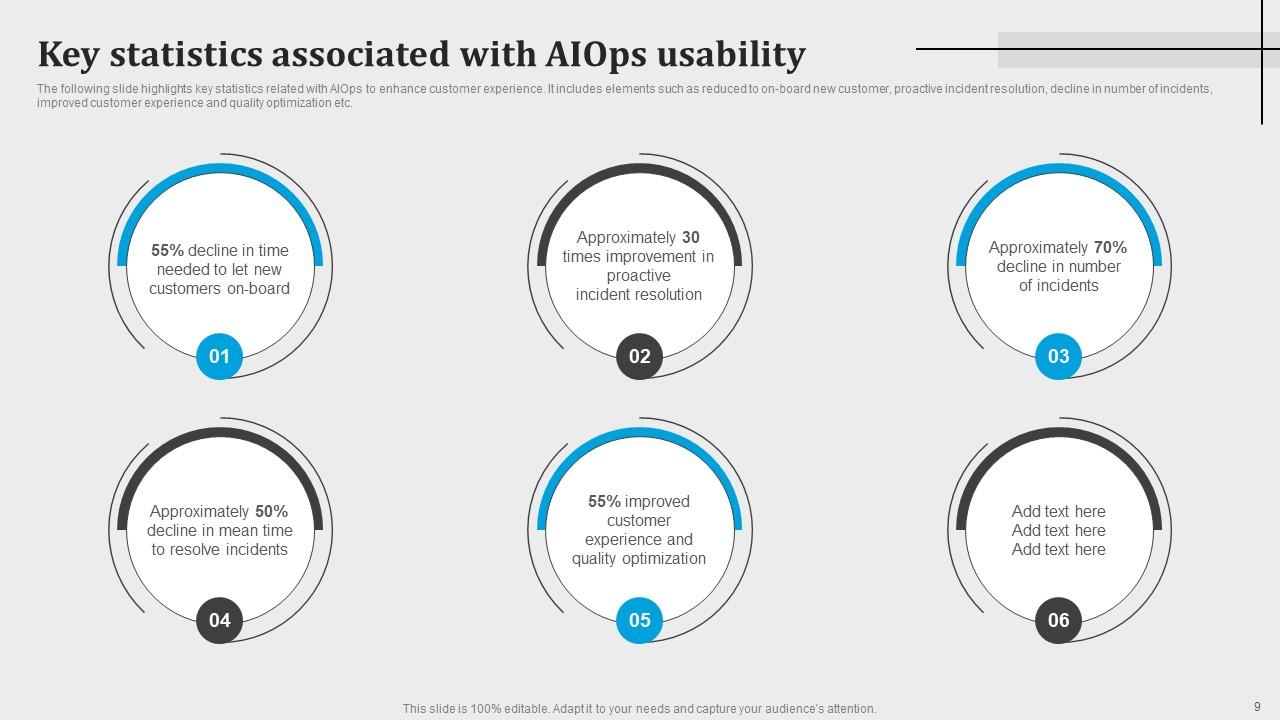
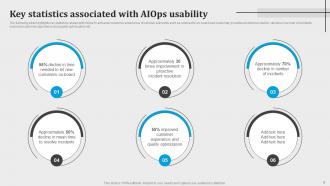
Slide 9: The following slide highlights key statistics related with AIOps to enhance customer experience.
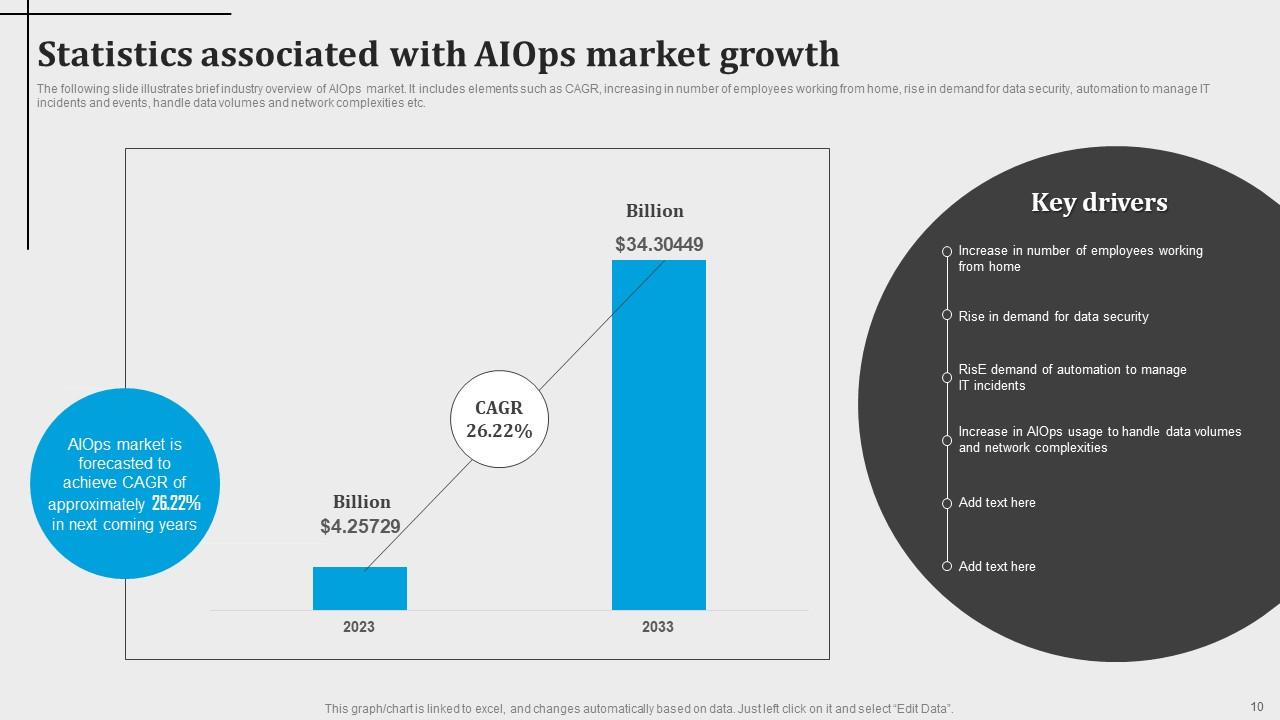
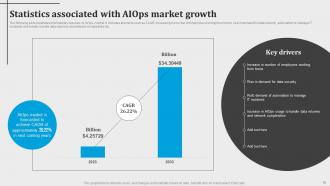
Slide 10: The following slide illustrates brief industry overview of AIOps market.
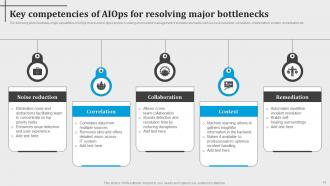
Slide 11: The following slide illustrates major capabilities of AIOps that assist in quick problem solving and incident management.
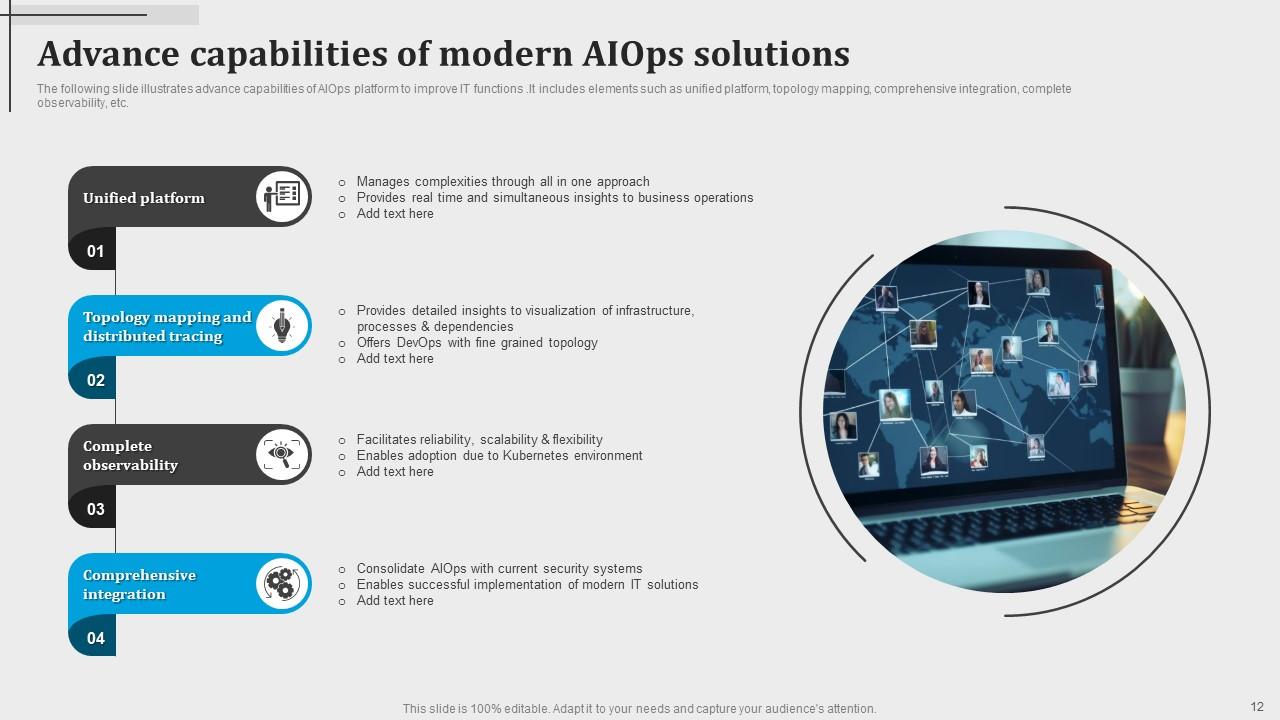
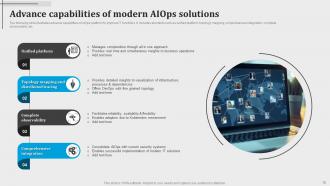
Slide 12: The following slide illustrates advance capabilities of AIOps platform to improve IT functions.
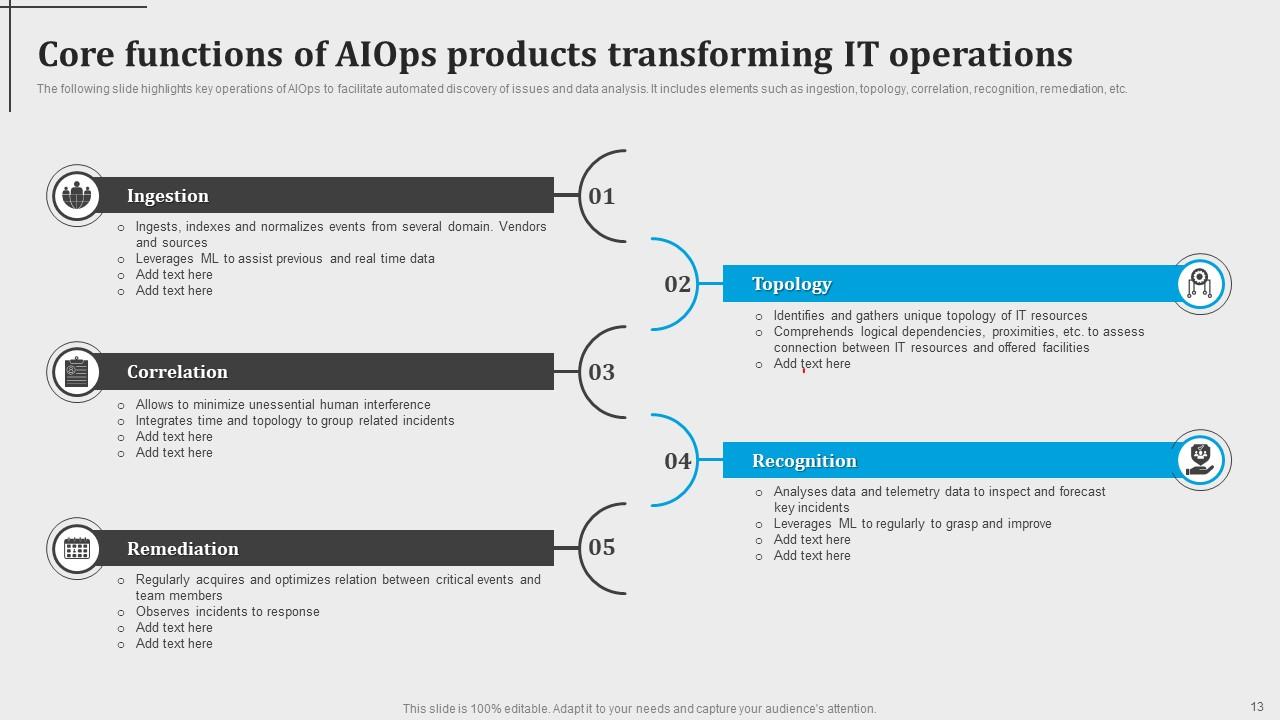
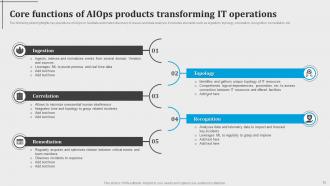
Slide 13: The following slide highlights key operations of AIOps to facilitate automated discovery of issues and data analysis.
Slide 14: This slide exhibit table of content that is to be discuss further.
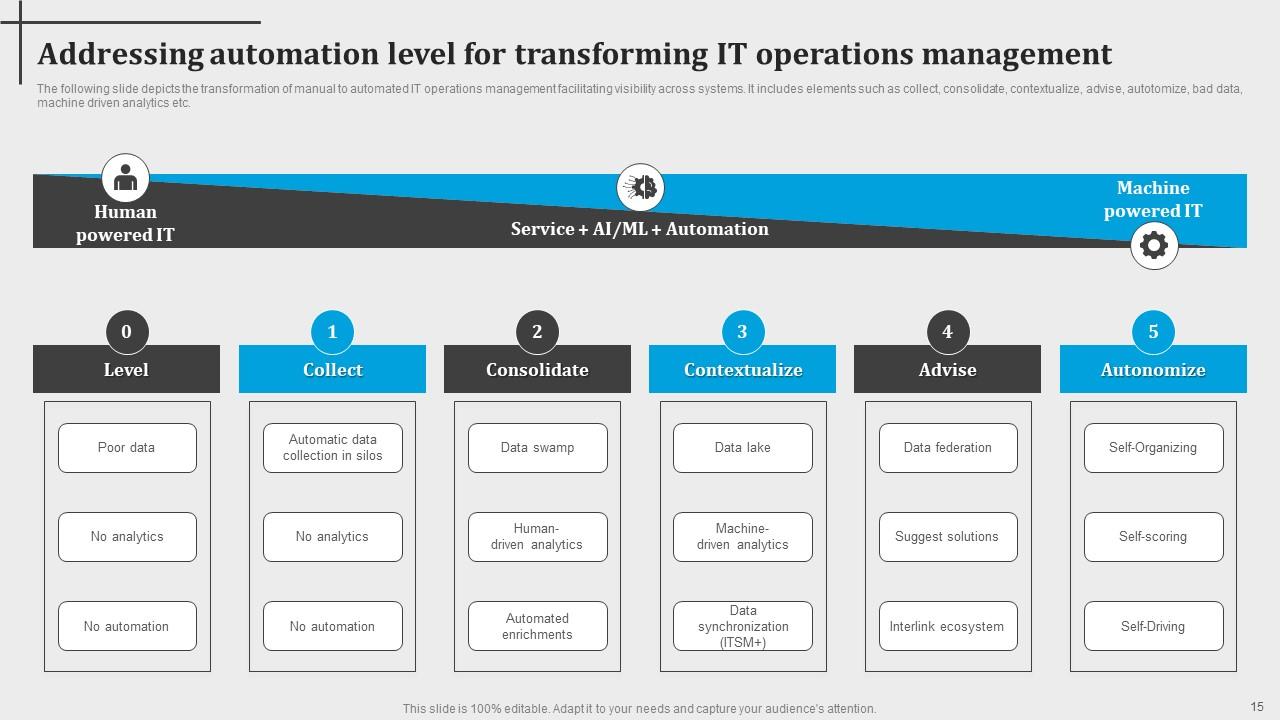
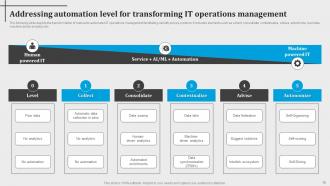
Slide 15: The following slide depicts the transformation of manual to automated IT operations management facilitating visibility across systems.
Slide 16: This slide exhibit table of content that is to be discuss further.
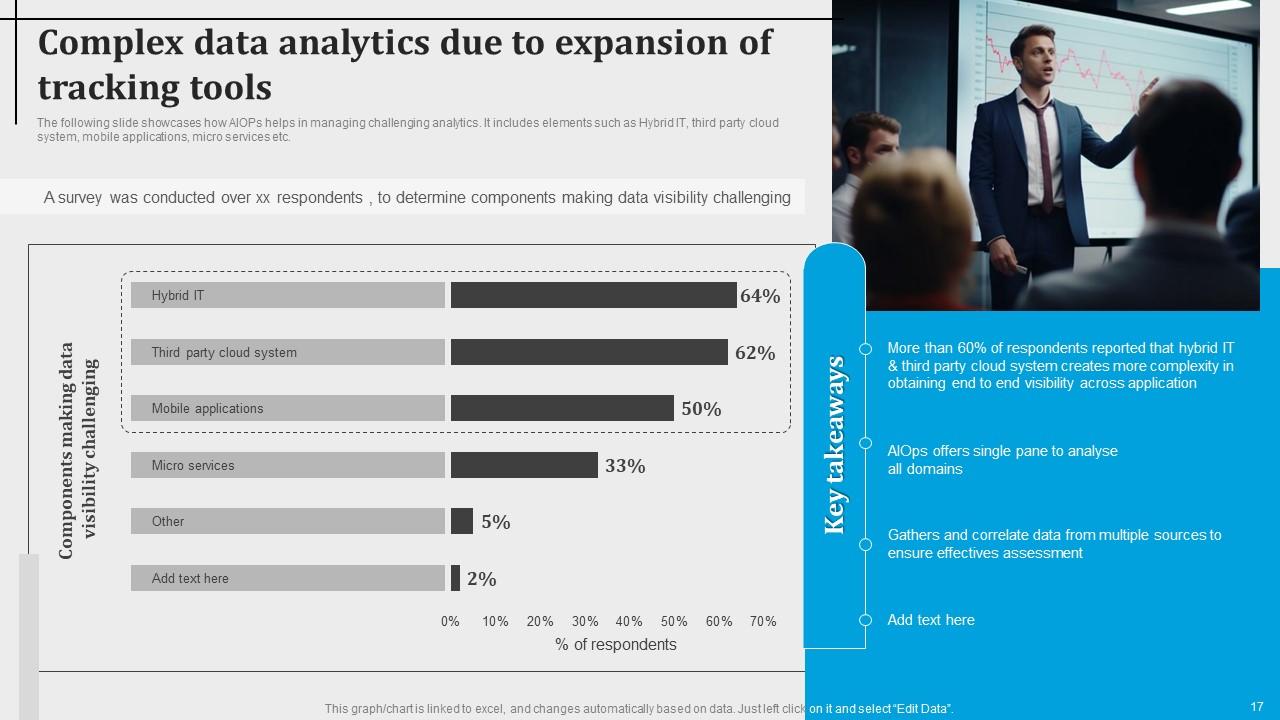
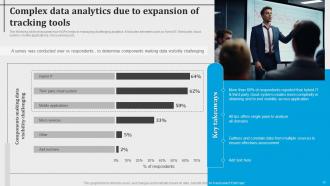
Slide 17: The following slide showcases how AIOPs helps in managing challenging analytics.
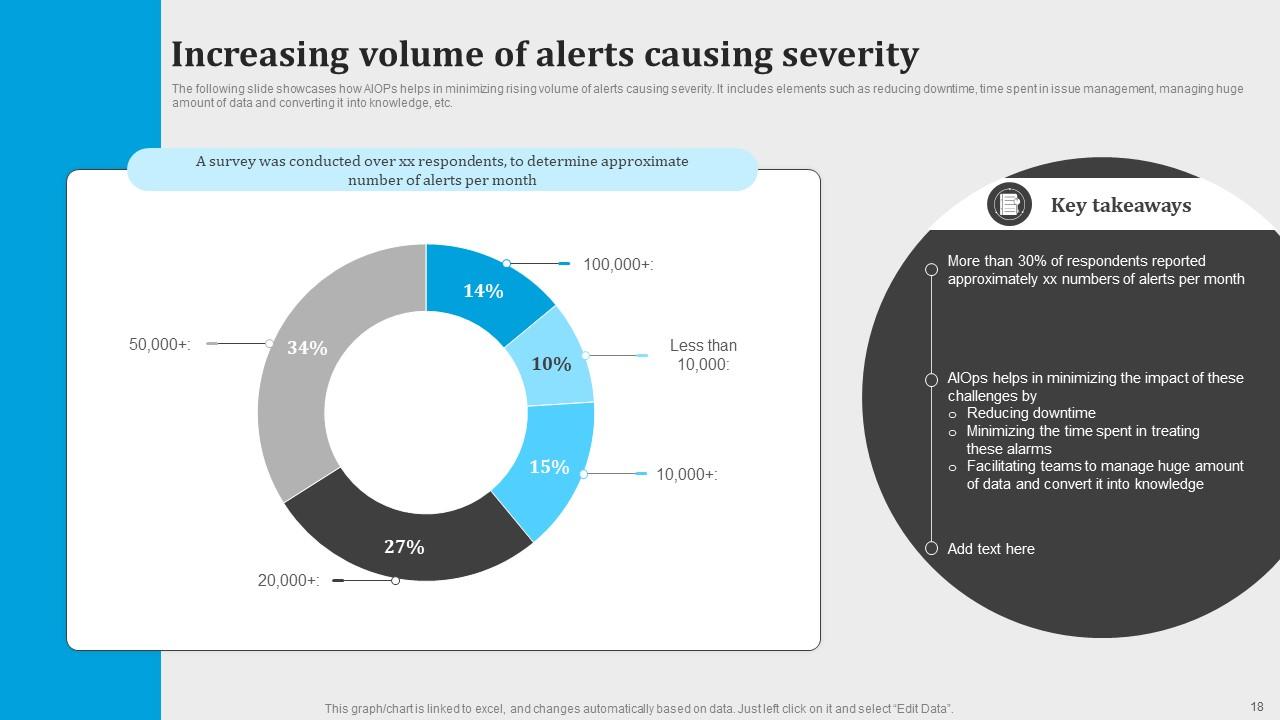
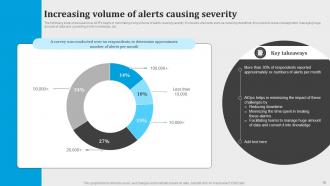
Slide 18: The following slide showcases how AIOPs helps in minimizing rising volume of alerts causing severity.
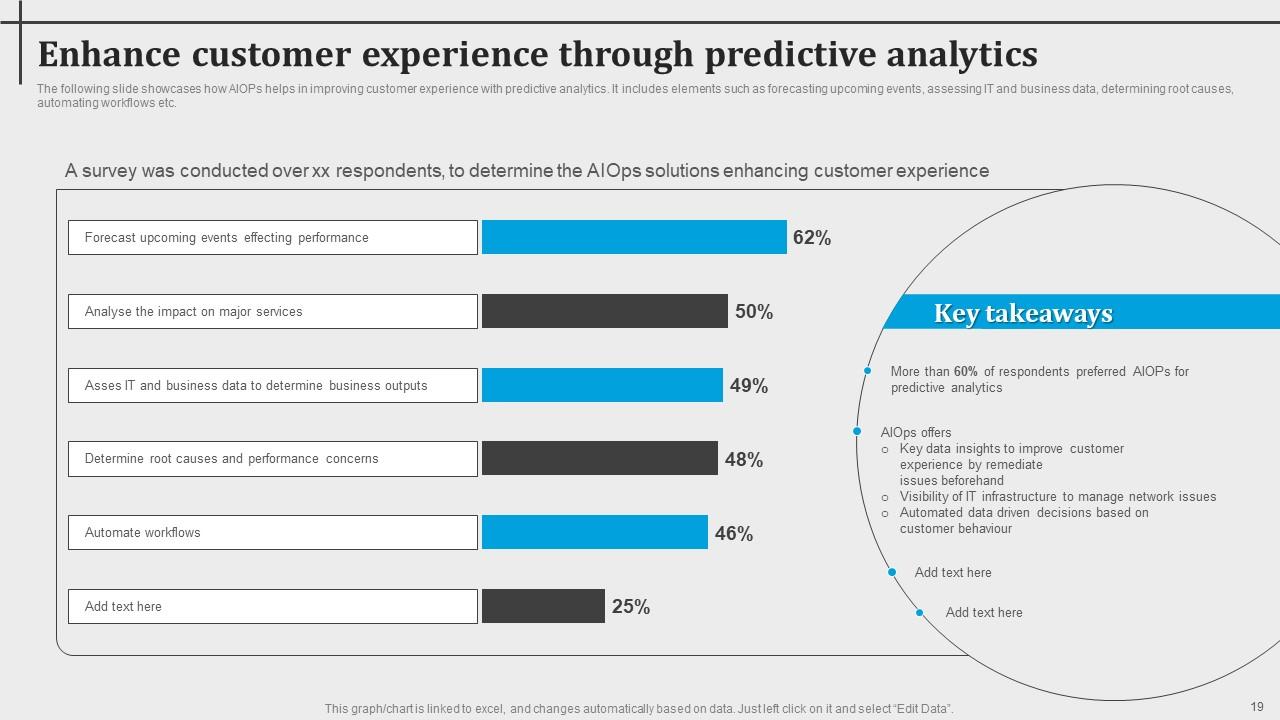
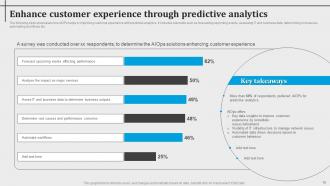
Slide 19: The following slide showcases how AIOPs helps in improving customer experience with predictive analytics.
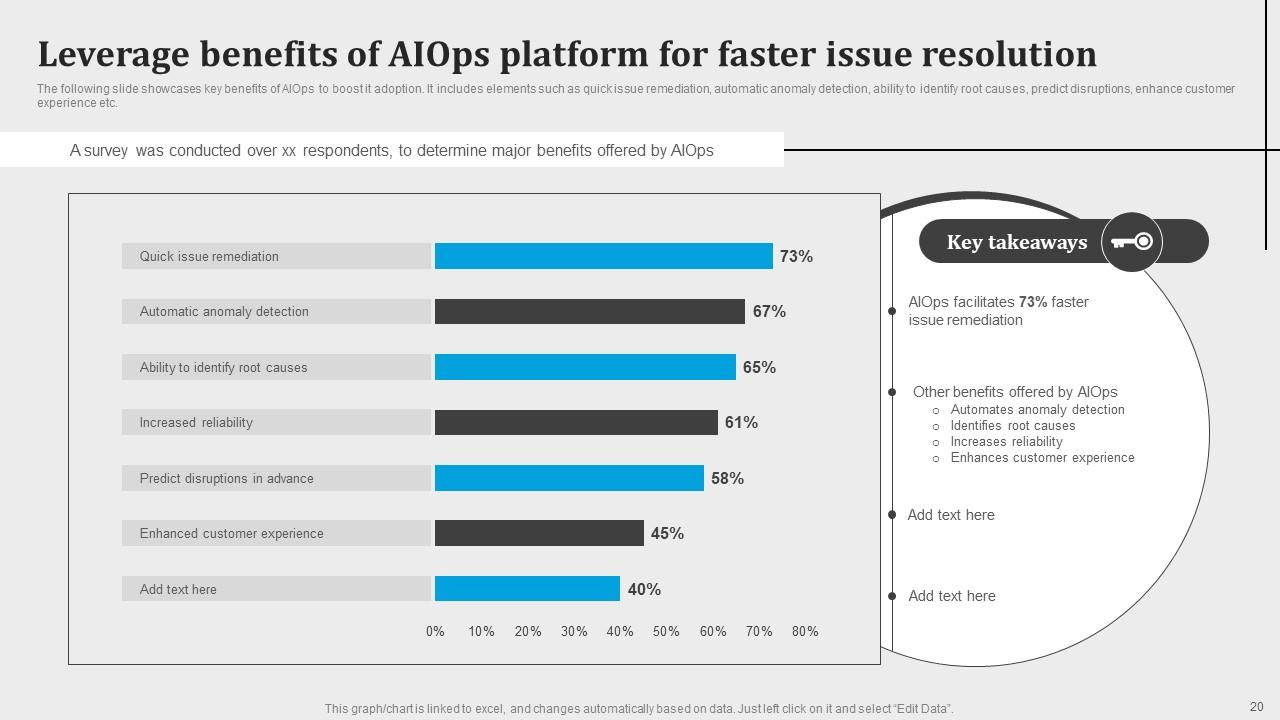
Slide 20: The following slide showcases key benefits of AIOps to boost it adoption.
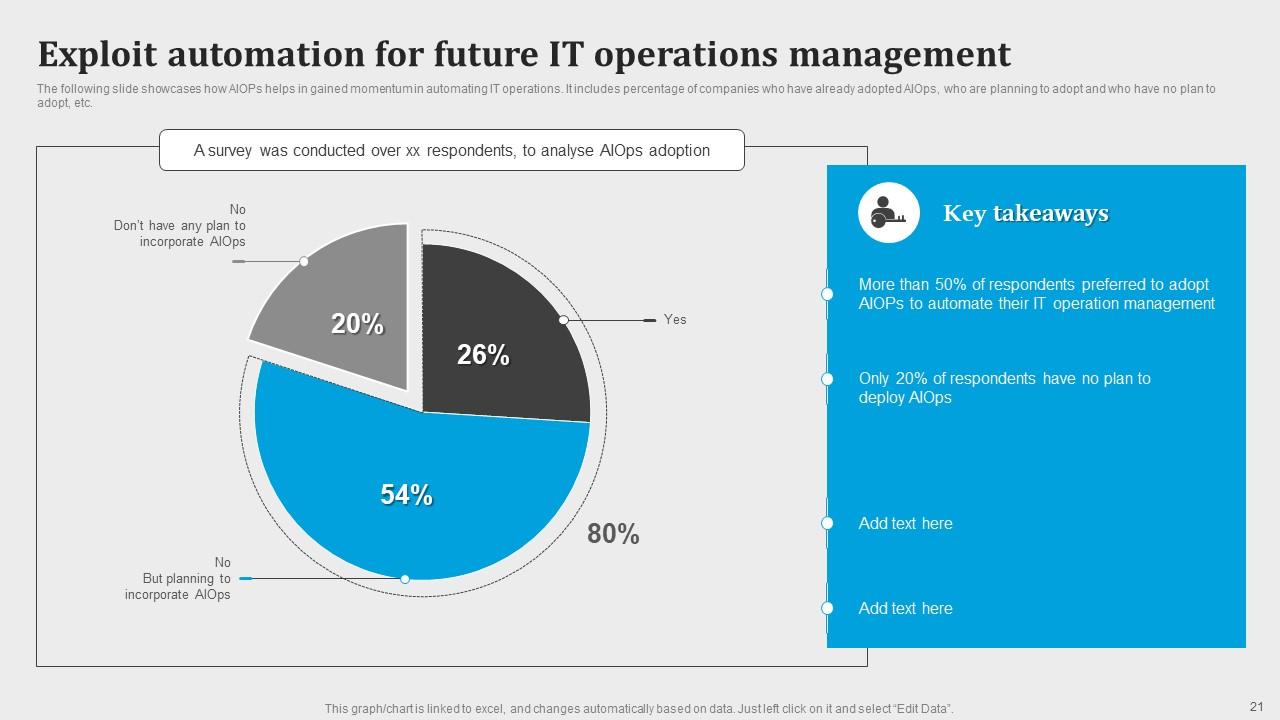
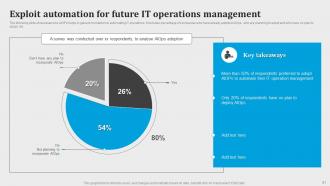
Slide 21: The following slide showcases how AIOPs helps in gained momentum in automating IT operations.
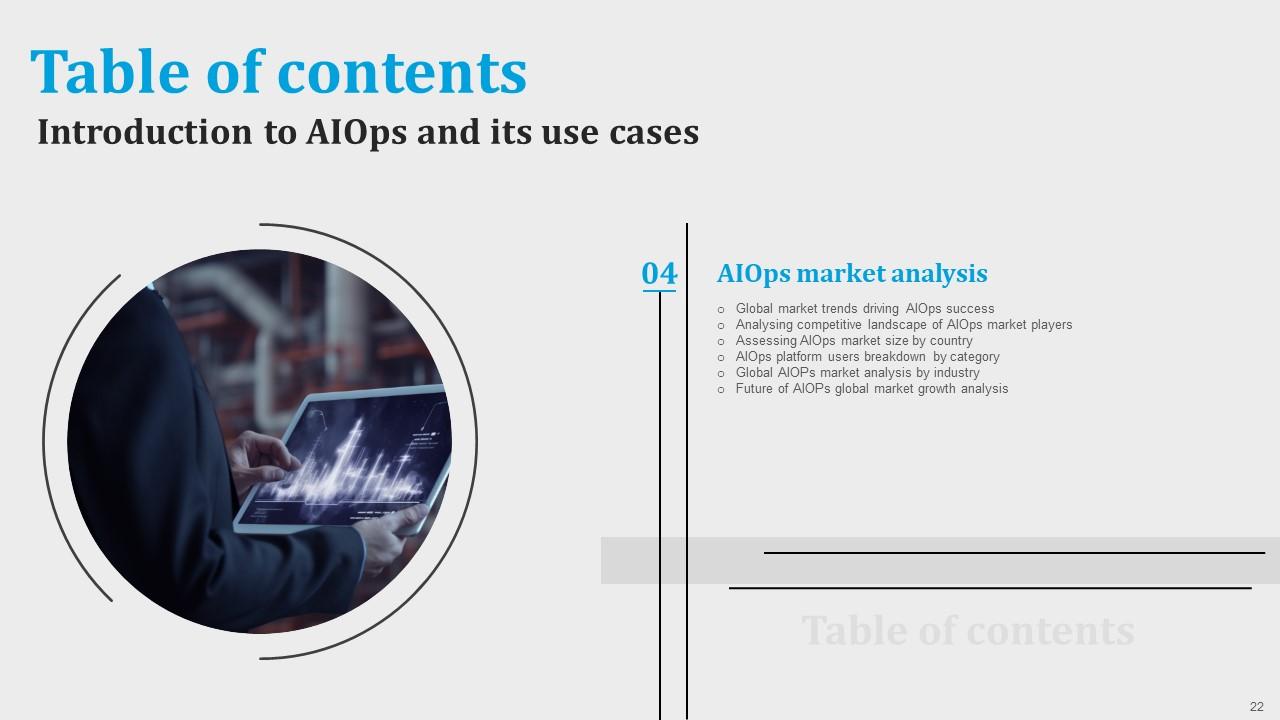
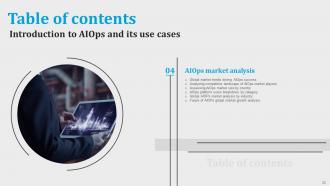
Slide 22: This slide exhibit table of content that is to be discuss further.
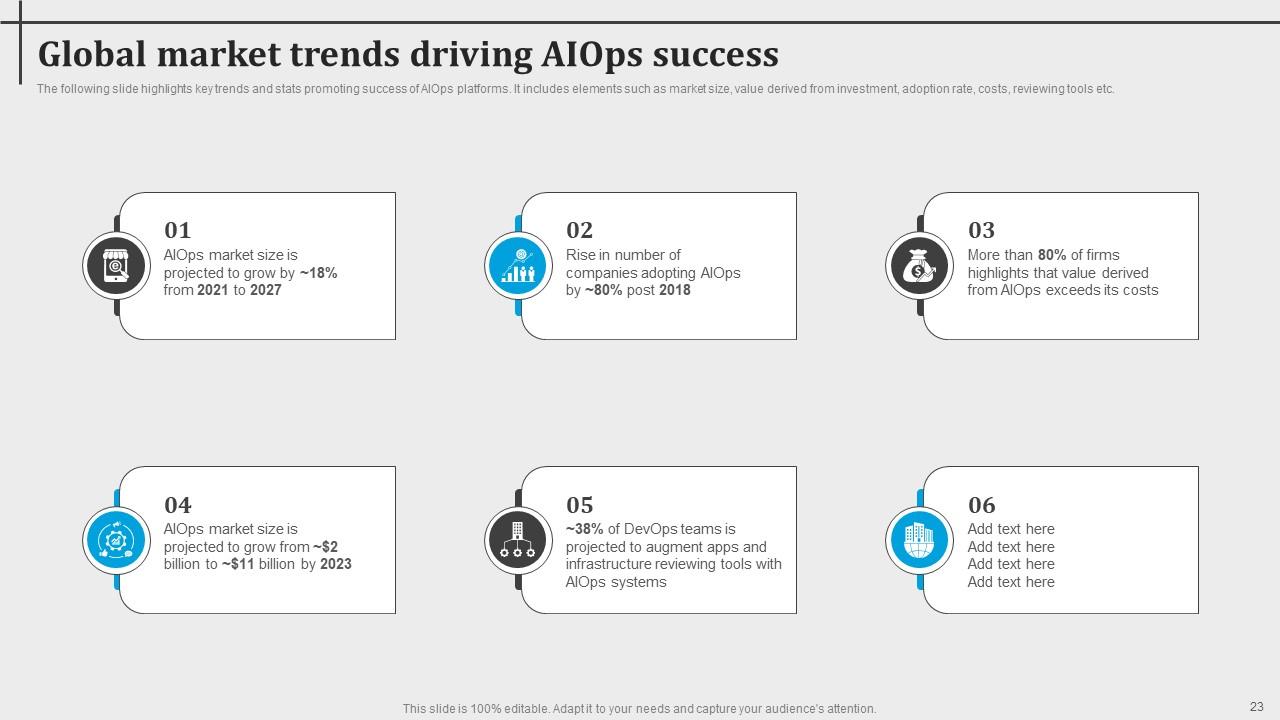
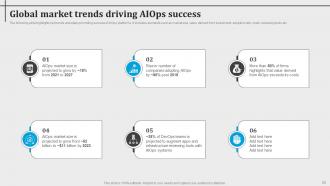
Slide 23: The following slide highlights key trends and stats promoting success of AIOps platforms.
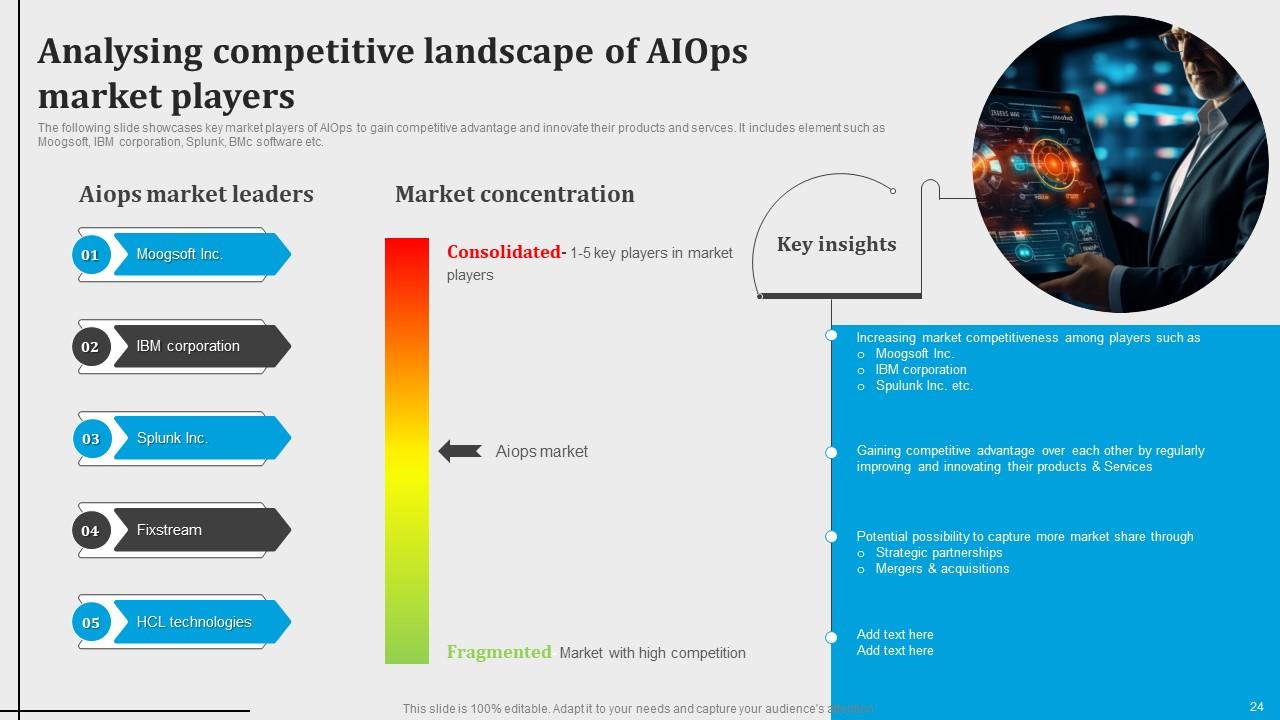
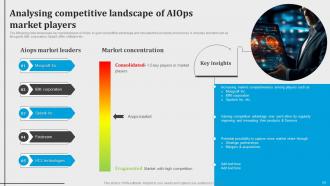
Slide 24: The following slide showcases key market players of AIOps to gain competitive advantage and innovate their products and servces.
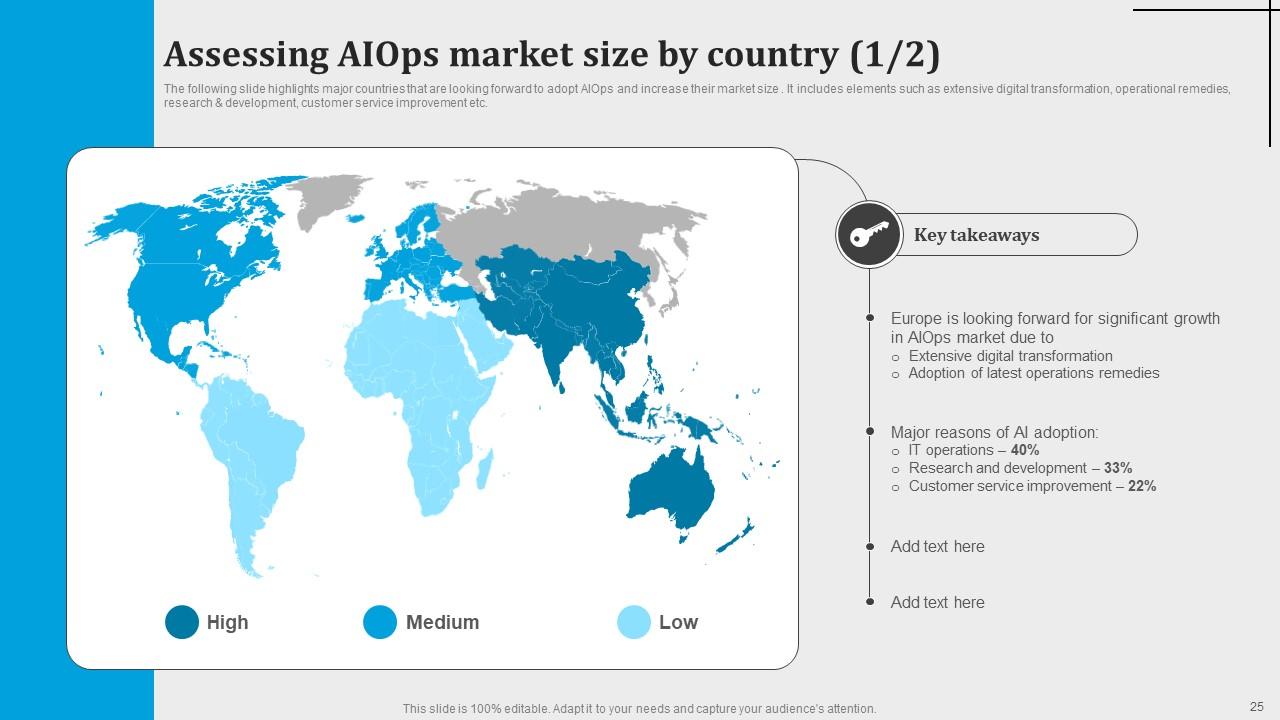
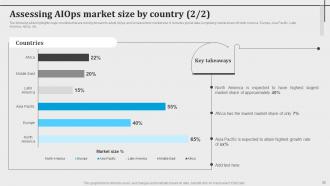
Slide 25: The following slide highlights major countries that are looking forward to adopt AIOps and increase their market size.
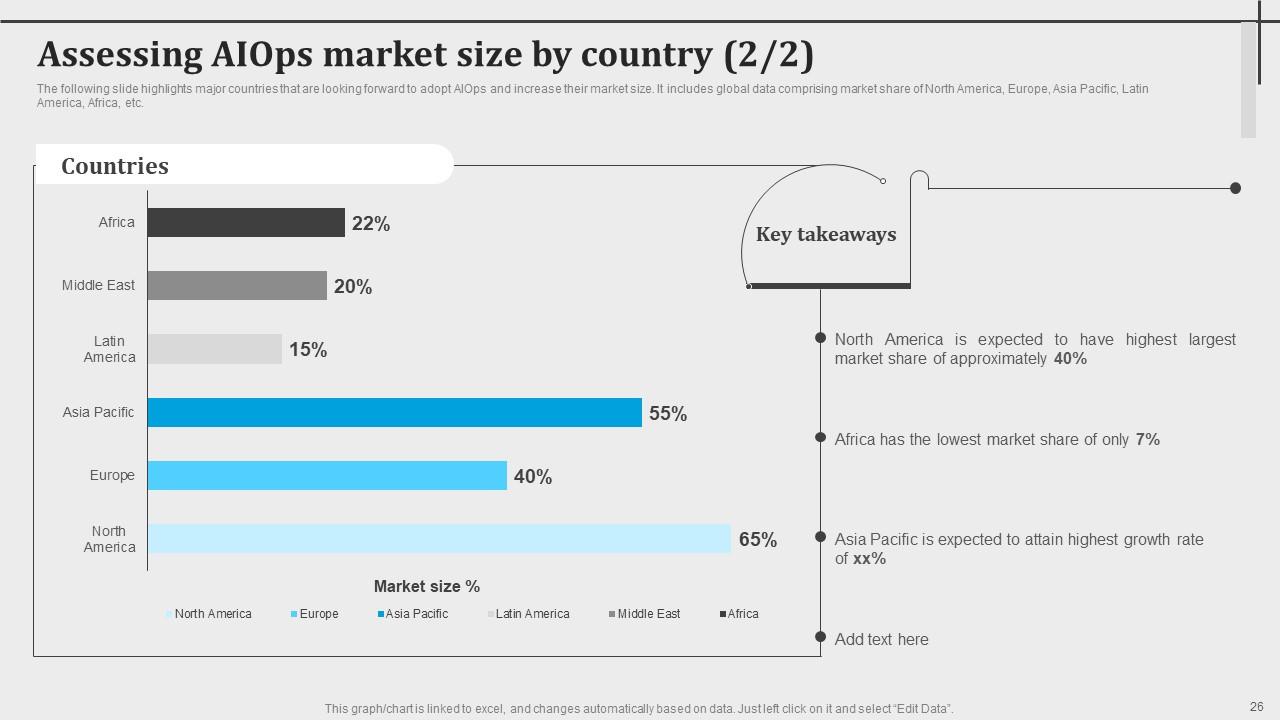
Slide 26: The following slide highlights major countries that are looking forward to adopt AIOps and increase their market size.
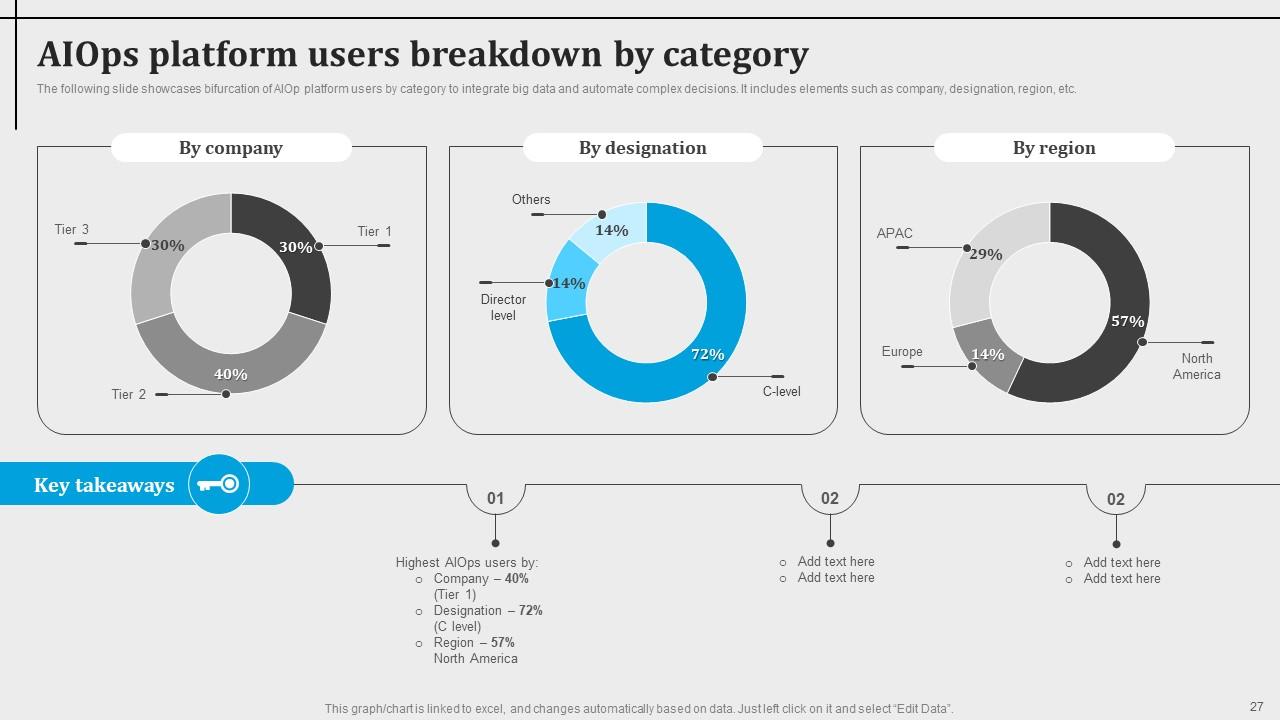
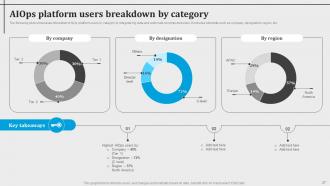
Slide 27: The following slide showcases bifurcation of AIOp platform users by category to integrate big data and automate complex decisions.
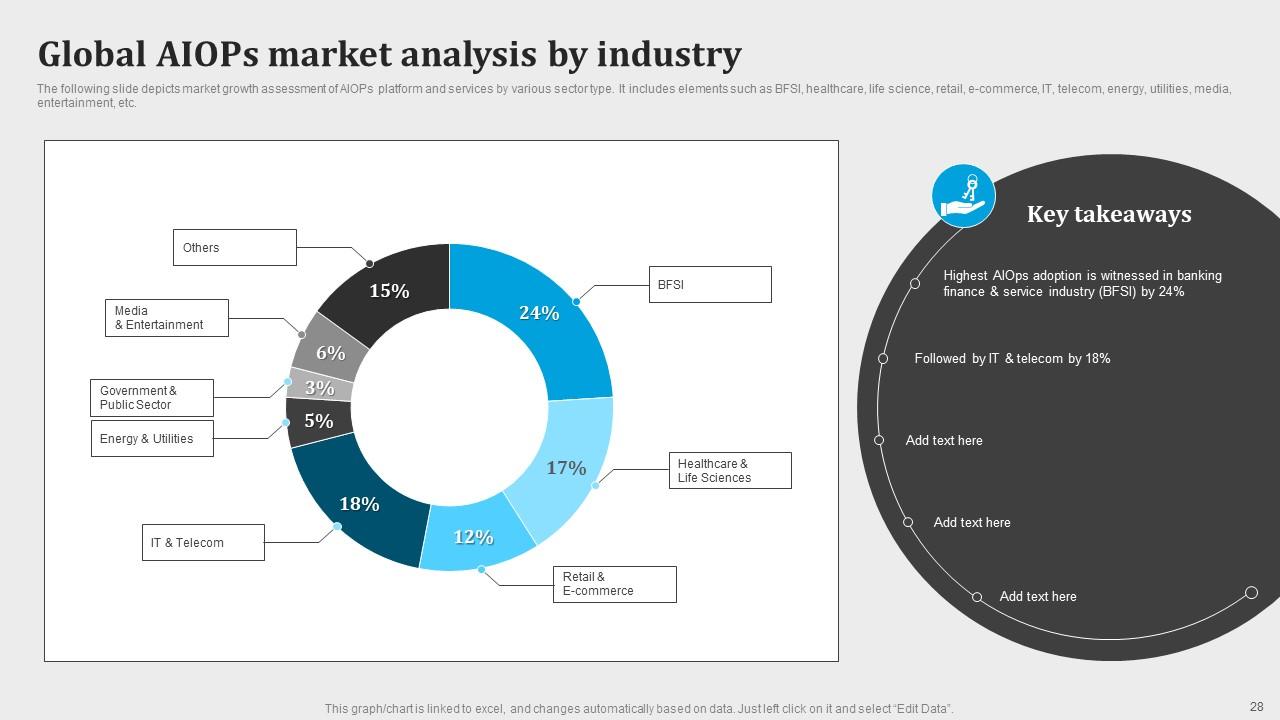
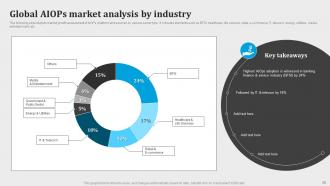
Slide 28: The following slide depicts market growth assessment of AIOPs platform and services by various sector type.
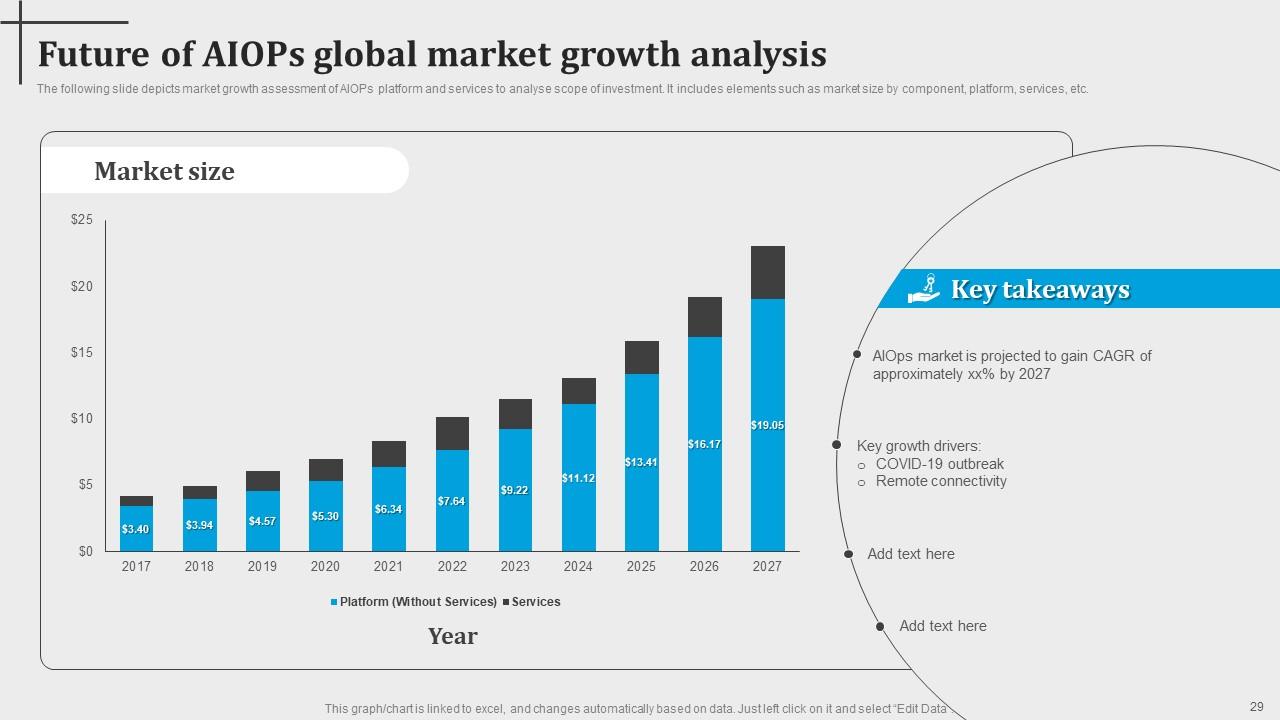
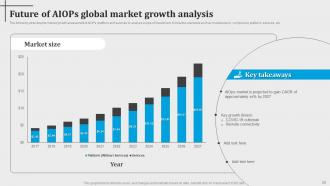
Slide 29: The following slide depicts market growth assessment of AIOPs platform and services to analyse scope of investment.
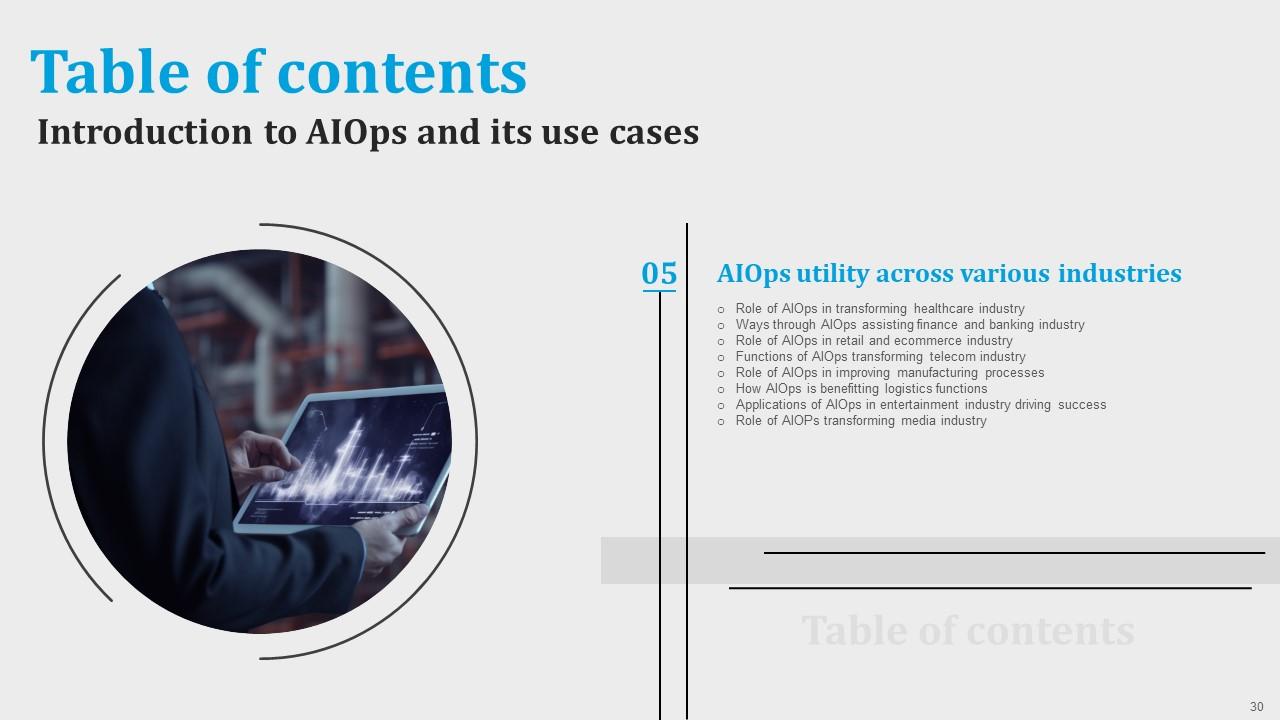
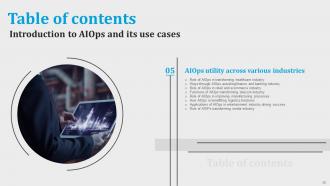
Slide 30: This slide exhibit table of content that is to be discuss further.
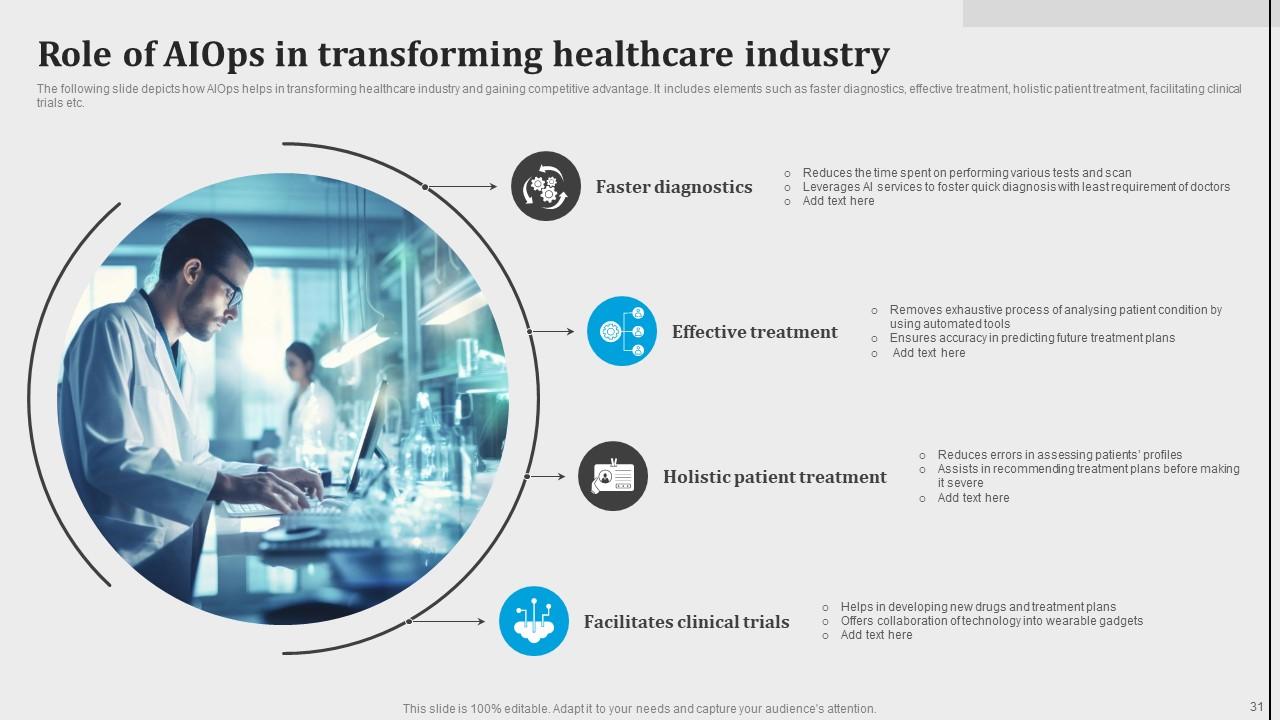
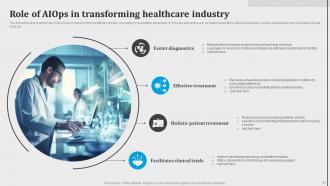
Slide 31: The following slide depicts how AIOps helps in transforming healthcare industry and gaining competitive advantage.
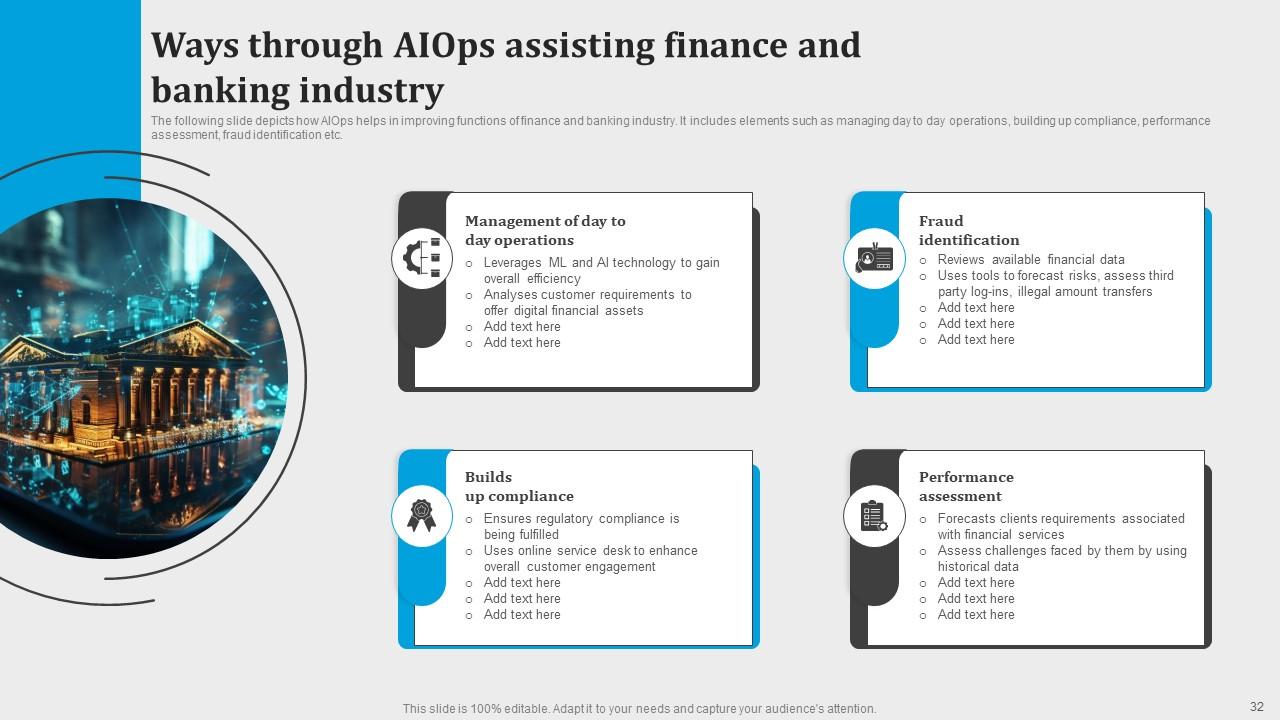
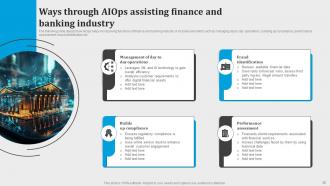
Slide 32: The following slide depicts how AIOps helps in improving functions of finance and banking industry.
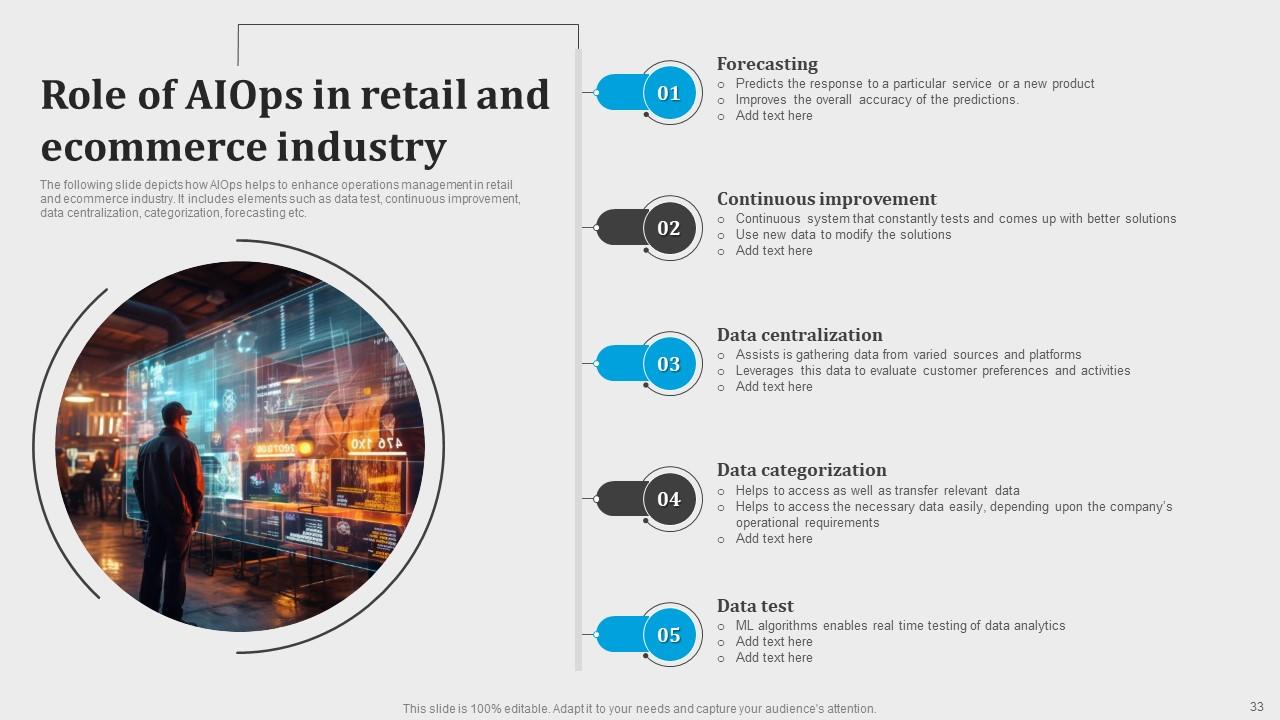
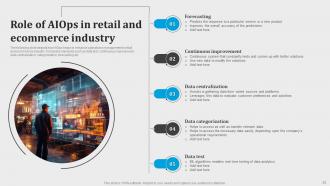
Slide 33: The following slide depicts how AIOps helps to enhance operations management in retail and ecommerce industry.
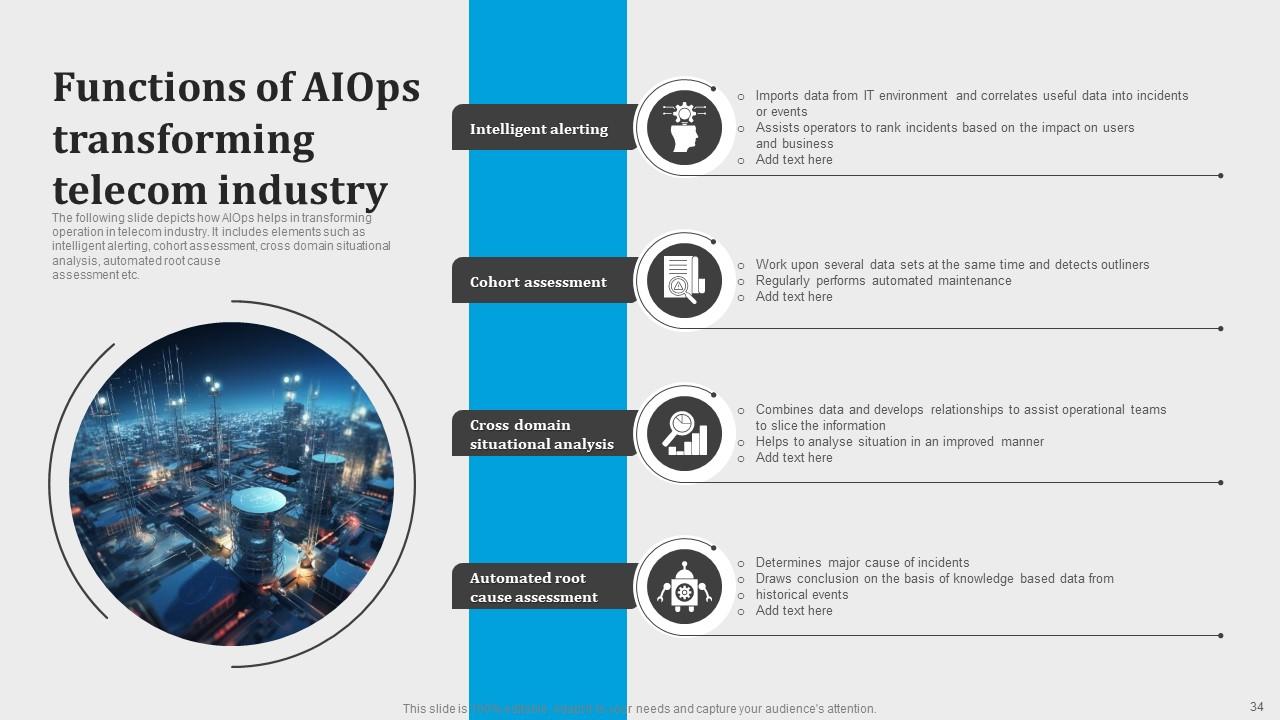
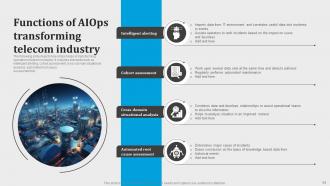
Slide 34: The following slide depicts how AIOps helps in transforming operation in telecom industry.
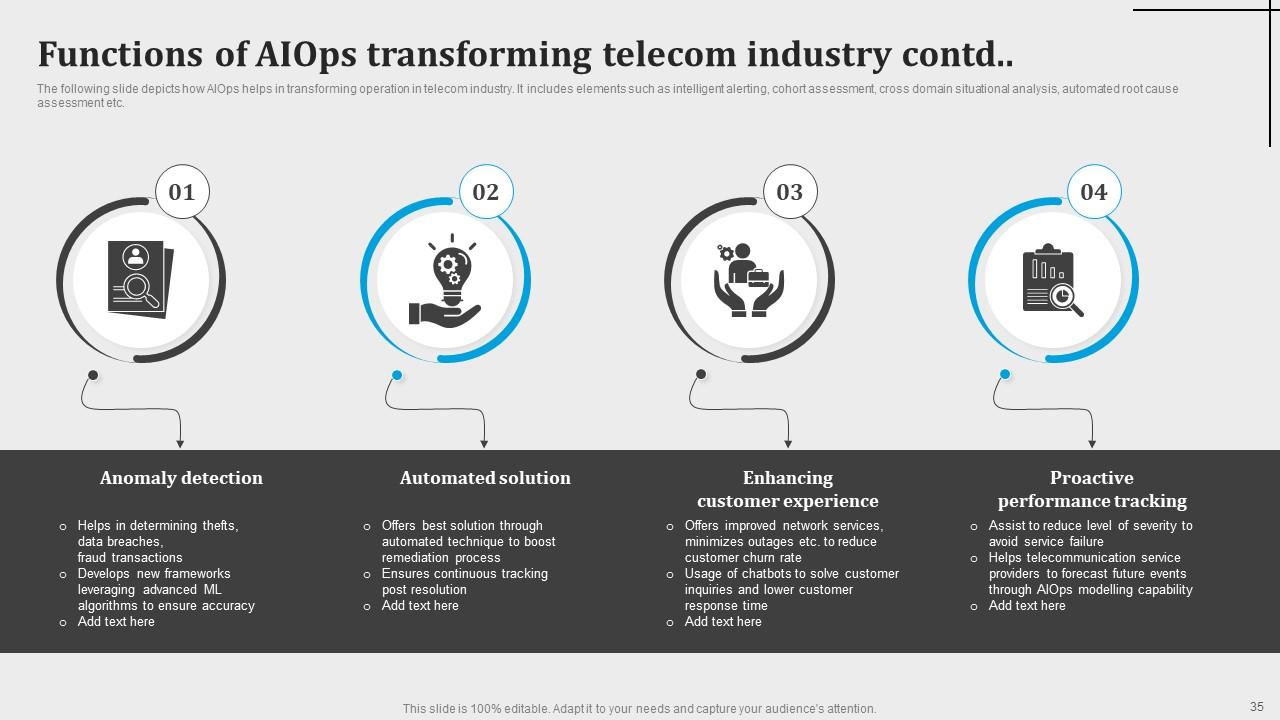
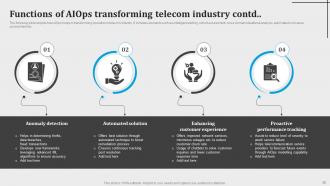
Slide 35: The following slide depicts how AIOps helps in transforming operation in telecom industry.
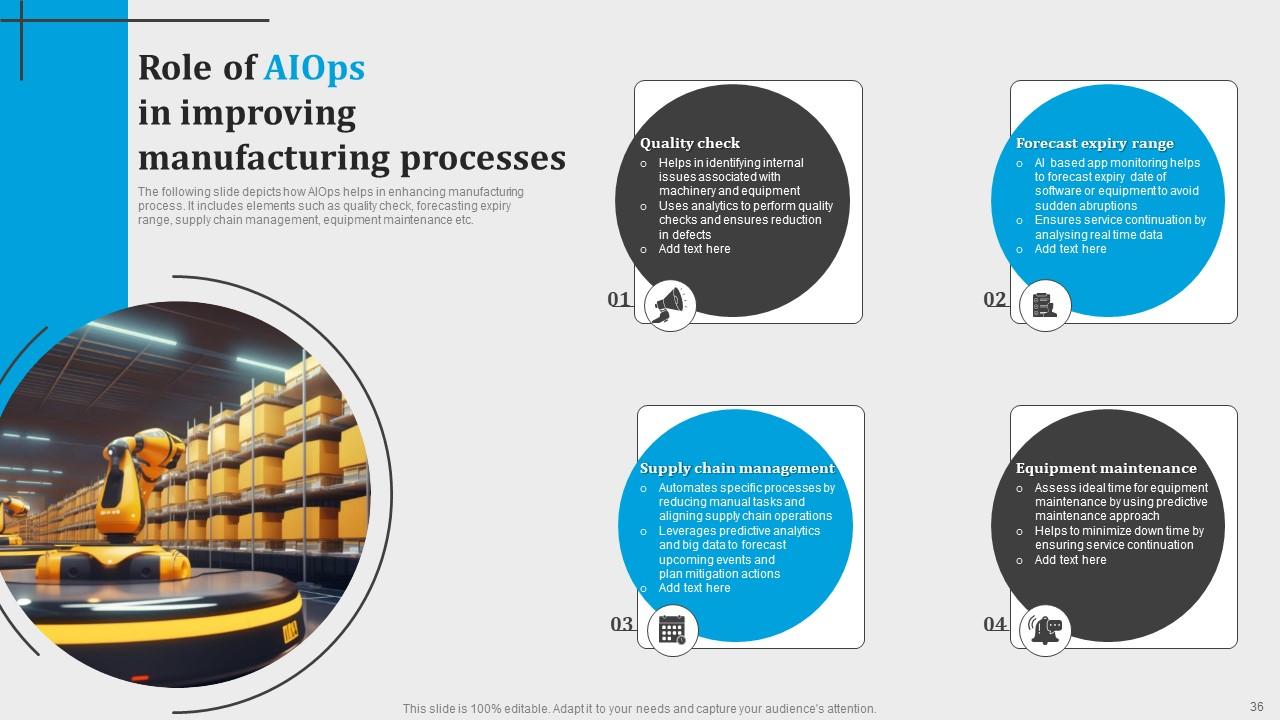
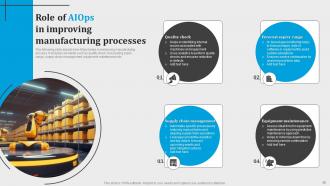
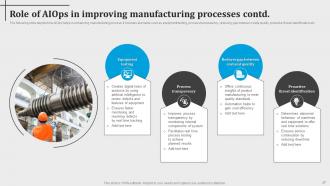
Slide 36: The following slide depicts how AIOps helps in enhancing manufacturing process.
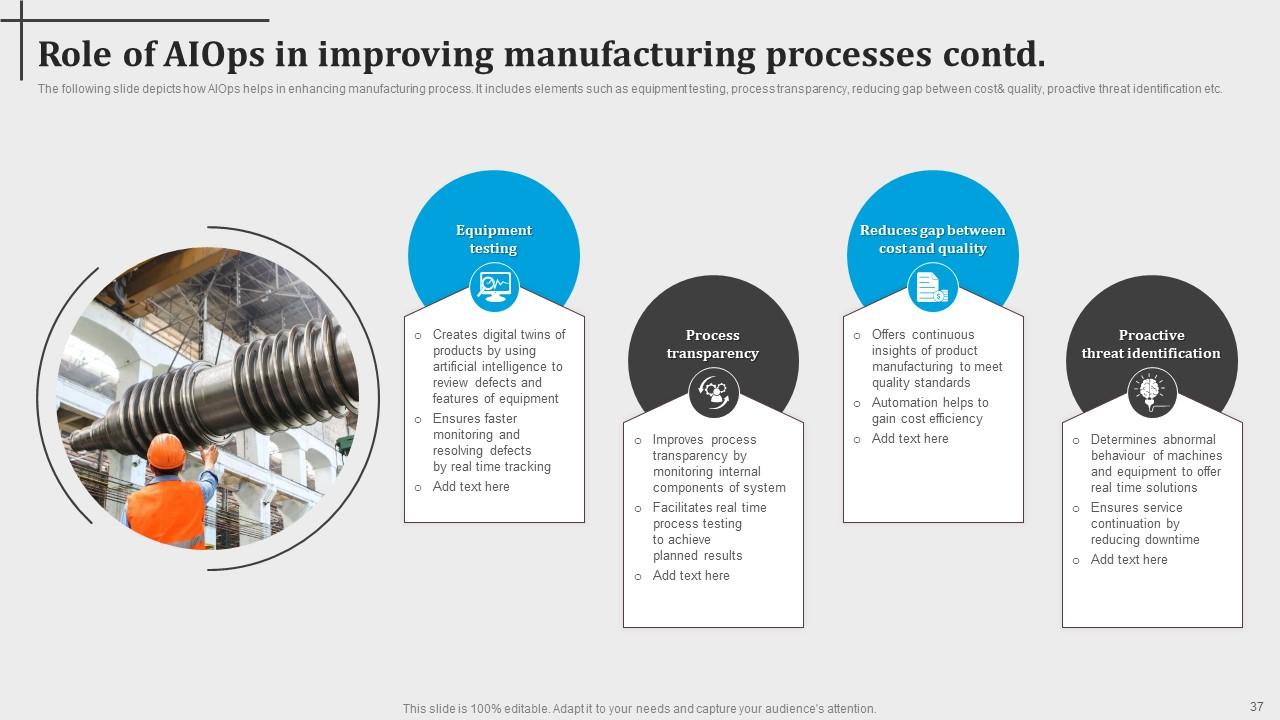
Slide 37: The following slide depicts how AIOps helps in enhancing manufacturing process.
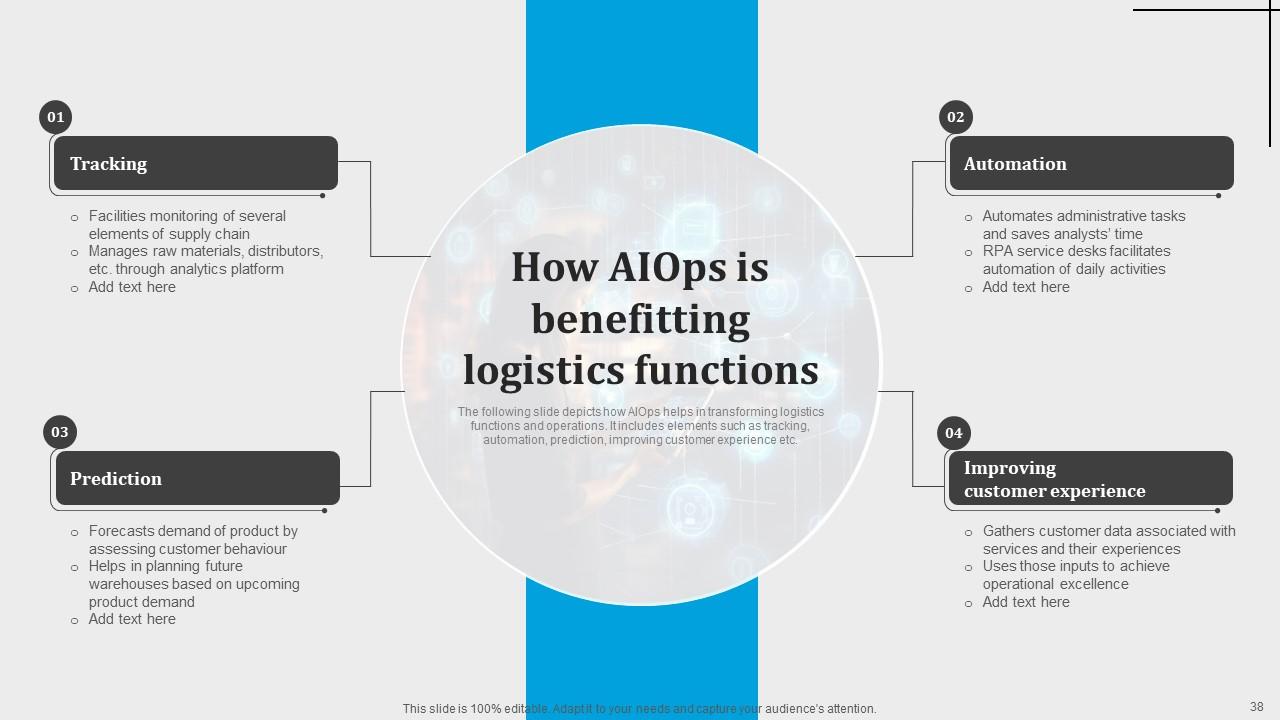
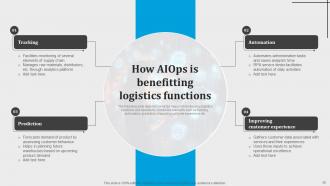
Slide 38: The following slide depicts how AIOps helps in transforming logistics functions and operations.
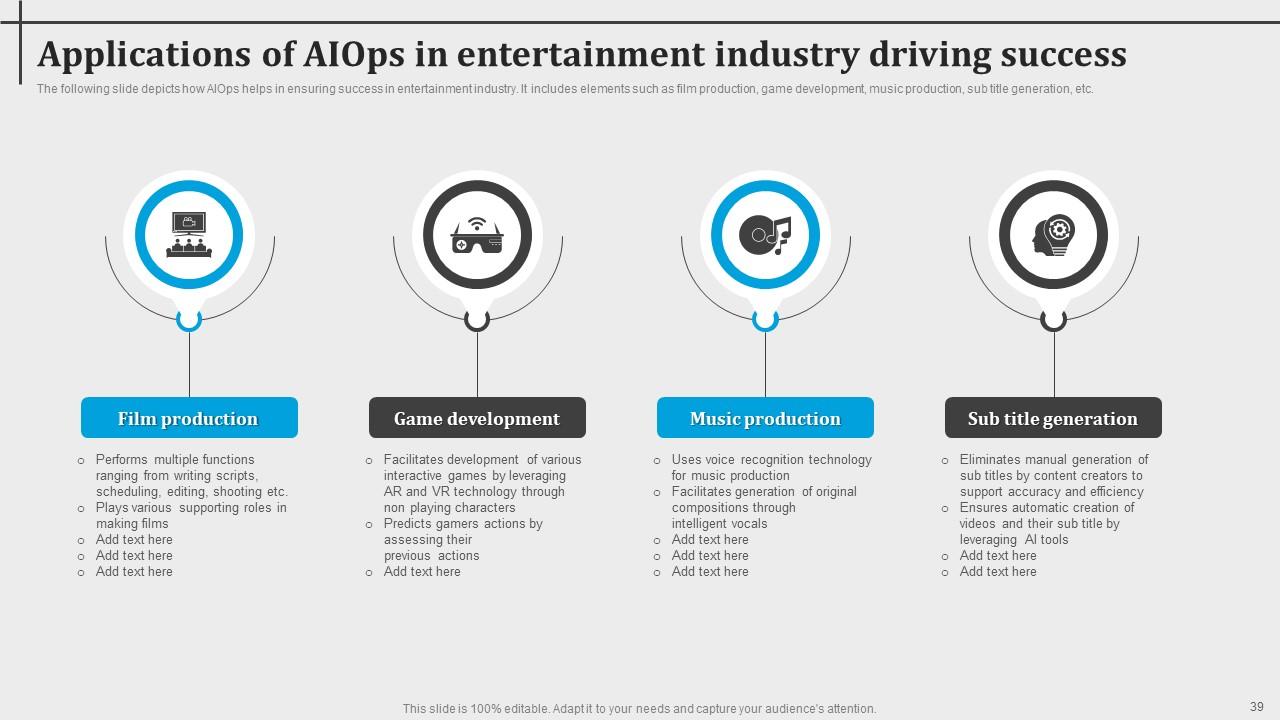
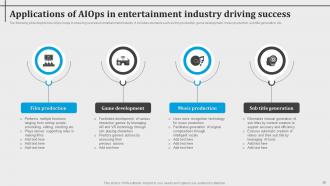
Slide 39: The following slide depicts how AIOps helps in ensuring success in entertainment industry.
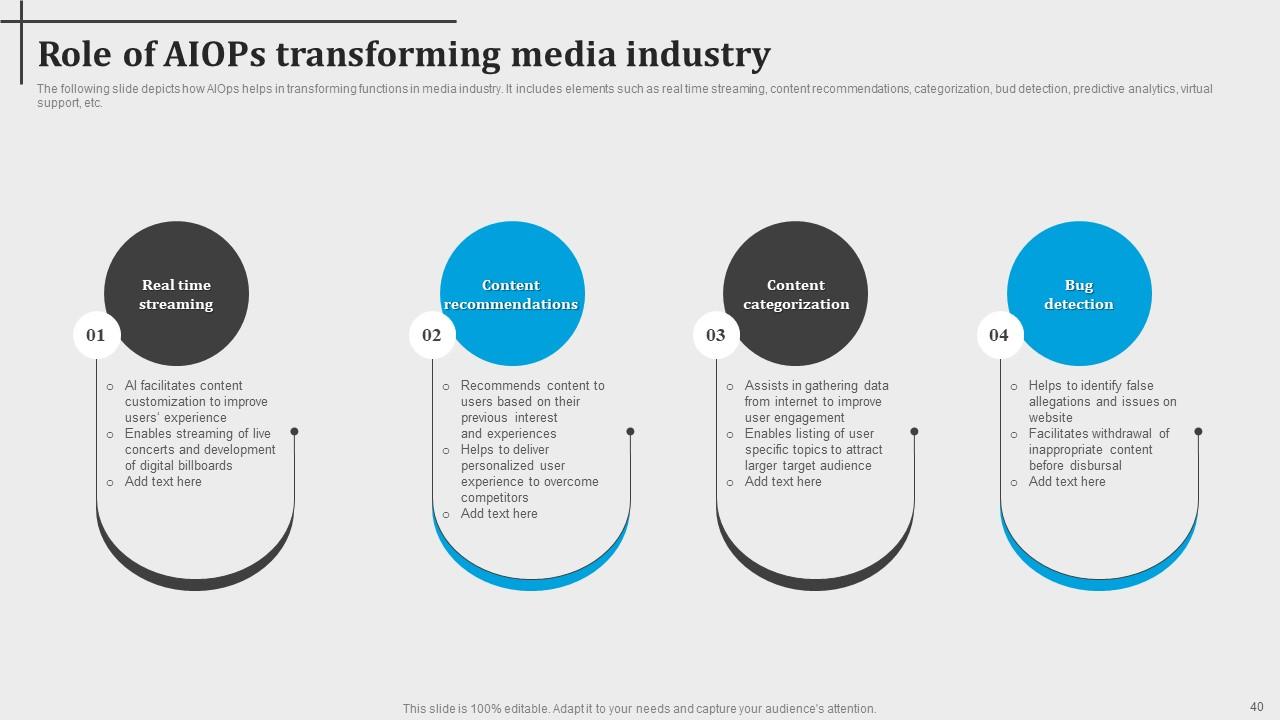
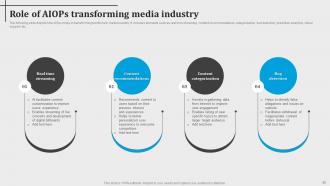
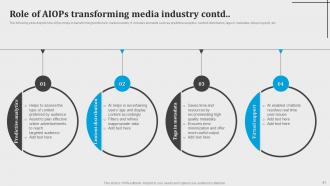
Slide 40: The following slide depicts how AIOps helps in transforming functions in media industry.
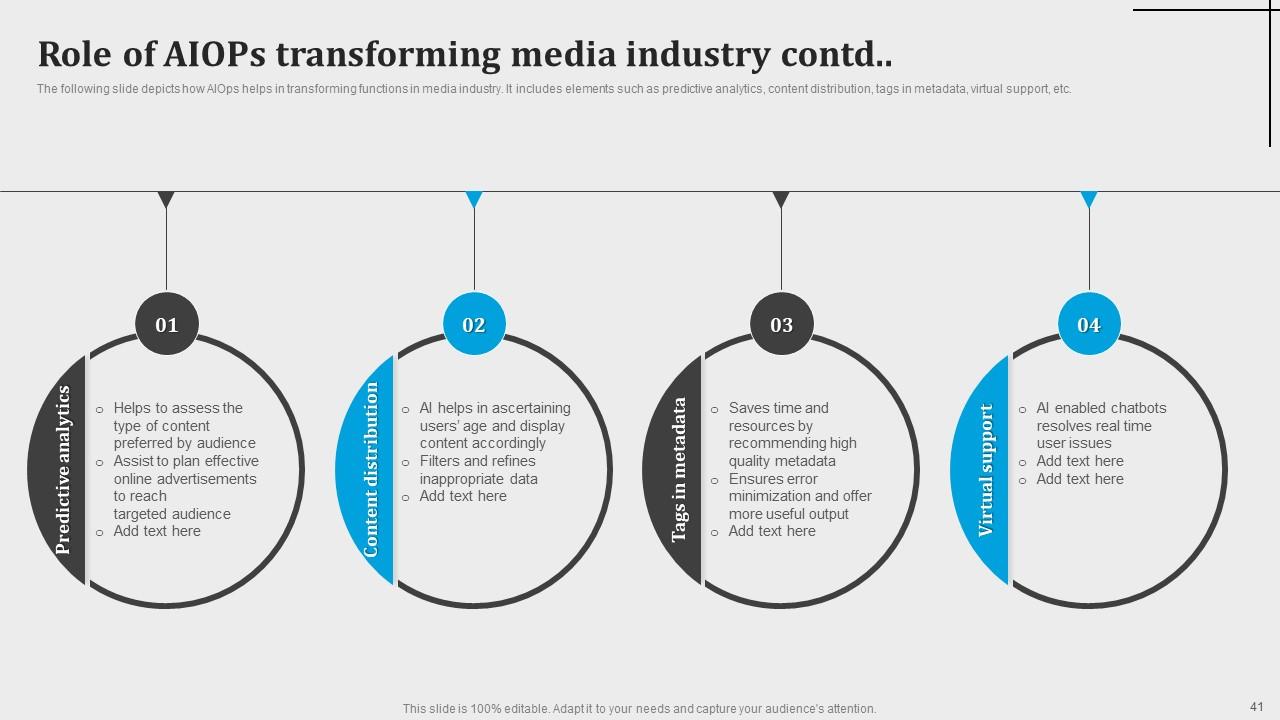
Slide 41: The following slide depicts how AIOps helps in transforming functions in media industry.
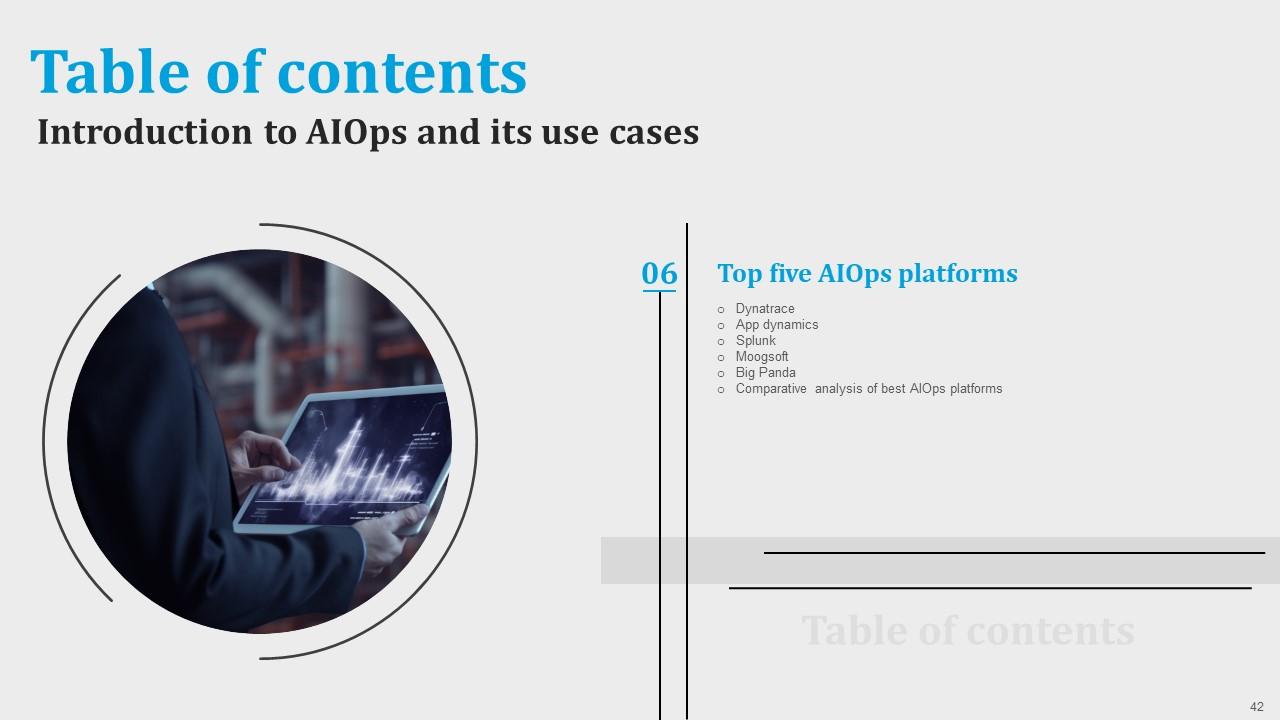
Slide 42: This slide exhibit table of content that is to be discuss further.
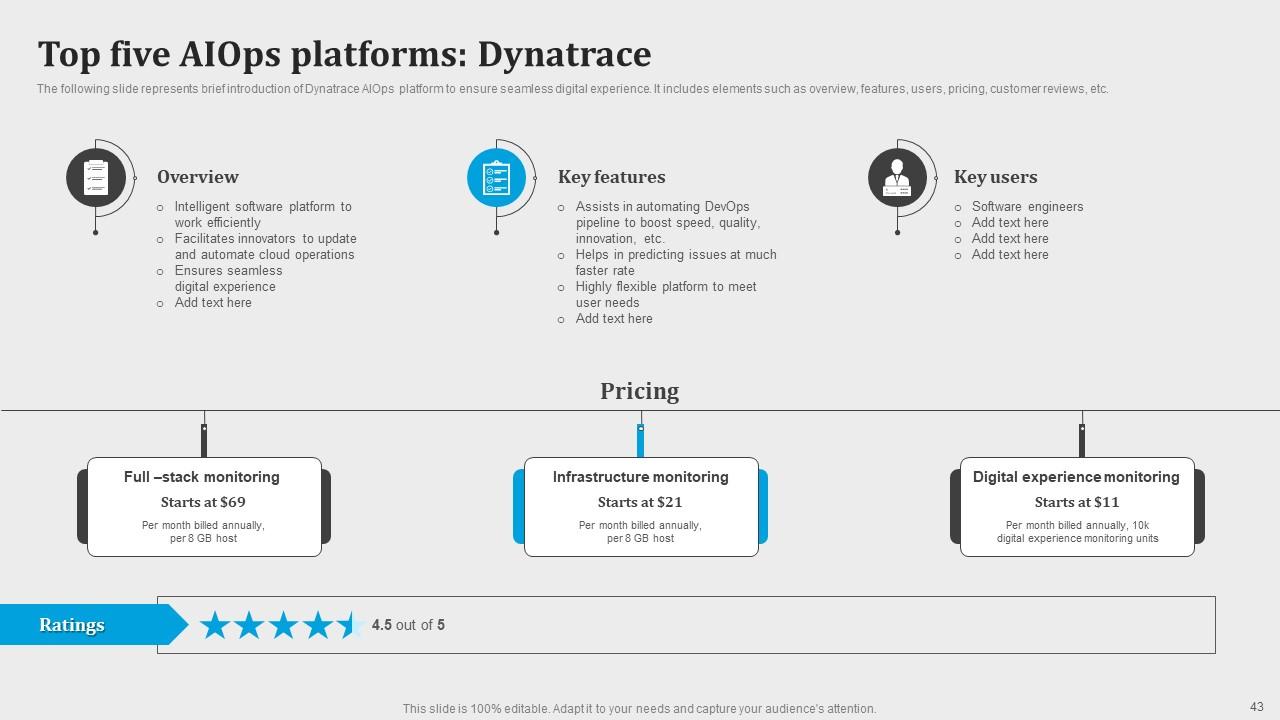
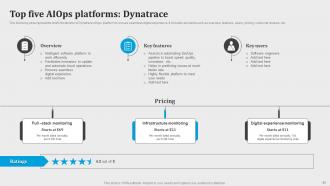
Slide 43: The following slide represents brief introduction of Dynatrace AIOps platform to ensure seamless digital experience.
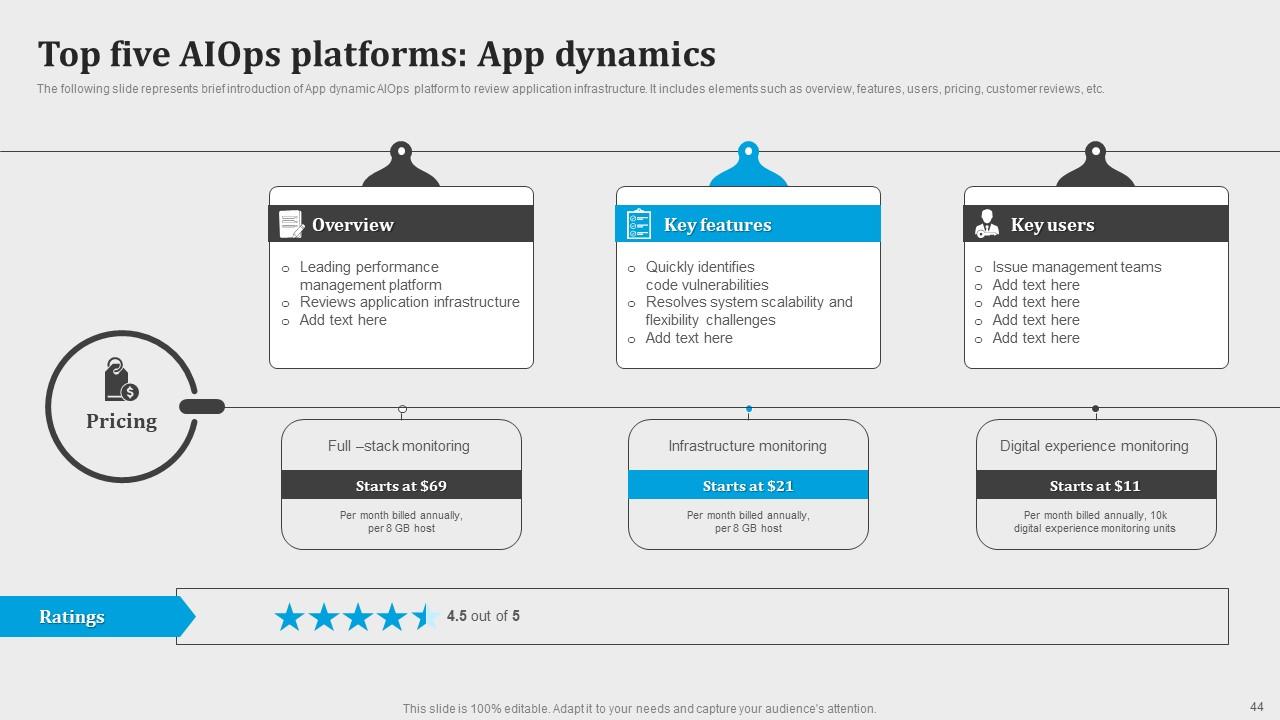
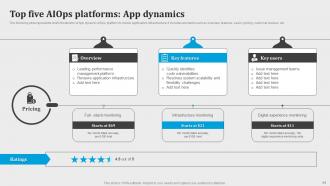
Slide 44: The following slide represents brief introduction of App dynamic AIOps platform to review application infrastructure.
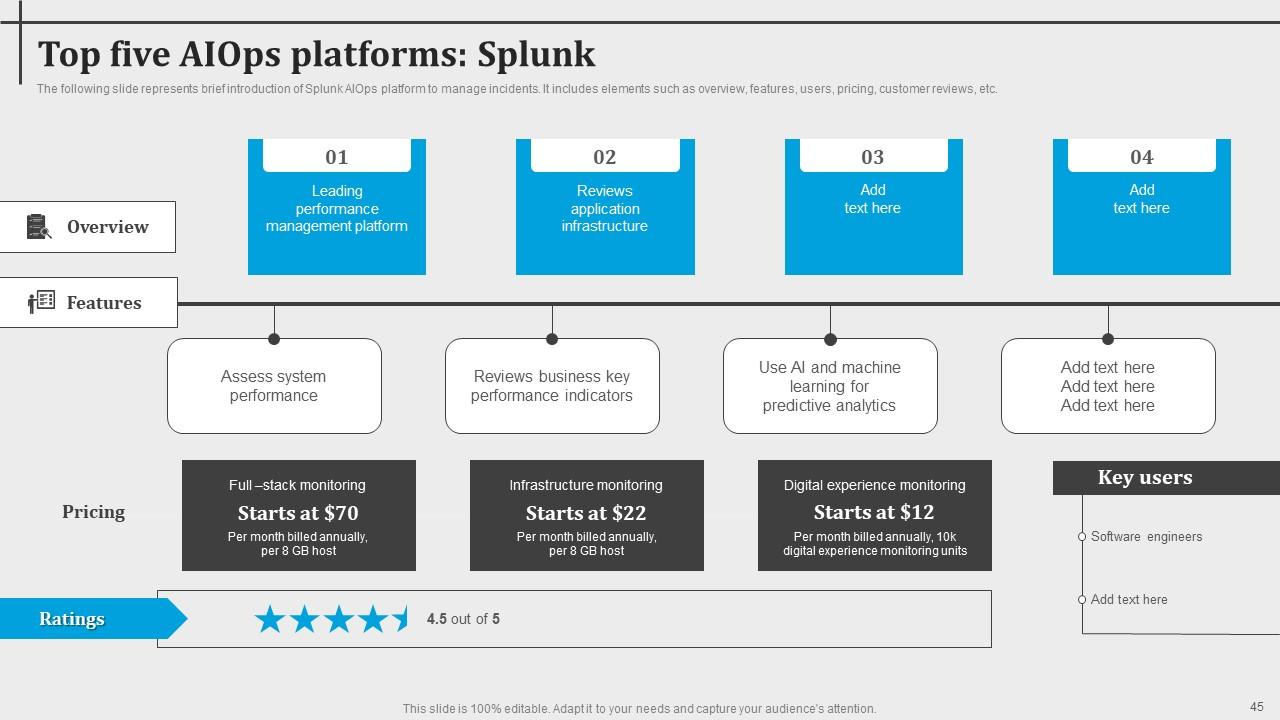
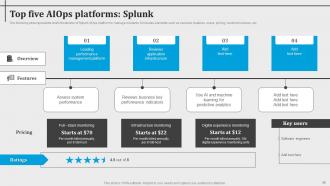
Slide 45: The following slide represents brief introduction of Splunk AIOps platform to manage incidents.
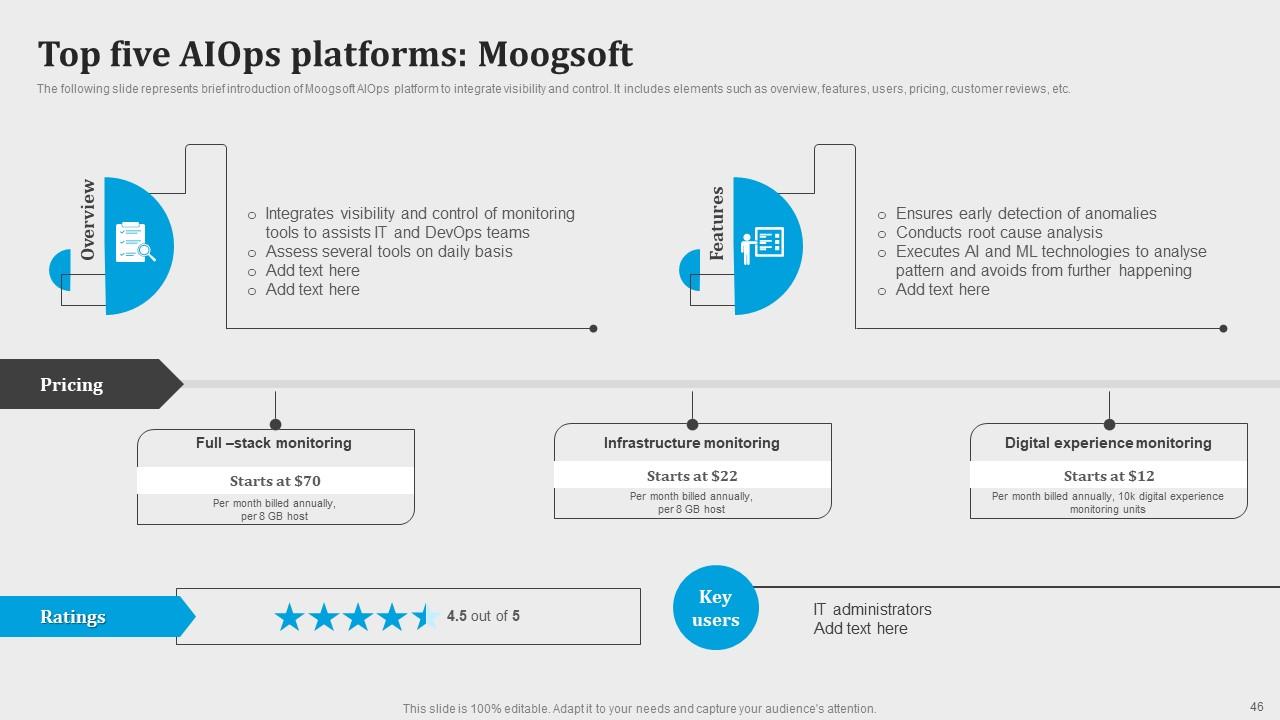
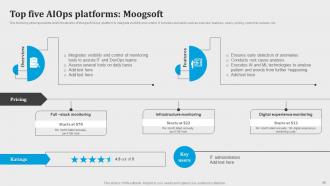
Slide 46: The following slide represents brief introduction of Moogsoft AIOps platform to integrate visibility and control.
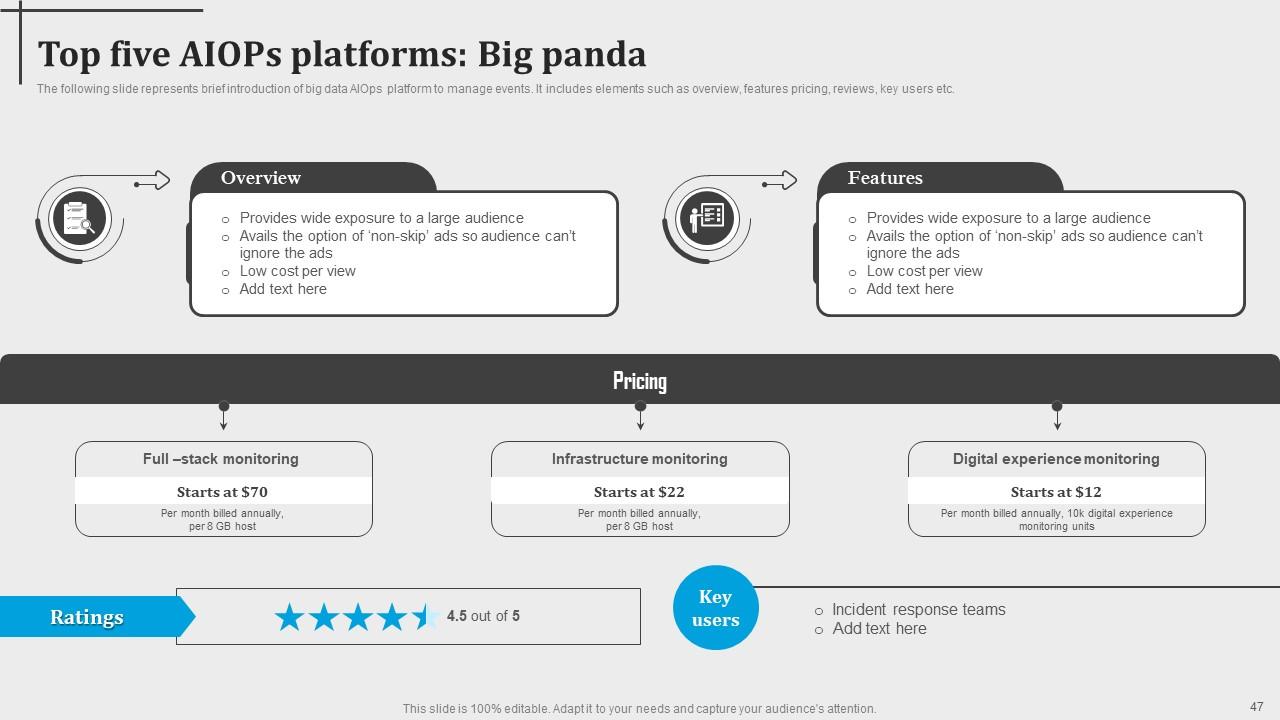
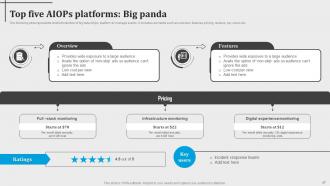
Slide 47: The following slide represents brief introduction of big data AIOps platform to manage events.
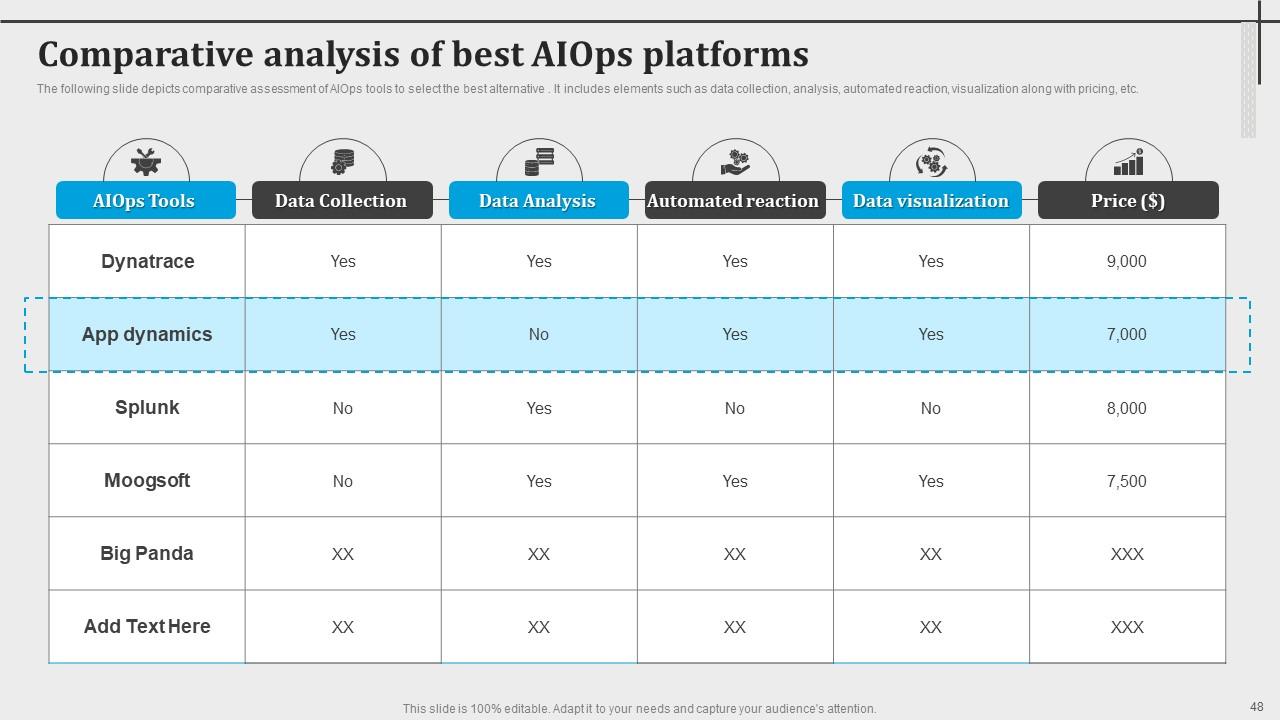
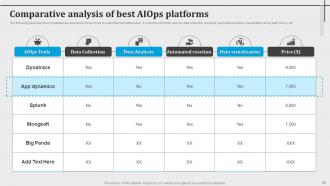
Slide 48: The following slide depicts comparative assessment of AIOps tools to select the best alternative.
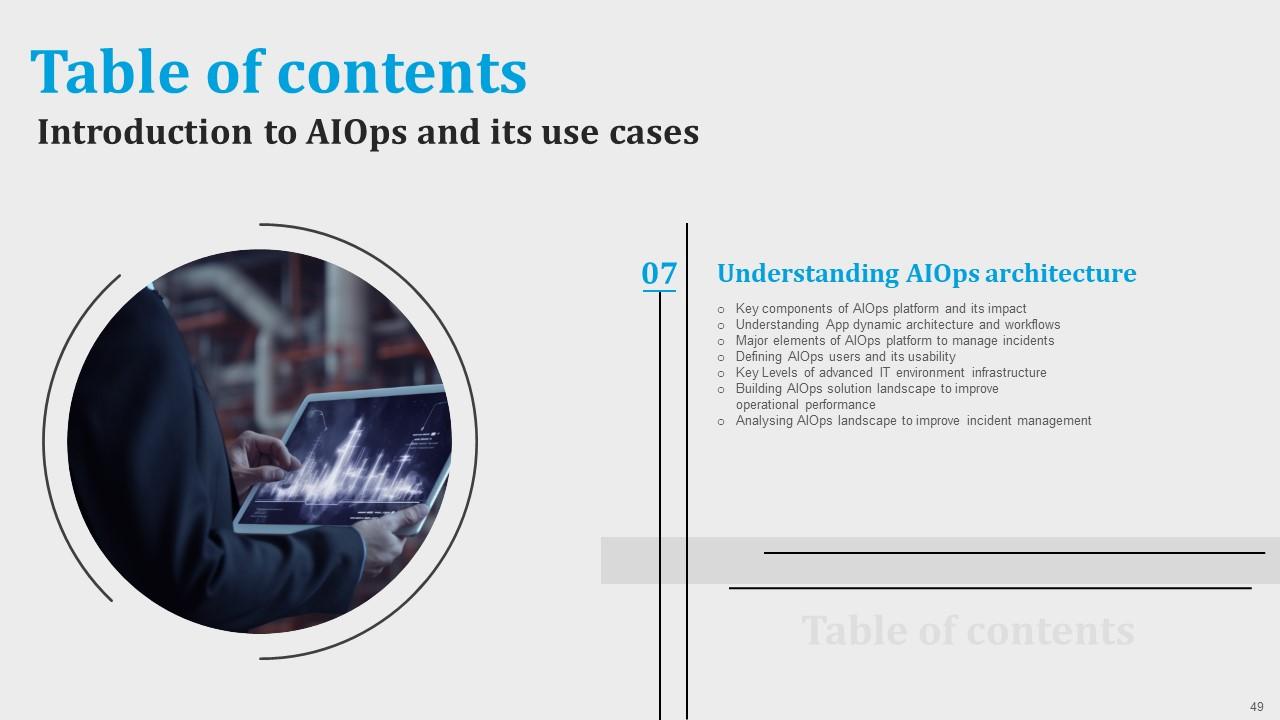
Slide 49: This slide exhibit table of content that is to be discuss further.
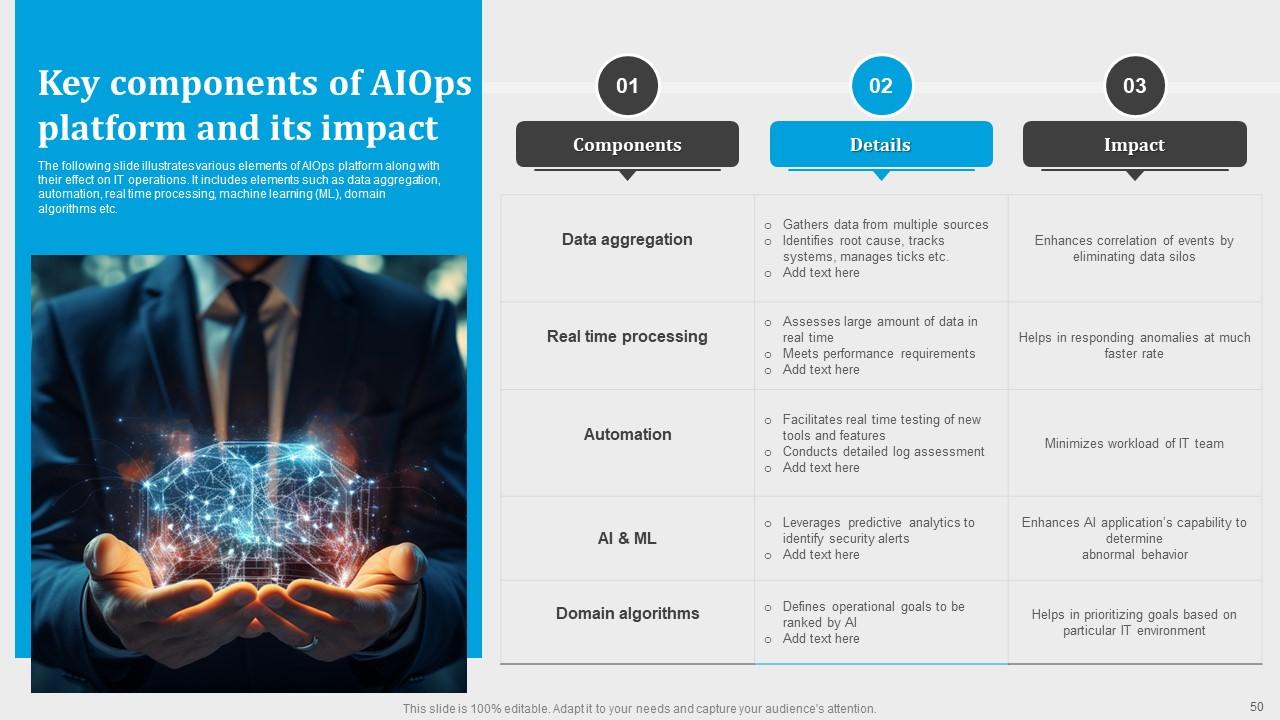
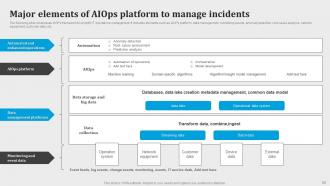
Slide 50: The following slide illustrates various elements of AIOps platform along with their effect on IT operations.
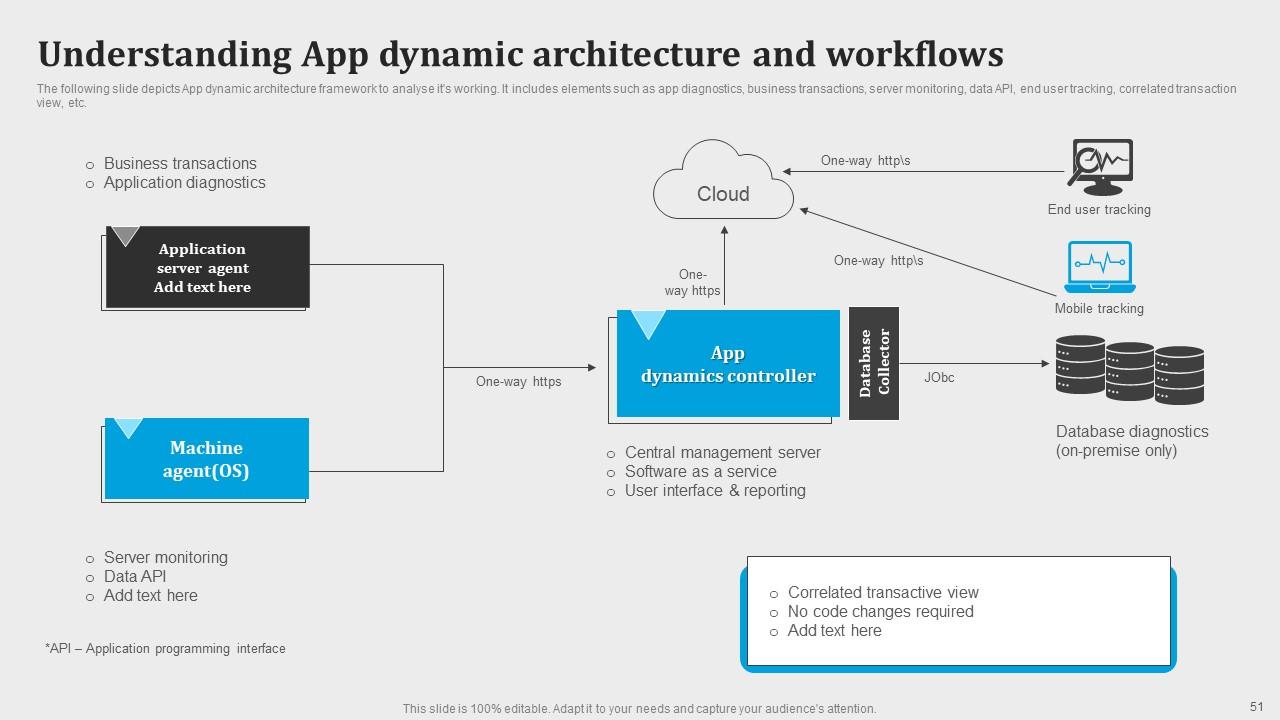
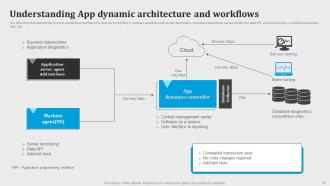
Slide 51: The following slide depicts App dynamic architecture framework to analyse it's working.
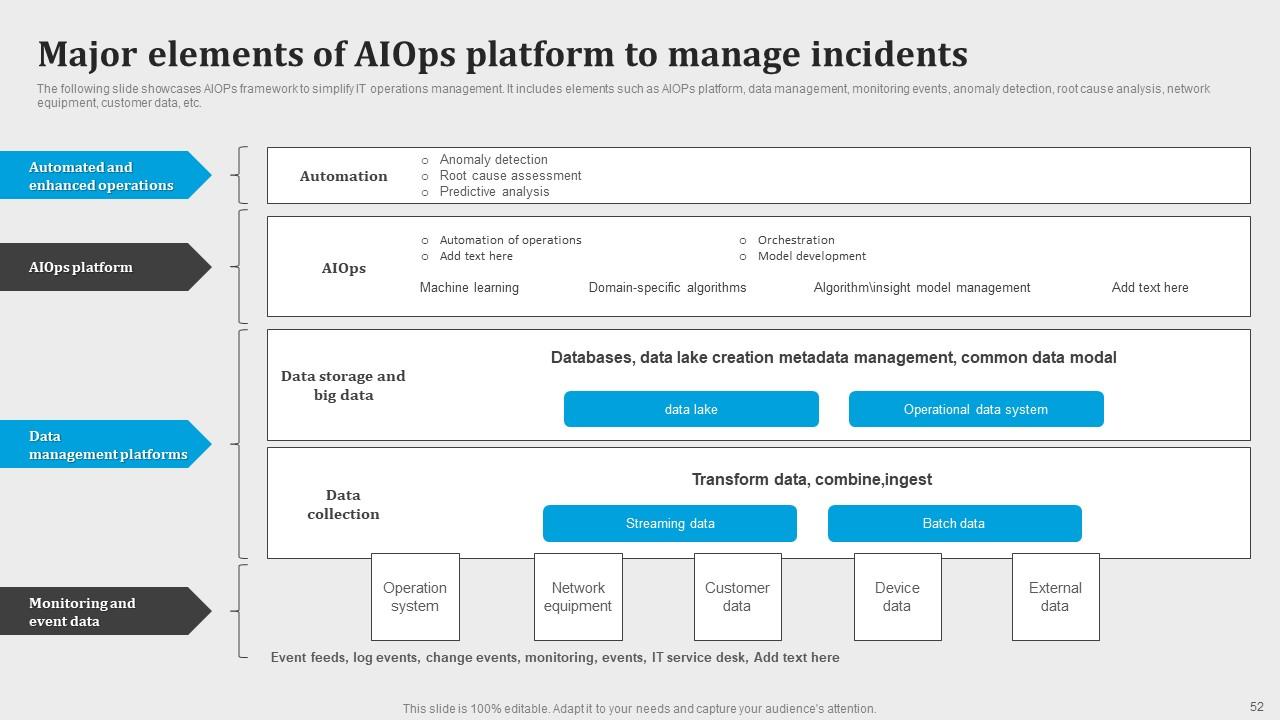
Slide 52: The following slide showcases AIOPs framework to simplify IT operations management.
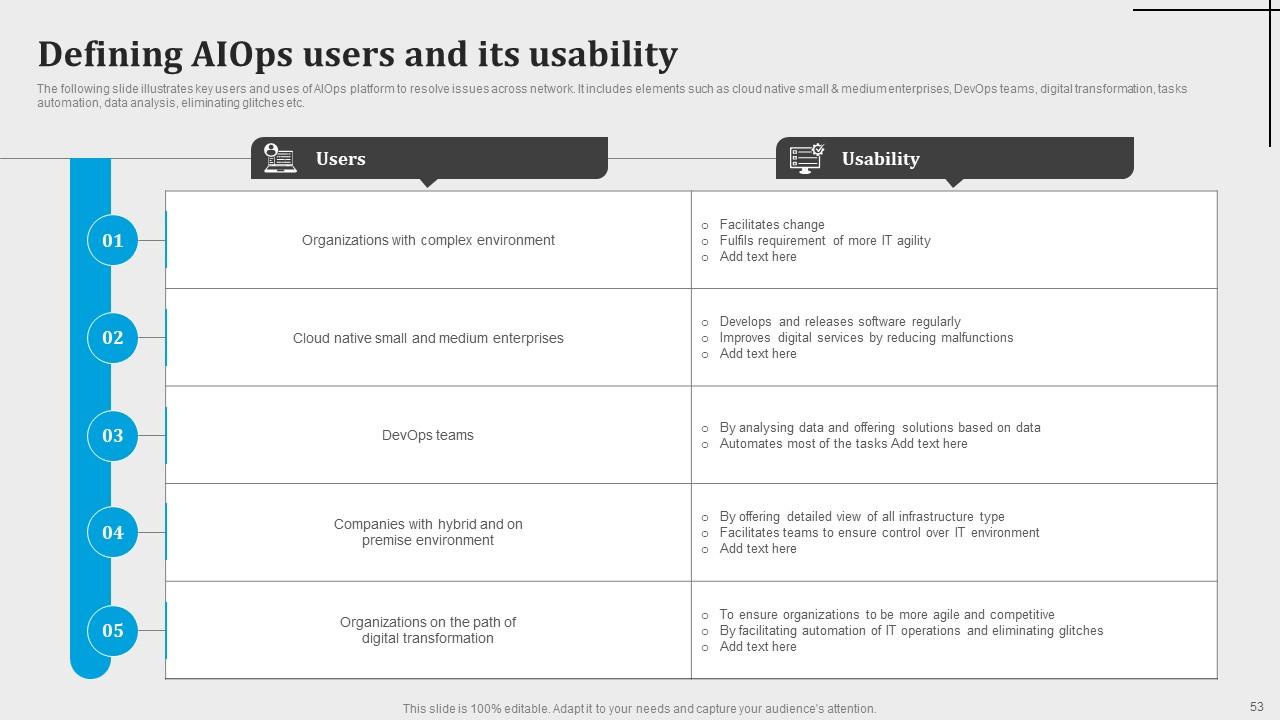
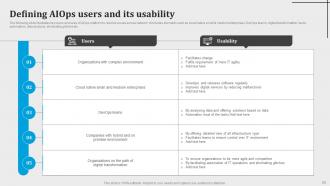
Slide 53: The following slide illustrates key users and uses of AIOps platform to resolve issues across network.
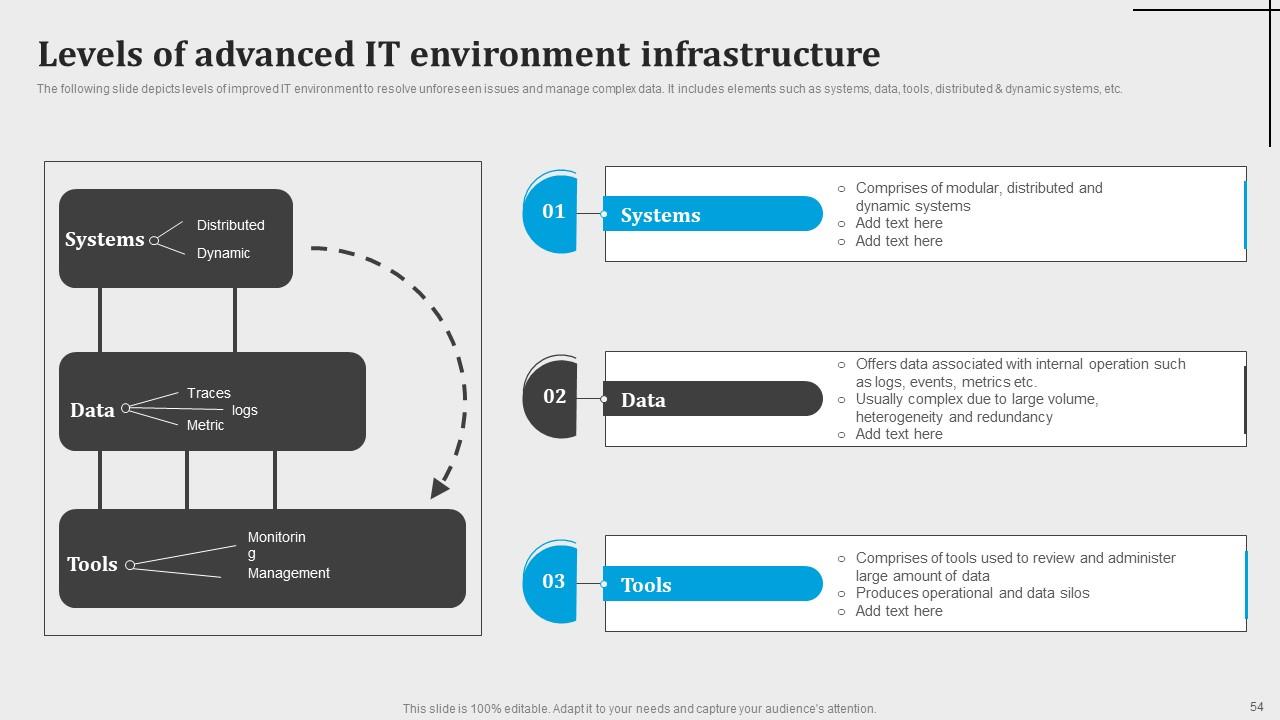
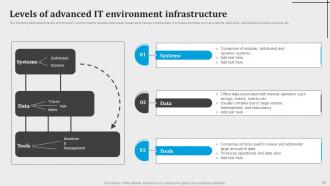
Slide 54: The following slide depicts levels of improved IT environment to resolve unforeseen issues and manage complex data.
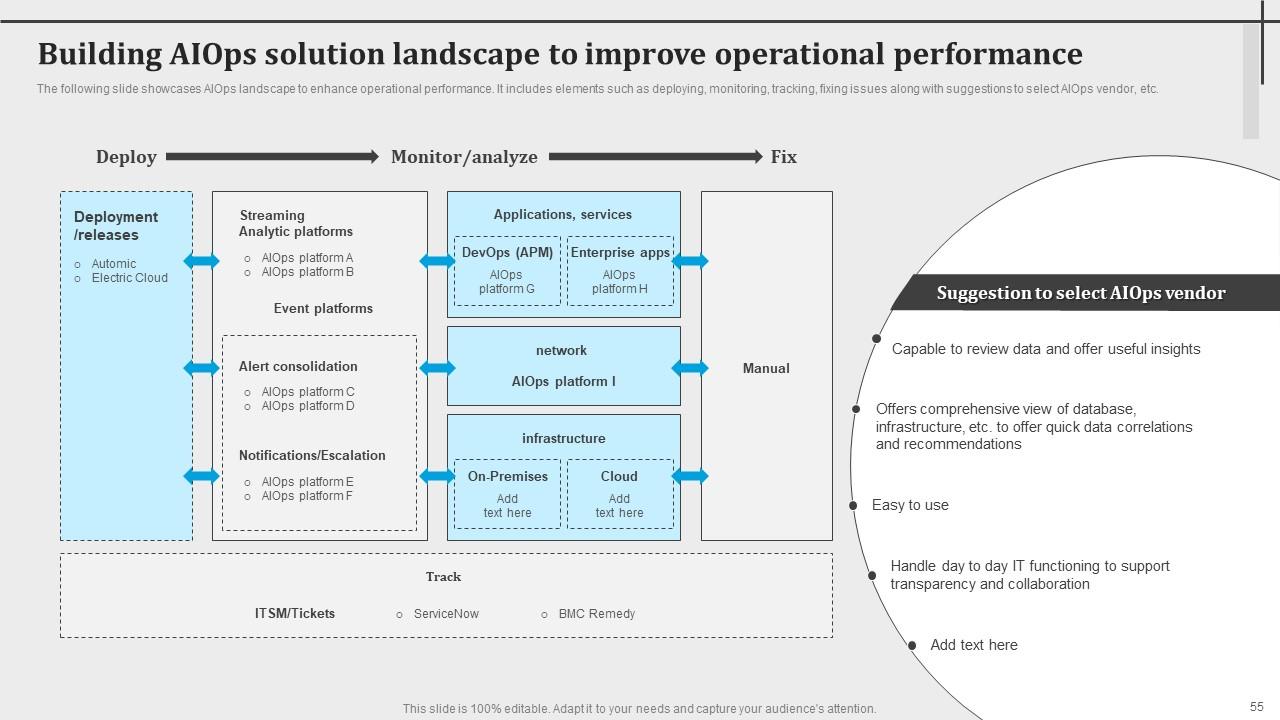
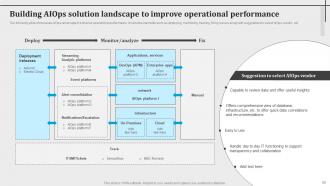
Slide 55: The following slide showcases AIOps landscape to enhance operational performance.
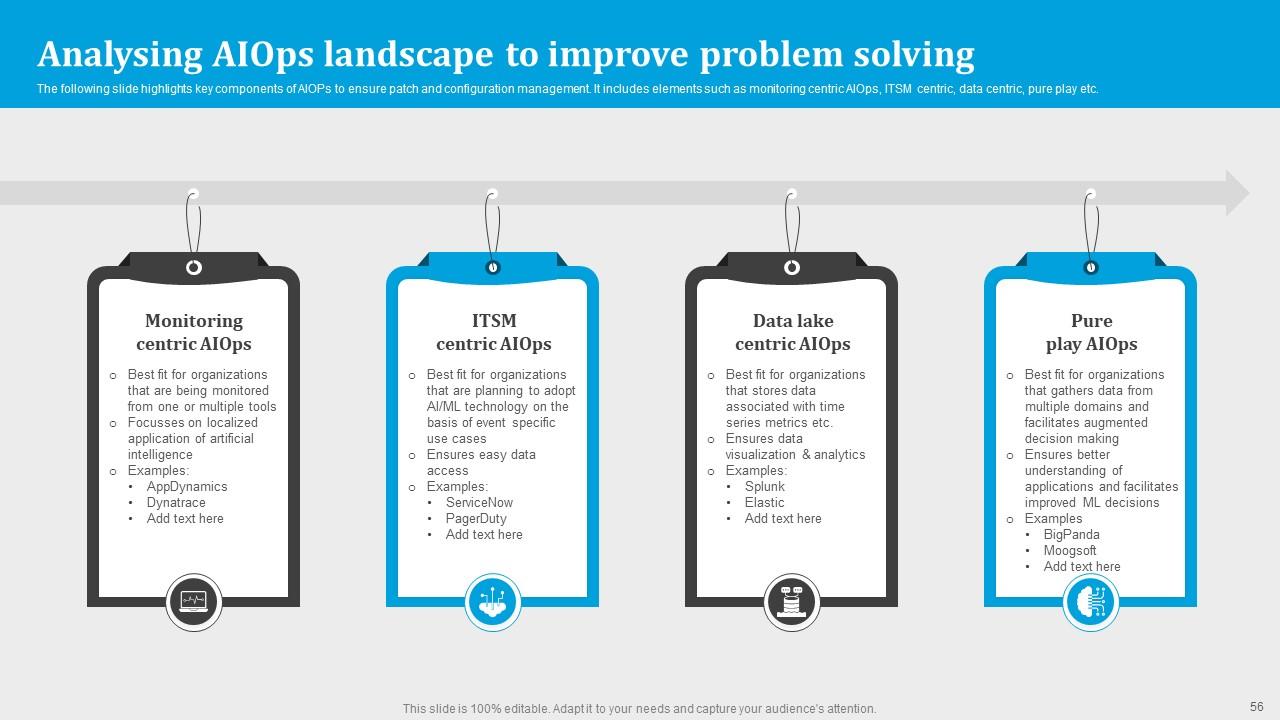
Slide 56: The following slide highlights key components of AIOPs to ensure patch and configuration management.
Slide 57: This slide exhibit table of content that is to be discuss further.
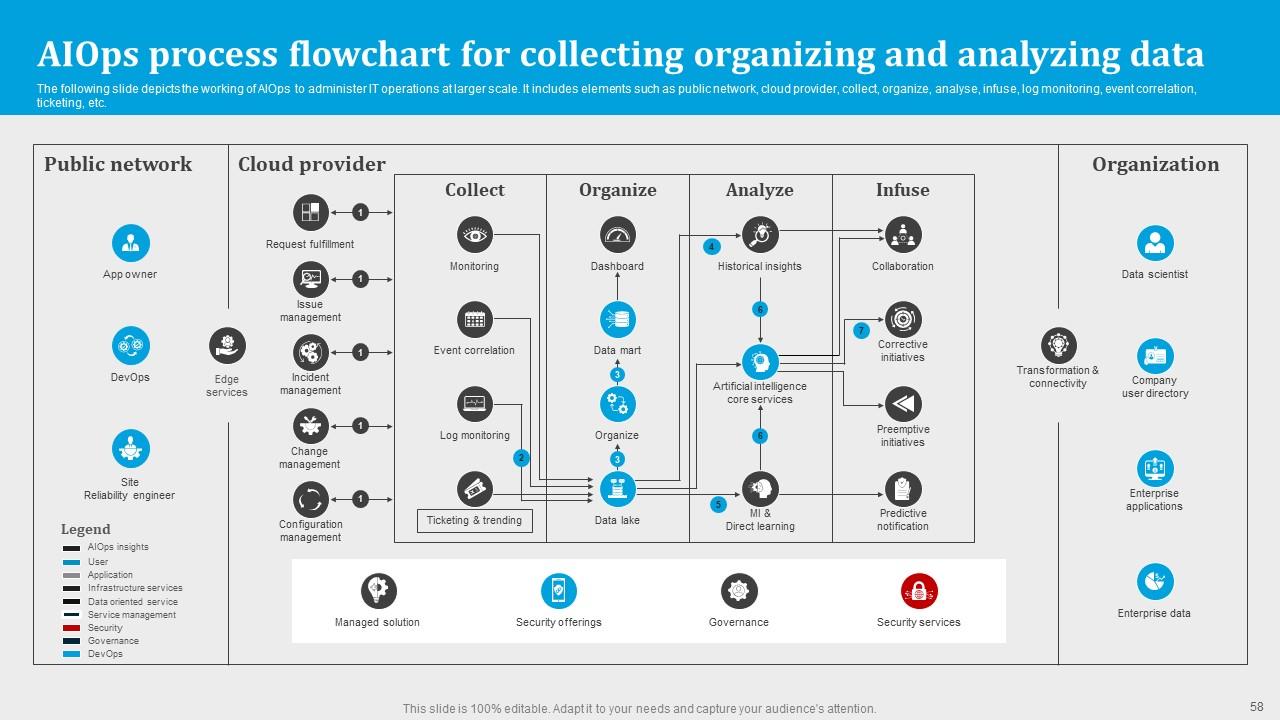
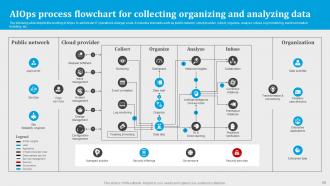
Slide 58: The following slide depicts the working of AIOps to administer IT operations at larger scale.
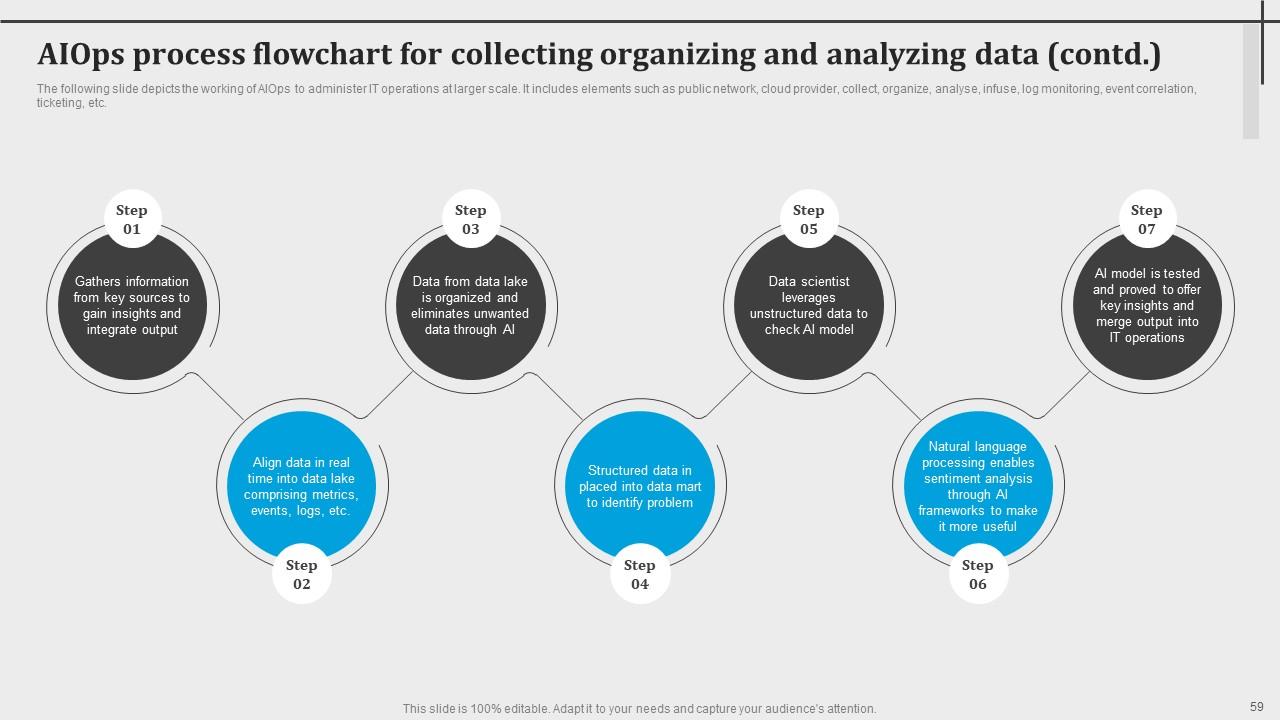
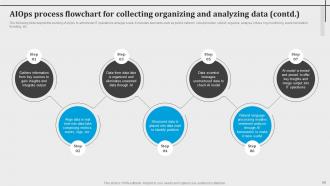
Slide 59: The following slide depicts the working of AIOps to administer IT operations at larger scale.
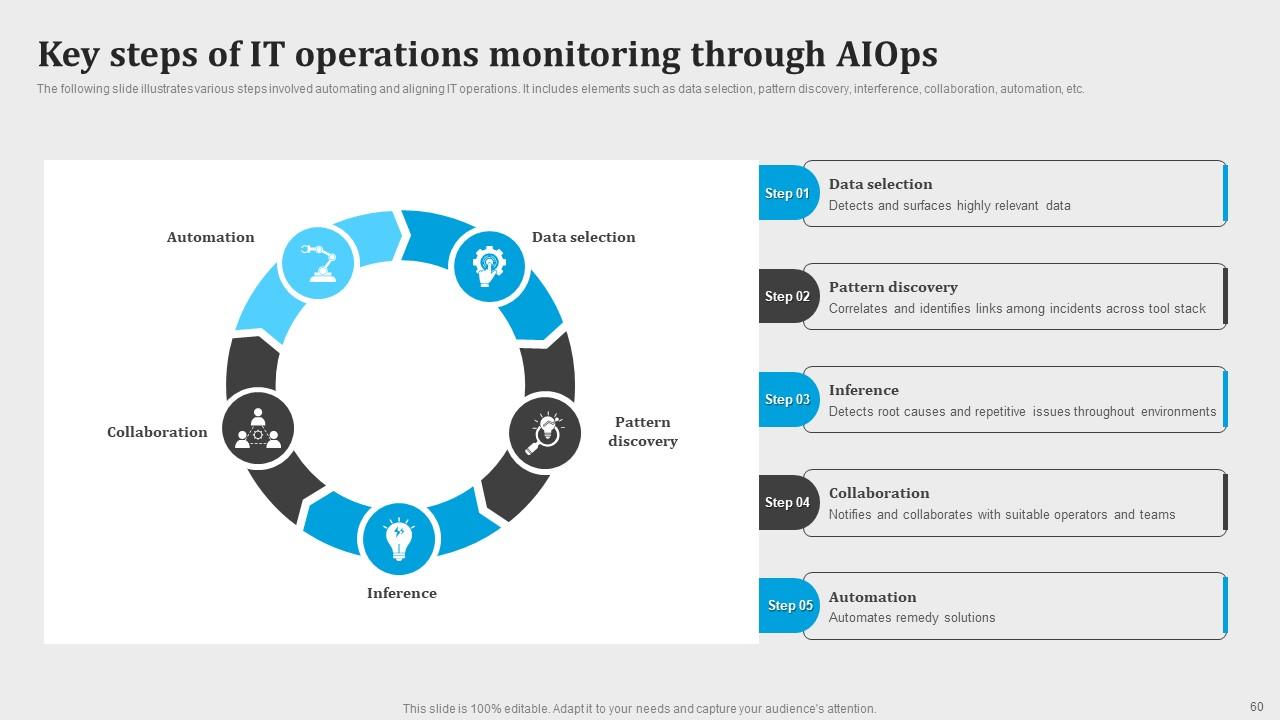
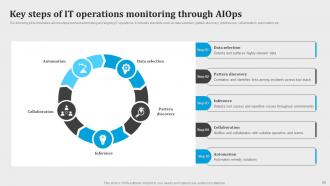
Slide 60: The following slide illustrates various steps involved automating and aligning IT operations.
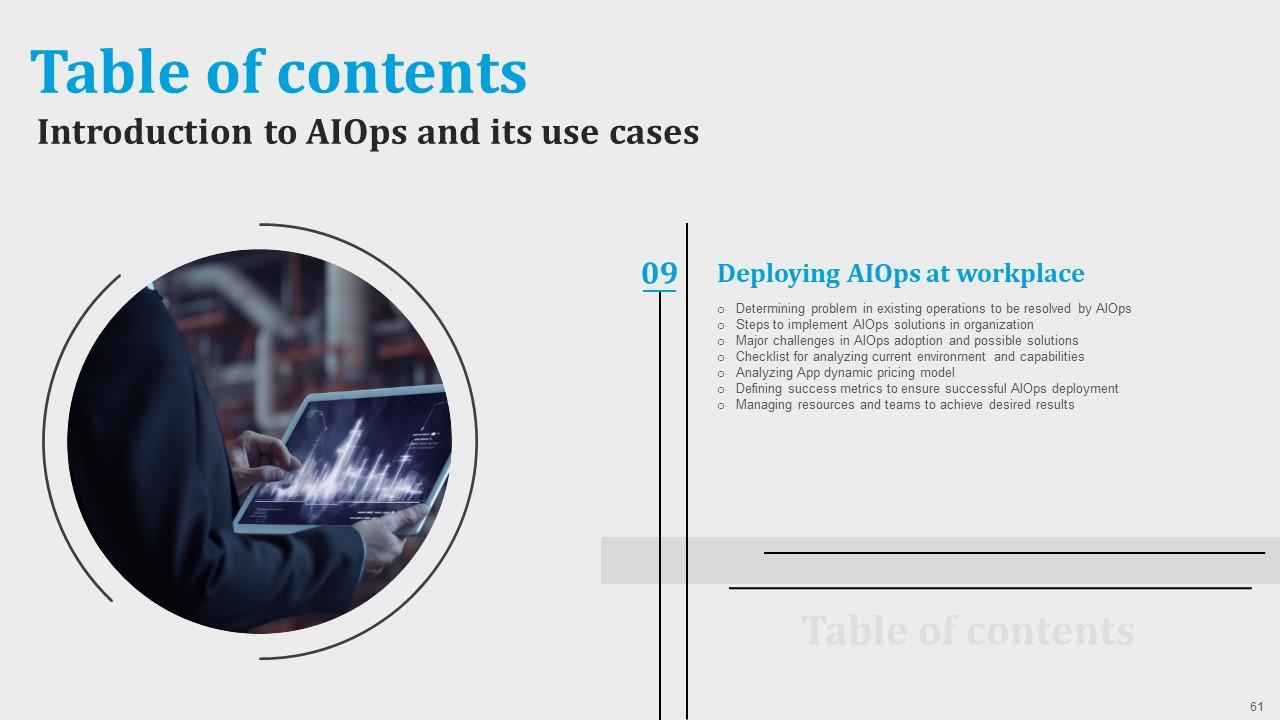
Slide 61: This slide exhibit table of content that is to be discuss further.
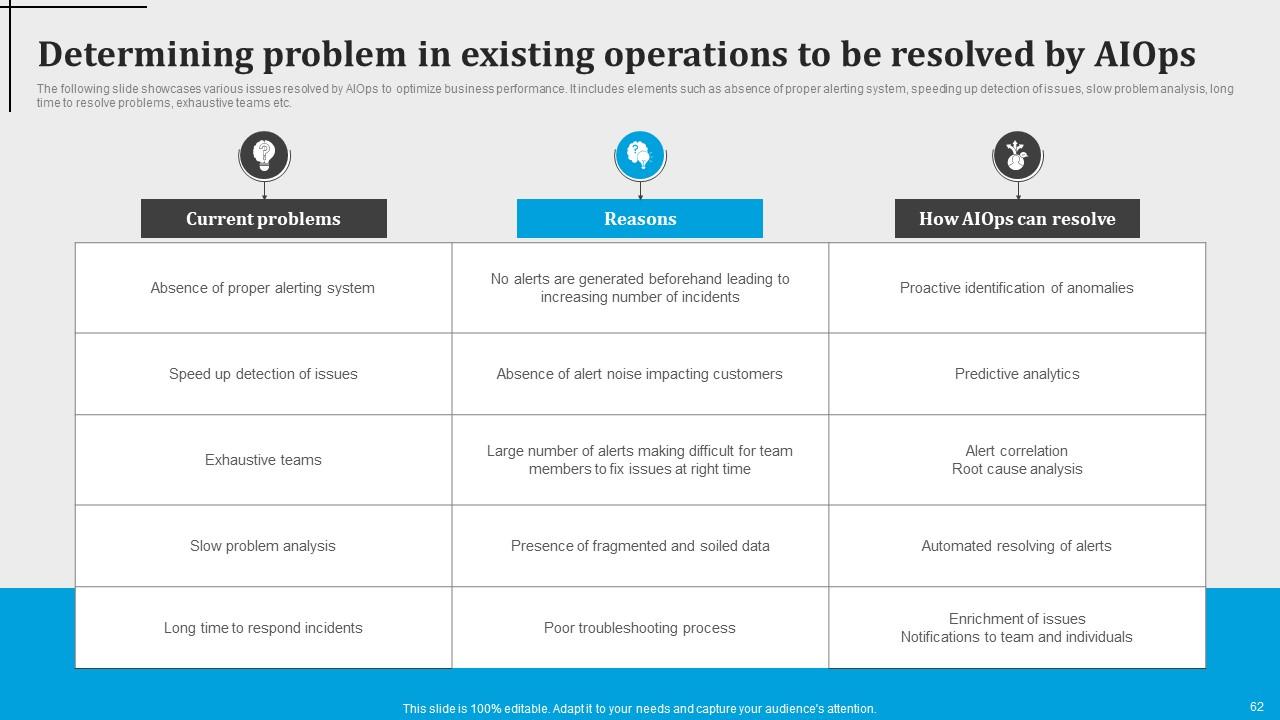
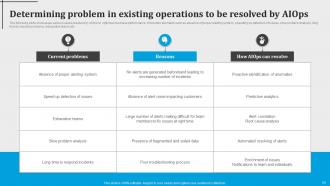
Slide 62: The following slide showcases various issues resolved by AIOps to optimize business performance.
Slide 63: The following slide illustrates various issues and their possible solutions to.
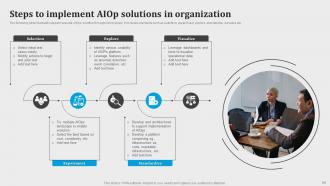
Slide 64: The following slide illustrates steps to execute AIOps solution throughout company.
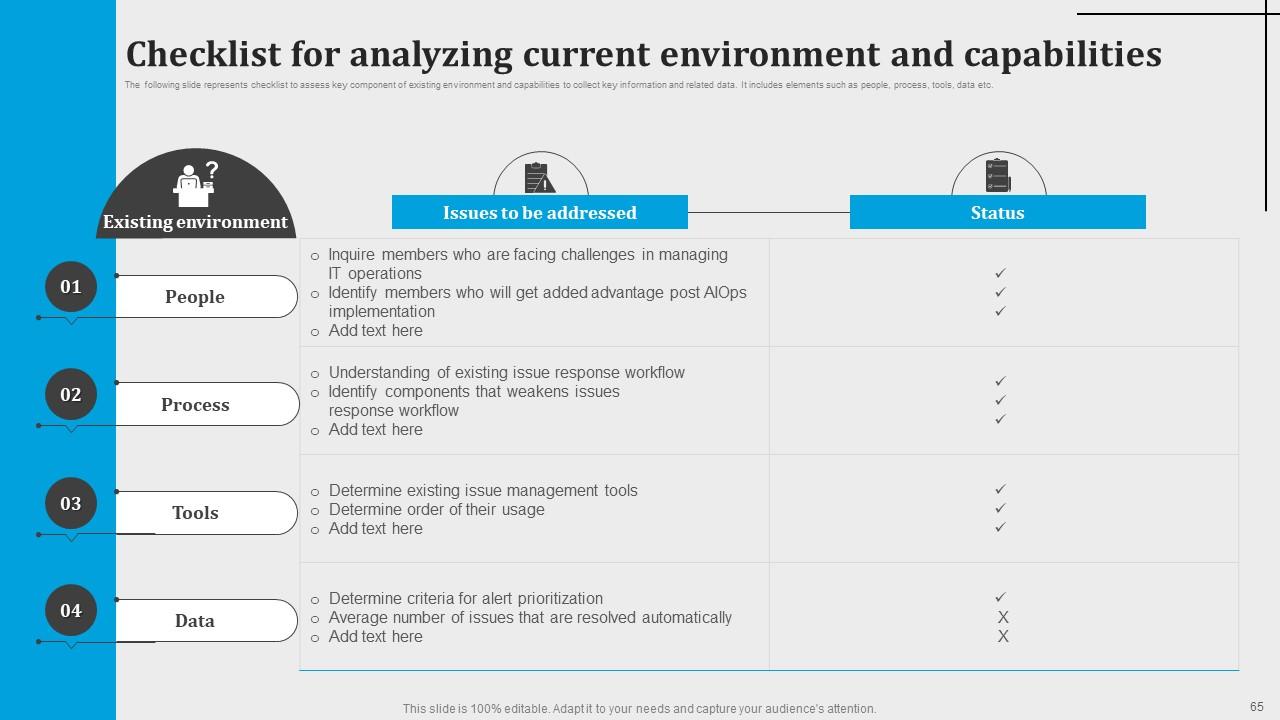
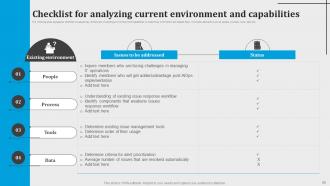
Slide 65: The following slide represents checklist to assess key component of existing environment and capabilities to collect key information and related data.
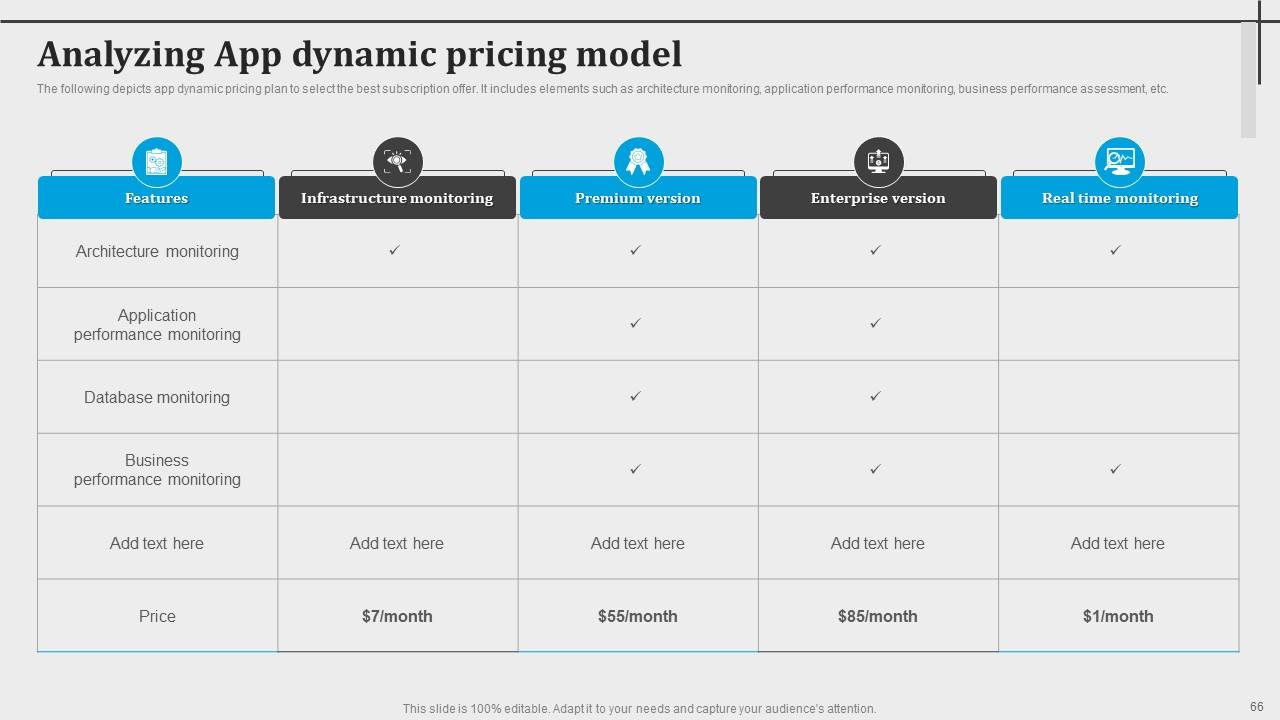
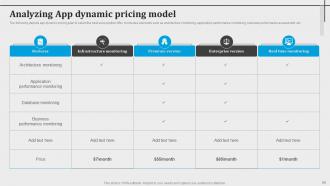
Slide 66: The following depicts app dynamic pricing plan to select the best subscription offer.
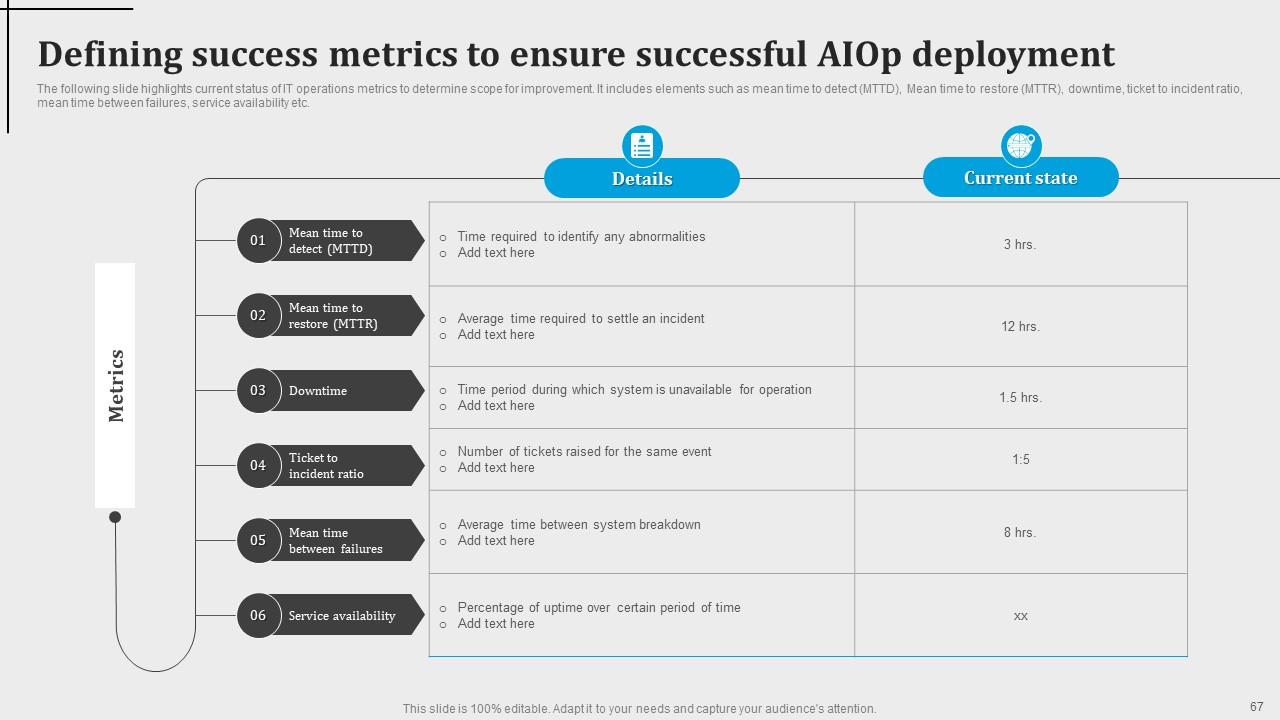
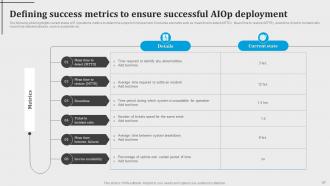
Slide 67: The following slide highlights current status of IT operations metrics to determine scope for improvement.
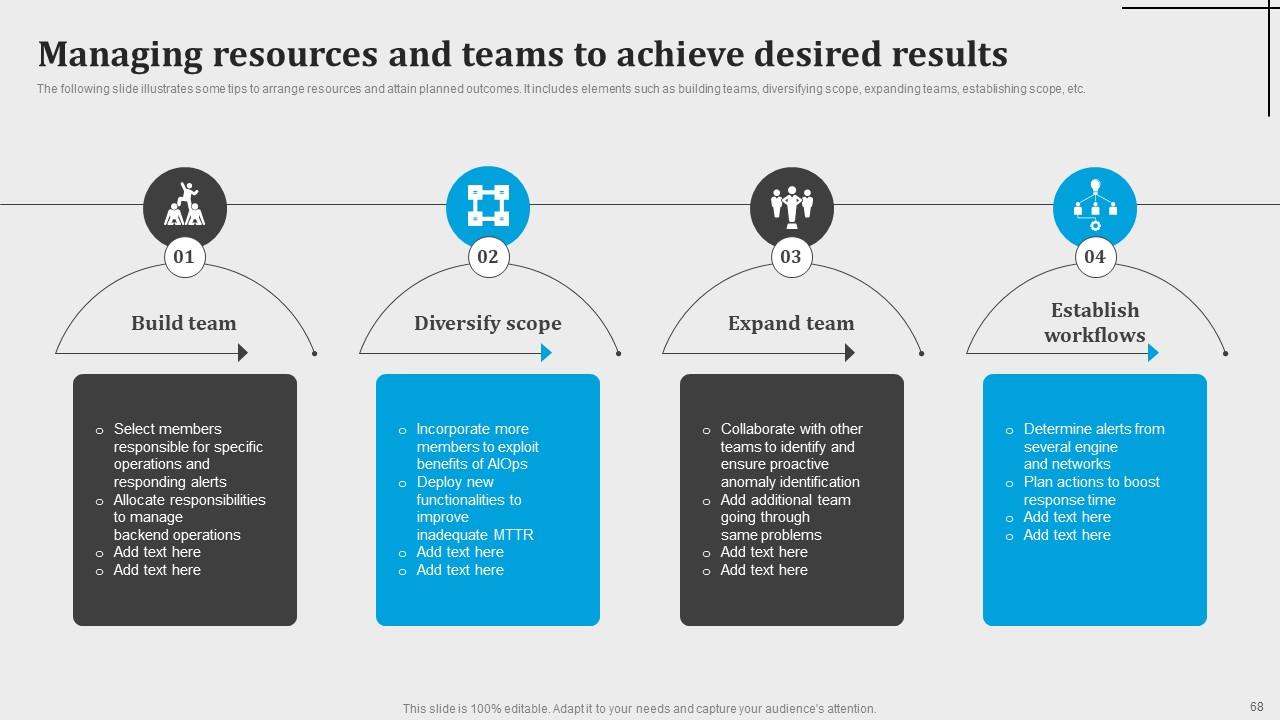
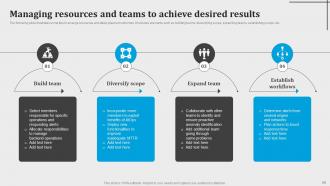
Slide 68: The following slide illustrates some tips to arrange resources and attain planned outcomes.
Slide 69: This slide exhibit table of content that is to be discuss further.
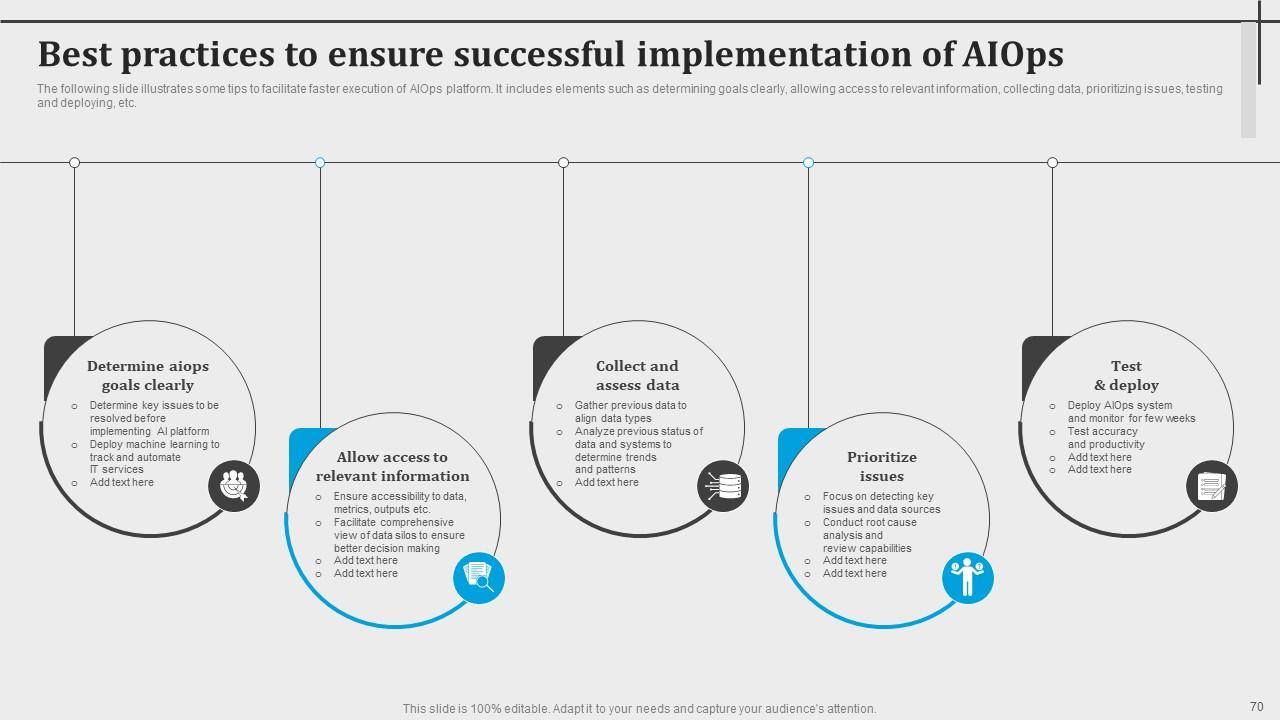
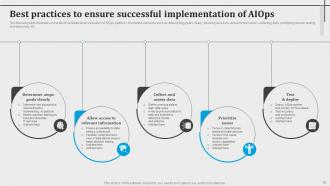
Slide 70: The following slide illustrates some tips to facilitate faster execution of AIOps platform.
Slide 71: This slide exhibit table of content that is to be discuss further.
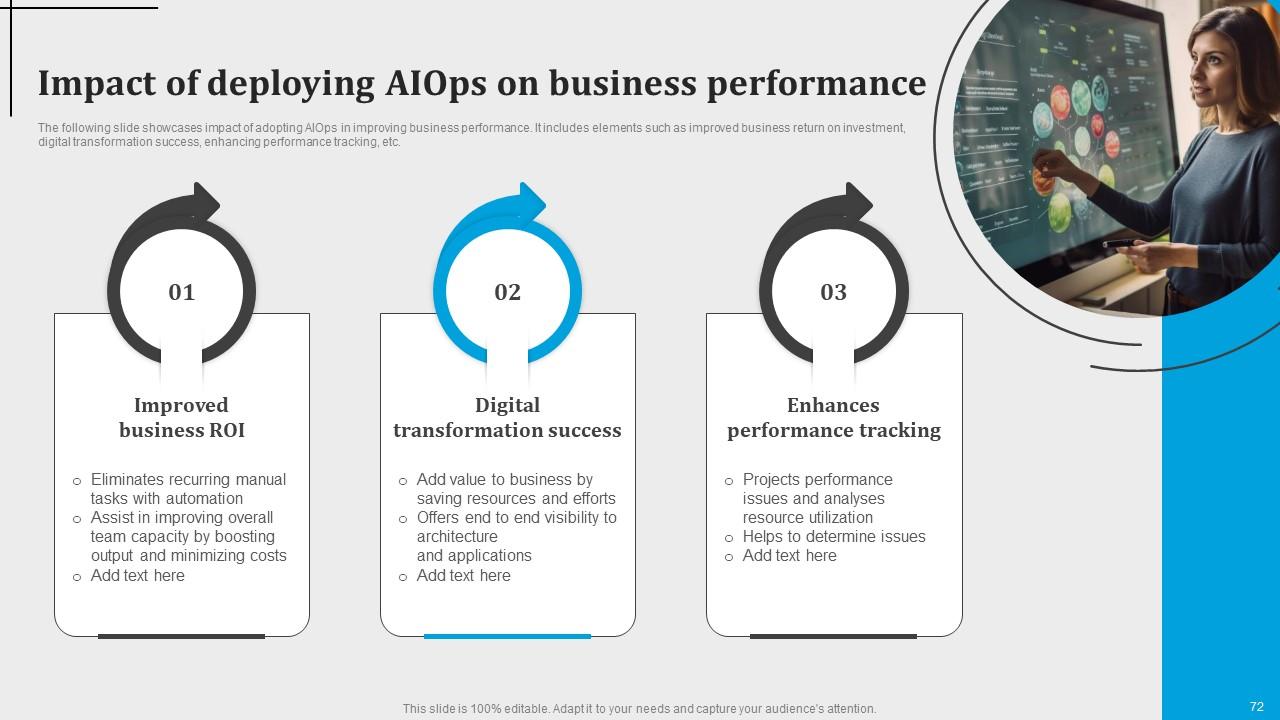
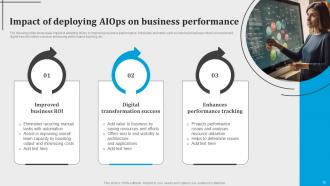
Slide 72: The following slide showcases impact of adopting AIOps in improving business performance.
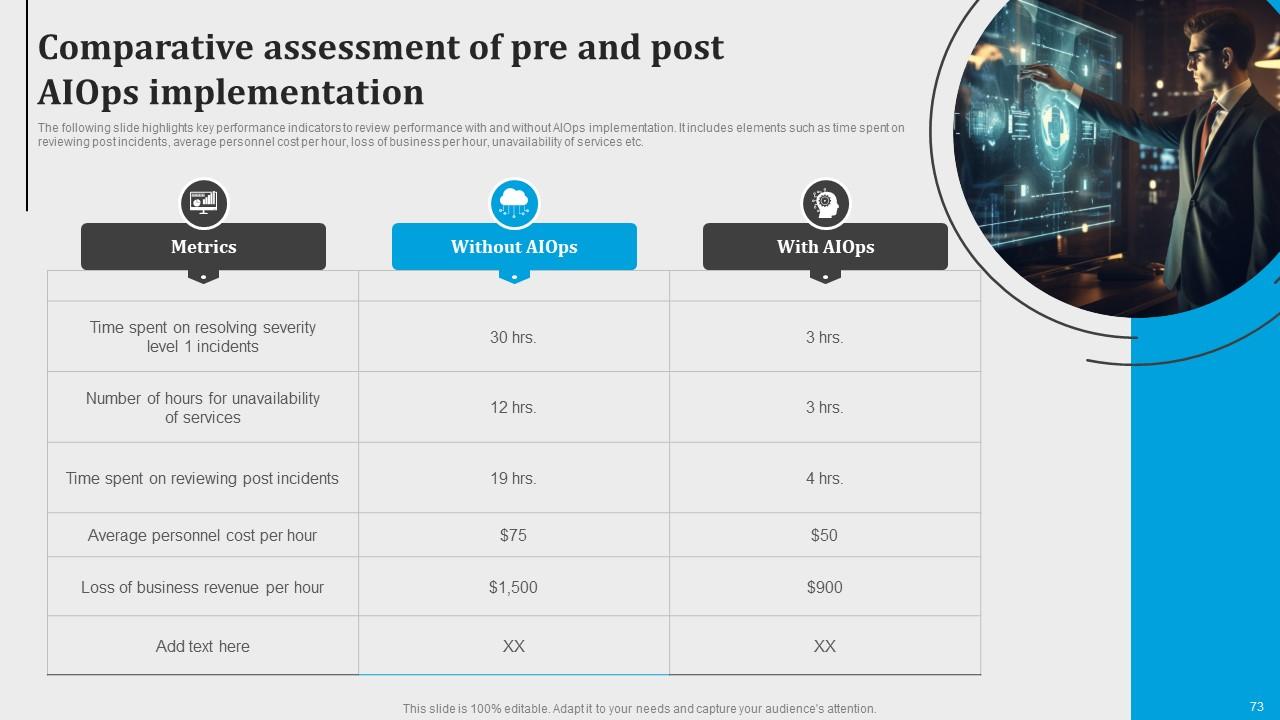
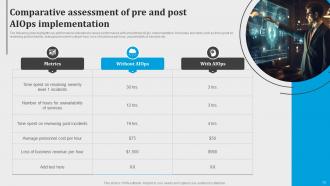
Slide 73: The following slide highlights key performance indicators to review performance with and without AIOps implementation.
Slide 74: This slide exhibit table of content that is to be discuss further.
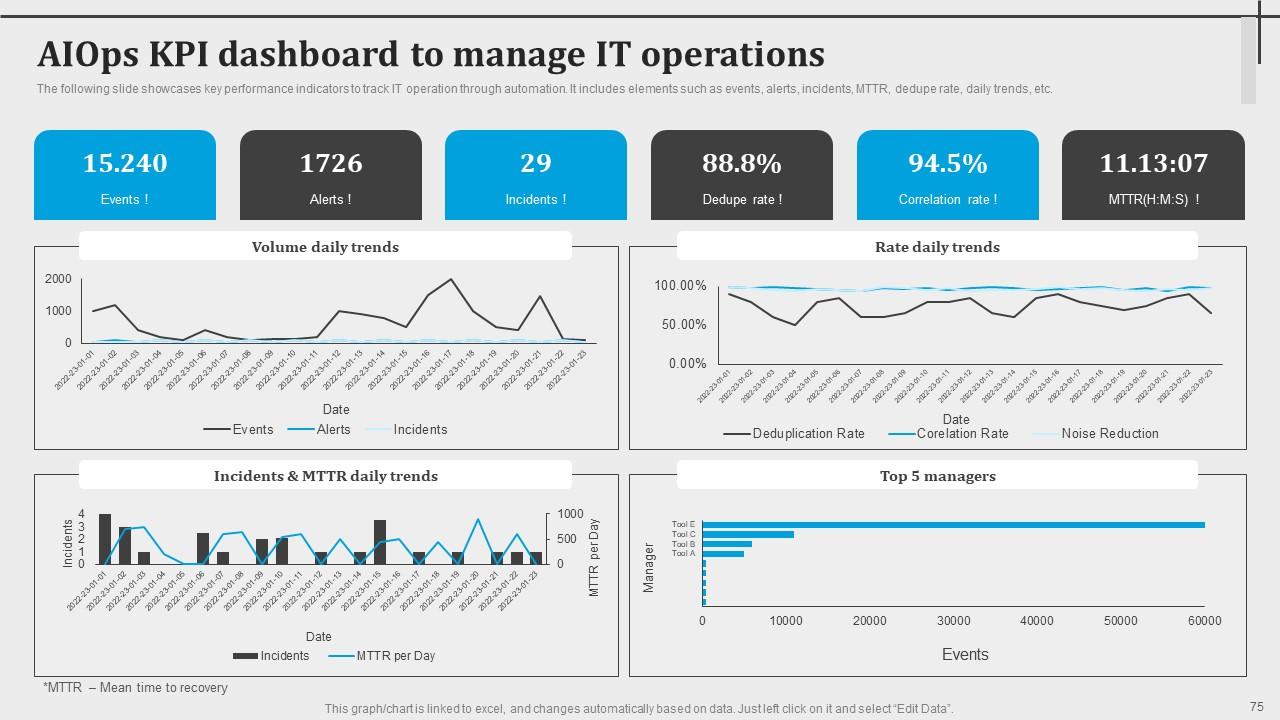
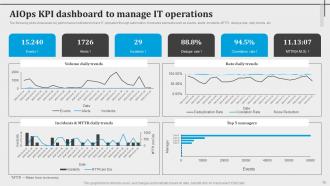
Slide 75: The following slide showcases key performance indicators to track IT operation through automation.
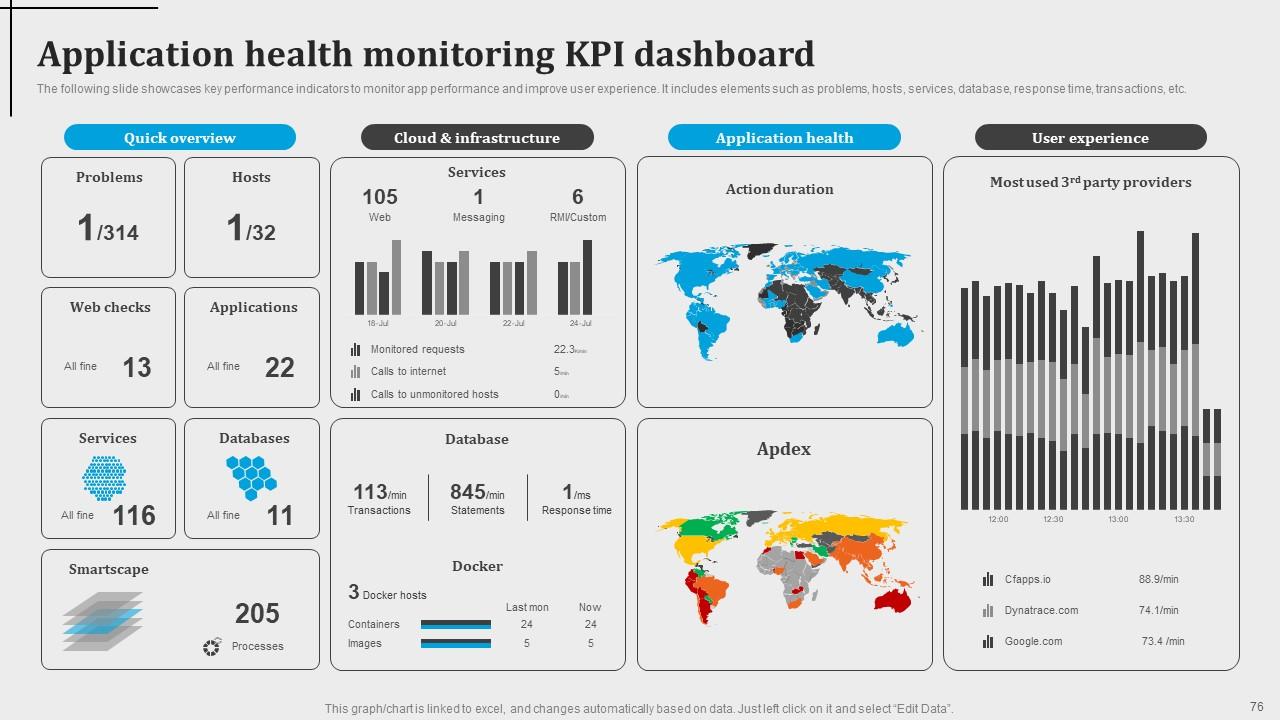
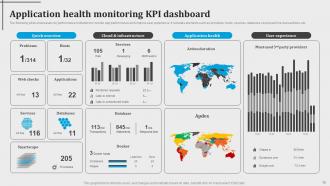
Slide 76: The following slide showcases key performance indicators to monitor app performance and improve user experience.
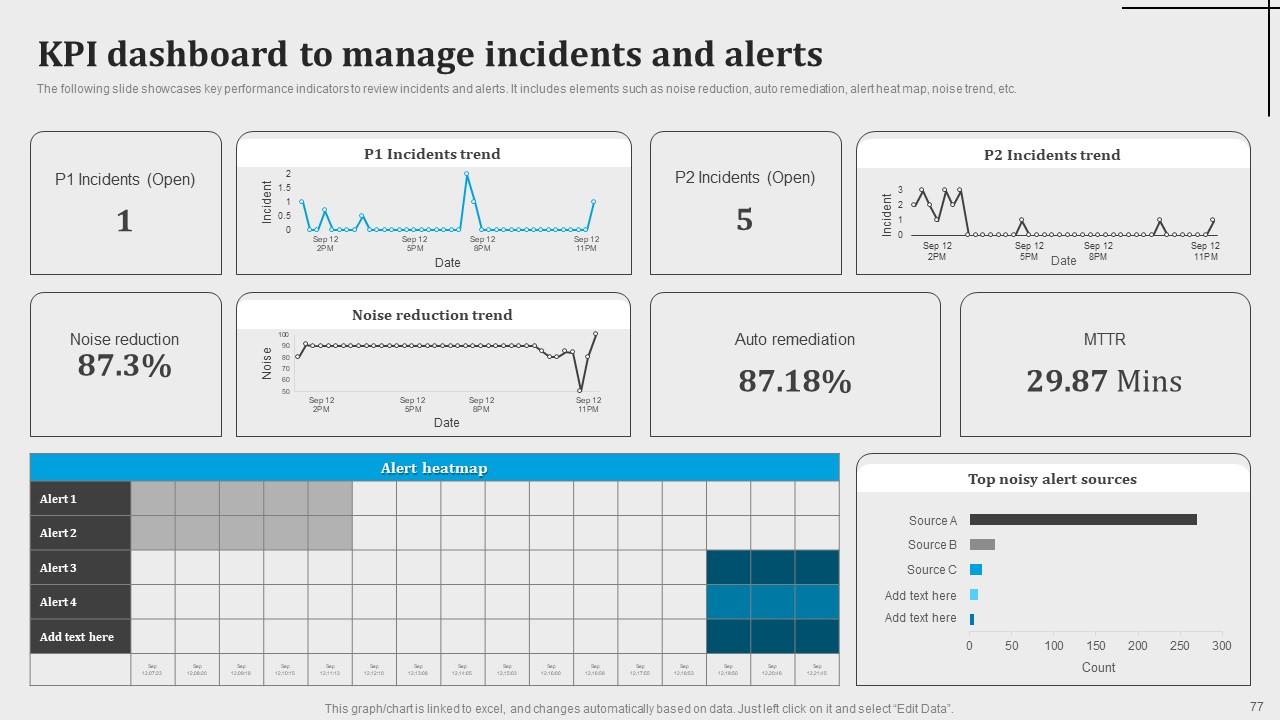
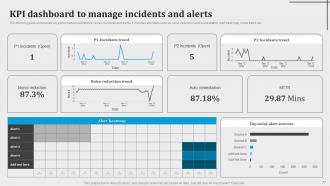
Slide 77: The following slide showcases key performance indicators to review incidents and alerts.
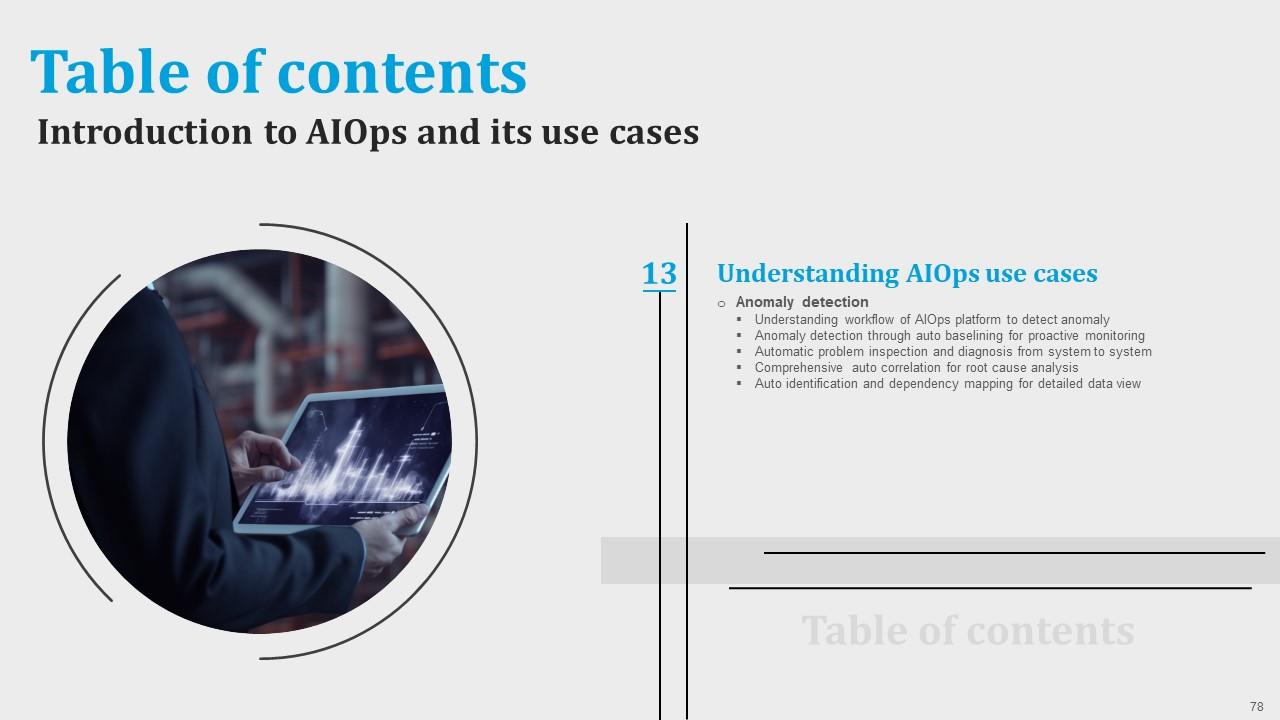
Slide 78: This slide exhibit table of content that is to be discuss further.
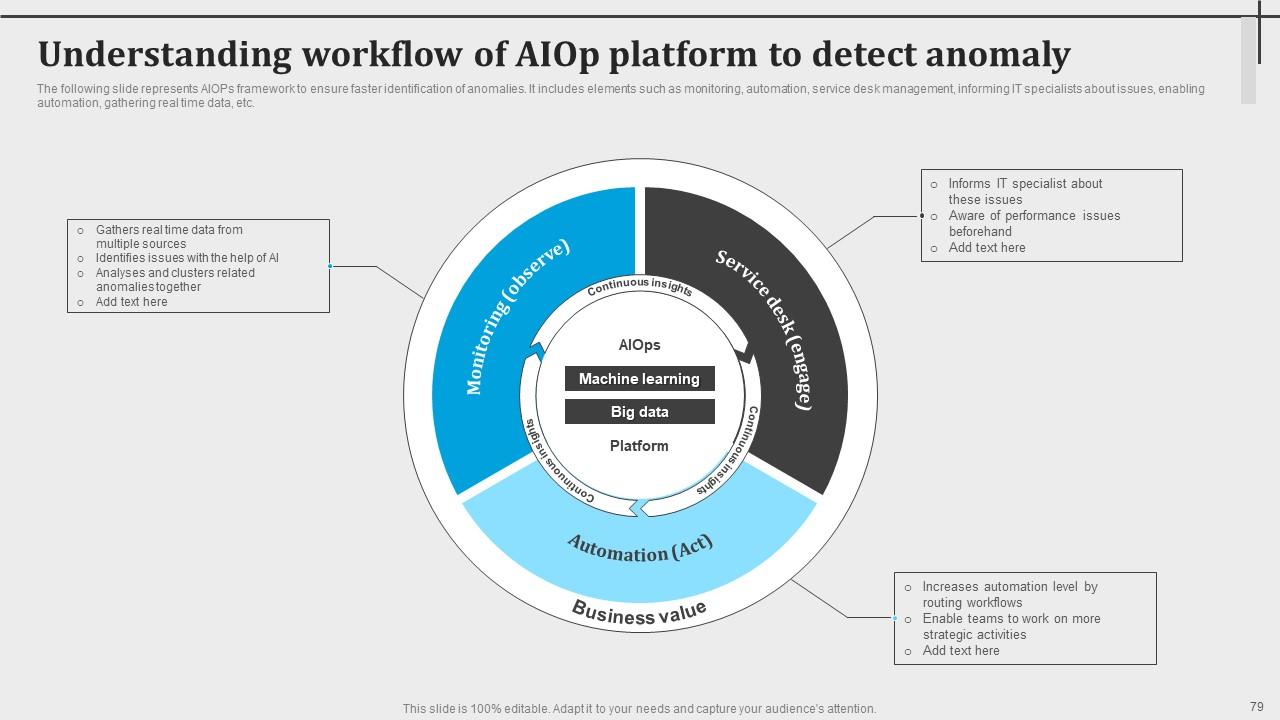
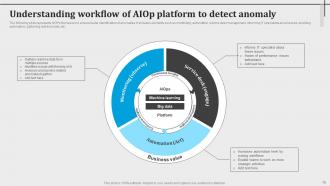
Slide 79: The following slide represents AIOPs framework to ensure faster identification of anomalies.
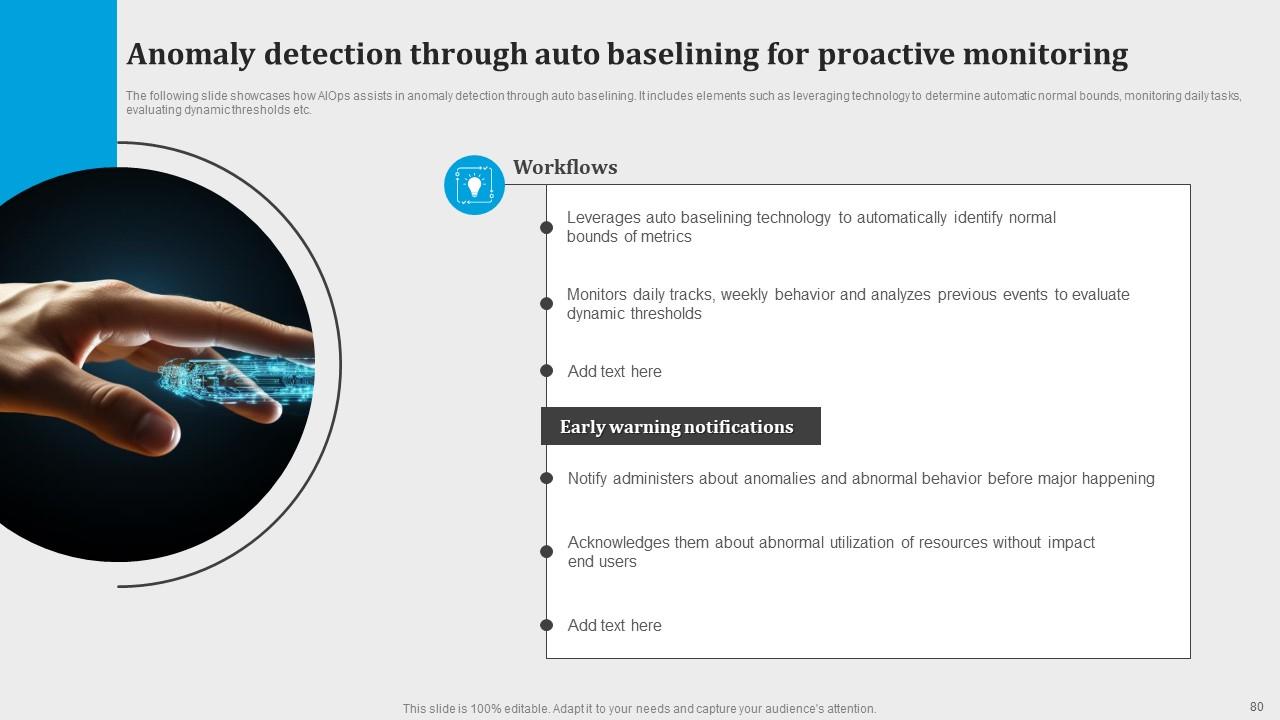
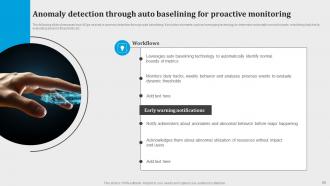
Slide 80: The following slide showcases how AIOps assists in anomaly detection through auto baselining.
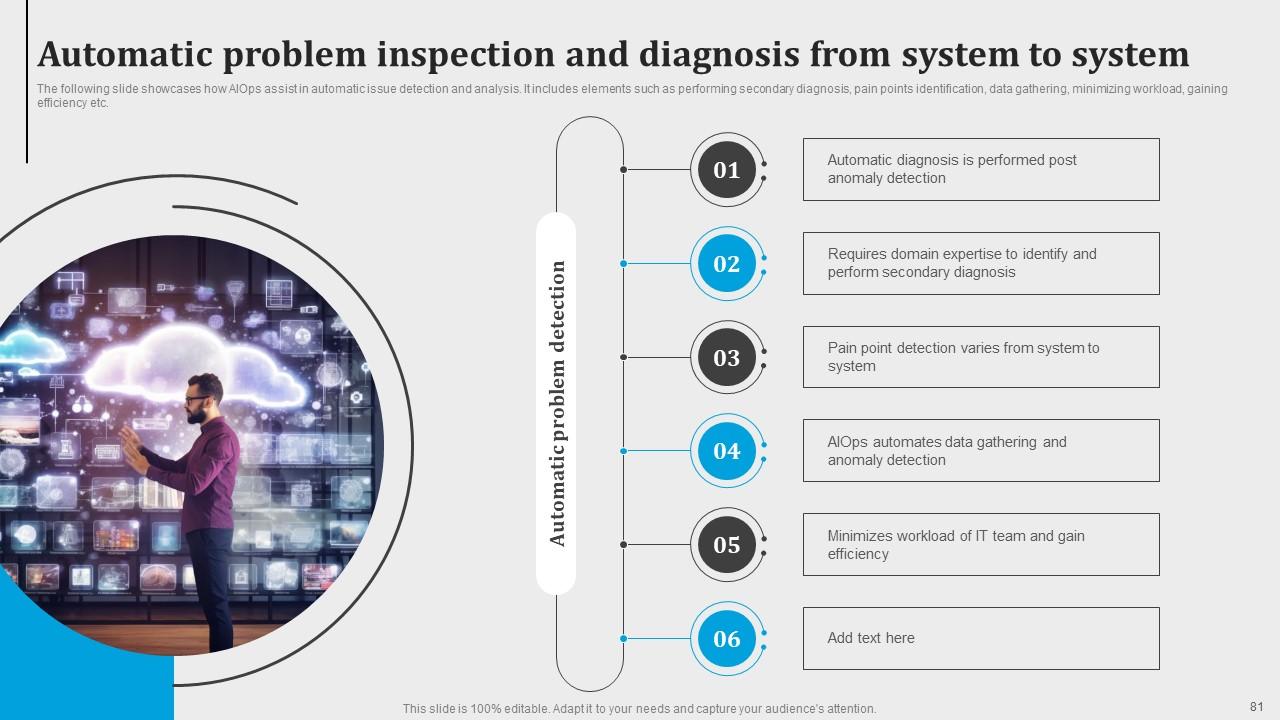
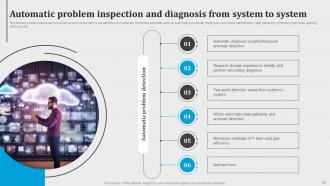
Slide 81: The following slide showcases how AIOps assist in automatic issue detection and analysis.
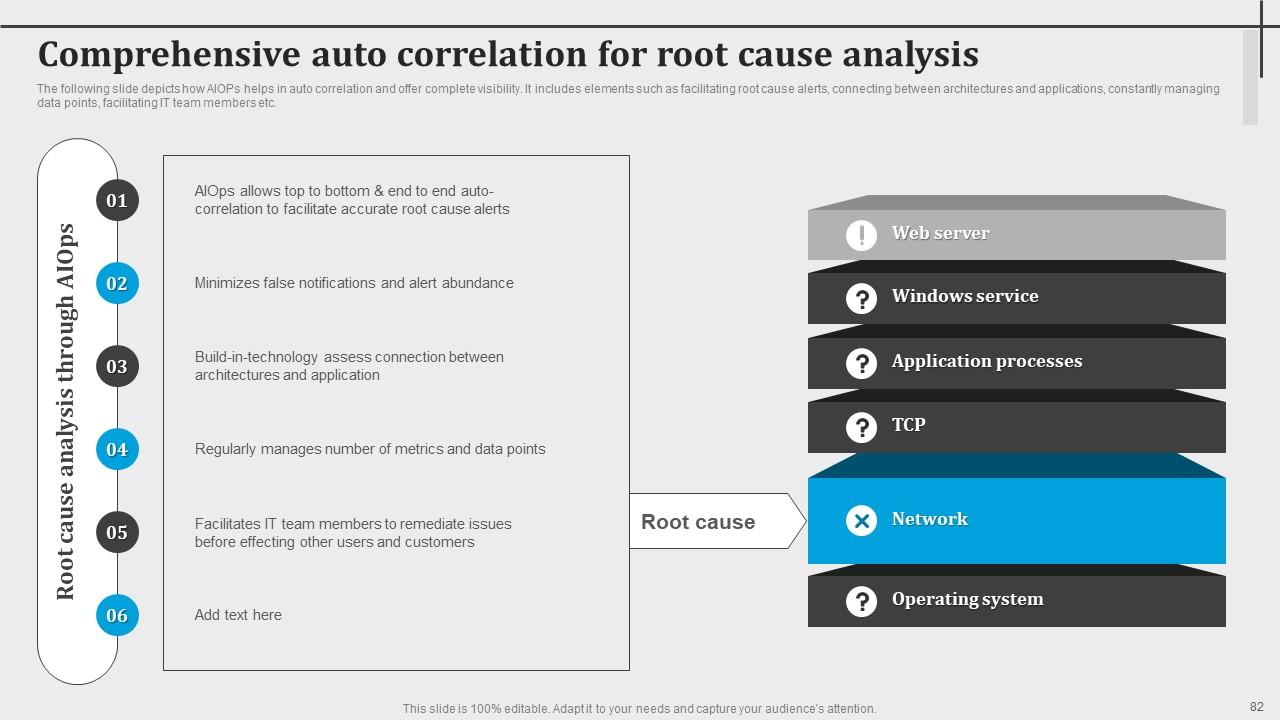
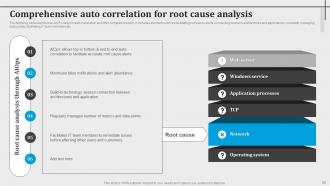
Slide 82: The following slide depicts how AIOPs helps in auto correlation and offer complete visibility.
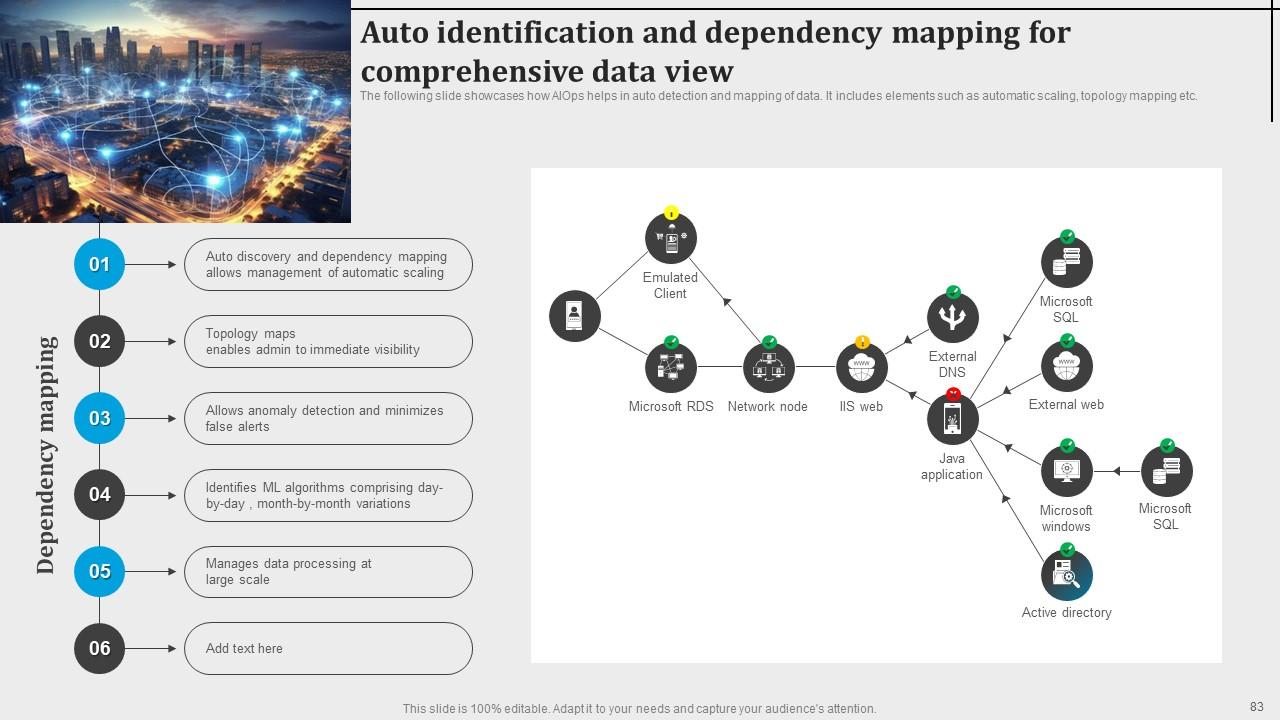
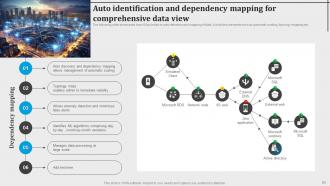
Slide 83: The following slide showcases how AIOps helps in auto detection and mapping of data.
Slide 84: This slide exhibit table of content that is to be discuss further.
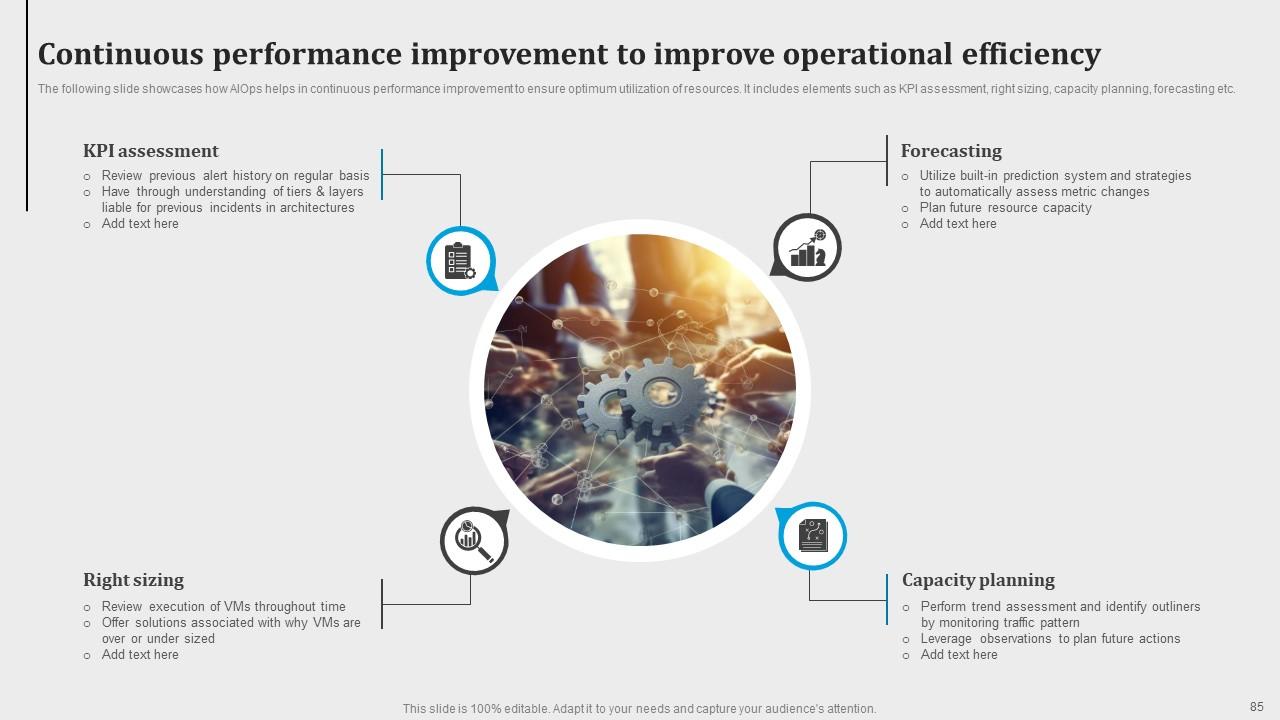
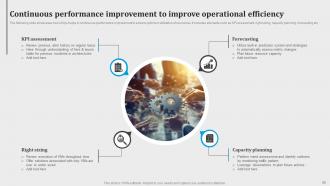
Slide 85: The following slide showcases how AIOps helps in continuous performance improvement to ensure optimum utilization of resources.
Slide 86: This slide exhibit table of content that is to be discuss further.
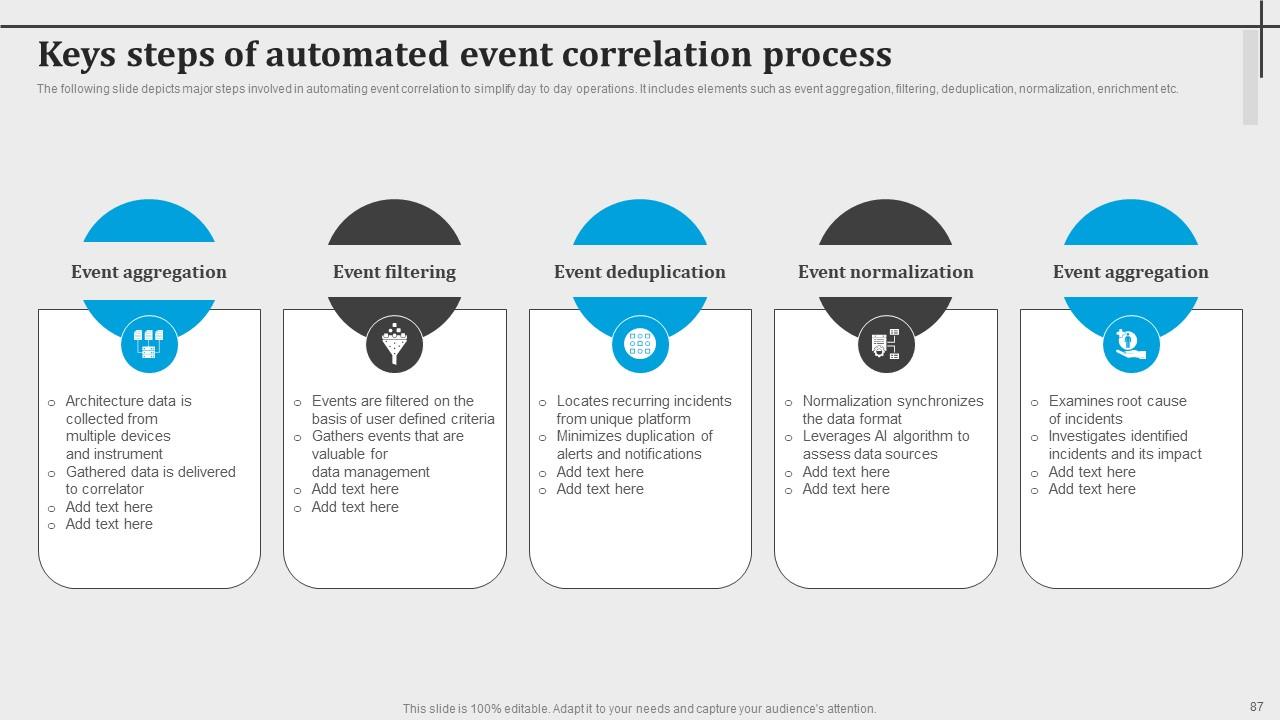
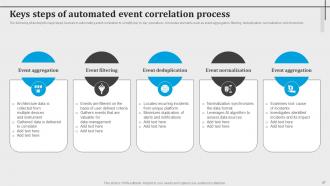
Slide 87: The following slide depicts major steps involved in automating event correlation to simplify day to day operations.
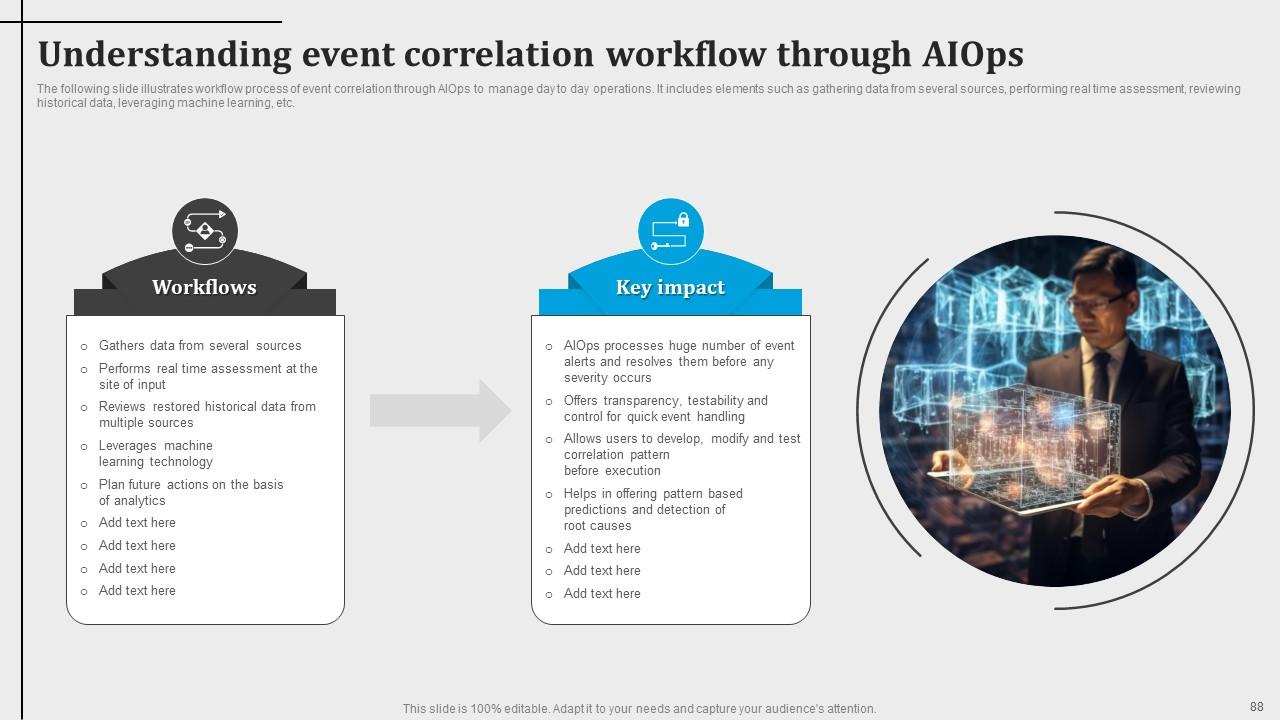
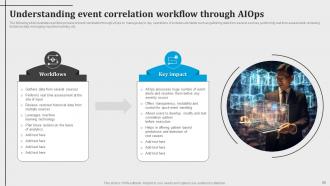
Slide 88: The following slide illustrates workflow process of event correlation through AIOps to manage day to day operations.
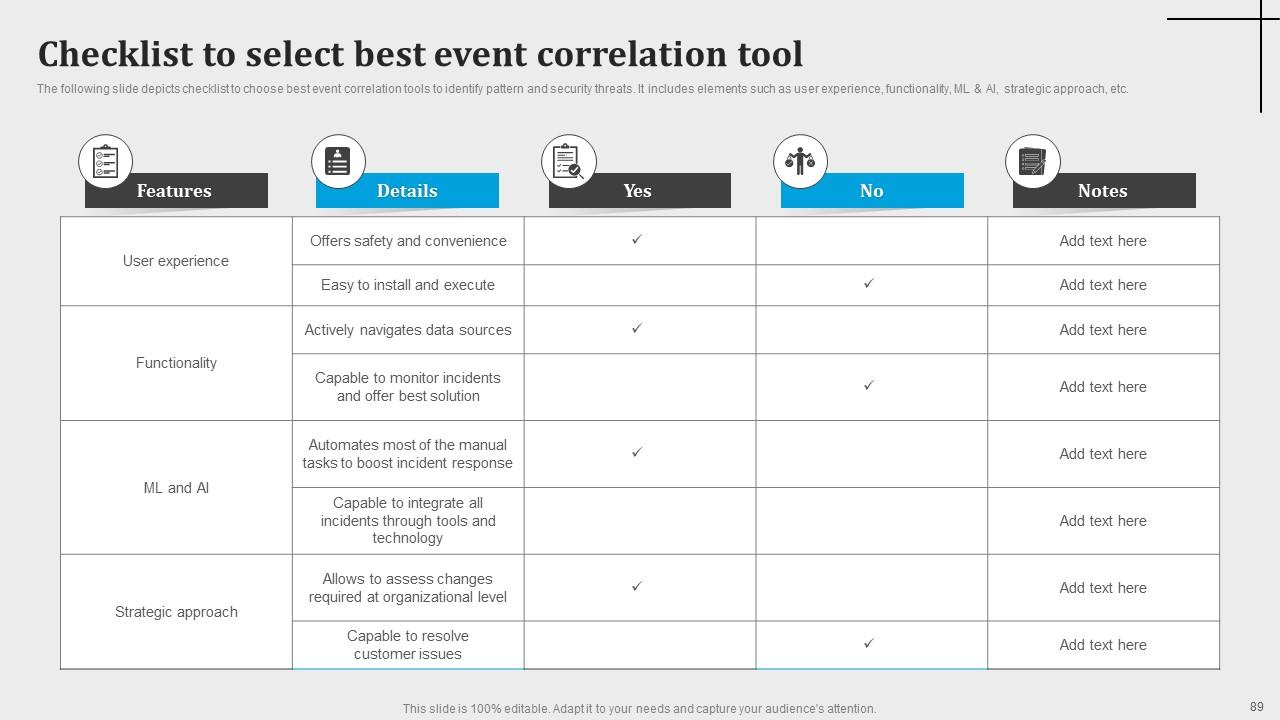
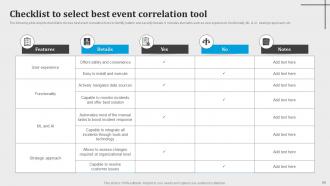
Slide 89: The following slide depicts checklist to choose best event correlation tools to identify pattern and security threats.
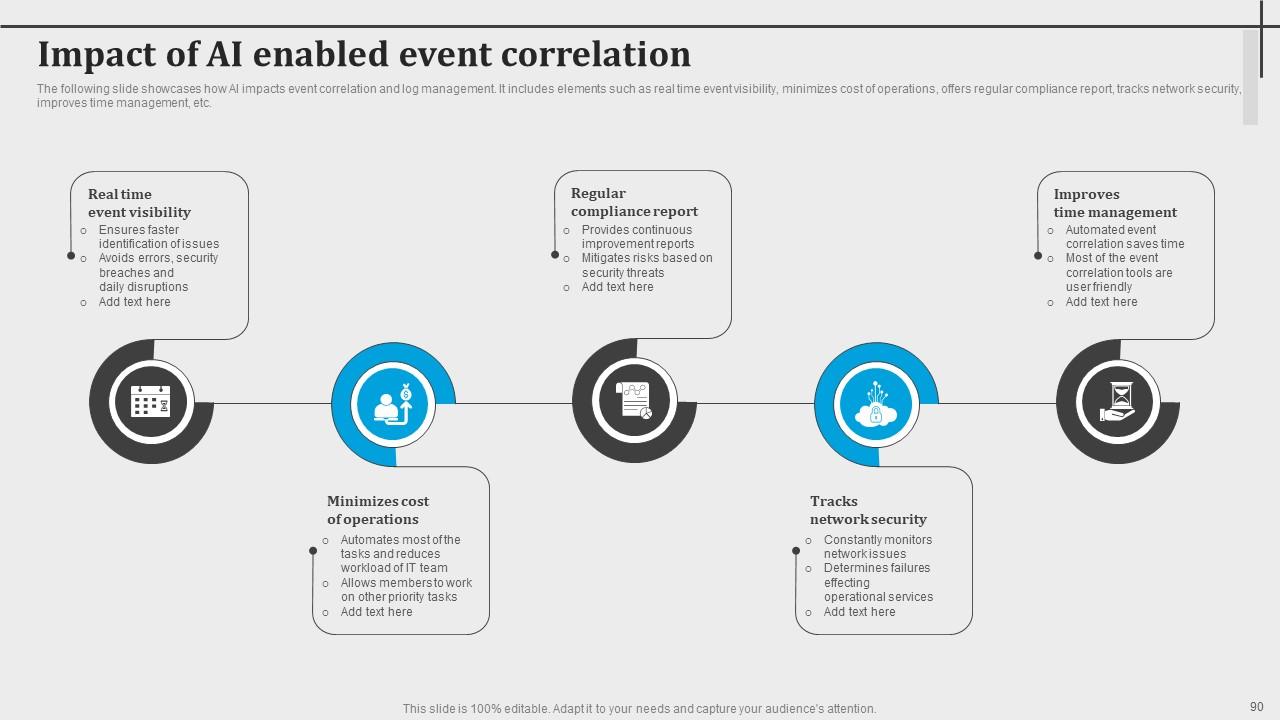
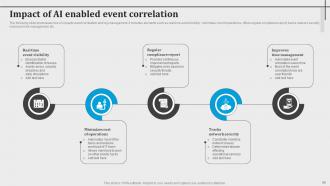
Slide 90: The following slide showcases how AI impacts event correlation and log management.
Slide 91: This slide exhibit table of content that is to be discuss further.
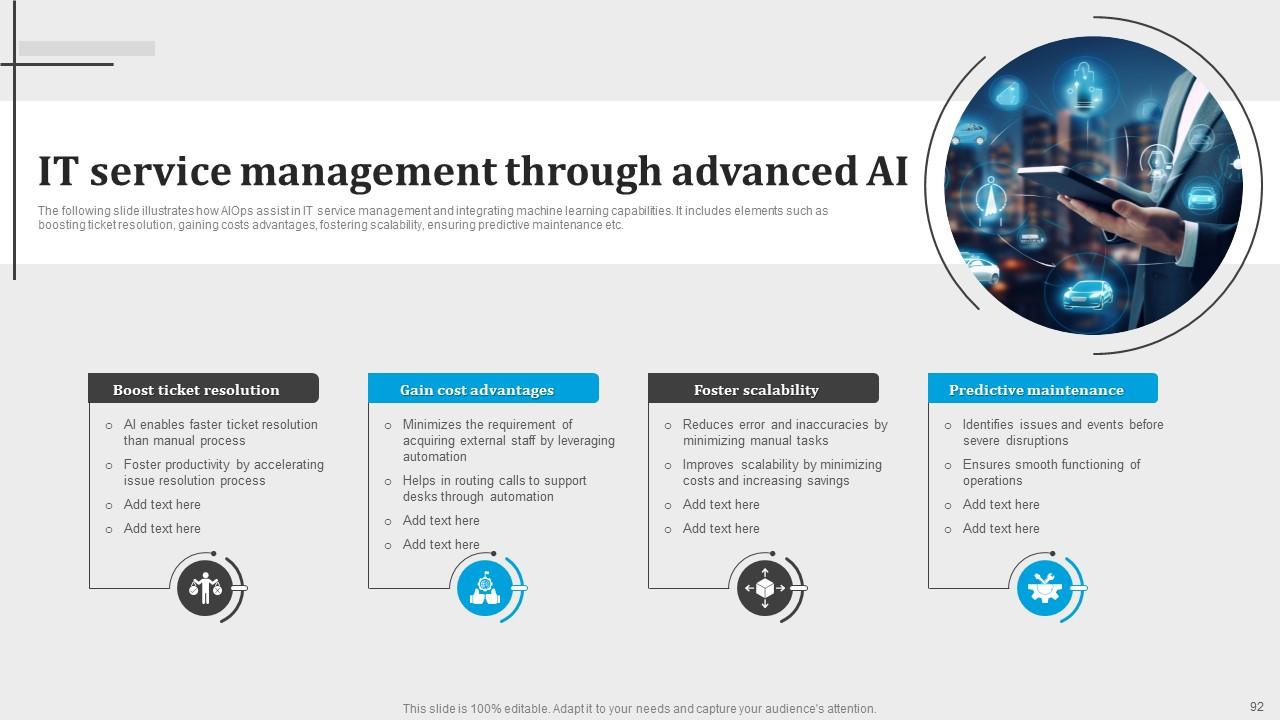
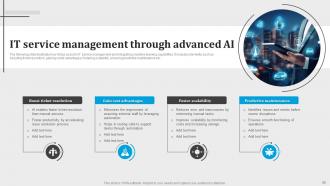
Slide 92: The following slide illustrates how AIOps assist in IT service management and integrating machine learning capabilities.
Slide 93: This is the icons slide.
Slide 94: This slide presents title for additional slides.
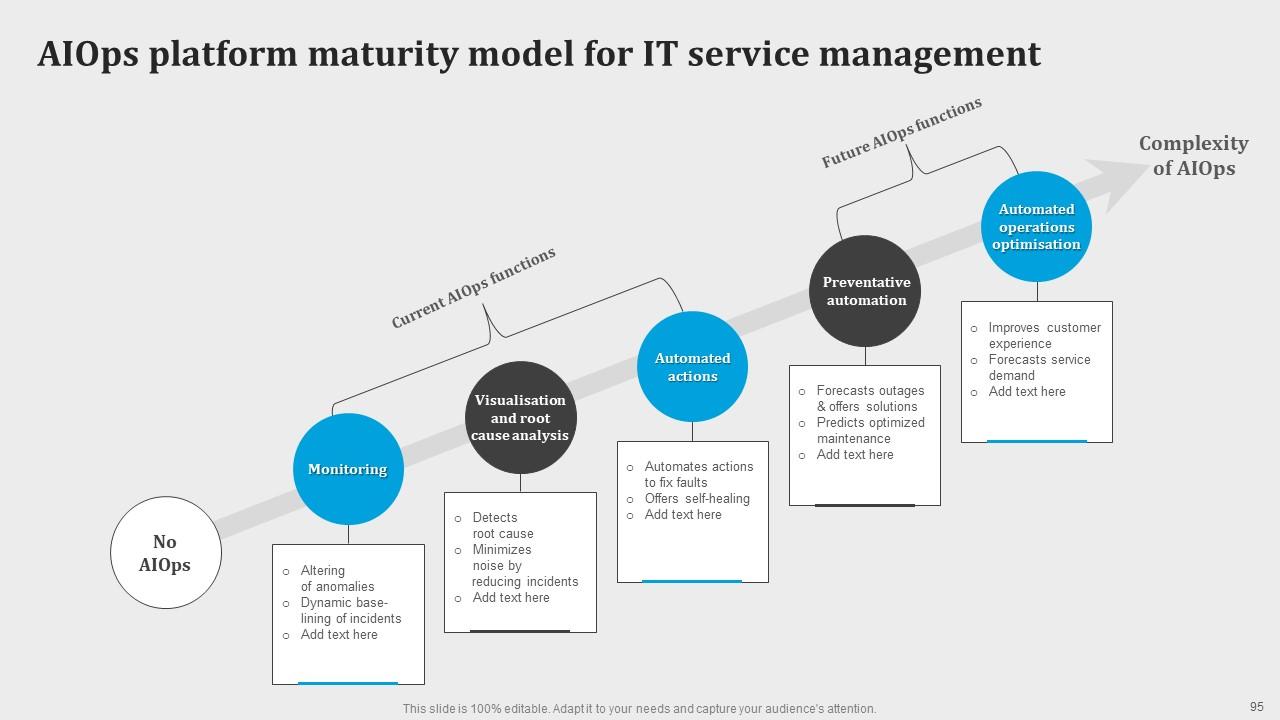
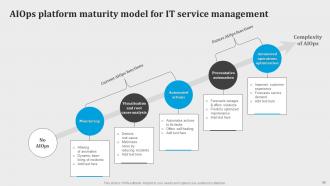
Slide 95: This slide display the title AIOps platform maturity model for IT service management.
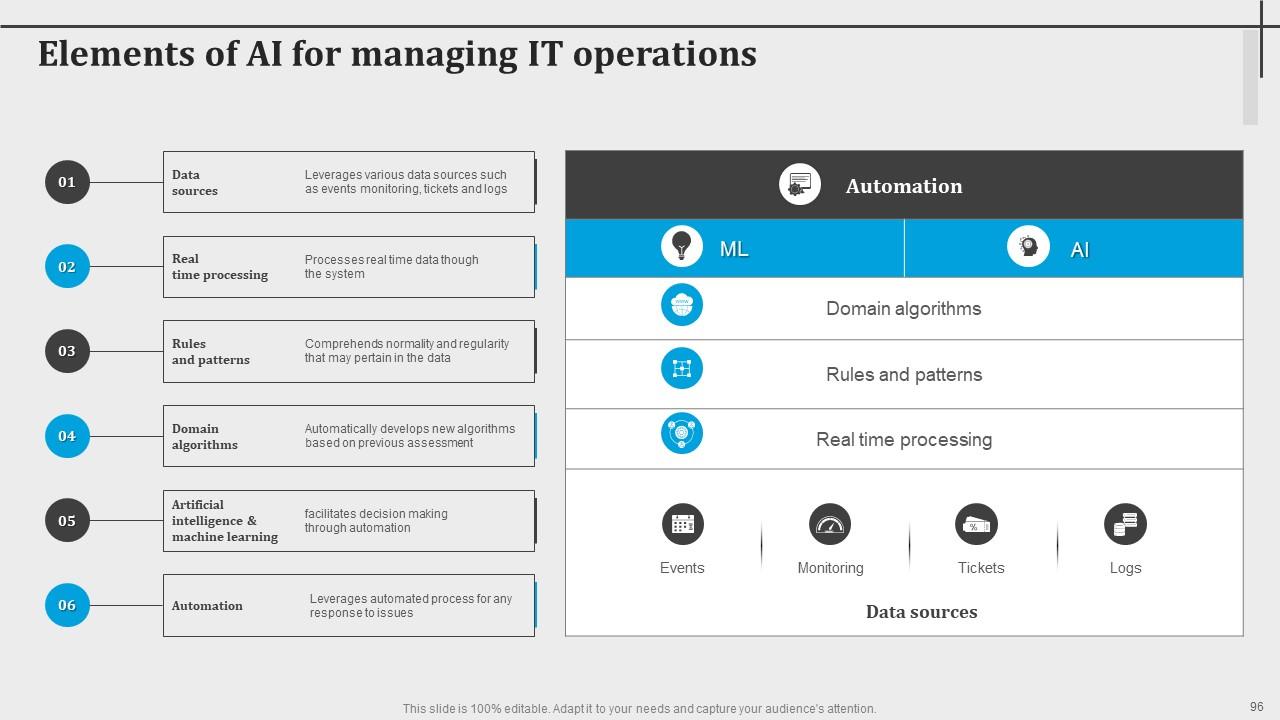
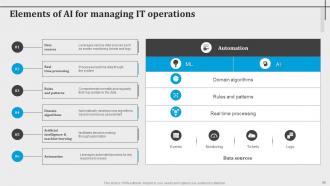
Slide 96: This slide showcase Elements of AI for managing IT operations.
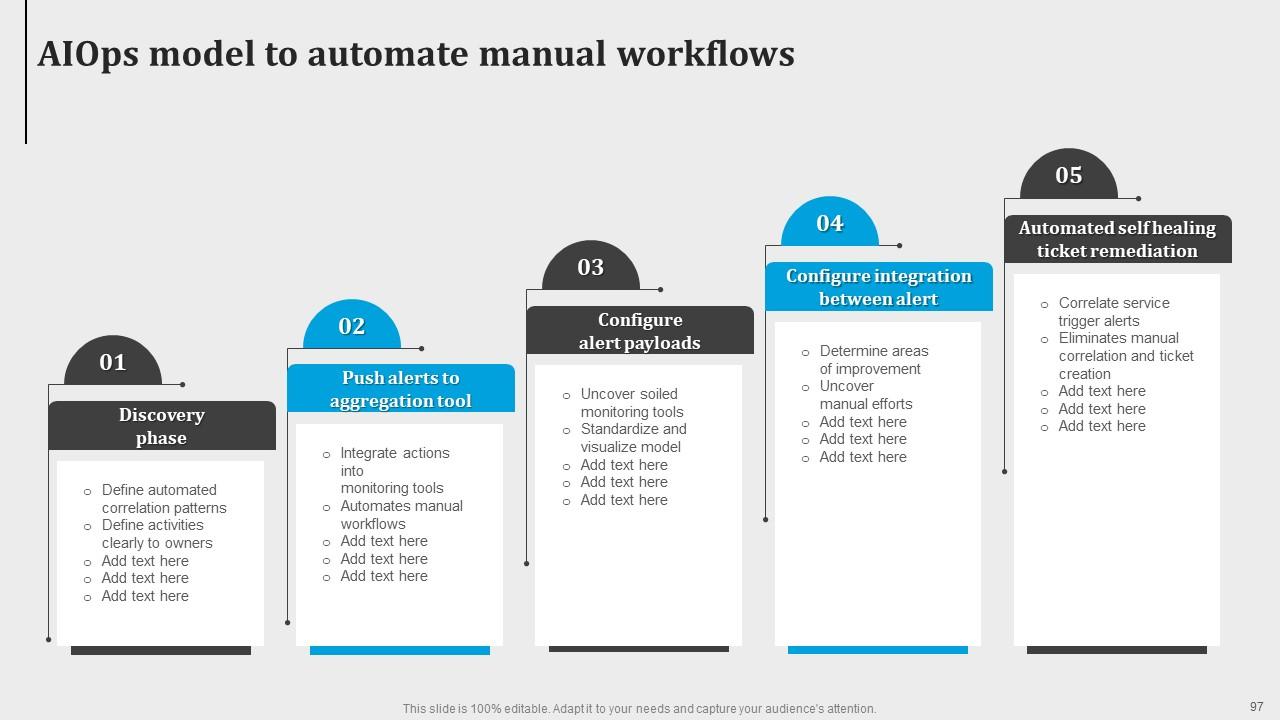
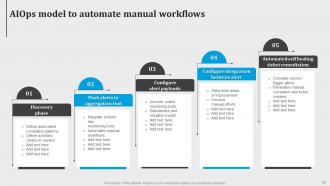
Slide 97: This slide showcase AIOps model to automate manual workflows.
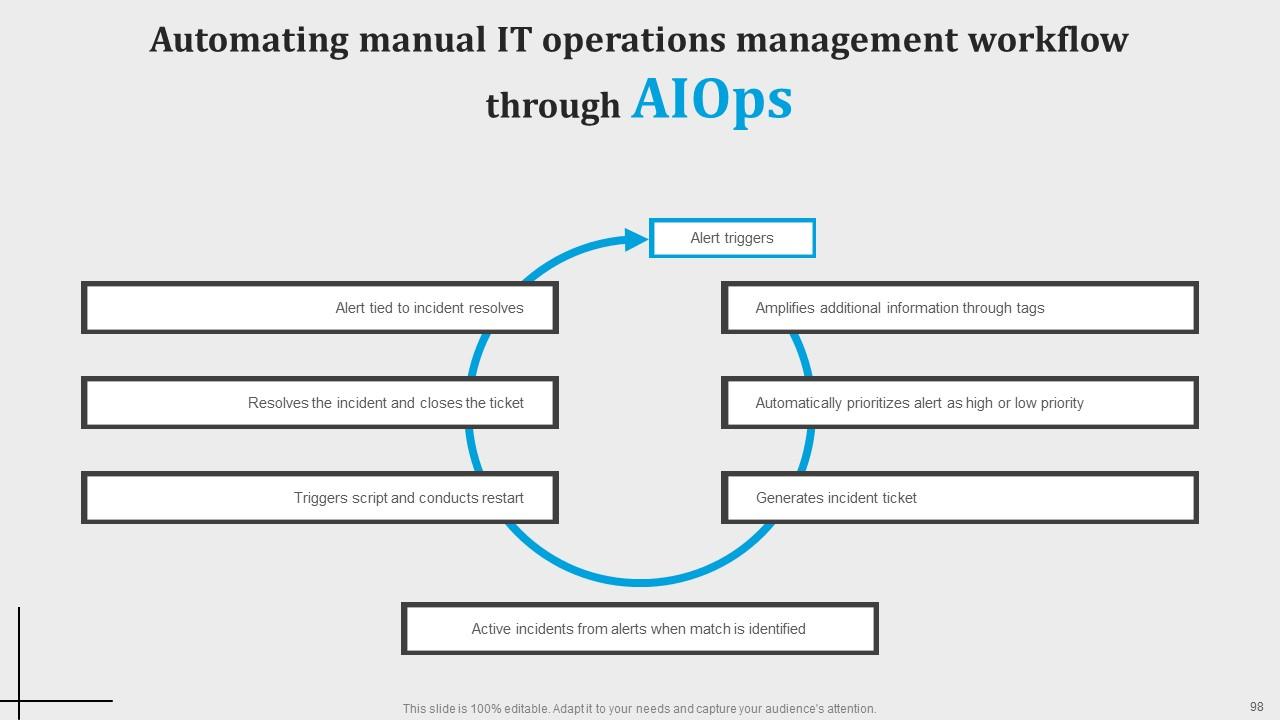
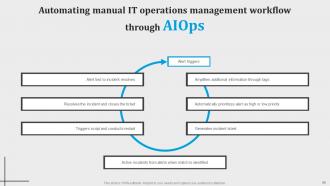
Slide 98: This slide showcase Automating manual IT operations management workflow through AIOps.
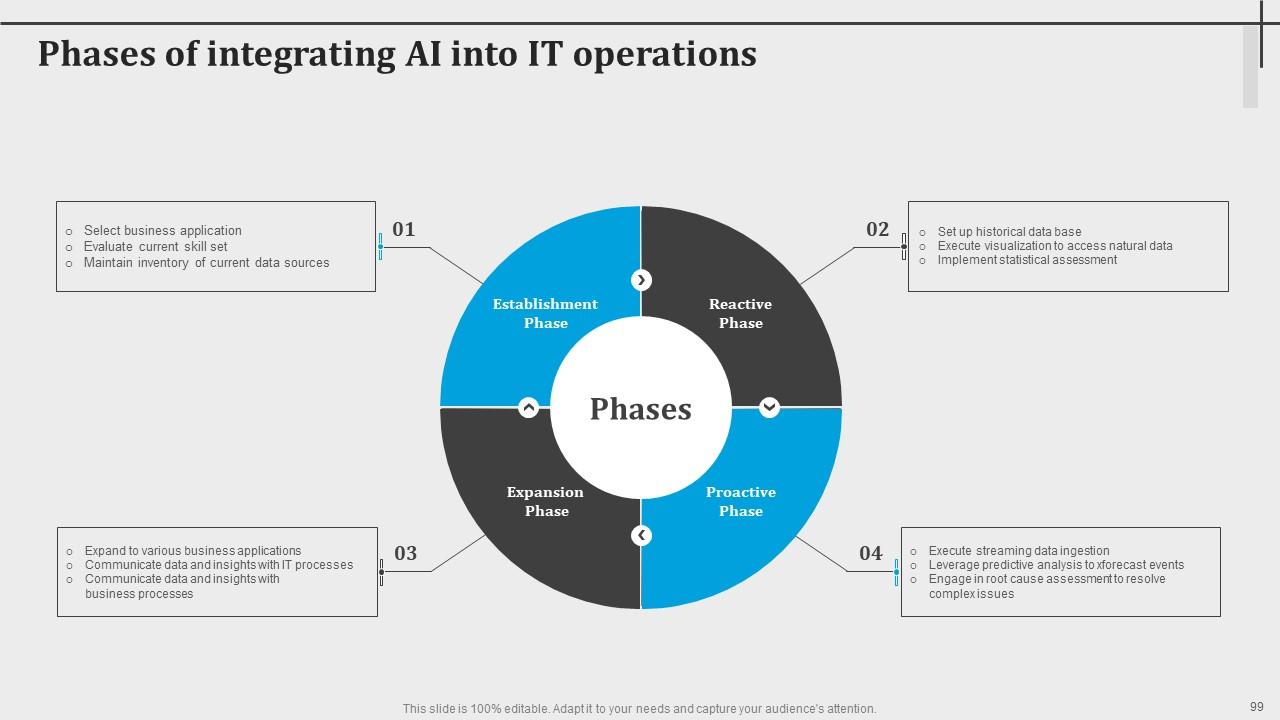
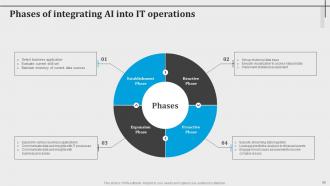
Slide 99: This slide display Phases of integrating AI into IT operations.
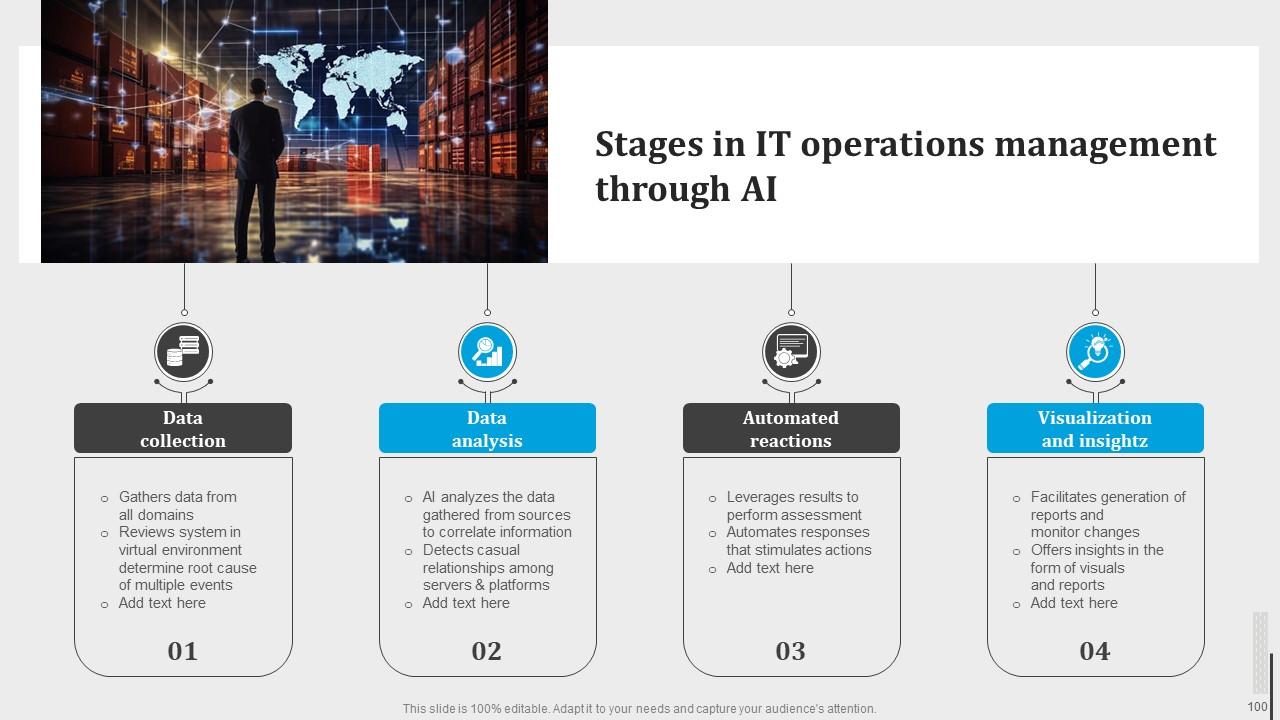
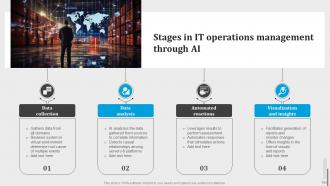
Slide 100: This slide showcase Stages in IT operations management through AI.
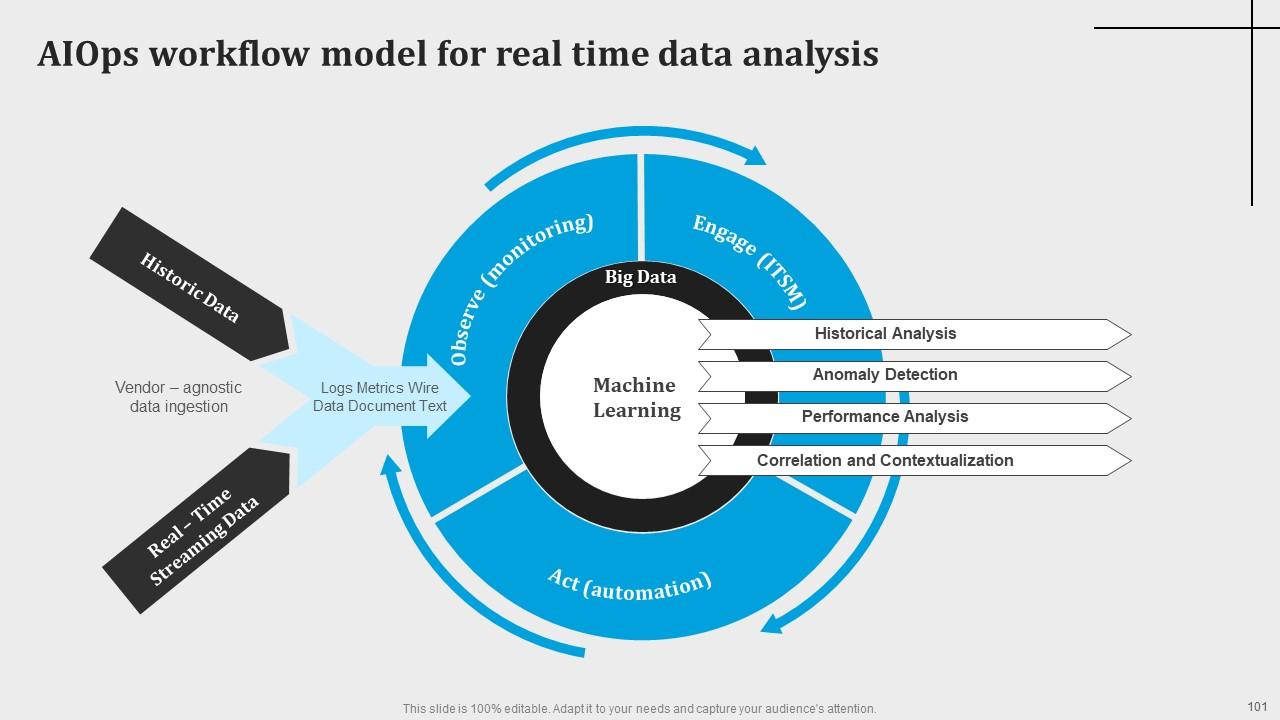
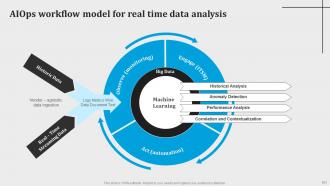
Slide 101: This slide showcase AIOps workflow model for real time data analysis.
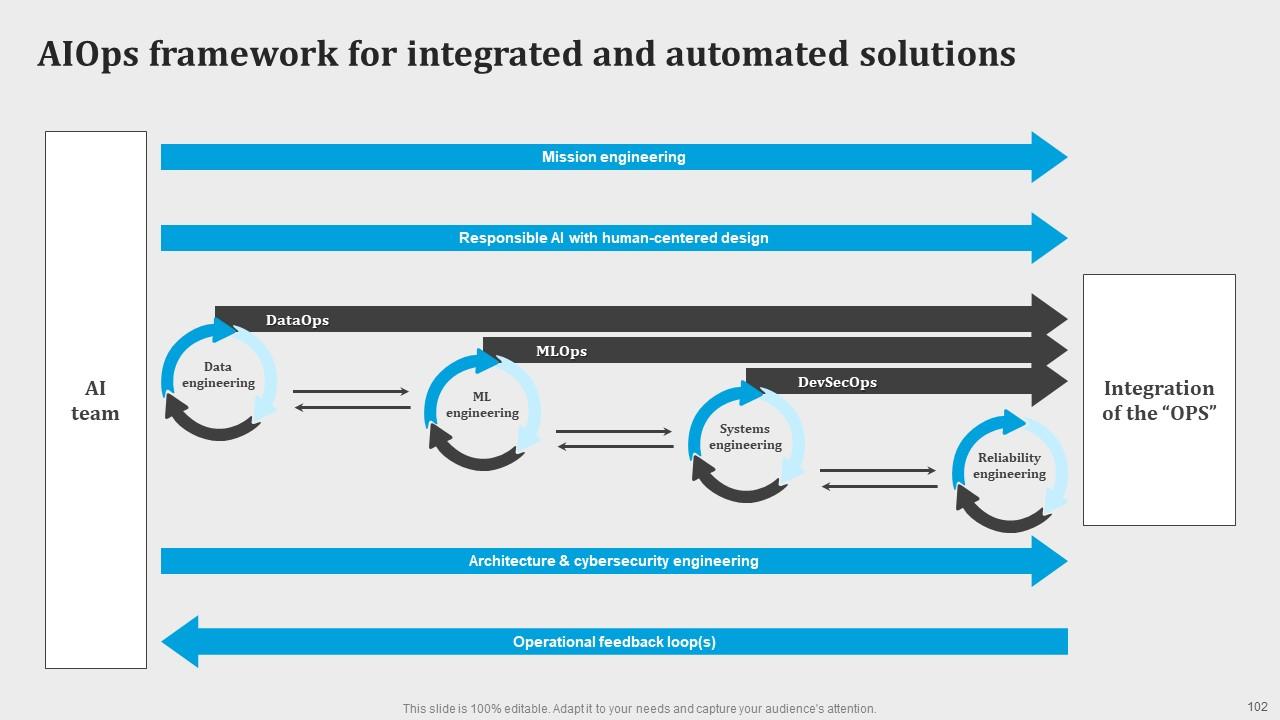
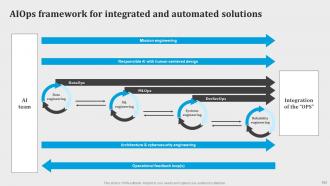
Slide 102: This slide display the title AIOps framework for integrated and automated solutions.
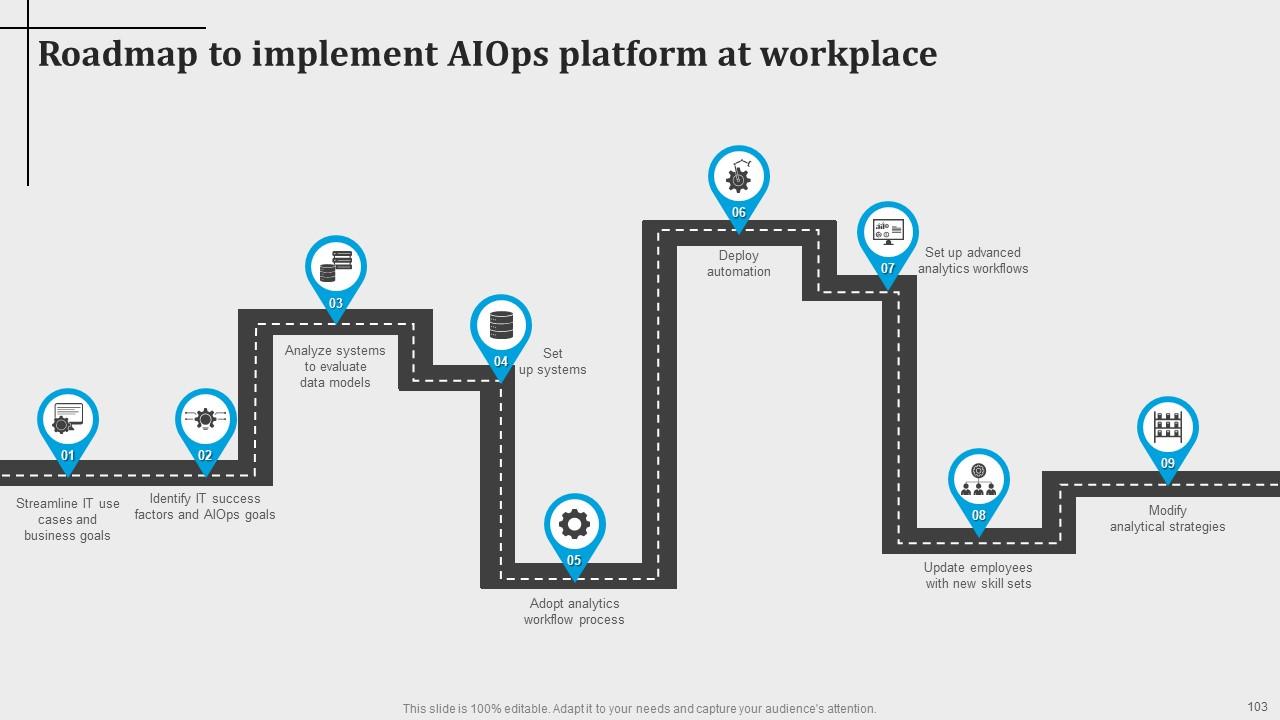
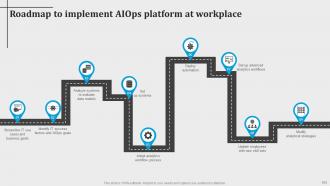
Slide 103: This slide display Roadmap to implement AIOps platform at workplace.
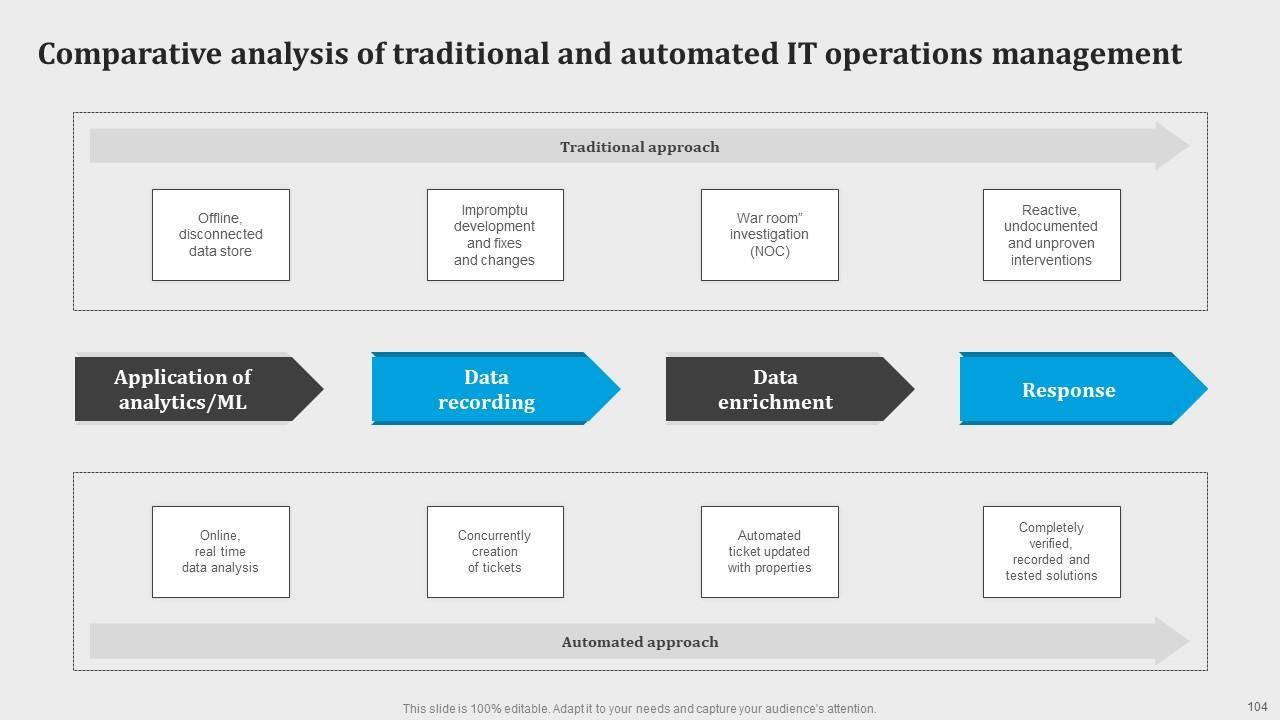
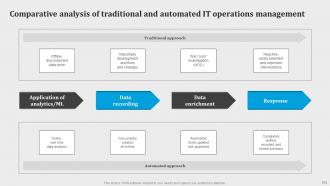
Slide 104: This slide display Comparative analysis of traditional and automated IT operations management.
Slide 105: This slide shows details of team members like name, designation, etc.
Slide 106: This slide showcase About us.
Slide 107: This slide depicts posts for past experiences of clients.
Slide 108: This slide display Swot analysis.
Slide 109: This is thank you slide & contains contact details of company like office address, phone no., etc.
Introduction To AIOps And Its Use Cases Powerpoint Presentation Slides AI CD V with all 118 slides:
Use our Introduction To AIOps And Its Use Cases Powerpoint Presentation Slides AI CD V to effectively help you save your valuable time. They are readymade to fit into any presentation structure.
-
I want to thank SlideTeam for the work that they do, especially their customer service.
-
One word for SlideTeam–Versatile!
