

Introduction to git powerpoint presentation slides





Try Before you Buy Download Free Sample Product
 Impress Your
Audience
 100%
Editable
 Save Hours
of Time


Get this fully customizable Introduction To Git PowerPoint Presentation Slides. Effectively elucidate GIT version control software with the help of version control system PPT slideshow. Incorporate our visually-appealing PowerPoint presentation to give your audience an idea about the version management system. Elucidate on the need for GIT by your organization. Depict the advantages of the GIT distributed version control application using our version control software PowerPoint layout. You can also convey the features of this distributed revision control tool. Data visualizations featured in this PPT template deck facilitate a better explanation of the GIT architecture. You can also present the common commands used in GIT with appreciable ease with the help of our readily available PPT slideshow. Take the advantage of this visually attention-grabbing PPT slide deck and present vital information about the revision control system such as working with remote repositories. So, hit the download icon now and instantly start building an impressive system software presentation.
People who downloaded this PowerPoint presentation also viewed the following :
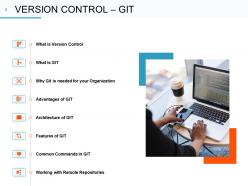
Content of this Powerpoint Presentation
How to collaborate effectively and independently has been a fundamental business problem for decades.
For instance, how to ensure the marketing department knows what actual discounts the sales department is offering to the end-consumer. Perhaps, the most accurate instance of a department needing individuals to perform at their best, yet needing to collaborate, is the software development business.
Here, each coder needs to work, but it is critical that other coders working on another portion of the same project understand and see each other’s work on a real-time basis.
To resolve this issue, Linus Torvalds, a Finnish-American software engineer, created the GIT version control system for the development of the Linux Kernel in 2005.
It is the most widely used distributed version control system (DVCS) for managing source code. Distributed version control system means that the working copy of every developer is also a repository with the entire history or version tracking ability. This facilitates developers to collaborate effectively and independently.
Another feature of GIT is that it simplifies the process of switching between new branches and merges them into the head codebase. With the help of GIT, the team can work offline and still commit changes locally whenever they have an active connection. GIT also includes a staging area where the developers can selectively exclude or include changing before committing.
Also, checkout this PowerPoint Slide on the most common commands in GIT.
Introduction of GIT in an organization is an essential step for smooth-running of the software development process and promoting collaboration and version control. By employing these professionally curated PowerPoint Presentation Slides, companies can communicate the benefits and features of GIT. This ensures smooth adoption of the tool. These 100% editable and customizable templates provide a framework to present the branching, merging, commit history, remote repositories, and more.
Let's explore a few of the slides from the bundle!
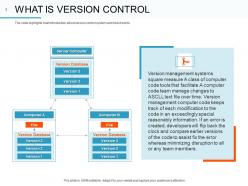
Template 1: What is Version Control?
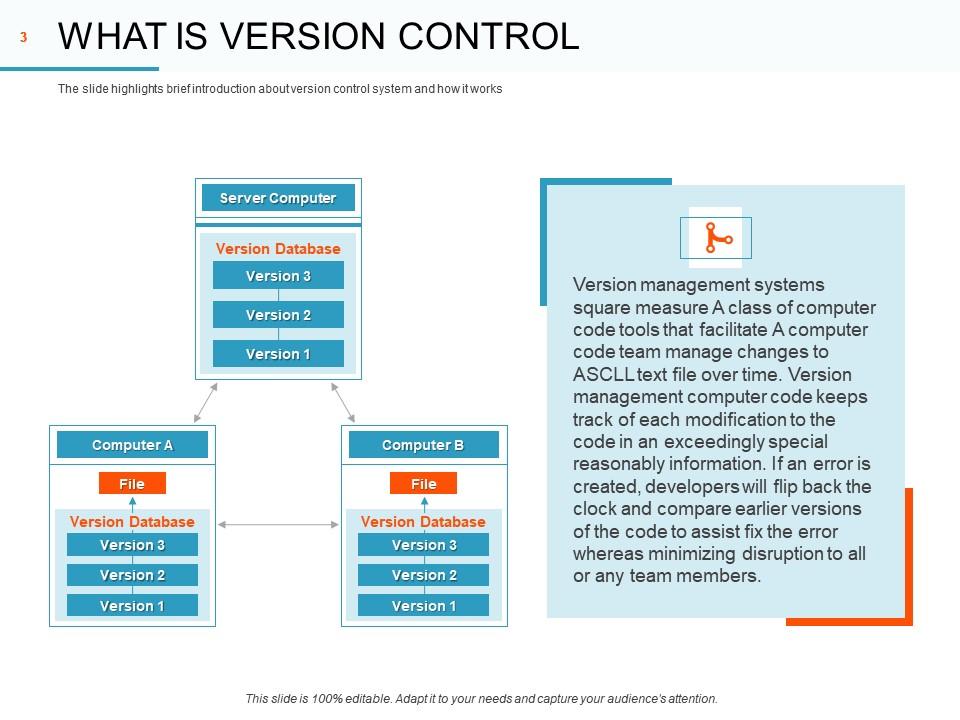
When you make changes to a file or a set of files, the previous versions of that file are saved somewhere for you to access anytime you need. This system or location is known as a version control or source control. This facility allows you to monitor who made what changes, when and why. This PPT Slide showcases a diagram with a server computer highlighting version database comprising three versions. If a team member created an error, the management or developers can flip it back to an earlier version.
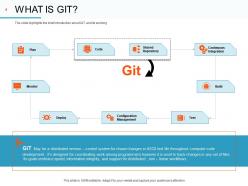
Template 2: What is GIT?
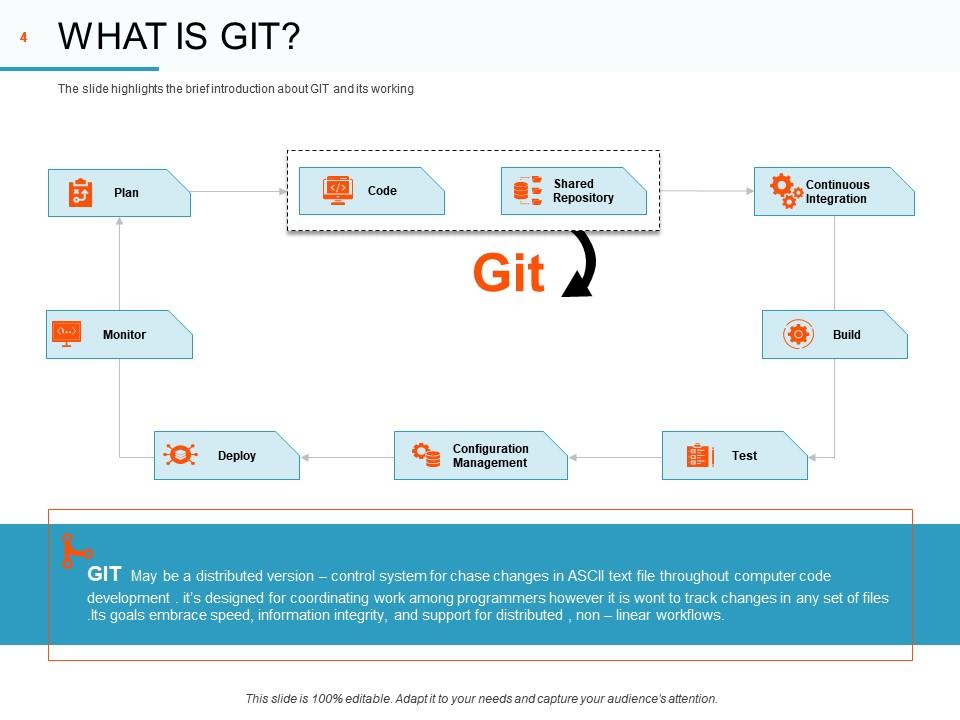
This Slide highlights a brief introduction about GIT and its working. The process includes continuous integration, build, test, configuration management, deploy, monitor, and plan in the form of a process chart.
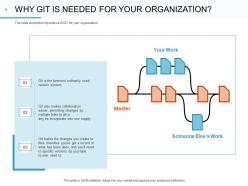
Template 3: Why GIT is Needed for your Organization?
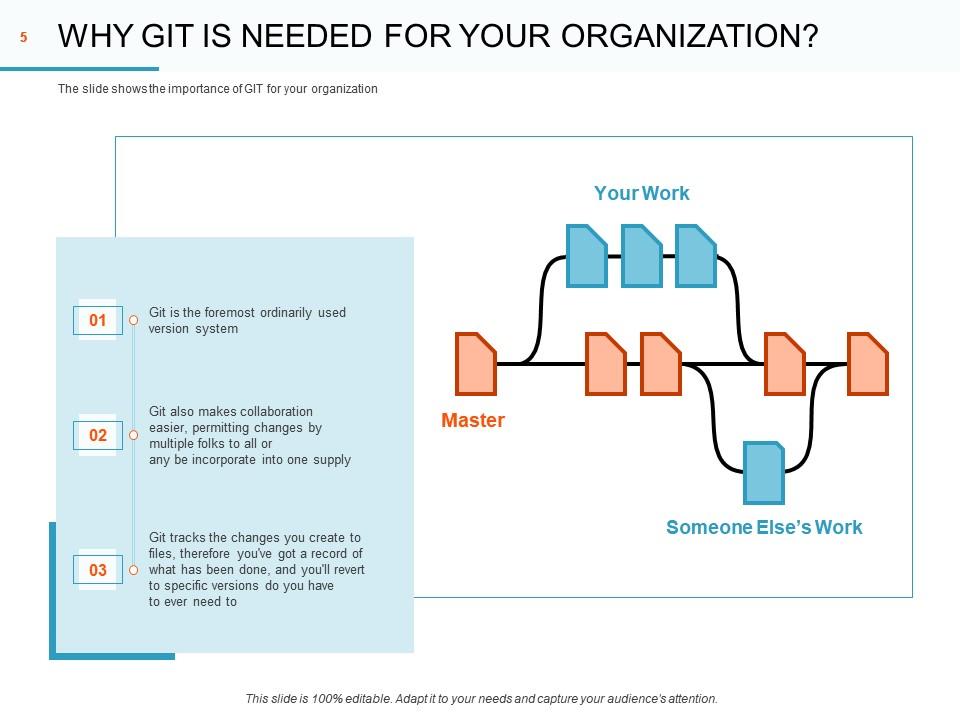
This Template highlights the importance of GIT for your organization. It is the foremost ordinarily used version system. Using GIT makes collaboration easier, permitting changes by multiple team mates. The third advantage of incorporating GIT is that it facilitates effortless tracking of the changes that you create to files so that you can revert to specific versions.
Template 4: Advantages of GIT
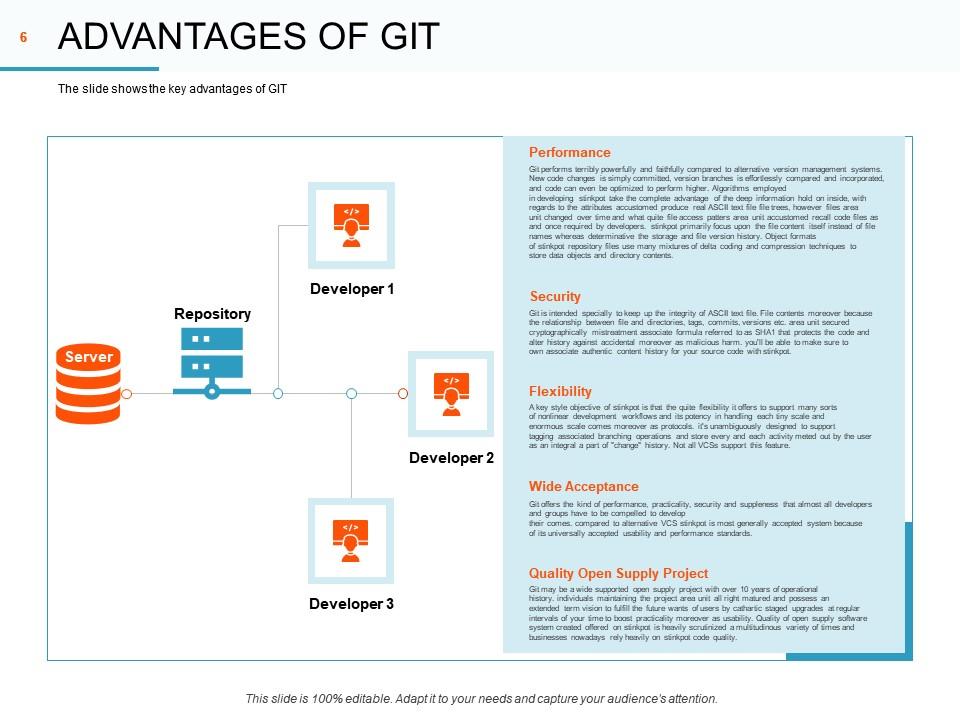
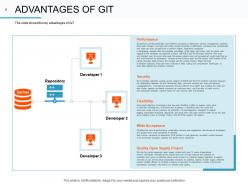
This PPT Template illustrates a process chart which showcases how all developers make changes and it gets stored in the GIT repository. The advantages showcased are performance, security, flexibility, wide acceptance and quality open supply project.
Template 5: Architecture of GIT
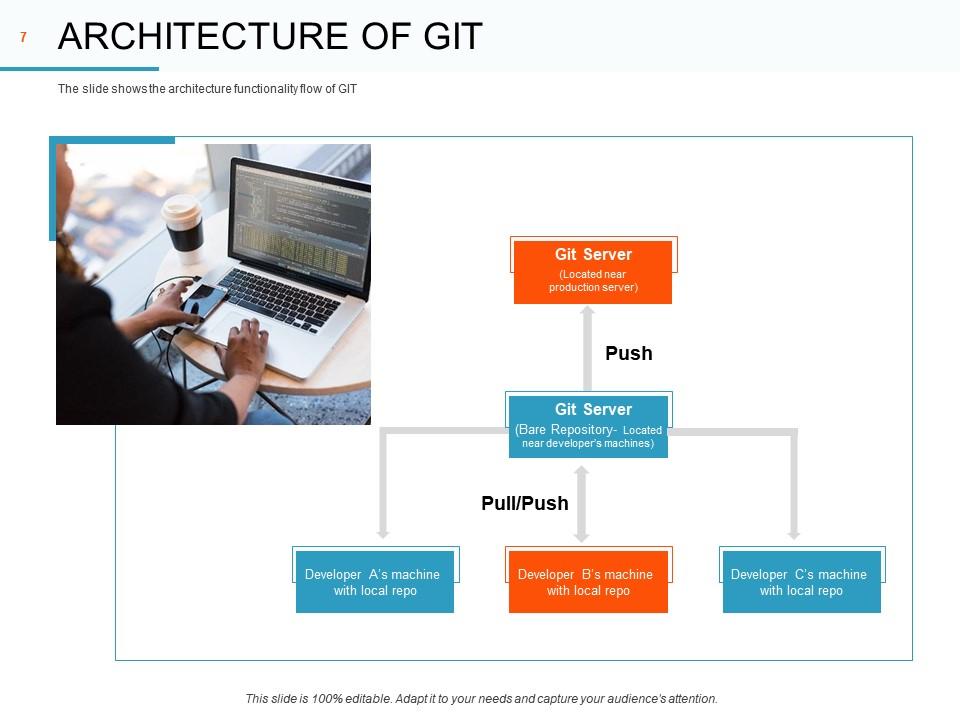
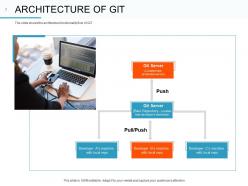
This Slide highlights a chart that represents the architecture functionality flow of GIT. There is a GIT server located near the production server followed by a GIT server which is located near the developer’s machines. Lastly there are three developer’s machines connected to the server. The representation in the form of a flowchart makes the information more comprehensive.
Template 6: Features of GIT
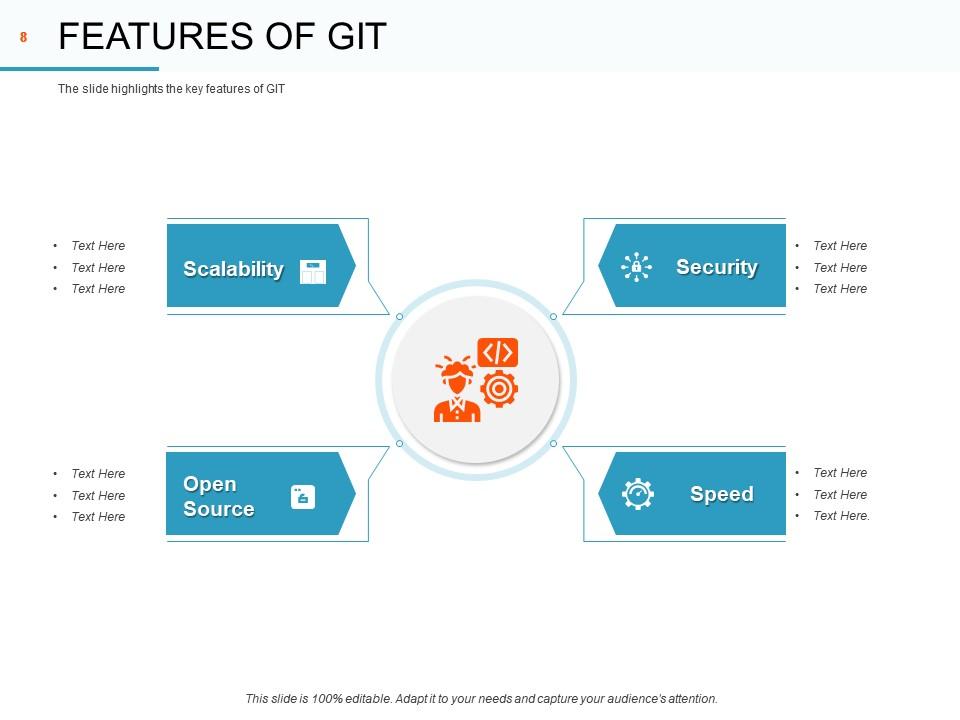
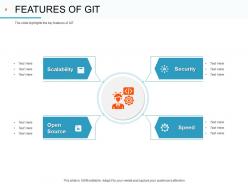
Use this PPT Template to showcase the features of scalability, security, open source and speed associated with the GIT. Each element is accompanied by icons and a separate space to add text about the feature.
Template 7: Common Commands in GIT
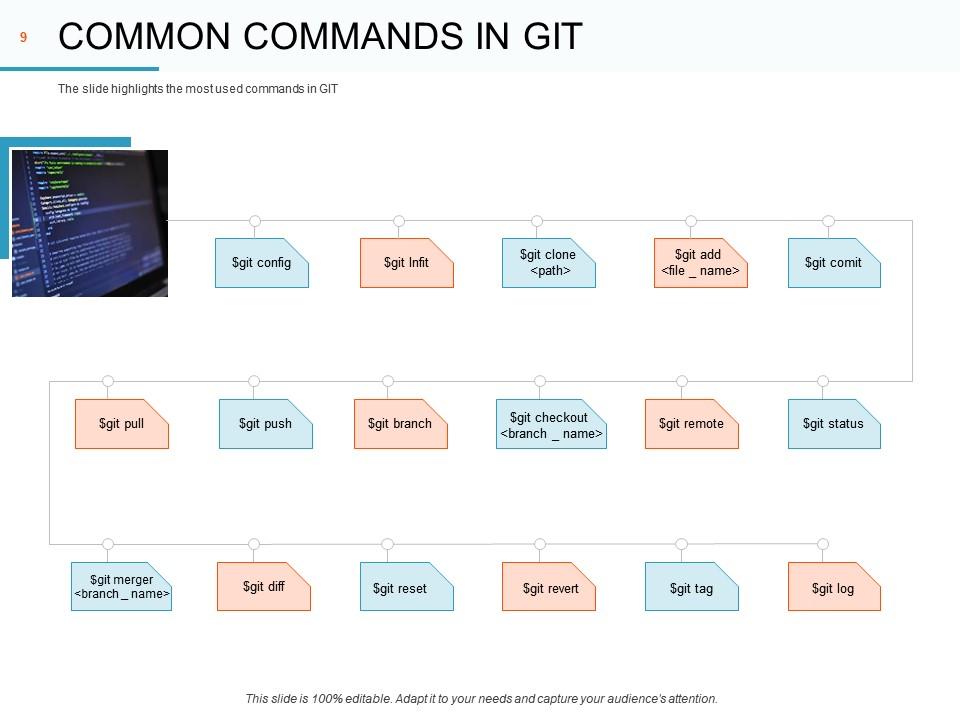
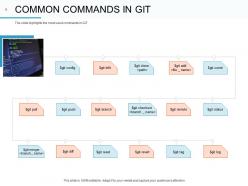
These common commands in GIT are important for efficient management of codebase and collaboration with others on a project. This slide highlights a few commands which ensure smooth progression of the software project. These are git status, git log to examine the position of the project, git push, git add, and more. They are the backbone of the developer’s daily workflow for efficient management.
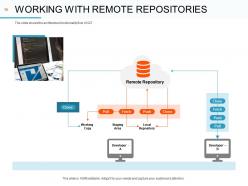
Template 8: Working with Remote Repositories

Remote repositories are an essential aspect of Git based version control. It allows developers to coordinate and collaborate on the same database and share changes with the team. This PPT slide highlights the process flow of remote repository with details on elements like the working copy, staging area and collaboration with local repository.
Master Version Control with Git
The GIT ecosystem provides a set of solutions from issue tracking system and integration platforms to deployment automation and code review tools that can be tailored to the particular needs of individual teams and projects. Using these pre-designed templates can provide a walkthrough and practical examples that make the learning experience engaging. It provides consistency and professionalism throughout the presentation.
PS: Click on this link for our custom-ready PPT Template on the features of GIT scalability speed security.
Introduction to git powerpoint presentation slides with all 24 slides:
Use our Introduction To Git Powerpoint Presentation Slides to effectively help you save your valuable time. They are readymade to fit into any presentation structure.
FAQs for Introduction to git
So Git is basically this distributed version control system that tracks all your code changes. Every developer gets the full project history on their machine - no constant server connection needed like with SVN and those older systems. The branching is where it really shines though. You can mess around with new features without worrying about breaking everything. Honestly took me forever to wrap my head around it at first, but once you get `git add`, `git commit`, and `git push` down, you're golden. Way better than trying to coordinate code changes through email or whatever nightmare people used before.
Basically Git saves snapshots of your code called commits - way better than those "final_version_FINAL_v2" folders we used to make lol. Everyone gets their own copy to work on. When you're ready, Git merges everyone's changes together and flags conflicts if two people edited the same stuff. Honestly, branches are a lifesaver for working on different features without breaking anything. Pull updates from the main repo regularly so you don't fall behind. Start with `git add`, `git commit`, and `git push` - you'll get the hang of it pretty quick.
Honestly, Git is amazing because it's distributed - everyone gets the full project history on their machine. You can work offline no problem. The branching thing though? Total game changer. Experiment all you want without screwing up the main code, then just merge it back. I love how it handles conflict resolution automatically and keeps detailed histories of everything. Easy rollbacks when you inevitably break something (we've all been there). Works great with GitHub, GitLab, whatever. Your team really should switch if they haven't already - it'll save you tons of headaches later.
So basically Git branches let you make separate copies of your code to mess around with. You can try new features or fix bugs without worrying about breaking the main stuff. Honestly, once you start using them you'll wonder how you ever coded without branches - they're that useful. Multiple people can work on totally different things at the same time. No more accidentally overwriting each other's work. Keep your main branch clean and stable. Even for tiny changes, I'd say make a feature branch. Your workflow will be so much less chaotic, trust me.
Think of commits like save points in a video game - they're snapshots of your code at specific moments. Each one captures what changed plus a message explaining why. For the messages, use present tense like "Fix login bug" or "Add user authentication." Keep that first line under 50 characters. Need more space? Add a blank line, then explain the reasoning behind your changes rather than just what you did. Honestly, the biggest thing is writing them so future you won't hate past you. Your teammates will thank you too when they're not hunting through code trying to figure out what the hell "misc updates" actually meant.
Oh man, merge conflicts! So basically Git freaks out when two branches change the same code lines and can't figure out what to do. You'll get those ugly `<<<<<<<` markers everywhere - they look terrifying but aren't that bad. Just open the messy files, pick which changes you want (or mash them together), delete all those markers, then stage and commit. Pro tip: pull changes often so you don't end up with massive conflicts later. Also talk to your teammates about who's touching what code. Smaller commits help too. When conflicts do happen, don't rush it or you'll definitely introduce bugs.
So a .gitignore file basically tells Git what to skip when tracking your code. Just drop a plain text file called `.gitignore` in your project root. Then list patterns for stuff you don't want committed - things like `*.log`, `node_modules/`, `.env` files. Honestly, it's a lifesaver for keeping build junk and dependencies out of your repo. I learned this the hard way after pushing my entire node_modules folder once (nightmare). GitHub has solid gitignore templates you can grab for whatever language you're using. Just make sure you add the .gitignore before you commit the files you want it to ignore, otherwise Git's already tracking them.
So `git log` shows you the whole commit history - who changed what and when. I'd start with `git log --oneline` since it's way cleaner and less overwhelming. The `--graph` option is actually pretty neat if you want to see how branches merge together (kinda looks like subway maps).
For specific changes, `git diff` compares different versions, or use `git show
So Git is basically the version control thing that lives on your computer - tracks changes, handles branches, all that stuff. GitHub is where you stick your repositories online. Honestly, I used to think they were the same thing for way too long lol. You can totally use Git without GitHub if you want, but GitHub adds all the collaboration features like pull requests and issue tracking. Pretty much everyone uses them together though - Git does the heavy lifting locally, then you push everything to GitHub so other people can actually see and work on your code. Makes sharing projects way less painful.
Git LFS is definitely what you want here. It stores pointers instead of the actual files, so your repo won't turn into a bloated mess. First install Git LFS, then run `git lfs track "*.psd"` for whatever file types you're using. Videos, huge images, all that stuff works way better this way. One thing though - set it up *before* you commit those big files. I learned that the hard way and had to do a bunch of cleanup after. Trust me, it's worth doing it right from the start.
Think of Git tags like sticky notes on specific commits - they mark stuff you'll want to find later. Most people use them for releases (v1.0.0, v2.1.3) or big milestones. They're different from branches because once you stick a tag somewhere, it never moves. Perfect for tracking "this exact code went to production." Pro tip: I always mess this up and forget to push tags after making them locally. Use `git tag -a v1.0 -m "Release version 1.0"` then `git push origin --tags` to actually share them with your team.
Two ways to do this: `git revert
Make small commits that focus on one thing. Write commit messages explaining *why* you changed something - I learned this the hard way after leaving myself cryptic notes like "fix stuff" lol. Use branches for new features, then delete them once merged. Pull from main regularly or you'll end up in merge hell. Never commit passwords or build files - .gitignore is your friend here. Oh, and commit often but only push clean code. If you screw up locally, just use git reset to fix it. Trust me on this one.
Honestly, Git is amazing for remote work because everyone gets their own full copy of everything on their laptop. Work offline all you want, commit stuff locally, then sync when you're back online. No more "server's down" drama. Feature branches are a game-changer too – each person can mess around with their own branch without breaking anyone else's work. Oh, and if your main server crashes? Anyone's local copy can just become the new master. Trust me, once you get the hang of branching for different tasks, collaborating becomes so much cleaner.
Think of forking like making a photocopy of someone's project - you get your own version to mess around with. The original stays untouched while you make whatever changes you want. Once you're happy with your edits, you can submit a pull request asking them to merge your stuff back in. It's honestly genius for open-source work since you don't need special permissions to contribute. Most maintainers are pretty cool about reviewing contributions too. Just pick a project that interests you and hit that fork button to start experimenting!
-
Presentation Design is very nice, good work with the content as well.
-
Colors used are bright and distinctive.
-
Topic best represented with attractive design.
-
Content of slide is easy to understand and edit.
-
Best way of representation of the topic.
-
Visually stunning presentation, love the content.
-
Great product with effective design. Helped a lot in our corporate presentations. Easy to edit and stunning visuals.
-
Informative design.
-
Awesome presentation, really professional and easy to edit.
-
Topic best represented with attractive design.