


IoT Energy Management Solutions For Sustainable Future Powerpoint Presentation Slides IoT CD
Harnessing IoT in energy management optimizes resource utilization, providing real time insights to enhance efficiency. This technology facilitates predictive analytics, diminishing energy consumption and promoting sustainability. Check out our professionally designed IoT Energy Management Solutions for Sustainable Future PowerPoint Presentation. This informative presentation offers a detailed overview, encompassing crucial components, key advantages, market size evaluation and a comprehensive architecture of IoT energy management. Additionally, the Smart Energy Management PPT templates explore diverse IoT solutions that elevate energy efficiency, such as smart grids, energy storage systems, intelligent lighting equipment, and smart meters. The presentation exemplifies practical applications in smart cities, homes and buildings across various sectors, underscoring significant environmental contributions. Moreover, the Smart Building Energy Management PPT examines the environmental impact of IoT based energy management and explores how technology integration influences annual energy savings. It introduces a dynamic dashboard featuring an IoT energy management dashboard tailored for intelligent buildings. Lastly, it includes a case study on The Edge building, illuminating the tangible impact of IoT in energy management. Download our 100percentage editable and customizable PowerPoint, compatible with Google Slides, to streamline your presentation process.




































You must be logged in to download this presentation.


Do you want to remove this product from your favourites?
 Impress your
 audience
 100%
100% Editable
 Save Hours
 of Time
PowerPoint presentation slides
Enthrall your audience with this IoT Energy Management Solutions For Sustainable Future Powerpoint Presentation Slides IoT CD. Increase your presentation threshold by deploying this well-crafted template. It acts as a great communication tool due to its well-researched content. It also contains stylized icons, graphics, visuals etc, which make it an immediate attention-grabber. Comprising seventy two slides, this complete deck is all you need to get noticed. All the slides and their content can be altered to suit your unique business setting. Not only that, other components and graphics can also be modified to add personal touches to this prefabricated set.

People who downloaded this PowerPoint presentation also viewed the following :
Content of this Powerpoint Presentation
Slide 1: This slide introduces IoT Energy Management Solutions for Sustainable Future. State your company name and begin.
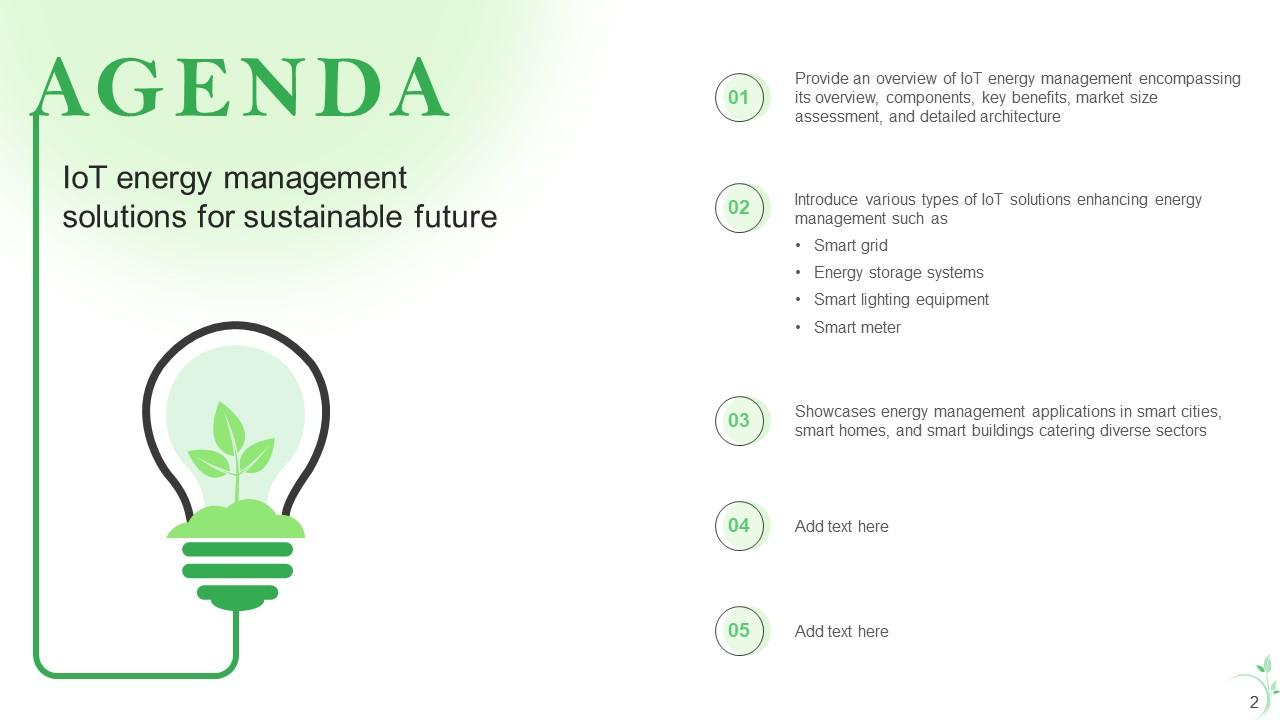
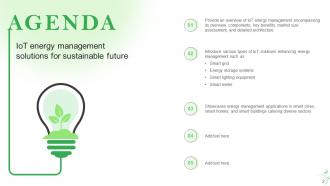
Slide 2: This is an Agenda slide. State your agendas here.
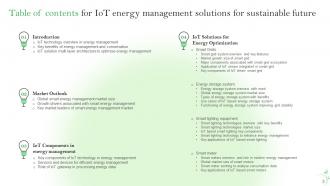
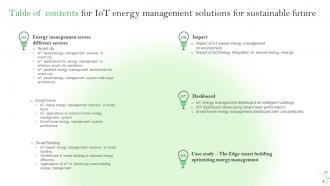
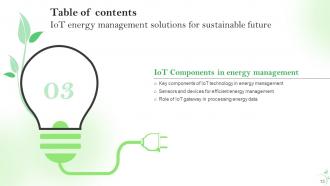
Slide 3: This slide shows Table of Content for the presentation.
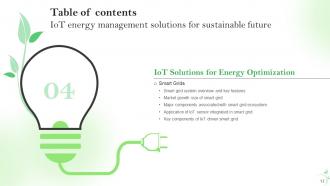
Slide 4: This slide continues showing Table of Content for the presentation.
Slide 5: This slide shows title for topics that are to be covered next in the template.
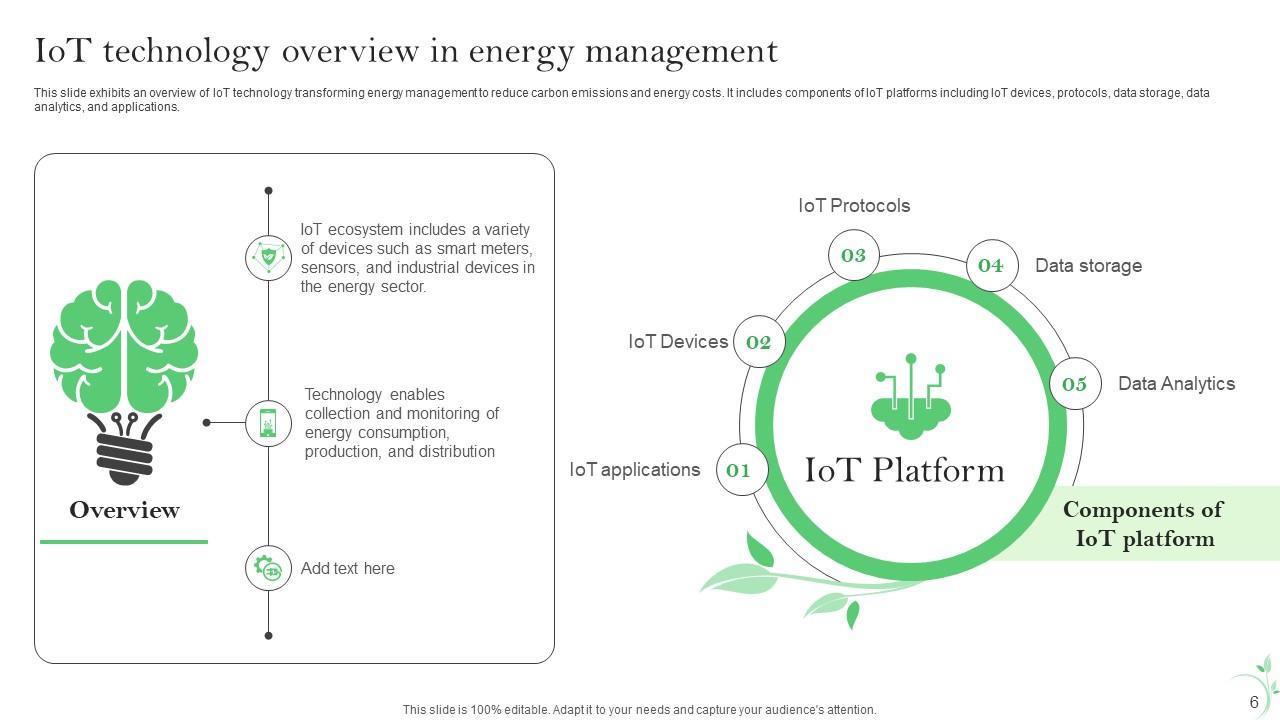
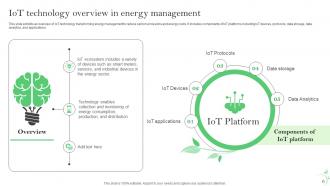
Slide 6: This slide exhibits an overview of IoT technology transforming energy management to reduce carbon emissions and energy costs.
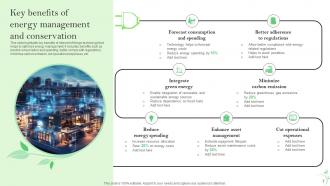
Slide 7: This slide highlights key benefits of internet of things technology that helps to optimise energy management. It includes benefits such as predict consumption and spending etc.
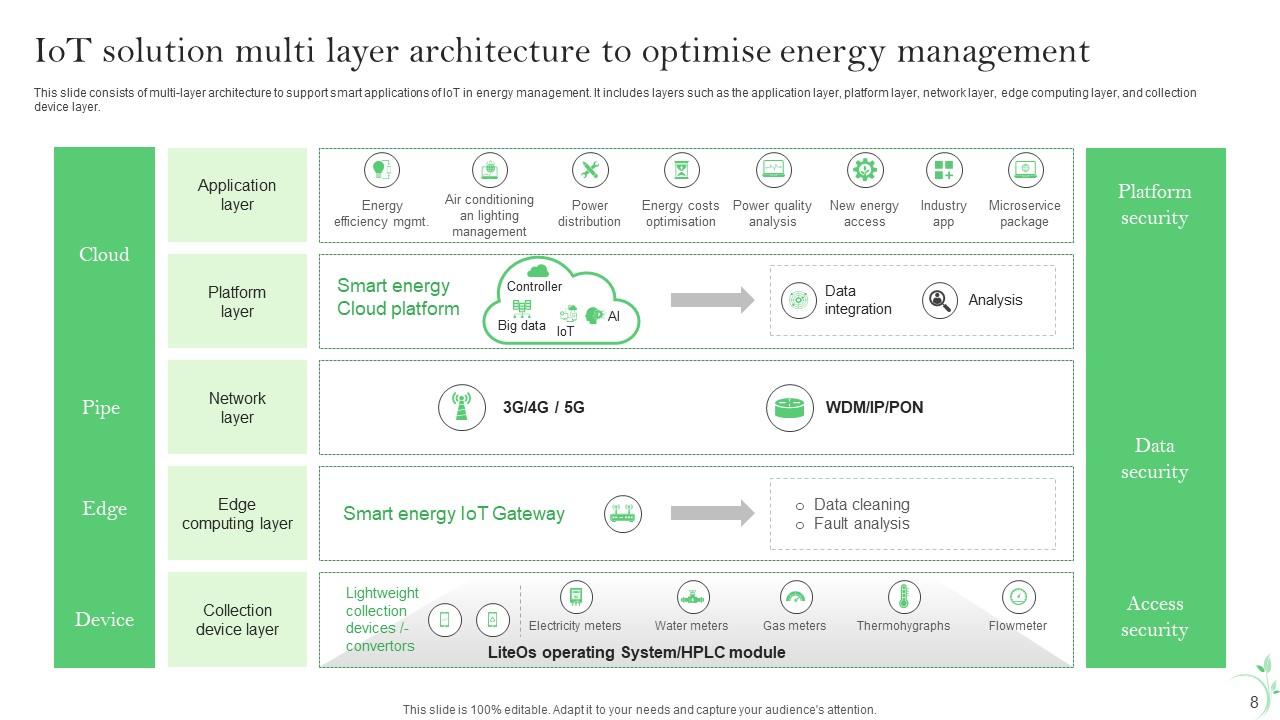
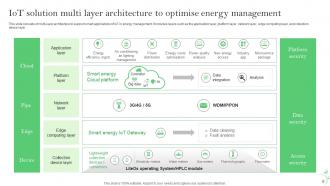
Slide 8: This slide consists of multi-layer architecture to support smart applications of IoT in energy management. It includes layers such as the application layer, platform layer etc.
Slide 9: This slide shows title for topics that are to be covered next in the template.
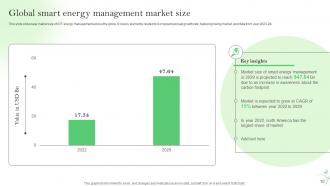
Slide 10: This slide showcase market size of IOT energy management across the globe. It covers elements related to Compound annual growth rate, fastest growing market etc.
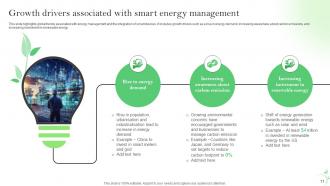
Slide 11: This slide highlights global trends associated with energy management and the integration of smart devices. It includes growth drivers such as a rise in energy demand etc.
Slide 12: The slide outlines the most prominent players offering smart energy management solutions to various institutions. It includes major companies such as ABB, General Electric Company etc.
Slide 13: This slide shows title for topics that are to be covered next in the template.
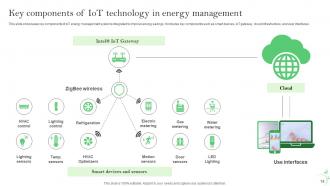
Slide 14: This slide showcases key components of IoT energy management systems integrated to improve energy savings. It includes key components such as smart devices, IoT gateway etc.
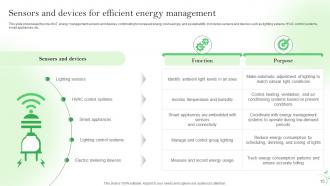
Slide 15: This slide displays the role of IoT energy management sensors and devices, contributing to increased energy cost savings, and sustainability.
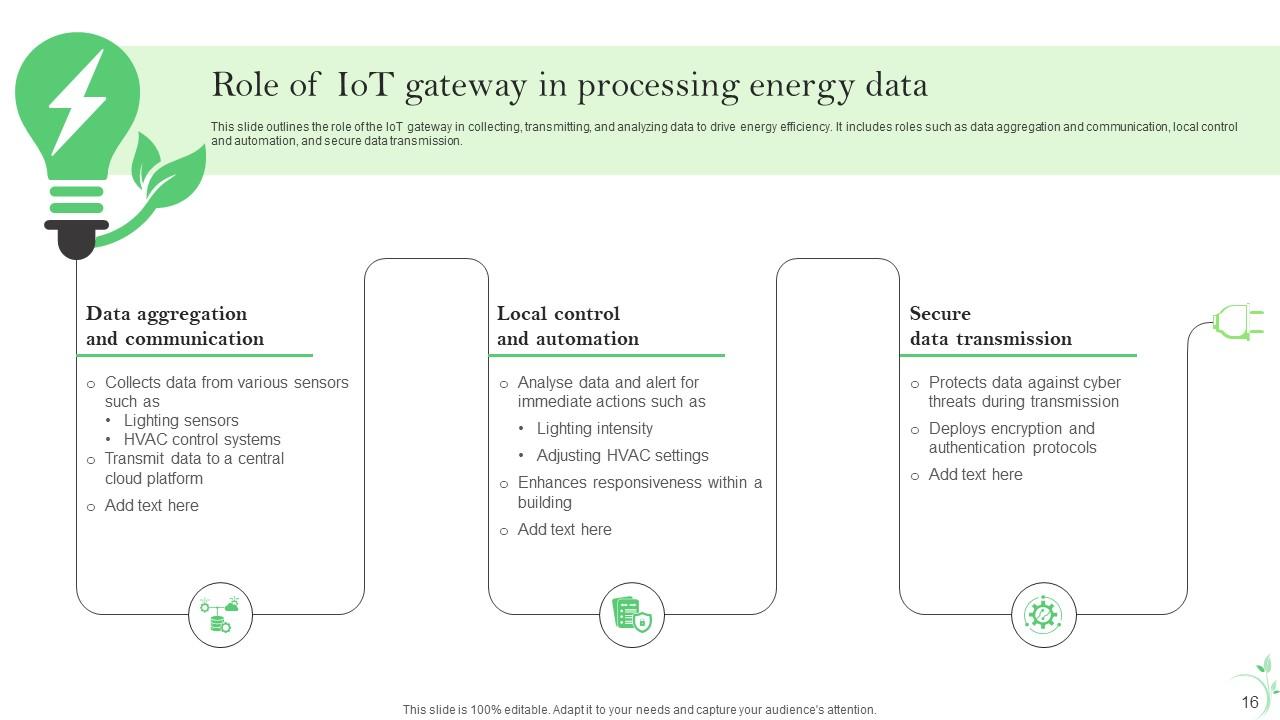
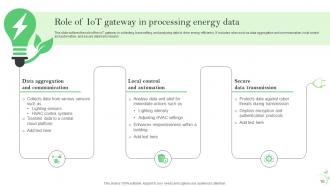
Slide 16: This slide outlines the role of the IoT gateway in collecting, transmitting, and analyzing data to drive energy efficiency.
Slide 17: This slide shows title for topics that are to be covered next in the template.
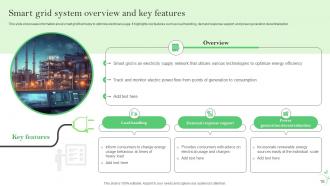
Slide 18: This slide showcases information about smart grid that helps to optimize electrical usage. It highlights key features such as load handling, demand response support etc.
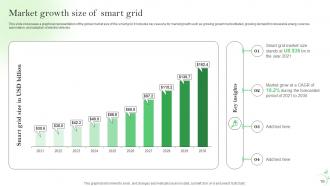
Slide 19: This slide displays a graphical representation of the global market size of the smart grid. It Includes key reasons for market growth such as growing government-initiated etc.
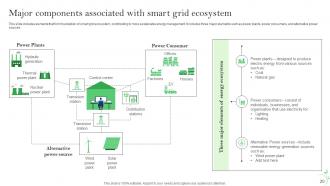
Slide 20: This slide includes elements that form foundation of smart grid ecosystem, contributing to more sustainable energy management.
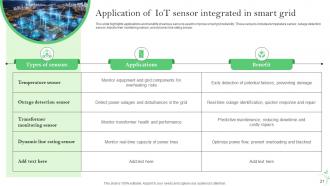
Slide 21: This slide highlights applications and benefits of various sensors used to improve smart grid reliability. These sensors includes temperature sensor etc.
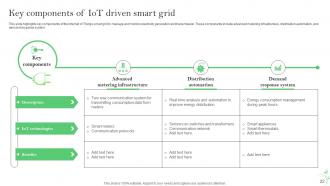
Slide 22: This slide displays key components of the Internet of Things smart grid to manage and monitor electricity generation and transmission.
Slide 23: This slide shows title for topics that are to be covered next in the template.
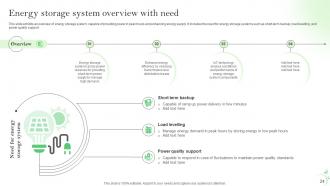
Slide 24: This slide exhibits an overview of energy storage system, capable of providing power in peak hours and enhancing energy supply.
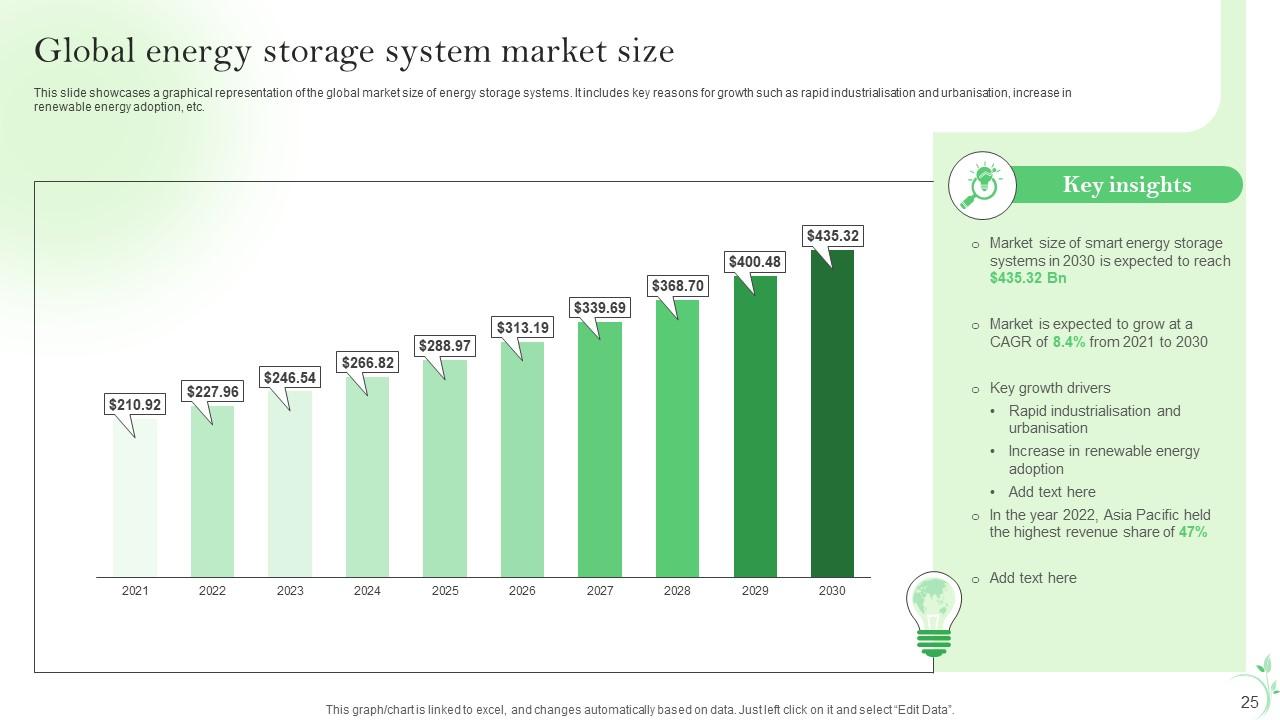
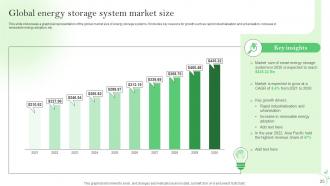
Slide 25: This slide showcases a graphical representation of the global market size of energy storage systems. It includes key reasons for growth such as rapid industrialisation etc.
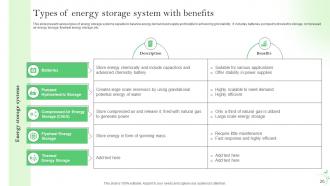
Slide 26: This slide presents various types of energy storage systems capable to balance energy demand and supply and helpful in enhancing grid stability.
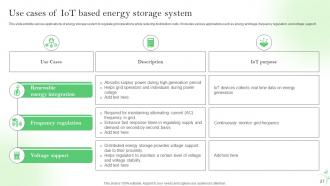
Slide 27: This slide exhibits various applications of energy storage system to regulate grid operations while reducing distribution costs.
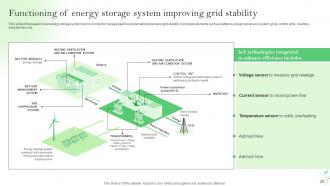
Slide 28: This slide showcases how an energy storage system works in order to manage peak hours demand and ensure grid stability. It includes elements such as batteries etc.
Slide 29: This slide shows title for topics that are to be covered next in the template.
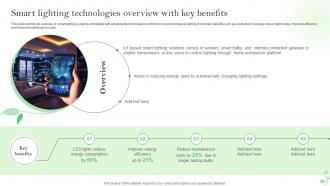
Slide 30: This slide exhibits an overview of smart lighting systems embedded with advanced technologies to control home and workplace lighting.
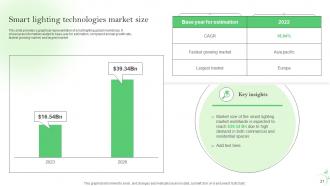
Slide 31: This slide provides a graphical representation of smart lighting global market size. It showcases information related to base year for estimation etc.
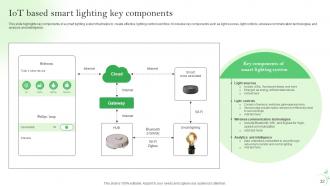
Slide 32: This slide highlights key components of a smart lighting system that helps to create effective lighting control workflow.
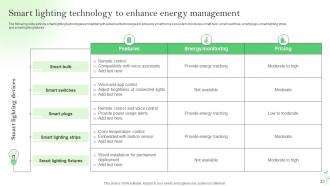
Slide 33: This slide exhibits smart lighting technologies embedded with advanced technologies to enhance smart home ecosystem. It includes smart bulb, smart switches etc.
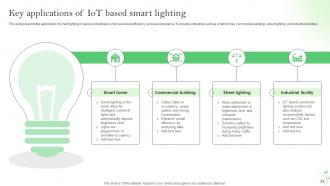
Slide 34: This slide presents the application of smart lighting in various industries to improve overall efficiency and user experience.
Slide 35: This slide shows title for topics that are to be covered next in the template.
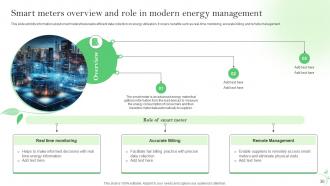
Slide 36: This slide exhibits information about smart meters that enable efficient data collection on energy utilisation. It covers benefits such as real-time monitoring etc.
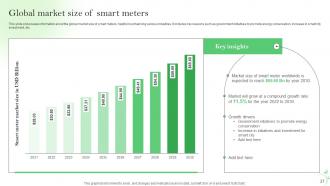
Slide 37: This slide showcases information about the global market size of smart meters, helpful in enhancing various industries.
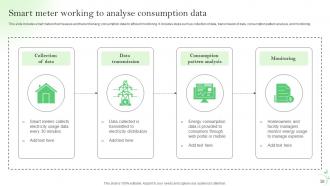
Slide 38: This slide includes smart meters that measure and transmit energy consumption data for efficient monitoring. It includes steps such as collection of data etc.
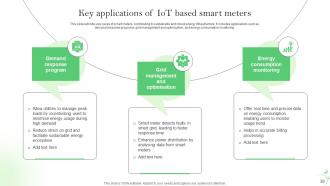
Slide 39: This slide exhibits use cases of smart meters, contributing to sustainable and robust energy infrastructure. It includes applications such as demand response programs etc.
Slide 40: This slide shows title for topics that are to be covered next in the template.
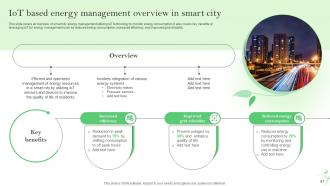
Slide 41: This slide covers an overview of smart city energy management utilizing IoT technology to monitor energy consumption.
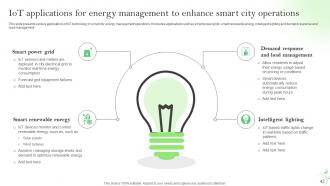
Slide 42: This slide presents various applications of IoT technology in smart city energy management operations. It includes applications such as smart power grids etc.
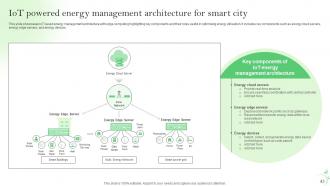
Slide 43: This slide showcases IoT based energy management architecture with edge computing highlighting key components and their roles useful in optimising energy utilisation.
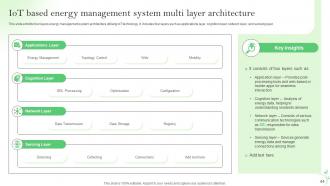
Slide 44: This slide exhibits four layers energy management system architecture utilising IoT technology. It includes four layers such as applications layer, cognition layer etc.
Slide 45: This slide shows title for topics that are to be covered next in the template.
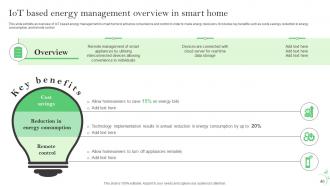
Slide 46: This slide exhibits an overview of IoT based energy management in smart home to enhance convenience and control in order to make energy decisions.
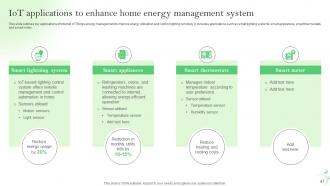
Slide 47: This slide outlines key applications of Internet of Things energy management to improve energy utilization and control lighting remotely.
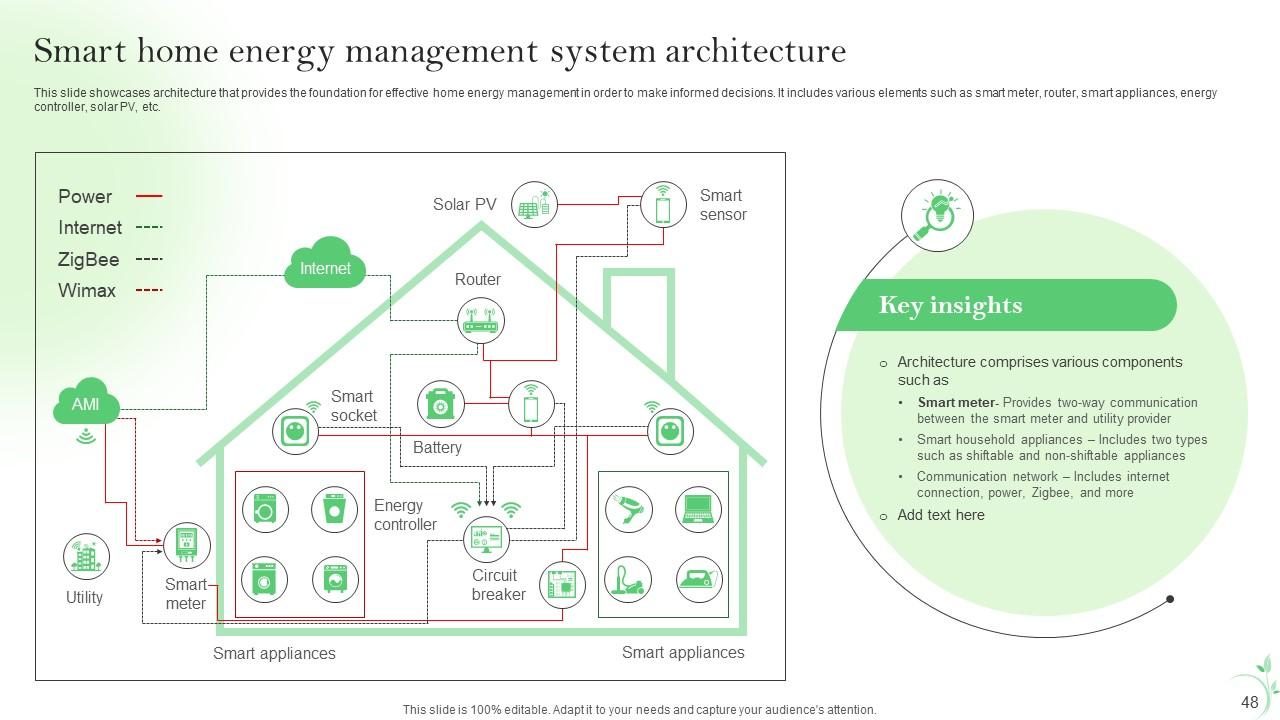
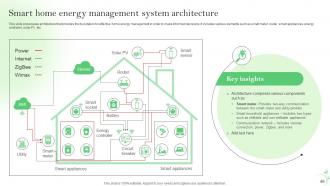
Slide 48: This slide showcases architecture that provides the foundation for effective home energy management in order to make informed decisions.
Slide 49: This slide shows title for topics that are to be covered next in the template.
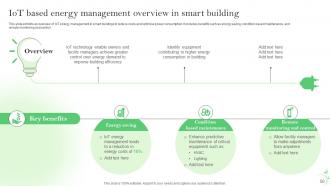
Slide 50: This slide exhibits an overview of IoT energy management in smart buildings to reduce costs and optimise power consumption. It includes benefits such as energy saving etc.
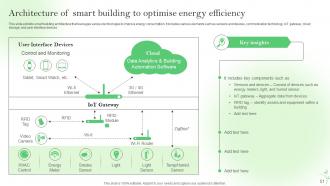
Slide 51: This slide presents smart building architecture that leverages various technologies to improve energy consumption. It includes various elements.
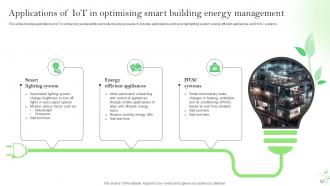
Slide 52: This slide includes applications of IoT in enhancing sustainability and reducing energy waste. It includes applications such as smart lighting system etc.
Slide 53: This slide shows title for topics that are to be covered next in the template.
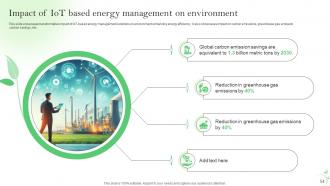
Slide 54: This slide showcases transformative impact of IoT-based energy management solutions on environment enhancing energy efficiency.
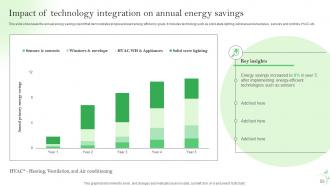
Slide 55: This slide showcases the annual energy savings report that demonstrates progress toward energy efficiency goals. It includes technology such as solid-state lighting etc.
Slide 56: This slide shows title for topics that are to be covered next in the template.
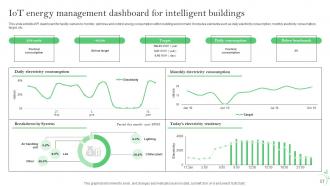
Slide 57: This slide exhibits KPI dashboard for facility owners to monitor, optimise and control energy consumption within building environment.
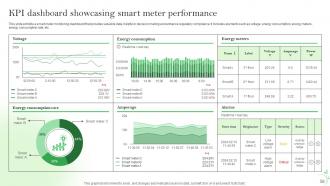
Slide 58: This slide displays a smart meter monitoring dashboard that provides valuable data, helpful in decision making and enhance regulatory compliance.
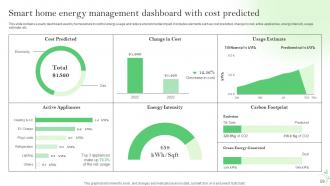
Slide 59: This slide contains a yearly dashboard used by homeowners to control energy usage and reduce environmental impact. It includes elements such as cost predicted etc.
Slide 60: This slide shows title for topics that are to be covered next in the template.
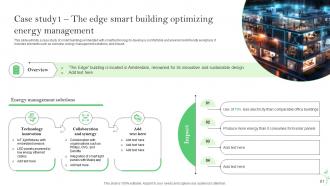
Slide 61: This slide exhibits a case study of smart buildings embedded with smart technology to develop a comfortable and environment-friendly workplace.
Slide 62: This slide shows all the icons included in the presentation.
Slide 63: This slide is titled as Additional Slides for moving forward.
Slide 64: This is Our Vision, Mission & Goal slide. Post your Visions, Missions, and Goals here.
Slide 65: This slide provides 30 60 90 Days Plan with text boxes.
Slide 66: This slide depicts Venn diagram with text boxes.
Slide 67: This slide contains Puzzle with related icons and text.
Slide 68: This is an Idea Generation slide to state a new idea or highlight information, specifications etc.
Slide 69: This slide presents Roadmap with additional textboxes. It can be used to present different series of events.
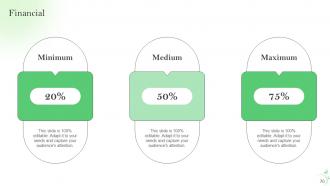
Slide 70: This is a financial slide. Show your finance related stuff here.
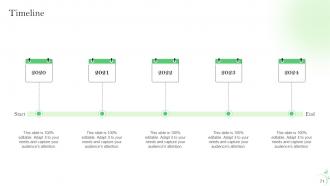
Slide 71: This is a Timeline slide. Show data related to time intervals here.
Slide 72: This is a Thank You slide with address, contact numbers and email address.
IoT Energy Management Solutions For Sustainable Future Powerpoint Presentation Slides IoT CD with all 81 slides:
Use our IoT Energy Management Solutions For Sustainable Future Powerpoint Presentation Slides IoT CD to effectively help you save your valuable time. They are readymade to fit into any presentation structure.
-
Easy to edit slides with easy to understand instructions.
-
My search for complete decks ended with SlideTeam. Such a surplus collection of HD PowerPoints. Moreover, their standard and widescreen formats have helped me in delivering bullseye presentations.
