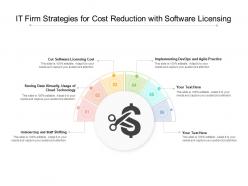
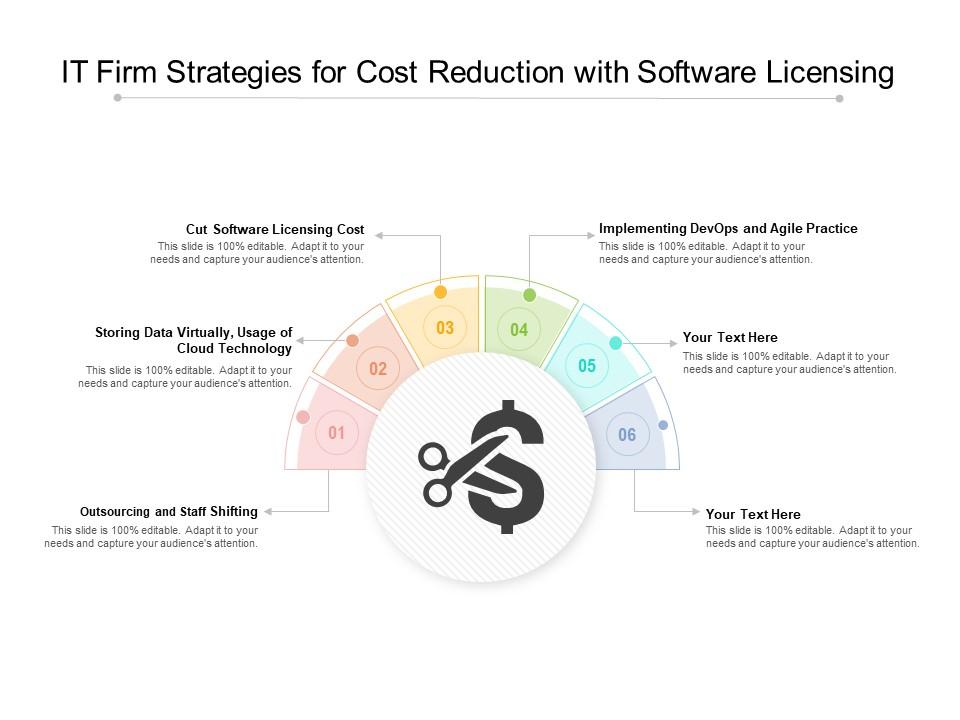
It firm strategies for cost reduction with software licensing
Try Before you Buy Download Free Sample Product
Audience
Editable
of Time
Our IT Firm Strategies For Cost Reduction With Software Licensing have an intriguing effect. It arouses intense interest.
People who downloaded this PowerPoint presentation also viewed the following :
It firm strategies for cost reduction with software licensing with all 2 slides:
Our IT Firm Strategies For Cost Reduction With Software Licensing arouse intense interest. It has an intriguing effect.
FAQs for It firm strategies for cost reduction
IT firms can negotiate software licensing costs through volume discounts, multi-year commitments, flexible usage models, license optimization audits, and strategic vendor partnerships. These approaches enable organizations to reduce expenses by consolidating purchases, rightsizing license allocations, and leveraging competitive bidding, with many firms finding that proactive license management delivers significant cost savings while maintaining operational flexibility.
Open-source alternatives significantly reduce licensing expenses by eliminating recurring subscription fees, minimizing vendor lock-in costs, and providing customizable solutions without proprietary restrictions. Many IT firms find that strategic migration to open-source platforms like Linux, PostgreSQL, and Apache delivers 40-60% cost savings while enhancing operational flexibility and competitive positioning.
Asset management tools streamline software licensing by providing real-time visibility into license usage, automating compliance tracking, identifying unused licenses, and monitoring renewal dates across organizations. These platforms enable IT firms to eliminate redundant purchases, negotiate better vendor terms, and redistribute underutilized licenses, with many companies reducing licensing costs by 20-30% while maintaining operational efficiency.
Cloud-based solutions reduce software licensing costs through subscription models that eliminate large upfront purchases, automatic scaling that matches usage to actual needs, and shared infrastructure that distributes expenses across multiple users. Many businesses find they can reduce software costs by 20-30% while gaining enhanced flexibility, automatic updates, and improved resource allocation, ultimately delivering better operational efficiency and predictable budgeting in an increasingly competitive market.
Non-compliance risks include hefty financial penalties, legal disputes, damaged reputation, operational disruptions, and potential business shutdowns from audit violations. IT firms can mitigate these through automated license management systems, regular compliance audits, employee training programs, and strategic vendor negotiations, with many organizations finding that proactive compliance monitoring ultimately delivers cost savings and competitive advantage.
Bulk purchasing agreements enable IT firms to secure volume discounts, negotiate better terms, and consolidate vendor relationships, often reducing per-license costs by 20-40%. These strategic arrangements streamline procurement processes while delivering predictable budgeting, enhanced support levels, and flexibility for scaling operations, with many organizations finding that consolidated purchasing ultimately strengthens their negotiating position for future renewals.
IT firms can prioritize software tools through budget-aligned strategies including conducting comprehensive license audits, negotiating volume discounts, implementing subscription-based models, consolidating redundant applications, and adopting open-source alternatives where feasible. These approaches enable organizations to streamline software portfolios, reduce unnecessary expenses, and optimize resource allocation, with many firms finding that strategic license management delivers significant cost savings while maintaining operational efficiency.
Regular software usage reviews reveal licensing inefficiencies by tracking actual user activity against purchased licenses, identifying dormant accounts, seasonal usage patterns, and redundant applications across departments. Through automated monitoring tools and usage analytics, IT firms can pinpoint licenses sitting idle for months, consolidate overlapping software functions, and reallocate resources strategically, ultimately reducing licensing costs by 20-30% while maintaining operational efficiency.
SaaS models significantly reduce costs by eliminating upfront license fees, minimizing infrastructure investments, and streamlining maintenance expenses through subscription-based pricing and cloud-hosted solutions. These platforms enable organizations to scale usage dynamically, reduce IT overhead, and access automatic updates, with many enterprises finding that SaaS delivers 20-30% cost savings while enhancing operational flexibility.
IT firms should establish comprehensive asset inventories, maintain detailed usage documentation, conduct regular compliance reviews, implement centralized license management systems, and prepare audit-ready records throughout the year. These proactive practices streamline audit processes by ensuring accurate license tracking, minimizing compliance gaps, and demonstrating proper usage, with many organizations finding that systematic preparation reduces audit duration and potential penalties significantly.
Firms can effectively manage multiple software licenses through centralized inventory systems, automated tracking tools, usage analytics, standardized procurement processes, and regular audit protocols. These strategic approaches streamline license allocation by eliminating redundancies, negotiating volume discounts, and optimizing utilization across departments, with many organizations finding that consolidated management reduces licensing costs by 20-30% while enhancing compliance.
License sharing and multi-user licenses significantly reduce software costs by maximizing utilization across teams, eliminating duplicate purchases, and enabling volume discounts that can cut expenses by 30-50%. These strategic licensing approaches streamline resource allocation while ensuring compliance, with many IT firms finding that centralized license management ultimately delivers enhanced operational efficiency and substantial budget optimization across departments.
Vendor partnerships significantly reduce long-term licensing costs through volume discounts, flexible renewal terms, strategic bundling agreements, and priority access to cost-effective upgrade paths. These collaborative relationships enable IT firms to negotiate enterprise-wide deals, secure multi-year pricing locks, and leverage vendor roadmaps for budget planning, ultimately delivering 20-40% cost savings while enhancing operational predictability.
IT firms can learn competitive strategies including license pooling, cloud-first migrations, open-source integrations, vendor consolidation, and usage-based optimization models from industry leaders. Through analyzing competitors' approaches, organizations streamline operations by renegotiating enterprise agreements, implementing automated compliance monitoring, and leveraging hybrid licensing strategies, ultimately delivering significant cost reductions while maintaining operational efficiency and competitive advantage.
Key metrics include license utilization rates, cost per user, compliance audit results, software sprawl indicators, and return on investment from license optimization initiatives. These measurements enable IT firms to identify underutilized licenses, track spending efficiency across departments, and demonstrate tangible savings, with many organizations finding that regular monitoring delivers 20-30% cost reductions while maintaining operational effectiveness.
No Reviews