ITIL Business Relationship Management Framework Diagram

Rating:
80%
ITIL Business Relationship Management Framework Diagram
Slide 1 of 6

or

Favourites Favourites

Try Before you Buy Download Free Sample Product

Audience Impress Your
Audience
Editable 100%
Editable
Time Save Hours
of Time
The Biggest Sale is ending soon in
0
0
:
0
0
:
0
0
Rating:
80%
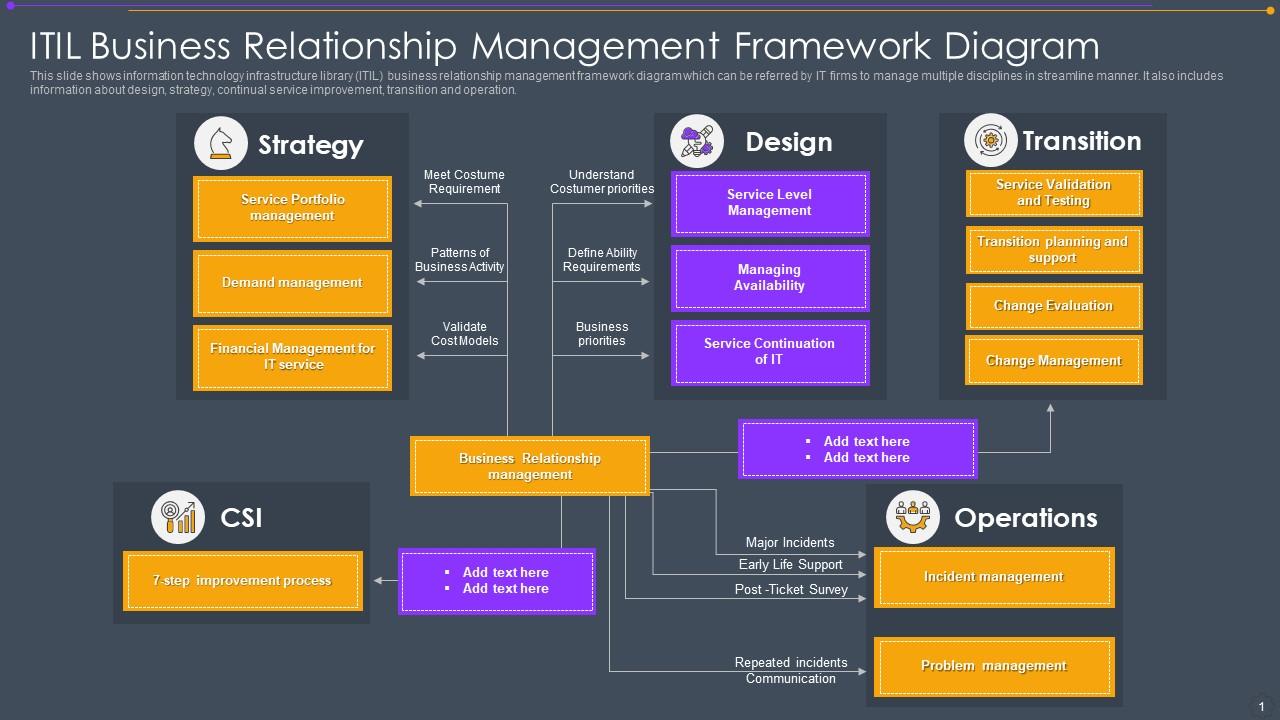
This slide shows information technology infrastructure library ITIL business relationship management framework diagram which can be referred by IT firms to manage multiple disciplines in streamline manner. It also includes information about design, strategy, continual service improvement, transition and operation. Presenting our well structured ITIL Business Relationship Management Framework Diagram. The topics discussed in this slide are Strategy, Transition, Operations. This is an instantly available PowerPoint presentation that can be edited conveniently. Download it right away and captivate your audience.

FAQs for ITIL Business Relationship

So ITIL BRM is basically about becoming the bridge between IT and business people. First thing - figure out what business outcomes they actually want, then make your IT services deliver real value instead of just... existing. Relationship building is huge here, plus managing all those stakeholders and getting good two-way communication going. You're more like a translator than anything tech-related, tbh. Also gotta spot new opportunities and keep expectations realistic on both sides. Oh, and definitely start by mapping who your key business people are - find out their real problems, not what you assume they need.

So ITIL BRM is basically your translator between IT and business people. You know how they always speak different languages? This fixes that. Set up regular meetings with key stakeholders - like actually scheduled ones, not just "we should chat sometime." Get them talking about what they really need, then figure out how your IT services can deliver that. The relationship part is honestly the hardest bit because you're dealing with people, not just tech. But once you nail down those communication channels and feedback loops, you can actually measure if your services are helping the business hit their goals. Start small though - pick your most important stakeholders first.

So you've got a few key people to know. Business Relationship Manager is your main contact - they translate between business folks and IT. Then there's Service Owners who handle specific services from start to finish, and Process Owners who focus on the actual ITIL processes. Most places also have someone managing the service catalog overall. Honestly, job titles are all over the place depending on where you work, but the actual work stays pretty similar. I'd definitely figure out who's doing what at your company since people end up wearing multiple hats anyway. Makes things way less confusing once you know the players.

Honestly, just focus on five main things: how well you engage stakeholders, whether your services actually match what the business needs, your relationship structures, how you show value, and your strategic influence. ITIL has this maturity model that's pretty useful once you get into it. Are you being reactive or actually driving outcomes? That's huge. Also - and this might sting a bit - do your business contacts see you as strategic or just "the IT guy"? The quickest way to find out is surveying your key business people about how effective the relationship really is. Use those results as your starting point for getting better.

Honestly, I'd start with one-on-one interviews for the tricky stuff, then throw out surveys to cast a wider net. Workshops work great when you need people to actually hash things out together - executives arguing over priorities can get... interesting. Map out your stakeholders first so you're not wasting time with the wrong people. Oh, and definitely use a traceability matrix to connect everything back to business goals. Sounds boring but it saves your butt later. Always circle back with what you've captured before moving ahead. Trust me on that one.

ITIL BRM basically bakes improvement right into the process by constantly measuring value and getting feedback from stakeholders. Instead of just looking at tech metrics, you're actually tracking how services meet business needs. The relationship management part is honestly where the magic happens - business stakeholders give you real-time insights about what's broken or working well. That info flows straight into improving your service strategy and design. Plus regular service reviews help you catch problems early before they blow up. I'd start by figuring out who you're already talking to and where you can get better feedback about service value.

So you gotta look at two main things - how your relationships are doing AND if it's actually helping the business. Customer satisfaction scores and stakeholder surveys are solid starting points for the relationship side. Business-wise, track stuff like service adoption rates and how many escalations you're getting from key people. Time to resolve requests matters too - nobody likes waiting around. The relationship metrics are honestly kind of a pain to measure, but quarterly surveys work pretty well. Oh, and see if business units are actually using what you've built for them. That tells you everything.

So basically ITIL BRM gives IT and business people a common way to talk to each other. Sets up regular check-ins and clear roles so nobody's confused about who handles what. Honestly, it cuts down on so much miscommunication - you know those moments where business asks for something and IT's like "wait, what?" It maps out how business needs connect to actual IT services. Way more strategic conversations instead of just putting out fires all the time. Oh, and start by figuring out your main business contacts first, then set up consistent meetings with them.

For ITIL BRM, you've got options like ServiceNow or Remedy for service catalogs. Business relationship stuff works well with Salesforce or Microsoft Dynamics. Power BI and Tableau are solid for dashboards - honestly, most people underestimate how much good dashboards help. Don't forget CMDBs and survey tools for feedback. Integration's the tricky part though. I'd say pick whatever plays nice with your current ITSM setup first. Starting there prevents those annoying data silos that'll bite you later. Really depends on your org's size, but that's where I'd begin.

So ITIL BRM is basically your safety net for catching risks before they totally wreck your IT services. You map out potential threats, figure out how bad they could mess things up, then put safeguards in place. It's like having radar for problems - honestly pretty smart when you're juggling tons of moving parts. The framework keeps you monitoring stuff continuously and documenting your backup plans. Oh, and it helps your services bounce back when (not if) something breaks. Start by checking your current risks against their guidelines - that'll show you where you're most vulnerable right now.

Honestly, the biggest pain is just getting people on board - everyone freaks out when you mess with their processes. Your IT folks will probably struggle with shifting from "fix stuff when it breaks" to actually being strategic partners. Plus you'll likely hit resource issues since most places don't have people who know how to do relationship management well. Start with small pilot programs first. Get executive backing early or you're screwed. Training is huge too - invest in it. Quick wins help a ton because you can show value fast. Oh and keep communication flowing between teams during the whole transition, otherwise things get messy.

So BRM is like having a translator between IT and the business side. Instead of just fixing whatever's broken, you can actually prioritize incidents based on what matters to the company. Change management gets way smarter too - you're not flying blind anymore. Your service catalog suddenly makes sense to actual users (imagine that), and SLAs align with what the business really needs. Honestly, most IT teams skip this step and wonder why they're always putting out random fires. Map out your key business relationships first - that'll show you where to plug BRM into your existing processes.

Customer feedback is huge for ITIL BRM - it's how you know if you're actually doing your job right. Collect it through surveys, service reviews, casual chats with stakeholders. Most teams screw up by not closing the loop though. Take what you hear and fix your service delivery, tweak those SLAs, spot problems early. I'd say quarterly business reviews work best - show them what you heard and your action plan. Honestly, this whole process is what separates teams that just exist from ones that business units actually trust and want to work with.

Regular face-to-face meetings between your BRMs and business folks - that's where the magic happens. Your BRMs need to actually get what the business does (beyond just tech stuff) so they can talk shop properly. I swear, half these trust problems happen because IT speaks in acronyms nobody gets! Create shared goals that both teams give a damn about. Quick side note - metrics help too, but they can't be fluffy nonsense. The real goal? Making IT feel like actual business partners instead of glorified help desk people.

So there's this huge shift happening toward outcome-based relationship management right now. Instead of just tracking SLAs, companies are actually measuring business value delivered - which honestly makes way more sense. ITIL 4's value streams are pushing this forward big time. You're also seeing BRM get more agile and continuous, moving away from those boring quarterly reviews. Oh, and DevOps integration is everywhere now. AI's creeping into relationship insights too, though that feels pretty early still. My advice? Start mapping your relationships to actual business outcomes. That's where everything's headed and you'll look like a genius for being early on it.

Ratings and Reviews

80% of 100
Review Form
Write a review
Most Relevant Reviews
  1. 80%

    by Callum Gonzalez

    If you have visited their site and failed to find the products, try reaching the customer service because it will be the case that you didn't use the search bar well.
  2. 80%

    by Edmond Estrada

    Requested a complete pitch deck. Delivered immediately and with high quality well researched content.

2 Item(s)

per page: