


Key Account Strategy To Boost Customer Acquisition Powerpoint Presentation Slides Strategy CD V
Check out our professionally designed Key Account Strategy to Boost Customer Acquisition PPT. This comprehensive Key Accounts presentation initially offers an overview of account strategy, highlighting its advantages. Moreover, this Cross selling presentation delves into essential aspects such as market statistics, historical evolution, foundational pillars, best practices, and critical drawbacks of essential business account planning and strategy execution. Also, the Key Account Management template covers a range of slides that outline the crucial steps involved in account planning and management, emphasizing factors like revenue potential assessment and the formulation of tailored sales strategies for these key accounts. Furthermore, the Business Account PowerPoint presentation includes slides dedicated to exploring critical account management tools and software, providing insights into their pricing plans. Additionally, the Customer Relationships PowerPoint section encompasses slides addressing vital account planning teams, their respective responsibilities, and the assessment of the impact of key account management on customer relationships. Lastly, this Account Scoring Matrix presentation offers valuable insights into cross selling, upselling techniques, and the implementation of an Account Scoring Matrix to manage and prioritize key accounts effectively. Gain access to this robust template now.
Check out our professionally designed Key Account Strategy to Boost Customer Acquisition PPT. This comprehensive Key Accoun..

































-

- Google Slides is a new FREE Presentation software from Google.
- All our content is 100% compatible with Google Slides.
- Just download our designs, and upload them to Google Slides and they will work automatically.
- Amaze your audience with SlideTeam and Google Slides.
-

Want Changes to This PPT Slide? Check out our Presentation Design Services
-

- WideScreen Aspect ratio is becoming a very popular format. When you download this product, the downloaded ZIP will contain this product in both standard and widescreen format.
-

- Some older products that we have may only be in standard format, but they can easily be converted to widescreen.
- To do this, please open the SlideTeam product in Powerpoint, and go to
- Design ( On the top bar) -> Page Setup -> and select "On-screen Show (16:9)” in the drop down for "Slides Sized for".
- The slide or theme will change to widescreen, and all graphics will adjust automatically. You can similarly convert our content to any other desired screen aspect ratio.
Compatible With Google Slides

Get This In WideScreen
You must be logged in to download this presentation.


Do you want to remove this product from your favourites?
PowerPoint presentation slides
Enthrall your audience with this Key Account Strategy To Boost Customer Acquisition Powerpoint Presentation Slides Strategy CD V. Increase your presentation threshold by deploying this well-crafted template. It acts as a great communication tool due to its well-researched content. It also contains stylized icons, graphics, visuals etc, which make it an immediate attention-grabber. Comprising seventy one slides, this complete deck is all you need to get noticed. All the slides and their content can be altered to suit your unique business setting. Not only that, other components and graphics can also be modified to add personal touches to this prefabricated set.

People who downloaded this PowerPoint presentation also viewed the following :
Content of this Powerpoint Presentation
Slide 1: The slide introduces Key Account Strategy to Boost Customer Acquisition. State your Company name.
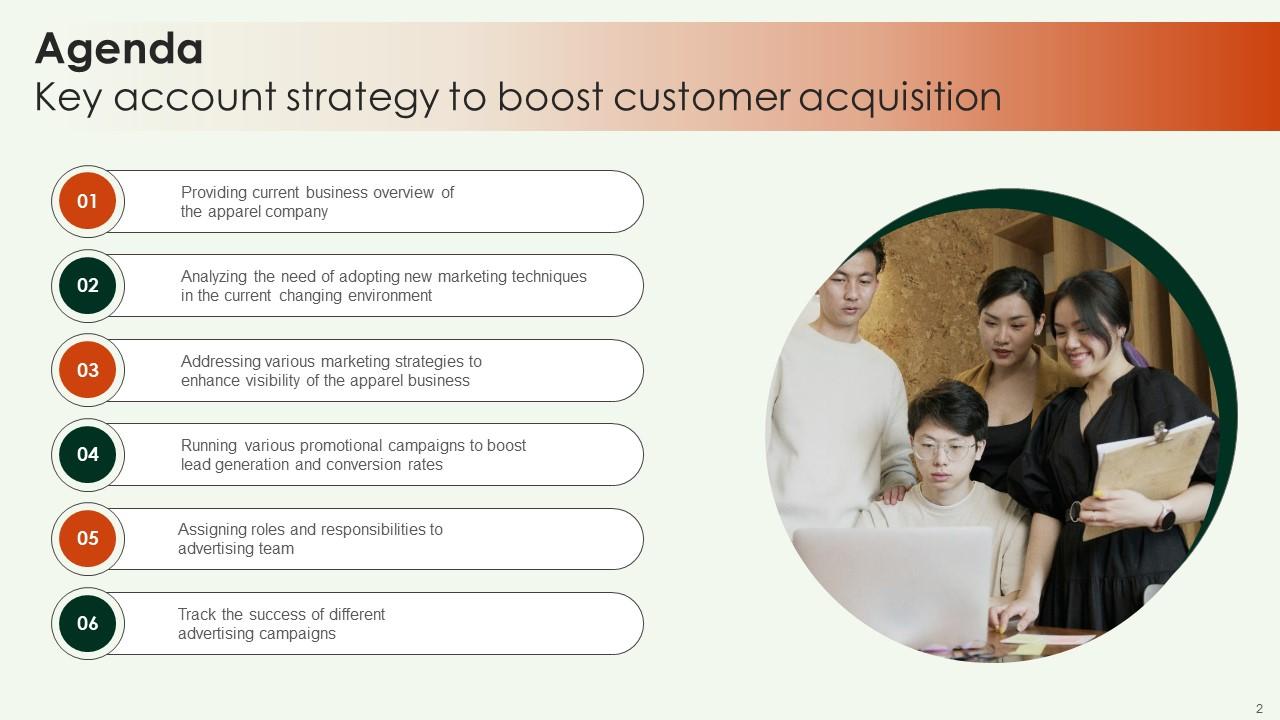
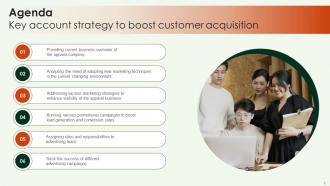
Slide 2: This is an Agenda slide. State your agendas here.
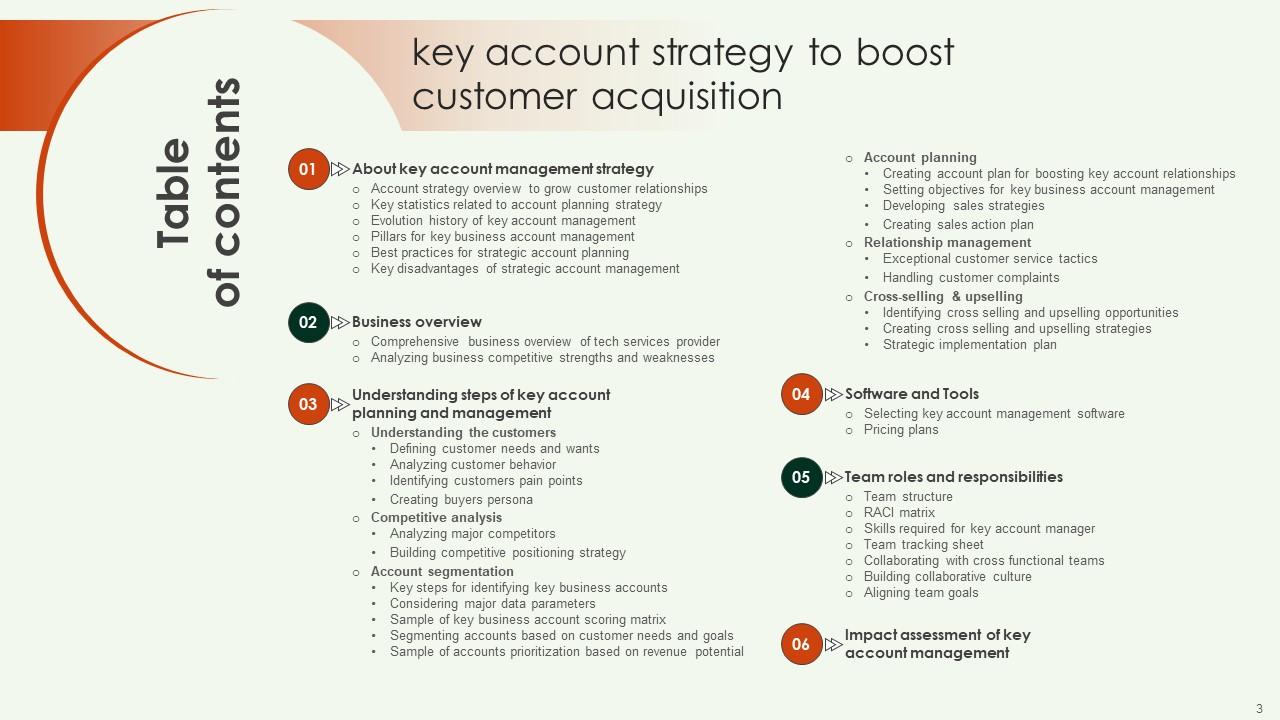
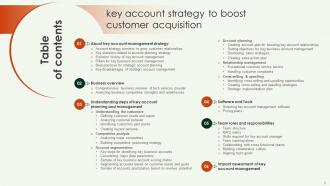
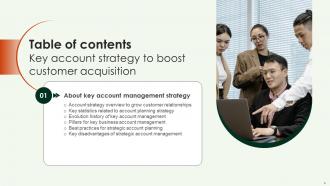
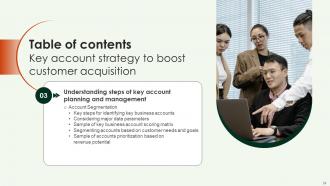
Slide 3: The slide displays Table of contents for presentation.
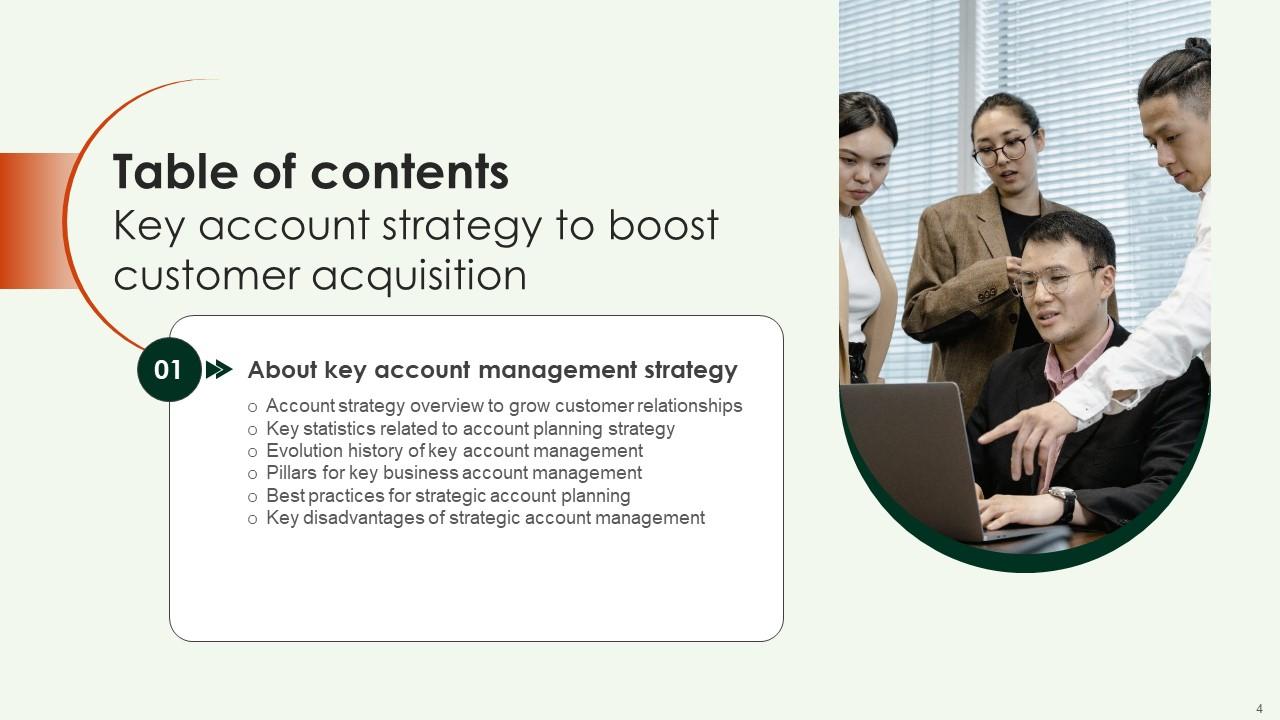
Slide 4: The slide continues Table of contents.
Slide 5: The slide highlights table of contents again which is to be discussed further.
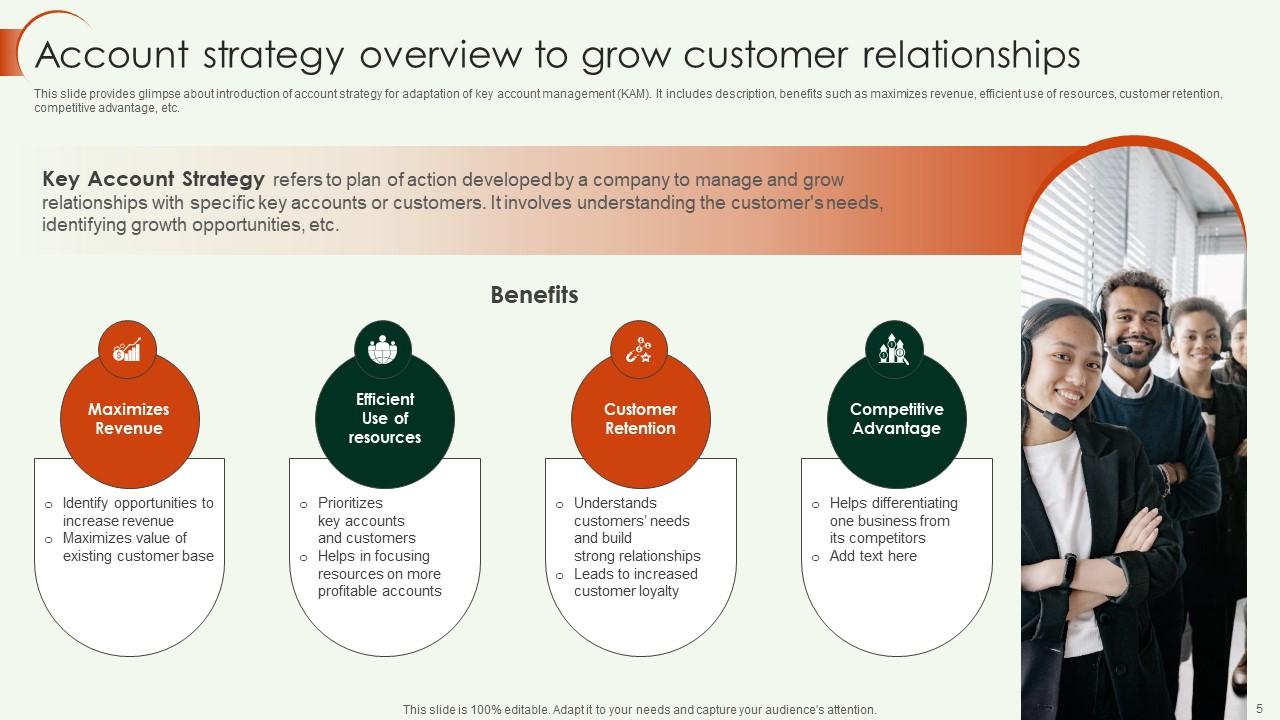
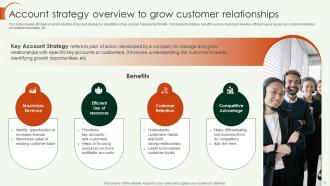
Slide 6: This slide provides glimpse about introduction of account strategy for adaptation.
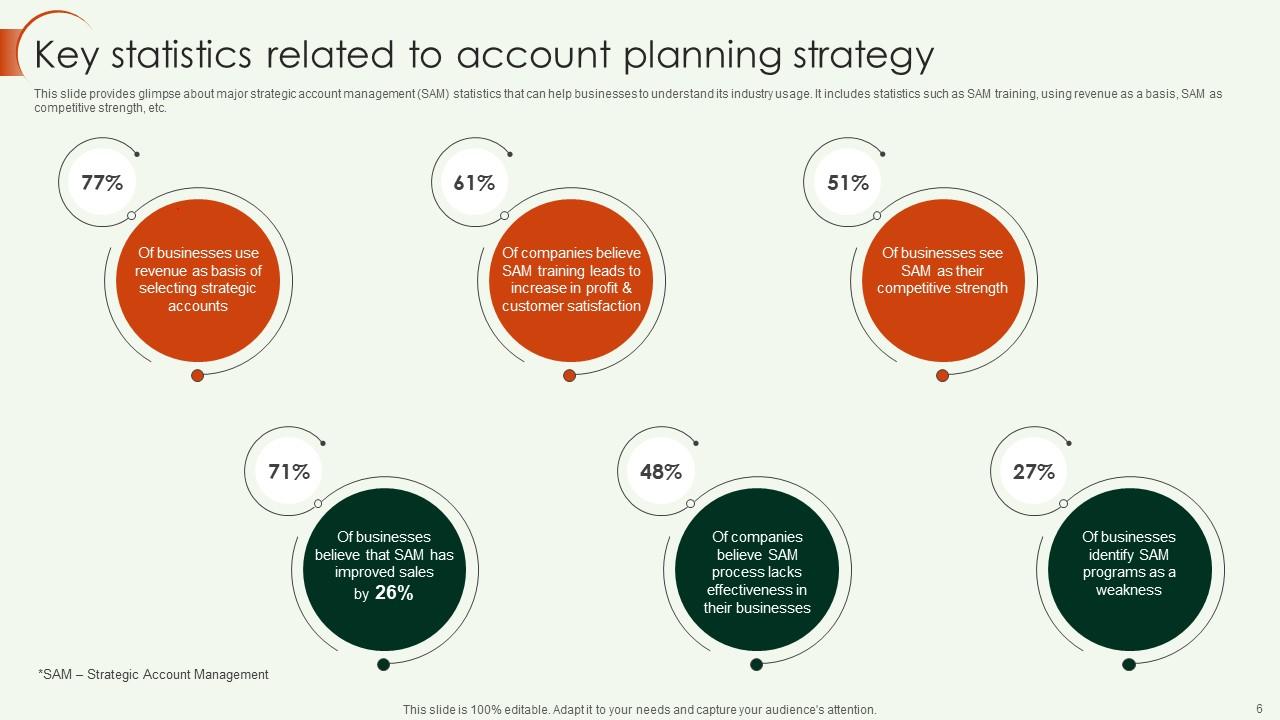
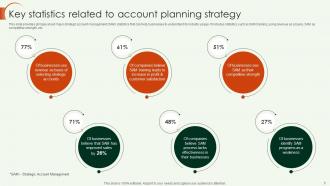
Slide 7: This slide renders glimpse about major strategic account management statistics.
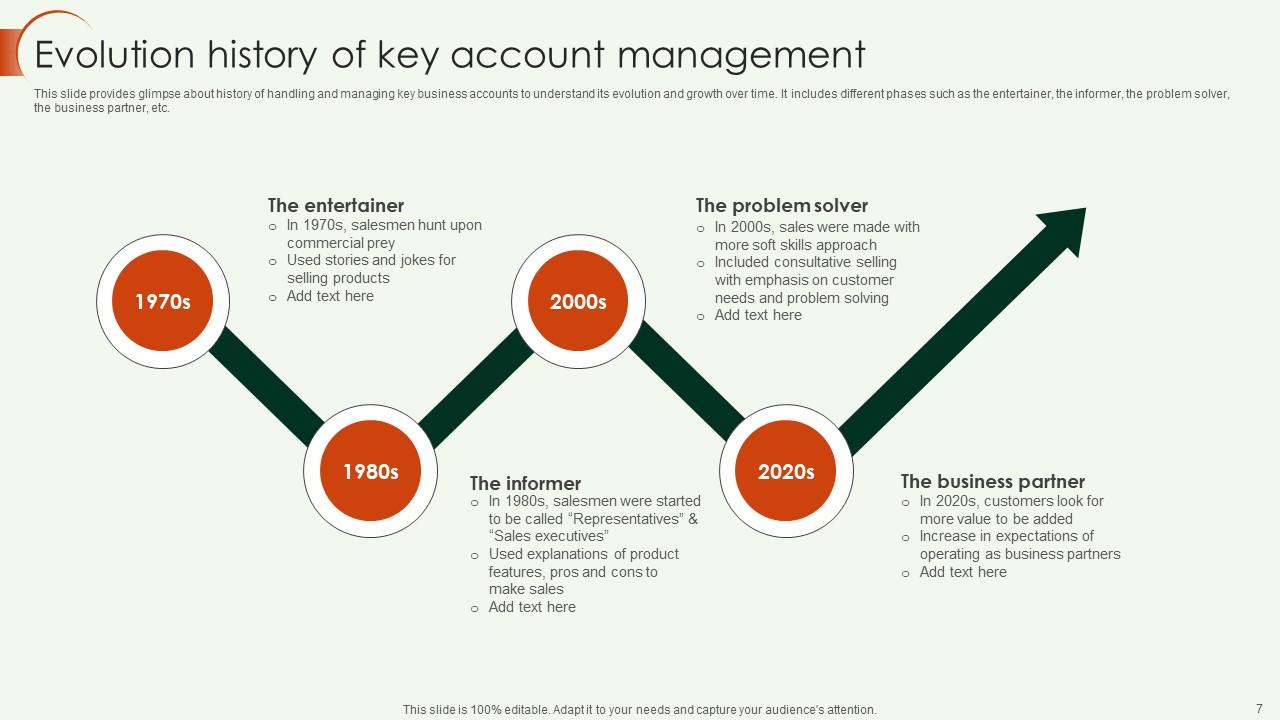
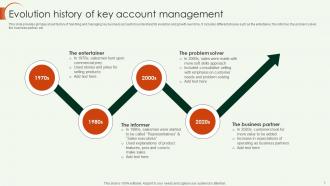
Slide 8: This slide illustrates glimpse about history of handling and managing key business accounts.
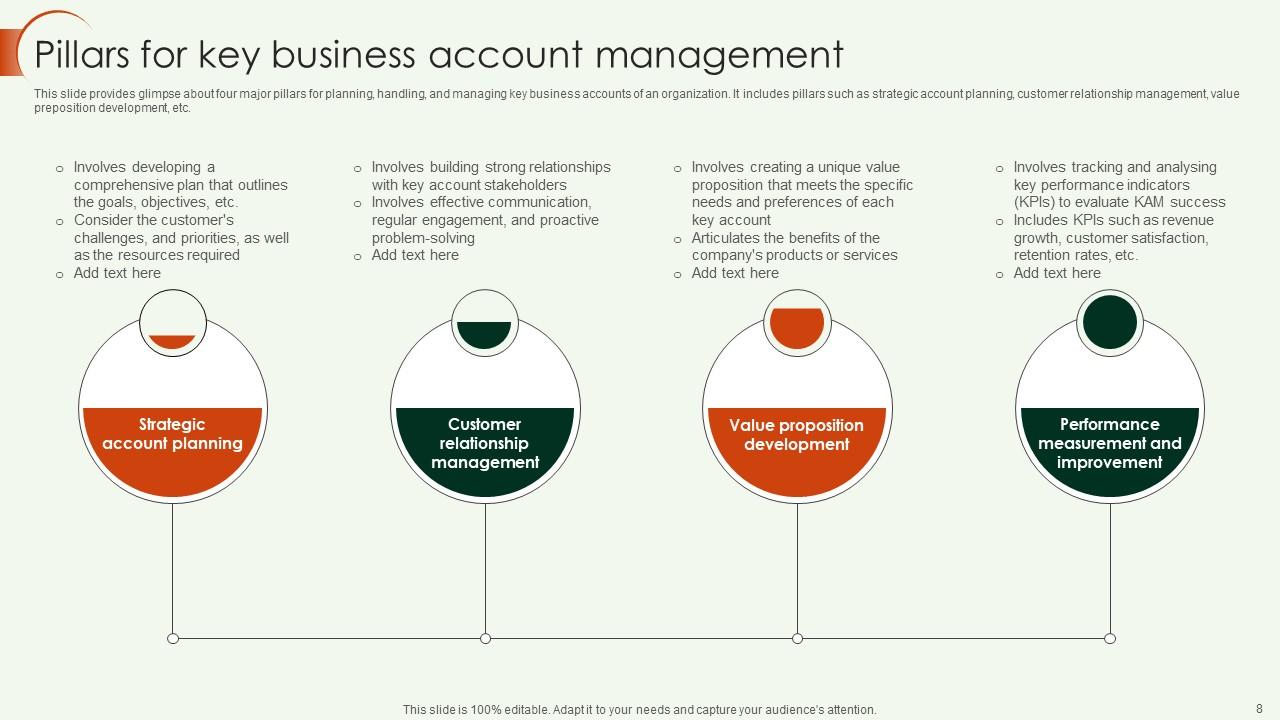
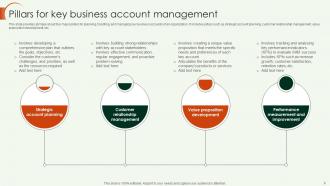
Slide 9: This slide provides glimpse about four major pillars.
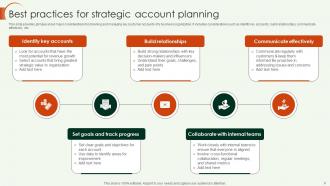
Slide 10: This slide shows glimpse about major considerations for planning and managing key customer accounts.
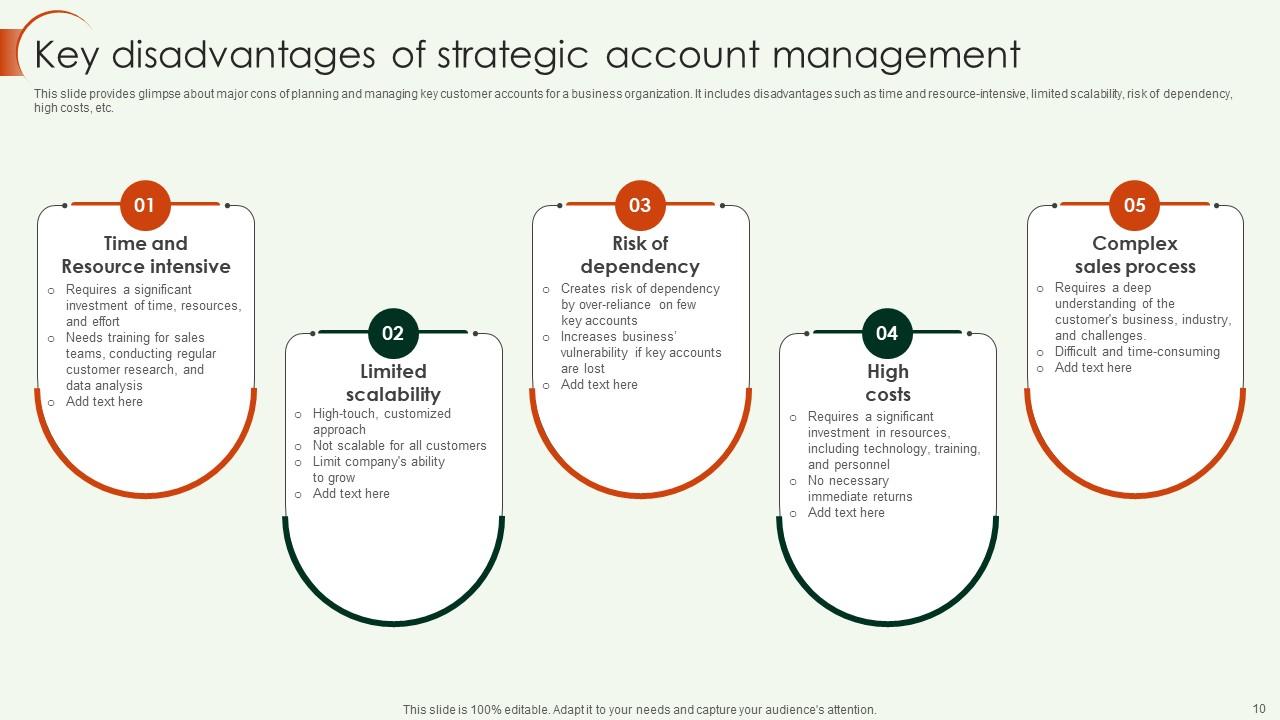
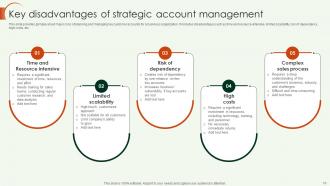
Slide 11: This slide gives glimpse about major cons of planning and managing key customer accounts.
Slide 12: The slide higlights title of contents further.
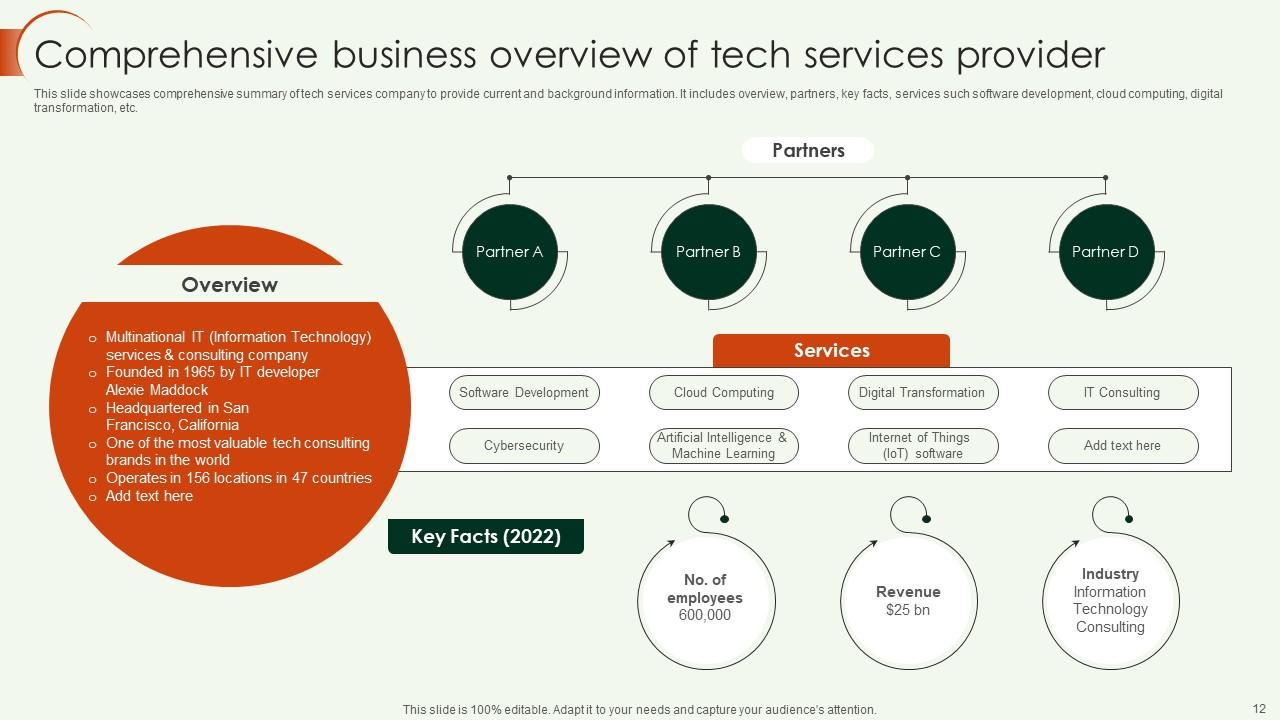
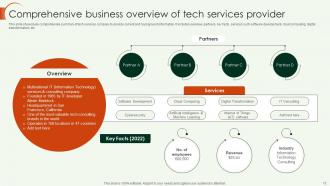
Slide 13: This slide showcases comprehensive summary of tech services company to provide current and background information.
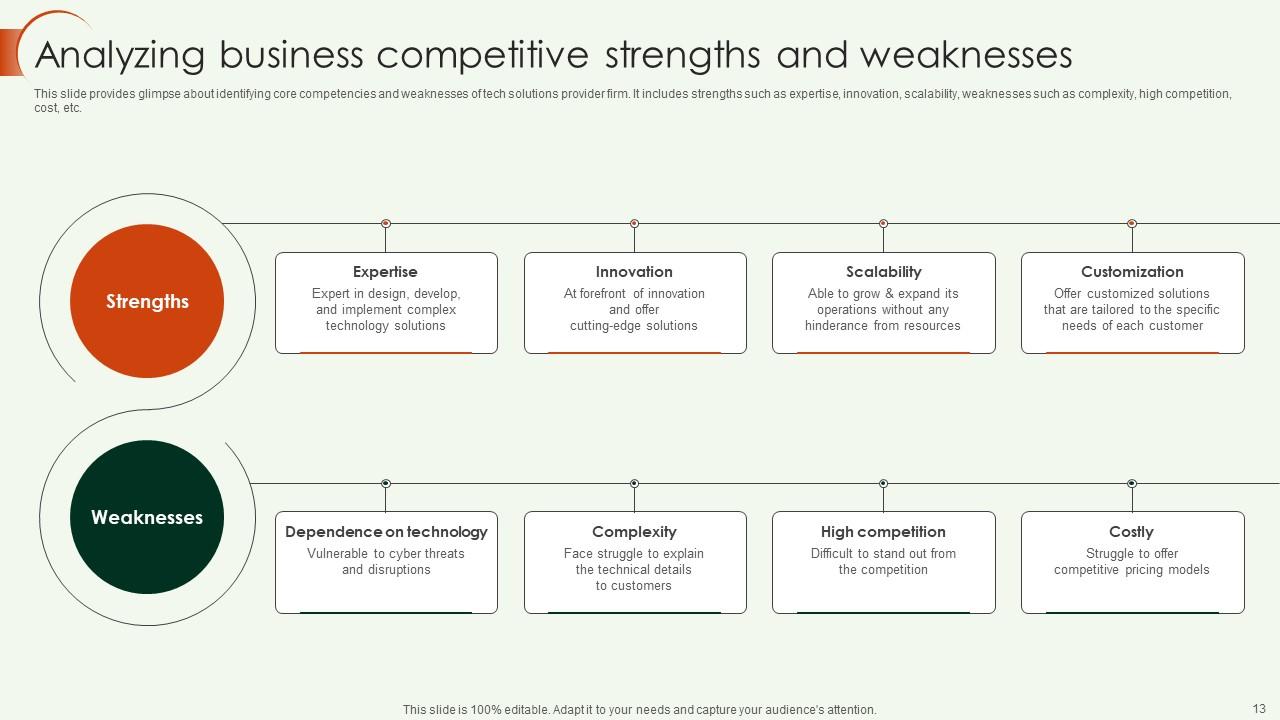
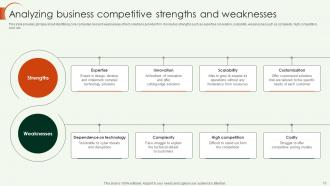
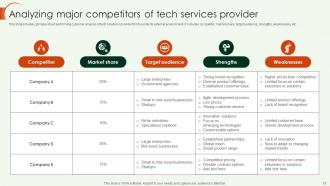
Slide 14: This slide provides glimpse about identifying core competencies and weaknesses of tech solutions provider firm.
Slide 15: The slide highlights title of contents which is to be discussed further.
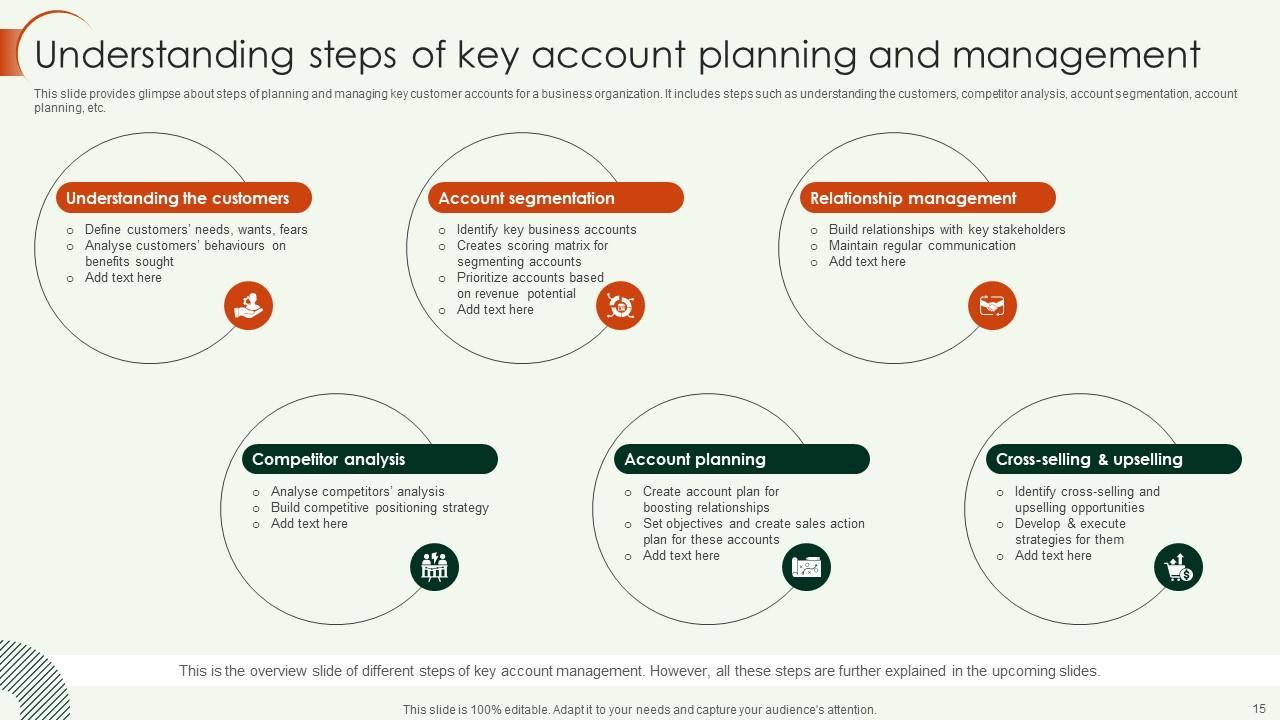
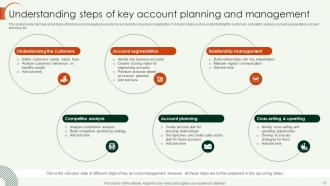
Slide 16: This slide provides glimpse about steps of planning and managing key customer accounts for a business organization.
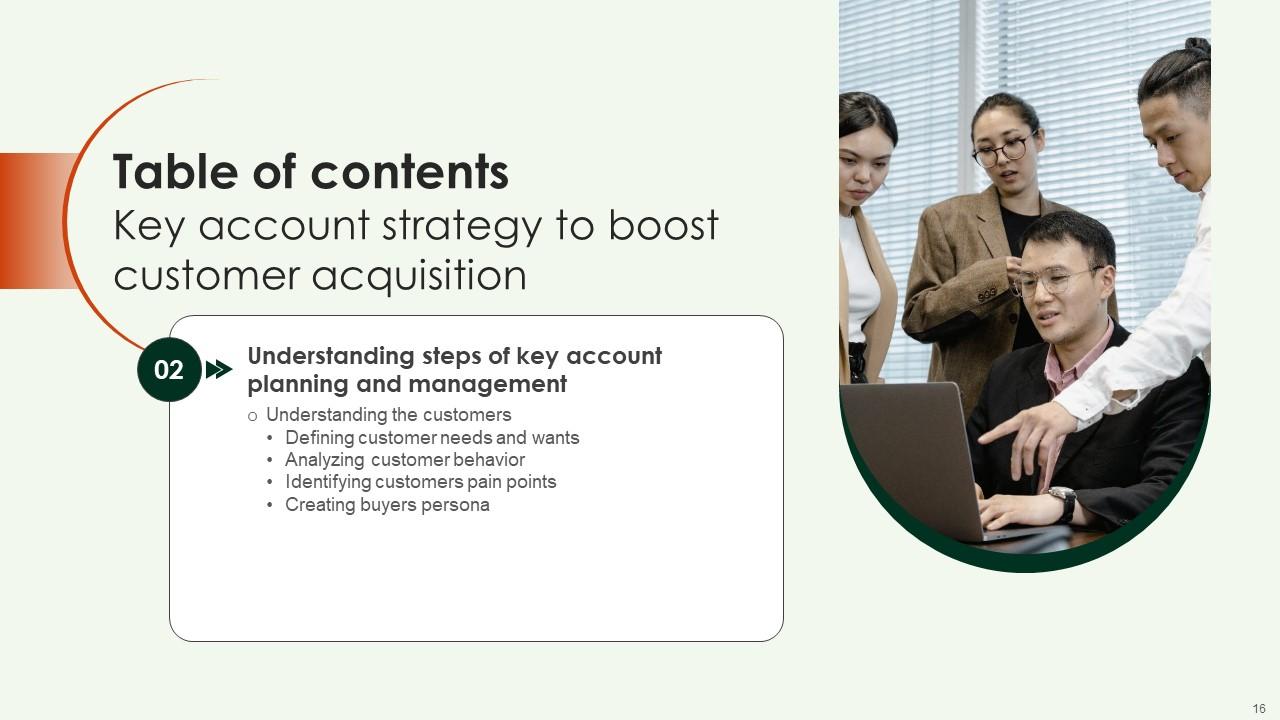
Slide 17: The slide again highlights title of contents.
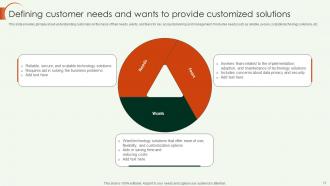
Slide 18: This slide provides glimpse about understanding customers on the basis of their needs, wants, and fears.
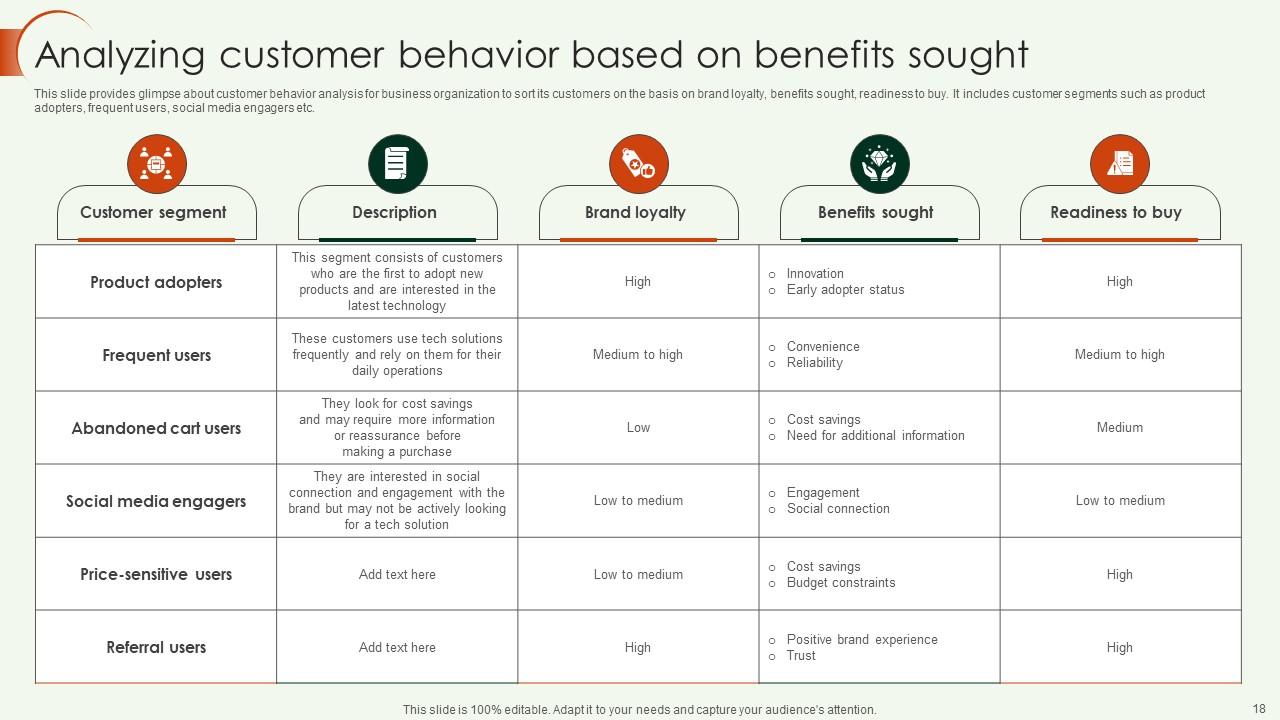
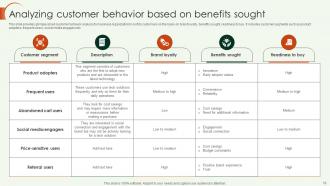
Slide 19: This slide represents glimpse about customer behavior analysis for business organization.
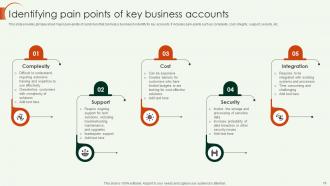
Slide 20: This slide presents glimpse about major pain-points of customers.
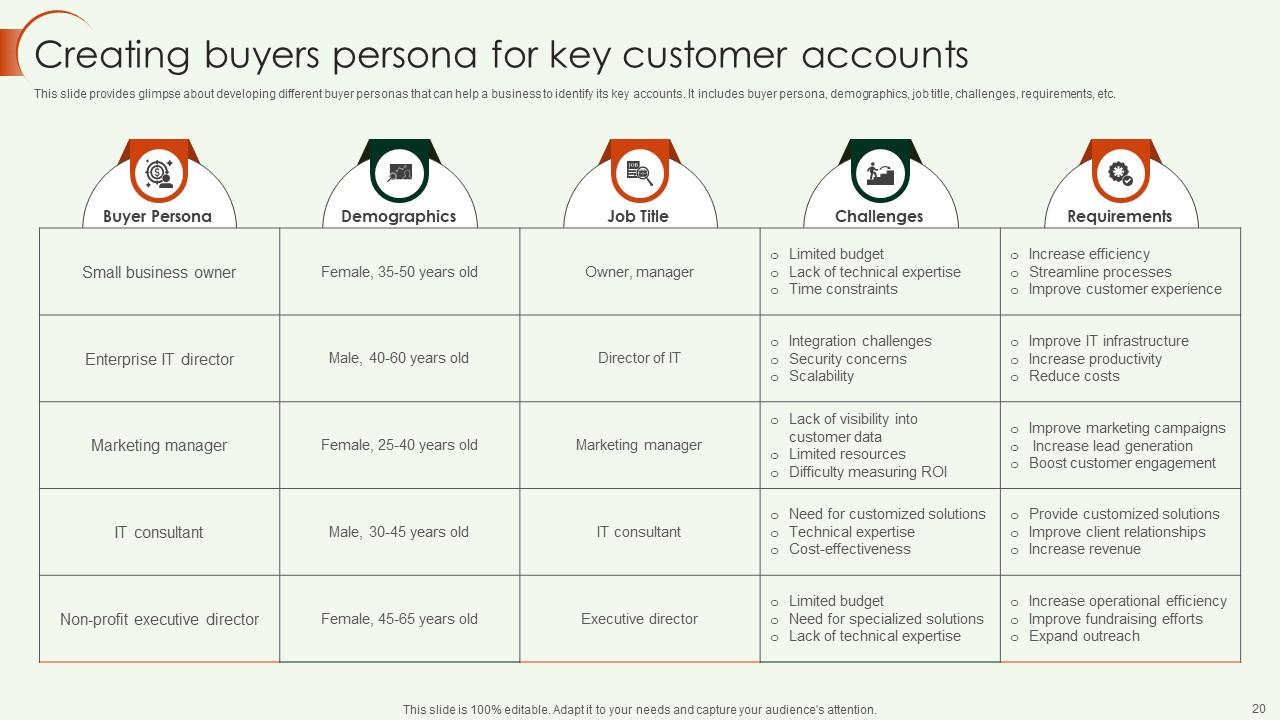
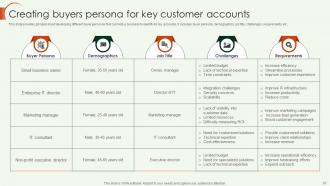
Slide 21: This This slide provides glimpse about developing different buyer personas.
Slide 22: The slide contains Title of contents further.
Slide 23: This slide gives glimpse about performing customer analysis of tech solutions provider firm to under its external environment.
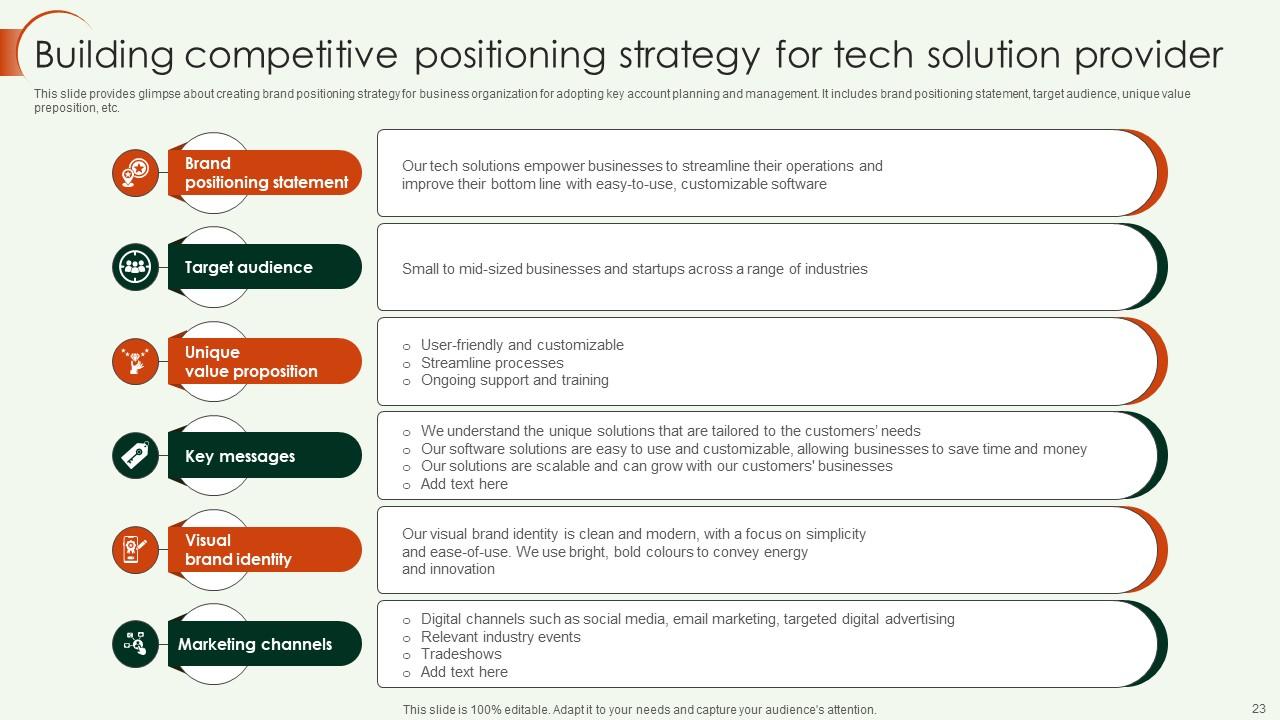
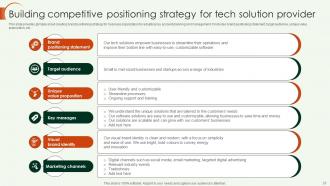
Slide 24: This slide provides glimpse about creating brand positioning strategy for business organization.
Slide 25: The slide again displays title of contents,
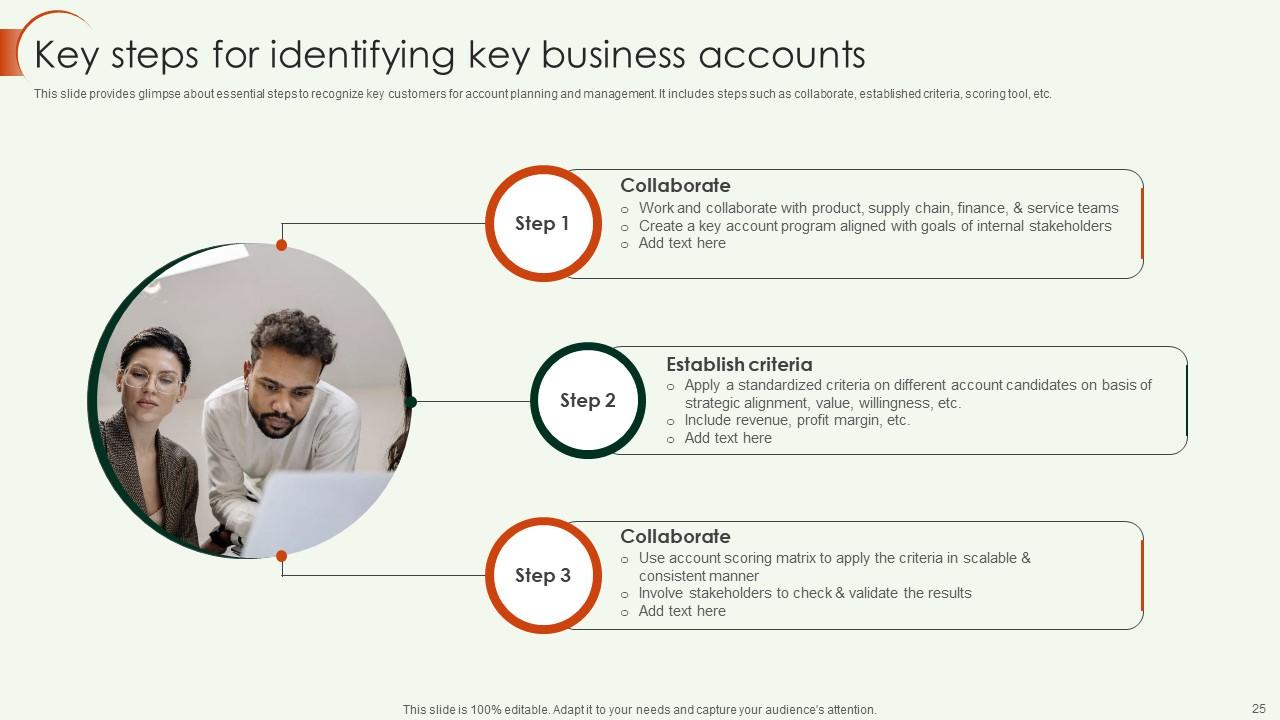
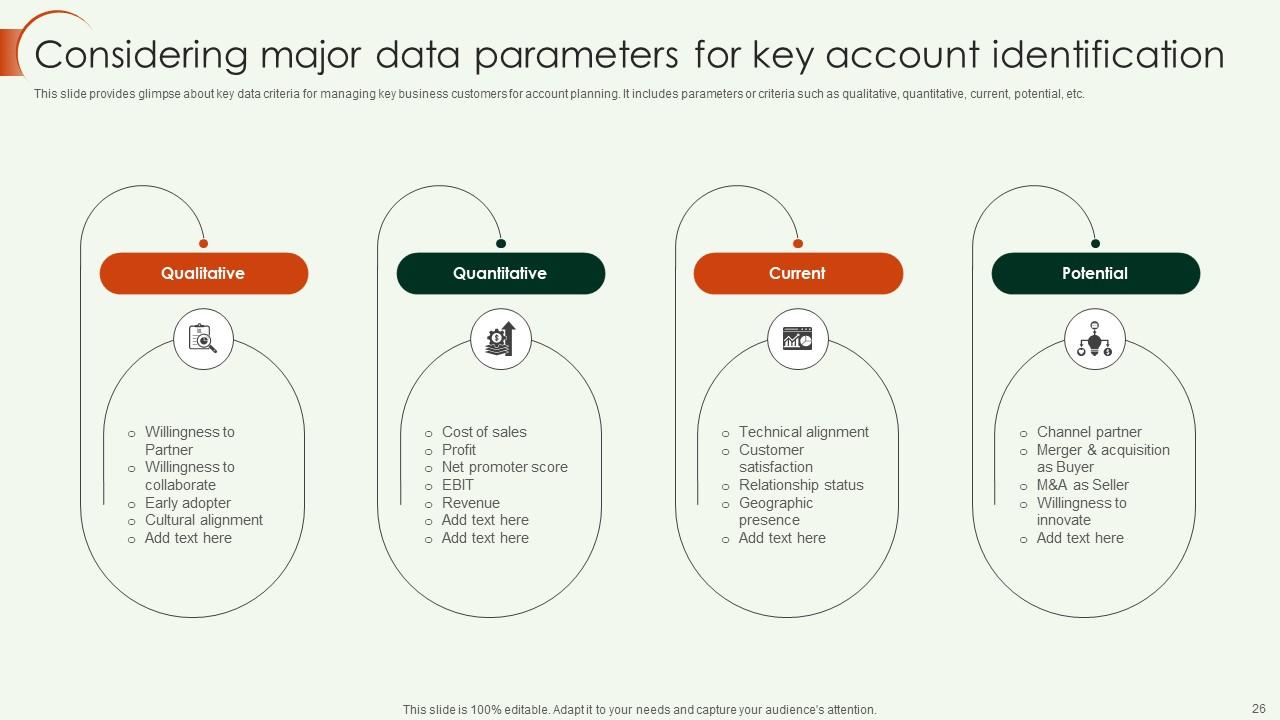
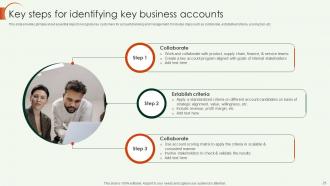
Slide 26: This slide provides glimpse about essential steps to recognize key customers.
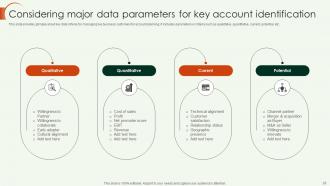
Slide 27: This slide provides glimpse about key data criteria for managing key business customers.
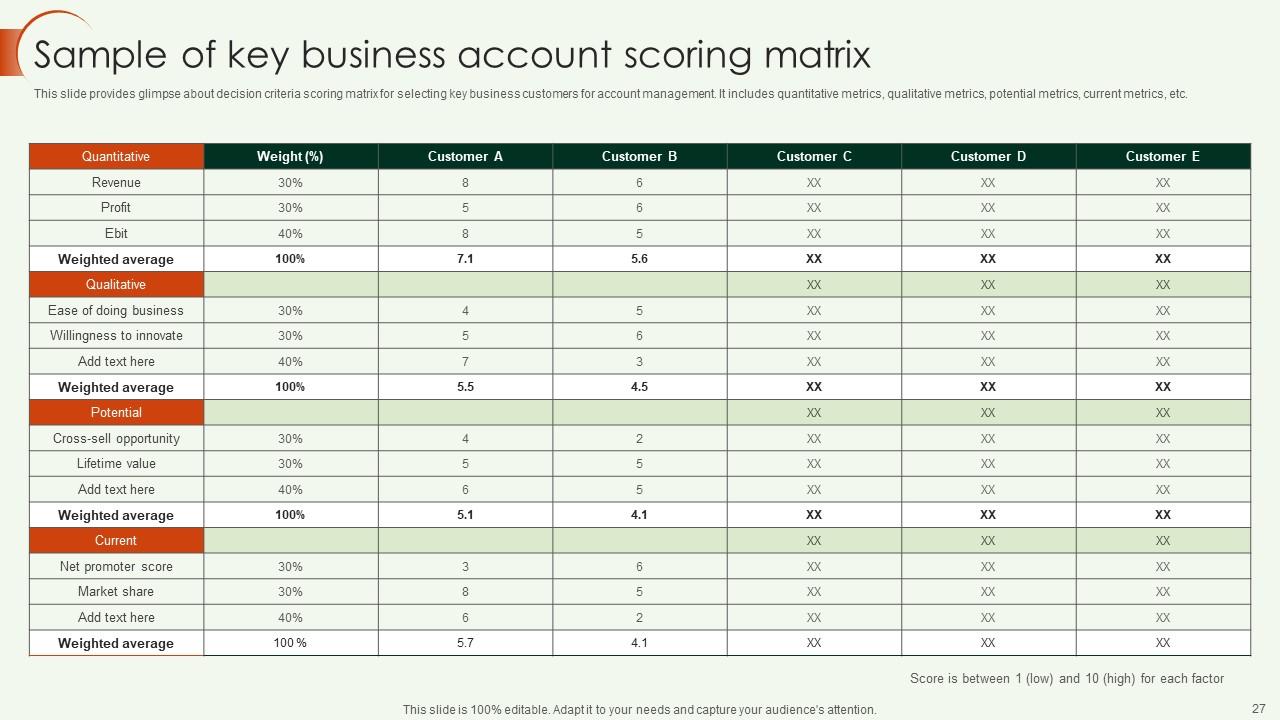
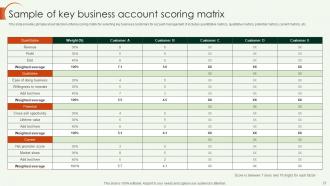
Slide 28: This slide provides glimpse about decision criteria scoring matrix for selecting key business customers.
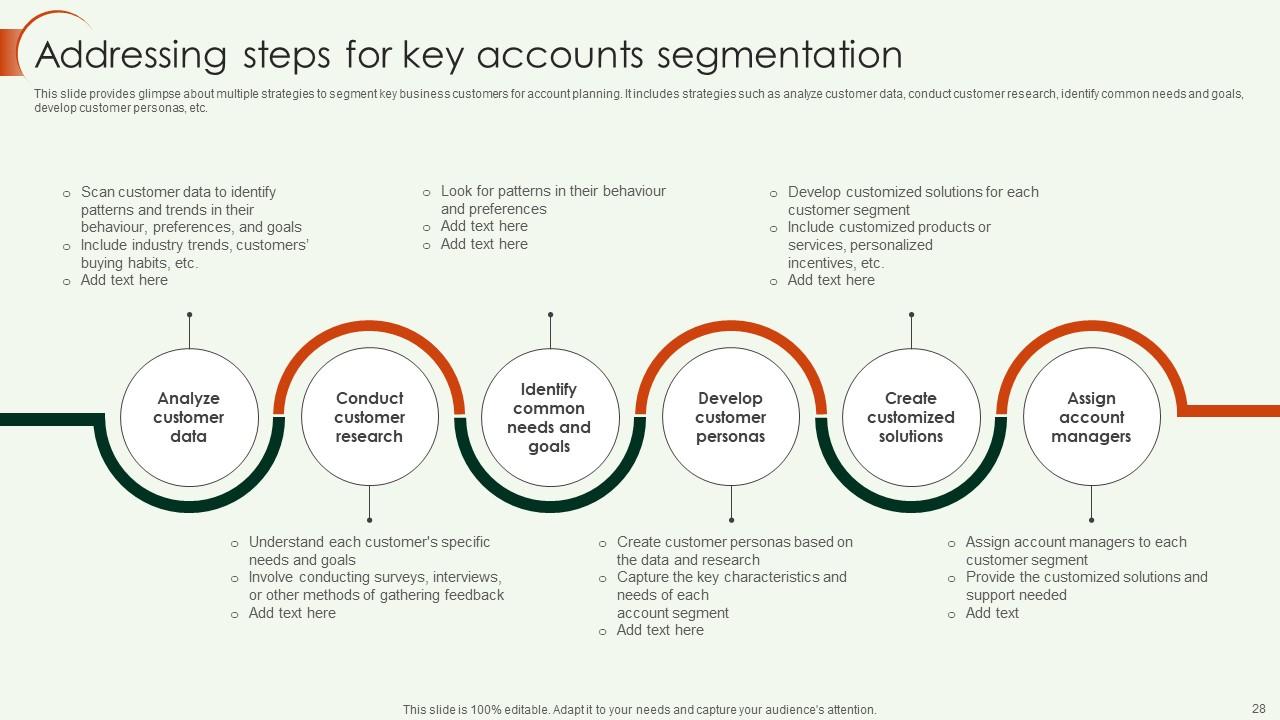
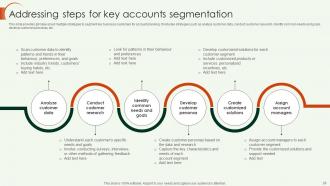
Slide 29: This slide provides glimpse about multiple strategies to segment key business customers.
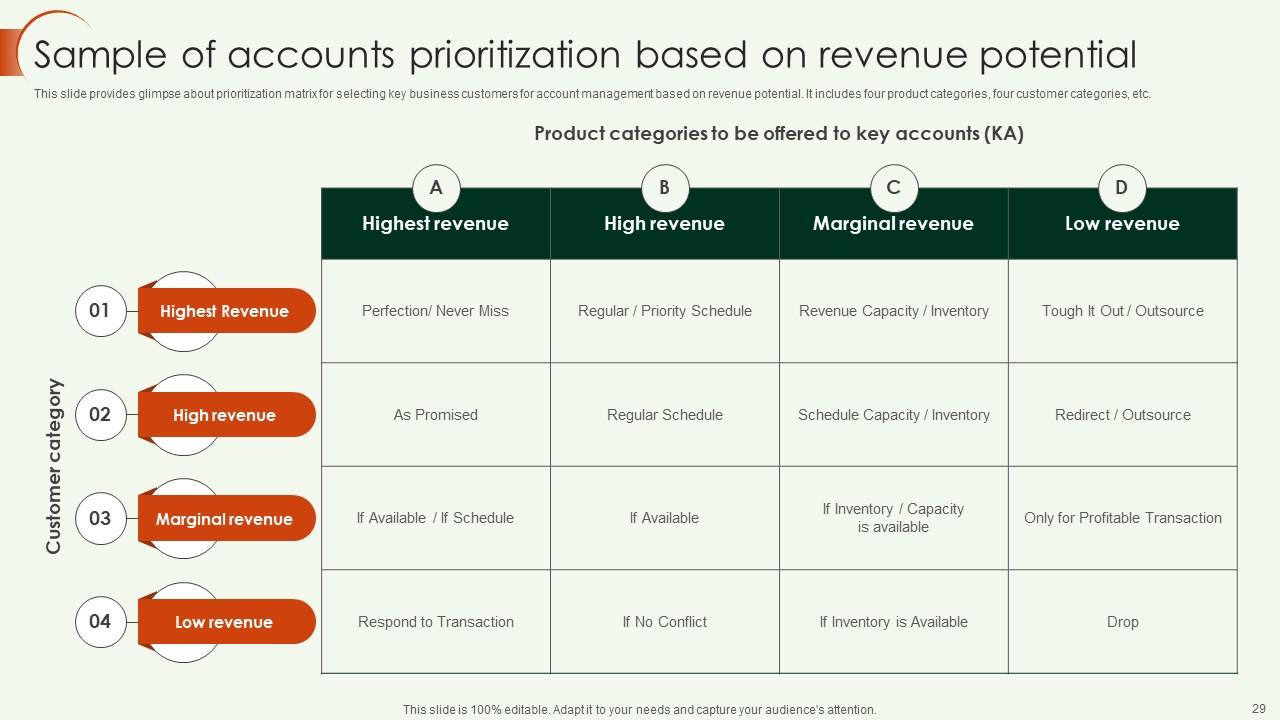
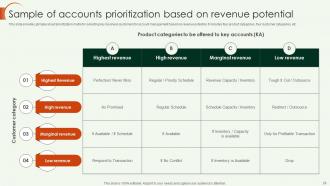
Slide 30: This slide provides glimpse about prioritization matrix for selecting key business customers.
Slide 31: The slide also renders Title of contents.
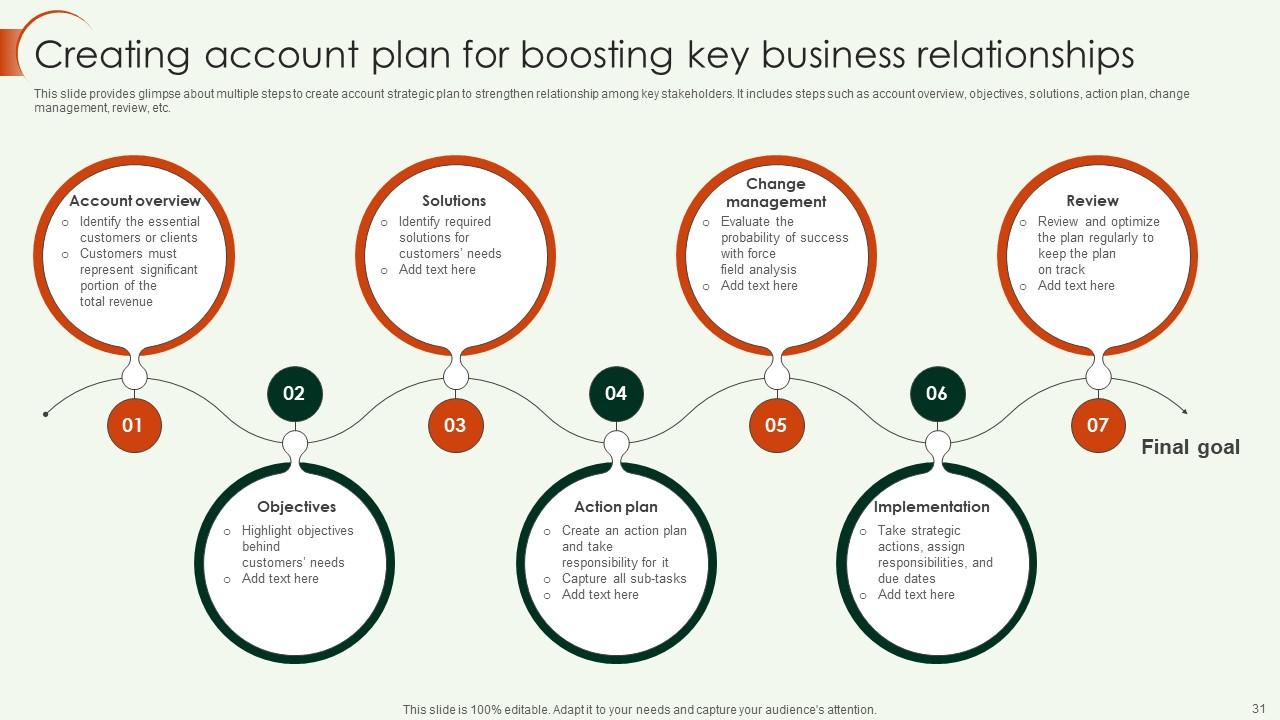
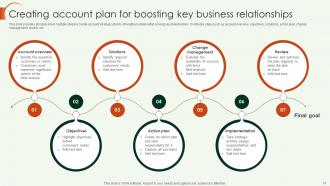
Slide 32: This slide provides glimpse about multiple steps to create account strategic plan to strengthen relationship among key stakeholders.
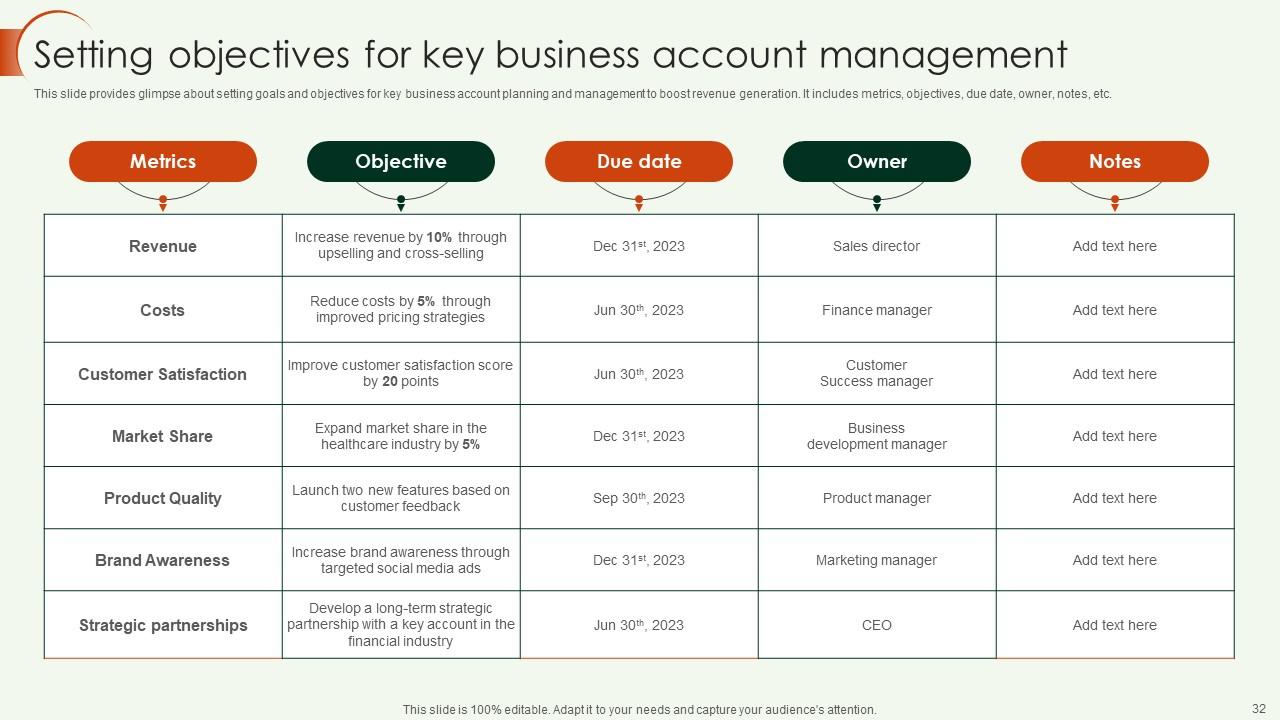
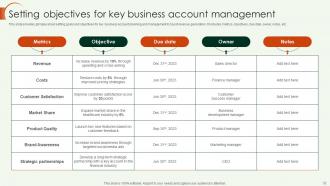
Slide 33: This slide illustrates glimpse about setting goals and objectives for key business account planning and management.
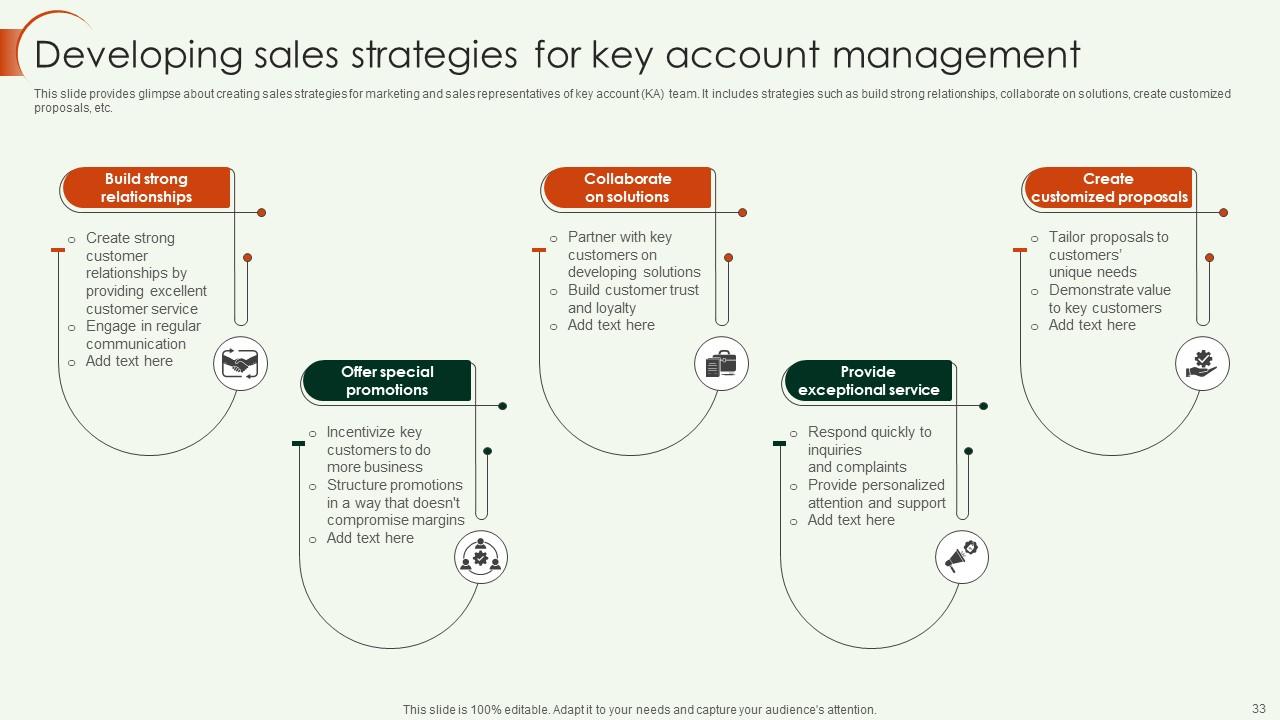
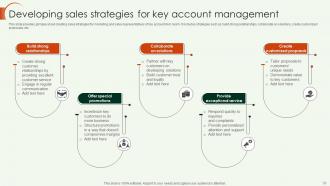
Slide 34: This This slide highlights glimpse about creating sales strategies.
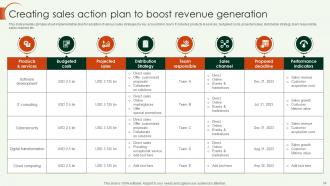
Slide 35: This slide provides glimpse about implementation plan for adoption of various sales strategies by key account team.
Slide 36: The slide depicts another title of contents.
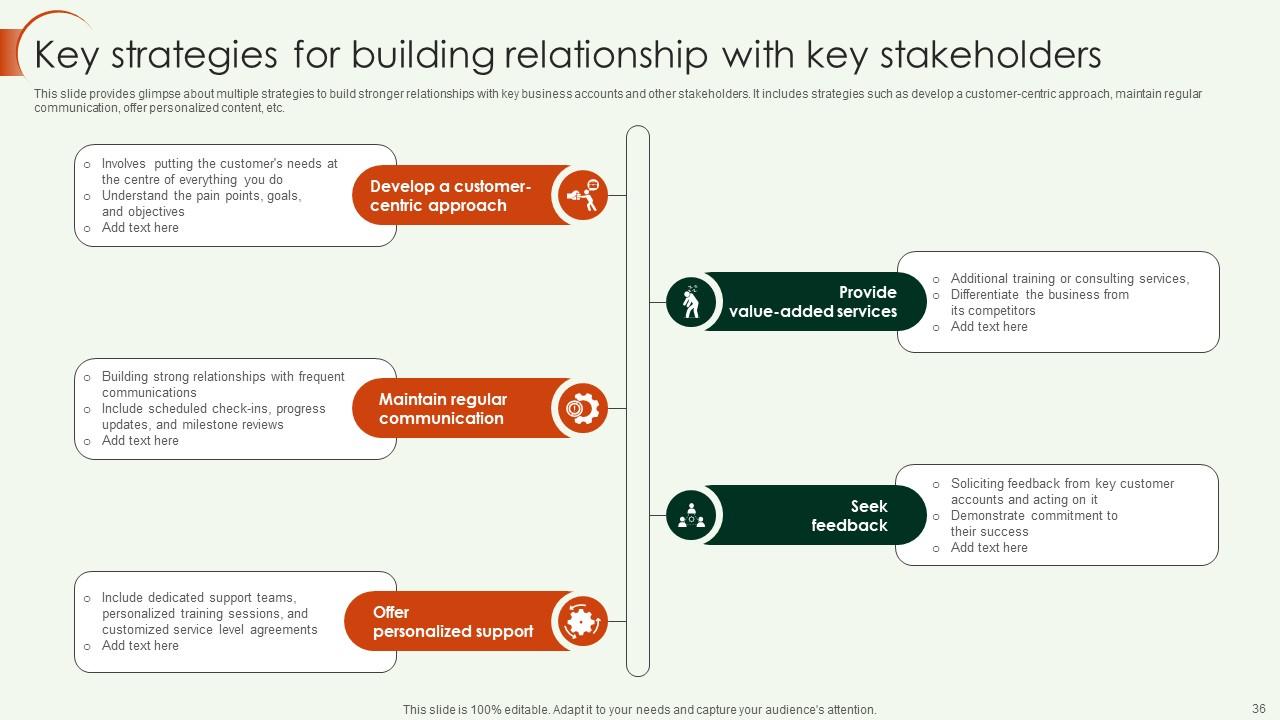
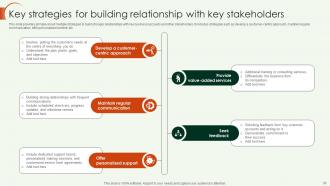
Slide 37: This slide represents glimpse about multiple strategies to build stronger relationships with key business accounts and other stakeholders.
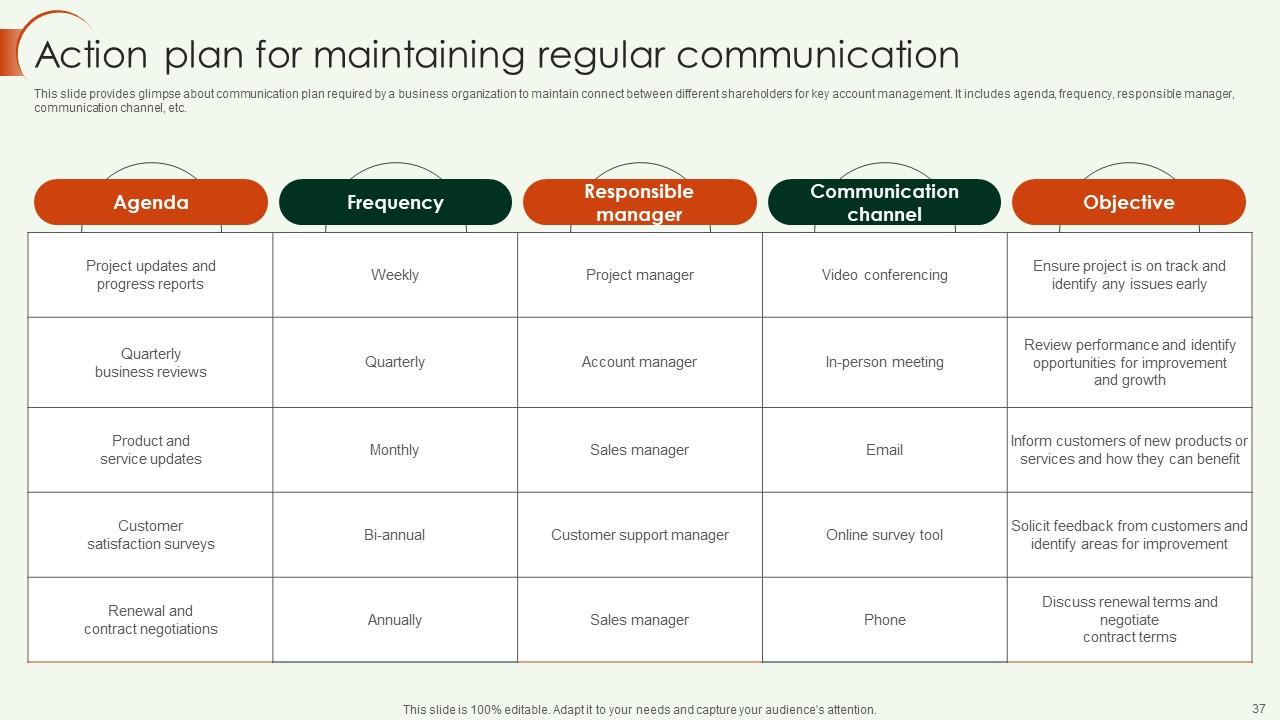
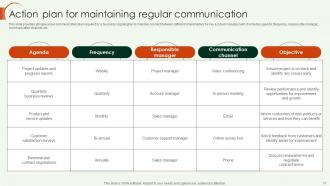
Slide 38: This slide presents glimpse about communication plan required by a business organization.
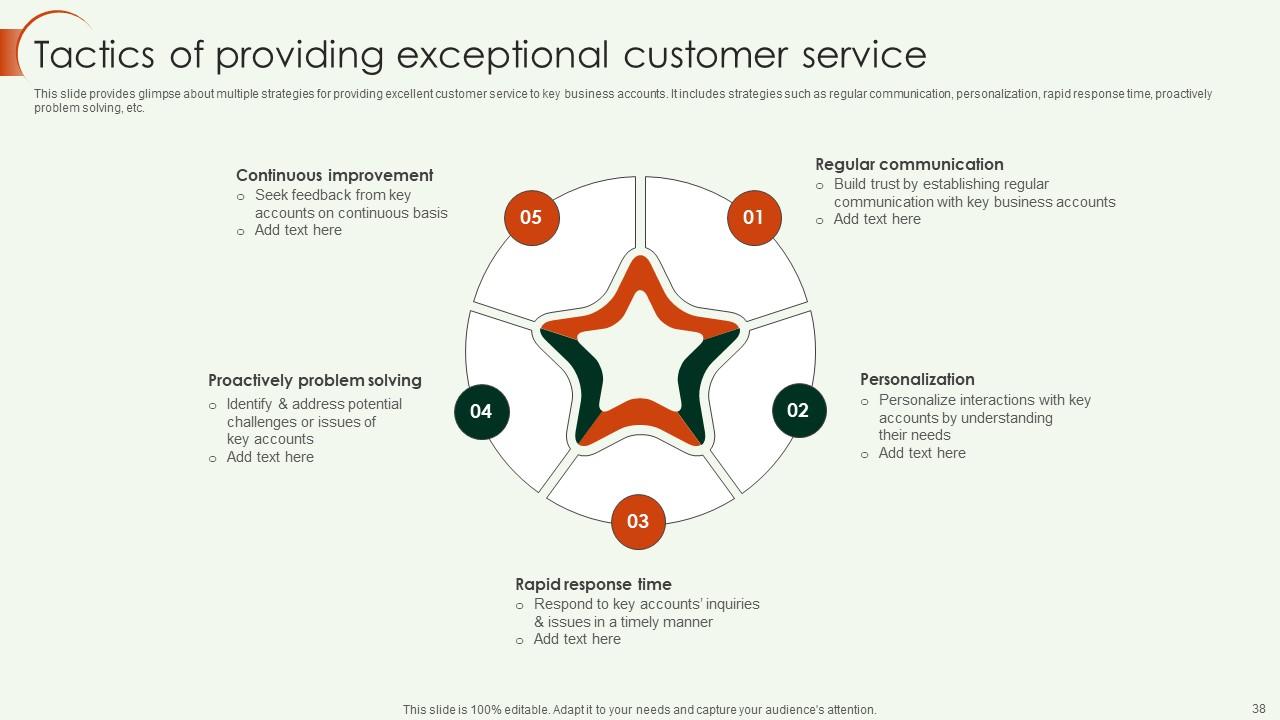
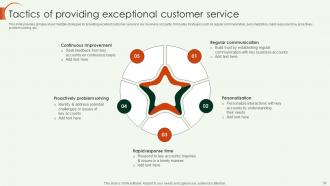
Slide 39: This slide renders glimpse about multiple strategies for providing excellent customer service to key business accounts.
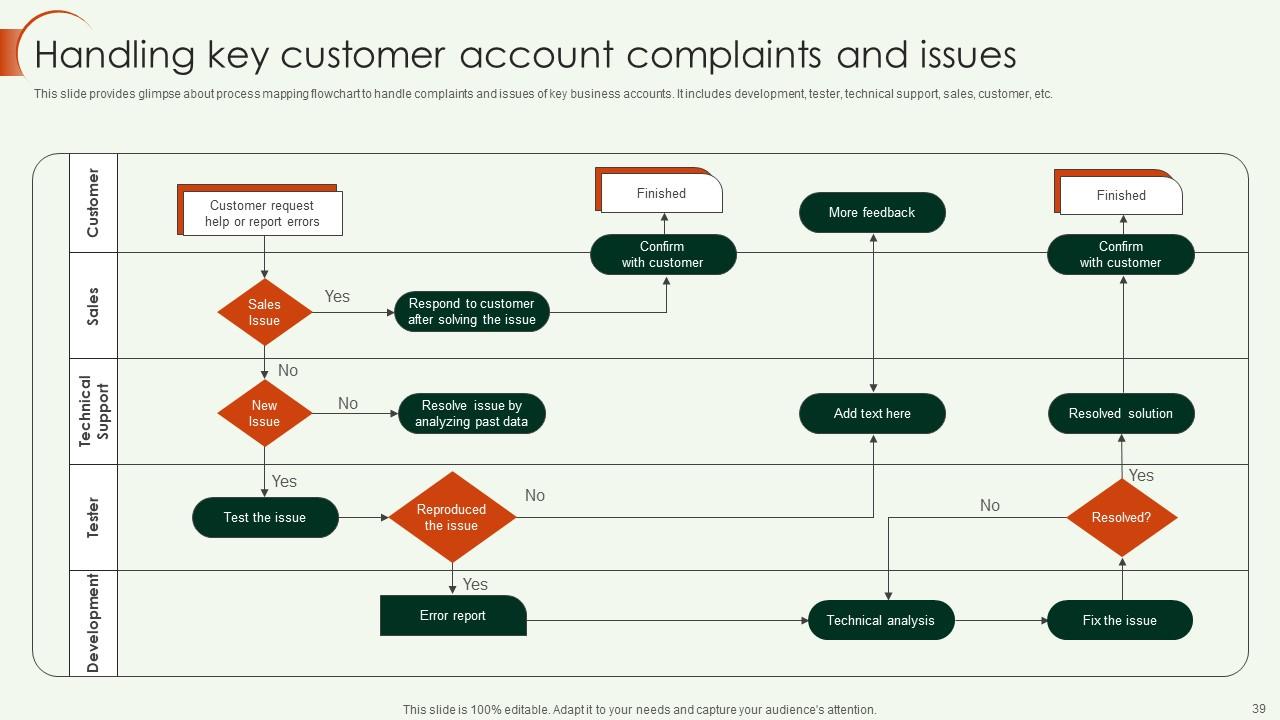
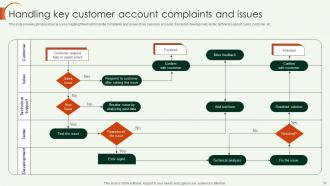
Slide 40: This slide shows glimpse about process mapping flowchart to handle complaints and issues of key business accounts.
Slide 41: The slide contains title of contents which is to be discussed further.
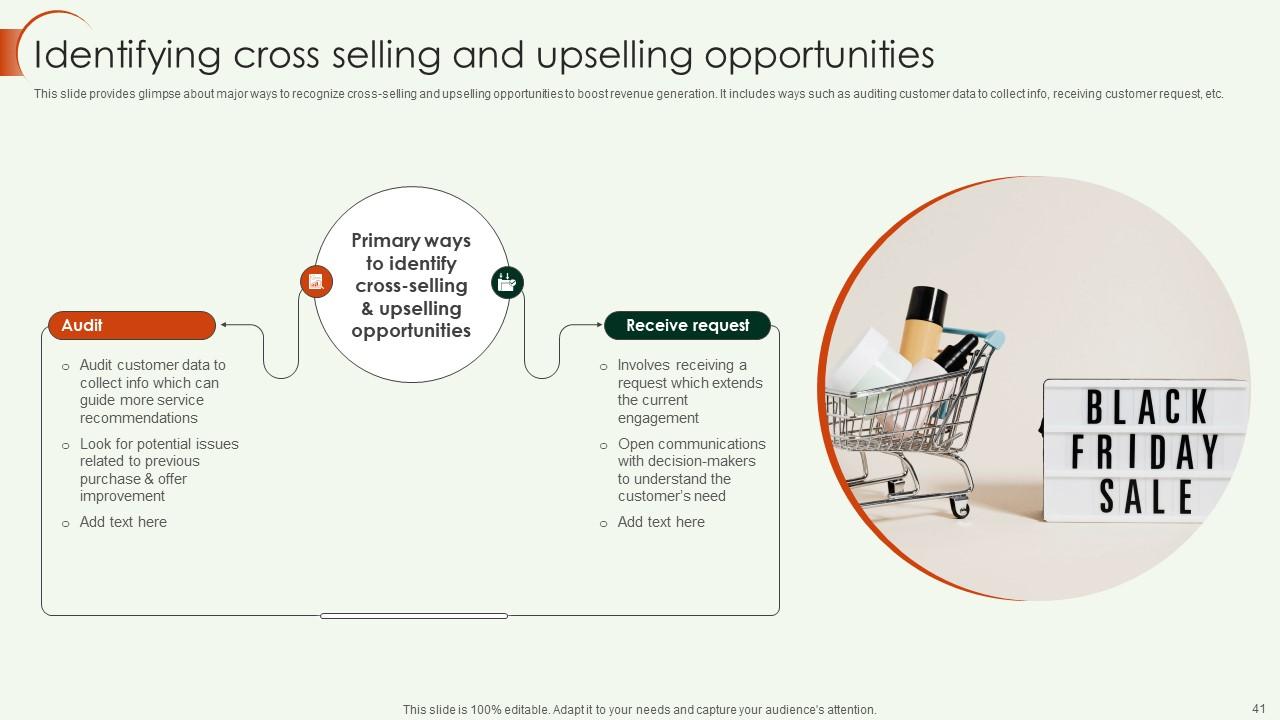
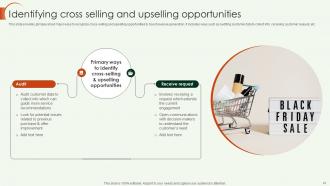
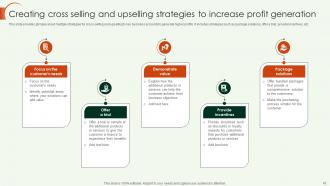
Slide 42: This slide provides glimpse about major ways to recognize cross-selling and upselling opportunities to boost revenue generation.
Slide 43: This slide shows glimpse about setting goals and objectives for key business account planning and management.
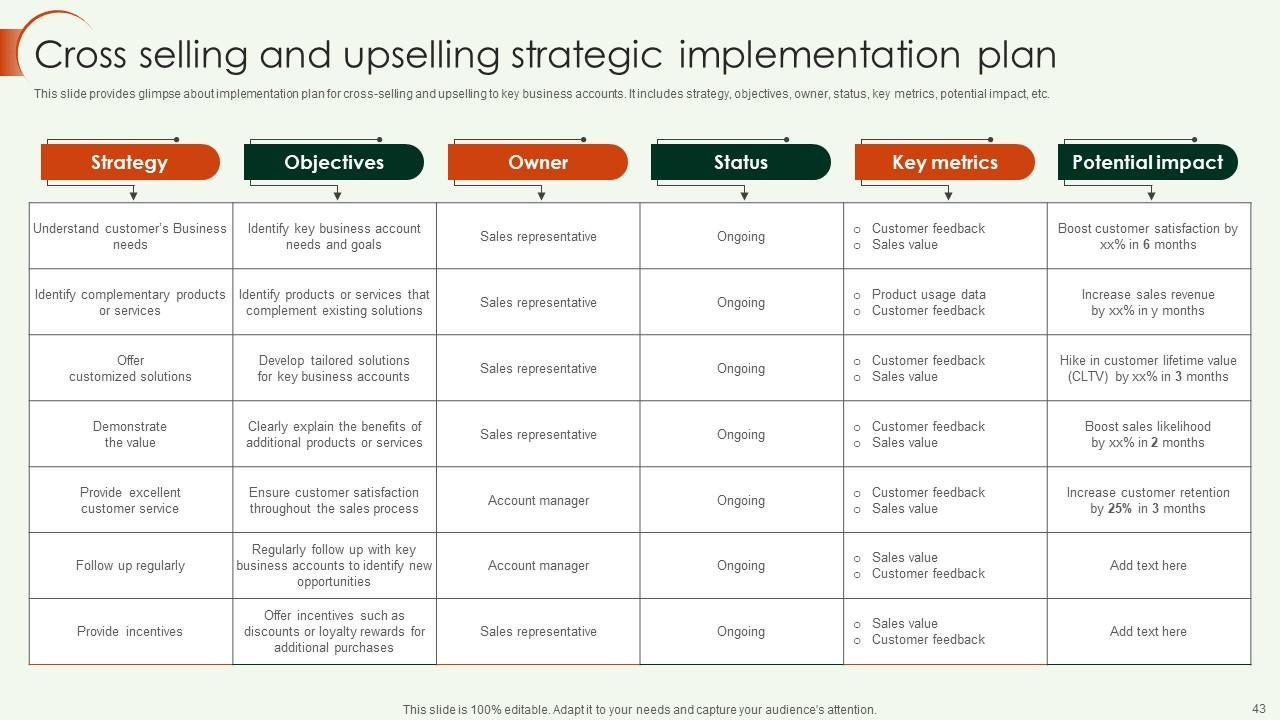
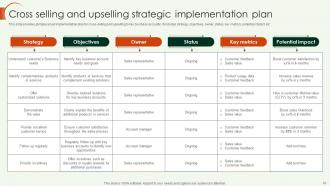
Slide 44: This slide showcases glimpse about implementation plan for cross-selling and upselling to key business accounts.
Slide 45: The slide displays another title of contents.
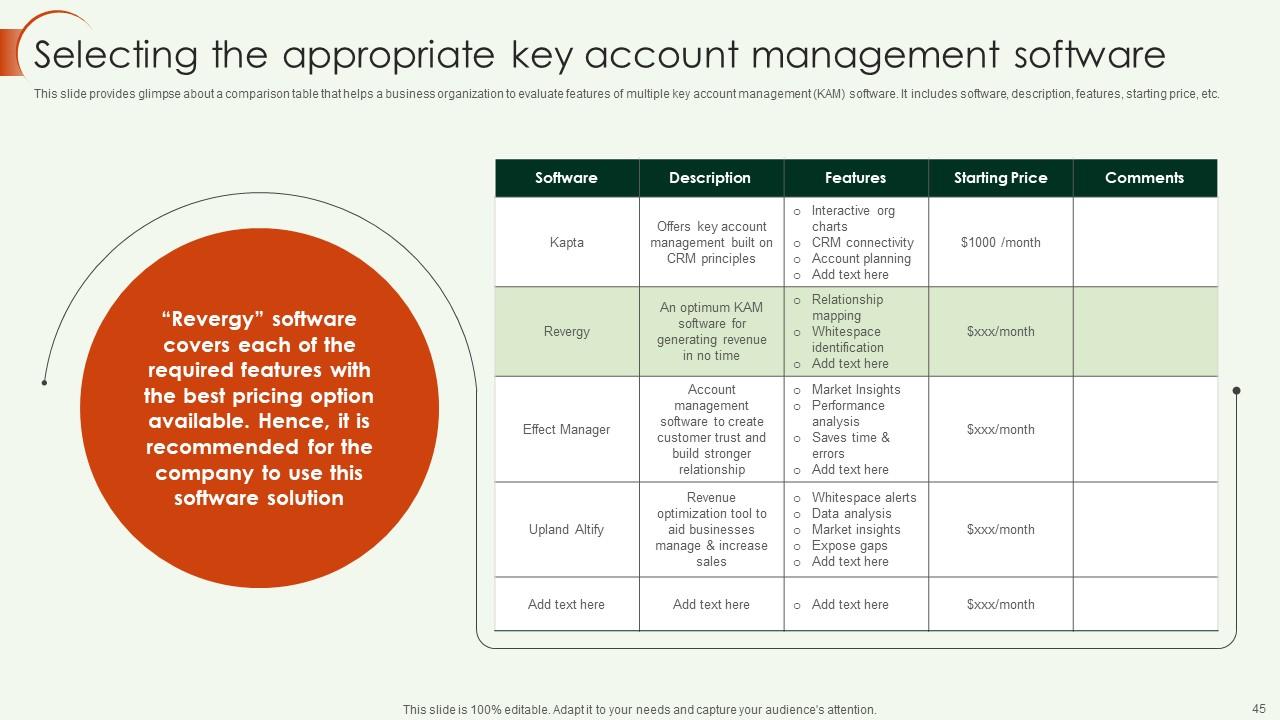
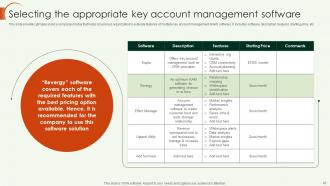
Slide 46: This slide exhibits glimpse about a comparison table that helps a business organization.
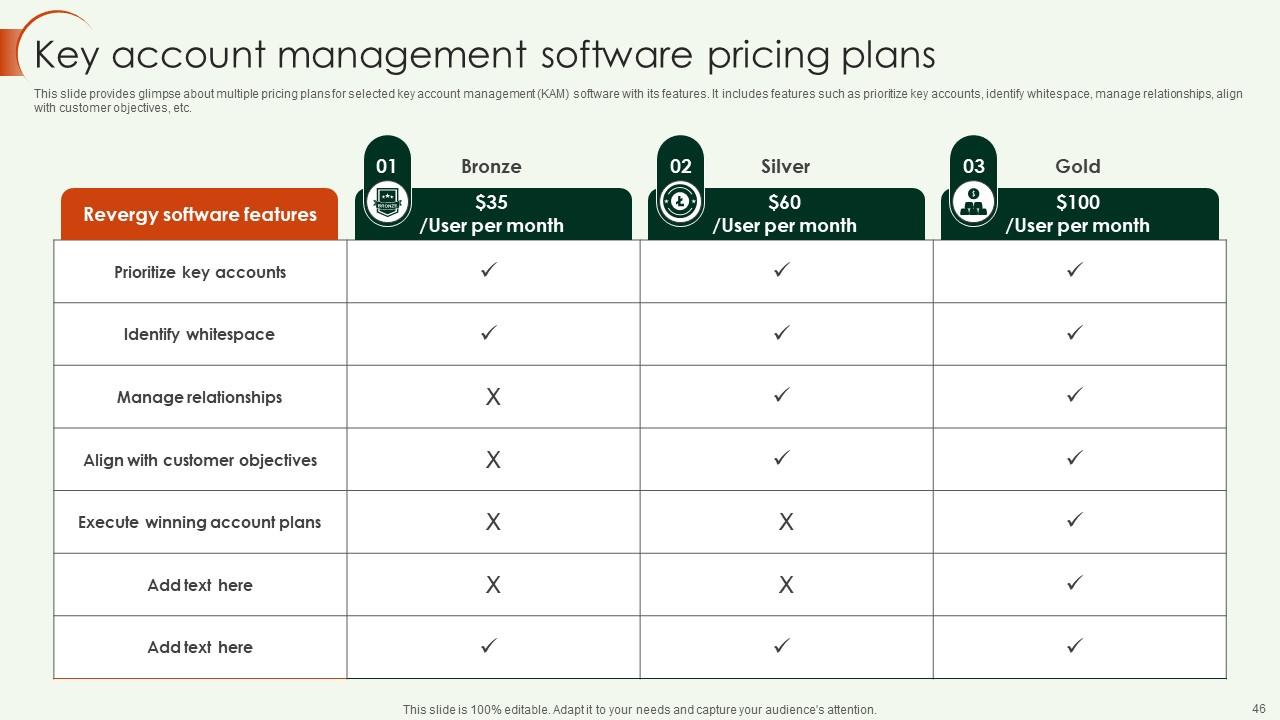
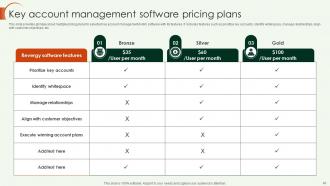
Slide 47: This slide provides glimpse about multiple pricing plans for selected key account management software with its features.
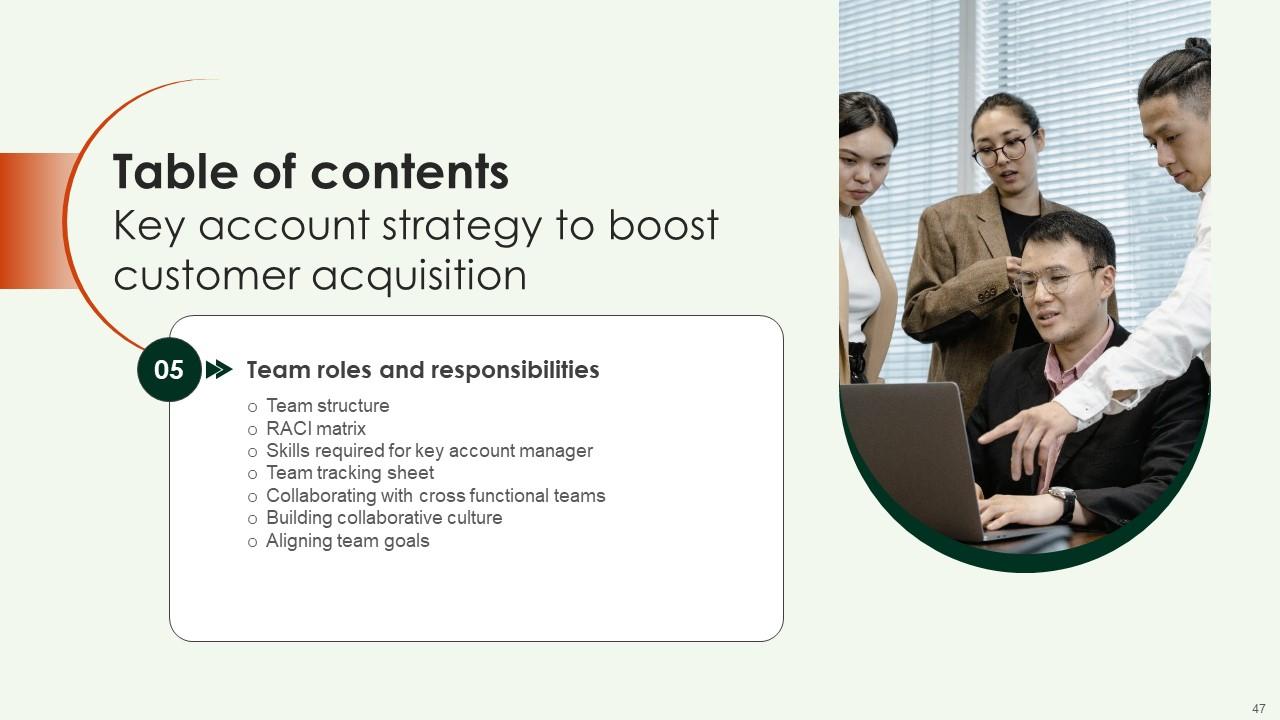
Slide 48: The slide highlights title of contents further.
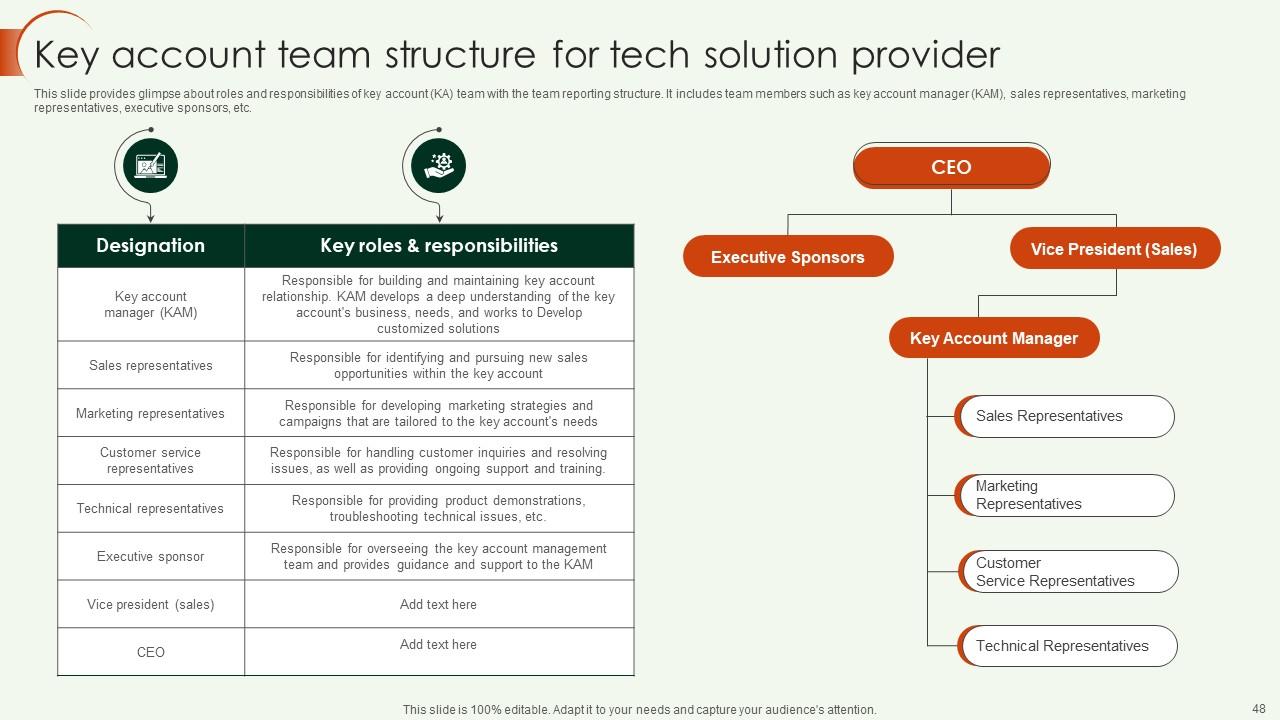
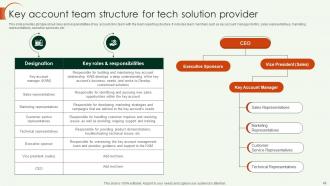
Slide 49: This slide provides glimpse about roles and responsibilities of key account team with the team reporting structure.
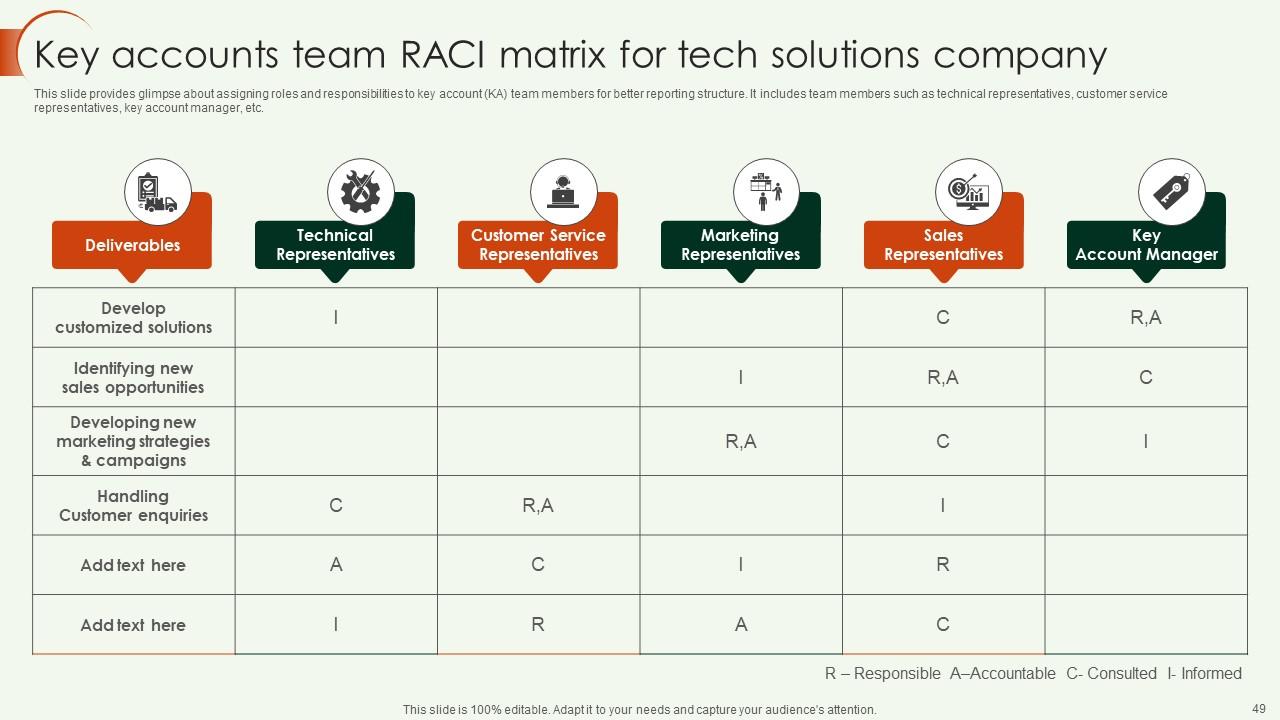
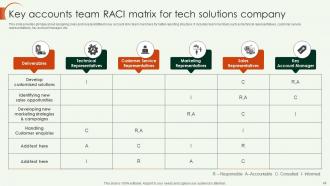
Slide 50: This slide gives glimpse about assigning roles and responsibilities to key account team members.
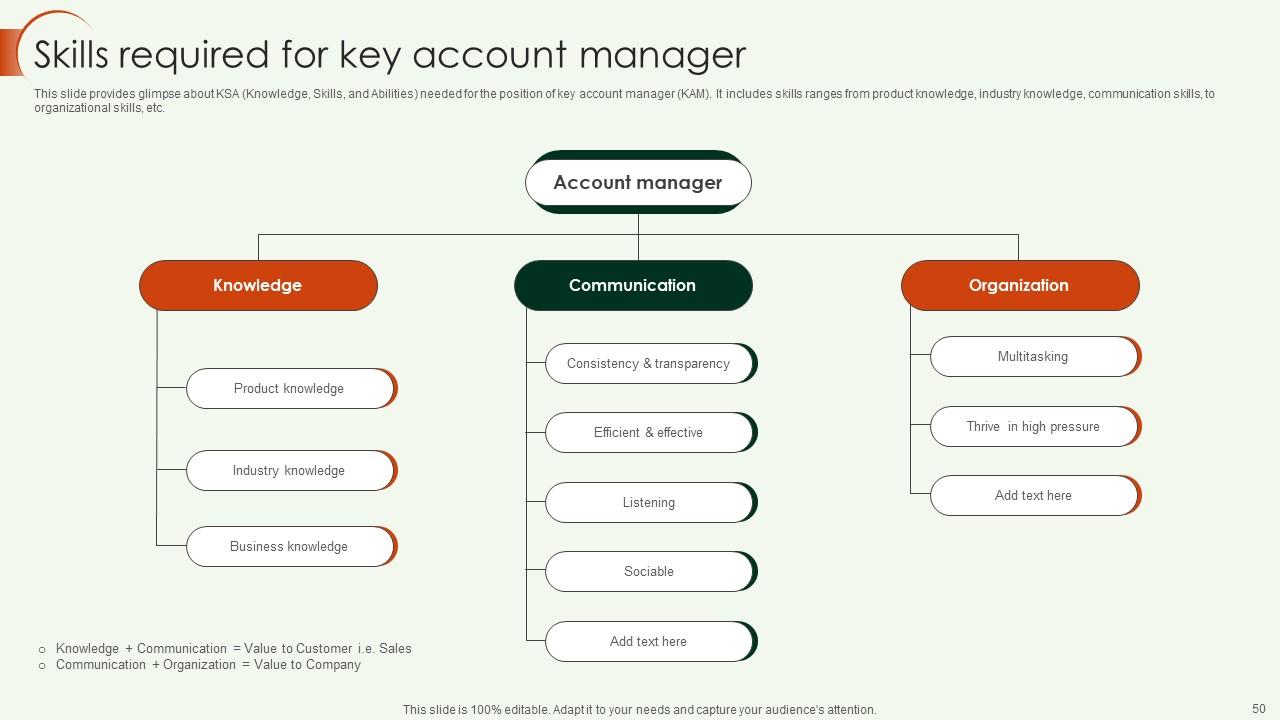
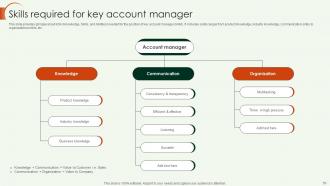
Slide 51: This slide shows glimpse about KSA needed for the position of key account manager.
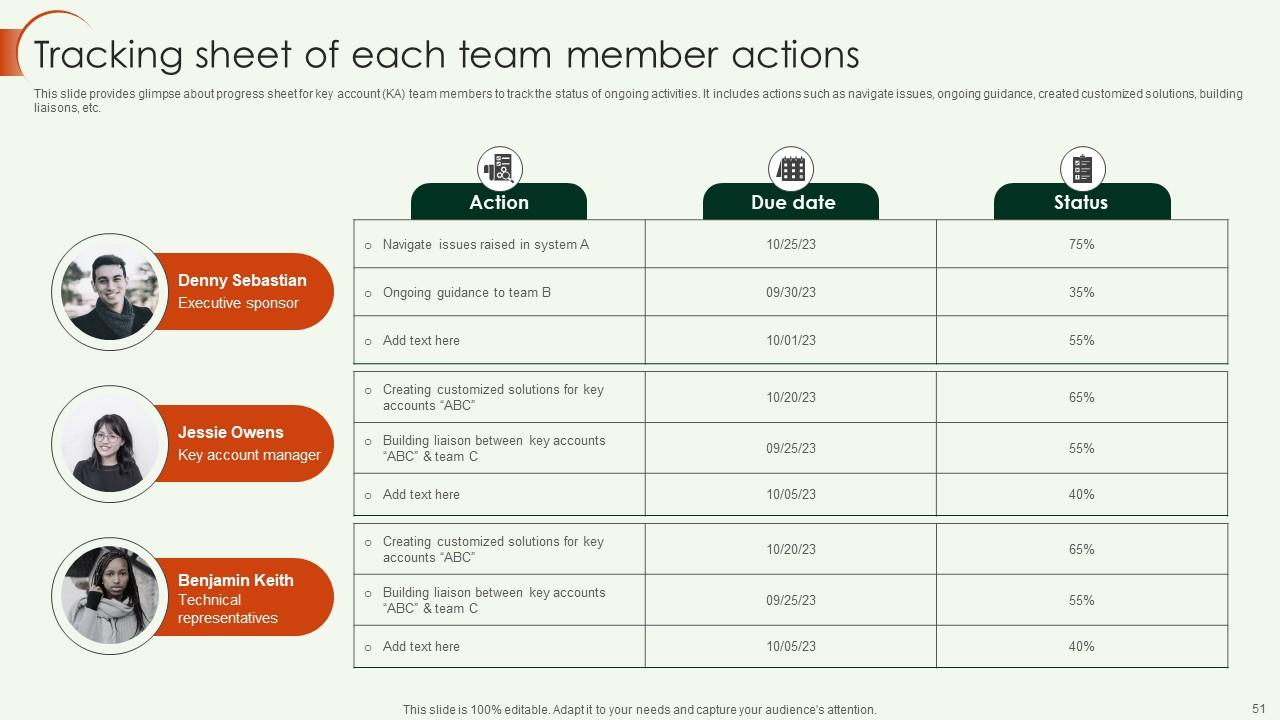
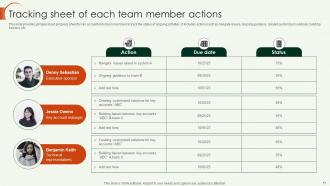
Slide 52: This slide presents glimpse about progress sheet for key account team members to track the status of ongoing activities.
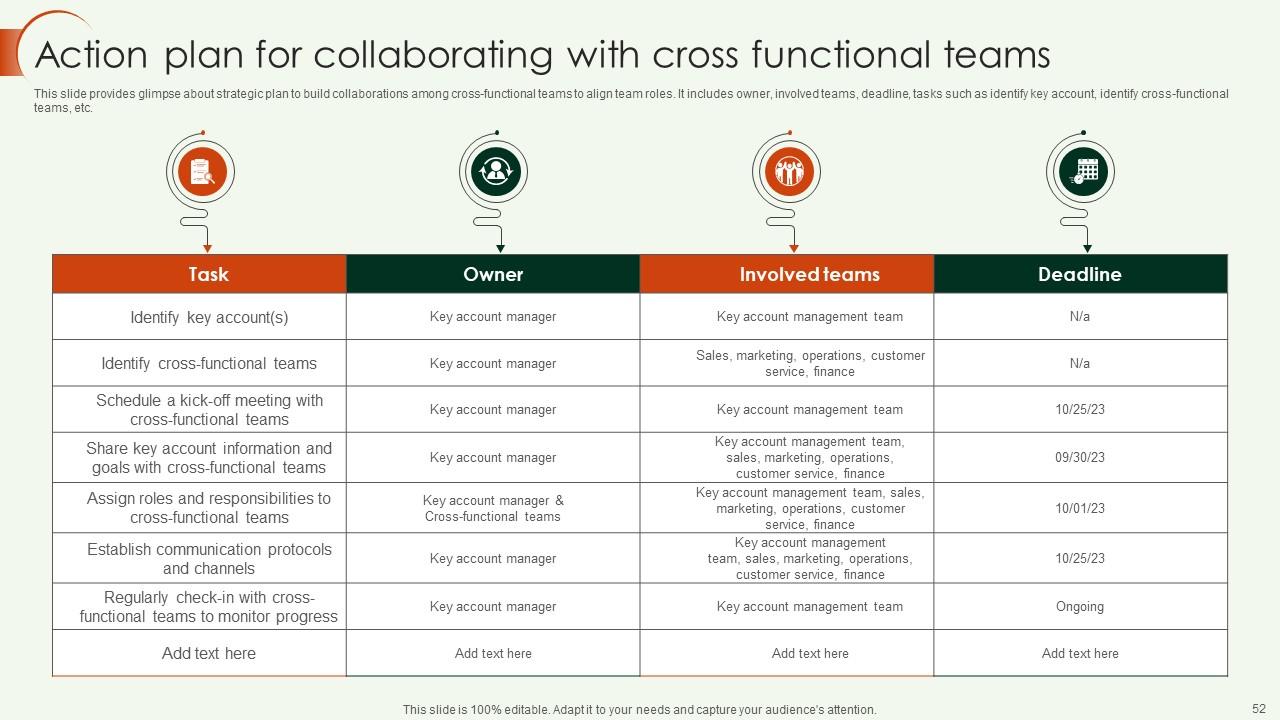
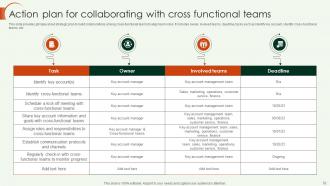
Slide 53: This slide exhibits glimpse about strategic plan to build collaborations among cross-functional teams to align team roles.
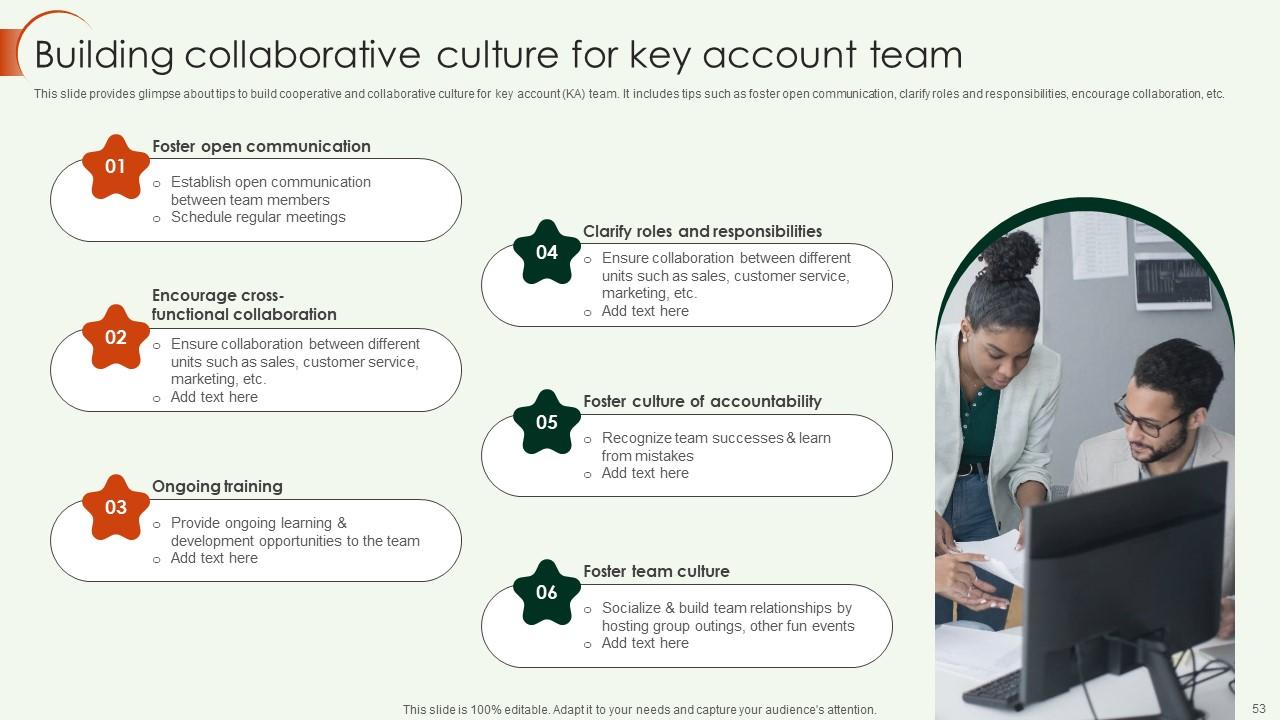
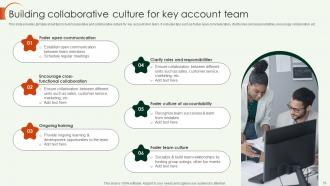
Slide 54: This slide represents glimpse about tips to build cooperative and collaborative culture for key account team.
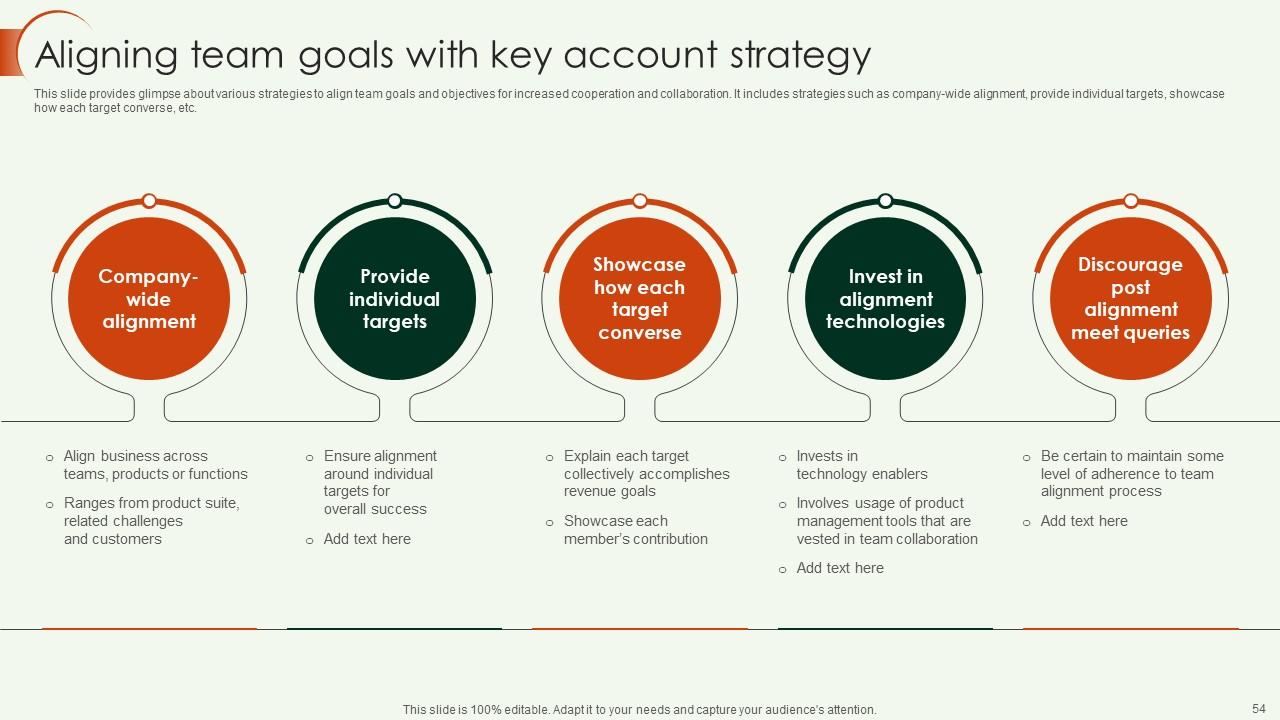
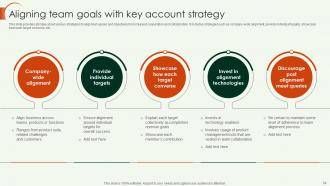
Slide 55: This slide showcases glimpse about various strategies to align team goals and objectives.
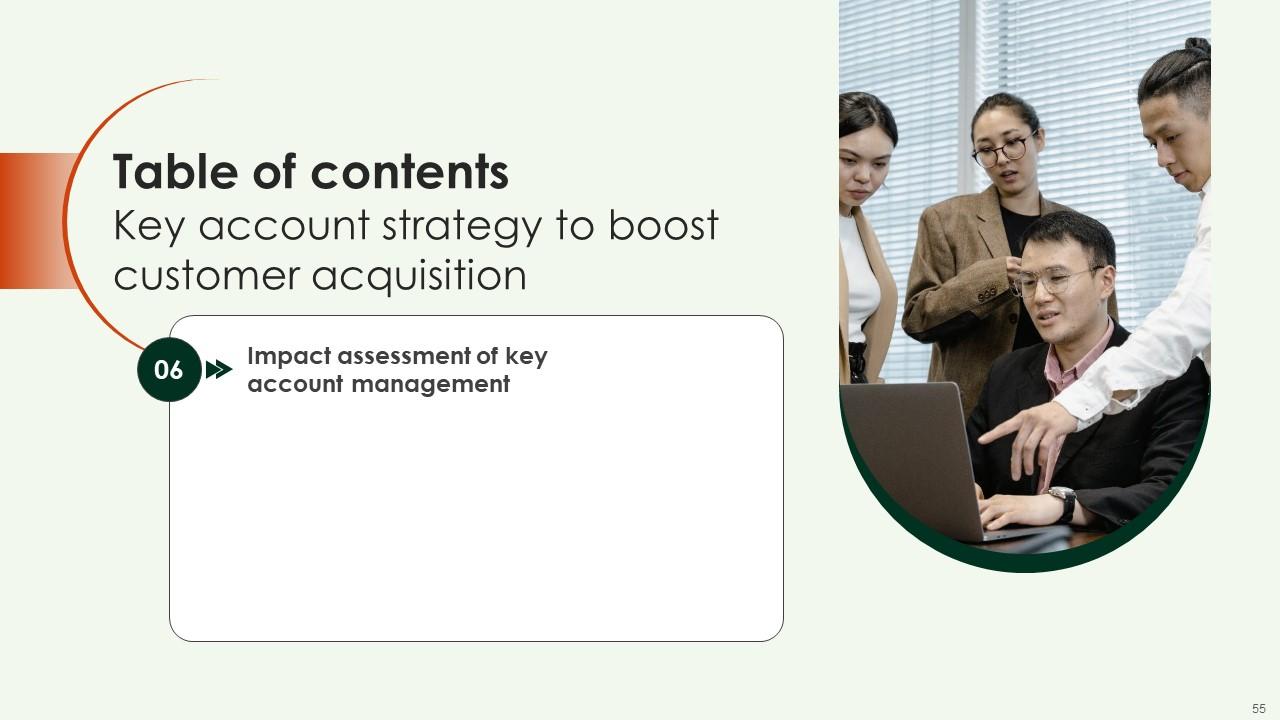
Slide 56: The slide again exhibits title of contents.
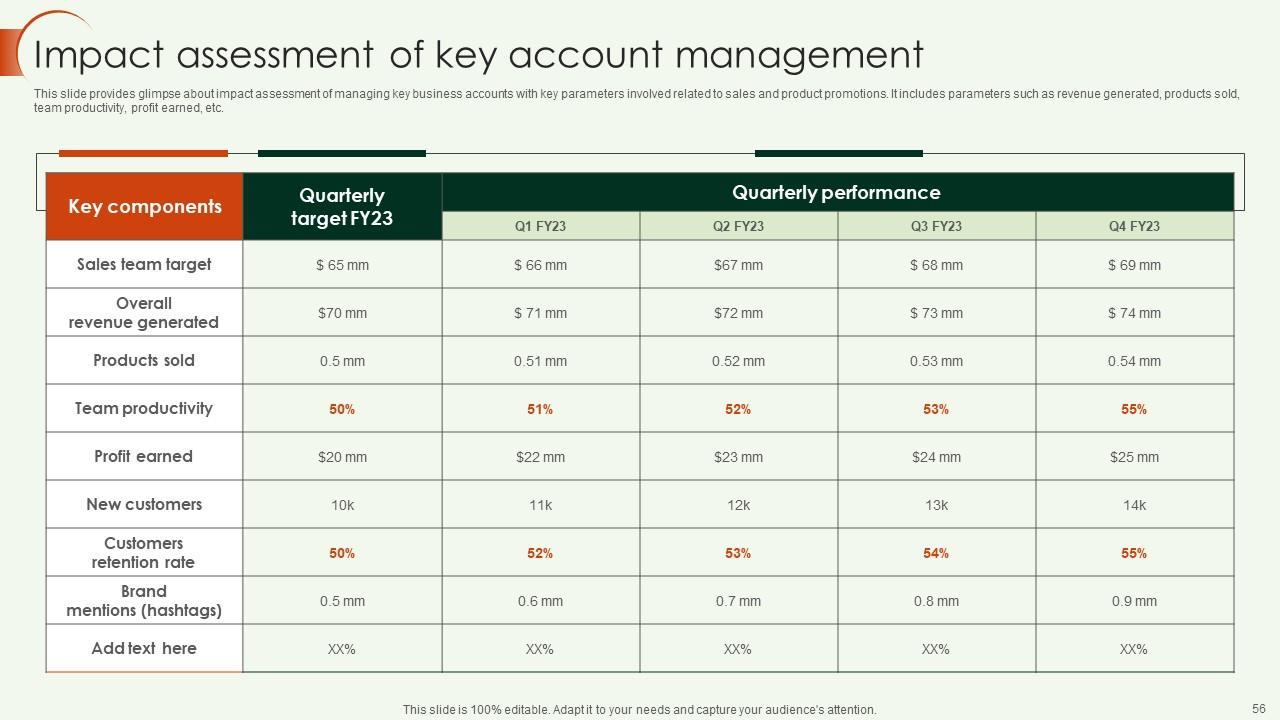
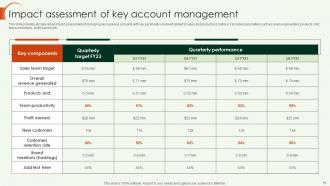
Slide 57: This slide provides glimpse about impact assessment of managing key business accounts with key parameters.
Slide 58: This slide shows all the icons included in the presentation.
Slide 59: This slide is titled as Additional Slides for moving forward.
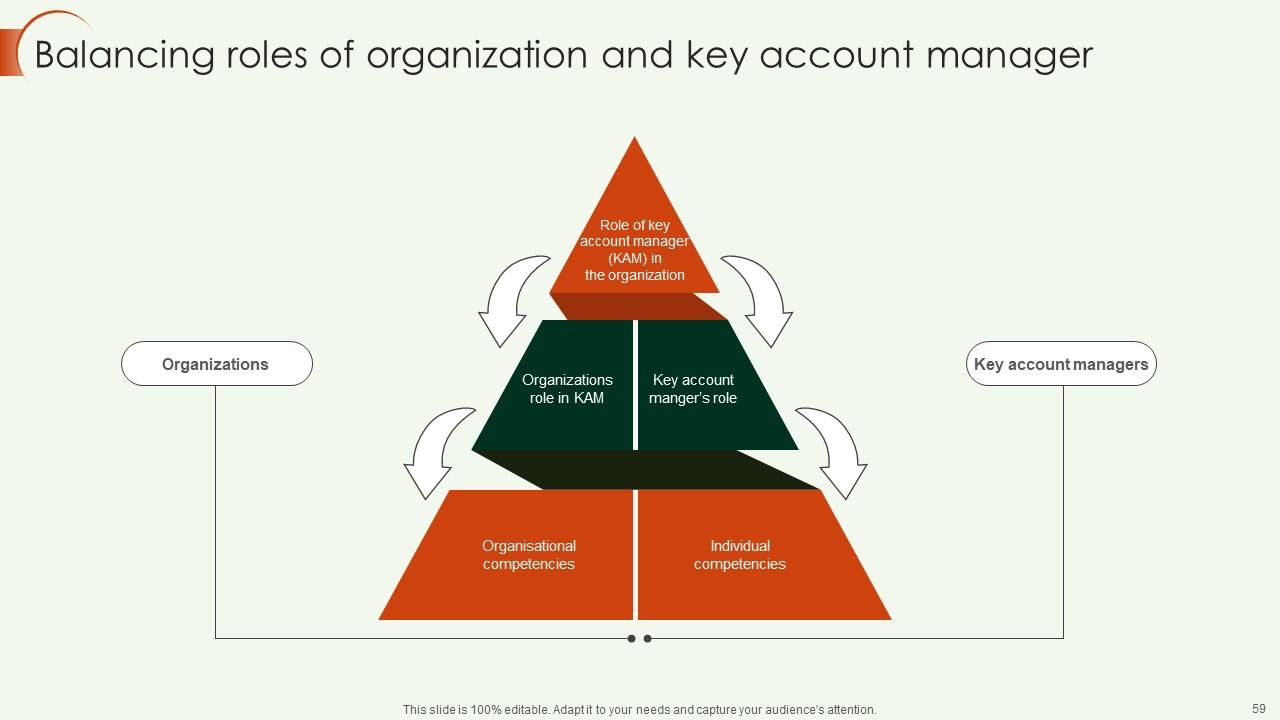
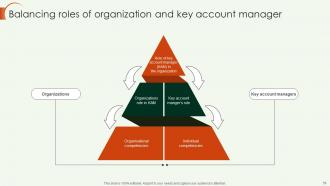
Slide 60: The slide renders Balancing roles of organization and key account manager.
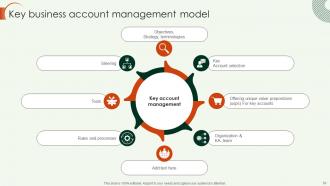
Slide 61: The slide displays Key business account management model.
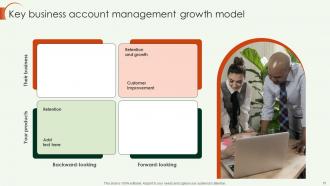
Slide 62: The slide depicts Key business account management growth model.
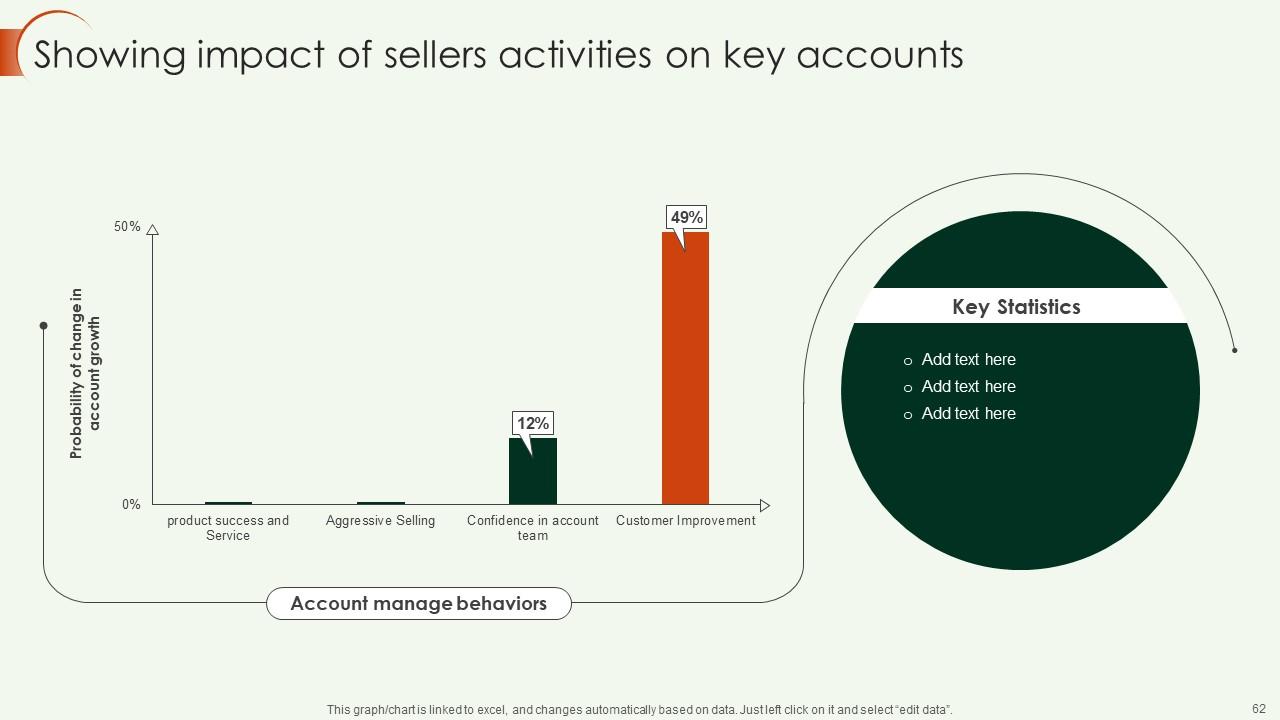
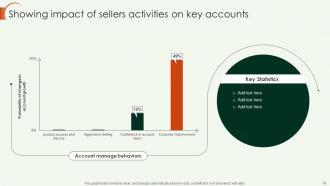
Slide 63: The slide contains Probability of change in account growth.
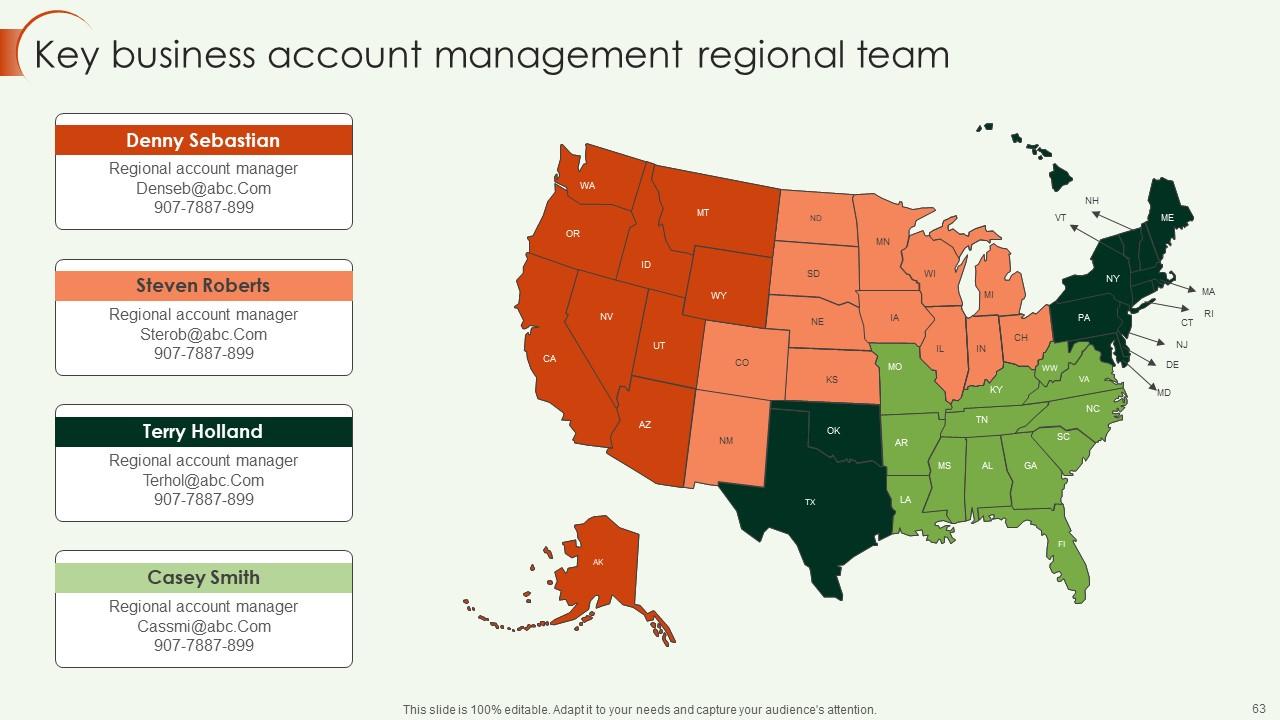
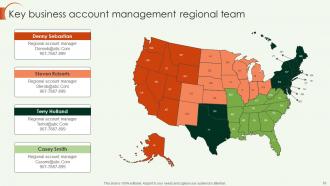
Slide 64: The slide illustrates Key business account management regional team.
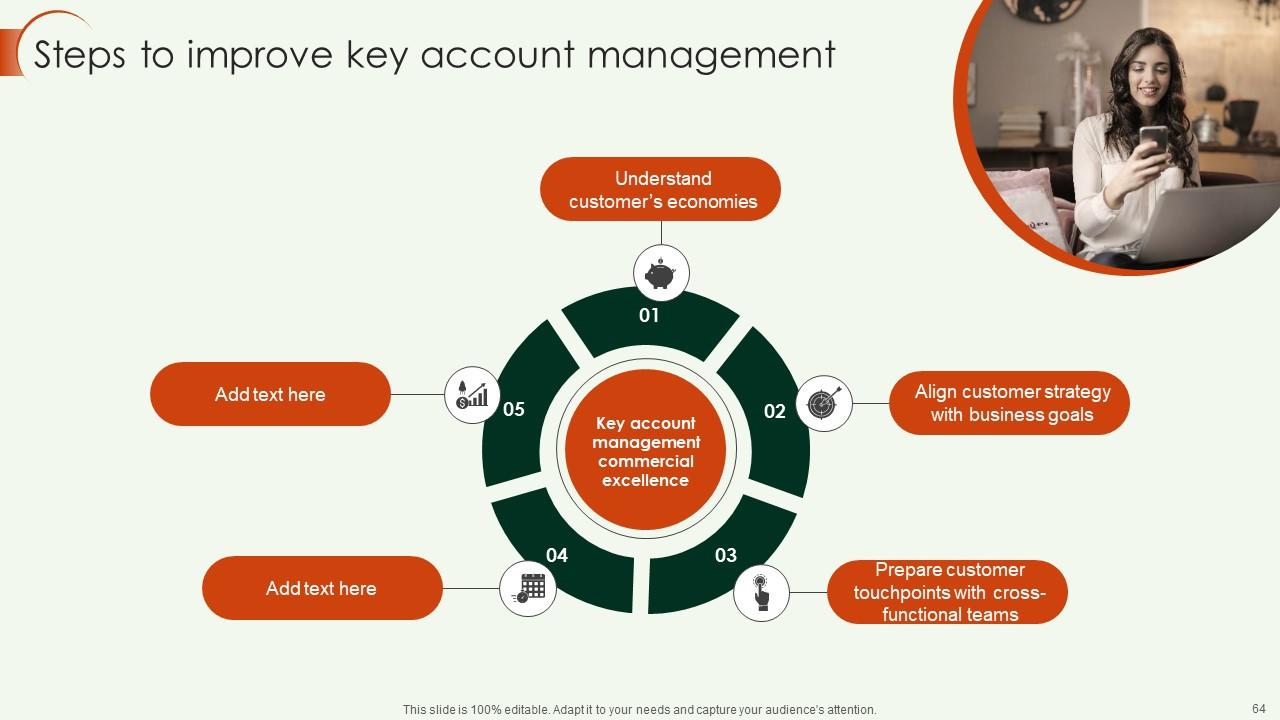
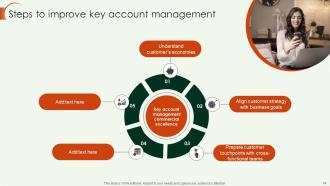
Slide 65: The slide represents Steps to improve key account management.
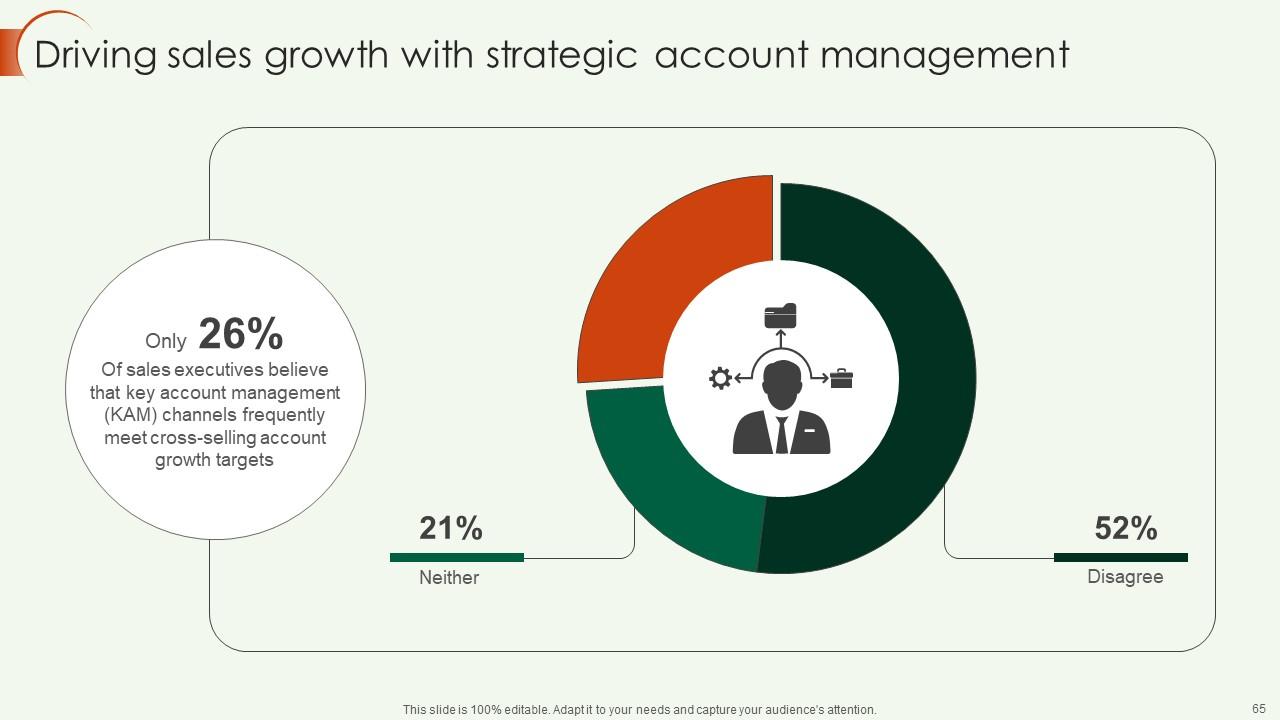
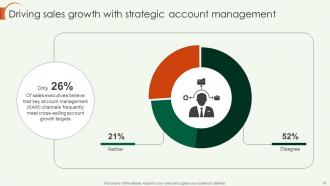
Slide 66: The slide shows Driving sales growth with strategic account management.
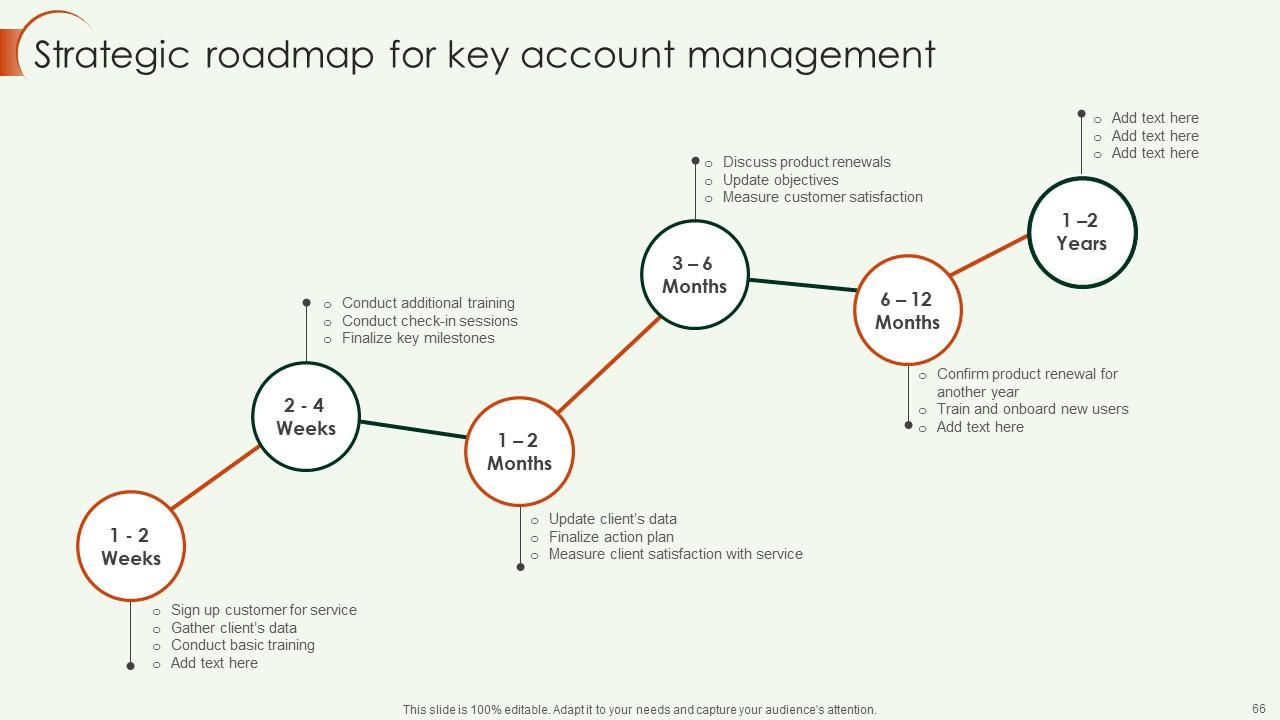
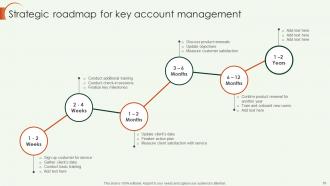
Slide 67: Thee slide demonstrates Strategic roadmap for key account management.
Slide 68: This slide provides 30 60 90 Days Plan with text boxes.
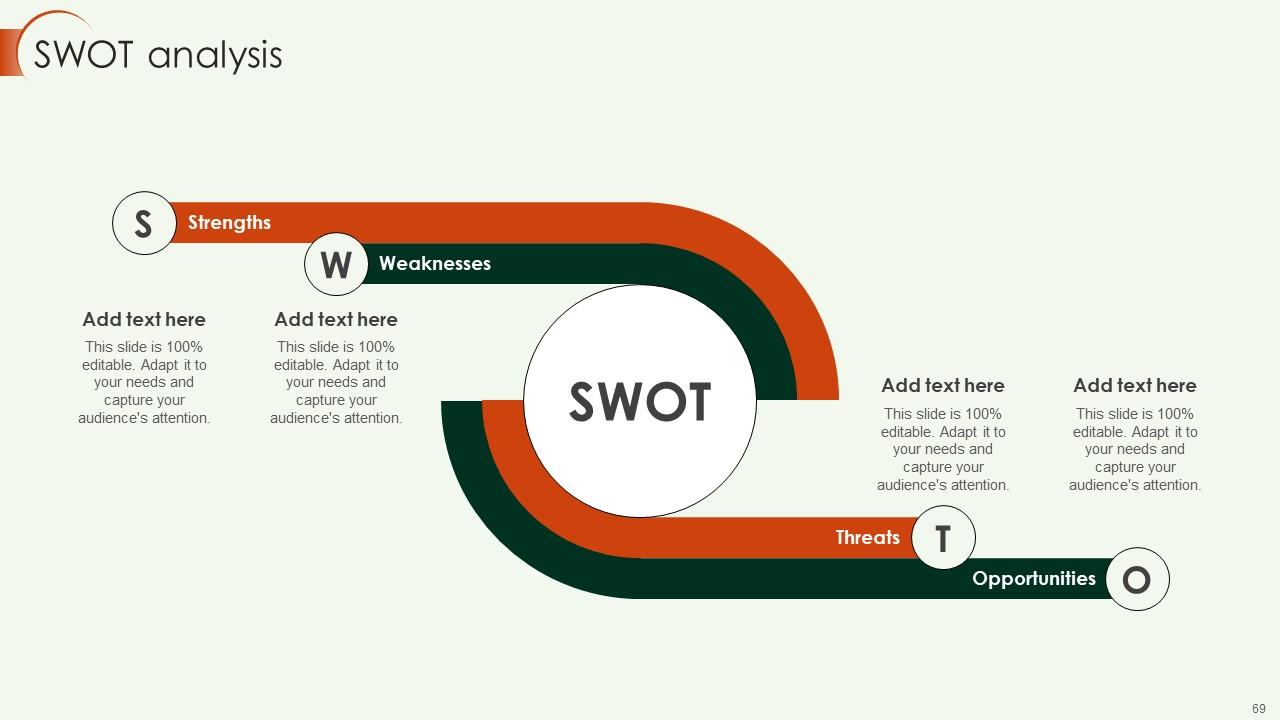
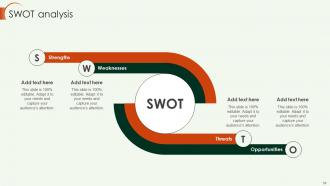
Slide 69: This slide shows SWOT describing- Strength, Weakness, Opportunity, and Threat.
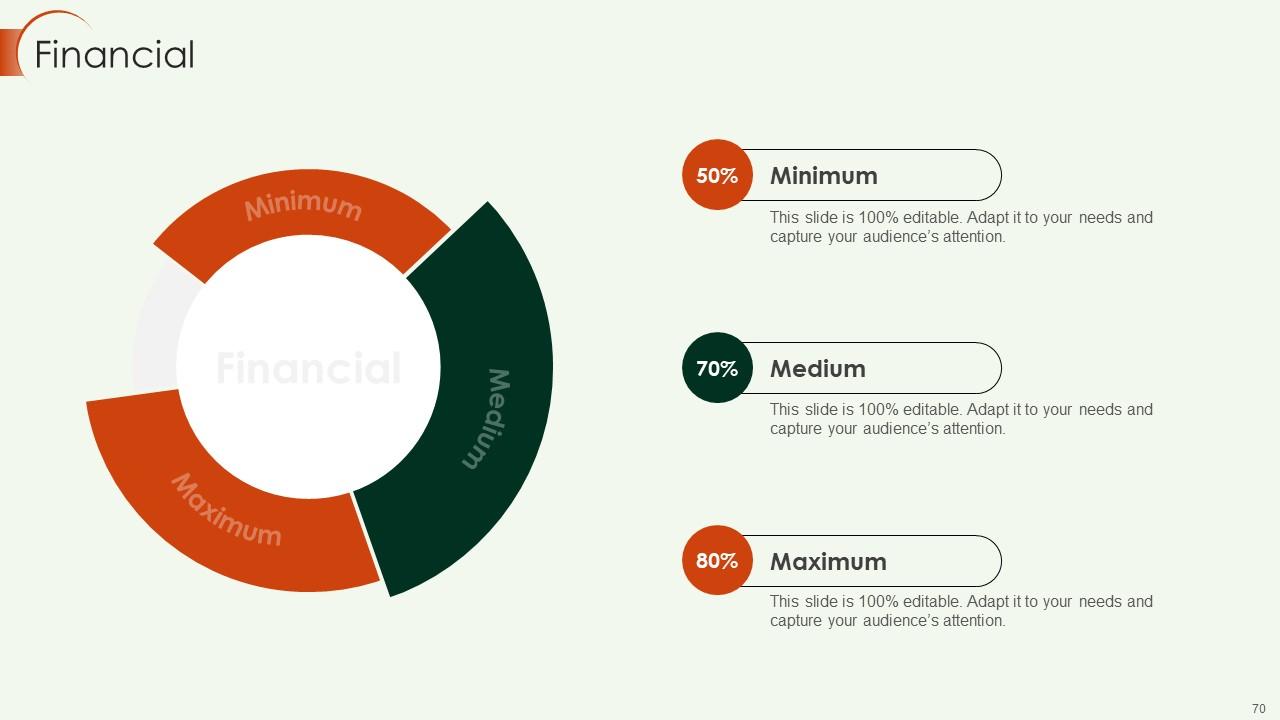
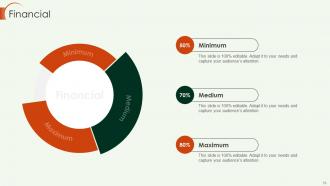
Slide 70: This is a Financial slide. Show your finance related stuff here.
Slide 71: This is a Thank You slide with address, contact numbers and email address.
Key Account Strategy To Boost Customer Acquisition Powerpoint Presentation Slides Strategy CD V with all 80 slides:
Use our Key Account Strategy To Boost Customer Acquisition Powerpoint Presentation Slides Strategy CD V to effectively help you save your valuable time. They are readymade to fit into any presentation structure.
-
The best part about SlideTeam is their meticulously prepared presentations (complete-decks and single-slides both), infused with high-quality graphics and easy to edit. All-in-all worthy products.
-
The quality of PowerPoint templates I found here is unique and unbeatable. Keep up the good work and continue providing us with the best slides!
